
光刻胶

Search documents
A股光刻胶概念股上涨,张江高科涨超7%
Xin Lang Cai Jing· 2025-08-05 05:12
Group 1 - The A-share market saw a rise in photolithography stocks, with Wavelength Optoelectronics increasing by over 9% [1] - Zhangjiang Hi-Tech experienced a rise of over 7% [1] - Hanghua Co., Taihe Technology, and others rose by over 5% [1] Group 2 - Prilite, Haili Co., and Feikai Materials increased by over 4% [1] - Guolin Technology, Maolai Optics, and Blue Eagle Equipment rose by over 3% [1]

光刻胶上市公司久日新材,全产业链布局半导体光刻胶领域发展
Sou Hu Cai Jing· 2025-07-31 01:45
在半导体产业链国产化替代加速的浪潮中,天津久日新材料股份有限公司(688199)正以全产业链布局 为核心竞争力,在光刻胶领域迅速崛起。作为全球光引发剂龙头企业,久日新材通过技术突破与产能扩 张,成为国产光刻胶领域的重要力量。 全产业链布局构建独家优势 随着4500吨光刻胶项目产能逐步释放,久日新材的市场渗透加速。2025年第二季度,久日新材光刻胶订 单量累计形成吨级规模,光敏剂已实现规模化销售,客户覆盖显示面板、半导体芯片、LED 及功率芯 片生产企业。业内人士指出,久日新材当前以i-线、g-线光刻胶(365nm以上工艺)切入市场,契合国 内成熟制程广泛应用的需求,随着技术进步,未来有望向高端ArF、KrF光刻胶领域渗透。 除此之外,久日新材作为全国最大光引发剂供应商,其在化学合成、工艺优化等领域积累的二十余年经 验,可直接赋能半导体材料生产。例如,通过酸-酸缩合一步连续法降低原材料消耗,采用氯代物工艺 减少废酸排放,这些技术优势已复制到光刻胶生产中,显著提升成本控制能力。 久日新材坚定以"光固化产业为核心、半导体产业为重点"的发展方向,未来将持续加大半导体化学材料 投入。除现有产品外,久日新材正在开发光致产 ...


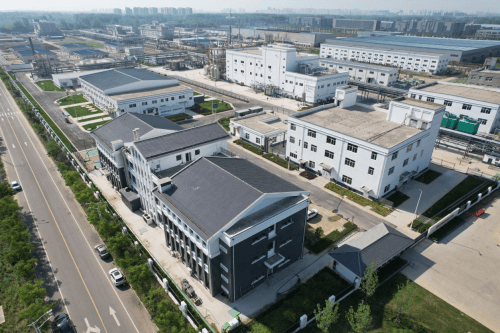
势银研究 |《光刻胶产业研究报告》
势银芯链· 2025-07-25 03:02
Core Viewpoint - The article summarizes key insights from the "Photoresist Industry Research Report" published by TrendBank, focusing on the photoresist industry chain, application scenarios, industry barriers, and market competition landscape, which aids companies in making informed strategic decisions [2] Key Data - In 2024, China's wafer production capacity is projected to reach 7.5 million pieces per month, representing a year-on-year growth of 13.86% compared to 2023 [3] - The global display panel market size is expected to reach 1.33 trillion yuan in 2024, with an anticipated growth to over 1.4 trillion yuan in 2025, reflecting a year-on-year increase of 6% [4] - From 2019 to 2024, there have been 58 financing events involving photoresist companies in mainland China, with notable large-scale financing [5] Market Size Projections - The market size for semiconductor photoresists in mainland China is projected to be 4.985 billion yuan by 2025 [6] - The market size for display photoresists in mainland China is expected to reach 10.848 billion yuan by 2025 [7] National Policy Support - National policies are empowering the photoresist industry in four major directions: - Tax incentives for integrated circuit enterprises and projects, encouraging the development of materials and components, including photoresists [8] - Import tax incentives for materials like photoresists to reduce costs and promote industry growth [8] - Investment from the National Integrated Circuit Industry Investment Fund, with over 50 billion yuan planned for key material research and industrialization [8] - Special funding exceeding 2 billion yuan for research and innovation in photoresist technology [8]

A股光刻胶板块盘初活跃,康鹏科技涨超7%,久日新材、怡达股份涨超4%,上海新阳、晶瑞电材、佳先股份、广信材料跟涨。
news flash· 2025-07-25 01:39
Group 1 - The A-share photoresist sector is active in early trading, with Kangpeng Technology rising over 7% [1] - Jiuri New Materials and Yida Co., Ltd. both increased by more than 4% [1] - Other companies such as Shanghai Xinyang, Jingrui Electric Materials, Jiaxian Co., Ltd., and Guangxin Materials also experienced gains [1]

国内首条,八亿时空百吨级半导体KrF光刻胶树脂双产线建成
势银芯链· 2025-07-24 06:15
Core Viewpoint - The establishment of the first domestic 100-ton semiconductor KrF photoresist resin production line by Eight Billion Space is expected to generate over 100 million yuan in revenue upon reaching full capacity [1][3]. Group 1: Company Overview - Eight Billion Space, a wholly-owned subsidiary of Beijing Eight Billion Space Liquid Crystal Technology Co., Ltd., focuses on semiconductor materials and display panel materials, particularly in photoresist raw materials and photo-sensitive polyimide [5]. - The company has established a comprehensive quality management system covering product development to production control, ensuring the provision of high-quality products and services in the domestic semiconductor materials industry [7]. Group 2: Production Capacity and Plans - Eight Billion Space plans to gradually expand its production capacity based on market conditions, aiming for an annual production capacity of 200-300 tons of high-end photoresist resin within the next five years [2]. - The company has designed two fully autonomous production lines to meet the differentiated needs of the entire industry lifecycle, with expectations of achieving tens of millions in revenue by the second half of 2025 as production capacity is gradually released [3]. Group 3: Production Lines and Technology - The high-flexibility R&D pilot line is designed to meet the "small batch, multiple varieties" R&D iteration and pilot verification needs of domestic photoresist manufacturers and research institutions, enabling rapid switching of different formulations and processes [4]. - The high-capacity mass production line focuses on efficiency and stability, ensuring high consistency between product batches and providing strong material support for the large-scale application of domestic high-end photoresists [4]. Group 4: Product Development and Capabilities - Eight Billion Space has developed multiple technologies for the development of photoresist resins, capable of independently developing KrF and ArF series resins, and has conducted resin procurement verification with several leading companies in the photoresist sector [7]. - The company is also engaged in the synthesis and mass production of electronic-grade monomers and PAG photo acids for KrF, ArF, and PSPI photoresist resins, with capabilities for custom synthesis [10].


光刻胶咽喉上的中国:95%进口依赖率背后的产业真相
材料汇· 2025-07-21 14:48
Core Viewpoint - The global and Chinese photoresist market is experiencing growth driven by the semiconductor and display panel industries, with future demand expected to increase significantly despite recent fluctuations in specific sectors [5][10]. Group 1: Global Photoresist Market Overview - The global photoresist market size is expected to grow at an annual rate of approximately 5% from 2022 to 2027, despite a 2% decline in 2022 due to decreased demand in the new display industry [5]. - In the semiconductor sector, the global market size reached $573.5 billion in 2022, with a year-on-year growth of 3.2%, and photoresist consumption in this sector was approximately 23.8 billion yuan, growing by 8% [6]. - The new display panel market saw a decline in 2022, with a total shipment area of 237 million square meters, down 4.3%, leading to a 19% decrease in photoresist consumption to about 12.6 billion yuan [7]. - The PCB industry is projected to grow at an average annual rate of 4% from 2022 to 2027, with photoresist consumption in this sector reaching approximately 16.3 billion yuan in 2022, a 2% increase [9]. Group 2: Chinese Photoresist Market Overview - China's photoresist demand is expected to grow at an average annual rate of 7% from 2022 to 2027, despite the market size remaining stable in 2022 compared to 2021 [12]. - In the semiconductor sector, China's photoresist consumption reached 4.6 billion yuan in 2022, with a growth rate of 15%, and is expected to grow at 10% annually over the next five years [13]. - The new display sector in China saw a decline in photoresist consumption to 6.1 billion yuan in 2022, down 13%, but is projected to grow at 8% annually in the coming years [14]. - The PCB industry in China had a total output value of $43.6 billion in 2022, with photoresist consumption reaching approximately 10.1 billion yuan, a 3% increase [16]. Group 3: Development Status of China's Photoresist Industry - The domestic production rate of photoresists is relatively low, with significant reliance on imports for semiconductor and display panel photoresists [19]. - Several domestic companies have made progress in the production of G/I line photoresists, with KrF photoresists seeing some successful local production [25]. - The market for TFT positive photoresists is dominated by foreign companies, with domestic production accounting for about 20% of the total market [32]. - The PCB photoresist market is characterized by a growing domestic supply of wet film photoresists and imaging solder masks, with a current domestic production rate of approximately 55% [36]. Group 4: Challenges and Future Prospects - The high technical barriers in the photoresist industry and the need for collaboration with lithography equipment manufacturers pose challenges for rapid domestic development [19]. - There is a significant opportunity for domestic companies to increase their market share in high-end photoresists, as the current production capabilities are still limited [42]. - Ongoing projects in China aim to enhance the production capacity of photoresists and related materials, indicating a strong push towards achieving greater self-sufficiency [41].

走访上市公司 推动上市公司高质量发展系列(二十)
证监会发布· 2025-07-18 09:30
Group 1 - The Shenzhen Stock Exchange (SZSE) has initiated a regular visiting mechanism to enhance the quality of listed companies, focusing on supporting technological innovation and addressing external challenges [2][4] - Over 200 listed companies in regions such as Guangdong, Zhejiang, Jiangsu, Beijing, and Shanghai have been visited, allowing for in-depth discussions on business models, core technologies, and challenges faced by companies [2][3] - The SZSE has implemented over 150 measures in response to company feedback, primarily in areas such as information disclosure, mergers and acquisitions, refinancing, and equity incentives [3] Group 2 - The Guangxi Securities Regulatory Bureau has established a collaborative mechanism with local governments to enhance the innovation and competitiveness of listed companies, aiming to improve overall investment value [5][7] - In 2024, Guangxi listed companies' R&D expenditure reached 6.316 billion yuan, a year-on-year increase of 18.62%, with significant advancements in traditional industries' digital and green transformations [12] - The Beijing Securities Regulatory Bureau has conducted extensive visits to nearly 200 listed companies in the first half of 2025, achieving a problem resolution rate exceeding 95% [15][19] Group 3 - The Beijing Securities Regulatory Bureau has focused on addressing common issues faced by listed companies, such as housing security, personnel settlement, and financing needs, through coordinated efforts with various government departments [17] - The implementation of policies like "merger six articles" and "science and technology innovation board eight articles" has encouraged companies to utilize mergers and acquisitions for transformation and upgrade [18] - The ongoing regular visits by regulatory bodies are seen as a crucial strategy to enhance service quality and regulatory effectiveness, fostering a better business environment for high-quality development [19]

无需升级昂贵光刻系统,东丽发布负性PSPI 新产品
势银芯链· 2025-07-18 01:17
Core Viewpoint - Toray has successfully developed the STF-2000 photosensitive polyimide, which allows for fine processing with a line width of 30 micrometers on films up to 200 micrometers thick, targeting applications in new MEMS devices [1][9]. Group 1: Product Features - STF-2000 can achieve a high aspect ratio of 7 and high-resolution patterns below L/S=4μm, making it suitable for advanced microfabrication [1][9]. - The product complies with EU environmental regulations, being free from N-Methyl-2-pyrrolidone (NMP) and per- and polyfluoroalkyl substances (PFAS) [2]. - The development of thick film versions is underway, with mass production expected by 2025 [2]. Group 2: Technical Advantages - STF-2000 can form complex patterns using standard exposure systems without the need for expensive upgrades to KrF or ArF lithography systems, significantly reducing technical upgrade costs for companies, especially small and medium-sized enterprises [6]. - The product utilizes an alkaline water solution for development, maintaining inherent advantages such as excellent heat and chemical resistance, mechanical properties, insulation, and X-ray resistance [9]. Group 3: Market Position - Toray is recognized as one of the most successful companies in the commercialization of positive photosensitive polyimides, and the new product combines the advantages of both positive and negative photosensitive polyimides [7].

中国有机液体光刻胶行业深度研究及投资前景调研2025~2031年
Sou Hu Cai Jing· 2025-07-17 00:03
Group 1 - The core viewpoint of the article is the in-depth analysis and investment prospects of the organic liquid photoresist industry in China from 2025 to 2031, highlighting market trends, growth opportunities, and competitive landscape [1][3][4]. Group 2 - The organic liquid photoresist market overview includes definitions, classifications, and the statistical scope of the industry [3][4]. - The market is segmented by product types, including positive and negative photoresists, with growth trends projected for 2021, 2025, and 2031 [4][5]. - Applications of organic liquid photoresists are categorized into semiconductor, LCD, printed circuit boards, and others, with growth trends analyzed [4][5]. Group 3 - The current development status of the organic liquid photoresist industry is analyzed, including overall industry characteristics, influencing factors, and entry barriers [4][5][6]. - Global supply and demand dynamics for organic liquid photoresists are forecasted from 2021 to 2031, detailing production capacity, output, and utilization rates [4][5][6]. - China's supply and demand situation is also examined, with projections for production capacity, output, and market demand [4][5][6]. Group 4 - The competitive landscape of the global organic liquid photoresist market is analyzed, including market share of major manufacturers and sales revenue from 2021 to 2025 [4][5][6]. - The report provides insights into the market share and revenue of key players in the Chinese market, along with their sales prices [4][5][6]. Group 5 - Different product types of organic liquid photoresists are analyzed, with sales and revenue trends projected for both global and Chinese markets from 2021 to 2031 [5][6][7]. - The report also discusses the pricing trends of various product types and applications within the organic liquid photoresist market [5][6][7]. Group 6 - The industry development environment is assessed, focusing on trends, driving factors, and a SWOT analysis of Chinese enterprises in the organic liquid photoresist sector [6][7][8]. - The supply chain analysis covers the industry’s procurement, production, and sales models, along with key raw materials and downstream customers [7][8][9]. Group 7 - The report includes profiles of major global manufacturers of organic liquid photoresists, detailing their production bases, market positions, and recent developments [8][9][10]. - It also provides an analysis of the import and export trends of organic liquid photoresists in China, including major sources and destinations [10][11][12].

午评:创业板指半日涨近1% 军工股再度爆发
news flash· 2025-06-30 03:35
Core Viewpoint - The market experienced a rebound in the morning session, with the ChiNext Index leading the gains, reflecting a diverse range of stock performances across various sectors [1] Market Performance - The total trading volume in the Shanghai and Shenzhen markets reached 914.3 billion, a decrease of 77 billion compared to the previous trading day [1] - Over 3,500 stocks rose, indicating a predominantly positive market sentiment [1] - The Shanghai Composite Index increased by 0.2%, the Shenzhen Component Index rose by 0.54%, and the ChiNext Index gained 0.93% by the end of the session [1] Sector Performance - Military stocks saw a significant surge, with nearly 20 stocks, including Changcheng Military Industry, hitting the daily limit [1] - Gaming stocks also performed strongly, with Giant Network reaching the daily limit [1] - Stocks related to photolithography equipment were active, with Blue Eagle Equipment rising by 20% [1] - In contrast, banking stocks continued to adjust, with Qingdao Bank dropping over 2% [1] - The sectors with the highest gains included military, gaming, brain-computer interface, and photolithography equipment, while banking, securities, non-ferrous metals, and coal sectors faced declines [1]
