农产品电商

Search documents
【牢记嘱托 展现新风采】解码“数字引擎”!独山县以“电商直播+黔货”解锁县域经济发展新活力
Sou Hu Cai Jing· 2025-05-19 23:51
Core Viewpoint - The article highlights the successful integration of e-commerce and local agriculture in Dushan County, showcasing how the "e-commerce +" model has enabled local agricultural products to reach a broader market through live streaming and online sales [1][6]. E-commerce Development - Dushan County has actively explored the "e-commerce +" development model, combining e-commerce live streaming with local agricultural products to enhance online and offline sales connections [1]. - The rise of e-commerce has led to a significant increase in sales for local agricultural products, with live streaming becoming a new consumption trend since 2021 [5]. Live Streaming Success - Live streaming hosts, such as Lu Fanggui, have successfully promoted local products like Dushan rice, achieving monthly sales exceeding 2 million yuan and selling over 3,000 orders per session, with peak sales surpassing 10,000 orders [3][5]. - The local agricultural products have gained national exposure through live streaming, providing more sales channels for local farmers [6]. Business Growth - Companies like Guizhou Dushan Hong'an Grain and Oil Trade Co., Ltd. have seen their monthly sales increase from 450 tons to over 600 tons due to the support of e-commerce and live streaming [8]. - Guizhou Qianwang Flavor Food Co., Ltd. reported a 20% increase in order volume since starting e-commerce live streaming, with projected annual output value expected to exceed 9 million yuan [13]. Talent Development - The demand for skilled e-commerce professionals is rising, prompting Dushan County to implement training programs covering essential skills such as traffic conversion and account management [12][15]. - The county has established a regular talent cultivation system to transition from merely providing resources to fostering self-sustaining growth in e-commerce capabilities [15]. Future Plans - Dushan County aims to enhance product quality supervision in live streaming, develop e-commerce brands, and secure funding for e-commerce industry development to standardize production and improve product quality [19]. - The county's online retail sales are projected to reach 181 million yuan in 2024, with a year-on-year growth of 8.29%, selling over 1.52 million agricultural products through online platforms [17].


重庆巫山:电商实训赋能乡村振兴 川渝协作共育“红色带货人”
Sou Hu Cai Jing· 2025-05-14 17:38
Group 1 - The training program aims to empower local agricultural products through e-commerce skills, focusing on the upcoming sales season for Wushan's crispy plums [2][10] - The training includes a combination of theoretical and practical sessions, covering live streaming, short video marketing, and store operations [2][6] - The program emphasizes the integration of party organization with the e-commerce industry to drive rural revitalization [3][9] Group 2 - The training features a practical component where participants engage in simulated live streaming to promote local products, enhancing their marketing skills [8][10] - Local and regional collaboration is highlighted, with experiences shared from Mianzhuzhi City to improve e-commerce strategies [9] - The initiative aims to create a network of "red delivery people" who will lead e-commerce efforts in their communities, with a goal of connecting at least five households to online platforms [10][11] Group 3 - The training program is aligned with the broader rural revitalization strategy, aiming to establish 20 "red delivery demonstration villages" by 2025 [10][11] - The initiative seeks to leverage digital platforms to increase the visibility and sales of local agricultural products, targeting over one million consumers [11][12] - Continuous development of e-commerce talent is emphasized as a means to address challenges in agricultural product marketing [11]

农产品网络销售迅猛,物流费用高成阻碍?咋回事
Sou Hu Cai Jing· 2025-05-13 10:10
当前,农产品网络销售领域正迎来迅猛的发展局面。不过,物流费用问题一直成为阻碍其持续进步的关键障碍。这种费用不仅对农产品定价产生作用,还直 接关系到电商公司的盈利状况。接下来,我们将对农产品电商的物流费用问题进行详细分析。 农产品电商的物流成本受到多种因素的影响。在这些因素中,产品的特性起着至关重要的作用。例如,对于那些容易变质、保鲜期较短的农产品,在运输过 程中必须采取特殊的处理方法,比如冷藏和保湿。这些额外的处理步骤无疑会增加物流的成本。 农产品电商的配送区域对物流成本产生显著影响。较远的距离会导致运输费用上升,同时,偏远地区交通不便,运输效率低下,进而产生额外开销。除此之 外,市场因素也不容忽视,例如油价的波动会导致运输成本的不稳定性。 成本构成 农产品电商的物流成本构成复杂多样。首先,运输成本占据一大部分,包括购买或租赁车辆的支出、燃油费用以及过路费等。不同的运输方式成本相差悬 殊,比如冷链运输的成本就远高于普通运输。因为冷链运输需要特定的冷藏设备和专业技术,以保证农产品在运输途中保持新鲜,这些因素都直接推高了成 本。 仓储成本也是一大因素,为了保持农产品的鲜度,必须搭建适合的仓储设施,这涉及租金和设备 ...


农产品电商供应链管理有多重要?这些关键点你知道吗
Sou Hu Cai Jing· 2025-05-13 10:05
Core Insights - The article emphasizes the importance of agricultural e-commerce supply chain management as a crucial link between producers, e-commerce platforms, and consumers, enhancing product circulation speed, ensuring quality, and reducing costs [1] Supply Chain Composition - The agricultural e-commerce supply chain consists of producers, suppliers, e-commerce platforms, logistics providers, and consumers, with each component being interdependent [2] - For instance, in the fruit industry, farmers grow fruits, suppliers handle acquisition and packaging, and logistics ensure timely delivery to consumers [2] Quality Control - Quality control is fundamental in the agricultural e-commerce supply chain, starting from strict standards in planting and breeding, to careful selection of fertilizers and pesticides [3] - During storage, maintaining appropriate temperature and humidity is critical to prevent spoilage, especially for perishable items like berries [5] - Continuous quality checks during transportation and sales are essential to ensure high-quality products reach consumers, enhancing satisfaction and loyalty [5] Logistics and Distribution - Efficient logistics and distribution directly impact consumer shopping experiences, with cold chain logistics being vital for perishable goods [6] - Optimizing delivery routes and utilizing data analytics can significantly reduce delivery times and costs, while pre-positioning goods in warehouses near consumers can enhance delivery speed [6] Information Management - Effective information management is crucial for transparency and information sharing across the supply chain, allowing producers to adjust strategies based on market demand [9] - E-commerce platforms can leverage detailed sales data for market predictions and marketing strategies, while logistics providers can optimize delivery processes based on real-time information [9] - Implementing blockchain technology can enhance data security and authenticity throughout the supply chain [9] Cost Control - Reducing costs is essential for enhancing profitability in the agricultural e-commerce supply chain, which includes establishing long-term relationships with reliable suppliers [10] - Utilizing advanced agricultural techniques can improve yield and reduce per-unit costs, while efficient inventory management can minimize excess and waste [12] Risk Management - The agricultural e-commerce supply chain faces various risks, including natural disasters, market demand fluctuations, and regulatory changes [13] - Establishing a risk warning system and collaborating with insurance companies can mitigate potential losses from unforeseen events [13]
农产品电商领域数据分析有多重要?一文深度剖析
Sou Hu Cai Jing· 2025-05-13 03:45
Core Insights - The agricultural e-commerce sector is experiencing significant growth, driven by the widespread use of the internet and changing consumer shopping habits [2][3] - The market is expanding as specialty agricultural products successfully reach national markets through e-commerce platforms [2] Market Size - The agricultural e-commerce market is continuously growing, with increasing sales across various product categories such as fruits, vegetables, and meat [2] - High-quality agricultural regions are seeing particularly strong growth due to superior product quality and brand recognition, exemplified by the success of Gannan navel oranges [3] Consumer Demographics - The consumer base for agricultural e-commerce is diversifying, with younger consumers showing a preference for fresh and organic products, while middle-aged and elderly consumers focus on staple items [6] - Younger consumers tend to purchase more frequently but spend less per transaction, while older consumers have fixed purchasing patterns and may spend more per transaction [6] Product Categories - Fresh fruits and vegetables remain popular in e-commerce, with seasonal products like strawberries and specialty fruits like cherries and blueberries performing well [7] - The meat and seafood categories are rapidly growing, supported by improved cold chain logistics ensuring product freshness [7] Regional Distribution - Agricultural e-commerce is thriving in economically developed eastern coastal regions and resource-rich provinces, such as Guangdong and Zhejiang, which have robust logistics and internet infrastructure [9] - Remote areas face challenges like high logistics costs and limited internet coverage, hindering market growth, although government support is helping these regions develop [9] Marketing Strategies - Live streaming has emerged as a key marketing tool in agricultural e-commerce, allowing direct interaction between producers and consumers [10][11] - Brand marketing is increasingly important, with companies focusing on building strong product brands to enhance market competitiveness, as seen with Wuchang rice [11] Development Trends - The future of agricultural e-commerce will be shaped by smart and digital technologies, enabling precise marketing and improved logistics efficiency [12] - There is a growing demand for green and organic products, with e-commerce platforms providing extensive sales opportunities for these items [12]

农产品电商物流成本有多关键?影响几何?控制措施在哪?
Sou Hu Cai Jing· 2025-05-12 21:01
Core Insights - The prosperity of the agricultural e-commerce industry largely depends on the reduction of logistics costs, which can enhance price advantages and expand sales channels [1] Cost Composition - Logistics costs in agricultural e-commerce include transportation fees, warehousing costs, packaging expenses, handling costs, and information processing costs [2] - Transportation fees are significantly influenced by factors such as distance and type of transport, with fresh produce like fruits incurring higher costs due to longer distances [2] - Warehousing costs are affected by the need for specific storage conditions, such as cold storage for perishable goods, leading to increased construction and maintenance expenses [2] - Packaging costs play a crucial role in protecting agricultural products, but high-quality materials can raise overall costs [2] Influencing Factors - The perishability of agricultural products, such as strawberries, necessitates cold chain logistics, which increases costs due to the required technology [5] - Seasonal demand fluctuations can lead to increased logistics costs during peak seasons and higher per-unit costs during off-peak times [5] - The quality of logistics infrastructure, particularly in remote areas, can significantly impact transportation efficiency and costs [5] Transportation Cost Analysis - Transportation costs constitute a large portion of logistics expenses, with road transport being the most common method, affected by fuel prices and tolls [6] - Rail transport offers efficiency but lacks flexibility, potentially leading to additional costs if scheduling does not align [6] - Air transport is fast but expensive, making it suitable for high-value, perishable goods despite its high cost share in logistics [6] Warehousing Cost Analysis - Warehousing costs include construction and rental expenses, with high-quality facilities being costly to build [9] - Management costs related to warehousing, including personnel and inventory management systems, are significant and can be optimized to reduce expenses [9] - Losses during storage due to spoilage or damage add hidden costs, further increasing warehousing expenses [9] Packaging Cost Role - Proper packaging is essential for maintaining product quality and can reduce damage during transport, indirectly saving costs [10] - Attractive packaging can enhance product value, especially during peak sales periods like holidays [10] - Over-packaging can lead to increased costs, necessitating a balance between quality and expense [12] Cost Control Strategies - Optimizing delivery routes using big data can significantly reduce logistics costs by improving efficiency [13] - Collaborating with experienced logistics companies can help minimize losses and expenses during transportation [13] - Enhancing warehousing management through advanced systems and employee training can lead to better inventory control and reduced costs [13][14]
农产品“美颜直播”当休矣
Guang Zhou Ri Bao· 2025-04-11 03:10
Core Viewpoint - The rapid development of live-streaming e-commerce has introduced new risks to food safety, particularly through the phenomenon of "beautified live-streaming" which misrepresents agricultural products, leading to consumer deception and regulatory challenges [1][2] Group 1: Challenges in Food Safety - The emergence of "beautified live-streaming" has created significant challenges for food safety regulation, as some merchants use filters and special effects to misrepresent agricultural products [1] - A survey indicated that 52.48% of negative consumer sentiment in agricultural live-streaming e-commerce is attributed to false advertising, with excessive beautification being a major factor [1] - The disparity between the actual products received by consumers and those showcased in live-streams undermines consumer rights and creates new risks in online food sales [1] Group 2: Regulatory Responses and Solutions - Food safety regulation must encompass both online and offline markets, emphasizing the need for a robust "cloud defense" against potential blind spots in food safety oversight [2] - Strengthening platform responsibilities and ensuring that live-stream hosts and their service providers engage in truthful and compliant selling practices is essential [2] - Implementing technological solutions, such as establishing a "one village, one brand, one product traceability" system and a "health score" credit evaluation for online hosts, are effective attempts to regulate live-streaming sales and reduce the prevalence of "beautified" agricultural products [2] - Enhancing consumer protection mechanisms, optimizing return and exchange processes for live-stream shopping, and publicizing black and red lists of violators can help ensure consumer confidence in purchasing [2]
直播电商为乡村振兴注入云动力
Zhong Guo Jing Ji Wang· 2025-03-31 02:09
Core Insights - The rise of rural e-commerce, particularly through live streaming and digital platforms, is significantly contributing to the revitalization of rural economies in China, with notable success stories emerging from various regions [1][2][3] Group 1: Rural E-commerce Growth - In Gansu Province, the annual sales of local specialties through e-commerce have surged from 60,000 yuan to 6 million yuan, benefiting over 300 households [1] - The rural online retail sales in China are projected to reach 26,493.6 billion yuan in 2024, marking a 6.4% year-on-year increase, with agricultural product online retail sales growing by 15.8% [1][2] - The Ministry of Commerce aims to establish around 1,000 county-level live streaming e-commerce bases over the next five years to enhance rural e-commerce [2] Group 2: Technological Innovations - The integration of generative artificial intelligence in live streaming e-commerce is enhancing content production efficiency, product promotion accuracy, and user experience personalization [2] - The use of digital personas and AI models is driving the smart and personalized evolution of rural e-commerce, improving operational management and innovation [2] Group 3: Talent Development and Employment - Gansu's rural e-commerce talent development strategy includes training over 10,000 individuals annually, with 320,000 people engaged in e-commerce-related employment [3] - Live streaming e-commerce is creating numerous job opportunities and facilitating the sales of local agricultural products [3] Group 4: Challenges and Recommendations - The e-commerce sector faces intense competition characterized by price wars and product homogenization, which could threaten sustainable development [4] - Experts recommend a "chain development" approach to extend the agricultural product supply chain and enhance value, advocating for collaboration between e-commerce and traditional sectors [4]
火蝠案例 | 从0到1,拼多多农产品新店30天达成22W!
Sou Hu Cai Jing· 2025-03-29 17:39
Core Insights - The article discusses the rapid growth of China's agricultural e-commerce market, highlighting a significant increase in online retail sales and the challenges faced by new entrants in the market [6][15]. Industry Overview - The agricultural e-commerce market in China reached a network retail sales figure of 587.03 billion yuan in 2023, nearly five times the amount in 2014, with a year-on-year growth rate of 21.7% in the first half of 2024 [6]. - Agricultural logistics costs have decreased from 18% in 2012 to 14.4% in 2023, with a historical low of 14.2% in the first half of 2024, indicating improved supply chain efficiency [8]. Challenges in Agricultural E-commerce - The influx of numerous merchants has led to intensified competition characterized by product homogenization, where many sellers offer similar products and services [8][10]. - New stores often struggle with low customer retention and high operational costs, leading to a low-profit environment [10][12]. Operational Strategies - The "Three-Stage Store Launch Method" developed by Huofe E-commerce aims to help new stores overcome initial challenges and achieve sustainable growth [10][15]. - Key strategies include precise product selection, SKU optimization to avoid price wars, and light paid promotion to enhance visibility and sales [10][11]. Success Metrics - A case study of a new store on Pinduoduo achieved sales of 229,200 yuan within 30 days, demonstrating the effectiveness of the operational strategies employed [15]. - The store's sales increased significantly through structured product matrices and promotional strategies, with daily sales reaching up to 12,000 yuan [11][12]. Future Directions - Huofe E-commerce plans to refine its operational standards and create a replicable model for agricultural e-commerce, aiming to empower more merchants to succeed online [17].


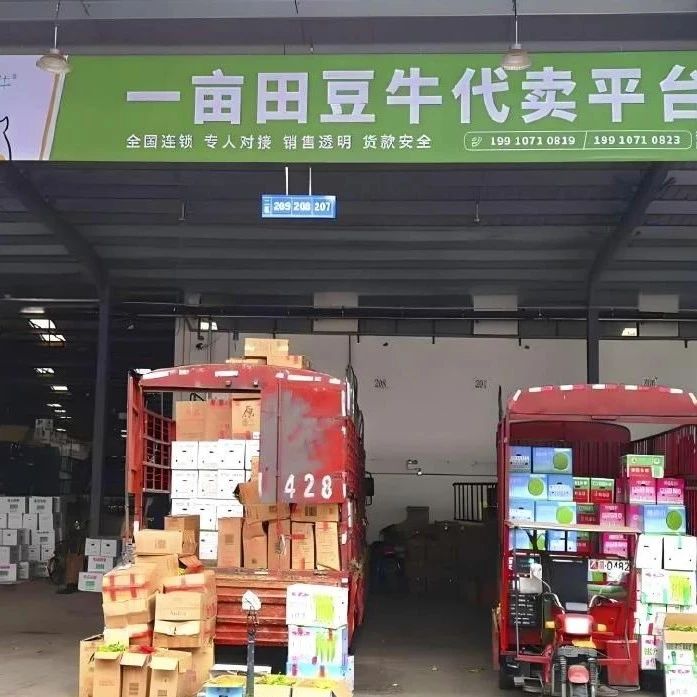
一亩田赴美上市,IPO能否帮邓锦宏迎来转折?
美股研究社· 2025-03-06 10:32
Core Viewpoint - The article discusses the upcoming IPO of Yimutian Group, a leading agricultural e-commerce platform in China, highlighting the challenges and opportunities in the agricultural digitalization sector as it prepares to list on NASDAQ [1][2][26]. Company Overview - Yimutian Group is the largest B2B digital service platform for agricultural products and food in China, aiming to connect with international capital markets through its IPO [2][26]. - The company has accumulated over 56 million B-end supply and demand users, facilitating nearly 300,000 efficient transaction matches daily [17]. Historical Context - Founded in 2011 by Deng Jinhong, Yimutian initially focused on addressing information asymmetry in the agricultural market by providing a price comparison tool for farmers [4][5]. - The company achieved profitability within its first year and attracted significant investment, raising tens of millions of dollars over several funding rounds [6][7][19]. Business Model and Expansion - Yimutian has evolved from a transaction-focused model to a digital service platform, leveraging big data and AI to provide comprehensive services in agricultural B2B information matching and online transactions [14][24]. - The company has diversified its offerings, including the launch of the Dou Niu platform for direct sales to wholesale markets and a focus on the booming prepared food sector [16][25]. Industry Landscape - The agricultural e-commerce sector in China has seen rapid growth, with a reported online retail sales figure of 587 billion yuan in 2023, reflecting a 12.5% increase year-on-year [23]. - Despite the growth, the industry faces intense competition, with only 1% of agricultural e-commerce platforms achieving profitability, indicating a challenging environment for most players [22][24]. Competitive Position - Yimutian, while profitable, must navigate significant competitive pressures, particularly from social media platforms like WeChat, which have begun to encroach on its core business [24]. - The company's ability to adapt to user needs and provide efficient services has positioned it favorably within the agricultural e-commerce landscape, laying a solid foundation for its IPO [25]. Future Outlook - The upcoming IPO is seen as a milestone for agricultural digitalization in China, with the potential to lead the global B2B agricultural market if successful [26][27]. - However, the company must continuously innovate and improve efficiency to meet the rigorous demands of the capital market and the competitive landscape [27].