花卉种植

Search documents
“2026广州年花藏宝图”发布
Zhong Guo Xin Wen Wang· 2026-01-24 07:04
Core Insights - The "Guangzhou Spring Action" series event, "Guangzhou Year Flower Blooming for Thousands of Families," was held to promote local flower products and attract investment [1] - The event showcased the "Top Ten Year Flowers" produced in Guangzhou and released the "2026 Guangzhou Year Flower Treasure Map" [1] Group 1: Event Highlights - The event featured over ten local flower companies presenting unique year flower products, including classic varieties like butterfly orchids and kumquats, as well as mini kumquats and carnivorous plants [1] - Interactive activities such as flower arrangement performances and Lingnan pressed flower experiences were organized to engage the public and stimulate on-site consumption [1] Group 2: Industry Overview - Guangzhou has approximately 300,000 acres of flower planting area, producing over 436 million pots of potted flowers annually, making it the largest small potted plant production base in China [2] - The flower industry in Guangzhou has a scale exceeding 30 billion yuan, with the local government prioritizing land allocation for flower industry development by reserving at least 1,000 acres annually [2] Group 3: Featured Flowers - The "Top Ten Year Flowers" selected by the Guangzhou Flower Industry Association include butterfly orchids, red anthuriums, national orchids, kumquats, coarse rib grass, peach blossoms, carnivorous plants, lilies, rose hawthorns, and chrysanthemums [1] - Each flower has its own cultural significance, such as butterfly orchids symbolizing "good fortune" and kumquats representing "auspiciousness" [1]
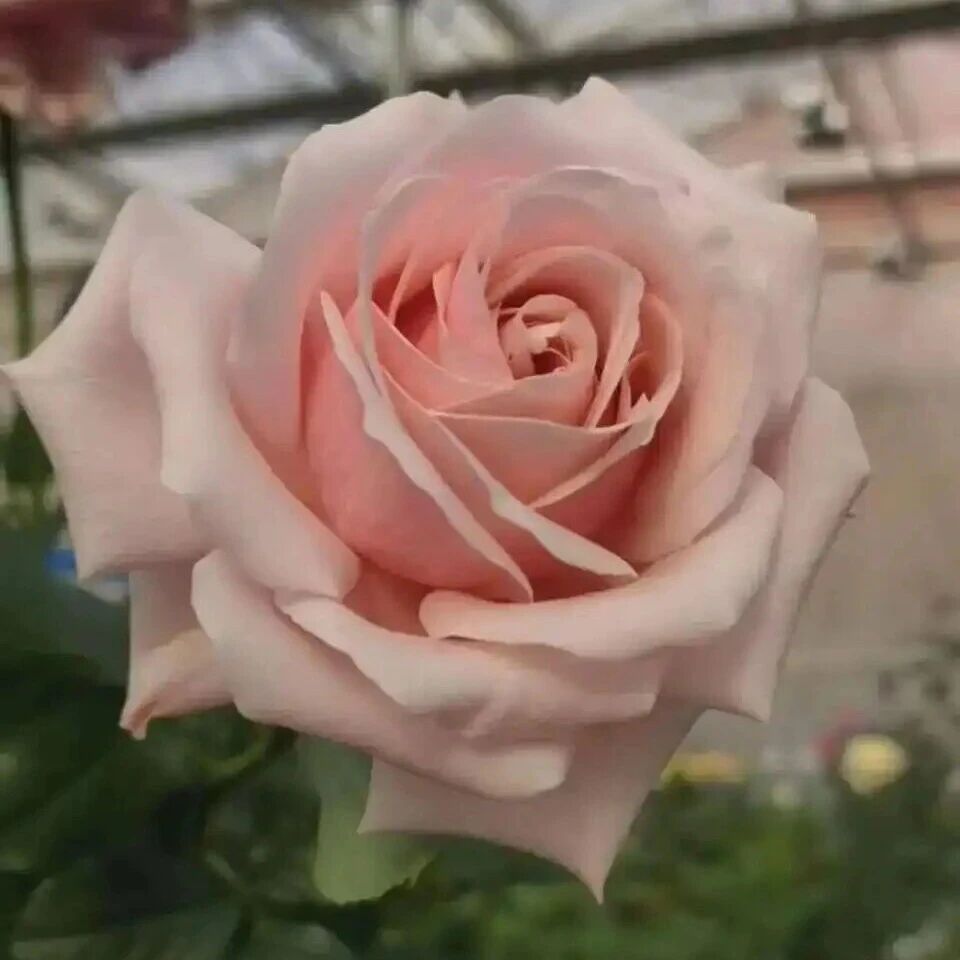
娇龙月季绽放
Xin Lang Cai Jing· 2026-01-24 04:12
转自:京报网_北京日报官方网站 【#娇龙月季绽放# 】#娇龙月季敬娇龙# 1月23日,云南省花卉产业劳动竞赛工作专班、云南省农业科学 院花卉研究所发布关于拟提前终止云南月季新品种征名活动并确定名称的公告。公告称,面向全网为编 号4815-27的"中国芯"月季征集名称活动得到社会各界热烈响应,在网友提出的众多名称中,"娇龙"断 层式领先。经指导单位、主办单位及承办单位共同研究决定:顺应广大网友的热切呼声,提前终止本次 新品月季的征名活动,正式确定其名称为"娇龙"。"娇龙"二字,恰如其分地契合了此株月季的花色、株 型与独特气质。同时,这一名称也凝聚着大家对贺娇龙同志始终坚守为民初心、扎根发展一线、倾力赋 能乡村产业的深深敬意。花如其人,见花即见精神。贺娇龙同志在助力乡村振兴、促进民族团结中所展 现的劳模精神与团结意识,不仅在云南、新疆两地深入人心,也必将在更广阔的土地上引发广泛共鸣。 因之前发布的征名活动时间为2026年1月16日至2月16日,为确保公信力,现将拟提前终止本次征名活动 并正式命名的意见全网公布,征求广大网友意见。目前,云南省农业科学院花卉研究所已向国家林业和 草原局提交"娇龙"月季的申报材料。(人 ...
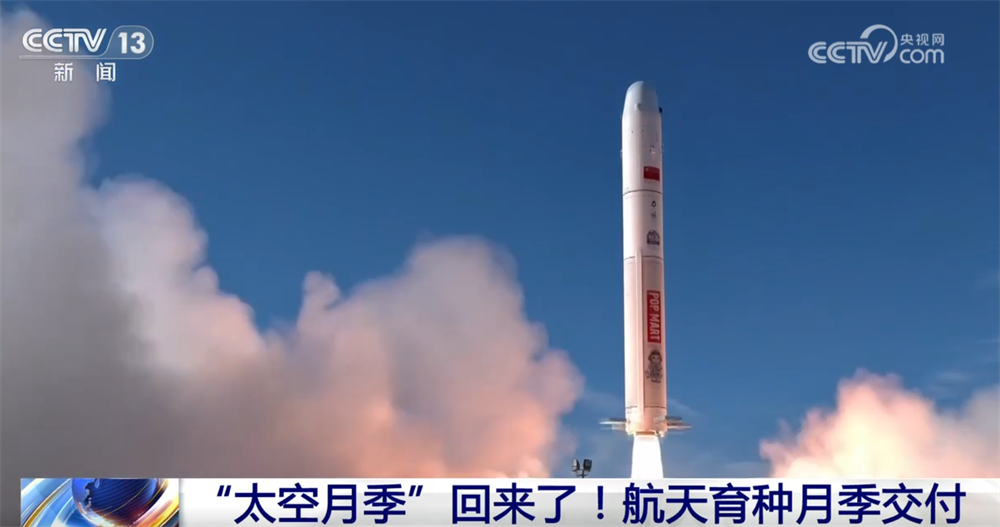
“太空月季”回来了!航天育种让百姓“菜篮子+果盘子+花园子”更健康更丰富
Yang Shi Wang· 2026-01-24 01:37
Core Viewpoint - The successful return of the "Lihong No. 1" spacecraft carrying precious rose seeds from Nanyang marks a significant step in China's exploration of space agriculture, aiming to enhance plant traits through space breeding techniques [1][3]. Group 1: Space Breeding Overview - Space breeding involves sending plant seeds into space to expose them to cosmic rays and microgravity, potentially leading to beneficial genetic mutations [3][6]. - The rose seeds used in this experiment were carefully selected for their strong disease resistance and vitality, derived from wild roses and ancient Chinese varieties [3][6]. Group 2: Benefits of Space-Bred Plants - The anticipated outcomes of the space-bred rose seeds include stronger plants with enhanced disease resistance, reduced pesticide use, and longer blooming periods, ultimately providing more vibrant and unique flowers [6][12]. - Space breeding has been utilized for over 30 years, contributing to the development of high-yield and resilient crop varieties, such as "Huangmai 247" wheat and "Luyuan 502" wheat, which have been widely adopted [8][11]. Group 3: Safety and Future Prospects - Concerns regarding health risks from mutations are addressed, as studies indicate that space seeds do not exhibit increased radioactivity and are as safe as conventional seeds [11]. - The future of space breeding aims not only to ensure food security but also to enhance the nutritional quality of food, with ongoing research into crops tailored for specific health needs [12].

姹紫嫣红中把“年味”带回家 上海市中心最大年宵花市开幕 5万多株郁金香冬日暖阳中绽放
Jie Fang Ri Bao· 2026-01-24 01:36
Core Insights - The largest Lunar New Year flower market in downtown Shanghai opened, attracting many visitors to enjoy the vibrant floral displays and festive atmosphere [1] Group 1: Market Overview - The flower market is divided into two main areas: the "Bright Garden" in Fuxing Park, featuring a 600 square meter tulip garden, and an indoor flower room at Sinan Mansion showcasing various premium floral arrangements [1][2] - The market offers a wide range of flowers, including traditional New Year flowers like orchids and azaleas, as well as trendy new products such as waxed amaryllis and hydroponic tulip sets, with prices starting as low as 15 yuan [1][2] Group 2: Pricing and Discounts - Both locations provide high value for consumers, with prices reportedly at least 30% lower than other flower markets [2] - For example, a pot of large orchids is priced at 280 yuan, compared to over 500 yuan in other markets, and single butterfly orchids are available for just 28 yuan [2] Group 3: Product Variety and Innovation - The flower market features over 500 varieties of flowers, with a significant focus on butterfly orchids, which have nearly 100 different types cultivated from seedlings in Shanghai [2][3] - New landscape flowers have been introduced, integrating natural aesthetics into floral products, allowing for a more immersive home decor experience [3] Group 4: Seasonal and Cultural Integration - The market utilizes "five-degree bulbs" technology to ensure that bulb plants like hyacinths and tulips bloom from autumn to early spring, enabling winter flower viewing [3] - Alongside the flower market, a "Bright New Year Goods Market" offers traditional snacks and artisanal products, enhancing the festive shopping experience [3] Group 5: Event Duration and Community Impact - The event aims to create a lively and immersive consumer experience, contributing to the festive atmosphere in Huangpu District, and will run until February 1 [4]
这缕年宵芬芳,何以四海飘香?
Xin Lang Cai Jing· 2026-01-23 22:57
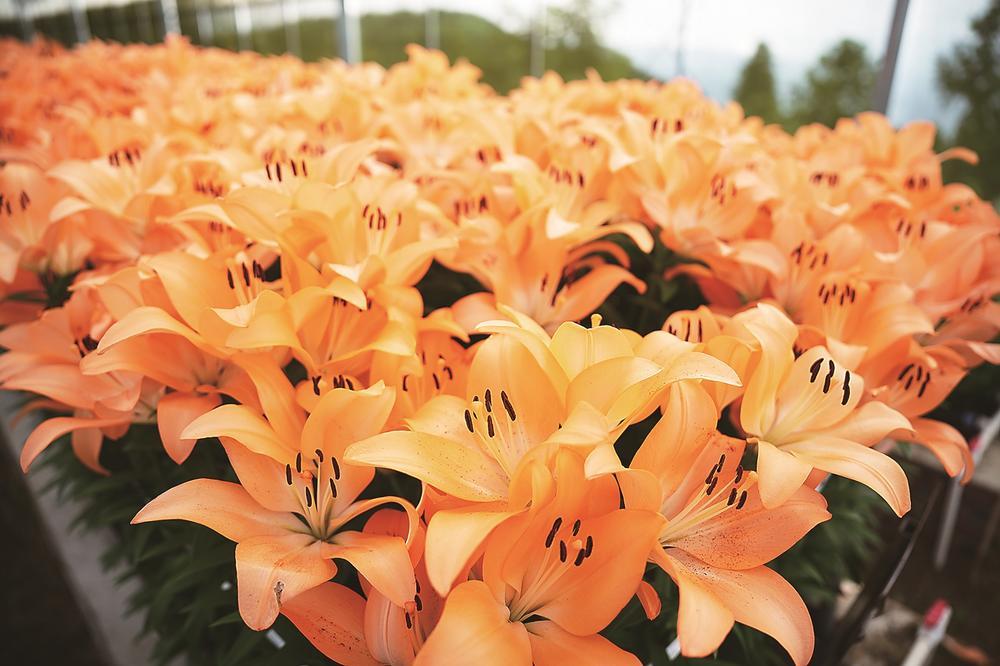
茫荡山高山百合种质基因库里盛开的百合花 种植户在大棚采摘百合。 种植户在搬运刚刚采摘下来的百合。 黄宗超在大棚内查看甜百合生长情况。 位于茫荡山的高山百合种质基因库 核心提示 春节临近,多地年宵花市场升温。百合花,因其寓意吉祥、品种多样、花色丰富,在年宵花市场备受消费者青睐。 眼下,又到了百合花采摘 的季节。上周,在延平百合物流中心举办的延平百合助农专场直播活动现场,延平百合便是全场的"流量担当"——活动当天,达成订单超5100 笔,销售额突破22万元。 南平市延平区,不仅是百合花自然分布的中心,还是百合花最适宜栽培区。从1983年第一粒种球在茫荡山宝珠村种下起步,延平百合产业历经 了从无到有、从小到大的发展历程,如今成为全国第三大百合鲜切花主产区,基本形成了以王台现代农业示范园区为中心,辐射带动周边乡镇 发展的百合花产业发展布局,品牌价值和市场影响力逐年提升。 一次"偶然" 撬动产业"花式生长" 进入延平区王台镇,随处可见百合种植大棚,如黑白琴键般在田间地头有序排开。"王台百合小镇到了。"1月14日,记者在这里见到了延平"百 合切花种植第一人"卢柳余。 卢柳余的百合种植大棚位于王台镇溪后村罗源工区,面积达3 ...
屏幕溢兰香 直播富乡邻
Xin Lang Cai Jing· 2026-01-23 20:58
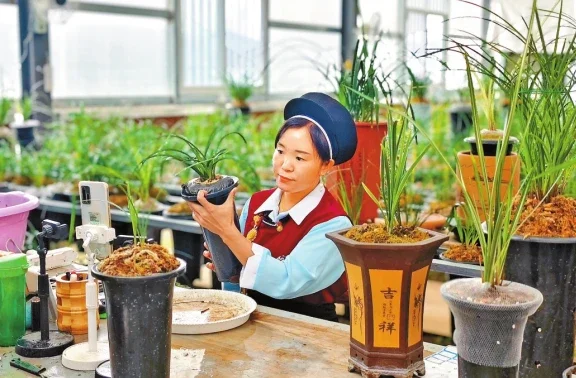
Core Insights - The article highlights the transformation of Songyuan Village into a hub for orchid cultivation and sales, driven by e-commerce and community initiatives [2][3][4] Group 1: Community and Economic Development - Yang Songlian, a local farmer, has successfully transitioned to selling orchids online, showcasing the impact of e-commerce training initiated in 2019 [2] - The village has nearly 90% of its residents engaged in orchid cultivation, with a projected inventory of 300,000 orchids by 2025 [2] - The village's total sales from orchid sales exceeded 10 million yuan in 2023, indicating a significant economic boost [2] Group 2: Organizational and Structural Changes - The introduction of a "Party Building + Association + Cooperative + Farmer" model has improved the quality and branding of orchid cultivation in the village [3] - The establishment of the Orchid Association in 2019 and the formation of a cooperative have enhanced the bargaining power and risk resilience of small farmers [3] - The average income increase per household from orchid farming is over 13,000 yuan, contributing to a collective village income exceeding 100,000 yuan annually [3] Group 3: Industry Growth and Infrastructure - The orchid industry has become a signature industry for Hekou County, with over 9,600 growers and a cultivation area of over 2,000 acres [4][5] - The county's orchid industry is projected to reach a value of 1.86 billion yuan by 2025, reflecting substantial growth [5] - Daily trading volume at the county's orchid market exceeds 500, with over 1,000 professional flower farmers and e-commerce hosts involved [5]
仙客来俏销
Xin Lang Cai Jing· 2026-01-23 19:56
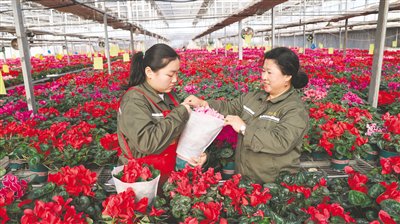
Group 1 - The core viewpoint of the article highlights the flourishing flower market in Tongliao City, particularly focusing on the successful cultivation and sale of high-quality cyclamen flowers by Qingyun Agricultural Technology Co., Ltd. [3] - The company has 50,000 pots of premium cyclamen in full bloom, attracting both local citizens and tourists to visit the planting base [3] - The flowers are set to be sold to flower markets in Northeast and North China regions in anticipation of the upcoming Spring Festival [3]
视频丨国色“添香” 牡丹花成村民“致富花”
Yang Shi Xin Wen Ke Hu Duan· 2026-01-23 13:24
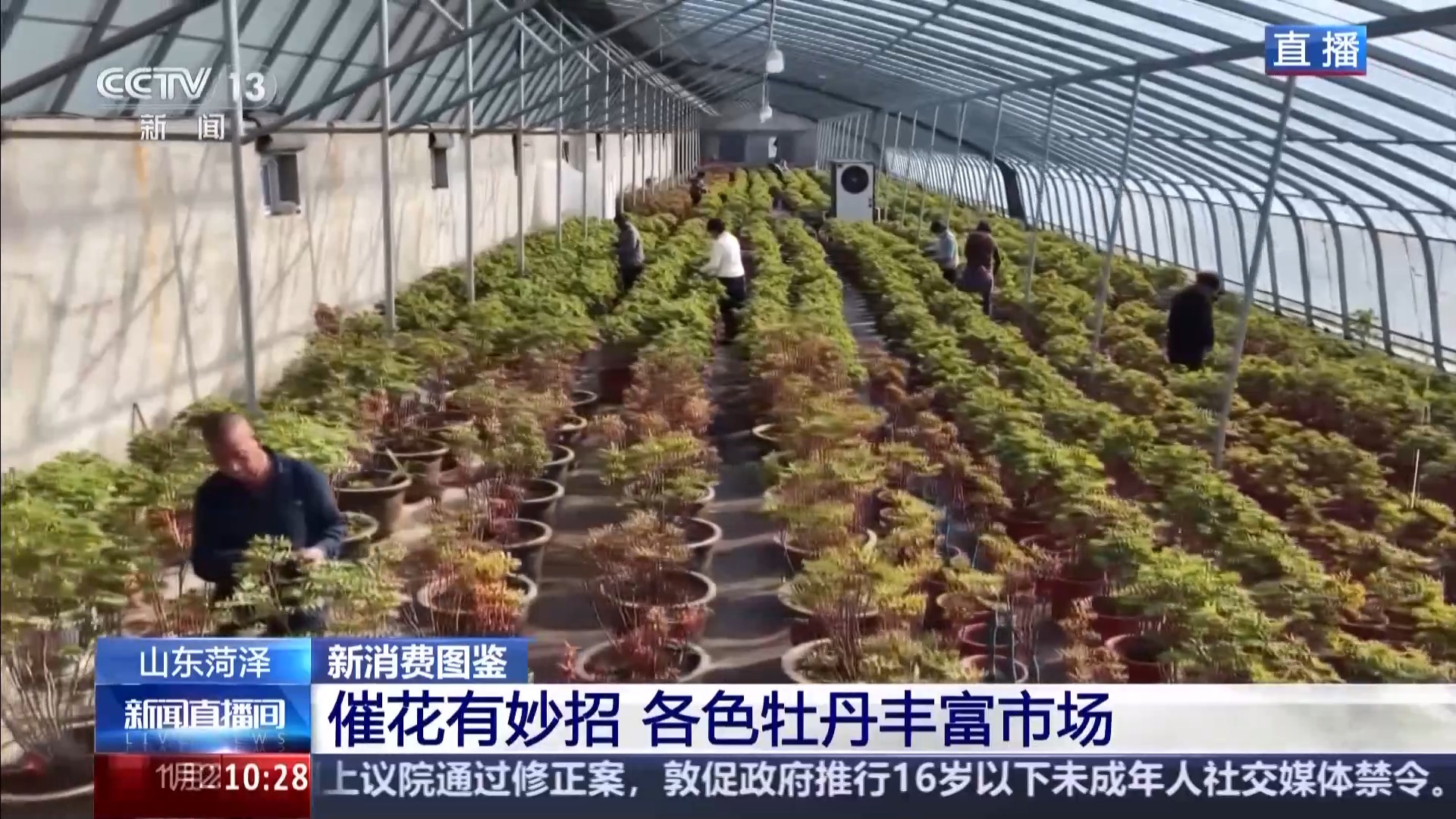
眼下,山东菏泽迎来了牡丹花的销售旺季。不少花农们通过催花技术,让牡丹的花期提前。那么怎样才能让牡丹提前绽放呢? 0:00 总台记者 李美慧:我现在就在菏泽皇镇街道王桥村的一个温室大棚里,身后就有一片生机勃勃的牡丹。今年,这里预计有2.5万盆催花牡丹上市,花农们已 经开始忙碌起来了。牡丹花因为有着富贵吉祥的美好寓意,得到很多人的喜爱。像我身旁这些紫二乔、乌龙捧盛,都很受大家欢迎。 我们把花买回家后,还有没有办法延长花期呢?我也跟花农们学了一些养护技巧。开花的时候,白天放在客厅赏花,晚上可以将它放在阳台等气温相对较低 的地方,形成昼夜温差;浇水的时候一次浇500毫升就足够,而且要避免叶片、花直接接触到水。 已经看到了牡丹花的风采,也学会了养护技巧,这些牡丹花从哪买呢?我身后就有一个直播间,工作人员可以现场给消费者展示牡丹的情况。 以前,花农要开着货车跑全国。现在,村里开了助农直播,从早上8点到晚上8点直播卖牡丹花,销售网络基本覆盖了国内所有城市,让整体销售额提升了 20%。 现在牡丹花也有了专属包装箱,快递员在大棚里现场打包。有人下单后,他们就能现场出单、打包、装车,实现了山东省内次日达,省外隔日达。 和已经盛开 ...
国色“添香” 牡丹花成村民“致富花”
Yang Shi Xin Wen Ke Hu Duan· 2026-01-23 12:21
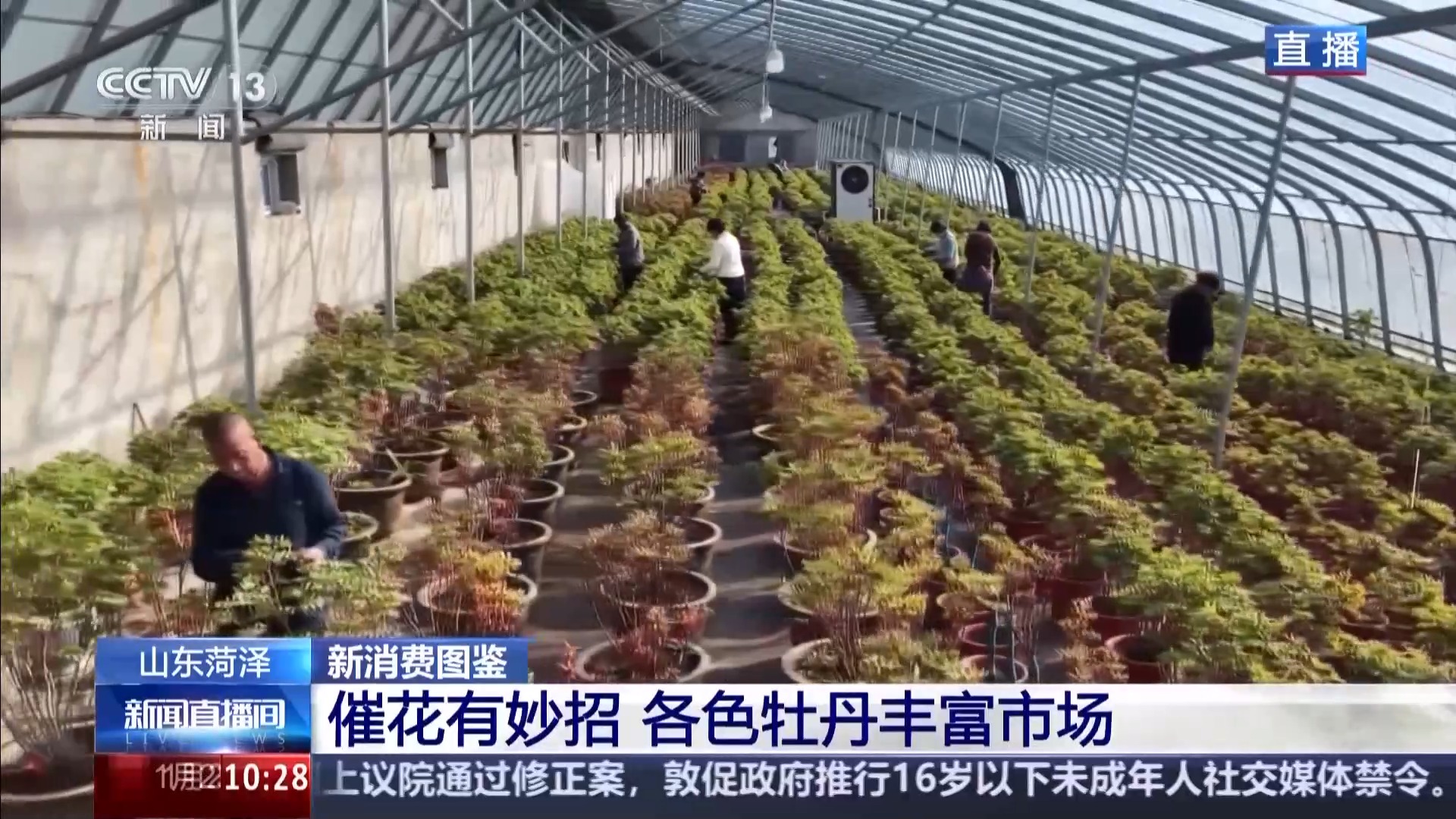
眼下,山东菏泽迎来了牡丹花的销售旺季。不少花农们通过催花技术,让牡丹的花期提前。那么怎样才能让牡丹提前绽放呢? 总台记者李美慧:我现在就在菏泽皇镇街道王桥村的一个温室大棚里,身后就有一片生机勃勃的牡丹。今年,这里预计有2.5万盆催花牡丹上市,花农们已 经开始忙碌起来了。牡丹花因为有着富贵吉祥的美好寓意,得到很多人的喜爱。像我身旁这些紫二乔、乌龙捧盛,都很受大家欢迎。 和已经盛开的花不一样,这片牡丹还都是花骨朵。这是因为牡丹的花期一般在4月份,想要让它在冬天开放,就需要通过控制温度、湿度来进行催花。温室 大棚就是为了给它模拟出春天的环境,一般安装有热泵,可以把棚内白天的温度控制在20℃左右,等花在大棚里生长50—60天,花苞长到三四厘米,就能上 市和消费者见面了。 我们来看这株花农刚从盆里拿出来的牡丹,大家能看到它白色的根系密密麻麻地缠绕在一起。这样有着发达根系的牡丹被称作"老盆"牡丹,因为它们提前1 —2年就在花盆里安家生长,根扎得更牢,能储备更多养分,让花期延长7—10天。 我们把花买回家后,还有没有办法延长花期呢?我也跟花农们学了一些养护技巧。开花的时候,白天放在客厅赏花,晚上可以将它放在阳台等气温相对较 ...
官宣:“娇龙”月季,正式命名
券商中国· 2026-01-23 12:10
Core Viewpoint - The article discusses the early termination of the naming activity for a new rose variety in Yunnan, which has been officially named "Jiao Long" in response to public enthusiasm and to honor the contributions of labor model He Jiao Long [1][2]. Group 1: Naming Activity - The naming activity for the new rose variety, identified as "China Core" (编号4815-27), was initiated on January 16, 2023, as part of a labor competition aimed at promoting the flower industry in Yunnan [1]. - The activity received a positive response from the public, with the name "Jiao Long" emerging as the clear favorite among suggestions [1]. - The decision to officially name the rose "Jiao Long" reflects both the flower's characteristics and the respect for He Jiao Long's dedication to rural development and labor spirit [1]. Group 2: Public Engagement - The announcement of the early termination of the naming activity and the official name was made public to ensure transparency and gather further opinions from the community [2]. - The public is encouraged to share their thoughts on various social media platforms, emphasizing the importance of community feedback in the naming process [2].