
黄酒

Search documents
青岛啤酒终止收购!即墨黄酒超1亿元股权被冻结成直接导火索?
Mei Ri Jing Ji Xin Wen· 2025-10-27 02:34
Core Viewpoint - Qingdao Beer announced the termination of its acquisition of Jimo Huangjiu due to unmet conditions in the share transfer agreement, following significant equity freezes affecting Jimo Huangjiu [1][2][4]. Group 1: Acquisition Details - Qingdao Beer planned to acquire 100% of Jimo Huangjiu, but the deal fell through after over five months due to unmet delivery conditions outlined in the share transfer agreement [2][4]. - The share transfer agreement stipulated that all major operations should continue normally without significant adverse changes during the transition period, which was not upheld [4][6]. - The agreement had a validity period of 120 days, which expired without the necessary conditions being met, leading to the automatic termination of the deal [4][6]. Group 2: Impact of Equity Freezes - Jimo Huangjiu faced over 100 million yuan in frozen equity, which was a critical factor in the acquisition's failure [2][3][6]. - The freezing of shares was executed against Jimo Huangjiu's major shareholders, which legally prevented the completion of the share transfer as per the original agreement [6][8]. - The equity freeze was described as the "biggest obstacle" to the acquisition, with the urgency of ST Xinhua Jin's situation also influencing the decision to terminate the deal [6][7]. Group 3: Consequences for Stakeholders - The termination of the acquisition is expected to have minimal impact on Qingdao Beer, as its core business remains focused on beer, with limited expectations from the Huangjiu segment [7]. - For Jimo Huangjiu, missing the opportunity to partner with Qingdao Beer is seen as a significant loss, as it would have provided essential resources and market experience [7][8]. - ST Xinhua Jin, which was relying on the 665 million yuan from the sale to address financial issues, now faces increased pressure and potential delisting risks due to the failed acquisition [8].



青岛啤酒终止收购 即墨黄酒100%股权
Zheng Quan Shi Bao· 2025-10-26 22:22
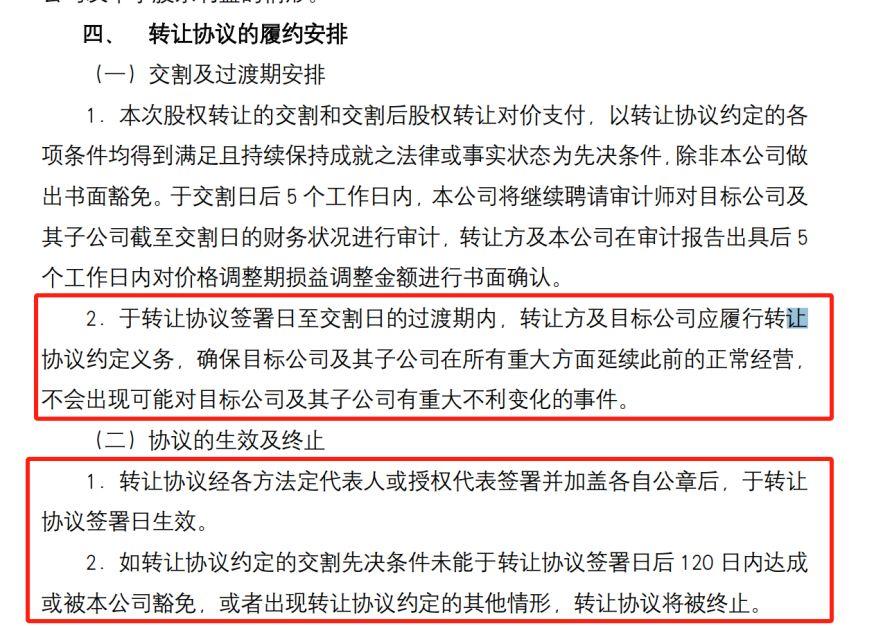
Core Viewpoint - Qingdao Beer has announced the termination of its planned acquisition of 100% equity in Jimo Yellow Wine Factory due to unmet conditions in the equity transfer agreement [1][2]. Group 1: Acquisition Details - The acquisition was first disclosed on May 7, with Qingdao Beer intending to purchase 100% of Jimo Yellow Wine from Xinhua Jin Group and Shandong Lujin Import and Export Group for a total price of 666 million yuan, plus adjustments for profit and loss during the price adjustment period [2]. - Jimo Yellow Wine, established in 1949, reported a main business income of 166 million yuan in 2024, a year-on-year increase of 13.5%, and a net profit of 30.47 million yuan, up 38% [2]. Group 2: Strategic Implications - The acquisition was seen as a way to diversify Qingdao Beer's business beyond beer, leveraging synergies in marketing, sales networks, and product lines within the fermented beverage sector [2]. - The complementary nature of beer and yellow wine sales was expected to create new growth opportunities while solidifying the company's market position [2]. Group 3: Termination Reasons - The termination was due to the failure to meet the preconditions for the equity transfer within 120 days post-agreement signing, particularly related to the financial difficulties faced by Xinhua Jin Group, which had its assets frozen by the court [3]. - Despite the termination, Qingdao Beer maintains a strong position in its core beer business, with a brand strategy that includes both Qingdao Beer and Laoshang Beer, and a continued increase in the proportion of high-end products [3].
股权交割先决条件未满足 青岛啤酒终止收购即墨黄酒100%股权
Zheng Quan Shi Bao Wang· 2025-10-26 11:47
Core Viewpoint - Qingdao Beer has announced the termination of its acquisition of 100% equity in Shandong Jimo Yellow Wine Factory due to unmet conditions in the share transfer agreement [2][3] Group 1: Acquisition Details - The acquisition was first disclosed on May 7, with Qingdao Beer planning to acquire 45.45% and 54.55% of Jimo Yellow Wine from Xinhua Jin Group and Shandong Lujin Import and Export Group, respectively, for a total price of 665 million yuan [2] - Jimo Yellow Wine, established in 1949, reported a main business income of 166 million yuan in 2024, a year-on-year increase of 13.5%, and a net profit of 30.47 million yuan, up 38% [2] Group 2: Strategic Implications - The acquisition was intended to diversify Qingdao Beer's non-beer business and enhance its product line, leveraging synergies in brand promotion and sales networks [3] - The complementary nature of both companies' products was expected to create new growth opportunities while solidifying market position [3] Group 3: Challenges Faced - Financial difficulties faced by Xinhua Jin Group, including multiple court freezes on its shares in Jimo Yellow Wine, were noted as potential factors leading to the acquisition's failure [4] - Xinhua Jin Group's ongoing issues with the return of 406 million yuan in non-operational funds further complicated the acquisition process [4] Group 4: Company Performance - Despite the termination of the acquisition, Qingdao Beer's core beer business remains strong, with a brand strategy that includes Qingdao Beer and Laoshang Beer as a national second brand [4] - In the first half of the year, Qingdao Beer achieved a revenue of 20.491 billion yuan, a year-on-year increase of 2.11%, and a net profit of 3.904 billion yuan, up 7.21% [5]
古越龙山:公司近年来积极推动黄酒文化传播和消费场景创新
Zheng Quan Ri Bao Zhi Sheng· 2025-10-16 13:13
Core Viewpoint - The company is actively promoting the culture of Huangjiu (yellow wine) and innovating consumption scenarios, with a focus on engaging younger consumers through various initiatives [1] Group 1: Cultural Promotion and Consumer Engagement - The company has established 65 tasting and slow wine houses globally to serve as important venues for spreading Huangjiu culture and connecting deeply with consumers [1] - The company participates in events such as the "7·9" festival, music festivals, and sports events, as well as conducting online live broadcasts to closely engage with younger consumer groups [1] Group 2: Product Development and Market Recognition - High-end products like "Guo Niang 1959" and "Qing Hua Zui" have received positive market recognition, contributing to the overall value recovery of Huangjiu [1] - The company plans to continue optimizing its product structure and enhancing brand value in the future [1]

古越龙山:目前公司暂无新的股份回购及大股东增持计划
Zheng Quan Ri Bao Wang· 2025-10-16 12:49
Core Viewpoint - The company, Guyue Longshan (600059), has stated that there are currently no new plans for share buybacks or major shareholder increases, and any future arrangements will be disclosed in a timely manner [1] Group 1 - The company responded to investor inquiries on October 16 regarding its current financial strategies [1] - There is an emphasis on transparency, with a commitment to fulfill information disclosure obligations if any new plans arise [1]
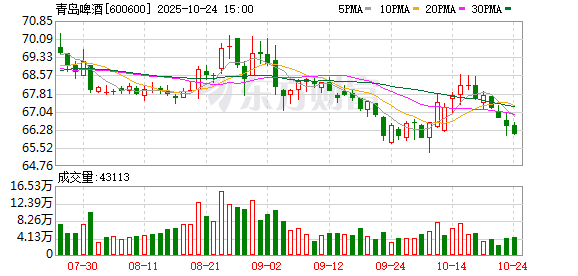
非白酒板块10月16日涨0.29%,古越龙山领涨,主力资金净流出1.29亿元
Zheng Xing Xing Ye Ri Bao· 2025-10-16 08:20
Market Overview - On October 16, the non-liquor sector rose by 0.29% compared to the previous trading day, with Guyue Longshan leading the gains [1] - The Shanghai Composite Index closed at 3916.23, up 0.1%, while the Shenzhen Component Index closed at 13086.41, down 0.25% [1] Stock Performance - Guyue Longshan (600059) closed at 10.35, up 3.92% with a trading volume of 362,400 shares and a turnover of 376 million yuan [1] - Kuaijishan (601579) closed at 24.85, up 3.41% with a trading volume of 364,700 shares and a turnover of 881 million yuan [1] - Other notable performers include *ST Yedao (600238) up 1.17%, Zhirun Co. (002568) up 0.48%, and Chongqing Beer (600132) up 0.22% [1] Capital Flow - The non-liquor sector experienced a net outflow of 129 million yuan from institutional investors, while retail investors saw a net inflow of 184 million yuan [2] - The table of capital flow indicates that *ST Yedao had a net inflow of 1.58 million yuan from institutional investors, while it faced a net outflow of 2.22 million yuan from retail investors [3] Individual Stock Analysis - *ST Yedao (600238) had a net inflow of 158,810 yuan from institutional investors, but a net outflow of 221,770 yuan from retail investors [3] - Mogaogufen (600543) saw a net inflow of 152,120 yuan from institutional investors, with a net outflow of 206,640 yuan from retail investors [3] - Chongqing Beer (600132) faced a net outflow of 652,000 yuan from institutional investors, while retail investors contributed a net inflow of 346,940 yuan [3]


上亿元股权被冻结,即墨黄酒“卖身”再添阻碍
2 1 Shi Ji Jing Ji Bao Dao· 2025-10-15 07:29
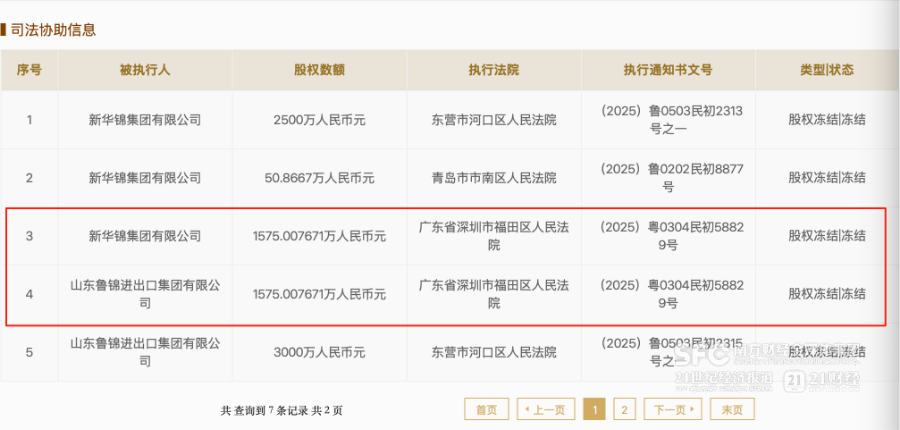
Core Viewpoint - The acquisition of Jimo Huangjiu by Qingdao Beer faces significant challenges due to the freezing of shares and financial difficulties of its shareholders, which may jeopardize the transaction and the financial stability of the involved parties [1][4][13]. Group 1: Shareholder Financial Issues - Jimo Huangjiu's shares worth approximately 15.75 million RMB have been frozen by the Shenzhen court, with the freezing period lasting until October 9, 2028 [1][3]. - This is the seventh instance of share freezing for Jimo Huangjiu, totaling around 127 million RMB in frozen shares within just over a month [3]. - The major shareholders, Xinhua Jin Group and Shandong Lujin Group, are facing severe financial issues, including a non-operational fund occupation of 406 million RMB by Xinhua Jin Group, which has led to its stock being marked as ST (special treatment) [4][8]. Group 2: Acquisition Challenges - Qingdao Beer proposed to acquire 100% of Jimo Huangjiu for 665 million RMB, which was seen as a high valuation given the market conditions [3][15]. - The acquisition is complicated by the fact that the receivables from Qingdao Beer have not yet been paid, and the agreement's validity period has lapsed [6][14]. - The financial instability of Xinhua Jin Group raises concerns about the completion of the acquisition and the potential for further delays due to ongoing legal and financial disputes [7][12]. Group 3: Market Context and Valuation - Jimo Huangjiu's projected revenue for 2024 is 166 million RMB, with a net profit of 30.47 million RMB, leading to a static price-to-earnings ratio of 21.8 times based on the acquisition price [14][15]. - Comparatively, leading brands in the yellow wine industry have significantly higher price-to-earnings ratios, indicating a competitive market environment [15]. - The acquisition is part of Qingdao Beer's strategy to diversify its product offerings and explore new growth avenues amid declining sales and revenue [17].
1个多月被冻结超1亿元股权,即墨黄酒6.65亿元“卖身”青岛啤酒受影响吗?
Mei Ri Jing Ji Xin Wen· 2025-10-14 11:45
Core Viewpoint - The recent freezing of approximately 15.75 million yuan in equity of Jimo Huangjiu raises uncertainties regarding its acquisition by Qingdao Beer, as the deal has not yet been finalized and significant amounts of equity have been frozen [2][4][5]. Group 1: Equity Freezing and Acquisition Status - Jimo Huangjiu has experienced over 100 million yuan in equity being frozen since September, with the latest freeze occurring on October 10, 2023, affecting its two major shareholders [3][4]. - Qingdao Beer announced a plan to acquire 100% of Jimo Huangjiu for 665 million yuan, but the payment has not yet been made, and the transaction remains incomplete [4][5]. - The freezing of equity is likely to impact the acquisition process, depending on the terms outlined in the acquisition agreement [4][5]. Group 2: Financial Implications for Shareholders - The major shareholders of Jimo Huangjiu, Xinhuajin Group and Shandong Lujin Group, are under pressure as the acquisition funds are critical for addressing financial obligations, particularly for ST Xinhuajin, which is linked to these shareholders [5][6]. - ST Xinhuajin has reported that funds owed to it by Xinhuajin Group and its affiliates amount to 406 million yuan, which they intend to recover through the proceeds from the Jimo Huangjiu sale [5][6]. - There is a looming risk of ST Xinhuajin facing delisting if it fails to recover the funds within the stipulated timeframe, further complicating the situation for all parties involved [6].
古越龙山(600059):黄酒行业步入结构性拐点 古越龙山三轮驱动价值重估在望
Xin Lang Cai Jing· 2025-10-07 10:27
Core Insights - The yellow wine industry in China is experiencing a structural turning point driven by five key factors: technological breakthroughs, brand value reassessment, channel reconstruction, policy empowerment, and generational change [1] Brand Development - The company leverages its core area advantages as "China's Yellow Wine Capital" to build a strong competitive barrier through a five-brand collaborative matrix, with "Guyue Longshan" as the high-end benchmark brand [1] - "Guyue Longshan" is the only yellow wine brand that holds the titles of "China Famous Trademark," "Chinese Time-honored Brand," and "Asia's Top 500 Brands," continuously supplying the state banquet at Diaoyutai since 1988 [1] - The brand system has undergone three advancements in the past decade, enhancing communication models, optimizing cross-border strategies, and deepening international operations [1] Product Strategy - The company is advancing both high-end and youth-oriented product lines, creating a diversified product matrix [2] - High-end products include "Guoniang 1959" and "Qinghua Zui" series, with successful launches like "Only This Green" leveraging popular cultural IPs [2] - Youth-oriented innovations include yellow wine ice cream, tea-wine fusion, and trendy experiences like coffee yellow wine and sparkling yellow wine [2] Channel Strategy - The company has restructured its channel system to create an efficient network, moving from a fragmented offline channel to a more organized structure [3] - The channel strategy focuses on the restaurant sector as the lead, with supermarkets and distribution channels as core drivers, while also exploring diverse channels like group buying and online sales [3] - The company is transitioning its marketing model from B2B to B2C, enhancing digital marketing and integrating online and offline sales [3] Market Outlook - The yellow wine market is expected to benefit from generational shifts and cultural changes that reshape alcohol consumption patterns [3] - The company aims to capture part of the social demand traditionally dominated by white liquor, leveraging its historical and cultural significance [3] Financial Projections - The company is currently in a critical phase of "quality investment for long-term premium," with expectations for gross margin improvement as national and high-end strategies progress [4] - Revenue projections for 2025 and 2026 are estimated at 2.05 billion and 2.21 billion yuan, respectively, with year-on-year growth rates of 5.7% and 7.8% [4] - Net profit forecasts for the same years are 223 million and 243 million yuan, with growth rates of 8.6% and 9.1% [4]
古越龙山:累计回购公司A股股份1375.21万股
Zheng Quan Ri Bao Zhi Sheng· 2025-09-30 12:13
(编辑 楚丽君) 证券日报网讯 9月30日晚间,古越龙山发布公告称,截至2025年9月30日,公司通过上海证券交易所交 易系统以集中竞价交易方式回购公司A股股份1375.21万股,已回购股份占公司总股本的比例为1.51%。 ...