
航空装备

Search documents
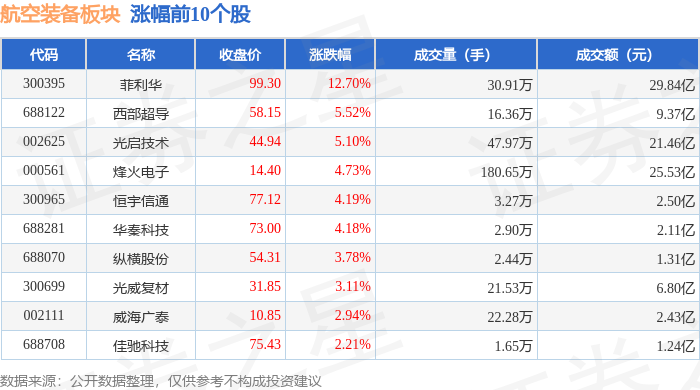
航空装备板块8月15日涨1.78%,菲利华领涨,主力资金净流出3.76亿元
Zheng Xing Xing Ye Ri Bao· 2025-08-15 08:44
| 代码 | 名称 | 收盘价 | 涨跌幅 | 成交量(手) | 成交额(元) | | --- | --- | --- | --- | --- | --- | | 600760 | 中航沈飞 | 59.71 | -0.23% | 31.64万 | 18.84亿 | | 600893 | 航发动力 | 39.44 | -0.13% | 25.50万 | 10.08亿 | | 300696 | 爰乐达 | 29.67 | -0.10% | 19.83万 | 5.88亿 | | 300719 | 安达维尔 | 18.70 | 0.05% | 6 9.27万 | 1.73亿 | | 600372 | 中航机载 | 12.29 | 0.08% | 31.58万 | 3.89亿 | | 688287 | *ST观曲 | 5.06 | 0.20% | 2.58万 | 1308.87万 | | 600316 | 洪都航空 | 41.54 | 0.24% | 13.65万 | 5.66亿 | | 000768 | 中航西飞 | 27.81 | 0.25% | 25.22万 | 2666.9 | | 688237 | 超卓航科 ...


多国六代战机研发正酣
Ke Ji Ri Bao· 2025-08-15 00:49
Core Viewpoint - The development of sixth-generation fighter jets, driven by AI technology, is reshaping future aerial combat and global strategic dynamics, with multiple countries racing to establish air superiority [1][4]. Group 1: Sixth-Generation Fighter Jet Development - The U.S. government has selected Boeing to produce the "Next Generation Air Dominance" fighter, which is touted to be the most advanced and lethal aircraft ever [1]. - Countries like the UK, Italy, and Japan are collaborating on the "Tempest" project, aiming for its first flight by 2035, while France, Germany, and Spain are leading the "Future Combat Air System" expected to be deployed by 2040 [1][4]. - The sixth-generation fighter jets will redefine aerial combat rules and significantly alter the global strategic landscape [1]. Group 2: Technological Advancements - The sixth-generation fighter jets will feature a significant increase in size compared to current fifth-generation jets, driven by the need for enhanced stealth capabilities and internal weapon storage [2]. - Key competitive advantages of sixth-generation jets will include supersonic cruise capability, omnidirectional stealth, and extended operational range, with the "Tempest" expected to carry twice the weapon load of the F-35 [2][3]. Group 3: AI Integration and Cloud Warfare - Sixth-generation jets are described as "flying supercomputers," capable of processing vast amounts of data in real-time and sharing information across military units via satellite data links [3]. - The integration of AI systems is a hallmark of sixth-generation fighters, promising to enhance overall efficiency and reshape future aerial combat through a "cloud warfare" model [3]. Group 4: Global Competition and Strategic Goals - The U.S. has officially named its sixth-generation fighter as the F-47, which emphasizes modular design, directed energy weapon integration, advanced stealth, and AI-assisted operations, with an expected service entry by 2030 [4]. - In Europe, the FCAS aims to combine manned and unmanned systems for a new air superiority paradigm, with deployment expected by 2040 [4]. - Russia's MiG-41 is projected to achieve speeds of 4-5 Mach and is expected to enter service by 2028 [5]. Group 5: Challenges in Development - The development of sixth-generation fighters requires the integration of multiple advanced technologies, including AI and stealth, into a multi-domain combat platform [6][7]. - A significant challenge is the development of robust AI systems for autonomous combat decision-making, with debates ongoing about the necessity of retaining a pilot's cockpit [7]. - Balancing performance with cost is critical, as projects like the F-47 may exceed initial contracts of $20 billion, with total costs potentially reaching hundreds of billions [7].
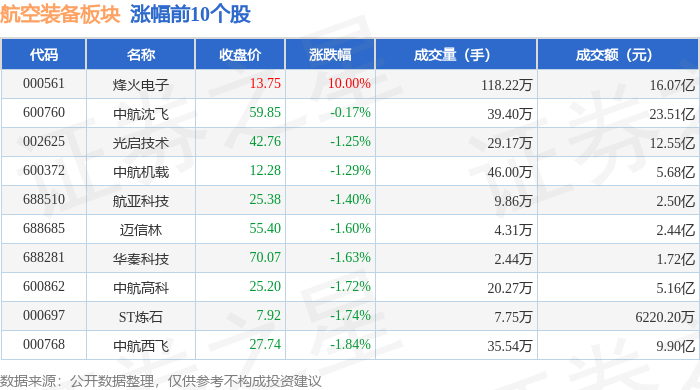
航空装备板块8月14日跌2.08%,恒宇信通领跌,主力资金净流出26.24亿元
Zheng Xing Xing Ye Ri Bao· 2025-08-14 08:34
Market Overview - The aviation equipment sector experienced a decline of 2.08% on August 14, with Hengyu Xintong leading the drop [1] - The Shanghai Composite Index closed at 3666.44, down 0.46%, while the Shenzhen Component Index closed at 11451.43, down 0.87% [1] Stock Performance - Key stocks in the aviation equipment sector showed mixed performance, with Huohuo Electronics rising by 10.00% to a closing price of 13.75 [1] - Hengyu Xintong saw a significant decline of 8.95%, closing at 74.02 [2] - Other notable declines included Jiachi Technology (-6.71%), Aileida (-6.57%), and Lijun Co. (-6.50%) [2] Trading Volume and Capital Flow - The aviation equipment sector saw a net outflow of 2.624 billion yuan from main funds, while retail investors contributed a net inflow of 2.052 billion yuan [2][3] - The trading volume for Huohuo Electronics reached 1.1822 million hands, with a transaction amount of 1.607 billion yuan [1] Individual Stock Capital Flow - Huohuo Electronics had a net inflow of 85.27 million yuan from main funds, while retail investors contributed a net inflow of 12.31 million yuan [3] - Conversely, ST Lihang experienced a net outflow of 7.34 million yuan from main funds, with retail investors contributing a net inflow of 4.42 million yuan [3]


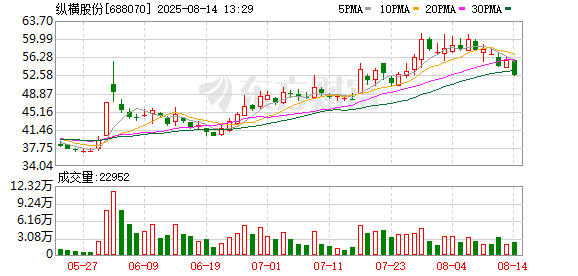
低空经济板块显著回调 纵横股份跌5.19%
Mei Ri Jing Ji Xin Wen· 2025-08-14 05:29
Group 1 - The low-altitude economy sector experienced a decline, with a drop of 2.02% in the afternoon trading session [2] - Specific companies within this sector saw significant losses, including Zongheng Co., which fell by 5.19%, Aerospace Morning Light down by 4.70%, and *ST New Research decreasing by 4.49% [2] - Other companies also faced declines, such as Aerospace Electronics down by 4.15% and Northern Navigation dropping by 4.30% [2]


上市公司“并购重组与做强做大做优”——北京上市公司协会组织上市公司走进中航机载
Zheng Quan Shi Bao Wang· 2025-08-13 09:29
Group 1 - The event organized by the Beijing Listed Companies Association focused on "mergers and acquisitions (M&A) and strengthening, expanding, and optimizing" as a key theme [1] - The event included a visit to the China Aviation Industry Museum, highlighting the history and technological innovations of China's aviation industry [1] - The Secretary-General of the Association emphasized the importance of M&A in resource optimization, market restructuring, and driving innovation [1] Group 2 - AVIC On-Board Systems aims to become a world-class supplier of aviation onboard systems, consolidating its leading position in the domestic market while expanding into the low-altitude economy [2] - Experts discussed the transformative impact of the low-altitude economy on the aviation industry and the expected changes in the industry landscape during the 14th Five-Year Plan [2] - The company shared its experiences in M&A, focusing on professional integration and promoting high-quality development through strategic acquisitions [2] Group 3 - Attendees actively shared their experiences and challenges in M&A, discussing issues such as cultural integration and financial consolidation [3] - The discussions included considerations of market conditions and industry trends, as well as strategies to enhance innovation through M&A [3] - The Secretary-General concluded the event by expressing gratitude and emphasizing the Association's commitment to providing more platforms for learning and exchange among listed companies [3]

中航机载连跌5天,华泰柏瑞基金旗下1只基金位列前十大股东
Sou Hu Cai Jing· 2025-08-13 09:28
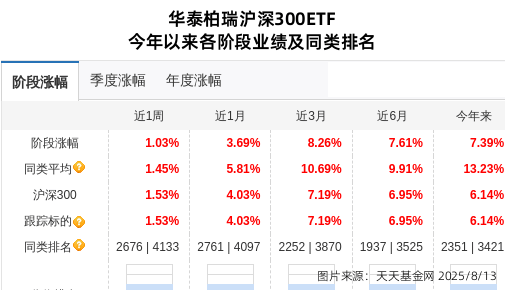
Group 1 - The core point of the news is that AVIC Aircraft Systems Co., Ltd. has experienced a decline in stock price over five consecutive trading days, with a cumulative drop of -2.58% [1] - AVIC Aircraft provides various aviation electronic systems, including flight control systems, radar systems, and integrated data management systems, and is a leading manufacturer in China [1] - The company supplies system-level products to numerous domestic and international aircraft manufacturers and other military product platforms [1] Group 2 - Huatai-PineBridge's Huatai-PineBridge CSI 300 ETF is among the top ten shareholders of AVIC Aircraft, having reduced its holdings in the second quarter of this year [2] - The fund has achieved a year-to-date return of 7.39%, ranking 2351 out of 3421 in its category [2] - The performance of the fund over various periods shows a near-term increase of 1.03% over the past week and 8.26% year-to-date, but it lags behind the average of its peers [3] Group 3 - The fund manager of Huatai-PineBridge CSI 300 ETF is Liu Jun, who has extensive experience in fund management and has been with Huatai-PineBridge since 2004 [4][5] - Liu Jun has managed multiple funds and has a cumulative tenure of over 16 years, with a notable return of 147.39% on assets under management totaling 466.984 billion [5]
洪都航空连跌5天,交银施罗德基金旗下2只基金位列前十大股东
Sou Hu Cai Jing· 2025-08-13 09:28
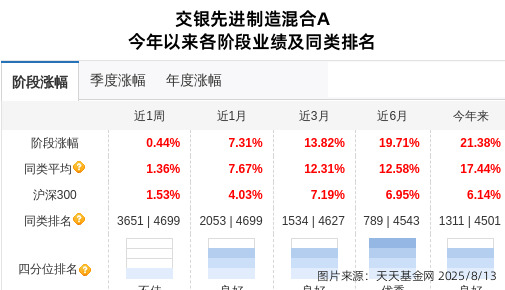
Group 1 - Hongdu Aviation has experienced a decline for five consecutive trading days, with a cumulative drop of -6.39% [1] - Jiangxi Hongdu Aviation Industry Co., Ltd. was established on December 16, 1999, initiated by Jiangxi Hongdu Aviation Industry (Group) Co., Ltd. along with four other enterprises [1] - Two funds under China Merchants Jinling Fund Management, namely the China Merchants Advanced Manufacturing Mixed A and China Merchants Balanced Growth One-Year Mixed A, have entered the top ten shareholders of Hongdu Aviation [1] Group 2 - The China Merchants Advanced Manufacturing Mixed A fund has recorded a year-to-date return of 21.38%, ranking 1311 out of 4501 in its category [1] - The China Merchants Balanced Growth One-Year Mixed A fund has achieved a year-to-date return of 21.63%, ranking 1282 out of 4501 in its category [1] - Both funds are managed by Liu Peng, who has been with China Merchants Jinling Fund Management since June 2014 and has served as the fund manager since May 29, 2018 [4][5]

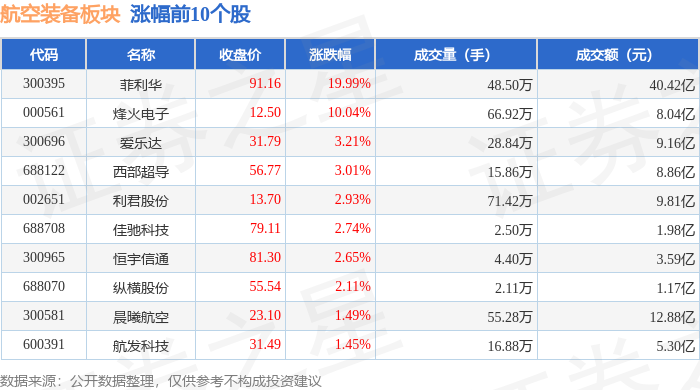
航空装备板块8月13日涨1.02%,菲利华领涨,主力资金净流出3.97亿元
Zheng Xing Xing Ye Ri Bao· 2025-08-13 08:41
Group 1 - The aviation equipment sector rose by 1.02% on August 13, with Filihua leading the gains [1] - The Shanghai Composite Index closed at 3683.46, up 0.48%, while the Shenzhen Component Index closed at 11551.36, up 1.76% [1] - Filihua's stock price increased by 19.99% to 91.16, with a trading volume of 485,000 shares [1] Group 2 - The aviation equipment sector experienced a net outflow of 397 million yuan from institutional investors, while retail investors saw a net inflow of 375 million yuan [2] - The top gainers in the sector included Fenghuo Electronics, which rose by 10.04% to 12.50, and Aileda, which increased by 3.21% to 31.79 [1][2] - The overall trading volume for the aviation equipment sector was significant, with Fenghuo Electronics achieving a transaction value of 804 million yuan [1] Group 3 - Filihua had a net inflow of 560 million yuan from institutional investors, while retail investors had a net outflow of 533 million yuan [3] - The net inflow for Lijun Co. was 37.94 million yuan, with a net outflow of 28.98 million yuan from retail investors [3] - The trading activity showed mixed results, with some stocks like Aileda experiencing both inflows and outflows from different investor types [3]
洪都航空:九三阅兵是国家国防力量的一次大检阅,洪都必不会缺席
Ge Long Hui· 2025-08-13 07:57
格隆汇8月13日丨洪都航空(600316.SH)在互动平台表示,九三阅兵是国家国防力量的一次大检阅,洪都 必不会缺席。至于细节,无法"剧透",敬请期待。 ...
长城军工再度涨停,航空航天ETF天弘(159241)昨日“吸金”超3100万元居同标的第一,机构:Q3军工行业催化剂有望增多
2 1 Shi Ji Jing Ji Bao Dao· 2025-08-13 06:09
Group 1 - The military industry sector is experiencing a strong performance, with the aerospace ETF Tianhong (159241) rising by 0.74% and achieving a trading volume exceeding 760 million yuan, indicating active premium trading [1] - Among the constituent stocks, Changcheng Military Industry has hit the daily limit, achieving 10 gains in 7 trading days, with other stocks like Inner Mongolia First Machinery, Hailanxin, Zhongbing Hongjian, and Beifang Navigation also seeing increases [1] - The aerospace ETF Tianhong (159241) has attracted a net inflow of 31.63 million yuan yesterday, ranking first among similar products, and has seen a cumulative net inflow exceeding 67 million yuan over the past four trading days [1] Group 2 - The National Aerospace Index, closely tracked by the aerospace ETF Tianhong, has a significant weight of nearly 98% in the defense military industry, making it the highest military content index in the market [1] - The National Aerospace Index has a high "aerospace content," with the two core sectors of aviation equipment and aerospace equipment accounting for nearly 67% of its weight, focusing on key areas in the aerospace equipment industry chain such as large aircraft manufacturing, low-altitude economy, and commercial aerospace [1] - Short-term catalysts for the military industry are expected to increase in Q3, coupled with positive earnings expectations for some companies in Q2, indicating structural opportunities [1]
