
Funds

Search documents
千亿公募董事长变更!年内100家基金公司高管变动
券商中国· 2025-07-17 01:28
Core Viewpoint - The article discusses the recent change in leadership at Zhongjia Fund, highlighting the implications of frequent executive turnover in the public fund industry and its potential impact on governance and strategic implementation [2][3][9]. Group 1: Leadership Change at Zhongjia Fund - On July 16, Zhongjia Fund announced that Yang Lin succeeded Xia Yuanyang as the chairman, marking the fourth chairman since the fund's establishment in 2013 [2][4]. - Yang Lin, who has a background in Beijing Bank, holds master's degrees from The Chinese University of Hong Kong and Northwestern University, and has held various positions in financial institutions [4][5]. - Xia Yuanyang served as chairman for 2 years and 5 months, the shortest tenure among the four chairmen [6]. Group 2: Executive Turnover in the Fund Industry - As of July 16, 224 executives have changed in the public fund industry this year, involving 100 fund companies, with 49 chairmen and 48 general managers among those changes [3][7]. - The turnover includes cases of retirement due to age, but a significant portion involves smaller public funds experiencing simultaneous departures of key executives [3][9]. - The article notes that high executive turnover can affect the implementation of company strategies and internal governance, emphasizing the need for stable governance structures [3][11]. Group 3: Governance and Stability - The stability of core executives in fund companies is closely linked to internal governance levels, with larger funds experiencing changes that align with strategic decisions from major shareholders [9][10]. - In contrast, smaller funds often face significant operational shifts due to changes in leadership, which can stem from performance pressures and governance instability [10][11]. - The China Securities Regulatory Commission has emphasized the importance of revising governance guidelines to enhance the effectiveness of fund management and protect investors' interests [11].


国泰海通 · 深度|固收:科创债ETF如何投:投资价值和优选策略
国泰海通证券研究· 2025-07-16 12:39
Core Viewpoint - The rapid expansion of the Sci-Tech bond market is expected to continue, driven by policy incentives and the introduction of new financial products like the Sci-Tech bond ETFs, which will enhance the market's ability to support technological innovation [4][7][28]. Group 1: Development Stages of Sci-Tech Bonds - The development of the Sci-Tech bond market has gone through three main stages: 1) The Double Innovation Bond stage (2015-2021), 2) The Sci-Tech Bond stage (2022-2025), and 3) The Debt Market Sci-Tech Board stage (from May 2025) [4][9][18]. - The cumulative issuance of new Sci-Tech bonds has exceeded 585 billion yuan as of June 2025, accounting for nearly 50% of the expected total issuance for 2024 [4][19]. - The current Sci-Tech bond stage (3.0) is characterized by a policy shift that enhances market access and credit quality, with a significant increase in the issuance of bonds from private enterprises [4][21]. Group 2: Introduction of Sci-Tech Bond ETFs - The first batch of 10 Sci-Tech bond ETFs was successfully raised, with a total initial funding of approximately 29 billion yuan, indicating strong market interest [5][28]. - These ETFs track high-rated public Sci-Tech bonds and are expected to enhance the liquidity and attractiveness of the bond market [5][29]. - The average duration of the indices tracked by these ETFs is around 3.75 to 3.81 years, with a total sample bond balance exceeding 1 trillion yuan [5][30]. Group 3: Market Dynamics and Future Outlook - The short-term market dynamics, including a "抢券" (coupon-snatching) phenomenon, are favorable for the issuance and expansion of these products, while long-term growth will depend on sustained policy support [7][51]. - The proportion of private enterprises in the newly issued Sci-Tech bonds has increased to 9.2%, up from 3.7% in previous issuances, reflecting a positive trend towards diversification in the bond market [21][26]. - The average remaining maturity of newly issued Sci-Tech bonds is concentrated in the short to medium term, with about 60% having a remaining term of 1-3 years [26][35].

中证A500ETF争夺战:国泰基金降百亿,华泰柏瑞登顶
Nan Fang Du Shi Bao· 2025-07-16 11:03
Group 1 - The ETF market has reached a scale of 4.39 trillion yuan as of July 15, 2023, an increase of 661 billion yuan from the end of last year, marking a growth rate of 17.7% [2][3] - The main categories attracting investment this year are bond, cross-border, and gold ETFs, with significant inflows into related sectors such as robotics and innovative pharmaceuticals [2][5] - The number of newly established ETFs has reached 200, with a total issuance of 131 billion shares, surpassing the total scale of the previous year [8] Group 2 - Among the various types of ETFs, stock ETFs dominate the market, accounting for 80.08% of the total number and 72.44% of the total shares issued [4] - Bond ETFs have seen a remarkable increase, with a market scale of 400.61 billion yuan, up 130.3% from the end of last year, making them the largest "dark horse" in the ETF category [5] - The cross-border ETFs have also grown significantly, with an increase of 177.82 billion yuan since the end of last year, second only to bond ETFs [6] Group 3 - The CSI A500 ETF has experienced the largest decline in market scale this year, dropping over 60 billion yuan, making it the "blood loss king" among ETFs [8][11] - The competition landscape for the CSI A500 ETF has changed, with Huatai-PB's CSI A500 ETF rising to the top with a scale of 179.6 billion yuan, while Guotai's CSI A500 ETF has fallen to 176 billion yuan [11][12] - The performance of various thematic ETFs related to technology, such as robotics and artificial intelligence, has also been strong, with significant inflows exceeding 100 billion yuan [7][8]

网传博时基金薪酬数据疑泄露,知情人士:已报警,数据不实
Nan Fang Du Shi Bao· 2025-07-16 10:02
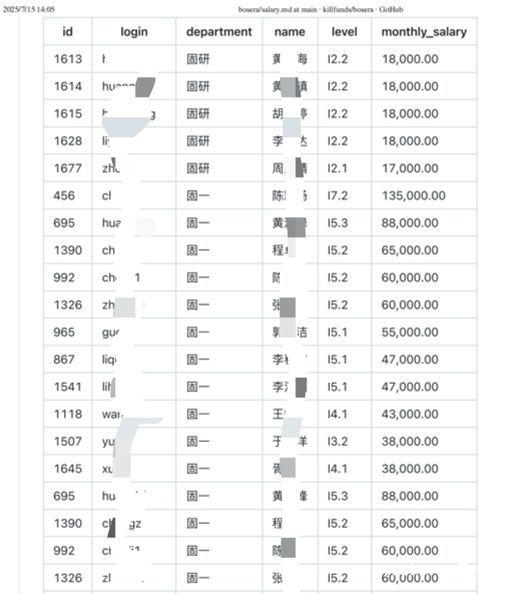
针对上述网传信息,南都·湾财社记者联系博时基金进行求证,截至发稿,公司尚未对此事作出正式回 应。不过,一位接近博时基金的知情人士向南都·湾财社记者透露,网传数据不实,不符合实际情况, 且涉及员工隐私及商业机密,目前博时基金已就此事向警方报案,相关情况正在进一步处理中。 | 25/7/1514:05 | | | | | | boseral salary md at main - killfunds/bosera · GifHab | | | --- | --- | --- | --- | --- | --- | --- | --- | | id | | login | department | name | | level | monthly_salary | | 1613 | 1 | | 圆研 | 或 | 舞 | 12.2 | 18,000.00 | | 1614 | huna | | 图 研 | 双 | 14 | 12.2 | 18,000.00 | | 1615 | 7 | 3 | 图研 | ਸੰਬ | -02 | 12.2 | 18,000.00 | | 1628 | lir | | 图研 | 李 | ...
债市专题研究:如何看待债券ETF持续扩容?
ZHESHANG SECURITIES· 2025-07-16 09:14
1. Report Industry Investment Rating The document does not provide the industry investment rating. 2. Core Viewpoints of the Report - The report details the development of domestic bond ETFs, liquidity analysis of bond - making varieties in the Shanghai and Shenzhen stock exchanges, and the investment application of bond ETFs [1]. - The scale of bond ETFs has expanded rapidly in the past year, exceeding 40 billion yuan for the first time. As of July 15, 2025, bond ETFs are mainly divided into interest - rate bond ETFs, credit - bond ETFs, and convertible - bond ETFs [1][11]. - Since July 10, 2025, 10 science - innovation bond ETFs have been established. The share of ETFs linked to the CSI Convertible Bond and Exchangeable Bond Index has increased the most, and the trading volume of CSI short - term financing - related ETFs has been the most active [2][17]. - Bond ETFs have asset - allocation and trading attributes. Their trading is more flexible, efficient, and leveraged, with high information transparency. The main strategies include primary - secondary market price arbitrage, intraday T + 0 trading, and pledge - repurchase leveraging [3]. 3. Summary by Relevant Catalogs 3.1 What are Bond ETFs? - **Domestic Bond ETF Overview**: In the past year, the scale of domestic bond ETFs has developed significantly, exceeding 40 billion yuan, but the variety is still single. As of July 15, 2025, there are 16 interest - rate bond ETFs, and 15 bond ETFs have a scale of over 1 billion yuan. The top five in scale are Fuguo Policy Financial Bond ETF, Haifutong Short - term Financing ETF, Boshi Convertible Bond ETF, E Fund Company Bond ETF, and Southern Shanghai Stock Exchange Company Bond ETF. Since July 10, 2025, 10 science - innovation bond ETFs have been established [11][15][16]. - **Recent Performance Tracking of Bond ETFs**: In terms of share changes, the share of ETFs linked to the CSI Convertible Bond and Exchangeable Bond Index has increased the most. In terms of share change rate, the share of ETFs with the Shanghai 30 - year Treasury Bond Index as the underlying index has increased by about 15 million shares (+21.74%). In terms of trading activity, CSI short - term financing - related ETFs have the most active trading volume [17]. 3.2 Exchange Bond Liquidity Analysis - Overall, the trading volume and liquidity of bonds on the Shanghai Stock Exchange are better than those on the Shenzhen Stock Exchange [19]. - **Shanghai Stock Exchange Interest - Rate Bond Market - Making Varieties**: In the past month, among the interest - rate bond market - making varieties on the Shanghai Stock Exchange, those maturing within 3 years have the most active trading volume, followed by those maturing within 3 - 5 years. The liquidity is negatively correlated with the standard term [20]. - **Shanghai Stock Exchange Credit - Bond Market - Making Varieties**: Among the credit - bond market - making varieties on the Shanghai Stock Exchange in the past month, those maturing over 10 years have the most active liquidity, followed by those maturing within 3 years [22]. - **Shenzhen Stock Exchange Interest - Rate Bond Market - Making Varieties**: Among the interest - rate bond market - making varieties on the Shenzhen Stock Exchange in the past month, the average trading volume of varieties maturing within 3 years is the highest, followed by those maturing over 10 years [23]. - **Shenzhen Stock Exchange Credit - Bond Market - Making Varieties**: Among all the credit - bond market - making varieties on the Shenzhen Stock Exchange in the past month, the varieties maturing within 3 - 5 years have the highest turnover rate, followed by those maturing over 10 years [24]. 3.3 Investment Application of Bond ETFs - Bond ETFs have the functions of asset allocation and trend trading. Compared with ordinary over - the - counter bond index funds, they have additional investment strategies [25]. - **Investment Strategies**: Asset allocation (holding strategy), trend (band operation), arbitrage strategy (discount - premium), arbitrage (spot - futures arbitrage), dividend strategy, event - driven strategy, intraday T + 0 strategy, and leverage strategy [27]. - **Advantages**: Primary - secondary market price arbitrage, intraday T + 0 trading, and the ability to use pledge - repurchase to add leverage [28].

基金圈S级事故:传博时基金工资库遭泄露,固收部年终奖高达600万元
Sou Hu Cai Jing· 2025-07-16 08:02
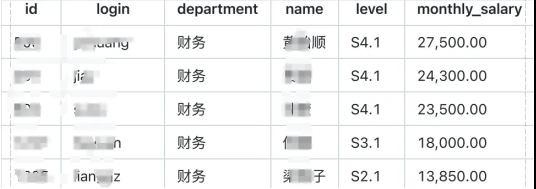
根据公开资料,陈凯杨是公募基金老将,从业20年,投资经理年限是14年,拿过中国证券报的金牛奖、 中国基金报的英华奖、证券时报的明星基金奖。 陈凯杨职位是MD级别的董事总经理兼固收部公募组投资负责人,博时基金的固收业务,主要负责中长 债基,2022年管理规模约200亿左右。 (公司研究室 曲奇) 近日,一份疑似博时基金的工资单在网上被疯传,博时基金公司内部的工号、部门、姓名、职级、薪酬 等信息被泄露。 从曝光内容来看,涉及从固收、权益到财务、信息等部门数十名员工的工号、姓名、职级、月薪等情 况,其中月薪最高为13.5万元。 | id | login | department | | name | level | monthly_salary | | --- | --- | --- | --- | --- | --- | --- | | 5 | raally | 财务 | | 声 当顺 | S4.1 | 27,500.00 | | 1 | 112 | 财务 | | 11 | S4.1 | 24,300.00 | | - | | 财务 | | 11 82 | S4.1 | 23,500.00 | | | 10 | ...

25只新型浮动费率基金成立,募集规模近250亿元
news flash· 2025-07-16 07:16
Group 1 - Huashang Fund announced the establishment of Huashang Zhiyuan Return Mixed Fund with a fundraising scale of 2.082 billion [1] - As of July 16, a total of 25 new floating fee rate funds have been established in the market, with a total fundraising scale of 24.764 billion [1]
最高月薪13.5万、年终奖610万元,万亿基金公司员工数据疑似泄露!公司回应:已第一时间报警,数据不实
Sou Hu Cai Jing· 2025-07-16 06:42
Core Viewpoint - A potential data leak involving employee salary information at Bosera Asset Management has raised concerns about information security within the public fund industry [1][2]. Group 1: Incident Details - The leaked data includes employee identification numbers, names, positions, and monthly salaries, with the highest monthly salary reported at 135,000 yuan [1]. - A leaked image also detailed year-end bonuses for employees, with the highest bonus reaching 6.1 million yuan and the lowest at 490,000 yuan [1]. - Bosera Asset Management has stated that the leaked data is inaccurate and does not reflect actual circumstances, and the company has reported the incident to the police for further investigation [2]. Group 2: Industry Reactions - Industry insiders suggest that the leaked data may be outdated, as some employees mentioned in the leak have already left the company [2]. - The incident has prompted discussions about the sensitivity of employee salary information and the need for robust data security measures within companies [3]. Group 3: Company Profile - As of the end of Q2 2023, Bosera Asset Management had an asset management scale of 1,072.542 billion yuan, ranking sixth in the industry, with a total of 386 fund products [3].

20cm速递|科创创业ETF(588360)涨超1.1%,科技板块估值分化或存结构性机会
Mei Ri Jing Ji Xin Wen· 2025-07-16 04:32
Group 1 - The core viewpoint of the article highlights the deepening reform details of the Sci-Tech Innovation Board, which address the pain points of listing for tech companies and enhance the capital market's inclusivity and adaptability towards technological innovation and new productive forces [1] - The reform clarifies the delisting standards for the Sci-Tech Growth Layer, implementing a "new and old distinction" for existing unprofitable companies, while the delisting conditions for newly registered companies are raised to meet the first set of listing standards of the Sci-Tech Innovation Board [1] - As of July 14, 13 unprofitable companies are already in the IPO queue, indicating an expected increase in unprofitable tech companies applying for IPOs following the reform [1] Group 2 - The reform encourages experienced institutional investors to participate, requiring them to have rich investment experience and long-term holding capabilities to better identify growth potential companies [1] - The pre-review mechanism is expected to enhance review efficiency, potentially shortening the review cycle and attracting more tech companies to apply for IPOs on the Sci-Tech Innovation Board [1] - The Sci-Tech Innovation and Entrepreneurship ETF tracks the Sci-Tech Innovation and Entrepreneurship 50 Index, which can have a daily fluctuation of up to 20%, reflecting the overall performance of listed companies in China's tech innovation sector [1]

格林中短债A,格林中短债C: 格林中短债债券型证券投资基金2025年第2季度报告
Zheng Quan Zhi Xing· 2025-07-16 02:52
格林中短债债券型证券投资基金 基金管理人:格林基金管理有限公司 基金托管人:兴业银行股份有限公司 报告送出日期:2025年07月16日 §1 重要提示 基金管理人的董事会及董事保证本报告所载资料不存在虚假记载、误导性陈述或 重大遗漏,并对其内容的真实性、准确性和完整性承担个别及连带责任。 基金托管人兴业银行股份有限公司根据基金合同约定,于2025年7月15日复核了 本报告中的财务指标、净值表现和投资组合报告等内容,保证复核内容不存在虚假记 载、误导性陈述或者重大遗漏。 基金管理人承诺以诚实信用、勤勉尽责的原则管理和运用基金资产,但不保证基 金一定盈利。 基金的过往业绩并不代表其未来表现。投资有风险,投资者在作出投资决策前应 仔细阅读本基金的招募说明书。 本报告中财务资料未经审计。 本报告期自2025年4月1日起至2025年6月30日止。 | §2 | 基金产品概况 | | | --- | --- | --- | | 基金简称 | 格林中短债 | | | 基金主代码 | 010145 | | | 基金运作方式 | 契约型开放式 | | | 基金合同生效日 | 2020年10月28日 | | | 报告期末基金份额 ...