
数字金融

Search documents
华检医疗(01931.HK)与ETHK共同投资成立两家合资公司 透过"ETHK"核心品牌深化全球链上金融生态战略布局
Ge Long Hui· 2025-09-14 10:22
Core Viewpoint - The company has entered into a partnership with ETHK Group to establish two new companies, ETHK Inc and ETHK HOLDINGS LIMITED, which will be incorporated into the company's consolidated financial statements [1][2]. Group 1: Company Overview - ETHK Group is an investment holding group focused on the global blockchain financial ecosystem, aiming to build the next-generation blockchain financial kingdom named "ETHK" [1]. - ETHK Inc will focus on operating and developing the "ETHK" core brand, aiming to create a secure, efficient, compliant, and open decentralized financial platform [1]. - ETHK HOLDINGS LIMITED will serve as a central hub for digital industry investment and mergers, focusing on asset completion, capital activation, and compliance strengthening [2]. Group 2: Strategic Goals - The partnership aligns with the group's strategy to build a Real World Asset (RWA) platform technology ecosystem and explore blockchain finance [3]. - The initiative aims to expand from focusing on RWA transactions to a comprehensive blockchain financial ecosystem that includes technology infrastructure, asset categories, business models, and global compliance [3]. - The group aims to participate in and lead the process of "on-chain" integration of quality Chinese assets and efficient global asset circulation, creating a new long-term growth trajectory [3].
华检医疗(01931)设立合资公司 透过“ETHK”核心品牌深化全球链上金融生态战略布局
智通财经网· 2025-09-14 10:20
Core Viewpoint - The company has entered into a partnership with ETHK Group to establish two new companies, ETHK Inc and ETHK HOLDINGS LIMITED, which will become subsidiaries and be included in the group's consolidated financial statements [1][2] Group 1: Company Overview - ETHK Inc will focus on operating and developing the "ETHK" core brand, aiming to create a safe, efficient, compliant, and open decentralized financial platform through technological innovation and ecosystem integration [1] - ETHK HOLDINGS LIMITED will serve as a digital industry investment and acquisition hub, strategically focusing on asset completion, capital activation, and compliance strengthening [1] Group 2: Strategic Goals - The strategy involves a three-pronged approach of "assets-capital-licenses" to identify and integrate key industry players with core assets, long-term funding institutions, and licensed financial entities globally [1] - The goal is to create a self-sustaining growth cycle that provides high-quality, scalable, and sustainable resource pools and value buffers for ETHK Inc and the entire ecosystem, thereby enhancing long-term competitive barriers and future value release potential [1] Group 3: Board Perspective - The board believes that the establishment of the joint venture aligns with the overall interests of the company and its shareholders, marking a significant step into the promising emerging field of global on-chain finance [2] - The board expresses confidence in the future development prospects of the "ETHK" ecosystem [2]
中央级大报《学习时报》:稳定币的技术原理与信任逻辑
Sou Hu Cai Jing· 2025-09-12 15:42
Core Insights - The article published by the authoritative media "Learning Times" on September 11, 2025, discusses the technical principles and trust logic of stablecoins, reflecting a potential shift in China's strategic thinking in the digital finance sector [1][4]. Group 1: Definition and Market Role - Stablecoins are defined as digital assets based on blockchain technology, pegged to fiat currencies like the US dollar to maintain price stability, combining the efficiency of blockchain with the stability of traditional currencies [4]. - The global market size for stablecoins has surpassed $280 billion, highlighting their extensive applications in transaction settlements, cross-border payments, and asset tokenization [4]. Group 2: Development History and Global Regulatory Trends - The article reviews the evolution of stablecoins from the inception of USDT in 2014, through the DeFi boom in 2020, to the regulatory responses following the collapse of algorithmic stablecoin UST in 2022 [4]. - It notes significant global regulatory developments, including the US GENIUS Act, the EU's MiCA, and Hong Kong's Stablecoin Regulation, which lay the groundwork for the compliant development of stablecoins [4]. Group 3: Technical Principles and Trust Building - Stablecoins are categorized into three types: off-chain asset-backed (e.g., USDT, USDC), on-chain asset-backed (e.g., DAI), and algorithmic stablecoins, with their stability relying on blockchain's immutability and smart contract automation [5]. - Trust in stablecoins is derived from the reliability of their anchoring mechanisms, the transparency of the technology, and the improving regulatory frameworks, while also acknowledging the inherent risks of different types of stablecoins [5]. Group 4: Future Outlook and Challenges - The article presents an optimistic outlook for stablecoins, predicting market expansion to several trillion dollars with potential integration into supply chain finance and real estate tokenization, possibly becoming a foundational infrastructure in mainstream finance [6]. Group 5: Strategic Signals - The publication of this article signals a strategic shift in China's approach to digital finance, moving from a stance of rejection to one of pragmatic research and strategic planning [9]. - It indicates that Chinese policymakers are closely monitoring global stablecoin regulatory frameworks, potentially preparing for domestic regulatory policies and pilot programs [10]. - The article suggests that the exploration of stablecoins may serve to enhance the internationalization of the digital yuan (e-CNY) and improve its design by learning from successful stablecoin models [10]. - It emphasizes China's intention to assert its position in global digital finance governance, with Hong Kong potentially serving as a testing ground for regulatory experiences [10]. - The article also aims to educate the public and financial institutions about the risks associated with stablecoins, fostering a better understanding of digital finance [10].


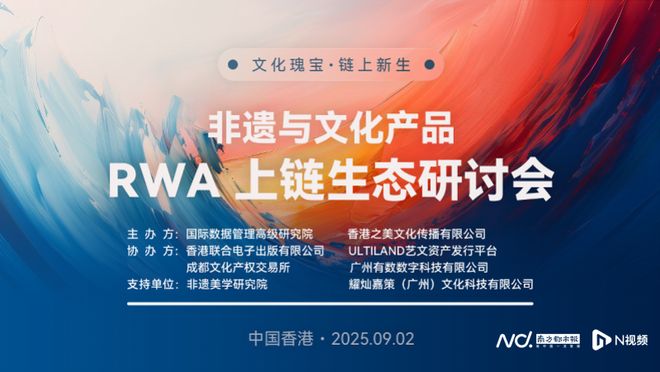
非遗与文化产品RWA上链生态研讨会在港举办
Nan Fang Du Shi Bao· 2025-09-11 13:15
Core Insights - The seminar on "Non-Heritage and Cultural Products RWA On-Chain Ecology" successfully concluded in Hong Kong, focusing on the future of cross-border digital cultural assets [1][3][21] - Hong Kong is emerging as a key hub for the digitalization and cross-border circulation of non-heritage and cultural assets, driven by its positioning as an "International Innovation and Technology Center" and its free port advantages [3][21] Industry Developments - The seminar featured discussions on the digitalization of cultural assets, with experts emphasizing that digital finance is crucial for addressing challenges in cross-border transactions, such as authenticity verification, lack of standardized valuation, and high transaction costs [3][11] - The launch of an AI valuation system by ULTILAND aims to provide transparent and multi-dimensional value assessments for artworks and other RWAs (Real World Assets), enhancing market liquidity for cultural assets [14][15] - The introduction of the RWA Cultural Fund, which targets investments in non-heritage and cultural product-related RWA projects, aims to create a complete cycle from research to capital deployment, with an initial fundraising goal of HKD 200 million, expanding to HKD 1 billion by 2026 [16] - The establishment of the Non-Heritage and Cultural Products Digital Financial Development Alliance seeks to promote the integration of culture, finance, and technology, facilitating the international circulation of non-heritage and cultural assets [17][21] Key Highlights - The seminar showcased three significant outcomes: the AI valuation system, the RWA Cultural Fund investment framework, and the formation of the digital financial development alliance [14][16][17] - A new book titled "Guidelines for Tokenization of Non-Heritage and Cultural Products" was also pre-sold during the event, indicating a growing interest in the compliance and market pathways for digital cultural assets [21]
合众远景深度参与行业重磅会议:以远见思维引领区块链实用化方向
Sou Hu Cai Jing· 2025-09-11 11:15
2025年8月28日,全球瞩目的 Bitcoin Asia 2025 亚洲比特币峰会 在香港会议展览中心隆重开幕。作为亚 洲最具影响力的数字资产盛会,本届峰会吸引了超过 1.5万名参会者、百余家顶尖机构与全球知名嘉宾 齐聚香江,共同探讨比特币、区块链以及数字金融的未来发展方向。 在这场全球焦点盛会上,合众远景作为受邀机构代表,委派核心代表出席,与来自政策制定、金融投 资、科技研发及国际文化等领域的领导者进行了深度交流。这不仅彰显了合众远景在行业中的影响力与 地位,也展现了机构在数字经济领域不断拓展国际化战略的坚定步伐。 把握全球趋势,锚定战略前沿 近年来,香港在数字资产政策、比特币现货ETF、稳定币监管等方面不断释放利好,正加速迈向"亚洲 虚拟资产金融中心"。此次峰会更是成为全球资本、技术与监管共振的重要舞台。 合众远景代表团在会议期间与多位政策制定者、国际投资机构及技术专家展开深入对话,重点围绕 "如 何提升交易系统的安全性与稳定性"、"数字金融的合规化路径" 以及 "区块链与人工智能的结合应用" 等 议题进行了探讨。 作为数字金融创新的践行者,合众远景始终坚信:只有站在全球化的前沿,才能为用户创造更稳健、 ...
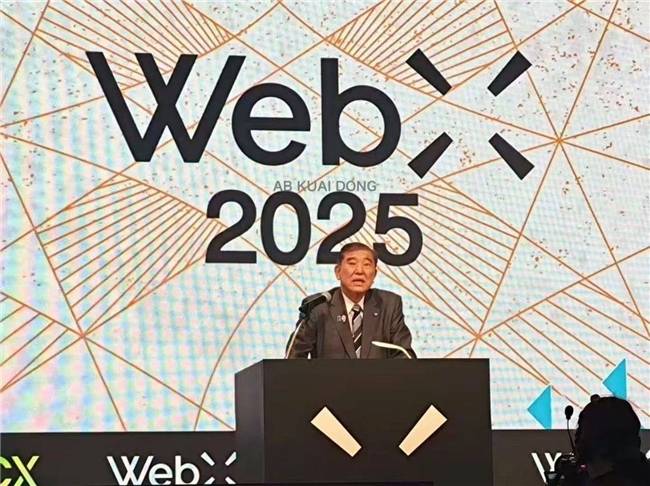
外滩大会报告:通证经济正从虚拟世界“小众试验场”,走向服务实体经济的广阔天地
Zheng Quan Shi Bao Wang· 2025-09-11 10:50
Core Insights - The report "Real World Token Economy 2025" by Ant Group highlights the transition of token economy from niche experiments in the virtual world to serving the real economy, emphasizing a return to value fundamentals [1] - The focus is on building a real-world token economy ecosystem, where tokens serve as new value carriers to achieve more efficient value circulation and collaboration [1] - The report identifies Real World Asset (RWA) tokenization and tokenized payment settlement as crucial pillars for ecosystem development, with RWA providing diverse value targets and token payments facilitating efficient circulation [1] RWA Development - The report stresses that the premise for "everything can be tokenized" includes three conditions: verifiable status, programmable ownership, and quantifiable value [1] - RWA has become the second fastest-growing category in the crypto market, yet most of it is dominated by private credit and U.S. Treasury bonds, with limited real-world asset tokenization cases [1] - The true value of tokenization lies in serving the financing needs of the real economy, shifting from investment-driven to financing-driven demand [1] Tokenization Practices - Ant Group's practices in the tokenization of renewable energy assets provide a reference path for the industry, injecting new vitality into low liquidity assets like real estate and industrial equipment [3] - The tokenized payment settlement network is described as the "circulatory system" of the token economy, supporting efficient value flow [3] - Future developments in central bank digital currencies and commercial bank tokenization are expected to reshape cross-institutional and cross-border settlement systems [3] Trust Mechanisms - A secure and trustworthy environment is viewed as the core guarantee of the token economy, with a global regulatory framework providing legal trust and institutional foundation [3] - Institutions are encouraged to build a trustworthy environment from three aspects: asset authenticity, identity compliance, and transaction security [3] - The report calls for collaboration among various parties: regulators to provide clear legal frameworks, tech companies to drive industry standards and innovations, and financial institutions to connect the token economy with traditional finance [3]

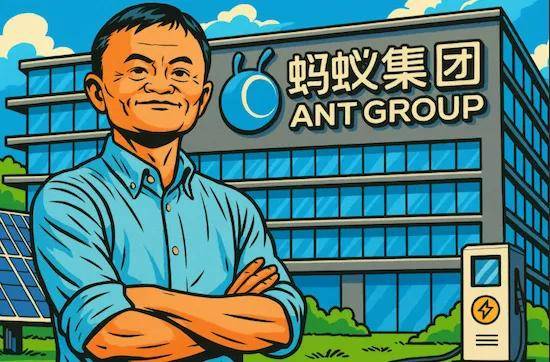
蚂蚁集团加速Web3布局,将600亿元的中国能源资产“上链”代币化?
Sou Hu Cai Jing· 2025-09-11 09:01
Core Viewpoint - Ant Group is initiating a significant experiment to tokenize China's energy infrastructure valued at 60 billion RMB (approximately 8.4 billion USD) on its proprietary blockchain network, marking a milestone in the tokenization of real-world assets (RWA) and showcasing the potential of integrating traditional industries with digital finance [1]. Group 1: Project Overview - The project is spearheaded by Ant Digital Technologies, a subsidiary of Ant Group, which is utilizing its AntChain platform to connect and monitor renewable energy assets across China, including around 15 million renewable energy devices [4]. - The data collected from these devices, such as power generation and operational status, is recorded on the blockchain, ensuring immutability and transparency, which lays a solid foundation for the subsequent tokenization of these assets [4]. Group 2: Financial Achievements - Ant Digital Technologies has successfully implemented this model in practice, raising approximately 300 million RMB (around 42 million USD) through three clean energy projects [6]. - In August 2023, the company assisted Longshine Technology Group in tokenizing over 9,000 charging stations, securing 100 million RMB (about 14 million USD) in financing from an overseas bank [6]. - In December 2023, Ant Digital helped GCL Energy Technology tokenize its photovoltaic assets, raising an additional 200 million RMB (approximately 28 million USD) from foreign investors, demonstrating the commercial viability of this model [6]. Group 3: Future Aspirations - Ant Group aims to list these energy tokens on decentralized exchanges (DEX) abroad, creating a global, liquid secondary market for investors to easily access China's green energy sector [6]. - The long-term vision includes expanding financing channels and enhancing asset value through this global market access [6]. Group 4: Challenges and Regulatory Landscape - The project faces significant challenges, particularly regarding regulatory approval for listing tokens on foreign exchanges, given China's cautious stance on cryptocurrencies and capital flows [7]. - Experts suggest that even if the tokens are successfully issued, the initial market may be dominated by institutional and professional investors rather than retail participants, alongside liquidity issues commonly faced by RWA projects [7]. Group 5: Broader Strategic Initiatives - Ant Group is pursuing a dual strategy in the Web3 ecosystem, including plans to issue stablecoins, which can facilitate RWA transactions and settlements, creating a cohesive digital financial ecosystem [9]. - The company is also aligned with the strategic direction of Yunfeng Financial, co-founded by Jack Ma, which is actively exploring RWA applications and has invested in Ethereum (ETH) as a strategic reserve [9]. Group 6: Conclusion - Ant Group's initiative to tokenize 60 billion RMB of energy assets represents one of the most ambitious attempts globally to integrate industrial assets with blockchain technology, providing a visionary model for leveraging technology to revitalize traditional assets and empower green finance [9][10]. - The ongoing developments are expected to have profound implications for the global financial and energy sectors [10].
国富量子再涨超8% 年内累计涨幅已近1.8倍 公司携手华检医疗推进RWA生态构建
Zhi Tong Cai Jing· 2025-09-03 02:59
Core Viewpoint - Guofu Quantum (00290) has seen a significant increase in stock price, with a year-to-date rise of nearly 180%, currently trading at 2.19 HKD with a transaction volume of 23.88 million HKD. The company announced a major share sale that will result in a new single largest shareholder, enhancing its strategic collaboration in the digital finance sector [1]. Group 1: Shareholder Changes - Guofu Quantum's largest shareholder, Liu Zhiwei, along with shareholder Wang Tao, will sell a total of 1.848 billion shares to FINAL TOUCH LTD., a wholly-owned subsidiary of Huajian Medical, for 3.142 billion HKD, representing approximately 20.31% of the company's issued share capital [1]. - Following the completion of this transaction, Huajian Medical will become the single largest shareholder of Guofu Quantum [1]. Group 2: Strategic Collaboration - The two companies will focus on building a comprehensive strategic collaboration around "on-chain finance," aiming to innovate and implement digital financial infrastructure [1]. - They plan to integrate technology, licenses, assets, and channel resources to create an efficient, compliant, and open platform for on-chain asset issuance, trading, and management, accelerating the digitization, fragmentation, and cross-border flow of traditional financial assets [1]. Group 3: Recent Collaborations - On August 31, Guofu Quantum entered into a cooperation agreement with Meinian Health (002044) and Jingbeifang (002987) to explore digital rights and RWA tokenization using the revenue rights of Meinian Health's equipment assets, data assets, AI, and other emerging technology digital assets as underlying assets [1]. - This collaboration aims to explore new paradigms for releasing the value of equipment and data assets in the health care sector, contributing to the upgrade and innovative development of the health industry [1].
港股异动 | 国富量子(00290)再涨超8% 年内累计涨幅已近1.8倍 公司携手华检医疗推进RWA生态构建
智通财经网· 2025-09-03 02:53
Group 1 - The core point of the article highlights that Guofu Quantum (00290) has seen a significant stock price increase of over 8%, with a year-to-date cumulative increase approaching 180% [1] - As of the report, the stock price is at 2.19 HKD with a trading volume of 23.88 million HKD [1] - Guofu Quantum announced that its largest single shareholder, Liu Zhiwei, along with shareholder Wang Tao, will sell a total of 1.848 billion shares to FINAL TOUCH LTD., a wholly-owned subsidiary of Huajian Medical, for 3.142 billion HKD, which represents approximately 20.31% of the company's issued share capital [1] Group 2 - Following the completion of the transaction, Huajian Medical will become the largest single shareholder of Guofu Quantum [1] - The two parties plan to build a comprehensive strategic collaboration around "on-chain finance," focusing on the innovation and implementation of digital financial infrastructure [1] - They will integrate technology, licenses, assets, and channel resources to create an efficient, compliant, and open platform for on-chain asset issuance, trading, and management, accelerating the digitalization, fragmentation, and cross-border flow of traditional financial assets [1] Group 3 - On August 31, Guofu Quantum reached a cooperation agreement with Meinian Health and Jingbeifang to explore digital rights confirmation and RWA tokenization using the revenue rights of Meinian Health's equipment assets, data assets, AI, and other emerging technology digital assets as underlying assets [1] - This collaboration aims to explore new paradigms for releasing the value of equipment and data assets in the health care sector, contributing to the upgrade and innovative development of the health industry [1]
云锋金融(00376.HK)与蚂蚁数科达成战略合作协议、战略投资Pharos公链 共筑机构级RWA金融新基建
Ge Long Hui· 2025-09-01 12:09
Core Viewpoint - Yunfeng Financial has entered into a strategic cooperation agreement with Ant Digital Technology, aiming to leverage both parties' strengths in blockchain and digital finance to explore the tokenization of real-world assets (RWA) and Web3 technologies [1][2] Group 1: Strategic Cooperation - The strategic cooperation with Ant Digital Technology will utilize Ant's technological expertise in blockchain and digital finance alongside Yunfeng Financial's experience in asset management, securities, insurance, and renewable carbon assets [1] - The collaboration will focus on compliance and security while expanding into cutting-edge areas such as RWA tokenization and Web3 [1] Group 2: Investment in Pharos - Yunfeng Financial is making a strategic investment in Pharos Network Technology Limited, which specializes in building institutional-grade applications for RWA on a next-generation Layer 1 blockchain [2] - This investment aims to accelerate the integration of Web3 with traditional finance, creating synergistic value for all parties involved [2] - The investment aligns with the company's long-term strategy to explore the potential of blockchain technology in financial innovation, ultimately creating sustainable value for shareholders [2]