
现实世界资产(RWA)代币化

Search documents
全球数字资产: 市场回调 监管博弈
Sou Hu Cai Jing· 2026-02-10 16:40
Group 1: Digital Asset Market Overview - The digital asset market experienced a significant downturn in Q4 2025, with a total market capitalization of approximately $2.93 trillion as of January 31, 2026, reflecting a decline of about 27.1% from the end of Q3 2025 [3][4] - Bitcoin's closing price was $84,100, down approximately 26.4%, while Ethereum fell to around $2,702, a decrease of about 35.9% [3][4] - The market adjustment was influenced by changes in liquidity expectations, delays in key regulatory legislation in the U.S., and a shift in market sentiment towards caution [3][4] Group 2: Stablecoin Market Dynamics - The stablecoin market showed a significant slowdown in growth, with a total market capitalization of $293.29 billion as of January 31, 2026, representing a mere 2.3% increase from the previous quarter [5] - The dominance of USD stablecoins remains strong, with USDT and USDC maintaining a duopoly, accounting for approximately 59.7% and 22.8% of the market, respectively [5] Group 3: Regulatory Developments - The U.S. regulatory landscape for digital assets is characterized by a dual focus on institutional integration and risk prevention, with the legislative process for the "CLARITY Act" stalled due to industry conflicts [2][8] - The People's Bank of China has initiated a new generation of the digital RMB system, marking a transition towards a more systematic development phase [2][13] - The U.S. Office of the Comptroller of the Currency (OCC) has granted temporary national bank charters to several stablecoin issuers, integrating them into the federal banking regulatory framework [7] Group 4: Real World Assets (RWA) Growth - The market capitalization of Real World Assets (RWA) grew by 41.1% from the end of Q3 2025 to approximately $23.7 billion as of January 31, 2026, with U.S. Treasury RWA accounting for 40% of this total [15][16] - Traditional financial institutions are actively promoting the tokenization of compliant products, indicating a shift towards integrating RWA into blockchain ecosystems [16] Group 5: Future Regulatory Scenarios - The ongoing negotiations surrounding the "CLARITY Act" may lead to three potential outcomes: a conservative version favoring banking interests, a middle-ground version facilitating compliance for crypto-native platforms, or a complete failure of the act, resulting in continued regulatory uncertainty [11][12] - The Chinese regulatory framework has clarified the definition and stance on RWA, emphasizing compliance and the need for regulatory approval for tokenization activities [17][18]
RWA代币化监管落地:境内资产境外发行开启“备案制”
Zhong Guo Jing Ying Bao· 2026-02-10 12:41
Core Viewpoint - The recent release of the regulatory guidelines for the issuance of asset-backed security tokens for domestic assets abroad marks a significant step in establishing a regulatory framework for the tokenization of real-world assets (RWA) in China, distinguishing it from speculative virtual currencies while providing compliant financing channels for domestic enterprises [1][3]. Group 1: Regulatory Framework - The guidelines clarify that the issuance of asset-backed security tokens abroad is based on cash flows generated from domestic assets, utilizing distributed ledger technology [2]. - The regulatory framework aims to separate RWA from speculative virtual currencies, emphasizing that tokenization serves as a trading tool without altering the legal and asset attributes of the underlying real-world assets [3]. - The guidelines establish strict entry barriers, prohibiting RWA activities if the underlying assets have significant ownership disputes or pose national security risks [4]. Group 2: Compliance and Integrity - The guidelines link the issuance of RWA abroad to a negative list of domestic asset securitization, preventing companies from circumventing domestic macro-control policies [4]. - Issuers with a history of economic crimes such as bribery or embezzlement in the past three years are excluded from participating in RWA activities [4]. - The regulatory stance on intermediary institutions has tightened, requiring them to fulfill their responsibilities diligently [4]. Group 3: Market Dynamics and Risks - The guidelines highlight the need to distinguish between compliant and non-compliant RWA, as illegal activities under the guise of RWA have been reported [5]. - The document notes that there are currently only three companies in China that have successfully issued compliant RWA using blockchain technology in overseas markets [6]. - The guidelines reiterate a strict regulatory attitude towards illegal financial activities related to virtual currencies and RWA, emphasizing the need for law enforcement against fraud, money laundering, and illegal fundraising [6]. Group 4: Future Outlook - The guidelines provide a framework for the development of compliant RWA models while balancing financial innovation and regulatory oversight [7]. - There is a growing concern about illegal fundraising activities disguised as RWA, with examples of fraudulent projects that misrepresent asset values [7]. - The guidelines serve as a warning to ordinary investors about the risks associated with virtual currencies and speculative activities, urging caution to avoid financial losses [7].
未知机构:山证电新架重点推荐2026年2月6日中国人民银行等-20260210
未知机构· 2026-02-10 02:25
Summary of Key Points from the Conference Call Industry Overview - The document discusses the regulatory framework for Real World Asset (RWA) tokenization in China, as outlined in a notification issued by the People's Bank of China and eight other departments on February 6, 2026 [1]. Core Insights and Arguments - RWA is defined as the process of using cryptographic technology and distributed ledger or similar technologies to convert ownership rights, income rights, and other interests into tokens or other rights and debt certificates for issuance and trading [1][2]. - The regulatory principles emphasize strict prohibition within China and stringent management for overseas activities, clarifying the legality of RWA [2]. - Currently, any form of RWA token issuance, trading, and related services is strictly prohibited within mainland China [2]. - Companies wishing to engage in asset securitization and other RWA activities must first file with the China Securities Regulatory Commission (CSRC) and comply with strict regulations [2]. - The CSRC has issued guidelines for the regulation of digital assets, indicating that companies controlling the underlying assets in China must file with the CSRC before conducting RWA activities overseas [2]. - This new policy represents a significant shift in the top-level approach towards the trillion-dollar digital asset market, allowing for a pathway for RWA issuance of domestic assets overseas [2]. Additional Important Content - The document highlights that companies involved in RWA, such as those aggregating charging RWA and Ant Chain Trust, are expected to benefit from these regulatory changes, making them a focus for investment recommendations [2].
虚拟货币与RWA代币化迎严管
2 1 Shi Ji Jing Ji Bao Dao· 2026-02-09 23:12
Core Viewpoint - The regulatory stance on Real World Asset (RWA) tokenization activities has been clarified, emphasizing a strict prohibition within domestic markets and stringent management for cross-border activities [1][3]. Regulatory Framework - The recent notification from the People's Bank of China and other departments outlines a clear definition and regulatory direction for RWA tokenization, encapsulated in the phrase "domestic prohibition, cross-border regulation" [3]. - Domestic markets are explicitly closed to RWA activities, with any related issuance, trading, or service provision deemed illegal [3][4]. - Cross-border RWA activities must adhere to the principle of "same business, same risk, same rules," ensuring that even offshore activities involving domestic assets are subject to domestic regulations [4][5]. Compliance Requirements - Financial institutions are prohibited from providing services for unauthorized RWA tokenization activities and must ensure that their offshore subsidiaries comply with risk management protocols [4][5]. - Service providers, including intermediaries and technology firms, are required to enhance risk controls and fulfill reporting obligations to regulatory authorities [5]. Virtual Currency Regulation - The notification reiterates a comprehensive ban on all virtual currency activities within domestic markets, categorizing them as illegal financial activities [5][6]. - The definition of virtual currencies has been expanded to include stablecoins, with a specific prohibition on issuing stablecoins linked to the Renminbi without regulatory approval [6]. Risk Management Mechanism - A comprehensive risk prevention and management mechanism has been established, covering both domestic and international operations, and emphasizing the importance of regulatory compliance [7][8]. - The notification promotes a collaborative approach between central and local authorities to enhance policy implementation and improve responsiveness to regional risks [8][9].
虚拟货币相关业务,境内一律禁止!
Sou Hu Cai Jing· 2026-02-09 09:25
Core Viewpoint - The recent notice issued by eight Chinese regulatory bodies emphasizes that all virtual currency-related activities are illegal financial activities within China, reinforcing a strict prohibition on such operations [1][3]. Group 1: Virtual Currency Regulations - Virtual currencies do not have the same legal status as fiat currencies and cannot be used for market circulation [1]. - All activities related to virtual currencies, including exchanges between fiat and virtual currencies, trading services, and token issuance, are strictly prohibited [1][3]. - The notice specifies that any issuance of virtual currencies by domestic entities or their controlled foreign entities without approval is illegal [3]. Group 2: Real World Asset (RWA) Tokenization - The concept of RWA tokenization is defined as converting ownership and income rights of assets into tokens using encryption and distributed ledger technology [3][5]. - Activities related to RWA tokenization, including providing intermediary and technical services, are considered illegal financial activities unless approved by regulatory authorities [5]. - The notice warns against the speculative nature of RWA tokenization, highlighting risks associated with low-threshold investments [3]. Group 3: Mining Activities - The notice mandates strict control over virtual currency mining activities, including the closure of existing projects and prohibition of new ones [5]. - Companies involved in the production and sale of mining machines are also prohibited from providing services within China [5].


八部门进一步防范和处置风险 重申境内对虚拟货币禁止性政策
Chang Jiang Shang Bao· 2026-02-09 01:55
Core Viewpoint - The People's Bank of China and seven other departments have issued a notification reinforcing the prohibition of virtual currencies and related activities, emphasizing that such activities are illegal financial operations [1][2][3]. Regulatory Framework - Since 2017, multiple policies have been released to curb virtual currency trading and speculation, with a significant announcement in 2021 establishing a coordination mechanism to combat these activities [2]. - The recent notification continues the established policy stance, reiterating that virtual currencies do not hold the same legal status as fiat currencies and should not circulate as money [2][3]. Definition and Prohibition of RWA Tokenization - The notification provides a clear definition of Real World Asset (RWA) tokenization, which involves converting ownership and income rights of assets into tokens using cryptographic technology [4]. - It explicitly prohibits the tokenization of real-world assets and related intermediary services within the country, except for activities approved by relevant authorities [4][5]. Risk Monitoring and Prevention - The notification outlines requirements for risk monitoring, intermediary regulation, and management of internet information content, aiming to create a coordinated regulatory framework [3]. - It emphasizes the need for strict oversight of domestic entities engaging in overseas virtual currency issuance and RWA tokenization activities [5].
央行、证监会等八部门划红线:虚拟货币与RWA代币化迎严管
2 1 Shi Ji Jing Ji Bao Dao· 2026-02-07 08:51
Core Viewpoint - The regulatory stance on Real World Asset (RWA) tokenization activities in China has been clearly defined, emphasizing a complete ban on domestic activities and strict regulation on cross-border operations [1][4][3]. Regulatory Framework - The recent notice from the People's Bank of China and other departments outlines three main regulatory points regarding RWA tokenization: 1. A total prohibition on any form of issuance, trading, and related services within the domestic market [1][4]. 2. Domestic entities engaging in cross-border RWA activities must adhere to the principle of "same business, same risk, same rules," with strict oversight from relevant authorities [1][5]. 3. Foreign entities and individuals are prohibited from providing RWA-related services to domestic subjects in any form [2][7]. Financial Institutions Guidelines - Financial institutions are reminded not to provide services for unauthorized RWA tokenization activities and related financial products. Additionally, foreign subsidiaries must manage risks prudently when offering RWA services abroad [2][6]. Definition and Scope of RWA Tokenization - RWA tokenization is defined as the use of encryption technology and distributed ledger technology to convert ownership and income rights of assets into tokens or similar rights for issuance and trading. The notice categorically bans any such activities within China [4][5]. Cross-Border Regulation - Cross-border RWA activities involving domestic entities will be strictly regulated, ensuring that any business with underlying assets in China complies with domestic financial regulations, regardless of where the activity occurs [5][6]. Compliance Requirements - The notice imposes stringent compliance requirements on various service providers, including financial, intermediary, and technology firms, prohibiting them from supporting unauthorized RWA tokenization activities [5][6]. Virtual Currency Stance - The notice reiterates a strict prohibition on all virtual currency activities within China, including trading and exchange services, categorizing them as illegal financial activities [9][10]. Risk Management Mechanism - A comprehensive risk prevention and management mechanism has been established, covering both domestic and international operations, and emphasizing the principle of "same business, same risk, same rules" [11][12]. Collaborative Governance - The notice establishes a collaborative governance framework involving multiple departments at both central and local levels to enhance policy implementation and risk response capabilities [13].
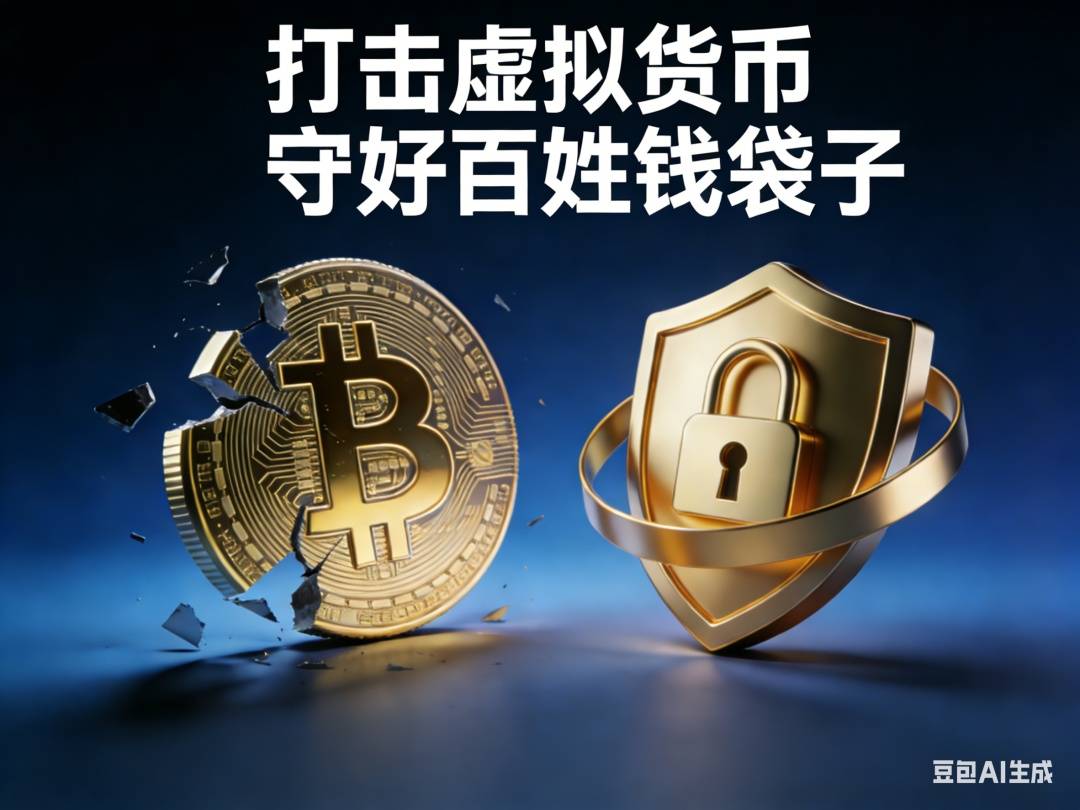
经济热点快评|“一律严格禁止”!打击虚拟货币出实招
Sou Hu Cai Jing· 2026-02-07 06:27
Core Viewpoint - The People's Bank of China and eight other departments have reiterated a strict prohibition on virtual currency activities, classifying them as illegal financial activities, and emphasizing the risks associated with such investments [1][3]. Group 1: Regulatory Stance - The recent notification reinforces a long-standing policy against virtual currencies, stating that they do not hold the same legal status as fiat currencies and are illegal to operate within the country [3]. - Previous regulations from 2013 and 2021 have consistently defined virtual currencies like Bitcoin and stablecoins as non-currencies, reiterating their prohibition in domestic markets [3]. Group 2: Market Impact - Following the announcement, Bitcoin's price fell below $70,000 for the first time since November 2024, with a maximum drop of 9.74% within 24 hours, leading to significant losses for many investors [1]. - Other cryptocurrencies, including Ethereum, Solana, Binance Coin, and Dogecoin, also experienced substantial declines, resulting in severe financial repercussions for investors [1]. Group 3: Investor Guidance - Investors are advised to avoid falling for myths of quick wealth in the cryptocurrency market and to develop a proper investment mindset, enhancing their risk awareness and ability to identify potential dangers [4].
人民日报:“一律严格禁止”,打击虚拟货币出实招
Xin Lang Cai Jing· 2026-02-07 05:13
Core Viewpoint - The People's Bank of China and eight other departments have reiterated a strict prohibition on virtual currency-related activities, classifying them as illegal financial activities [1][3]. Group 1: Regulatory Stance - The recent notice emphasizes that virtual currencies do not have the same legal status as fiat currencies and that all related activities are strictly prohibited within the country [3][4]. - This regulatory stance has been consistent since 2013, with previous notices reinforcing the illegality of virtual currency transactions and their classification as illegal financial activities [3][4]. Group 2: Market Impact - Following the announcement, Bitcoin's price fell below $70,000 for the first time since November 2024, with a maximum drop of 9.74% in 24 hours, leading to significant losses for investors [1]. - Other cryptocurrencies, including Ethereum, Solana, Binance Coin, and Dogecoin, also experienced substantial declines, resulting in many investors facing severe financial repercussions [1]. Group 3: Investor Caution - Investors are warned against believing in myths of quick wealth in the cryptocurrency market and are encouraged to adopt a correct investment mindset and enhance their risk awareness [4].
八部门:虚拟货币相关业务,境内一律禁止!
Sou Hu Cai Jing· 2026-02-07 04:10
Core Viewpoint - The recent notice issued by eight Chinese regulatory bodies emphasizes that all virtual currency-related activities are illegal financial activities within China, aiming to curb speculation in virtual currencies and the tokenization of real-world assets (RWA) [1][2]. Group 1: Virtual Currency Regulations - Virtual currencies do not have the same legal status as fiat currencies and cannot be used for market circulation [2]. - All activities related to virtual currencies, including exchanges between fiat and virtual currencies, trading of virtual currencies, and issuance of tokens, are strictly prohibited [2][4]. - The notice highlights the cross-border risks associated with virtual currencies due to their reliance on blockchain technology [2]. Group 2: Stablecoin Regulations - The notice specifies that stablecoins pegged to fiat currencies are considered to perform some functions of legal tender and cannot be issued abroad without regulatory approval [3]. Group 3: RWA Tokenization - RWA tokenization is defined as converting ownership and income rights of assets into tokens using encryption and distributed ledger technology [4]. - Activities related to RWA tokenization, including providing intermediary and technical services, are deemed illegal financial activities unless approved by regulatory authorities [4][5]. Group 4: Mining Activities - The notice mandates strict control over virtual currency mining activities, including shutting down existing projects and prohibiting the establishment of new mining operations [6].