
蔬菜种植

Search documents
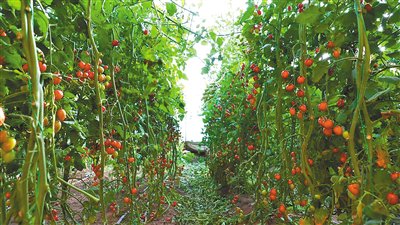
番茄丰收 “珠玉”满棚
Xin Lang Cai Jing· 2026-01-14 20:46
(来源:内蒙古日报) 寒冬时节,位于巴彦淖尔市乌拉特后旗巴音宝力格镇东升春华蔬菜种植专业合作社的温室大棚里暖意融 融,一串串鲜嫩饱满的小番茄挂满藤蔓,迎来丰收季。 1月13日,临河区居民徐敏带着孩子来到巴音宝力格镇东升村游玩。温室内成串饱满的小番茄吸引了他 们的目光。"孩子们体验采摘的乐趣,一家人共度了难得的闲暇时光,真是收获颇丰。"徐敏满脸笑意地 说。 东升春华蔬菜种植专业合作社,已打造成集蔬菜种植、技术示范与培训、休闲采摘、观光旅游于一体的 现代化设施农业基地。该基地积极探索"农业+生态+旅游"融合发展模式,通过商超直销、线上推广、 采摘体验及口碑传播等多种渠道,让大棚里的新鲜果蔬走向更广阔的市场。 转自:内蒙古日报 "目前棚内种植的'夏日阳光'等小番茄品种,在市场上很受欢迎。这一茬采收的产量已达到4000多斤, 预计能带来2万多元的收入。"种植基地负责人赵孝银介绍道。 近年来,乌拉特后旗大力发展设施农业,通过集成科技种植、休闲体验与多元销售模式,有效延伸了农 业产业链。一颗颗小小的番茄,不仅丰富了当地冬季"菜篮子",鼓起了农户的"钱袋子",更带动了乡村 休闲旅游的发展,为当地乡村振兴注入了强劲的产业动能 ...

粤味珍品赴深之约!1月16日,连州菜心把粤北山水搬来深圳了
Nan Fang Nong Cun Bao· 2026-01-14 08:35
Core Viewpoint - The event "Yuewei Treasures: Lianzhou Choy Sum Enters Shenzhen" aims to promote Lianzhou Choy Sum, a unique agricultural product from Lianzhou, to the Shenzhen market, enhancing collaboration between the agricultural sectors of Qingyuan and Shenzhen [3][4][6]. Group 1: Event Overview - The event will take place from January 16 to 17, showcasing Lianzhou Choy Sum as a key feature of Qingyuan's agricultural industry [3][4]. - It aims to build a bridge for cooperation between industries and provide Shenzhen residents with authentic northern Guangdong flavors [5][6]. - The event includes a food tasting session and community promotion activities to engage local consumers directly [18][26][35]. Group 2: Agricultural Significance - Lianzhou Choy Sum is recognized as a national geographical indication product, known for its unique taste and quality due to the region's favorable growing conditions [7][10]. - The goal is to expand the planting area of Lianzhou Choy Sum to 250,000 acres by 2030, supporting the development of a billion-level modern agricultural industry cluster in northern Guangdong [9][10]. - The event is part of a broader strategy to enhance the agricultural supply chain and promote high-quality agricultural products in the Guangdong-Hong Kong-Macao Greater Bay Area [15][22][44]. Group 3: Community Engagement - On January 17, community promotion activities will take place in several neighborhoods, allowing residents to taste freshly harvested Lianzhou Choy Sum and participate in interactive events [35][39]. - The initiative aims to make high-quality agricultural products accessible to local families and health-conscious individuals [39][42]. - The event emphasizes the integration of agriculture, culture, and commerce, showcasing the potential of Qingyuan's agricultural products in the broader market [42][44].

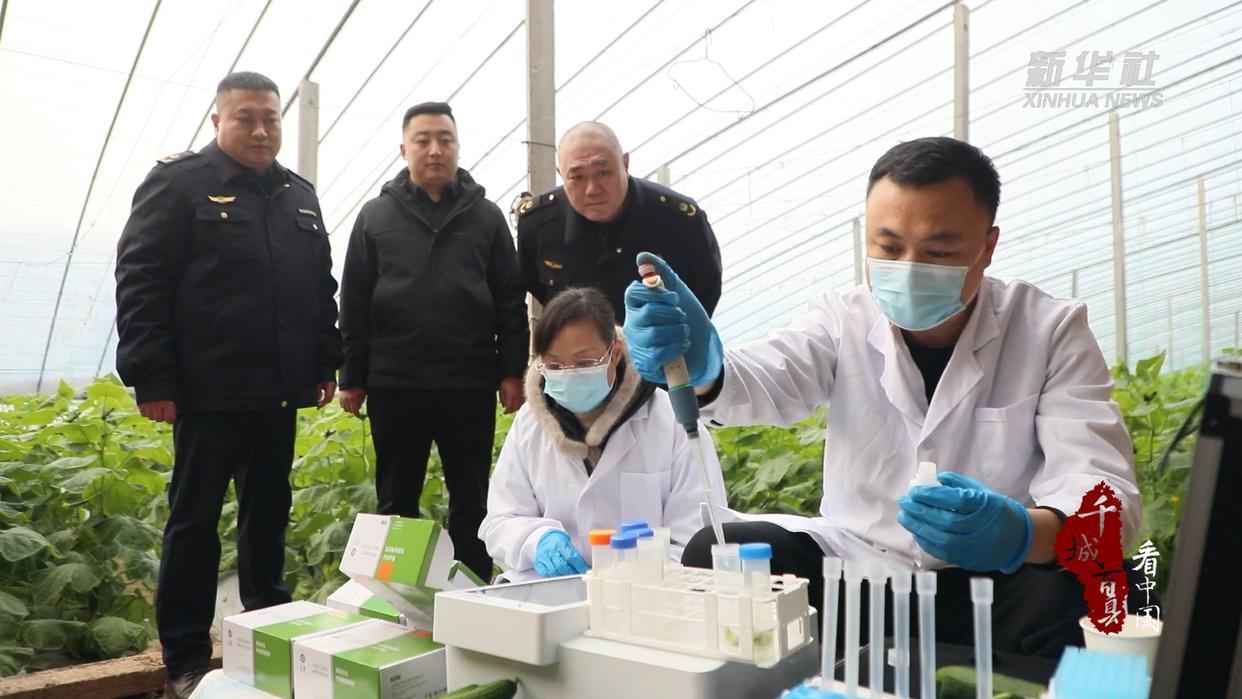
千城百县看中国丨山东郯城:冬日大棚黄瓜俏 农安检测护“菜篮”
Xin Lang Cai Jing· 2026-01-14 08:17
Core Viewpoint - The article highlights the successful implementation of ecological planting practices in Matao Town, Linyi City, Shandong Province, which has led to increased agricultural quality and safety standards, contributing to rural revitalization efforts [2][3]. Group 1: Agricultural Practices - Matao Town has actively promoted ecological planting models, attracting more growers to participate [3]. - The total area of ecological planting in the town has reached 8,000 acres, successfully cultivating four green agricultural product brands [3]. Group 2: Quality Control Measures - To ensure the quality of agricultural products, Matao Town has divided its planting bases into 10 regulatory grids and assigned three dedicated inspectors [3]. - The town conducts over 2,400 sample tests annually, maintaining a 100% pass rate for product quality [3]. Group 3: Economic Impact - The local planting industry has established a positive cycle of "production—testing—branding," which injects continuous momentum into rural revitalization [3].
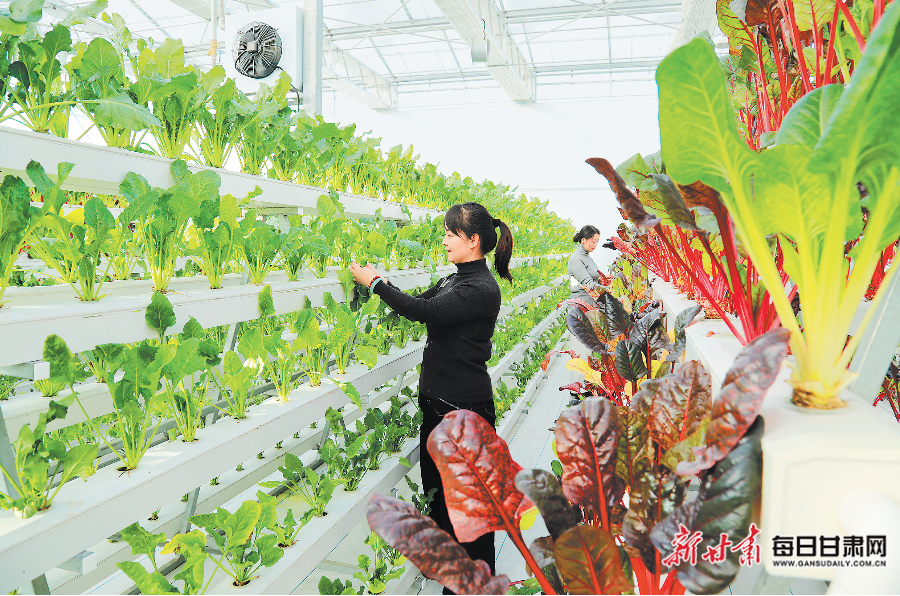
【图片新闻】徽县泥阳镇金徽农业蔬菜种植产业园工作人员在智能温室管护无土栽培蔬菜
Xin Lang Cai Jing· 2026-01-14 01:02
图片新闻 近日,徽县泥阳镇金徽农业蔬菜种植产业园工作人员在智能温室管护无土栽培蔬菜。新甘肃·甘肃日报通讯员 李旭春 责任编辑:陈德政 ...
青海特色农畜产品创新供给能力持续增强
Xin Lang Cai Jing· 2026-01-13 19:50
Group 1 - The core viewpoint of the news highlights the significant growth in the agricultural sector in Qinghai Province, driven by technological innovation and improved resource utilization, which enhances the supply capacity of high-quality agricultural products [1] Group 2 - By the end of 2025, the number of registered agricultural technology service entities in Qinghai reached 650, a 32.1% increase from 2024, with the industry’s invoiced sales revenue growing by 26.3% year-on-year [1] - The province's investment in innovation led to a tax reduction of nearly 8 million yuan from R&D expense deductions, indicating a sustained acceleration in innovation efforts [1] - Agricultural machinery purchases in the province saw a 70.6% increase in invoiced amounts, with drone equipment for seeding, spraying, and grazing rising by 80.2%, reflecting a growing trend towards mechanization and smart farming [1] - The invoiced sales revenue from software and IT services for agriculture increased by 47.8%, showcasing advancements in smart agricultural practices such as "5G + Beidou" intelligent fencing and livestock tracking [1] Group 3 - The establishment of innovation platforms, such as the potato incubation base, has led to a 25.1% year-on-year increase in invoiced sales revenue from the potato planting industry in 2025 [2] - The sales revenue from highland cool-season vegetables, cold-water fish, and yak products collectively grew by 17.9%, with sales to other provinces increasing by 21.4% [2] - The market recognition of "Qinghai salmon" has improved, with leading companies in salmon farming and processing reporting a 110% year-on-year increase in invoiced sales revenue, and a 20% growth in export value [2]
智慧育绿 四季生金
Xin Lang Cai Jing· 2026-01-13 18:48
Group 1 - The company Rocket Farm has successfully penetrated the Hami market with its high-quality and refreshing sprouts, also distributing to Urumqi [1] - The greenhouse cultivation allows for year-round production, with an estimated annual income of over 100,000 yuan from a single greenhouse [1] - The company practices a circular economy by utilizing leftover roots and beans as high-quality feed for local livestock, promoting sustainable practices [1] Group 2 - The agricultural policy from the 20th National Congress emphasizes enhancing agricultural production capacity and quality efficiency [2] - The local agricultural bureau plans to develop rural specialty industries by optimizing varieties, improving quality, extending supply chains, and building brands to drive agricultural efficiency and increase income for workers [2] - The goal is to inject lasting momentum into rural revitalization through these initiatives [2]
解码怀集:“岭南蔬菜之乡”的崛起密码
Nan Fang Nong Cun Bao· 2026-01-13 09:05
Core Viewpoint - Huai Ji County, known as the "Hometown of Lingnan Vegetables," has leveraged its agricultural resources to develop a robust vegetable industry, achieving significant economic growth and establishing itself as a key player in the Guangdong-Hong Kong-Macao Greater Bay Area [4][5][6]. Group 1: Industry Development - The vegetable industry in Huai Ji has a planting area of 258,800 acres and a production volume of 693,300 tons, contributing over 5 billion yuan to the entire industry chain [5][6]. - The county government has prioritized the vegetable industry as a leading sector, focusing on enhancing its scale, standardization, and branding [7][8]. - The total output value of agriculture, forestry, animal husbandry, and fishery in Huai Ji is projected to rise from 15.424 billion yuan in 2020 to 18.65 billion yuan by 2024, marking a growth rate of 20.92% [40]. Group 2: Infrastructure and Policy Support - Huai Ji County is strategically located at the intersection of Guangdong, Guangxi, and Hunan, providing favorable conditions for vegetable production [14][15]. - The establishment of the Huai Ji Green Agricultural Products Distribution Center has been a significant step in enhancing the agricultural supply chain, with a trading volume exceeding 1.2 billion yuan in 2025 [56][57]. - The local government has implemented a series of supportive policies since 2015, transitioning the vegetable industry from a fragmented state to a more organized and standardized development model [36][38]. Group 3: Technological Innovation - The Huai Ji vegetable industry benefits from the collaboration with agricultural research institutions, which focus on developing high-quality vegetable varieties suited to local conditions [80][86]. - The introduction of advanced agricultural technologies and practices has been crucial in improving the quality and yield of vegetable production [91][96]. - The establishment of a research institute in Huai Ji aims to foster innovation and enhance the overall competitiveness of the vegetable industry [64][65].
无人机植保+数字化管控 “00后种菜班”让智慧种菜成为田间日常
Yang Shi Xin Wen Ke Hu Duan· 2026-01-13 08:33
Core Insights - The article highlights the transformation of agricultural practices in Suining, Sichuan, through the establishment of a "post-00s vegetable planting class" that utilizes advanced technologies such as drones, smart irrigation, and digital management to cultivate specialty vegetables and educate local farmers [1][5]. Group 1: Technological Implementation - The "post-00s vegetable planting class" has constructed a smart greenhouse over the course of a year, employing young individuals to manage various agricultural tasks, including pest control and nutrient management [5]. - The use of drones allows a single operator to cover thousands of acres for pest control, while specialized technicians tailor nutrient solutions based on soil characteristics [5]. - Digital management has increased the output value per acre from 30,000 yuan to 120,000 yuan, representing a fourfold increase [5]. Group 2: Soil Improvement and Automation - The initial challenge faced by the planting class was soil improvement, which they addressed by consulting university professors and using organic fertilizers and probiotics [7]. - An automated fertilization and irrigation system was developed, allowing for precise nutrient delivery to the soil, which significantly reduced manual labor [9]. Group 3: Education and Community Impact - The young team has created easy-to-understand instructional materials to teach local farmers about smart greenhouse technologies, leading to over 100 villagers finding new employment opportunities in the smart greenhouse [3][13]. - The "post-00s vegetable planting class" is actively expanding its smart greenhouse initiatives to neighboring villages, with two new greenhouses covering 180 acres currently under construction [15].

甘肃民勤沙地韭黄品牌化“赢销”铺就增收路
Zhong Guo Xin Wen Wang· 2026-01-13 07:03
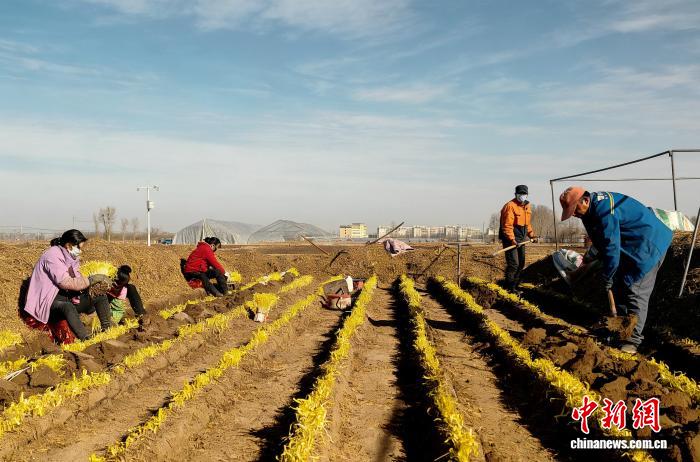
Core Insights - The article highlights the successful branding and marketing of Minqin County's garlic chives, which has become a significant source of income for local farmers through innovative agricultural practices and effective sales strategies [1][2]. Group 1: Agricultural Practices - The garlic chives in Caiji Town are cultivated using a "four seasons production, year-round supply" model, allowing for multiple harvests throughout the year [2]. - The unique "covering yellow" technique is employed to enhance the color and taste of the garlic chives by creating a dark environment during the growth phase [3]. - The introduction of non-polluting pest control and standardized production methods has improved the quality and yield of the garlic chives [5]. Group 2: Economic Impact - The establishment of a professional cooperative for garlic chives has integrated planting, maintenance, purchasing, and sales, creating a regional brand centered around "Guan Gou Garlic Chives" [5]. - The cooperative's innovative profit-sharing model has transformed small-scale farming into larger, more efficient operations, increasing farmers' incomes [5]. - Currently, the planting area for garlic chives in Guan Gou Village exceeds 300 acres, with an average yield of 2,000 kg per acre and earnings exceeding 50,000 yuan per acre [7]. Group 3: Sales and Marketing - The village has expanded its sales channels through e-commerce, establishing service stations and live streaming to connect directly with consumers [7]. - Improvements in cold chain logistics and packaging have ensured that the garlic chives reach the market in optimal condition, enhancing their marketability [7].
山东新泰:“跨村抱团”闯新路 “握指成拳”产业兴
Zhong Guo Jing Ji Wang· 2026-01-13 06:40
Core Insights - The project in Xin Tai City, Shandong Province, has a total investment of 11.6 million yuan, with 28 high-standard vegetable greenhouses expected to increase the annual income of 150 local laborers by 25,000 yuan each [1] - The initiative is part of a broader strategy to leverage central special lottery public funds to revitalize revolutionary old areas, integrating resources from 13 neighboring villages to explore new paths for rural revitalization [1] Group 1 - The project has established a leadership group co-chaired by the city’s party secretary and mayor, integrating 23 departments to create a responsibility chain that covers all 13 villages in the project area [1] - A joint party committee named "Bao Feng Shou Xin" has been formed to coordinate land, labor, and other resources, enhancing the "Party branch + cooperative + farmer" model [1] Group 2 - Xin Tai has developed a diversified investment structure combining "finance + social + collective" funding, with 50 million yuan from central special lottery public funds and 44.814 million yuan from departmental matching funds, ultimately leveraging 420 million yuan in social capital [2] - The project aims to shift from "single production" to "three-industry integration," with a focus on standardized meat chicken breeding, expected to produce 2.88 million birds annually, generating over 46.08 million yuan in output value [2] - The project covers over 5,700 households and nearly 17,000 people across 13 villages, with a total investment of 506 million yuan, aiming to create a production-village integration pilot area and a green planting and breeding demonstration area [2]