Funds

Search documents
富荣基金宋芳离任2只债券基金
Zhong Guo Jing Ji Wang· 2025-06-30 09:00
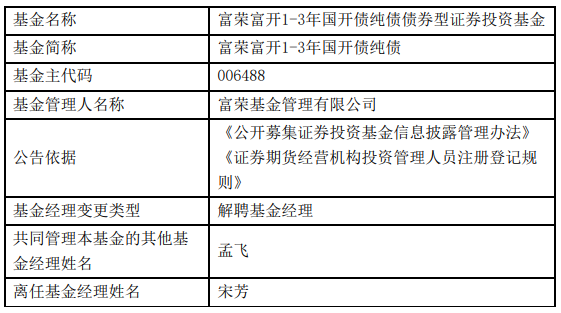
富荣富祥纯债A成立于2017年3月9日,富荣富祥纯债C成立于2024年5月20日,截至2025年6月27日,其 今年来收益率为1.29%、1.28%,成立来收益率为43.83%、4.87%,累计净值为1.4054元、1.2050元。 | 基金名称 | 富荣富开1-3年国开债纯债券型证券投资基金 | | --- | --- | | 基金简称 | 富荣富开1-3年国开债纯债 | | 基金主代码 | 006488 | | 基金管理人名称 | 富荣基金管理有限公司 | | 公告依据 | 《公开募集证券投资基金信息披露管理办法》 《证券期货经营机构投资管理人员注册登记规 | | | 则》 | | 基金经理变更类型 | 解聘基金经理 | | 共同管理本基金的其他基 | 是飞 | | 金经理姓名 | | | 离任基金经理姓名 | 宋芳 | | 基金名称 | 富荣富祥纯债债券型证券投资基金 | | --- | --- | | 基金简称 | 富荣富祥纯债 | | 基金主代码 | 0039999 | | 基金管理人名称 | 富荣基金管理有限公司 | | 公告依据 | 《公开募集证券投资基金信息披露管理办法》 | | | 《证券期 ...

REITs有多火?中金中国绿发商业REIT上市一日半上涨近40%
3 6 Ke· 2025-06-30 08:59
Group 1 - CICC China Green Development Commercial REIT listed on June 27, 2023, with a fundraising scale of 1.59 billion yuan and a subscription multiple of 249 times, setting a historical high for similar assets [3] - On its first trading day, the REIT hit the daily limit with a 30% increase and closed at a 7.4% rise on June 30, 2023 [3] - This REIT is the first public REIT product focused on consumer infrastructure following the issuance of guidelines to support consumption [3] Group 2 - Yang Huahui resigned as Chairman of Xingzheng Global Fund due to age reasons, with Zhuang Yuanfang taking over [4][5] - Su Junliang was appointed as Chairman of Industrial Securities on the same day [4][5] - Yu Yang from Fortune Fund left for personal reasons, and Xue Lili from Chunhou Fund resigned due to health issues [6][12] Group 3 - The global stock market experienced a collective rise, with the Shanghai Composite Index increasing by 1.91% and the Shenzhen Component Index by 0.34% over the past week [2] - The Nasdaq and S&P 500 indices in the US rose by 4.25% and 3.44%, respectively, with Nvidia's market value returning to the top globally [2] - The computer sector led the gains in the Shenwan first-level industry index, rising by 7.7% [2] Group 4 - The resignation of Yang Dawei from the浦银安盛品质优选 fund was due to internal adjustments, with Li Haoxuan taking over [13] - The fund has seen a total return of -53.07% since its establishment on December 28, 2021, significantly underperforming its benchmark [13][14] - Yang Dawei's management of the fund resulted in a return of -52.1% during his tenure [15] Group 5 - Xue Lili's resignation from Chunhou Fund was followed by a management transition, with Chen Wen and Gu Wei taking over the management of the funds she previously managed [6][12] - Under Xue Lili's management, the Chunhou Xin Yi fund achieved a return of 20.8% over a period of four and a half years [9][12] - The Chunhou Xin Rui fund, managed by Xue Lili for nearly five and a half years, recorded a return of 137.8% [9][12] Group 6 - Huabao Fund's Deputy General Manager, Lü Xiaoran, left due to a job transfer after only six months in office [17] - Lü Xiaoran previously held various strategic roles in Baosteel Group before joining Huabao Fund [17]

公募基金改革迈入深水区!资深基金经理怎么看、如何调整策略?记者观察→
Sou Hu Cai Jing· 2025-06-30 08:59
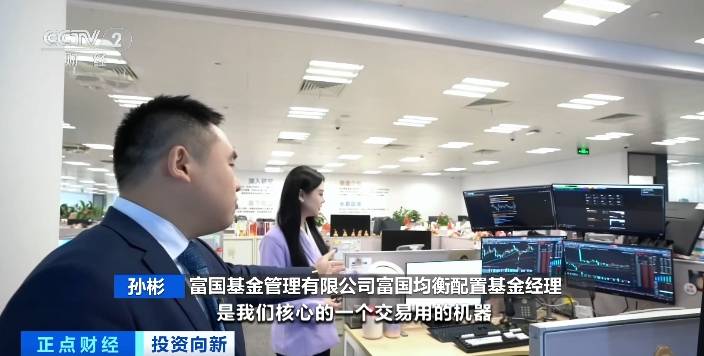
Core Viewpoint - The public fund industry is undergoing significant transformation with the emergence of new floating fee rate funds, which link management fees directly to performance, aiming to align the interests of managers and investors [6]. Group 1: Industry Changes - The new floating fee rate funds are becoming a focal point in the industry, contrasting with the traditional fixed fee model that charges investors regardless of fund performance [6]. - This shift is expected to change ranking rules and market issuance styles, potentially reducing market noise caused by capital disturbances [8]. Group 2: Fund Manager Insights - Senior fund managers, such as Sun Bin from Fortune Fund, are adapting their strategies in response to these changes, managing significant assets and utilizing advanced trading systems [1][3]. - The new fee structure is anticipated to enhance accountability among fund managers, embedding professionalism and responsibility within the capital market [8].
本周33只新基扎堆发行,被动指数型基金持续受热捧
Xin Hua Cai Jing· 2025-06-30 07:43
Group 1 - The public fund industry is experiencing a peak in issuance, with 33 new funds launched this week, a 50% increase from the previous week [1] - The average fundraising period for newly launched funds is 17.55 days, indicating a tight issuance schedule [1] - Equity funds dominate the new fund launches, with 28 equity funds accounting for 84.85% of the total [1] Group 2 - Passive index funds continue to be popular, with 24 out of 28 equity funds being stock funds, representing 85.71% of equity funds, including 21 passive index funds [1] - The increasing popularity of passive index funds is attributed to a shift in residents' wealth allocation from traditional assets to financial assets, enhancing their importance in asset allocation [1] - Public fund institutions are diversifying their index fund product lines, promoting market penetration of these products [1] Group 3 - Bond fund issuance remains stable, with 5 bond funds launched this week, making up 15.15% of the total [2] - The new funds this week come from 23 public fund institutions, with varying numbers of new products launched by each [2] - Notable institutions like China Europe Fund, Huatai-PB Fund, and China Universal Fund each launched 3 new funds this week, primarily focusing on equity and bond funds [2][3]
本周公募基金迎来发行小高峰 被动指数型基金持续受热捧
news flash· 2025-06-30 07:32
Core Viewpoint - The public fund market is experiencing a surge in new fund issuances, particularly in passive index funds, reflecting a shift in wealth allocation from traditional assets to financial assets [1] Group 1: Fund Issuance Trends - A total of 33 new funds were launched this week (June 30 to July 6, 2025), representing a 50% increase from the previous week's 22 funds [1] - The average fundraising period for newly issued funds is 17.55 days, indicating a tight issuance schedule [1] Group 2: Market Preferences - Passive index funds are increasingly favored by the market, driven by a growing trend of residents reallocating their wealth towards financial assets [1] - Public fund institutions are expanding their range of index fund products, offering diverse options that cover various markets, industries, and strategies, which further promotes the popularity of these products [1]
月内新发基金规模超900亿元;兴证全球基金新加坡子公司获批丨天赐良基早参
Mei Ri Jing Ji Xin Wen· 2025-06-30 00:58
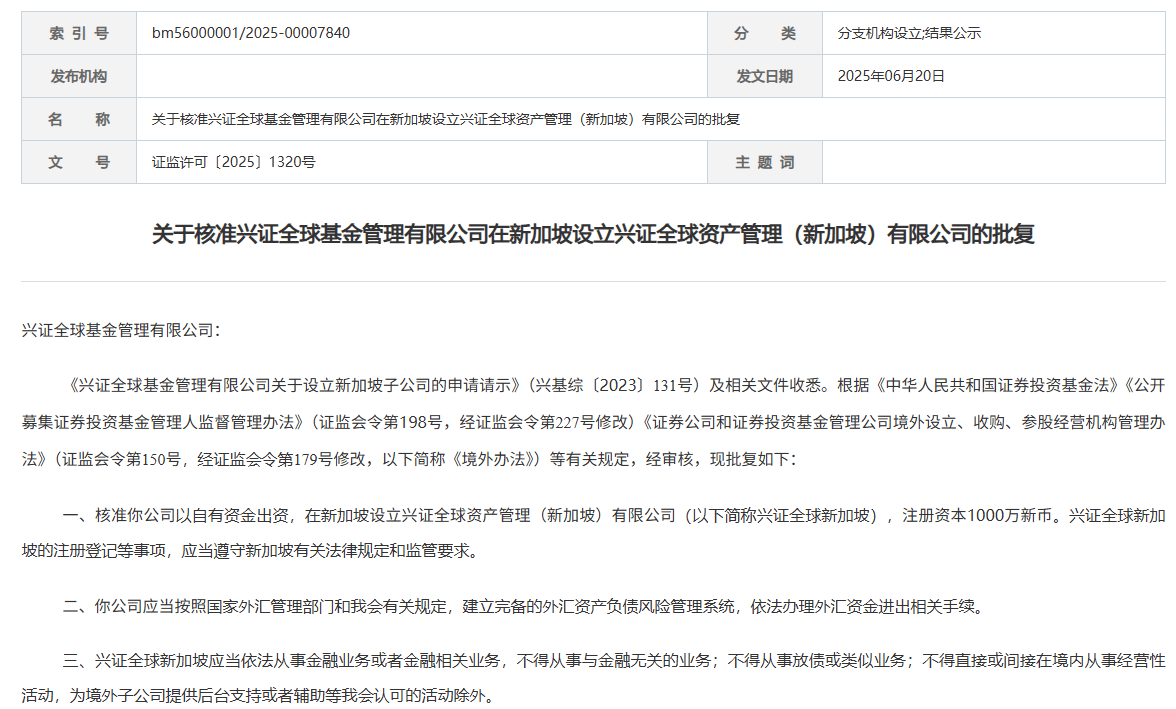
Group 1 - The total net asset value of public funds in China reached a record high of 33.74 trillion yuan as of the end of May 2025, marking the eighth consecutive record since 2024 [1] - The number of public fund products also hit a new high, totaling 12,772, an increase of 67 products from April [1] Group 2 - A total of 60 qualified domestic institutional investors received approval for a new round of QDII quotas, amounting to a combined 2.12 billion USD [2] - Notable fund companies such as E Fund, GF Fund, and others received individual QDII quotas of 50 million USD, while several other institutions received varying amounts between 10 million to 40 million USD [2] Group 3 - In June, the scale of newly launched funds exceeded 90 billion yuan, with bond funds dominating the issuance [3] - Mixed FOF funds emerged as the top fundraising category in June, raising 6.573 billion yuan, while the issuance of passive index products saw a decline [3] Group 4 - The China Securities Regulatory Commission approved the establishment of a subsidiary in Singapore by Xingzheng Global Fund, with a registered capital of 10 million SGD [4] - The subsidiary is restricted to conducting financial or related businesses and is prohibited from engaging in non-financial activities [4] Group 5 - The head of quantitative index and multi-asset departments at CICC Fund emphasized the importance of long-term investment strategies for achieving sustainable excess returns [5] - The focus should be on high-quality assets with significant "double high" characteristics, specifically those meeting the criteria of high and stable ROE and high safety margins [5] Group 6 - Looking ahead to the second half of 2025, it is anticipated that domestic economic growth will be further supported by ongoing policy initiatives, enhancing the profitability of listed companies [6] - Long-term capital is expected to increase its allocation to A-shares, benefiting quality companies with effective governance and innovative growth potential [6] Group 7 - Gao Xiyang resigned as the manager of Yimin Innovation Advantage Mixed Fund due to personal reasons, with Zhang Ting continuing the management of the fund [7] - Gao Xiyang also stepped down as the deputy general manager of Yimin Fund and will not transition to another position within the company [7] Group 8 - On June 27, the market experienced fluctuations, with the Shanghai Composite Index falling by 0.7% while the Shenzhen Component Index and the ChiNext Index rose by 0.34% and 0.47%, respectively [8] - The trading volume in the Shanghai and Shenzhen markets was 1.54 trillion yuan, a decrease of 42.1 billion yuan from the previous trading day [8]
基金忠言|科技股基金迷人眼,杜猛杨锐文立标杆
Sou Hu Cai Jing· 2025-06-30 00:55
Core Viewpoint - Since 2025, multiple fund companies have intensified their marketing efforts in the technology stock fund sector, employing various innovative strategies to attract investors [2] Group 1: Fund Characteristics - Technology stock funds are characterized by high volatility and risk due to significant fluctuations in performance and valuation [2] - Some fund companies misrepresent high beta as alpha, potentially misleading investors [2] Group 2: Fund Managers' Background - Notable fund managers with over 10 years of strong historical performance are rare in the technology stock fund sector [2] - Yang Ruiwen from Invesco Great Wall has managed 9 funds with a total scale of approximately 25 billion, achieving an average annualized return of over 12% since 2014 [2] - Du Meng from Morgan Asset Management has managed 4 funds totaling about 11 billion, with a similar average annualized return exceeding 12% since 2011 [3] - Liu Yuanhai from Dongwu Fund has managed 5 funds with a total scale of over 7 billion, achieving an average annualized return close to 14% since 2012, with all funds showing positive returns [3] Group 3: Investment Strategy - Investors should compare technology stock funds carefully, focusing on the research team's strength, the fund manager's professional background, and their ability to control drawdowns [3] - Investors need to be prepared for significant fluctuations in net value and trust experienced fund managers to navigate these changes for long-term growth [3] Group 4: Cautionary Advice - Investors should be wary of exaggerated marketing claims and avoid being misled by trendy activities and promotional content [4] - Caution is advised when considering fund managers with only a few years of performance history [4] - It is recommended to choose fund companies and managers with a clean historical record and no significant losses for investors [4][5]

3只,超200亿元大关
Zhong Guo Ji Jin Bao· 2025-06-29 07:24
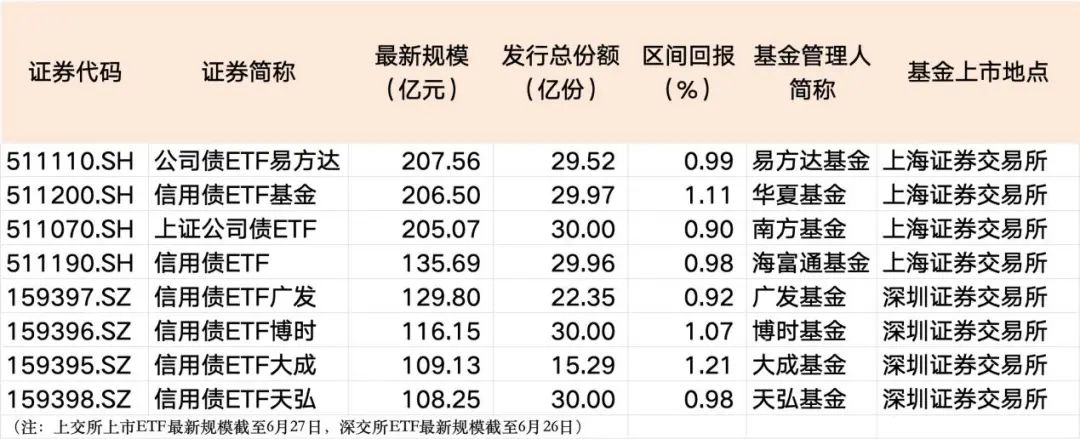
Core Insights - The first batch of benchmark market-making credit bond ETFs has seen explosive growth, with three ETFs now exceeding 20 billion yuan in scale [1][3][8] - The total scale of the first eight benchmark market-making credit bond ETFs has surpassed 120 billion yuan, reflecting a growth of over 460% from the initial fundraising amount of 21.71 billion yuan [3][9] - The popularity of credit bond ETFs is attributed to their relatively lower credit risk and higher tracking efficiency, indicating significant future growth potential [2][9] Fund Performance - As of June 27, the scale of the E Fund Company Bond ETF reached 20.756 billion yuan, marking a historical high and a net inflow of approximately 1.6 billion yuan on June 26 alone [3][7] - The Southern Fund's Shanghai Stock Exchange Company Bond ETF also surpassed 20.507 billion yuan, achieving this milestone just one month after crossing the 10 billion yuan mark [4][7] - The Huaxia Fund's credit bond ETF reached 20.650 billion yuan as of June 27, having crossed the 10 billion yuan threshold less than two weeks prior [5][7] Market Trends - The current market now has three ETFs tracking the Shanghai benchmark market-making company bond index exceeding 20 billion yuan, with others like the Hai Futong Credit Bond ETF exceeding 13.569 billion yuan [6][9] - Credit bond ETFs have attracted over 130 billion yuan in net inflows this year, accounting for over 80% of the total net inflow into bond ETFs [9] - The total scale of credit bond ETFs has exceeded 215 billion yuan, representing an increase of over 160 billion yuan from the end of the previous year, and now constitutes over 57% of the total bond ETF market [9] Investor Participation - Various types of investors, including pension funds, bank wealth management, and insurance asset management, are actively participating in the investment of benchmark market-making company bond ETFs [10] - The introduction of credit bond ETFs as collateral for general repurchase transactions since June 6 has enhanced their appeal, allowing investors to leverage these products for more efficient capital use [10] - The growing variety of credit bond ETF products provides investors with more options for selection and duration, making bond ETFs a significant investment vehicle for both long-term allocation and short-term trading needs [9][10]
谢治宇拟任新加坡子公司董事长,兴证全球基金:主要负责战略规划
Sou Hu Cai Jing· 2025-06-29 07:06
Core Viewpoint - The China Securities Regulatory Commission (CSRC) has approved Xingzheng Global Fund to establish a subsidiary, Xingzheng Global Asset Management (Singapore) Co., Ltd., with a registered capital of 10 million Singapore dollars, to be completed within 12 months [1][4]. Group 1: Company Establishment - Xingzheng Global Fund is required to complete the registration of its Singapore subsidiary within 12 months from the approval date [1]. - The proposed chairman of the Singapore subsidiary is Mr. Xie Zhiyu, who will focus on strategic planning while daily operations will be managed by the general manager and other operational staff [4]. Group 2: Management and Performance - As of the end of Q1 2023, Xingzheng Global Fund's public asset management scale was 651.945 billion yuan, ranking 16th in the industry, with non-monetary asset scale at 262.443 billion yuan, ranking 20th [5]. - Mr. Xie Zhiyu has been with Xingzheng Global Fund since July 2007, holding various positions and becoming the deputy general manager in January 2022 [5]. - Mr. Xie manages a total scale of 39.712 billion yuan across three public funds, with notable performance in the fund "Xingquan Helun," achieving a total return of 520.14% since taking over in January 2013 [7].

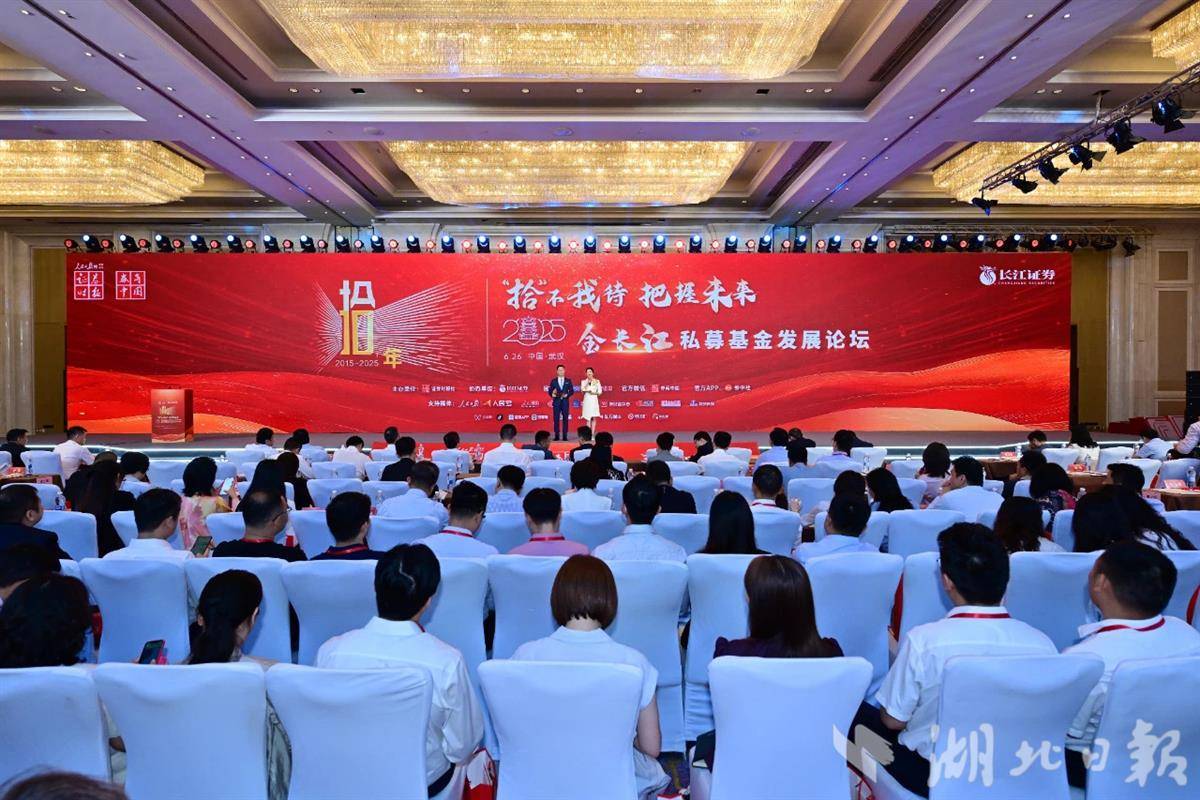
中国私募基金规模超20万亿元 金长江奖揭晓行业“优等生”
Sou Hu Cai Jing· 2025-06-29 02:50
Group 1 - The "2025 Jin Changjiang Private Equity Fund Development Forum" was held in Wuhan, revealing the 10th "Jin Changjiang" award for private equity funds and launching the "2015-2025 China Jin Changjiang Private Equity Fund Development White Paper" [2] - The event aims to identify outstanding managers in the Chinese private equity fund industry and support high-quality development through expert insights [2] - A total of 315 institutions registered for this year's "Jin Changjiang" award, including 42 institutions with over 10 billion yuan in assets under management [2] Group 2 - The white paper outlines the progress of high-quality development in China's private equity fund industry over the past decade, with the total management scale reaching 20.27 trillion yuan by the end of May 2025 [4] - The number of private equity firms with over 10 billion yuan in assets has surpassed 80, accounting for over 60% of the total management scale, indicating a significant trend towards industry consolidation [4] - Private equity funds are playing a crucial role in supporting the real economy and promoting technological innovation, particularly through early-stage investments in technology [4] Group 3 - Liu Zhengbin, Chairman of Changjiang Securities, emphasized the transition of the private equity industry from quantity growth to quality enhancement, with diverse investment strategies and a focus on digital economy and artificial intelligence [6] - The private equity sector is increasingly important in capital formation, serving the real economy, meeting wealth management needs, and improving market pricing efficiency [6]