基准做市信用债ETF

Search documents
科创债非成分券:成分券利差创新低
HUAXI Securities· 2026-03-09 01:15
1. Report Industry Investment Rating No information provided in the report about the industry investment rating. 2. Core Viewpoints of the Report - The scale of the Science and Technology Innovation Bond ETF has been declining for eight consecutive weeks, with most product scales basically stabilizing. Only 5 out of 24 Science and Technology Innovation Bond ETFs had a decline in scale last week, while the rest had a slight increase or remained stable [1]. - The scale of the Benchmark Market - Making Credit Bond ETF stopped falling and rebounded slightly, with an increase of 2 billion yuan to 104.1 billion yuan on March 6 [1]. - Among other credit bond ETFs, the Urban Investment Bond ETF and Short - Term Financing ETF of Haifutong Fund had relatively large increases, contributing the main increment to the credit bond ETF this week. The total scale of credit bond ETFs reached 524.4 billion yuan, with a weekly increase of 17 billion yuan [1]. - The weighted duration of most credit bond ETFs on March 6 was basically the same as that on February 27, with the median durations of the Science and Technology Innovation Bond ETF and the Benchmark Market - Making Credit Bond ETF being 3.2 years and 3.1 years respectively [2]. - The median static yield of the credit bond ETF portfolio reached 1.85%, about 2bp lower than the previous week [2]. - The Science and Technology Innovation Bond ETF mainly increased its holdings of new bonds issued in 2026, with a preference for bonds with maturities of 2 - 3 years and 4 - 5 years. The Benchmark Market - Making Credit Bond ETF had relatively shorter - term increases and decreases in holdings, mainly within 2 years [2]. - The median "non - component bond - component bond" spread of the Science and Technology Innovation Bond ETF dropped to 2.6bp, narrowing by 0.9 percentage points compared to the previous week, reaching a new low since listing. The trading enthusiasm of the Science and Technology Innovation Bond ETF is still low, and there is room for improvement in trading activity [3]. 3. Summary by Relevant Catalogs 3.1 Scale of ETFs - As of March 6, the scale of the Science and Technology Innovation Bond ETF was 271.4 billion yuan, a decrease of 3 billion yuan compared to February 27. The scale of the Benchmark Market - Making Credit Bond ETF was 104.1 billion yuan, an increase of 2 billion yuan. The total scale of credit bond ETFs was 524.4 billion yuan, an increase of 17 billion yuan [1]. 3.2 Duration and Yield of ETFs - The weighted duration of most credit bond ETFs on March 6 was basically the same as that on February 27, with the median durations of the Science and Technology Innovation Bond ETF and the Benchmark Market - Making Credit Bond ETF being 3.2 years and 3.1 years respectively. The median static yield of the credit bond ETF portfolio was 1.85%, about 2bp lower than the previous week [2]. 3.3 Bond Holdings of ETFs - The Science and Technology Innovation Bond ETF mainly increased its holdings of new bonds issued in 2026, with a preference for bonds with maturities of 2 - 3 years and 4 - 5 years. The industries involved include military, environmental protection, and urban investment. The bonds with reduced holdings also mainly had maturities of 2 - 3 years and 4 - 5 years, with a preference for central enterprise bonds in the construction, building materials, and machinery industries [2]. - The Benchmark Market - Making Credit Bond ETF had relatively shorter - term increases and decreases in holdings, mainly within 2 years. It mainly increased its holdings of local state - owned enterprise bonds with maturities of 1 - 2 years, involving industries such as transportation, environmental protection, and leasing. It mainly reduced its holdings of short - term bonds within 1 year, involving industries such as comprehensive investment and machinery [2]. 3.4 Spread and Trading Activity - The median "non - component bond - component bond" spread of the Science and Technology Innovation Bond ETF dropped to 2.6bp, narrowing by 0.9 percentage points compared to the previous week, reaching a new low since listing. From March 2 - 6, the number of transactions of the Science and Technology Innovation Bond ETF component bonds accounted for 6.3% of the credit bonds, still in a low - level shock. There is room for improvement in trading activity [3].
科创债ETF规模降幅收窄
HUAXI Securities· 2026-03-01 13:20
Group 1: Investment Rating of the Report - No information about the industry investment rating is provided in the report. Group 2: Core Views of the Report - As of February 27, the scales of the Sci - Tech Bond ETF and the Benchmark Market - Making Credit Bond ETF have been declining for seven consecutive weeks, but the decline has significantly narrowed since February. The Sci - Tech Bond ETF's scale on February 27 was 274.6 billion yuan, a decrease of 2.9 billion yuan from February 13, and the Benchmark Market - Making Credit Bond ETF's scale was 103.9 billion yuan, a decrease of only 0.3 billion yuan from February 13 [1]. - The scale of Haifutong Fund's Short - Term Financing ETF reached 80.1 billion yuan before the Spring Festival, a significant increase of 12 billion yuan from February 6, and then slightly declined after the festival, with a scale of 77.2 billion yuan on February 27, making it the largest - scale product among current credit bond ETFs [1]. - On February 27, the durations of most credit bond ETFs were basically the same as those on February 13, with most changes falling within the range of (- 0.1 year, 0.1 year). Along with the market adjustment, the median static yield of the portfolio reached 1.87%, about 1.2 bp higher on average than before the Spring Festival. Currently, the median duration of the Sci - Tech Bond ETF is 3.2 years, and that of the Benchmark Market - Making Credit Bond ETF is 3.1 years, with little difference [1]. - The Sci - Tech Bond ETF increased its holdings of bonds, mainly new bonds issued in 2026, with a dispersed term structure, and relatively more in the 4 - 5 - year and 2 - 3 - year terms. From February 24 - 27, 6 component bonds with an increase of more than 1 billion yuan were added, among which 5 were new bonds issued in 2026, with local state - owned enterprises and central state - owned enterprises basically in half, and the industries including transportation, public utilities, and securities [2]. - In terms of bond sales, bonds with a term of 4 - 5 years were relatively more. Among the top ten sold bonds, 6 had a term of 4 - 5 years, and the industries involved included machinery and equipment, transportation, electronics, and coal. The increase and decrease in the Benchmark Market - Making Credit Bond ETF were not significant. The increase mainly focused on short - duration bonds within 2 years, and the industries involved included transportation and medicine. The decrease mainly involved bonds with a term of 2 - 3 years, and the industries included non - ferrous metals, securities, and public utilities [2]. - In terms of trading, from February 24 - 27, the number of trading transactions of the Sci - Tech Bond ETF's component bonds accounted for 5.2% of the total number of credit bond trading transactions, a decrease of 0.4 percentage points compared to before the Spring Festival, indicating low activity. Since February, the median spread between "non - component bonds and component bonds" of the ETF has been continuously fluctuating at a low level, reaching 3.5 bp on February 27. Currently, the trading enthusiasm for the Sci - Tech Bond ETF is low, which is still related to the decline in scale. As the decline rhythm gradually slows down, attention can be paid to the opportunities of component bonds after the scale stabilizes and rebounds [2]. Group 3: Summary According to the Directory Scale and Duration of Credit Bond ETFs - As of February 27, 2026, the total scale of 35 credit bond ETFs was 522.9 billion yuan, a decrease of 6 billion yuan from February 13 (before the Spring Festival). The Sci - Tech Bond ETF's scale was 274.6 billion yuan, and the Benchmark Market - Making Credit Bond ETF's scale was 103.9 billion yuan. The scale of Haifutong Fund's Short - Term Financing ETF was 77.2 billion yuan, the largest among credit bond ETFs [1][5]. - The median duration of the Sci - Tech Bond ETF was 3.2 years, and that of the Benchmark Market - Making Credit Bond ETF was 3.1 years. On February 27, the durations of most credit bond ETFs were basically the same as those on February 13, with most changes falling within the range of (- 0.1 year, 0.1 year) [1]. Bond Holdings and Trading of Credit Bond ETFs - The Sci - Tech Bond ETF increased its holdings of bonds, mainly new bonds issued in 2026, with a dispersed term structure. From February 24 - 27, 6 component bonds with an increase of more than 1 billion yuan were added, among which 5 were new bonds issued in 2026. The Benchmark Market - Making Credit Bond ETF's increase mainly focused on short - duration bonds within 2 years [2]. - In terms of bond sales, the Sci - Tech Bond ETF mainly sold bonds with a term of 4 - 5 years, and the Benchmark Market - Making Credit Bond ETF mainly sold bonds with a term of 2 - 3 years [2]. - From February 24 - 27, the number of trading transactions of the Sci - Tech Bond ETF's component bonds accounted for 5.2% of the total number of credit bond trading transactions, a decrease of 0.4 percentage points compared to before the Spring Festival. Since February, the median spread between "non - component bonds and component bonds" of the ETF has been continuously fluctuating at a low level, reaching 3.5 bp on February 27 [2].
债券ETF周度跟踪(2.9-2.13):春季配置需求回归,债券ETF有望扩张-20260224
Southwest Securities· 2026-02-24 02:16
1. Report Industry Investment Rating - Not provided in the given content 2. Core View of the Report - The bond ETF market has a positive sentiment, with the net inflow amount turning positive. After the seasonal capital outflows at the beginning of the year, the scale of bond ETFs is expected to expand again with the return of institutional spring allocation demand and key policies set by the "Two Sessions". Different types of bond ETFs have different development prospects [2][6]. 3. Summary According to the Directory 3.1 Various Bond ETF Fund Inflows - Market sentiment is positive, and the net inflow of bond ETFs has turned positive. Last week, the net inflows of interest - rate bond ETFs, credit - bond ETFs, and convertible - bond ETFs were +5.098 billion yuan, +14.212 billion yuan, and +0.587 billion yuan respectively, with a total net inflow of 19.896 billion yuan in the bond ETF market. Looking ahead, the scale of bond ETFs is expected to expand [2][5]. - Short - term financing ETFs, treasury - bond ETFs, and urban investment bond ETFs led in net inflows last week, while the net inflows of science and technology innovation bond ETFs and benchmark market - making credit - bond ETFs were still negative but significantly reduced [6]. 3.2 Share and Net Value Trends of Various Bond ETFs and Representative Products - Before the holiday, funds had a high demand for flexibility, and the share of short - term financing ETFs increased. As of February 13, 2026, the shares of various bond ETFs changed to varying degrees, with a total change of +3.1% compared to the previous week and +3.3% compared to the end of last month [12][19]. - The net values of major bond ETFs generally increased. Taking the largest - scale products in each type of bond ETF as representatives, their net values increased compared to the previous week and the end of last month [22]. 3.3 Share and Net Value Trends of Each Benchmark Market - Making Credit - Bond ETF - There was no significant change in the shares. Among the 8 existing products, the shares of 7 remained unchanged, and one decreased by 3.97% compared to the previous week [26]. - The net values increased significantly. The net values of the 8 credit - bond ETFs increased by 0.10% - 0.17% compared to the previous week and 0.13% - 0.18% compared to the end of last month [28]. 3.4 Share and Net Value Trends of Each Science and Technology Innovation Bond ETF - The scale of share outflows significantly shrank. The net inflow of shares last week was -3.78 million shares, a -0.14% change compared to the previous week. Some products had net outflows, while others had net inflows [30]. - The net values continued to rise. The median net values of the first - batch and second - batch science and technology innovation bond ETFs increased by 0.13% compared to the previous week, and the median net values of products tracking different indexes also increased [33]. 3.5 Market Performance of Single Bond ETFs Last Week - The net values generally increased, with convertible - bond ETFs leading the rise. The convertible - bond ETF and the Shanghai - Stock - Exchange convertible - bond ETF led in net - value increases, and some products had positive premium rates [35]. - In terms of scale changes, short - term financing ETFs, urban investment bond ETFs, and treasury - and - policy - financial - bond ETFs had the highest net inflows [35]. 3.6 Marginal Changes in the PCF Lists of Benchmark Market - Making Credit - Bond and Science and Technology Innovation Bond ETFs - For benchmark market - making credit - bond ETFs, the estimated modified duration of Haifutong Credit - Bond ETF changed relatively significantly (-0.12 years). Some bonds were repeatedly included or excluded from the PCF list, and Huaxia Credit - Bond ETF changed the cash - substitution flag to "must" on some trading days [38][39]. - For science and technology innovation bond ETFs, the estimated modified durations of Tianhong and Guangfa Science and Technology Innovation Bond ETFs changed relatively significantly (+0.09 years and +0.07 years respectively). Some bonds were repeatedly included or excluded from the PCF list, and China Merchants Science and Technology Innovation Bond ETF changed the cash - substitution flag to "must" on some trading days [40][44].
2025登顶亚洲,中国ETF市场的“奇点之年”
2 1 Shi Ji Jing Ji Bao Dao· 2026-02-10 13:16
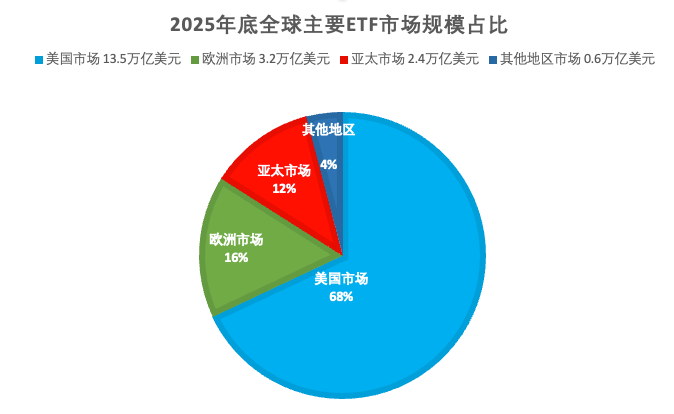
Core Insights - In 2025, China's ETF market reached a historic milestone, surpassing 6 trillion yuan, making it the largest in Asia, overtaking Japan [1][7][13] - The growth was driven by significant net inflows, particularly in bond ETFs, and a shift towards institutional investors dominating the market [2][12][28] Market Growth - By the end of 2025, the total size of the ETF market in China was 6.02 trillion yuan, with the Shanghai Stock Exchange (SSE) contributing approximately 4.22 trillion yuan and the Shenzhen Stock Exchange (SZSE) about 1.79 trillion yuan [1][8] - The SSE recorded a trading volume of 61 trillion yuan, ranking first in Asia and third globally, while the SZSE's trading volume grew by 189% to 23.17 trillion yuan [11][12] Investor Dynamics - The net inflow into the domestic ETF market exceeded 1.16 trillion yuan, with bond ETFs leading at 552.7 billion yuan [2][12] - Institutional ownership of ETFs increased significantly, with the SSE reaching 65% and the SZSE 58%, indicating a shift towards a more institutional-driven market [2][28] Product Innovation - The ETF market saw a transformation from broad-based products to more targeted offerings, including thematic ETFs focused on technology and innovation [15][16] - Bond ETFs experienced explosive growth, with their total size increasing from 173.9 billion yuan to 829 billion yuan, marking a 376% increase [18][20] Market Structure - By the end of 2025, the structure of the ETF market included 1,381 products, with stock ETFs making up 63.6% of the total size, followed by cross-border ETFs at 15.6% and bond ETFs at 13.8% [7][8] - The market's evolution reflects a growing demand for diversified investment strategies and a focus on long-term asset allocation [2][12] Regulatory and Institutional Framework - The regulatory environment has evolved to support the rapid growth of the ETF market, with new rules and mechanisms introduced to enhance liquidity and investor protection [29][30] - The market is transitioning towards a more institutionalized structure, with a focus on long-term capital and risk management [28][29] Future Outlook - The future of the ETF market in China is expected to focus on building a sustainable ecosystem that attracts long-term capital, emphasizing product innovation and regulatory balance [33]

信用ETF能做超额收益吗?
SINOLINK SECURITIES· 2026-02-09 14:37
Report Industry Investment Rating - Not provided in the report Core Viewpoints - Last week (2/2 - 2/6), bond - type ETFs had a net capital outflow of 4.1 billion yuan. Credit - bond ETFs, interest - rate bond ETFs, and convertible - bond ETFs had net outflows of 6.4 billion yuan, net inflows of 1.2 billion yuan, and net inflows of 1.1 billion yuan respectively. The weekly cumulative unit - net - value changes of credit - bond ETFs, interest - rate bond ETFs, and convertible - bond ETFs compared to the previous week were +0.02%, +0.16%, and - 0.07% respectively [2][13]. - There were no newly issued bond ETFs last week [3][17]. - As of February 6, 2026, the circulating market values of interest - rate bond ETFs, credit - bond ETFs, and convertible - bond ETFs were 130.1 billion yuan, 369.5 billion yuan, and 76.9 billion yuan respectively, with credit - bond ETFs accounting for 64% of the total scale. Compared to the previous week, the circulating market values of interest - rate bond ETFs, credit - bond ETFs, and convertible - bond ETFs increased by 1.7 billion yuan, decreased by 5.3 billion yuan, and increased by 0.9 billion yuan respectively. Among credit - bond ETFs, the circulating market values of benchmark - market - making credit - bond ETFs and science - innovation bond ETFs were 104.3 billion yuan and 278.2 billion yuan respectively, decreasing by 2.4 billion yuan and 7.9 billion yuan compared to the previous week [4][19][20]. - Last week, the cumulative unit net values of interest - rate bond ETFs and credit - bond ETFs closed at 1.19 and 1.03 respectively. The return rate of benchmark - market - making credit - bond ETFs since their establishment has been stable at around 1.47%, and the return rate of science - innovation bond ETFs since their establishment has marginally increased to 0.46% [5][27][29]. - Last week, the average premium/discount rates of credit - bond ETFs, interest - rate bond ETFs, and convertible - bond ETFs were - 0.14%, - 0.01%, and - 0.03% respectively. The average trading price of credit - bond ETFs was lower than the fund's unit net value, indicating low allocation sentiment. Specifically, the weekly average premium/discount rates of benchmark - market - making credit - bond ETFs and science - innovation bond ETFs were - 0.19% and - 0.13% respectively [6][34]. - Last week, the turnover rates were in the order of interest - rate bond ETFs > credit - bond ETFs > convertible - bond ETFs. The weekly turnover rates of interest - rate bond ETFs and credit - bond ETFs improved, rising to 165% and 141% respectively, while the weekly turnover rate of convertible - bond ETFs marginally decreased to 138%. Specifically, products such as Huaxia Shanghai Stock Exchange Benchmark - Market - Making Treasury Bond ETF, Southern China Securities AAA Science and Technology Innovation Corporate Bond ETF, and Morgan Shanghai Stock Exchange AAA Science and Technology Innovation Corporate Bond ETF had relatively high turnover rates [7][39]. Summary by Directory 1. Issuance Progress Tracking - No new bond ETFs were issued last week [3][17] 2. Existing Product Tracking - As of February 6, 2026, the circulating market values of interest - rate bond ETFs, credit - bond ETFs, and convertible - bond ETFs were 130.1 billion yuan, 369.5 billion yuan, and 76.9 billion yuan respectively, with credit - bond ETFs accounting for 64% of the total scale. The top two in terms of circulating market value were Haifutong China Securities Short - Term Financing ETF and Bosera Convertible Bond ETF, with values of 68.1 billion yuan and 65.0 billion yuan respectively [4][19][20]. - Compared to the previous week, the circulating market values of interest - rate bond ETFs, credit - bond ETFs, and convertible - bond ETFs increased by 1.7 billion yuan, decreased by 5.3 billion yuan, and increased by 0.9 billion yuan respectively. The product with a significant increase in scale last week was Haifutong China Securities Short - Term Financing ETF, with a month - on - month increase of 3.3 billion yuan, followed by Penghyang China Bond - 30 - Year Treasury Bond ETF and Bosera Shanghai Stock Exchange 30 - Year Treasury Bond ETF [4][20]. - Among credit - bond ETFs, the circulating market values of benchmark - market - making credit - bond ETFs and science - innovation bond ETFs were 104.3 billion yuan and 278.2 billion yuan respectively, decreasing by 2.4 billion yuan and 7.9 billion yuan compared to the previous week [4][24]. 3. ETF Performance Tracking - Based on the average trends of the cumulative unit net values of 16 interest - rate bond ETFs and 35 credit - bond ETFs, the cumulative unit net values of interest - rate bond ETFs and credit - bond ETFs closed at 1.19 and 1.03 respectively [27]. - The return rate of benchmark - market - making credit - bond ETFs since their establishment has been stable at around 1.47%, and the return rate of science - innovation bond ETFs since their establishment has marginally increased to 0.46% [29]. 4. Premium/Discount Rate Tracking - The premium/discount rate of ETFs measures the deviation between the secondary - market trading price of the fund and its unit net value. A high premium rate usually indicates that the market is optimistic about the fund or its underlying assets, while a high discount rate indicates pessimism or lack of interest [34]. - Last week, the average premium/discount rates of credit - bond ETFs, interest - rate bond ETFs, and convertible - bond ETFs were - 0.14%, - 0.01%, and - 0.03% respectively. The average trading price of credit - bond ETFs was lower than the fund's unit net value, indicating low allocation sentiment. Specifically, the weekly average premium/discount rates of benchmark - market - making credit - bond ETFs and science - innovation bond ETFs were - 0.19% and - 0.13% respectively [6][34]. 5. Turnover Rate Tracking - The weekly turnover rate of ETFs is calculated by dividing the weekly trading volume by the fund shares. Last week, the turnover rates were in the order of interest - rate bond ETFs > credit - bond ETFs > convertible - bond ETFs. The weekly turnover rates of interest - rate bond ETFs and credit - bond ETFs improved, rising to 165% and 141% respectively, while the weekly turnover rate of convertible - bond ETFs marginally decreased to 138% [7][39]. - Specifically, products such as Huaxia Shanghai Stock Exchange Benchmark - Market - Making Treasury Bond ETF, Southern China Securities AAA Science and Technology Innovation Corporate Bond ETF, and Morgan Shanghai Stock Exchange AAA Science and Technology Innovation Corporate Bond ETF had relatively high turnover rates [7][39].
6万亿里程碑!2025成ETF市场史上最强大年,深市跑出三大创新赛道
Sou Hu Cai Jing· 2026-02-09 13:25
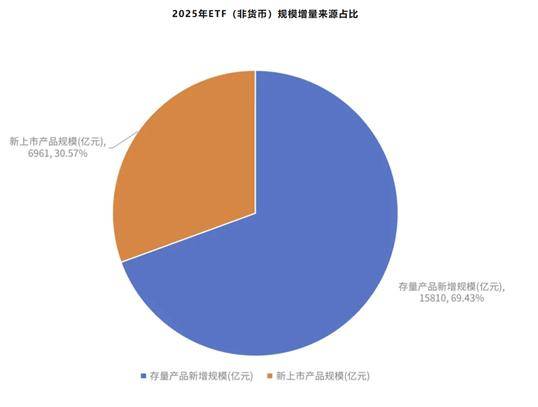
Core Insights - The Shenzhen Stock Exchange has released the "ETF Market Development White Paper (2025)", outlining the innovative trajectory of new ETF products driven by policy guidance and market demand [1] - By the end of 2025, the total scale of domestic ETFs is expected to exceed 6 trillion yuan, with an annual growth rate of 62% [2] Group 1: ETF Product Development - The white paper highlights a clear strategy for the development of ETFs in Shenzhen, focusing on the economic transformation and reform of the ChiNext market, with the introduction of multiple ChiNext 50 and ChiNext Composite Index ETFs [1] - The launch of thematic ETFs in artificial intelligence and robotics allows investors to easily share in the benefits of industrial transformation [1] - The bond ETF sector has seen significant innovation, with the introduction of 4 benchmark credit bond ETFs and 10 sci-tech bond ETFs, totaling a scale of 203.1 billion yuan, which is a 4.35 times increase compared to before listing [1] Group 2: Market Growth and Structure - The growth of the ETF market is primarily driven by the increase in existing product scales and the issuance of high-quality new products, contributing nearly 70% to the market increment [2] - The structure of new product issuance shows a solid multi-dimensional development pattern, with broad-based ETFs expanding steadily, while industry-themed ETFs have experienced explosive growth, particularly in the technology sector [4] - Strategy ETFs, such as those focused on dividends and free cash flow, have seen a nearly doubling in number, while bond ETFs contributed 489 billion yuan in new issuance [4] Group 3: Institutional Participation - The year 2025 is marked as a significant year for the issuance of new ETF products, with E Fund leading the industry by launching 32 new ETFs [4] - Other major institutions like China Universal Asset Management and Penghua Fund have also contributed significantly, with over 20 new ETFs each [4] - A total of 16 fund companies launched more than 10 new ETFs in the year, indicating a competitive landscape that injects continuous innovation into the ETF market [4]
国内债券ETF发展现状与产品结构解析:从规模高增到结构分化
Hua Yuan Zheng Quan· 2026-02-04 10:58
Report Industry Investment Rating No industry investment rating was provided in the report. Core Viewpoints of the Report - In 2025, the domestic bond ETF market experienced rapid growth, with the scale increasing from 174 billion yuan at the end of 2024 to 829 billion yuan at the end of 2025. The product structure showed differentiation, with credit - bond ETFs becoming the main growth driver. [1] - The participation of bond ETFs continued to expand, but the scale barriers of leading fund companies were relatively stable. The market was mainly dominated by institutional investors. [1][2] - The performance of interest - rate bond ETFs was related to duration, and there was significant differentiation. Credit - bond ETFs such as science - innovation bond ETFs and benchmark market - making credit - bond ETFs showed stable performance. Convertible bond ETFs also achieved high - speed growth. [2] - The domestic bond ETF market may further concentrate on leading institutions in single categories. Future product innovation may focus on diversified expansion to meet the differentiated needs of investors. [2] Summary by Relevant Catalogs 1. Domestic Bond ETF Market Overview 1.1 Bond ETF Development Process - The development of domestic bond ETFs has gone through three stages: the start - up stage from 2013 - 2018, the slow - growth stage from 2019 - 2021, and the rapid - growth stage from 2021 to the present. As of December 31, 2025, the scale reached 829 billion yuan. [6] 1.2 Bond ETF Scale Growth in 2025 - In 2025, the bond ETF market grew rapidly. By the end of 2025, there were 53 listed bond ETFs, with a total scale of 829 billion yuan, a 377% increase compared to the end of 2024. The scale expansion showed an accelerating trend. [9] - Among the 53 bond ETF products, 37 had a scale of over 10 billion yuan, accounting for about 70%, indicating rapid market development in 2025. [14] 1.3 Bond ETF Benchmark Index - As of the end of 2025, the domestic bond ETF benchmark index had formed a system covering all categories such as interest - rate bonds, credit bonds, and convertible bonds, with a total of 25 indices compiled by index institutions such as China Securities Index and China Bond Index. [17] - Different types of ETFs correspond to different target indices, which can meet the diversified needs of investors from stable allocation to thematic investment. [18] 1.4 Bond ETF Product Classification System - Domestic bond ETFs can be divided into interest - rate bond ETFs, credit - bond ETFs, and convertible bond ETFs. Interest - rate bond ETFs are the basic products, credit - bond ETFs were the main growth driver in 2025, and there are currently 2 convertible bond ETFs. [21][22] 1.5 Bond ETF Managers - As of the end of 2025, 28 fund companies managed a total of 53 bond ETFs. The scale of leading fund managers showed a long - term stagnation followed by rapid growth. [23] - The market pattern showed significant leading effects and high concentration. Haitong Fund ranked first, followed by Boshi Fund and Fuguo Fund. Both leading institutions and new entrants promoted the expansion of the industry. [28][31] 2. Bond ETF Product Line and Recent Trends 2.1 Structural Differentiation of Bond ETF Scale Growth in 2025 - In terms of scale and quantity, interest - rate bond, credit - bond, and convertible bond ETFs showed significant differentiation in 2025, reflecting the different demand for products with different risk - return characteristics. [33] - Products with a duration of 0 - 3 years and 3 - 7 years accounted for a relatively large proportion, with the proportion increasing by 12.33 percentage points compared to the end of 2024. [38] - The launch of science - innovation bond ETFs and benchmark market - making credit - bond ETFs was the highlight of the market in 2025. The total scale of science - innovation bond ETFs exceeded 35.53 billion yuan, contributing nearly 54% of the annual market scale increment. [41] 2.2 Interest - Rate Bond ETFs - The scale of interest - rate bond ETFs expanded steadily. As of the end of December 2025, the asset - net - value scale was 152.8 billion yuan, accounting for 18.4% of the overall bond ETF market. Policy support promoted the inflow of funds. [45][51] - The product system was improving and achieved full - duration coverage, but there was still room for innovation in some niche categories. [52] - The competition pattern was relatively stable, with leading institutions taking the lead. Competition focused on duration coverage, tracking - error control, and liquidity maintenance. [54] 2.3 Credit - Bond ETFs - Before 2025, there were only 3 credit - bond ETFs. In 2025, it was a big year for credit - bond ETF issuance, with the launch of benchmark market - making credit - bond ETFs and science - innovation bond ETFs. [57] - **Benchmark Market - Making Credit - Bond ETFs**: In January 2025, 8 benchmark market - making credit - bond ETFs were listed. Their scale showed a trend of rapid expansion in the first half of the year and high - level oscillation in the second half. The underlying assets were concentrated in medium - and short - duration, high - rating bonds, mainly including general public - offering corporate bonds and science - innovation bonds. [58][59][62] - **Science - Innovation Bond ETFs**: In 2025, science - innovation bond ETFs grew rapidly, with a total scale of 35.53 billion yuan at the end of the year, accounting for over 40% of the overall bond ETF scale. They were driven by policies and had a three - pillar tracking - index system, with products concentrated in leading fund companies. [70][73][76] - **Other Credit - Bond ETFs**: There were only 3 other credit - bond ETFs, focusing on short - term financing, urban investment bonds, and high - grade corporate bonds. [79] 2.4 Convertible Bond ETFs - In a low - interest - rate environment, convertible bond ETFs became an important allocation target. As of the end of 2025, there were only 2 convertible bond ETFs. The market had achieved leap - forward growth in recent years, and although the scale decreased in 2025, it remained at a high level. [81][82] 3. Bond ETF Product Holder Structure - Bond ETFs were mainly held by institutional investors, and the investor structure of treasury - bond ETFs was relatively balanced. As of June 2025, institutional investors held 92% of the asset - net - value scale, and individual investors held 8%. [84] - In terms of concentration, the concentration of policy - financial bond ETFs was the highest, and that of convertible bond ETFs was the lowest. The top three institutional investors in terms of holding scale were other institutions, securities firms, and securities investment funds. [88][89] 4. Bond ETF Performance - As of the end of 2025, the performance of interest - rate bond ETFs showed significant differentiation, with long - duration products having larger declines and short - duration products achieving positive returns. Most products had a tracking - deviation mean of less than 0.1. [92] - The performance of credit - bond ETFs also showed differentiation. Some science - innovation bond ETFs and benchmark market - making credit - bond ETFs performed well, and the annualized returns of some early - established credit - bond ETFs were higher. [95][97] - The recovery - unit - net - value trends of Haitong Shanghai - Stock - Exchange Investment - Grade Convertible Bond ETF and Boshi Convertible Bond ETF were highly synchronized, with 2025 returns of 13.1% and 18.0% respectively, and annualized returns since establishment of 4.5% and 5.5% respectively. [98] 5. Future Development of Bond ETFs - The domestic bond ETF market showed a trend of concentration among leading institutions, and there were problems such as product homogenization and lack of richness, which were difficult to meet the differentiated needs of investors. [102] - Referring to the US bond ETF market, the domestic bond ETF market could enrich the product matrix from multiple dimensions, including expanding product - gradient coverage, developing Smart Beta and actively managed bond ETFs, adding cross - border and cross - market bond ETFs if QDII quotas were sufficient, and adding over - the - counter connection funds. [103][104][107]
信用债ETF系列报告:近期信用债ETF的几项动态
Hua Yuan Zheng Quan· 2026-02-04 02:25
1. Report Industry Investment Rating - No industry investment rating is provided in the report [1][2] 2. Core Viewpoints - The logic supporting the discount repair of credit bond ETFs remains unchanged, and the discount is expected to oscillate towards zero in Q1 2026 [3][27] - The investment value of short - to medium - term science and technology bond components that have experienced short - term over - decline is emerging [3][43] 3. Summary by Section 3.1 Credit Bond ETFs: Surge and Decline, with Continuous Net Value Repair - In mid - to late December 2025, the circulating shares and market value of credit bond ETFs surged rapidly, then declined quickly in early 2026. As of January 28, 2026, the total market value of benchmark market - making credit bond ETFs was 108.3 billion yuan, and the circulating shares were 1.072 billion; the total market value of science and technology bond ETFs was 291.7 billion yuan, with 2.911 billion circulating shares; the total market value of corporate bond spread factor ETFs, urban investment bond ETFs, and short - term financing ETFs was 126.9 billion yuan, with 3.679 billion circulating shares [3][7] - From December 16 - 31, 2025, 8 benchmark market - making credit bond ETFs had a net inflow of 12 billion yuan, and a net outflow of 20.2 billion yuan from January 5 - 28, 2026; 24 science and technology bond ETFs had a net inflow of 87.1 billion yuan from December 16 - 31, 2025, and a net outflow of 65.9 billion yuan from January 5 - 28, 2026 [3][7] - As of January 28, 2026, the average unit net value of science and technology bond ETFs was 100.42 yuan per share (only the Southern Science and Technology Bond ETF was below 100 yuan), and the average unit net value of benchmark market - making credit bond ETFs was 101.28 yuan per share. The net value of credit bond ETFs has been continuously repairing since early December 2025 [15] 3.2 The Discount Repair of Credit Bond ETFs is still Promising - From November 21, 2025, to January 28, 2026, benchmark market - making credit bond ETFs maintained a deep discount of 19 - 47 BP without signs of repair; the discount rate of science and technology bond ETFs has been continuously repairing since late November 2025, briefly approaching zero from December 23 - 26, 2025, and then quickly falling back to a deep discount [19] - The reason for the difference in the discount rate between the two types of ETFs in late December 2025 may be due to liquidity differences. Science and technology bond ETFs have better on - site liquidity and are better discount arbitrage targets [25] - The logic supporting the discount repair remains unchanged. In Q1 2026, the discount of credit bond ETFs is expected to oscillate towards zero [27] 3.3 Is there Room for Excess Returns in the Component Bonds? - The valuation yield of short - term components of the CSI AAA science and technology innovation corporate bond index has increased since early 2026, while the medium - to long - term components over 3 years have decreased to varying degrees, and the yield curve has flattened [29] - The excess spread of the CSI AAA science and technology innovation index components has narrowed and then widened. The adjustment range is greater than that of the Shanghai - listed market - making corporate bond index, indicating that the science and technology bond index components are more sensitive to market conditions [29][35] - The excess spread of short - to medium - term science and technology bond components has adjusted to near the high since December 2025, and their investment value is emerging [43] 3.4 Review of the Top Three Science and Technology Bond ETFs by Average Daily Trading Volume in 2025 3.4.1 Science and Technology Bond ETF Guotai - As of January 28, 2026, the circulating shares were 128 million, the total market value was 12.884 billion yuan, and the unit net value was 100.56 yuan per share. It had the highest average daily trading volume in 2025, reaching 9.488 billion yuan [44] - As of January 28, 2026, the discount rate was 0.24%, in the 13.4% percentile since listing, with sufficient discount arbitrage space [45] - The fund tracks the CSI AAA science and technology innovation corporate bond index. 98.5% of its component bonds are issued by central and local state - owned enterprises. The weighted average remaining exercise period is 3.27 years [47] 3.4.2 Science and Technology Bond ETF Huatianfu - As of January 28, 2026, the circulating shares were 191 million, the total market value was 19.095 billion yuan, and the unit net value was 100.42 yuan per share. The average daily trading volume in 2025 was 7.835 billion yuan [54] - As of January 28, 2026, the discount rate was 0.24%, in the 21.9% percentile since listing. From September 30, 2025, to January 28, 2026, the maximum drawdown was 0.26%, and the annualized volatility was 0.33%, better than the average level of science and technology bond ETFs [54] - The fund tracks the CSI AAA science and technology innovation corporate bond index. 96.6% of its component bonds are issued by central and local state - owned enterprises. The weighted average remaining exercise period is 3.26 years [57] 3.4.3 Science and Technology Bond ETF Nanfang - As of January 28, 2026, the circulating shares were 97 million, the total market value was 9.666 billion yuan, and the unit net value was 99.94 yuan per share. The average daily trading volume in 2025 was 7.237 billion yuan [59] - As of January 28, 2026, the discount rate was 0.03%, in the 52.6% percentile since listing. From September 30, 2025, to January 28, 2026, the annualized volatility was 0.51%, which may be suitable for more aggressive institutions [59][64] - The fund tracks the CSI AAA science and technology innovation corporate bond index. 98.1% of its component bonds are issued by central and local state - owned enterprises. The weighted average remaining exercise period is 3.61 years [61]
超千亿元资金火速离场 借债券ETF冲量不可取
Xin Lang Cai Jing· 2026-02-01 19:22
Core Viewpoint - The bond ETF market has experienced significant volatility, with over 100 billion yuan in capital outflows in early 2026, contrasting sharply with the inflows seen at the end of 2025, where bond ETFs were a primary tool for institutions to boost their scale [1][2]. Group 1: Market Dynamics - The bond ETF market saw a dramatic increase in scale, reaching 829.024 billion yuan by December 31, 2025, marking a 377% year-on-year growth, the highest among all ETF categories [2]. - The growth was primarily driven by the issuance of benchmark credit bond ETFs and sci-tech bond ETFs, with several leading public funds participating in concentrated issuances [2][4]. - In December 2025 alone, over 100 billion yuan net inflow was recorded for bond ETFs, with 23 ETFs seeing net inflows exceeding 10 million yuan [2]. Group 2: Institutional Behavior - Some public funds have utilized bond ETFs as a primary vehicle for year-end scale boosting, taking advantage of their low fees, flexible redemption, and efficient scale expansion [5][6]. - The volatility in bond ETF sizes is evident, with products like the Dongcai Zhongzheng 1-3 Year Treasury ETF experiencing a drop from 6.277 billion yuan to 3.17 billion yuan in just one month [3][5]. - The seasonal scale boosting behavior is driven by the pressure of scale rankings, which are crucial for public funds' industry standing and collaboration opportunities [5][8]. Group 3: Challenges and Future Outlook - The reliance on bond ETFs for short-term capital inflows has led to significant fluctuations in their scale, raising concerns about market stability and the potential for mispricing of underlying assets [7][8]. - The bond ETF market is still in a rapid expansion phase, and there is a pressing need for regulatory measures to ensure sustainable development, moving away from being merely a tool for scale boosting [8][9]. - The long-term potential for bond ETFs remains significant, as they are expected to evolve into mainstream tools for long-term capital and asset allocation for residents, provided they return to their fundamental tool attributes [9].

年末全力冲规模,开年资金突然离场!发生了什么?机构“宠儿”陷冲量争议
券商中国· 2026-02-01 06:24
Core Viewpoint - The article discusses the significant fluctuations in the bond ETF market, highlighting how it has become a tool for some public funds to boost their scale at year-end, leading to substantial capital outflows at the beginning of the year [2][8][12]. Group 1: Market Trends - In 2025, the bond ETF market experienced a remarkable expansion, with the total market size reaching 8290.24 billion yuan by December 31, 2025, marking a year-on-year growth of 377% [4][5]. - The bond ETF saw over 100 billion yuan in net inflows in December 2025 alone, with 23 ETFs receiving over 10 billion yuan in net inflows [5][6]. - However, in January 2026, the bond ETF faced over 1000 billion yuan in capital outflows, with 29 ETFs experiencing net outflows exceeding 10 billion yuan [6][12]. Group 2: Institutional Behavior - Some public funds have utilized bond ETFs as a primary vehicle for year-end scale boosting, taking advantage of their low fees, flexible redemption, and high efficiency in scale expansion [9][10]. - The article notes that despite regulatory emphasis on long-term investment value, the pressure to maintain scale rankings leads to seasonal capital inflows and outflows, causing volatility in bond ETF sizes [9][11]. Group 3: Future Outlook - The bond ETF market is still in a rapid expansion phase, and its development must focus on long-term value creation rather than short-term scale boosts [13]. - The future of bond ETFs is expected to align more closely with their fundamental tool attributes, moving away from reliance on seasonal capital inflows, thus serving as a mainstream tool for long-term capital allocation [13].