
高等教育

Search documents
2.13亿元!清华大学采购光谱、共聚焦显微镜等大批仪器设备
仪器信息网· 2025-07-18 03:00
Core Insights - Tsinghua University has announced 28 procurement intentions for scientific instruments, with a total budget of 213 million yuan, expected to be executed between June and August 2025 [1][2]. Instrument Procurement Summary - The procurement includes various advanced instruments such as: - Infrared Spectrometer - Molecular Interaction Analyzer - Closed-loop Low-temperature System - Customized Organ-like Microenvironment Simulation System - Real-time Cell Function and Single-cell Behavior Analysis System - High-resolution Spatial Omics Analyzer - Laser Spectral Confocal Microscope [2][3]. Detailed Procurement List - The detailed budget allocation for specific instruments includes: - Closed-loop Low-temperature System: 1.92 million yuan - Real-time Cell Function and Single-cell Behavior Analysis System: 2.6 million yuan - Customized Organ-like Microenvironment Simulation System: 2.6 million yuan - High-resolution Spatial Omics Analyzer: 4.8 million yuan - Laser Spectral Confocal Microscope: 2.6 million yuan - Molecular Interaction Analyzer: 4 million yuan - Infrared Spectrometer: 1 million yuan [4][5][6].


华南理工调整奖学金政策,承诺不能“说变就变”
Xin Jing Bao· 2025-07-17 11:34
具体看,新《办法》将硕士研究生助研奖学金设特等、一等、二等共三个等级。特等2万元,获奖比例 不低于12%;一等1.2万元,获奖比例不低于40%;二等1万元,获奖比例不低于48%。相比原来"全覆 盖"所体现的平等,现在的"分级+比例"发放方式,尽管依然是"全覆盖",但金额的不同,却让不少学生 认为学校"违背了承诺"。 学校调整助学金、奖学金发放办法,目的应该是激励研究生在学业科研方面取得更好的成绩。新《办 法》显示,学校此次修订旨在"进一步完善研究生教育的资源运行机制,优化以创新能力为核心的培养 体系,提高硕士研究生培养质量"。 确实,当下有个别研究生入学之后甘作"南郭先生",在校混日子、混文凭。"全覆盖"的奖学金,也在一 定程度上让这些选择"混"的研究生减少了"后顾之忧"。学校调整后的奖学金拉大了等级落差,择优重 奖,这样的激励机制,无疑是对这些研究生的一次鞭策。但是,华南理工大学的奖学金调整方案却表现 出"朝令夕改"的特征,奖金数量、层级发生了改变,这有违当初的承诺。 拿到奖学金是每个学生都很期待的事情。但据智通财经报道,近日,华南理工大学的硕士研究生助研奖 学金调整方案,却让部分2025级研究生新生感到失 ...
启智金融 领航未来:香港中文大学金融财务MBA二十五载深耕金融高管教育,铸就“懂金融的行业领航者”
Cai Fu Zai Xian· 2025-07-17 09:21
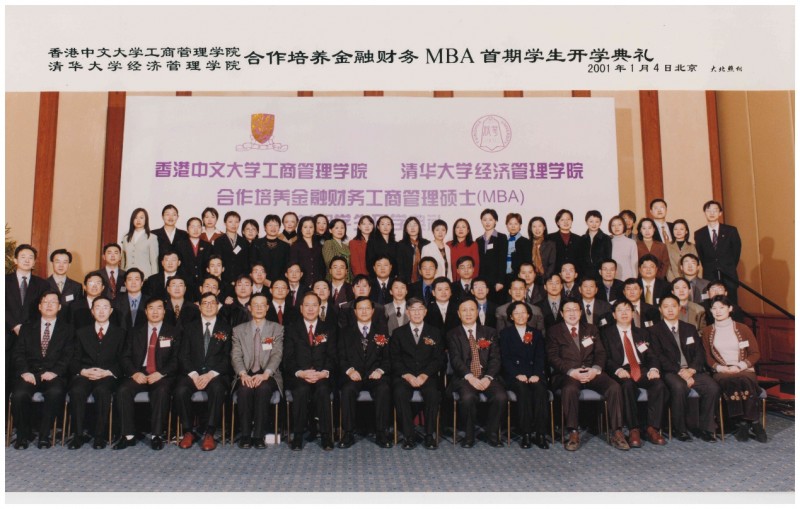
Group 1 - The FMBA program, established in 2000 by The Chinese University of Hong Kong and Tsinghua University, aims to cultivate senior management talent with a focus on Chinese practices and a global perspective [1][3] - The FMBA program is undergoing a significant transformation, transitioning from a dual-school collaboration to independent operation by The Chinese University of Hong Kong, marking a strategic opportunity to return to the heart of global finance [3][5] - The FMBA's mission has evolved to "cultivating industry leaders who understand finance," reflecting the historical changes in industry structure and economic landscape [5][6] Group 2 - The FMBA program has seen a shift in its student demographics, with 55% of the 2025 cohort coming from non-financial backgrounds, indicating a growing demand for financial knowledge across various industries [5][6] - The curriculum has been updated to include practical modules on Chinese financial challenges, management essentials, and emerging topics like AI and sustainable finance, enhancing the program's relevance [5][6] - The program emphasizes the integration of finance with industry, aiming to empower entrepreneurs with financial knowledge to drive growth [5][6] Group 3 - The FMBA alumni network is being strengthened with the establishment of a dedicated alumni association and regional chapters, creating a lifelong learning platform for graduates [3][11] - Alumni experiences highlight the program's value in providing a robust financial knowledge framework and fostering a network that enhances career opportunities [8][11] - The program aims to expand its reach to Chinese tech entrepreneurs and industrialists, facilitating a connection between finance and industry [11]
“万元”学费时代,要来了吗?
虎嗅APP· 2025-07-17 00:37
Core Viewpoint - The article discusses the rising trend of tuition fees in Chinese universities, indicating that many institutions are entering a new phase of tuition inflation, with some fees exceeding 40,000 yuan per year for certain programs, reflecting a significant financial burden on families [4][5][6]. Group 1: Tuition Fee Increases - Public universities are experiencing tuition increases ranging from 10% to 30%, with some private institutions seeing even higher hikes, such as Shanghai Zhongqiao Vocational and Technical University, where art program fees have surpassed 43,000 yuan, a 23% increase from the previous year [3][5][12]. - Yunnan Normal University has raised tuition for liberal arts majors from 3,400 yuan to 4,200 yuan per year, marking a 23.5% increase, while other disciplines also saw increases of 10% to 32.4% [8][9][10]. - The average tuition increase across various disciplines in Yunnan is approximately 10.5%, with a new floating mechanism linked to program quality being introduced [10][11]. Group 2: Financial Pressures and Future Trends - The rising tuition fees are attributed to increased operational costs and reduced government funding, leading universities to rely more heavily on tuition revenue [6][34][22]. - The trend of tuition hikes is expected to continue, with many institutions already experiencing significant increases since 2020, indicating a long-term shift in the higher education funding landscape [22][28]. - The financial strain on families is compounded by the rising costs of living and the declining birth rate, which may lead to fewer students enrolling in higher education institutions in the future [34][35]. Group 3: Impact on Educational Value - The article highlights a concerning trend of degree devaluation, where the job market is increasingly favoring vocational qualifications over traditional degrees, leading to a phenomenon where even graduates from prestigious universities struggle to secure employment [37][40]. - The rising tuition costs are juxtaposed with the increasing number of graduates, creating a competitive job market that diminishes the perceived value of a university degree [37][41]. - There is a growing call for higher education institutions to focus on practical skills and employability, suggesting a need for reform in how education is delivered to better align with market demands [42][43].
文科生毕业第一课:与现实和解
第一财经· 2025-07-16 09:38
Core Viewpoint - The article discusses the global trend of diminishing humanities programs in higher education, highlighting the challenges faced by humanities graduates in the job market and the shift towards more practical, employment-oriented education [3][4][5]. Group 1: Decline of Humanities Programs - Harvard University has canceled over 30 humanities courses, reflecting a broader trend among global universities to reduce or eliminate humanities programs [3]. - The reduction in humanities enrollment is driven by a perceived lack of job prospects for humanities graduates, as evidenced by statements from university leaders and government policies emphasizing employment-oriented education [4][5]. Group 2: Employment Challenges for Humanities Graduates - Humanities graduates face significant difficulties in securing jobs, with a reported offer rate of only 43.9% for humanities and social sciences graduates compared to 49.4% for STEM graduates [5][6]. - The starting salaries for humanities graduates are notably lower, with no humanities programs appearing in the top 20 for salary rankings among 2023 graduates [6][7]. Group 3: Shift in Career Aspirations - Many humanities graduates are increasingly turning to public sector jobs, with about 30% of 2024 humanities graduates considering civil service exams, compared to only 14% of STEM graduates [7][8]. - The trend of pursuing further education or alternative career paths, such as teaching or training, is prevalent among humanities graduates due to the competitive job market [7][8]. Group 4: Skills and Market Demand - The article emphasizes that the skills of humanities graduates, such as critical thinking and communication, are often undervalued in a job market that prioritizes technical skills and quantifiable results [8][9]. - The historical divide between humanities and sciences has intensified, with the latter being favored in a technology-driven society, further complicating the job prospects for humanities graduates [8][9]. Group 5: Long-term Prospects for Humanities Graduates - Despite current challenges, humanities graduates may find greater job satisfaction and opportunities for personal development in the long run, particularly in fields like education and cultural arts [9][10]. - The article suggests that the unique skills of humanities graduates may become more valuable as workplaces increasingly prioritize soft skills and interdisciplinary knowledge [10][11]. Group 6: Educational Reforms and New Opportunities - Universities are beginning to adapt their curricula to include interdisciplinary studies and practical skills, responding to the evolving job market [16][17]. - The rise of AI and technology is creating new opportunities for humanities graduates, as their critical thinking and communication skills become essential in a data-driven world [18][19].

制作火星车、走进科研一线场所,青少年高校科学营北京营活动开启
Xin Jing Bao· 2025-07-16 07:54
Group 1 - The 2025 Youth Science Camp in Beijing will take place from now until July 27, aiming to immerse students in scientific innovation through visits to key laboratories and research centers [1] - The camp will host over 500 students from both sides of the Taiwan Strait and Hong Kong and Macau, with four universities serving as sub-camps [1] - Activities will include expert lectures on aerospace technology, artificial intelligence, and hands-on experiences with renowned scientists [1][2] Group 2 - Sub-camps will provide students with opportunities to visit national key laboratories and research centers, focusing on themes such as 5G, artificial intelligence, and robotics [2] - Tsinghua University will organize visits to various laboratories, allowing students to visualize theoretical knowledge through practical activities [2] - The program will feature engaging experiments designed to enhance students' practical skills and foster their interest in science [2]
钱塘(新)区构建全方位服务生态
Hang Zhou Ri Bao· 2025-07-16 03:03
Group 1 - The event "Hand in Hand with Zhejiang Merchants" was held to explore how Zhejiang private enterprises can embrace the BRICS nations and integrate into the high-quality development of the international economy [1] - Zhejiang's foreign trade export business is a crucial pillar of its economy, with BRICS countries representing significant market potential for Zhejiang's private enterprises [1] - The establishment of the BRICS Special Economic Zone China Cooperation Center in Qiantang New District provides new opportunities and platforms for Zhejiang businesses to expand internationally [1] Group 2 - Qiantang New District is leveraging its unique educational resources, with 14 universities and over 250,000 students, to support enterprises going global [2] - The Zhejiang University of Finance and Economics has launched a global service center to assist enterprises in their internationalization efforts [2] - Future plans for Qiantang New District include the development of Jianghai City, a new urban center aimed at creating an international business, residential, and cultural space [2]
时空信息工程专业:培养数字时代“时空架构师”
Ke Ji Ri Bao· 2025-07-16 01:00
Core Viewpoint - The establishment of the Spatial Information Engineering major is a proactive response to national strategies and aims to cultivate "spatial architects" equipped for the digital economy [3][4]. Group 1: Professional Overview - The Spatial Information Engineering major is recognized as a new discipline that integrates Earth sciences, information sciences, and engineering technologies, focusing on the deep coupling of "time" and "space" [4]. - This major is essential for various applications, including navigation updates, smart city operations, natural resource management, and emergency responses during disasters [4][5]. Group 2: Curriculum Development - The curriculum is designed to break down disciplinary barriers, combining general education, foundational knowledge, and practical innovation [5][6]. - Courses include remote sensing, geographic information, and artificial intelligence, ensuring a comprehensive understanding of spatial data collection and processing [6]. - The program emphasizes real-world applications, with case studies in smart cities, autonomous driving, and disaster monitoring, utilizing a project-based learning approach [6][7]. Group 3: Employment Prospects - Graduates of the Spatial Information Engineering major are expected to meet the growing market demand for interdisciplinary talents capable of addressing complex spatial analysis and engineering challenges [7][8]. - Employment opportunities span various sectors, including natural resource management, smart city development, intelligent transportation, and low-altitude economy [8].
校企联动 自主培养高端人才
Ke Ji Ri Bao· 2025-07-16 01:00
Group 1 - The core viewpoint emphasizes the importance of practical training in engineering education, highlighting the challenges faced by students in transforming theoretical knowledge into real-world applications [1] - The Ministry of Education has initiated a reform in the training of engineering master's and doctoral students, focusing on substantial collaboration between universities and enterprises, which has shown significant results over the past three years [1][2] - A total of 40 National Excellent Engineer Colleges have been established, creating a new collaborative platform for talent cultivation between schools and enterprises [2] Group 2 - The program has developed 201 core courses that are high-level, cutting-edge, interdisciplinary, and challenging, focusing on 18 key areas [2] - Over 5,100 research topics have been provided by enterprises to the National Excellent Engineer Colleges, serving as primary sources for engineering master's and doctoral research and thesis topics [2] - The first batch of pilot engineering master's students has achieved a high-quality employment rate, with 71% remaining in their respective fields [4]