铁路运输

Search documents
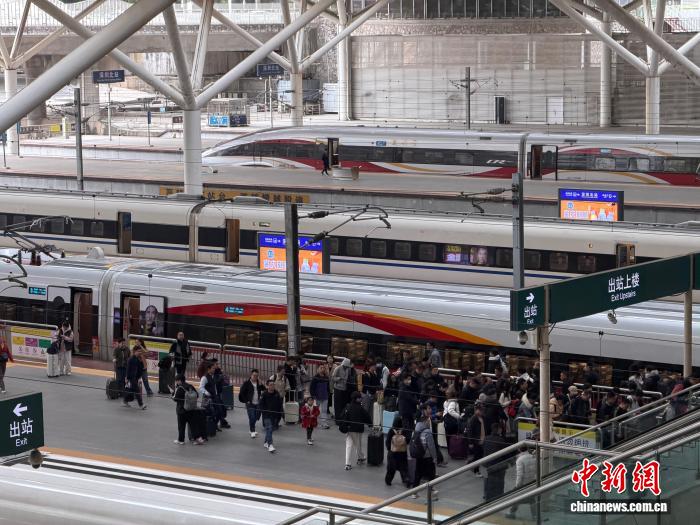
湛江北至广州白云最快1小时32分可达
Xin Lang Cai Jing· 2026-01-26 17:57
Core Viewpoint - The new train operation schedule implemented by the China National Railway Group aims to optimize train services in the Guangdong-Hong Kong-Macao Greater Bay Area, leveraging new high-speed rail lines to enhance connectivity and support regional development [1] Group 1: Train Operation Changes - A new train operation schedule has been in effect since midnight on the 26th [1] - The railway department is utilizing the capabilities of newly opened high-speed rail lines, such as the Guangzhou-Zhanjiang and Ningbo-Guangzhou lines, to improve train services [1] Group 2: Regional Impact - The adjustments in the train schedule are designed to support the construction of the Guangdong-Hong Kong-Macao Greater Bay Area [1] - New train services include the operation of high-speed trains from Shantou to Guangzhou, with a travel time of as fast as 1 hour and 26 minutes, and from Zhanjiang North to Guangzhou Baiyun, taking as little as 1 hour and 32 minutes [1]
规范与创新并举城际铁路发展焕新
Xin Lang Cai Jing· 2026-01-26 16:56
Core Viewpoint - The National Development and Reform Commission (NDRC) has issued guidelines to promote the sustainable development of intercity railways, marking the first official document addressing this sector, which aims to enhance the efficiency and capacity of intercity transportation networks across major urban clusters in China [3][4]. Policy Guidance - Intercity railways are recognized as a vital transportation mode within urban clusters, supporting regional strategies and urbanization efforts. The NDRC has accelerated the development of intercity railway networks in key areas, with a total length nearing 1,800 kilometers, significantly improving connectivity among major cities [4][5]. - The NDRC's guidelines emphasize the need for a balanced approach to development and safety, integrating both hard investments and soft construction to enhance quality and efficiency in intercity railway projects [4][6]. Five Clarifications - **Function Positioning**: Intercity railways are designated as the primary passenger transport mode between key cities, focusing on short to medium-distance travel needs. The guidelines prohibit the use of intercity railway designations for high-speed rail or urban transit systems [5]. - **Standard Conditions**: New intercity railways must have a minimum dual-direction passenger flow of 15 million trips per year. Projects with insufficient demand after five years of operation will be halted, and new lines should generally be at-grade with speeds between 120-200 km/h [5][6]. - **Implementation Procedures**: Planning for intercity rail construction will be coordinated by provincial departments, requiring feasibility studies before approval. Major changes in construction plans must follow established adjustment procedures [6]. - **Regulatory Requirements**: The National Railway Administration will oversee industry regulation, ensuring local governments are accountable for project quality and safety. New projects must have at least 50% capital funding from local governments, and projects failing to achieve cash flow balance after ten years will be suspended [6][7]. - **Management System**: A national coordination mechanism will be established to oversee intercity railway development, involving multiple governmental departments to ensure effective planning and execution [7]. Three Directives - **Resource Utilization**: The guidelines encourage local governments to collaborate with railway companies to maximize existing railway capacity for intercity services, enhancing the efficiency of current rail networks [8][9]. - **Diverse Operation Models**: The guidelines support various operational models, including delegated and self-operated services, allowing local transit companies to manage intercity railways while ensuring fair agreements with railway enterprises [8][9]. - **People-Centric Approach**: The focus is on improving convenience and efficiency for passengers, with an emphasis on flexible ticketing and integrated services across different transport modes [8][10]. Notable Practices - The Guangzhou Metro Group has successfully implemented autonomous operations for intercity railways, establishing a model for local state-owned enterprises to manage these services effectively. This approach has led to increased passenger volumes and operational efficiency [9][10].

黑龙江开行今年首趟旅拍列车
Xin Lang Cai Jing· 2026-01-26 15:53
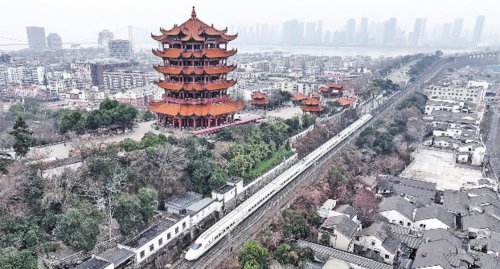
Core Viewpoint - The Harbin Railway Bureau Group has launched a new travel photography service on its "Silver Travel Train," enhancing the integration of railway and tourism, particularly in the context of the booming ice and snow tourism in Heilongjiang province [1][3]. Group 1 - The "Silver Travel Train" is the first travel photography train launched by the Harbin Railway Bureau this year, offering tourists a unique experience with European-style clothing and free photography services [1][3]. - The travel photography service has been upgraded this year, featuring a redesigned train body with larger spaces and scenic backdrops, including ice and snow worlds, ethnic styles, and European themes [4]. - The number of travel photography outfits has increased from 20 to 40, adding new themes such as ethnic styles, retro platforms, and modern snow scenes, allowing tourists to enjoy photography while traveling [4]. Group 2 - The Harbin Railway Bureau plans to extend the travel photography service to regular passenger trains on the Harbin to Yabuli route based on passenger flow, creating a mobile "photography studio" for tourists [4].

日本北海道遭破纪录暴雪,约7000人滞留机场
Xin Lang Cai Jing· 2026-01-26 13:52
据共同社报道,在札幌站附近一条地下通道里,25日晚约有340人过夜。 札幌市周边地面交通大面积"瘫痪"。据北海道旅客铁道公司(JR北海道)介绍,25日逾500趟列车停 运,其中包括通往新千岁机场以及札幌至旭川和函馆的线路,约13万人出行受到影响。 来源:新华社 作者: 王奕昕 据日本媒体报道,受25日至26日创纪录的暴雪天气影响,日本北海道新千岁机场取消56架次航班,约 7000名旅客被迫滞留机场过夜,札幌市周边地面交通大面积"瘫痪"。 日本《读卖新闻》援引日本气象厅数据报道,截至26日9时,札幌市中央区48小时内降雪量达64厘米, 创1999年3月以来该地区最大降雪纪录。 暴雪导致新千岁机场运营严重受阻。新千岁机场运营方、北海道机场股份有限公司说,25日取消56架次 航班,约7000名旅客在机场内过夜。据日本《每日新闻》25日报道,有人在社交媒体发文称机场的出租 车候车点排起超过200人的长队,"简直是灾难"。 ...
中老铁路新增4趟中亚国际货运班列
Sou Hu Cai Jing· 2026-01-26 13:46
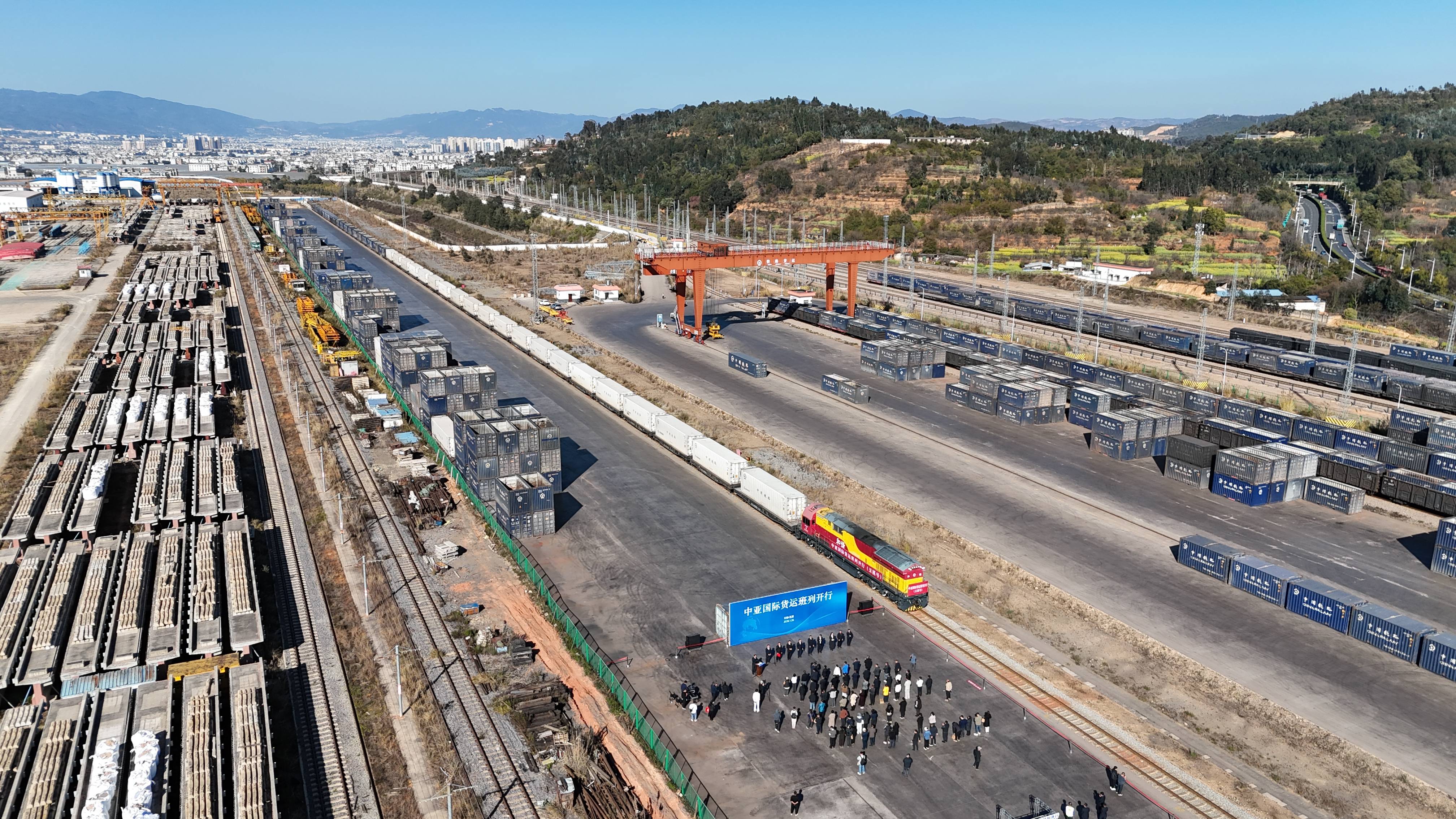
1月26日,中老铁路中亚国际货运班列在云南玉溪市研和站发车。新华社记者 高咏薇 摄 26日16时许,满载白菜、辣椒、西兰花等460吨新鲜蔬菜、285吨钢材的货运班列,从研和站缓缓驶出,这些货物将沿中老铁路到达老挝万象后,再继续转运 至泰国曼谷。 据中国铁路昆明局集团有限公司消息,中老铁路新增4趟中亚国际货运班列,首趟班列于26日从云南玉溪市研和站驶出,终点站为老挝万象南站。 据介绍,此次新增的中老铁路中亚国际货运班列将分别从玉溪市研和站、昆明市中谊村站、玉溪南站等始发,每周至少开行4趟。(记者岳冉冉、高咏薇) 1月26日,中老铁路中亚国际货运班列在云南玉溪市研和站发车。新华社记者 高咏薇 摄 中铁快运股份有限公司昆明分公司副总经理李谊说:"研和站从去年实现中老铁路国际货物列车的双向开行,到今天的中亚国际货运班列开行,标志着玉溪 至老挝的国际运输实现定时、定点、定班列,不仅时效更稳定,速度也更快了。" ...
南宁至昆明客运专线阳宗站正式开办客运业务
Xin Lang Cai Jing· 2026-01-26 12:48
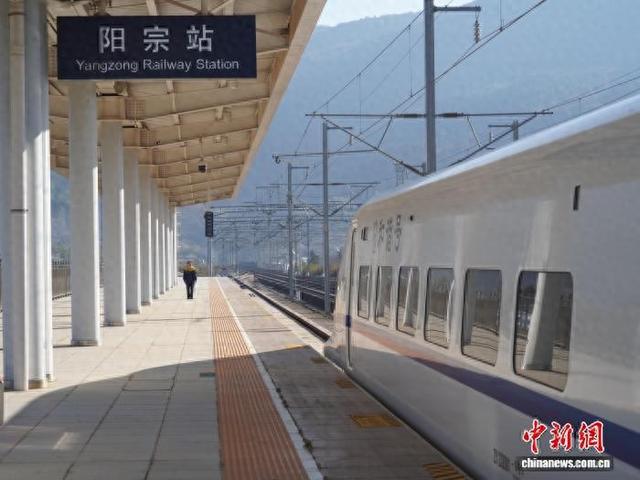
Core Viewpoint - The Nanning to Kunming high-speed railway line will officially commence passenger services at Yangzong Station starting from January 26, 2026, enhancing connectivity and travel efficiency in the region [1][3]. Group 1: Station and Services - Yangzong Station is located in Yuxi City, approximately 20 kilometers from the 4A-level scenic area of Yangzong Lake, with a total building area of about 2,500 square meters [3]. - The station's design incorporates traditional Yi ethnic patterns and colors, featuring a column-free waiting hall equipped with modern facilities such as intelligent security systems and facial recognition gates [3]. - After the commencement of passenger services, travel time from Yangzong Station to Kunming South Station will be as short as 10 minutes, and to Kunming Station approximately 35 minutes [3]. Group 2: Connectivity and Transportation - The travel time to Guangzhou South will be around 8.5 hours, and to popular tourist destinations in southern Yunnan, such as Honghe, it will take about 1.5 hours [3]. - To facilitate public transport connections, local transportation authorities will launch a dedicated bus service from the station to the Yangzong Lake tourist resort, linking major cultural and tourism sites [3]. Group 3: Ticket Sales - The railway department has started selling tickets for Yangzong Station from January 24, 2026, through the 12306 website, mobile app, and station ticket windows [3].
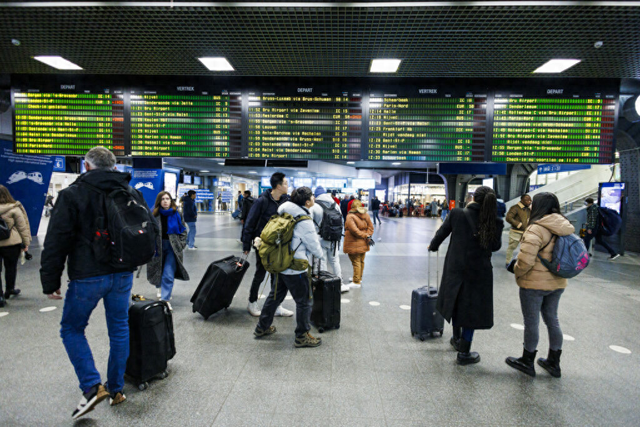
比利时铁路员工举行5天罢工,乘客出行将受严重影响
Xin Lang Cai Jing· 2026-01-26 12:48
来源:央视新闻客户端 比利时国家铁路公司称,将根据未参与罢工的铁路员工人数安排部分列车运行。乘客可通过相关应用程 序或网站查询新的列车时刻表。 据悉,比利时五个铁路工会联合发起此次罢工行动,抗议一项旨在改革铁路的法案草案。工会还对拟议 的劳资谈判制度改革等表示担忧。 当地时间1月26日,比利时铁路员工举行为期五天的罢工,全国铁路的乘客出行将受到严重影响。比利 时铁路服务从25日22时开始暂停,预计到1月30日22时恢复。 ...
新疆开行全国首趟棉花快速班列
Xin Hua Cai Jing· 2026-01-26 12:43
Core Viewpoint - The launch of the first rapid cotton train from Aksu, Xinjiang, marks a significant advancement in the logistics support for the cotton and yarn industry in Xinjiang, enhancing its overall competitiveness [1]. Group 1: Logistics and Transportation - The rapid train operates at a speed of 120 kilometers per hour and utilizes a "consolidation" transportation model, reducing the collection cycle by over 60% compared to previous methods [1]. - The railway department employs well-maintained high-speed vehicles for transportation and implements a "one warehouse, one plan" strategy to ensure careful loading and establish a green channel for cotton transport [1]. Group 2: Industry Impact - The opening of the rapid cotton train is considered an important development in the logistics of Xinjiang cotton, with plans to increase the frequency of train services and expand routes to cities like Zhengzhou and Shanghai, further lowering logistics costs in the industry [1][2].
高铁香港段连接内地站点增至110个
Xin Lang Cai Jing· 2026-01-26 12:38
Core Viewpoint - The Hong Kong section of the high-speed railway operated by the Hong Kong Railway Company will add 16 new stations, including Nanjing, Wuxi, and Hefei, starting from the 26th, increasing the total reachable mainland stations from Hong Kong West Kowloon Station to 110, covering 19 provinces, autonomous regions, and municipalities nationwide [1][1][1] Group 1 - The addition of 16 new stations enhances connectivity between Hong Kong and mainland China [1] - The total number of accessible mainland stations from Hong Kong increases significantly to 110 [1] - The expanded network covers a wide geographical area, including 19 provinces, autonomous regions, and municipalities [1]

广深港高铁蝶变:大湾区全面迈入高铁“公交化”时代
Zhong Guo Xin Wen Wang· 2026-01-26 12:33
Core Insights - The Guangzhou-Shenzhen-Hong Kong High-Speed Rail (GSHK) is transitioning into a "bus-like" operation model, significantly enhancing connectivity within the Guangdong-Hong Kong-Macau Greater Bay Area and beyond [1][2] Group 1: Operational Enhancements - As of January 26, 2026, the new train schedule will introduce 52 additional trains, bringing the total to 415 trains per day, making it the highest in terms of train frequency and station stops in the country [1] - The GSHK will now feature direct high-speed rail connections from Hong Kong to key cities in the Yangtze River Delta, including Nanjing, Wuxi, and Hefei, thereby strengthening economic ties between Hong Kong and this region [2] Group 2: Service Improvements - All cross-border trains will be upgraded to the Fuxing bullet train model, enhancing speed, comfort, and smart services, which is expected to attract more business and tourism passengers [4] - New services at Shenzhen North and Futian stations, including the "Four Connections" service, will facilitate seamless communication for cross-border travelers, improving the overall travel experience [4] Group 3: User Experience - The "Flexible Travel" feature allows passengers to change their travel plans easily, accommodating the dynamic nature of business travel, which is particularly beneficial for frequent travelers [6] - The introduction of the world's first fully intelligent high-speed rail platform screen door system at Futian Station will improve safety and operational efficiency by enhancing the alignment between platform doors and train doors [4]