Semiconductor

Search documents
ERI and ReElement Technologies Announce Rare Earth Elements Strategic Processing Partnership
Businesswire· 2025-11-20 14:30
Core Insights - The partnership between ERI and ReElement Technologies aims to establish a domestic supply chain for refined rare earth oxides from recycled magnet waste, enhancing U.S. capabilities in the rare earth sector [1][2][3] Group 1: Partnership Details - ERI will utilize its international collection network and eight U.S.-based recycling centers to process end-of-life magnet materials, which ReElement will refine into high-purity rare earth oxides [2][3] - This collaboration is expected to create a circular and secure supply chain for rare earth elements, addressing the growing strategic demand for these materials [3][4] Group 2: Production and Technology - ReElement has begun trial shipments of 99.99%+ pure rare earth oxides to commercial and defense partners, with production currently taking place at its Noblesville, Indiana facility [5] - Large-scale commercial output is set to transition to ReElement's 400,000-square-foot facility in Marion, Indiana, starting in early 2026 [5] Group 3: Company Profiles - ReElement Technologies focuses on refining recycled materials from rare earth permanent magnets and lithium-ion batteries, aiming to create an environmentally safe circular supply chain [8] - American Resources Corporation, the parent company of ReElement, is involved in the extraction and processing of critical minerals, including rare earth elements, to support the electrification market [9] - ERI is recognized as a leading material resource recovery company, certified for environmentally responsible recycling and capable of processing over a billion pounds of electronic waste annually [10]



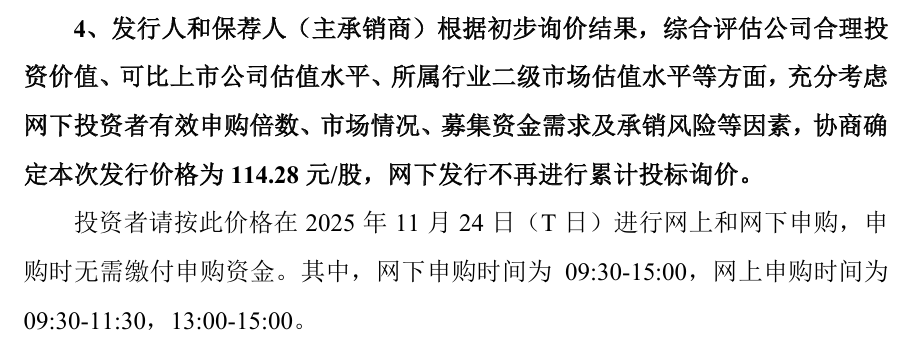
发行价114.28元/股 摩尔线程即将打新!
2 1 Shi Ji Jing Ji Bao Dao· 2025-11-20 14:00
Core Viewpoint - Moore Threads announced a public offering of 70 million shares at a price of 114.28 yuan per share, aiming to raise approximately 8 billion yuan for various AI chip development projects and working capital [1]. Group 1: Offering Details - The public offering will take place on November 24, 2025, through the Shanghai Stock Exchange trading system and internet trading platform [1]. - The total expected fundraising amount is approximately 79.996 billion yuan, with a net amount of around 75.76 billion yuan after deducting issuance costs [1]. Group 2: Use of Proceeds - The raised funds will be allocated to the development of next-generation AI training and inference chips, graphics chips, and AI SoC chips, as well as to supplement working capital [1]. Group 3: Company Background - Moore Threads was established in 2020 and focuses on providing accelerated computing infrastructure and one-stop solutions to support digital transformation across various industries [1].
容芯致远石旭:智算时代呼唤以GPU为核心的AI体系结构
2 1 Shi Ji Jing Ji Bao Dao· 2025-11-20 12:44
Core Insights - The demand for computing power has surged since the advent of generative AI in 2023, with high-end GPUs becoming essential production materials as AI applications proliferate by 2025 [1] - The transition from traditional computing to intelligent computing is marked by the introduction of the Deepseek mixture of experts (MoE) model, which allows for on-demand activation of sub-models, reducing training and inference costs [2] - The industry is moving towards a new data center architecture that utilizes electrical computing and optical transmission to overcome the limitations of traditional copper interconnects [3] Industry Trends - In 2023, China sold 4.7 million traditional computing servers and 150,000 intelligent computing servers, with projections indicating a decline in traditional server sales to over 1 million and an increase in intelligent server sales to over 100,000 by mid-2025 [1] - The shift towards GPU-centric architectures is driven by the limitations of CPUs in handling large-scale parallel computing tasks, with GPUs becoming the core of AI computing systems [4][5] - The industry is innovating to address the high failure rates and energy consumption of GPUs, with advancements in GPU hot-swapping and RAID technologies aimed at enhancing reliability and extending lifespan [5] Technological Innovations - The AGC (AI computer system with GPU as its Core) architecture proposed by companies like容芯致远 positions the CPU as a peripheral, reducing reliance on high-performance CPUs and allowing for better performance from domestic GPUs [5] - The effective utilization of computing power (MFU) can be improved from an average of 40% in traditional servers to over 60% through architectural innovations, enhancing overall computational efficiency [6]

SkyWater Technology and Silicon Quantum Computing Team to Advance Hybrid Quantum-Classical Computing
Businesswire· 2025-11-20 12:05
Core Insights - SkyWater Technology and Silicon Quantum Computing (SQC) have announced a collaboration to advance hybrid quantum-classical computing, aiming to commercialize this technology by integrating quantum and classical components [1][2][3] Company Overview - SkyWater Technology is the largest exclusively U.S.-based, pure-play semiconductor foundry, focusing on secure manufacturing and packaging capabilities for high-performance computing [1][4] - SQC is a leading company in quantum computing, utilizing atomically engineered quantum processors to achieve high fidelities in quantum algorithms [6] Collaboration Details - The partnership will leverage SQC's precision in quantum device engineering and SkyWater's manufacturing capabilities to create a "future compute stack" where quantum processors work alongside classical processors [1][3] - SkyWater's Technology-as-a-Service model will facilitate the integration of quantum and classical components, reinforcing its role as a trusted enabler of next-generation technologies [2][3] Technological Advancements - The collaboration aims to develop hybrid systems that require precise manufacturing, secure packaging, and high-bandwidth connections to effectively integrate quantum and classical components [3] - SQC will provide its atomically-engineered quantum processing units (QPUs), while SkyWater will supply superconducting resonators and tailored silicon wafers [3]



Wall Street Breakfast Podcast: Delayed Jobs Numbers Drop Today
Seeking Alpha· 2025-11-20 12:04
Group 1: Employment Data - The September nonfarm payrolls are expected to add 50,000 jobs, an increase from the 22,000 estimated in August, with the unemployment rate projected to remain at 4.3% [5] - The Bureau of Labor Statistics (BLS) revised its employment growth number for the year ending March 31, 2025, down by 911,000 jobs [5] - The BLS canceled the October jobs report due to the inability to collect household survey data retroactively [6] Group 2: Netflix and Warner Bros. Discovery - Netflix has indicated it will continue to release Warner Bros. films in theaters if it acquires the studio, despite previously limiting theatrical releases [7] - Warner Bros. has contractual obligations for theatrical releases that Netflix plans to honor [8] - Paramount Skydance's latest bid for Warner Bros. is expected to be around $23.50 per share, while Netflix and Comcast are interested in the streaming and studio operations [9][10] Group 3: ByteDance Valuation - A Chinese investment firm purchased a block of ByteDance shares at a valuation of $480 billion, indicating strong investor interest in the parent company of TikTok [11] - The stock block was priced at approximately $200 million, with a previous valuation of $360 billion for ByteDance [12]


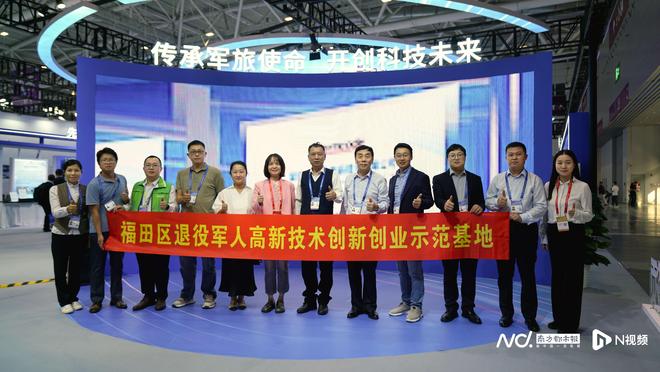
收获满满!来自福田的“军创”展团亮相高交会
Nan Fang Du Shi Bao· 2025-11-20 03:16
Core Insights - The 27th High-Tech Fair concluded successfully, focusing on "Technology Empowering Industries, Co-creating the Future" [1] - The "Guangdong Military Innovation and Technology" exhibition area attracted significant attention, showcasing nine military innovation enterprises with strong technological capabilities [1][3] Group 1: Company Highlights - Yuzhi Power presented an "Integrated Joint Power Module" and a series of embodied robot solutions, drawing high interest from attendees [3] - Biaolang Environmental showcased its Kason Environmental series of interior wall coatings and received numerous inquiries from construction industry clients, leading to initial agency agreements [3][5] - Daqi Disinfection introduced a dynamic disinfection IoT air purification device, effectively eliminating bacteria and viruses in spaces [5] - Fuan Zhi's fire self-rescue cabin attracted many participants with its innovative design and performance, establishing initial cooperation intentions with several construction and emergency equipment companies [5] - Suiguang Technology's AI-3D training system integrates AI and 3D interaction technology for immersive training across various sectors [5][6] - Huakai presented its "Huakai Smart Factory Overall Solution," enhancing digital upgrades and efficiency for enterprises [5] - Yijian Space exhibited an integrated remote sensing monitoring system applicable in various fields, aiding in safety risk prevention [5] Group 2: Event Outcomes - The exhibition saw over 10,000 professional consultations, resulting in 95 supply-demand matches and cooperation discussions [8] - Several enterprises received attention from investment institutions, with plans for further in-depth discussions [8] - The operational office of the base acted as a "super liaison," facilitating connections and resource integration for participating companies [8] - The base aims to continue its role as a platform and bridge, supporting veteran entrepreneurs in navigating the technology wave and contributing to economic development [8]
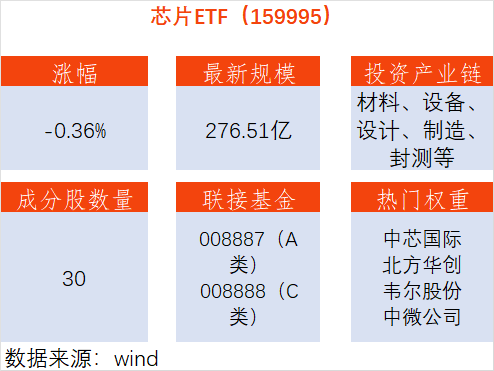
【芯片ETF(159995.SZ)震荡走低,机构看好2026年国产设备扩产趋势】
Mei Ri Jing Ji Xin Wen· 2025-11-20 03:08
Group 1 - The A-share market saw a collective rise in the three major indices on November 20, with the Shanghai Composite Index increasing by 0.29%. The sectors that performed well included non-ferrous metals, building materials, and environmental protection, while beauty care and retail sectors faced declines [1] - The semiconductor sector experienced a mixed performance, with the Chip ETF (159995.SZ) down by 0.36% as of 10:14 AM. Notable declines were seen in companies such as Zhongwei Company (-3.17%), Northern Huachuang (-2.75%), and Tuojing Technology (-2.16%). However, some individual stocks like Wentai Technology and Shengmei Shanghai saw increases of 2.67% and 1.09%, respectively [1] Group 2 - Domestic semiconductor equipment companies reported positive growth in Q3 2025, with Northern Huachuang showing a healthy revenue recovery and significant profit growth for companies like Zhongwei and Tuojing. The outlook for 2026 suggests accelerated expansion in advanced logic and memory production lines, benefiting from downstream advanced packaging trends and gradually extending into computing power fields [3] - According to招商证券, the acceleration of domestic self-controllable processes will continue to benefit from the expansion trends in advanced logic and memory production lines in 2026. There is a recommendation to focus on domestic large chip manufacturers and companies benefiting from marginal recovery and increased demand for AI servers [3] - The Chip ETF (159995) tracks the Guozheng Chip Index, which includes 30 leading companies in the A-share chip industry across materials, equipment, design, manufacturing, packaging, and testing, such as SMIC, Cambrian, Changdian Technology, and Northern Huachuang [3]
神工股份股价跌5.05%,国泰基金旗下1只基金位居十大流通股东,持有107.54万股浮亏损失382.82万元
Xin Lang Cai Jing· 2025-11-20 02:41
Group 1 - The stock of ShenGong Co., Ltd. fell by 5.05% on November 20, trading at 67.00 yuan per share, with a transaction volume of 399 million yuan and a turnover rate of 3.42%, resulting in a total market capitalization of 11.41 billion yuan [1] - ShenGong Co., Ltd., established on July 24, 2013, and listed on February 21, 2020, specializes in the research, production, and sales of semiconductor-grade monocrystalline silicon materials [1] - The main business revenue composition includes silicon components at 53.86%, large-diameter silicon materials at 44.37%, with 16-inch and above at 24.07% and below 16-inch at 20.30%, and semiconductor large-size silicon wafers at 1.44% [1] Group 2 - The top circulating shareholder of ShenGong Co., Ltd. includes a fund from Guotai Fund, specifically the Guotai CSI Semiconductor Materials and Equipment Theme ETF (159516), which entered the top ten circulating shareholders in Q3 with 1.0754 million shares, accounting for 0.63% of circulating shares [2] - The Guotai CSI Semiconductor Materials and Equipment Theme ETF (159516) was established on July 19, 2023, with a latest scale of 8.299 billion yuan, achieving a year-to-date return of 44.76% and a one-year return of 27.2% [2] - The fund manager of the Guotai CSI Semiconductor Materials and Equipment Theme ETF is Ai Xiaojun, who has a cumulative tenure of 11 years and 315 days, managing total fund assets of 169.029 billion yuan, with the best fund return during his tenure at 259.2% [2]

内存供应短缺,英伟达、AMD中低端游戏显卡或面临停产
Huan Qiu Wang· 2025-11-20 02:35
Core Insights - The global DRAM memory supply shortage is prompting GPU manufacturers Nvidia and AMD to consider halting production plans for entry-level and mid-range gaming graphics cards, potentially leading to supply adjustments and price fluctuations in the market [1][3] Group 1: Supply Chain Impact - The significant increase in GDDR memory module prices has sharply raised the material costs for graphics cards, causing a supply chain strain [3] - Current global DRAM production capacity is heavily shifting towards data center construction, resulting in a continued tight supply of consumer-grade memory [3] Group 2: Product Focus - Nvidia's "60 series" (e.g., RTX 4060/3060) and "50 series" (e.g., RTX 4050/3050) graphics cards, which focus on cost-performance ratio, are most likely to be affected by production adjustments due to their relatively thin profit margins [3] Group 3: Market Reactions - The memory shortage is causing a ripple effect in the electronics industry, leading to increased hardware component costs and significant price hikes in memory modules [3] - Manufacturers like Asus have indicated that if the DRAM shortage persists, consumer electronics prices may need to be raised, with a risk of mainstream graphics card prices "soaring" in the coming weeks, directly impacting gaming consumers' purchasing decisions [3]

强瑞技术在东莞成立半导体科技新公司
Xin Lang Cai Jing· 2025-11-20 02:24
Group 1 - Dongguan Qiangpeng Semiconductor Technology Co., Ltd. has been established with a registered capital of 50 million yuan [1] - The company's business scope includes manufacturing and sales of semiconductor device specialized equipment and electronic specialized equipment [1] - Qiangpeng is wholly owned by Qiangrui Technology through indirect shareholding [1]