储能

Search documents
南网储能:当前广东省暂未实施针对新型储能的容量补偿政策
Zheng Quan Ri Bao· 2026-01-08 14:09
Group 1 - The company, Nanfang Energy Storage, indicated that there is currently no capacity compensation policy for new energy storage implemented in Guangdong Province [2]


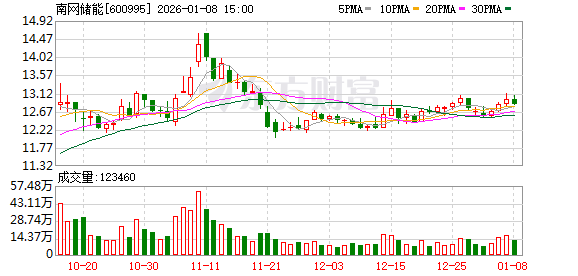
南网储能:公司积极关注并跟踪开展钠离子等新型储能技术研究
Zheng Quan Ri Bao Wang· 2026-01-08 13:43
Core Viewpoint - The company is actively exploring and tracking new energy storage technologies such as sodium-ion, flow batteries, compressed air, and gravity storage, in addition to lithium-ion electrochemical storage [1] Group 1: Company Initiatives - The company has successfully operated the Yunnan Qiubei Baochi energy storage station, which utilizes both lithium and sodium batteries, providing a demonstration application scenario for further validation and promotion of sodium battery technology [1] - The company plans to implement new technology application demonstrations when relevant technological routes mature and suitable scenarios are identified [1]
392GWh!2026年储能走向引热议
行家说储能· 2026-01-08 13:35
Core Viewpoint - The new energy storage industry is at a critical juncture, transitioning from a policy-driven model to a market-driven one, influenced by recent regulatory changes and technological advancements [5][7][41]. Group 1: Policy Changes and Market Dynamics - The 136 and 1502 documents signify a shift in energy pricing, impacting both generation and consumption sides, which will profoundly affect the new energy storage industry [2][41]. - The cancellation of mandatory time-of-use pricing for direct market participants aims to address how electricity pricing is connected to consumption, indicating a move towards more market-oriented pricing mechanisms [2][41]. - The acceleration of electricity market reforms is disrupting traditional business models, necessitating companies to redefine their roles within the energy ecosystem [6][41]. Group 2: Strategic Opportunities and Trends - The new energy storage sector is expected to experience significant growth, with global installed capacity projected to reach approximately 277 GWh in 2025 and 380 GWh to 392.76 GWh in 2026 [9]. - Key trends include the rise of large-capacity battery cells, grid-connected storage, long-duration storage, and the increasing importance of virtual power plants [3][10]. - The industry is moving towards a multi-scenario revenue model, shifting from simple arbitrage to comprehensive energy services, driven by the need for diversified revenue streams [16][41]. Group 3: Technological Innovations - The evolution of battery technology is evident, with a shift from 314 Ah cells to 500/600 Ah cells expected by 2026, enhancing efficiency and performance [13][15]. - Innovations such as the high-safety series-connected grid storage solutions are being developed to address challenges like low inertia and weak grid conditions [12][40]. - The introduction of AI and digital solutions is becoming crucial for optimizing energy management and operational efficiency in the storage sector [18][20]. Group 4: Commercialization and Application Scenarios - The commercial storage market is projected to grow significantly, with an expected increase in installed capacity from 7.54 GWh to 18.96 GWh from 2023 to 2025, reflecting a compound annual growth rate of 35.98% [30]. - The focus is shifting from price competition to comprehensive energy solutions, with companies like Haier introducing integrated storage systems that enhance safety and performance [31][33]. - The virtual power plant model is emerging as a key strategy for commercial storage, allowing for enhanced revenue generation through dynamic pricing and resource aggregation [19][25]. Group 5: Challenges and Industry Evolution - The cancellation of time-of-use pricing is leading to a reevaluation of revenue models for commercial storage, with companies needing to adapt to fluctuating market prices [41][44]. - The industry faces challenges in operational capabilities and safety, necessitating a transition towards multi-revenue models and enhanced operational strategies [37][46]. - As the market evolves, companies must focus on building differentiated advantages through integrated solutions and advanced technology to remain competitive [48][49].
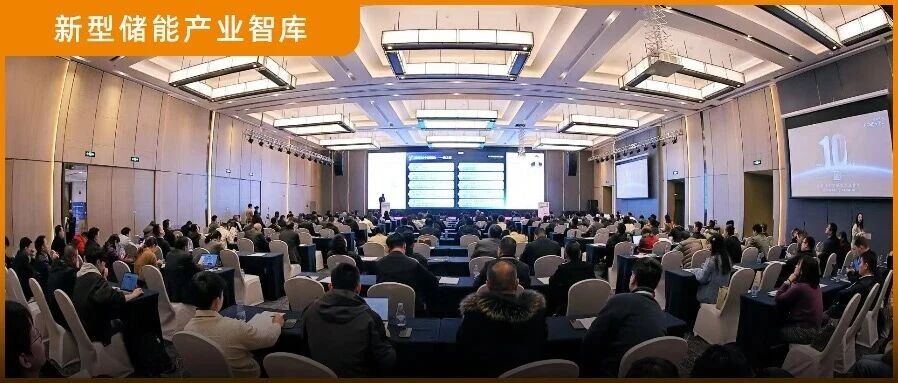
储能行家极光奖11大奖项名单公布
行家说储能· 2026-01-08 13:35
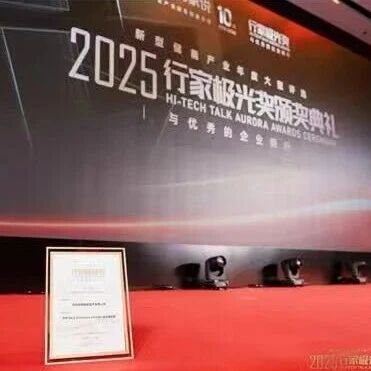
Core Viewpoint - In 2026, the Chinese energy storage industry is approaching a historic turning point, following a year of intense competition in 2025 characterized by rapid product technology iterations, evolving brand landscapes, and comprehensive safety standard upgrades [1] Group 1: Awards and Rankings - The "Aurora Awards" committee announced 11 award categories at the "2026 Energy Storage Innovation Summit" [3] - The annual top ten rankings are based on actual shipment volumes, integrating product performance metrics, market share, and customer reputation to identify leading companies in various segments [5] - The rankings include categories for "Top Ten Energy Storage Cell Shipments," "Top Ten User-Side Energy Storage System Integrators," and "Top Ten New Energy Storage System Integrators," aimed at recognizing industry leaders [5] Group 2: Specific Award Categories - The "Top Ten New Energy Storage System Integrators" focuses on companies that excel in system efficiency, intelligence, and project quality, driving high-quality industry development [7] - The "Top Ten User-Side Energy Storage System Integrators" evaluates companies based on adaptability, economic viability, and operational capabilities, emphasizing the commercial value of user-side storage [10] - The "Top Ten Energy Storage Cell Shipments" recognizes companies that establish industry benchmarks through large-scale production and technological advancements [13] Group 3: Influence and Innovation Awards - The "Influential New Energy Storage Enterprise Award" assesses companies based on technical strength, brand influence, operational capabilities, market share, safety standards, and digitalization levels [16] - The "Best Comprehensive Energy Operator" award evaluates companies on resource integration, project operation efficiency, and service quality, promoting high-value upgrades in the energy service market [23] - The "Growth Value Enterprise Award" focuses on companies' innovation potential and growth space, assessing revenue growth, market expansion, and technology conversion efficiency [25] Group 4: Safety and Product Awards - The "Energy Storage Industry Safety Pioneer Award" highlights companies that excel in key technology research, product stability, and safety applications in large-scale projects [27] - The "Influential Product Award" aims to showcase the technological ecosystem in the energy storage field, featuring sub-awards for "Innovative Product Award" and "Outstanding Product Award" [30] - The "Innovative Product Award" recognizes products that meet evolving industry needs through technological breakthroughs or differentiated solutions [31]
四部门联合召开动力和储能电池行业座谈会 强化央地协同联动,严控重复建设
Mei Ri Jing Ji Xin Wen· 2026-01-08 13:33
储能行业正陷入非理性竞争旋涡,行业普遍面临"增收不增利"的窘境。近日,这一局面迎来了强有力的 监管信号。 2026年1月7日,工业和信息化部、国家发展改革委、市场监管总局、国家能源局联合召开动力和储能电 池行业座谈会,明确指出行业存在盲目建设、低价竞争等问题,并部署了规范产业竞争秩序的相关工 作。会议要求,强化央地协同联动、综合施策,加强对本地企业指导,严控重复建设,推动行业健康有 序发展。 这是继2025年11月底工信部座谈会后,监管部门的再次加码,旨在引导储能行业回归理性发展轨道。 此外,会议还提出要支持行业协会发挥自律作用,引导企业科学布局产能,推动构建优质优价、公平竞 争的市场秩序。最后,会议强调了区域协同的重要性,要求强化央地协同联动、综合施策,加强对本地 企业指导,严控重复建设,推动行业健康有序发展。 数据显示,2024年末中国新增新型储能装机突破1亿千瓦时,近五年累计增长了20倍,储能电池和系统 出货量分别占全球市场的90%和70%以上。 然而,繁荣之下整个行业却陷入困境。2025年9月,宁德时代创始人、董事长曾毓群在世界储能大会上 致辞时表示,近3年间,储能系统价格下降了约八成,近期某个集采项 ...

年增长1135%,订单超美国,揭秘澳洲储能市场背后千亿金矿和陷阱
3 6 Ke· 2026-01-08 13:01
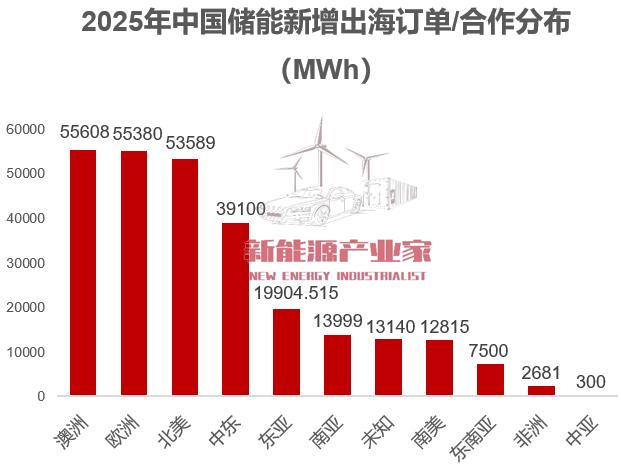
Group 1 - Australia is experiencing a significant surge in energy storage orders, with over 55 GWh of orders this year, a staggering increase of 1135% compared to last year's 4.5 GWh [2][3] - The Australian market is now the largest overseas order source for Chinese energy storage companies, surpassing the United States [2][3] - By the third quarter of this year, there are 74 energy storage projects under construction in Australia, with a total capacity of 35 GWh, positioning Australia as the third-largest energy storage market globally, following China and the U.S. [6] Group 2 - The Australian energy market is transitioning away from coal, with plans to retire over 11 GW of coal-fired power plants in the next decade, creating a demand for over 100 GWh of energy storage capacity [15] - The unique characteristics of the Australian power grid, which is a long and narrow "island," necessitate energy storage solutions to prevent potential blackouts [17] - The high electricity prices in Australia, which can reach over 20 AUD per MWh, create lucrative opportunities for energy storage operators [37] Group 3 - The development of energy storage projects in Australia faces significant regulatory hurdles, with a high project rejection rate and lengthy approval processes [20][21] - Local regulations require extensive environmental assessments and compliance with strict standards, making project execution challenging for foreign companies [20][21][30] - Successful companies in the Australian market, such as Tesla and Fluence, have adapted to local regulations and developed strong software capabilities to enhance their competitive edge [28][42] Group 4 - The Australian market values software capabilities and operational excellence over just hardware pricing, with local clients willing to pay a premium for high-quality service and support [43][44] - The scarcity of skilled labor in Australia poses challenges for project execution, emphasizing the need for well-coordinated teams that understand local regulations and standards [47] - Chinese companies are beginning to shift their strategies from competing on price to focusing on service quality and local partnerships to succeed in the Australian market [48][49] Group 5 - The upcoming Brisbane Olympics is expected to drive significant infrastructure investment in the region, further boosting the demand for renewable energy and storage solutions [55] - Australia is evolving into a decentralized, market-driven energy exchange network, highlighting the importance of software algorithms in future energy management [55] - The ongoing developments in Australia serve as a testing ground for companies' international capabilities and product quality, determining their potential for profitability in the energy storage sector [55]

新能源板块震荡分化,关注光伏ETF易方达(562970)、储能电池ETF易方达(159566)等投资价值
Sou Hu Cai Jing· 2026-01-08 10:34
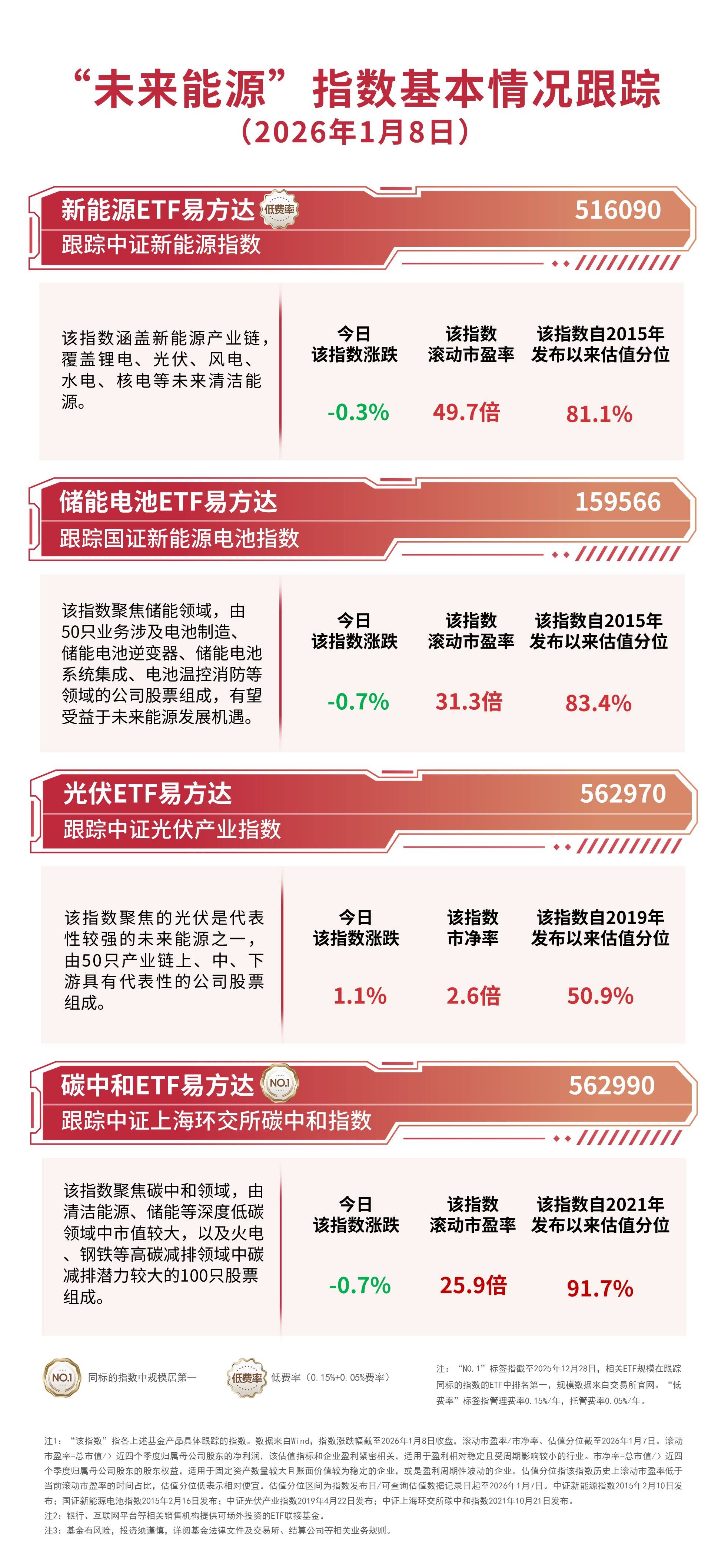
Core Viewpoint - The renewable energy sector is experiencing mixed performance, with photovoltaic components and battery cells showing gains, while other indices are declining. The focus remains on the development of a new energy system, particularly in energy storage and smart grid construction [1]. Group 1: Market Performance - The China Securities Photovoltaic Industry Index increased by 1.1%, while the China Securities New Energy Index decreased by 0.3% [1]. - The National Securities New Energy Battery Index and the China Securities Shanghai Carbon Neutrality Index both fell by 0.7% [1]. - The E Fund Energy Storage ETF (159566) saw a net subscription of 18 million units throughout the day, indicating strong investor interest [1]. Group 2: Industry Outlook - Huatai Securities emphasizes the importance of accelerating the construction of a new energy system during the 14th Five-Year Plan, focusing on the development of new energy storage and smart grid initiatives [1]. - The energy storage index comprises 50 companies involved in battery manufacturing, energy storage battery inverters, and system integration, which are expected to benefit from future energy development opportunities [4]. - The photovoltaic ETF tracks the China Securities Photovoltaic Industry Index, which includes 50 representative companies across the upstream, midstream, and downstream of the photovoltaic industry [6].
钒钛股份(000629) - 000629钒钛股份投资者关系管理信息20260108
2026-01-08 09:48
Group 1: Company Products and Production Capacity - The company produces a range of vanadium products including vanadium pentoxide, ferrovanadium, vanadium-nitrogen alloy, vanadium-aluminum alloy, and vanadium electrolyte, with an annual production capacity of 44,200 tons of vanadium products (measured in V2O5) [2] - The titanium series products include titanium dioxide and titanium slag, with an annual production capacity of 300,000 tons of titanium dioxide and 240,000 tons of titanium slag [2] - The products are widely used in industries such as steel, energy storage, non-ferrous metals, and coatings [2] Group 2: Raw Material Supply and Pricing - The main raw materials, titanium concentrate and crude vanadium slag, are sourced from the controlling shareholder, Panzhihua Steel Group, ensuring stable supply [2] - The pricing for crude vanadium slag is based on a cost-plus reasonable profit model [2][3] Group 3: Vanadium Energy Storage Business - The company is expanding its applications in non-steel sectors, particularly vanadium energy storage, through a strategic partnership with Dalian Rongke, a leader in the domestic vanadium energy storage field [4] - A joint venture is established to build a 2,000 cubic meters/year vanadium electrolyte production line, with a cumulative supply of over 20,000 tons of vanadium products to Dalian Rongke from 2021 to 2024 [4] Group 4: Titanium Dioxide Production Line - The 60,000 tons molten salt chlorination production line is a key project in Sichuan, utilizing titanium slag produced from local titanium concentrate [5] - The company has developed proprietary technology for low-grade titanium slag processing, leading to stable production and decreasing costs since 2025 [5] Group 5: Dividend Policy - The company currently does not meet the conditions for dividend distribution due to existing unabsorbed losses, but aims to improve operations to restore dividend eligibility as soon as possible [6]

报告:我国新型储能平稳较快发展 技术路线多元协同
Xin Hua Cai Jing· 2026-01-08 08:03
Core Insights - The report by State Grid Energy Research Institute indicates that by September 2025, China's new energy storage capacity will reach 103 million kilowatts, representing a growth of over 30 times compared to the end of the 13th Five-Year Plan [1] - The utilization level of energy storage stations is continuously improving, with the equivalent utilization hours for new energy storage nationwide increasing by approximately 120 hours year-on-year to about 770 hours from January to September 2025 [1] - The report forecasts that by 2030, the cumulative demand for new energy storage in China will exceed 300 million kilowatts, with lithium battery storage remaining the primary technology during the 14th Five-Year Plan [3] Group 1: Current Status - As of September 2025, the total installed capacity of new energy storage in the State Grid operating area is 83.146 million kilowatts, with an average charge and discharge duration of 2.43 hours [1] - The maximum adjustable power of new energy storage in the State Grid operating area is 64.23 million kilowatts, with an average discharge duration of 2.4 hours during peak summer evenings [1] - In regions like Jiangsu, Shandong, and Zhejiang, the maximum simultaneous utilization rate of new energy storage has reached over 95%, playing a crucial role in peak supply [1] Group 2: Technological Development - The report highlights a "diverse collaboration and multiple breakthroughs" in new energy storage technology, with rapid iterations and declining costs across various technology routes [2] - The construction cost for lithium-ion battery storage is projected to be between 900-1100 RMB/kWh by 2025, while sodium-ion battery storage costs are expected to range from 2500-3500 RMB/kWh [2] - New compressed air storage has achieved key indicators, entering an accelerated industrialization phase with construction costs dropping to 5000-6000 RMB/kWh [2] Group 3: Future Outlook - The report anticipates steady growth in new energy storage, with a projected cumulative demand exceeding 300 million kilowatts by 2030 [3] - The diversification of technology routes will include both short-term and long-term energy storage solutions, with new energy storage playing an increasingly significant role in peak shaving, load following, and long-cycle regulation [3]
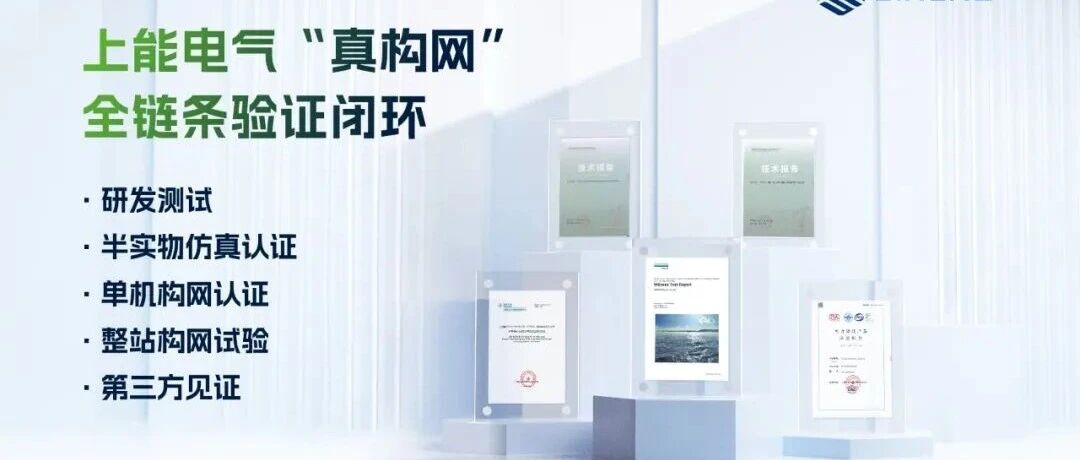
国际见证!上能电气构网型储能技术荣获DNV报告
中关村储能产业技术联盟· 2026-01-08 07:55
Core Viewpoint - The second-generation enhanced hybrid networking technology of the company has received authoritative certification from DNV, marking a significant step towards global large-scale application [2][4]. Group 1 - The station-level networking test was conducted at a 100MW/200MWh energy storage power station in Changsha, with the company collaborating closely with the project owner and Hunan Xiangdian Testing Research Institute to complete hundreds of functional tests in just one week [4]. - DNV's witness testing report fills a crucial gap in the company's "true networking" verification chain, which includes R&D testing, grid simulation, complete machine certification, and international witnessing [4]. - The certification enhances the international recognition of the company's networking energy storage technology, providing a "passport" for entering global markets [6]. Group 2 - The company will participate in the 14th International Energy Storage Summit and Exhibition (ESIE 2026) in Beijing from March 31 to April 3, 2026, inviting industry peers to explore the future of energy storage together [6][7]. - Recent achievements include supplying the largest energy storage power station in India (576MW) and successfully connecting a 200MW/400MWh energy storage power station in Yunnan to the grid [9].