
保险

Search documents
申万宏源:预计险企NBV增速亮眼 市场波动阶段性影响4Q25业绩表现
智通财经网· 2026-02-11 06:23
Group 1 - The core viewpoint is that the strong performance in the first three quarters lays a solid foundation for the annual results, with a high growth trend in NBV expected to continue into 2025 [1][2] - It is projected that the net profit attributable to shareholders of A-share insurance companies will increase by 22.7% year-on-year to 426.4 billion yuan in 2025, with a decrease in growth rate of 10.9 percentage points compared to the first three quarters of 2025 [1] - Specific companies are expected to show significant growth in net profit, including China Taiping (215%-225%), China Life (45.8%), and New China Life (43.0%) [1] Group 2 - The liability side of life insurance is expected to maintain a high growth trend, with projected NBV growth rates for various companies such as PICC Life (60.2%) and Sunshine Insurance (49.9%) [2] - The property insurance sector is expected to see a year-on-year premium income increase of 3.9% to 1.76 trillion yuan in 2025, with claims expenses rising by 1.6% to 1.17 trillion yuan [3] - The impact of Typhoon "Maitai" in October 2025 is expected to cause a temporary effect on the combined ratio (COR) performance, with significant economic losses reported [3] Group 3 - The strategy for insurance capital entering the market is continuously advancing, with the scale and proportion of investments in the secondary market increasing significantly [4] - By the end of September 2025, the balance of insurance funds in the secondary market reached 5.59 trillion yuan, accounting for 14.9% of total investments, an increase of 1.49 trillion yuan and 2.6 percentage points from the end of 2024 [4] - Market fluctuations are anticipated to exert pressure on investment performance in the fourth quarter of 2025, with various indices showing mixed performance [4]





大行评级丨小摩:重申友邦和保诚“增持”评级,自由现金流强劲改善
Ge Long Hui· 2026-02-11 05:31
Core Viewpoint - Morgan Stanley's report indicates that the strong improvement in free surplus and free cash flow generation is expected to rebuild market confidence in the embedded value of AIA and Prudential [1] Group 1: Financial Performance - The report highlights that the free cash flow yield and attractive capital returns may drive a revaluation of the stock prices against embedded value multiples, with strong growth momentum in Hong Kong presenting upside risks [1] - Prudential and AIA's stock prices surged approximately 70% to 80% last year, attributed to the recovery of Asian stock markets and improved cash generation capabilities [1] Group 2: Business Strategy - Both companies are focusing on optimizing their product portfolios to shorten the payback period for new business, such as increasing the proportion of health and protection products [1] - The P/EV multiples have rebounded from previous lows, with AIA at approximately 1.3 times the forecasted embedded value for 2026 and Prudential at about 0.9 times [1] Group 3: Future Outlook - New business profits drive free cash flow, which is utilized for capital returns and further growth, suggesting potential for P/EV revaluation for both stocks [1]

国任财险:现任总经理面临退休,现拟对外公开选聘总经理
Cai Jing Wang· 2026-02-11 05:26
国任财险公布岗位资格条件,要求原则上近5年工作经历须符合以下条件之一,特别优秀的经审定可以 适当放宽条件。1.曾担任保费规模100亿元以上财险公司总部经营班子副职及以上满两年,工作业绩突 出;2.在大中型财险公司担任分公司总经理5年以上,其中任省辖型分公司(保费规模50亿元以上)总 经理3年以上,具备总分公司多岗位管理经验的优先,工作业绩突出;3.在保费规模300亿元以上财险公 司担任总公司部门总经理及以上职务(或集团内同级别岗位)5年以上,且具有省辖型分公司(保费规 模30亿元以上)总经理3年以上的任职经历,工作业绩突出。 2月10日,据国任财险微信公众号披露,国任财产保险股份有限公司现任总经理面临退休,现拟对外公 开选聘总经理。 ...
和谐健康保险银保渠道开启价值增长新篇章
Xin Lang Cai Jing· 2026-02-11 05:21
Core Insights - The company is experiencing a new round of development opportunities in the insurance and banking channel due to the deepening of the "reporting and operation integration" policy by 2025, focusing on the increasing demand for elderly care and health protection [1][2] - The company aims to achieve a dual enhancement of scale and value by breaking through the 10 billion threshold in regular premium income, emphasizing compliance and value-driven development [1] Group 1: Strategic Focus - The company is concentrating on three core tasks: strict management of foundational operations, strengthening team building, and deepening balanced channel development [1][2] - A refined operational approach is being adopted to drive business quality, with a focus on enhancing business capabilities and controlling costs [1][2] - The company is implementing a "grasp both ends and promote the middle" strategy in its management of tiered institutions to ensure balanced development across all branches [1] Group 2: Sales and Compliance - The company has established a comprehensive sales management system that includes state-owned banks as leaders, joint-stock banks as key players, and rural commercial banks as supplements [2] - Compliance and consumer rights protection are prioritized, with the company exceeding industry standards in core quality indicators such as compliance rates and customer feedback success rates [2] - A robust risk compliance system is integrated throughout the business process to ensure stable development [2] Group 3: Product and Team Development - The company is rapidly increasing its channel premium share through high customer return period products while optimizing its product structure to meet customer lifecycle protection needs [2] - There is a focus on strengthening the foundational aspects of teams and channels, with the establishment of support systems for meeting management, activity volume management, and risk compliance [2] - The company aims to enhance core capabilities in execution, marketing, training, and innovation for sustainable business development [2] Group 4: Future Outlook - The company plans to continue deepening key channel cooperation, optimizing product offerings, and improving service quality while adhering to compliance and focusing on value growth [3] - The emphasis will be on addressing the core needs of residents for elderly care and health protection through refined operations and professional services [3]
金融监管总局:金融机构在节假日期间将保障适量网点开门营业
Sou Hu Cai Jing· 2026-02-11 05:16
Core Viewpoint - The State Council's Financial Regulatory Administration emphasizes the importance of a favorable consumer finance environment to stimulate market activity and consumption during the Spring Festival, outlining measures to reduce costs, improve services, benefit people's livelihoods, and strengthen guarantees [1][3]. Group 1: Cost Reduction - The Financial Regulatory Administration has implemented interest subsidy policies for service industry operators and personal consumer loans, particularly a 1% subsidy for personal consumer loans [3]. - Adjustments have been made to include credit cards in the subsidy scope and increase the subsidy limits, enhancing support for various financial institutions to lower consumer financing costs [3]. Group 2: Service Improvement - Financial institutions are encouraged to develop diverse financial products and services tailored to expand commodity consumption, service consumption, and foster new consumption types [3]. - There is a focus on digital, green, and intelligent consumption scenarios to better meet personalized and diverse financial needs [3]. Group 3: Livelihood Benefits - Financial institutions are tasked with leveraging their networks and technical resources to assist local governments in organizing consumption promotion activities and providing consumer subsidies [4]. - Collaborations with key merchants will lead to various promotional activities during the Spring Festival, including consumption red envelopes and discounts, aimed at enhancing consumer experience [4]. Group 4: Strengthened Guarantees - Financial institutions will ensure adequate branch operations during holidays to meet public financial service needs [4]. - There will be an emphasis on payment facilitation for various consumer scenarios, including new insurance products tailored for shopping, dining, travel, and sports [4]. Group 5: Future Directions - The Financial Regulatory Administration plans to continue enhancing financial policy support, guiding financial institutions to effectively serve the strategy of expanding domestic demand and optimizing financial services in key consumption areas [5].

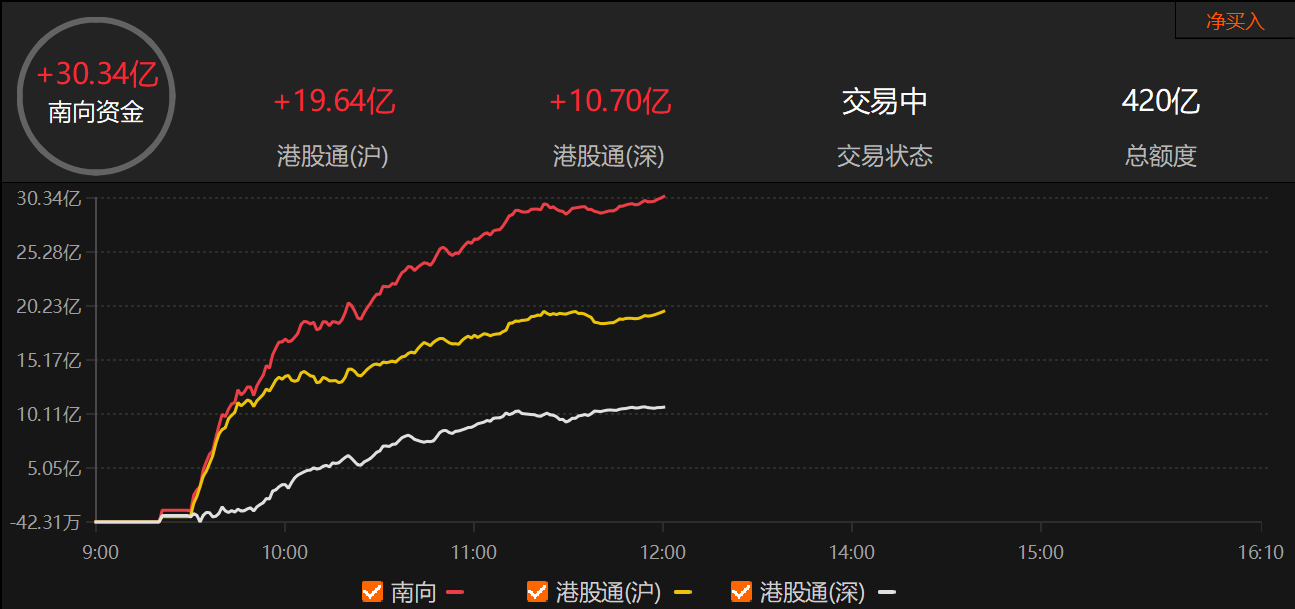
港股午评:恒生科技指数涨超1% 电影概念回调
2 1 Shi Ji Jing Ji Bao Dao· 2026-02-11 04:33
Market Performance - The Hong Kong stock market showed strength in the morning session, with the Hang Seng Index rising by 0.43%, the Hang Seng China Enterprises Index increasing by 0.41%, and the Hang Seng Tech Index up by 1.10% [1] Sector Performance - Gold stocks performed well, with Lingbao Gold rising over 7% and Shandong Gold and China Gold International both increasing by over 5% [1] - The healthcare sector remained active, with Angelalign Technology rising over 6%, and companies like InnoCare Pharma, Brainhole Laser, WuXi Biologics, and Four Seasons Medicine also seeing gains [1] - The mainland insurance sector weakened, with China Life and China Pacific Insurance both declining by over 2% [1] - The movie concept sector experienced a pullback, with DMG Entertainment dropping by over 5% and Maoyan Entertainment falling by over 4% [1] Capital Flow - Southbound funds recorded a net inflow of over 3 billion HKD in the morning session [1]
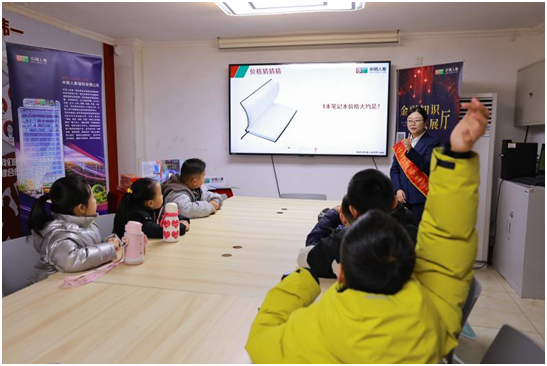
福暖新春伴成长 中荷人寿山东省分公司走进社区开展青少年金融教育活动
Qi Lu Wan Bao· 2026-02-11 04:32
此次进社区开展青少年金融教育活动,既帮助青少年普及了金融基础知识,提升了金融素养,也拉近了 企业与社区、居民之间的距离,树立了有温度、有担当的企业形象。未来,中荷人寿山东省分公司将持 续关注青少年成长,开展更多形式多样、贴合需求的金融教育公益活动,把金融知识送到青少年身边, 用专业守护成长,用温情传递温暖,为青少年健康快乐成长保驾护航,为构建和谐社区、普及金融知识 贡献保险力量。 活动以"寓教于乐"为核心,开展"价格猜猜猜"趣味游戏环节,让孩子们在游戏中解锁金融小知识。活动 现场,工作人员展示了多种孩子们熟悉的日常物品,邀请小朋友们轮流猜价。"我猜这个笔记本5 元!""不对不对,应该3元!"孩子们踊跃举手、积极抢答,现场氛围热烈欢快。在游戏过程中,工作人 员引导孩子们思考价格背后的意义,讲解商品成本、合理消费等基础财商金融知识,培养孩子们理性消 费的意识,在欢声笑语中播下金融素养的种子。 趣味互动之余,中荷人寿山东省分公司的工作人员还为现场每一位小朋友送上了精心准备的马年新春福 包。福包内装有寓意吉祥的马年福字、春联和窗花,承载着"马到成功"的美好祝福,也传递着中荷人寿 山东省分公司对青少年群体的关爱与期许。 ...
港股午评:恒生指数涨0.43%,恒生科技指数涨1.1%
Xin Lang Cai Jing· 2026-02-11 04:15
Market Overview - The Hong Kong stock market closed with the Hang Seng Index up by 0.43% and the Hang Seng Tech Index up by 1.1% [1] Sector Performance - The hotel and resort REITs, as well as the metals and mining sectors, showed strong gains [1] - Conversely, the forestry and paper products, along with the insurance sectors, experienced significant declines [1] Individual Stock Movements - Notable gainers included: - Kwan Hung Holdings up by 14.13% - Jiexin International Resources up by 12.79% - Woan Robotics up by 12.77% - China National Building Material up by 11.29% - Mongol Mining up by 11.06% [1] - Significant losers included: - Health 160 down by 33.15% - Easy Health down by 14.65% - May Day Vision down by 11.48% - Xuan Bamboo Biotechnology-B down by 11.23% - Yu Yuan Group down by 8.24% [1]
济宁金融监管分局同意利安人寿济宁市兖州支公司变更营业场所
Jin Tou Wang· 2026-02-11 03:49
2026年2月5日,济宁金融监管分局发布批复称,《关于利安人寿保险股份有限公司济宁市兖州支公司营 业场所变更的请示》(利保鲁发〔2026〕2号)及相关材料收悉。经审核,现批复如下: 一、同意利安人寿保险股份有限公司济宁市兖州支公司将营业场所变更为:山东省济宁市兖州区龙桥街 道九洲国际美食城(食尚坊)1号楼3层65、68号房间。 二、利安人寿保险股份有限公司应按照有关规定及时办理变更及许可证换领事宜。 ...
泰州金融监管分局同意中银保险泰州中心支公司变更营业场所
Jin Tou Wang· 2026-02-11 03:49
一、同意中银保险有限公司泰州中心支公司将营业场所变更为:江苏省泰州市海陵区济川东路220号 101、102室。 二、中银保险有限公司应按照有关规定及时办理变更及许可证换领事宜。 2026年2月4日,泰州金融监管分局发布批复称,《中银保险有限公司江苏分公司关于中银保险有限公司 泰州中心支公司变更营业场所的请示》(苏中银保险报〔2026〕07号)收悉。经审核,现批复如下: ...