零食

Search documents
IP 系列报告一:情绪消费风起,IP趣玩行业快速增长-国泰海通
Sou Hu Cai Jing· 2026-01-02 17:32
Group 1 - The report focuses on the development of the IP fun food industry under the trend of emotional consumption, analyzing industry scale, core competitiveness, competitive landscape, and investment opportunities [1] - The IP fun food market in China is expected to grow from 18.1 billion yuan in 2020 to 35.4 billion yuan in 2024, with a CAGR of 18.2%, while the IP fun food segment is projected to grow from 5.6 billion yuan to 11.5 billion yuan, achieving a CAGR of 19.6% [1][9] - The growth is driven by the younger generation, particularly those born in the 90s and 00s, who are becoming the main force in emotional consumption, with nearly 90% of youth having experience in emotional spending [1][21] Group 2 - The core competitiveness of the industry lies in supply chain management and IP operation, with the ability to control raw material costs and efficient production and distribution being fundamental barriers [2][12] - The competitive landscape is fragmented, with many small and medium-sized enterprises participating, and the leading company, Jintian Animation, holding only 7.6% market share in 2024 [2][12] - The rise of domestic brands is notable, with Jintian Animation entering the top five in the industry by 2024, indicating a shift in market dominance from foreign to local brands [2][12] Group 3 - Jintian Animation focuses on the 0-12 age group and has 26 popular IP licenses, with revenue expected to grow from 596 million yuan in 2022 to 877 million yuan in 2024, and net profit increasing from 37 million yuan to 131 million yuan [3] - The company has a gross margin of 33.7%, with over 70% of its revenue coming from the Ultraman and My Little Pony IPs, and is rapidly expanding its direct sales channels [3]



科技浪潮之下,企业如何保持清醒
3 6 Ke· 2025-12-30 13:36
Core Insights - The rapid advancement of technology, particularly AI, has outpaced the ability of businesses to effectively integrate and capitalize on these innovations, leading to strategic confusion and misallocation of resources [3][5][12] - Companies are increasingly recognizing the value of external perspectives to recalibrate their strategies and clarify their market positions amidst uncertainty [5][10][20] Group 1: Industry Challenges - Many companies are struggling to translate technological innovations into sustainable business value, resulting in a lack of clear growth trajectories [3][12] - The overwhelming pace of innovation has led to a situation where businesses find it difficult to determine where to allocate resources and when to pivot, often resulting in costly trial-and-error processes [3][12] - The issue is not a lack of innovation but rather an excess of it, with many firms focusing on technological capabilities without adequately addressing specific market needs [3][12] Group 2: Strategic Insights - The introduction of strategic consulting firms, such as Ries, has become crucial for companies seeking to navigate complex environments and make informed decisions about long-term investments [5][10] - Successful companies often rely on external consultants to help them compress complexity and clarify strategic choices, which is essential in a rapidly changing market landscape [5][10] - The importance of positioning theory is highlighted, emphasizing that businesses must solve real, identifiable problems for users to achieve sustainable growth [12][21] Group 3: Case Studies - The collaboration between Great Wall Motors and Ries Consulting exemplifies how strategic positioning can lead to significant growth, as seen in the development of the Haval and Tank brands [8][22] - The case of Xpeng Motors illustrates the importance of redefining a company's identity to align with market needs, transitioning from a traditional car manufacturer to a global AI driving technology company [15][21] - The success of brands like Junlebao and Weilong in the competitive dairy and snack markets demonstrates how precise positioning and addressing consumer needs can create new growth opportunities [22][23] Group 4: Market Dynamics - As the Chinese economy shifts from high-speed growth to a more stable phase, companies must adapt their strategies to focus on clarity in decision-making rather than merely expanding [18][20] - The competitive landscape is evolving, with technology becoming less scarce and the challenge now being the ability to translate it into understandable and marketable business forms [21][24] - Companies face the dual challenge of leveraging technological advancements while establishing a clear mental position in the market to ensure sustainable growth [20][25]


新股消息 | 齐云山港股IPO招股书失效
智通财经网· 2025-12-29 11:26
招股书显示,齐云山为中国的一家专注于南酸枣食品产品的知名果类零食公司。根据灼识咨询的资料,于2024年,以零售额计,公司占中国南酸枣食品 市场32.4%的份额,位居行业第一,自1997年以来,公司的旗舰产品南酸枣糕于中国连续28年获中国绿色食品发展中心认证为"绿色食品"并于2018年获认 可为国家地理标志保护产品。公司于1992年推出第一款南酸枣糕。历年来,公司的产品组合已拓展至包括四款其他南酸枣零食及其他果蔬糕。公司获认 定为高新技术企业及农业产业化国家重点龙头企业。 智通财经APP获悉,江西齐云山食品股份有限公司(简称:齐云山)于6月27日所递交的港股招股书满6个月,于12月27日失效,递表时中泰国际为其独家保 荐人。 ...

2026年-大消费策略展望
2025-12-29 01:04
Summary of Key Points from Conference Call Records Industry Overview - **Consumer Sector Outlook for 2026**: The consumer sector is expected to recover significantly, driven by a focus on domestic demand and policy support, particularly in service consumption and new product categories. The real estate sector's negative impact is diminishing, with core CPI showing six months of recovery [2][5][8]. Core Insights and Arguments - **Long Bull Market Prediction**: A long bull market similar to 2016-2019 is anticipated to begin in the second half of 2026, led by AI-driven new products, service consumption, overseas opportunities, and durable goods. The first half of 2026 will see strong performance in overseas markets, while domestic demand will gain attention in the latter half [1][5][6]. - **Policy Support for Consumer Spending**: The introduction of a resident income increase plan by the central economic work conference, along with the appreciation of the RMB and favorable trade policies, will provide a solid foundation for consumer spending in the coming years [1][9][10]. - **AI and 3D Printing Opportunities**: The AI and 3D printing sectors are poised for significant growth, with opportunities across the entire supply chain, including leading companies and innovative hardware products like AI glasses and smart mattresses [1][12]. Key Sectors and Companies to Watch - **Service Consumption**: Focus on service consumption growth in 2026, particularly in travel and tourism, as well as the elderly care sector, which is expected to see increased demand [3][15]. - **Alcohol and Snack Industries**: The liquor sector, particularly major brands like Moutai, is expected to maintain strong performance due to price stability measures. The snack sector is also showing promise, with companies like Wanchen and Yanjin expected to perform well during the pre-Spring Festival period [16][20][24]. - **Elderly Economy**: The silver economy is anticipated to grow, with companies like Sanxia Tourism and Aima Technology showing potential in the elderly travel and mobility sectors [15][11]. Investment Logic and Recommendations - **Consumer Sector Investment**: The consumer sector is seen as undervalued, with significant room for valuation recovery. The focus should be on companies benefiting from policy support and improving domestic demand [2][30]. - **Emerging Technologies**: Investment opportunities in AI and new technologies, particularly in 3D printing and AI-enhanced products, are highlighted as key growth areas [12][35]. - **Overseas Expansion**: Companies with strong overseas branding and supply chain capabilities are recommended for investment, especially in light of the RMB appreciation [13][31]. Additional Insights - **Real Estate Market Impact**: The negative impact of the real estate market on consumer spending is expected to be limited, as government measures to boost public spending and social security are likely to stabilize purchasing power [7][8]. - **Consumer Market Drivers**: Key drivers for the consumer market include urbanization, rising GDP per capita, and demographic shifts, particularly the aging population, which will influence consumption patterns [10][11]. - **Food and Beverage Sector**: The snack and beverage sectors are expected to benefit from new retail models and consumer trends, with specific companies recommended for their growth potential [20][24][27]. This summary encapsulates the essential insights and recommendations from the conference call records, providing a comprehensive overview of the anticipated trends and investment opportunities in the consumer sector for 2026.
A股或迎接跨年“小躁动”行情
Mei Ri Jing Ji Xin Wen· 2025-12-28 21:55
Group 1 - The A-share market is experiencing a "small fluctuation" trend as it approaches the end of the year, with the Shanghai Composite Index recording eight consecutive days of gains [1] - Market liquidity is driving the current trend, with total trading volume exceeding 2 trillion yuan on the last Friday, indicating a significant increase in market activity [1] - Key sectors such as non-ferrous metals and lithium mining are benefiting from price increases, while themes like Hainan Free Trade Port and commercial aerospace remain active [1] Group 2 - Institutional buying power is expected to strengthen, with increased allocation of funds as external uncertainties ease, contributing to a positive cross-year market outlook [2] - The rebound of U.S. tech stocks, appreciation of the yuan, and rising prices of non-ferrous metals are identified as catalysts for the upcoming market rally [2] - The cross-year market is anticipated to show a clear characteristic of "growth leading, liquor sector consolidating," with a focus on sectors like snacks and dairy that are showing clear growth potential [3] Group 3 - The liquor sector is currently in a "bottoming out" phase, with demand expected to increase as the Spring Festival approaches, leading to a potential valuation recovery post-holiday [3] - Recent stabilization in prices from leading liquor companies and a decrease in inventory levels are early signs of recovery in the liquor market [3]


可选消费W51周度趋势解析:A/H零食和零售板块表现亮眼,海外NIKE拖累运动服饰表现-20251228
Haitong Securities International· 2025-12-28 14:45
Investment Rating - The report assigns an "Outperform" rating to multiple companies including Nike, Midea Group, JD Group, Haier, Gree Electric, Anta Sports, and others, while Lulu Lemon is rated as "Neutral" [1]. Core Insights - The A/H snack and retail sectors have shown strong performance, while overseas Nike has negatively impacted sportswear performance [4][11]. - The report highlights a recovery in overseas consumer sectors and anticipates the implementation of supportive consumption policies in the A/H markets [3]. Performance Review by Sector - **Snacks**: The snack sector saw a weekly increase of 5.7%, with companies like Qiaqia Food and Three Squirrels rising by 6.0% and 7.5% respectively. The performance is attributed to seasonal sales and expectations for new products in Q1 2026 [5][13]. - **Retail**: The retail sector increased by 2.3%, driven by the rapid expansion of Wancheng Group's stores and positive same-store sales growth [6][14]. - **Overseas Cosmetics**: This sector rose by 2.4%, with notable increases from ELF Beauty and Estée Lauder [6][14]. - **Luxury Goods**: The luxury sector increased by 0.8%, with Samsonite benefiting from high-end consumer recovery [6][14]. - **Domestic Sportswear**: This sector experienced a decline of 0.3%, with Li Ning showing a 7.5% increase due to the opening of a flagship store [6][14]. - **Gold and Jewelry**: This sector fell by 1.9%, with Chow Tai Fook and other companies facing price increases and market volatility [6][14]. - **Overseas Sportswear**: This sector declined by 2.6%, primarily due to Nike's poor performance, which saw a 13.0% drop [6][14]. Valuation Analysis - The report indicates that most sectors are currently valued below their average over the past five years. For instance, the expected PE for the overseas sportswear sector is 31.2 times, which is 59% of its historical average [9][15]. - Other sectors such as domestic sportswear, gold and jewelry, and luxury goods also show lower expected PE ratios compared to their historical averages, indicating potential investment opportunities [9][15].
中信建投:跨年行情或呈现“成长先行、白酒蓄力”的鲜明特征
Zheng Quan Shi Bao Wang· 2025-12-28 13:08
转自:证券时报 人民财讯12月28日电,中信建投研报称,从月度数据与市场表现来看,跨年行情或呈现"成长先行、白 酒蓄力"的鲜明特征。当前市场资金更倾向于布局零食、乳业等景气度明确、弹性更高的赛道,这类板 块在政策支持与产业趋势共振下,月度数据持续改善,成为跨年行情的核心驱动力。而白酒板块则处 于"磨底蓄力"阶段,随着春节临近,终端备货需求逐步启动,近期头部酒企批价企稳、库存回落的边际 变化已开始显现,预计春节后随着消费场景修复与需求集中释放,白酒将迎来估值修复行情。 ...
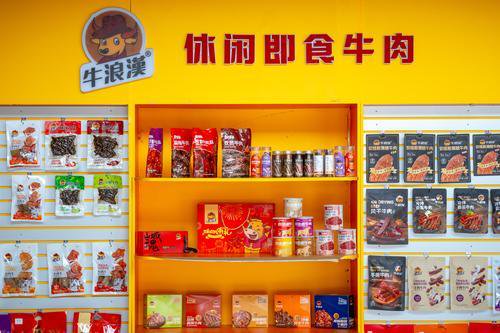
从“川渝特产”到“国民零食” 重庆老品牌牛浪汉在拼多多蜕变
Xin Lang Cai Jing· 2025-12-26 14:57
Core Insights - The article discusses the transformation of the traditional beef jerky brand "Niu Lang Han" in Chongqing, which has been a staple for 33 years, as it seeks to expand its reach to younger consumers and break regional limitations [1][4]. Group 1: Market Strategy - In 2023, Niu Lang Han transitioned its Pinduoduo channel from a third-party operation to self-operated, resulting in online sales increasing by over 200% within a year [3][12]. - The brand is leveraging Pinduoduo to shift from a regional specialty to a national snack, with orders coming from cities like Beijing, Guangzhou, and Jiangsu-Zhejiang [4][13]. Group 2: Product Development - The company introduced a new product, "Niu Cui Cui," which is a thin and crispy beef snack, inspired by a successful case of a competitor who repurposed unsold beef [5][8]. - Initial attempts to create the product using Brazilian and Argentine beef were unsuccessful, leading to a switch to higher-quality Australian Angus beef to enhance flavor and aroma [6][8]. Group 3: Production and Quality Control - The development of "Niu Cui Cui" involved extensive testing to achieve the ideal thickness and crispiness while maintaining the beef's texture and aroma [6][8]. - Niu Lang Han upgraded its production facilities to handle the increased demand from online sales, expanding its roasting capacity significantly [12][13]. Group 4: Marketing and Consumer Engagement - The brand utilized Pinduoduo's "flash sale" strategy to introduce "Niu Cui Cui," setting an attractive trial price and highlighting its unique selling points, which helped in gaining consumer attention [9][10]. - The success of the flash sale strategy was evident as it provided real-time market feedback, allowing the company to adjust its product offerings based on consumer preferences [9][10]. Group 5: Sales Performance - Niu Lang Han's self-operated team on Pinduoduo reported a sales increase of over 200%, indicating a significant expansion in its consumer base beyond traditional markets [12][13]. - The brand's new products, including "Niu Cui Cui" and "Hei Jin Chuan Xiang Beef," have successfully tapped into non-core markets, demonstrating the effectiveness of its new marketing strategies [12][13].
食品饮料2026年投资策略报告:曙光渐显,在分化中前行-20251224
Hua Yuan Zheng Quan· 2025-12-24 12:13
Group 1: Core Insights - The report emphasizes the recovery stage of consumer spending, highlighting that different sectors exhibit both commonalities and differences in their recovery rhythms, driven by supply-demand dynamics and industry structure [4][5] - ROA (Return on Assets) is identified as a leading indicator for the operational recovery of consumer companies, with a focus on analyzing various sub-sectors [4][13] Group 2: Sector Performance - The current recovery sequence indicates that soft drinks and snacks are leading, followed by the catering supply chain, condiments, dairy products, beer, and finally, liquor [5][25] - The report draws parallels with Japan's 1990s consumption differentiation, noting that sectors addressing consumer pain points and with low penetration rates are likely to succeed [5][6] Group 3: Investment Strategy - The report suggests focusing on sectors where ROA is stabilizing, indicating potential valuation recovery opportunities, particularly in traditional sectors like liquor, beer, and dairy [6][8] - It recommends identifying sub-sectors with either price or volume growth, with a preference for price-driven strategies [6][8] Group 4: Detailed Sector Analysis - The frozen food sector is showing signs of marginal improvement, with leading companies enhancing operational efficiency through product innovation and channel reforms [27][28] - The snack sector is experiencing high demand, driven by new channel developments, although competition is intensifying [33][35] - The beer industry is under pressure, with a focus on high-end products, but overall growth is slowing due to external economic factors [39][41] - The dairy sector is nearing the end of its adjustment phase, with expectations of improved performance as raw milk prices rise [41][42] - The liquor sector is currently in a phase of inventory reduction, with performance risks gradually clearing as channels stabilize [43][48]




对赌协议倒计时,溜溜果园“跑步”上市
Sou Hu Cai Jing· 2025-12-23 07:08
Core Viewpoint - Liuliu Fruit Garden's parent company, Liuliu Mei, has received approval from the China Securities Regulatory Commission for its overseas listing and the full circulation of its unlisted shares in the domestic market, indicating a significant step towards its IPO on the Hong Kong Stock Exchange [3] Group 1: Company Overview - Liuliu Fruit Garden plans to issue up to 19.37 million overseas listed ordinary shares and convert approximately 67.35 million domestic unlisted shares into overseas listed shares, achieving full circulation of shares [3] - The company has been a leader in the fruit snack industry since launching its classic brand in 2001, focusing on the plum product sector and developing a diverse product matrix including dried plums, plum jelly, and plum soft candies [3][4] Group 2: Market Position - According to Frost & Sullivan data, Liuliu Fruit Garden ranks first in China's fruit snack industry with a retail market share of 4.9% and leads the natural ingredient jelly sector with a market share of 45.7% [4] - The company has also entered the top tier of the jelly industry with a 2.9% market share, establishing itself as a core leader in the natural ingredient jelly field [4] Group 3: IPO Fund Utilization - The funds raised from the IPO will be allocated to four main areas: expanding production capacity for dried plums and jellies, enhancing brand awareness and sales networks, recruiting R&D personnel to strengthen technological capabilities, and providing operational funds for sustainable development [4]