Tourism

Search documents
兴业银行青岛分行助力擦亮岛城文旅新名片
Zhong Guo Jin Rong Xin Xi Wang· 2025-05-30 09:12
Core Viewpoint - The article highlights the role of Industrial Bank's Qingdao branch in empowering the cultural and tourism industry through innovative financial products and services, contributing to the city's reputation as a vibrant marine capital. Group 1: Tourism Industry Performance - During the "May Day" holiday, Qingdao's tourism group received 372,500 visitors, with a record high of 56,800 visitors on May 3, marking a 120% year-on-year increase in maritime tourism [2]. Group 2: Green Finance Initiatives - Industrial Bank's Qingdao branch has actively engaged in promoting a green and low-carbon transformation of the cultural and tourism industry, establishing a dedicated team to support the Qingdao Olympic Sailing Center's upgrade project, and providing a special loan of 1.3 billion yuan [2]. - The bank's green finance financing balance exceeded 38 billion yuan by the end of April this year, reflecting its commitment to integrating green finance with marine economy and ecological protection [2]. Group 3: Inclusive Financial Services - The bank has focused on providing warm financial services to individual merchants and citizens, creating a "cultural and creative version" of a cash wallet and enhancing merchant service efforts [3]. - A cash service guarantee mechanism has been established, with over 6,600 cash wallets distributed, totaling nearly 2 million yuan, to meet the cash needs of key industries [3]. Group 4: Future Outlook - The bank aims to continue focusing on the full lifecycle needs of cultural and tourism enterprises, leveraging flexible financial tools and diverse products to support Qingdao's development as a vibrant marine city and an attractive destination [4].

The 4th Hunan Tourism Development Conference to be held in Yueyang, Hunan from May 24 to 26
Globenewswire· 2025-05-23 09:33
Core Insights - The 4th Hunan Tourism Development Conference will take place in Yueyang, focusing on promoting cultural tourism with the slogan emphasizing Huxiang culture and the natural beauty of the region [1] - Yueyang is recognized as a historical and cultural city, known for its scenic landscapes and significant contributions to Chinese culture, making it a popular tourist destination [2] - The city is leveraging its historical landmarks, particularly Yueyang Tower, to create a comprehensive ecological cultural tourism experience, integrating various attractions and activities [3] - The cultural and tourism industry in Yueyang is being prioritized within the city's modern industrial system, aiming to enhance development and attract more visitors [4]
增值税发票数据显示:吉林省五一假期消费增势良好
Sou Hu Cai Jing· 2025-05-16 11:18
欧亚卖场是长春市知名购物广场,这家卖场推出免费抢1万套1200元家电抵用券活动以及家电购物达额送好礼活动,五一 期间,参与政府补贴的销售额达到1440余万元,占家电商场销售总收入76.7%,家电销售的政府补贴合计187万元。 为确保家电以旧换新政策红利精准落地,长春市朝阳区税务局针对欧亚卖场商家普遍关心的发票开具、政府补贴税务处 理等问题,深入商户开展"一对一"上门辅导,详细讲解折扣发票开具规则和折后收入确认标准,帮助企业在让利消费者 的同时防范涉税风险。 长影世纪城五天累计接待游客3.2万人次,入园人数同比增长37%,长春市餐饮堂食线上订单量同比增长超64%;吉林市 神州红旗汽车销售展厅日均接待超30批次,以旧换新订单占比达37.7%…… 增值税发票数据显示:五一假期,吉林省消费市场呈现强劲复苏态势,在"以旧换新"政策持续发力带动下,家用电器和 音像器材销售收入同比增长203.97%,智能手机等消费电子产品纳入购新补贴范围,通讯器材销售收入同比增长 430.66%。旅游游览和娱乐服务销售收入同比增长63.79%,文艺创作与表演服务销售收入同比分别增长57.48%。 政策精准落地家电以旧换新"热力十足" 作为 ...

夜间经济发展成效显著!2024年贵阳夜间餐饮营收约190.5亿元
Sou Hu Cai Jing· 2025-05-15 03:15
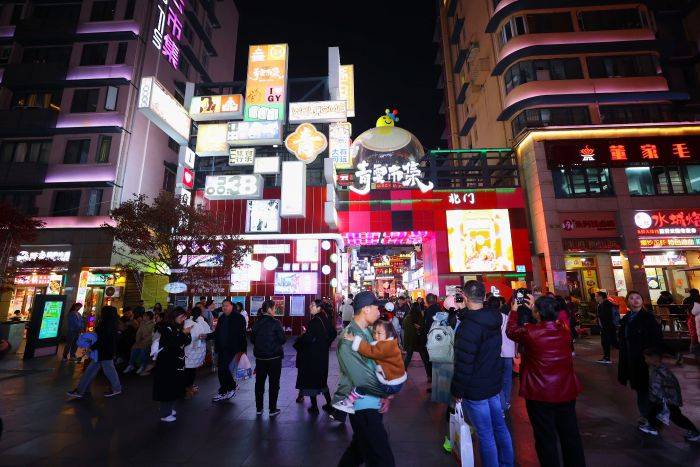
Core Viewpoint - Guiyang has made significant progress in developing its nighttime economy since the implementation of the "Accelerating the Construction of 'Brilliant Night Guiyang'" plan in July 2022, focusing on various nighttime activities to enhance urban branding and economic growth [2] Nighttime Economy Segments - Night dining is the leading segment, accounting for approximately 48% of the nighttime economy, with projected restaurant revenue of 27.211 billion yuan in 2024, a year-on-year increase of 9.9%, and nighttime dining revenue estimated at 19.05 billion yuan, representing 70% of total dining revenue [2] - Night shopping is the second-largest segment, making up about 32% of the nighttime economy, with the establishment of a "5+10+25" urban nighttime consumption space layout, including five provincial-level commercial circles and ten provincial-level nighttime consumption gathering areas [2] - Night tourism has seen the recognition of key areas like Qingyan Ancient Town and Qingyun Road as national-level nighttime cultural tourism consumption clusters, with significant visitor numbers during the "May Day" holiday [3] - Night entertainment has flourished with hundreds of nighttime performances and events, including street music concerts that attracted 150,000 attendees during the "May Day" holiday, boosting local hotel occupancy rates [3] - Night reading initiatives have been implemented with extended hours for public cultural spaces and community libraries, enhancing access to reading materials [4] - Night accommodation has expanded with 340 registered lodging establishments, including various star-rated hotels and high-grade inns, contributing to the overall nighttime economy [4] - Night sports facilities have increased, with over 2,000 venues open at night, catering to more than 1 million residents engaged in nighttime physical activities [5] - Night appreciation activities, such as city light shows and scenic spots, have been promoted in collaboration with travel platforms, enhancing the city's nighttime appeal [5]
乡村振兴在行动丨酸菜香、肉鸡肥、淡水鱼鲜、稻田画美——<br/>沈阳特色产业助力现代农业“四梁八柱”
Xin Hua Wang· 2025-05-09 01:26
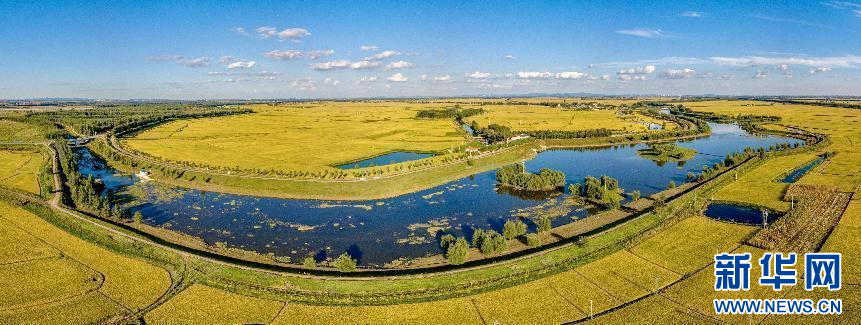
Core Viewpoint - Shenyang is leveraging its unique agricultural resources and modern technology to develop a high-quality agricultural sector, focusing on key industries such as sauerkraut, meat chickens, freshwater fish, and rice paddy art, thereby driving rural revitalization and economic growth [1][4][14] Group 1: Agricultural Development - Shenyang is enhancing its agricultural production through intelligent farming and brand empowerment, transforming local specialties into comprehensive industrial chains [1][4] - The city aims to become a national hub for freshwater fish, with a projected production of 232,000 tons and a fishery output value of 3.34 billion yuan in 2024 [5] - Shenyang's agricultural products are not only meeting local demand but also extending their reach to northeastern provinces and major regions like Beijing-Tianjin-Hebei and the Yangtze River Delta [5] Group 2: Brand and Market Expansion - The "Rice Dream Space" scenic area has gained popularity as a tourist destination, attracting hundreds of thousands of visitors annually and enhancing the brand value of Shenyang rice [6][8] - The city is integrating agricultural production with tourism and cultural branding, aiming to create a strong regional public brand for agricultural products [8][14] - Shenyang is promoting its unique agricultural products, such as sauerkraut and chicken, as key drivers of economic growth and brand recognition [9][14] Group 3: Industry Chain Development - The sauerkraut industry in Shenyang has seen significant growth, with 65 operating companies producing approximately 700 million pounds annually, accounting for 60-70% of national sales [9] - The white feather chicken industry is projected to reach a total industrial chain value of 10 billion yuan in 2024, with a focus on expanding the value chain through processing and branding [13][14] - Shenyang is committed to enhancing its agricultural ecosystem by strengthening leading enterprises and extending the value chain from production to market [14]
高盛:中国消费动态-劳动节假期消费总结-好于预期,零售销售增长加速
Goldman Sachs· 2025-05-07 02:10
Investment Rating - The report indicates a positive outlook for the retail and consumer sector, suggesting that consumption has bottomed out and is expected to continue growing, particularly during holiday periods [1][10]. Core Insights - Retail sales growth during the Labor Day holiday was better than expected, with key retail and restaurant enterprises reporting a year-over-year growth of 6.3%, up from 4.1% during the Chinese New Year holiday [1][10]. - Tourism sales also showed strong performance, with an 8% year-over-year increase, reaching 136% of pre-COVID levels, supported by a 6.4% increase in tourism traffic [1][10]. - Spending patterns indicate a rational approach from consumers, with per capita tourism spending growing by only 1.5% year-over-year, still below pre-COVID levels [3][10]. Summary by Category Retail and Catering - Home appliances, auto, and telecom equipment saw significant sales growth, with key enterprises reporting increases of 15.5%, 13.7%, and 10.5% respectively [2][23]. - Catering services also performed well, with an 8.7% increase in sales, particularly benefiting from strong traffic and consumer willingness to pay for experiences [2][22]. Tourism - Domestic tourism sales grew by 8% year-over-year, with total tourism sales recovering to 123% of pre-COVID levels, driven by increased traffic [10][11]. - Outbound travel showed solid momentum, with a 21% year-over-year increase, particularly to Hong Kong and Macau [11][10]. Regional Performance - Consumer spending growth was balanced across different tiers of cities, with key tourism cities and lower-tier cities benefiting from increased traffic [9][26]. - Major cities like Shanghai and Beijing outpaced the national average in consumption growth, aided by domestic tourism and visa-free policies [28][26]. Specific Categories - Jewelry sales improved due to better sentiment around gold prices, with notable growth from brands like Chow Tai Fook [24][19]. - The box office experienced a significant decline of 51% year-over-year, attributed to a lack of blockbuster films [25][10].
泰国月度经济监测,2025年4月
Shi Jie Yin Hang· 2025-05-01 23:10
Investment Rating - The report does not explicitly provide an investment rating for the industry Core Insights - Thailand's economic activity is showing mixed signals, with stable private consumption and strong exports countered by a sharp decline in private investment due to rising uncertainty [1][2] - Goods exports have shown robust growth, particularly to the US and China, with a year-on-year increase of 13.9 percent in February, marking the highest growth in four months [4][12] - The tourism sector is experiencing a decline in arrivals, particularly from China, which fell by 40 percent year-on-year, reaching only 35 percent of pre-pandemic levels [3] Summary by Sections Economic Activity - Private consumption expanded modestly, supported by fiscal stimulus, but high household debt and tighter credit standards are constraining spending [2] - The private investment index contracted sharply, reflecting declines in consumer confidence and ongoing weakness in manufacturing output [2] Exports - Goods exports maintained double-digit growth, driven by strong shipments to the US and China, partly due to frontloading amid global trade uncertainties [4][12] - Exports to Japan and ASEAN have started to contract, indicating potential challenges in these markets [12] Tourism - Tourist arrivals in February declined by 6.9 percent year-on-year, with arrivals from major sources surpassing pre-pandemic levels except for China [3] - The recent earthquake may further dampen tourist confidence and arrivals in the coming months [3] Inflation and Monetary Policy - Inflation has declined for three consecutive months, with headline inflation at 0.8 percent in March, below the Bank of Thailand's target range [14] - The Bank of Thailand has lowered the policy rate to 2.0 percent to alleviate household debt pressures amid tightening credit standards [14] Fiscal Position - The central government's fiscal deficit widened to 6.7 percent of GDP in the first five months of FY 2025, driven by increased spending [15] - Fiscal revenue reached its highest level since 2020, but spending growth outpaced revenue gains [15] Financial Markets - The Thai baht depreciated by 1.5 percent in early April, influenced by global market risk-off sentiment despite a strong current account surplus [16][24] - The current account surplus rose to USD 5.5 billion, the highest since the pandemic, driven by a stronger goods trade balance [24][25]
节日市场供应总量充足、购销两旺 “以旧换新+文旅热”激发消费活力释放
Yang Shi Wang· 2025-05-01 04:03
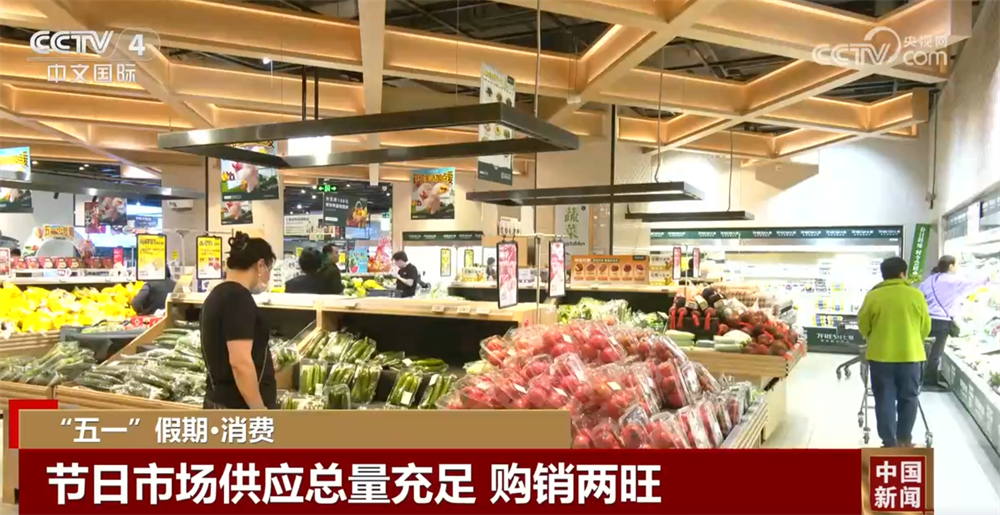
Group 1 - The consumption market is experiencing a surge in activity during the "May Day" holiday, with vibrant market supply and optimized consumer services across the country [1][3] - The Ministry of Agriculture and Rural Affairs reports sufficient grain and oil stocks, with a stable supply of essential products like meat, eggs, milk, fruits, and seafood during the holiday [3] - Major cities like Beijing and Guangdong are preparing for increased demand by stocking essential goods at 2-3 times the usual supply levels [3] Group 2 - In Jiangsu's Yancheng, there is a high demand for consumer electronics such as smartphones and air conditioners, with promotional activities like trade-in offers being popular [5] - Jiangsu province is distributing 2 million yuan in automotive consumption vouchers, particularly favoring new energy vehicle purchases [5] - Various regions are promoting trade-in subsidies for household appliances, with Ningxia planning 24 themed events and a subsidy fund of no less than 40 million yuan [7] Group 3 - New cultural and tourism consumption scenarios are being introduced, such as the "Night Guangxi" service consumption season, which includes a consumption map for tourists [9] - In Chongqing's Dazu District, new night tourism experiences are being created with vibrant performances and food stalls [11] - Beijing has launched the "Breeze Terrace Plan," focusing on unique terrace experiences and exclusive discounts in several commercial areas, running until September [13]
马尔代夫发展更新,2025年4月
Shi Jie Yin Hang· 2025-04-23 23:10
Investment Rating - The report does not explicitly provide an investment rating for the Maldives industry Core Insights - Economic growth in the Maldives remained robust in 2024, with real GDP growth estimated at 5.5 percent, driven primarily by a strong tourism sector [18][34] - Tourist arrivals reached an all-time high of 2.05 million in 2024, marking an increase of 8.9 percent compared to 2023 [18][35] - Headline inflation surged in late 2024, with food inflation averaging 6.6 percent, up from 5.9 percent in 2023 [19][42] - The fiscal deficit widened to MVR 12.7 billion (US$822.4 million or 11.7 percent of GDP) in 2024, driven by rising expenditures [20][52] - The current account deficit (CAD) remained elevated at US$1.4 billion (20.5 percent of GDP) in 2024, with a widening trade deficit [21][68] - Foreign exchange reserves fell to critically low levels, reaching US$371.2 million in September 2024, before recovering to US$832.1 million by February 2025 [22][69] - Public and publicly guaranteed debt rose to US$9.4 billion (134.2 percent of GDP) in 2024, with external debt servicing costs increasing significantly [25][60] Economic Update - Growth remained robust, supported by tourism, with a 7.1 percent increase in the tourism sector in the first three quarters of 2024 [34] - The fiscal deficit continued to increase, with total expenditure rising to 41.3 percent of GDP [20] - The current account deficit remained elevated, financed by foreign direct investment [21][68] Outlook and Risks - Growth is projected to moderate slightly, with real GDP growth expected at 5.7 percent in 2025 [26] - Inflation is anticipated to rise, potentially increasing poverty rates if targeted cash transfers are not implemented [27] - The fiscal deficit is likely to remain elevated, with public debt projected to rise further [28] - Risks to the outlook are significantly on the downside due to global trade uncertainties and high external debt service payments [29]
多个首单、首创!首批广州绿色金融创新实践示范基地亮相
Nan Fang Du Shi Bao· 2025-03-25 10:15
Core Viewpoint - Guangzhou has launched its first batch of "Green Financial Innovation Practice Demonstration Bases," marking a pioneering effort in the country to support low-carbon development through green finance [3][9]. Group 1: Overview of Demonstration Bases - The first batch includes 10 demonstration bases across various districts such as Huadu, Huangpu, Nansha, Haizhu, Tianhe, Zengcheng, and Conghua [3]. - These bases focus on areas like wastewater treatment, urban waste recycling, ecological restoration, low-carbon operation of urban complexes, rural cultural tourism revitalization, and realization of ecological value [3][5]. Group 2: Financial Tools and Support - The selected bases utilize green finance to provide funding support for project development, promoting green and low-carbon economic growth [5]. - The Fushan Circular Economy Industrial Park, one of the demonstration bases, received significant green finance support, including a 2.8 billion yuan green perpetual corporate bond, with 190 million yuan earmarked for project construction [5][6]. Group 3: Innovative Financial Products - The Guangzhou Water Supply Company issued Guangdong's first green water supply revenue rights ABS, achieving the lowest interest rate in the water supply industry for such products [9]. - The "Green + Digital" approach is emerging as a new direction for high-quality development in green finance, with companies like Green Finance (Guangzhou) Information Technology Co., Ltd. leveraging digital technologies to assist over 200 enterprises in reducing carbon emissions by more than 10 million tons annually [9][11]. Group 4: Market Platforms and Ecosystem Services - The Guangzhou Carbon Emission Rights Trading Center has established the first market-oriented ecological product value realization platform focused on natural resources, facilitating the market trading of ecosystem carbon sink products [11]. - This platform has successfully assisted in the purchase of "judicial carbon sinks," enhancing the mechanism for realizing the value of ecological products and providing alternative restoration methods for civil public interest litigation cases [11].