高等教育

Search documents
拒绝留学生,美国一半大学将破产
虎嗅APP· 2025-06-09 12:54
以下文章来源于华商韬略 ,作者华商韬略 华商韬略 . 聚焦标杆与热点、解构趋势与韬略 本文来自微信公众号: 华商韬略 ,作者:陈云青,主编:毕亚军 责编:周怡,美编:殷姗姗,题 图来自:AI生成 特朗普对进入美国高校的国际学生举起大棒之时,似乎没有意识到, 美国各地越来越多的大学正濒 临破产的边缘,而其动作将使这一状况雪上加霜。 一、大学倒闭成潮 2024年5月底,位于美国宾夕法尼亚州拉德诺镇的卡布里尼大学正式宣告"永久关闭",临时校长海伦· 德里南在一份视频声明中称,这是"令人难过的消息"。 卡布里尼大学成立于1957年,设有50多个本科专业,以小班授课和个性化教育闻名,每年学费在5万 美元左右,因为面临巨大的财务挑战,它在一年前就预告自己可能不行了。 几乎在同一时期,美国历史最悠久的艺术和音乐高等学府之一费城艺术大学也宣布关闭,而它从宣布 消息到永久关闭只用了一周。以至于校方公布这一决定时,许多人都难以置信,甚至还引发了学生的 示威抗议。因为倒闭前,该校还录取了一批新生。 整个2024年,美国都充斥着高校倒闭的消息。 纽约州的威尔士学院在官网首页高挂着"关停通知",阿拉巴马州的伯明翰南方学院在学期结束之日 ...

预算1.14亿元!河北工业大学近期大批仪器采购意向
仪器信息网· 2025-06-09 08:41
Core Viewpoint - Hebei University of Technology has announced procurement intentions for 30 items of laboratory equipment, with a total budget of 114 million yuan, scheduled for procurement in December 2025 [1][2]. Summary by Categories Electric Vehicles and Power Systems - Procurement includes an electric vehicle and grid interaction experimental platform and a flexible multi-heterogeneous converter interaction system, with a budget of 7 million yuan [3]. Reliability Testing and Innovative Methods - The university plans to acquire a multi-motor collaborative control and operational reliability testing platform, along with various advanced machining systems, totaling 591 million yuan [3]. Advanced Materials and Protective Research - The procurement list features high-pressure cold spray systems and flexible laser cladding systems, with a budget of 420 million yuan [5]. Semiconductor and Molecular Engineering - The university intends to purchase systems for semiconductor device preparation and testing, with a budget of 1,240 million yuan [5]. Environmental and Resource Utilization - The procurement includes systems for high-temperature and high-pressure catalytic reactions and green low-carbon liquid fuel refining, with a budget of 158 million yuan [5]. Artificial Intelligence and Data Science - Plans include acquiring AI computing platforms and systems for intelligent vehicle practice, with a total budget of 473 million yuan [6]. International Trade and Logistics - The university aims to enhance its logistics teaching platforms with a budget of 777 million yuan for a new generation of intelligent international trade logistics teaching experimental platform [6]. Smart Teaching Resources - The procurement also covers smart teaching resource applications and interactive recording platforms, with budgets of 148 million yuan and 320 million yuan respectively [7].

北大:对韦东奕健康很关心 望为其营造宁静治学环境
Xin Hua Wang· 2025-06-09 08:07
Core Viewpoint - The health condition of Wei Dongyi, a young scholar at Peking University, has raised concerns among netizens, prompting the university to assure that it is providing support for his treatment while emphasizing the need to create a peaceful environment for his academic work [1][2]. Group 1: Health Concerns - Wei Dongyi has serious periodontal issues, and he has been advised to pay attention to his oral health during annual health check-ups over the past three years, with other health results being normal [1]. - The university has previously arranged for medical consultations and treatment plans for Wei Dongyi, and will continue to assist him in his treatment [1]. Group 2: Academic Background - Wei Dongyi has been engaged in mathematical research and teaching at Peking University since his graduation, focusing on areas such as partial differential equations and geometric analysis, and has published multiple papers in international mathematics journals [2]. - He is recognized as a promising young scholar due to his mathematical talent, dedication to academia, and simple lifestyle, which have garnered public and media attention in recent years [2]. Group 3: Institutional Support - Peking University expresses gratitude for public concern regarding Wei Dongyi and emphasizes that it provides comprehensive support in terms of work, life, and medical care while respecting his personal wishes and lifestyle [2]. - The university calls for cooperation from the public to maintain a tranquil environment for Wei Dongyi to focus on his academic pursuits [2].
北大回应“韦东奕健康问题”
券商中国· 2025-06-09 06:51
Core Viewpoint - The article highlights the rising popularity of Wei Dongyi, an assistant professor at Peking University, who has gained significant attention on social media, amassing over 23 million followers. Concerns regarding his health, particularly dental issues, have also been raised by the public and the university [1][2]. Group 1 - Wei Dongyi, known as "Wei Shen," is an assistant professor and researcher at the School of Mathematical Sciences at Peking University, focusing on mathematical research and teaching [2]. - As of September 9, Wei's social media account has surpassed 23 million followers, indicating a strong public interest in his work and persona [1]. - The university has expressed a commitment to ensuring a conducive environment for Wei to focus on his academic responsibilities while addressing public concerns about his health [2]. Group 2 - Wei has been reported to have serious periodontal issues, with visible dental problems noted in his recent video, prompting public concern for his health [2]. - The university has been proactive in monitoring Wei's health, conducting annual check-ups, and providing support for his dental treatment [2]. - Wei is recognized for his strong analytical and computational skills in mathematics, with a research focus on partial differential equations and geometric analysis, having published multiple papers in international mathematics journals [2].

北大回应韦东奕健康问题
新华网财经· 2025-06-09 06:03
Core Viewpoint - The article emphasizes the importance of protecting the health and well-being of scholars like Wei Dongyi, allowing them to focus on their academic work without distractions [1][2]. Group 1: Health Concerns - Wei Dongyi, a 33-year-old assistant professor at Peking University, has been facing health issues, particularly severe periodontal problems, which have raised public concern after he shared a video showcasing his condition [1][2]. - Peking University has been proactive in monitoring Wei's health, conducting annual check-ups and providing medical support, including consultations and treatment plans for his dental issues [1]. Group 2: Academic Background - Wei Dongyi is recognized for his strong analytical and computational skills in mathematics, with research interests in partial differential equations and geometric analysis [2]. - He has published multiple papers in international mathematics journals and is regarded as a promising young scholar in his field [2].

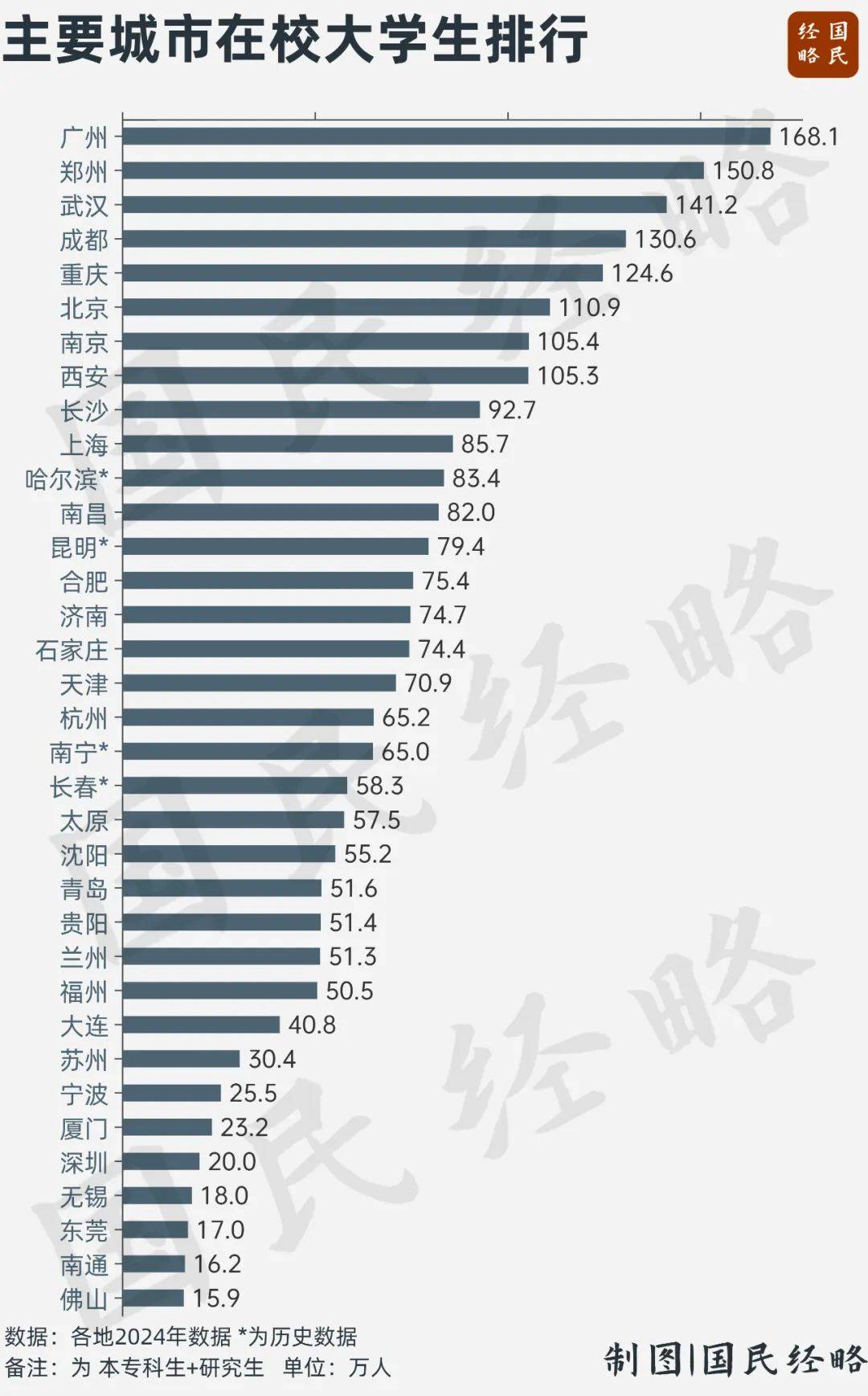
168万在校生,“中国大学生第一城”诞生
Hu Xiu· 2025-06-09 05:04
Group 1 - The core viewpoint emphasizes the importance of university students for future talent acquisition and economic growth, highlighting the ongoing competition among cities to attract and retain talent [1][3][57] - In 2025, the number of national college entrance examination candidates reached 13.35 million, while the number of graduates was 12.22 million, both at historical highs [2] - Major cities with a high number of university students are identified, with Guangzhou leading at 1.68 million, followed by Zhengzhou and Wuhan [6][8] Group 2 - The article categorizes cities based on the number of graduate students, noting that only six cities have over 150,000 graduate students, with Beijing leading at 470,000 [15][17] - The analysis reveals a disparity in higher education resources, with non-provincial capital cities often lacking sufficient universities despite strong economic performance [24][25] - The article discusses the trend of economic strongholds like Shenzhen and Suzhou actively building universities to enhance their educational landscape and attract talent [32][34][44] Group 3 - The challenge of retaining university graduates is highlighted, with many graduates from cities like Wuhan and Hefei moving to more developed regions for employment opportunities [48][50] - Cities are increasingly competing to attract talent, with initiatives like Guangzhou's "Million Talents Gathering in South Guangdong" campaign [56][57] - The article concludes that the ability to retain and attract talent will be crucial for cities as the population growth plateaus [58]
北大回应青年教师韦东奕健康问题
第一财经· 2025-06-09 04:52
Core Viewpoint - The article discusses the recent rise in popularity of Wei Dongyi, an assistant professor at Peking University's School of Mathematical Sciences, who gained over 23 million followers on social media after posting an introductory video. Concerns about his health, particularly regarding dental issues, have also been raised by the public and the university [1]. Group 1 - Wei Dongyi's social media account has surpassed 23 million followers as of September 9 [1] - The university emphasizes the importance of maintaining a peaceful environment for scholars to focus on their academic work [1] - Concerns about Wei's health have emerged, particularly regarding visible dental issues in his video [1] Group 2 - Wei has been diagnosed with severe periodontal problems, and he has been undergoing annual health check-ups organized by the university for the past three years [1] - The university has shown consistent concern for Wei's oral health and has previously accompanied him to medical appointments [1] - A treatment plan has been proposed by doctors, and the university will assist him in pursuing further treatment [1]

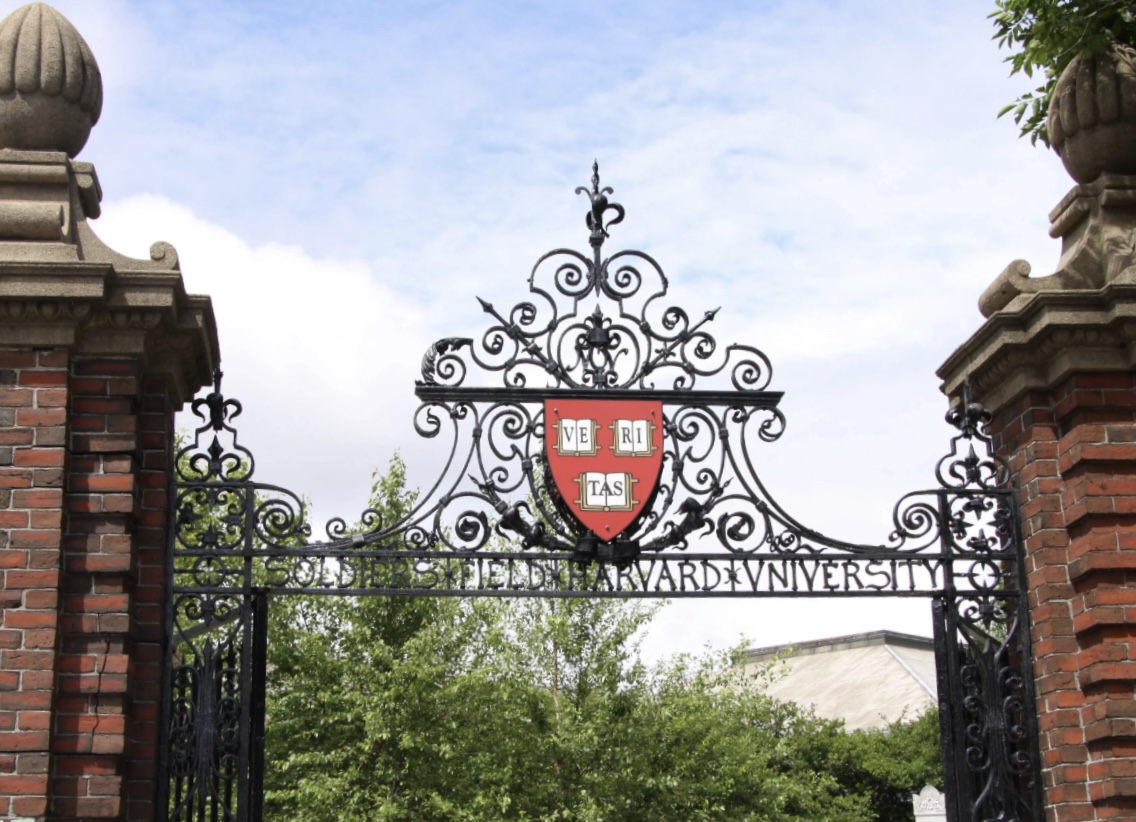
特朗普“死磕”哈佛,美国精英教育陷入“至暗时刻”?
Sou Hu Cai Jing· 2025-06-09 01:31
Group 1 - Harvard University has become a focal point of global public opinion due to a series of controversial events reflecting deep societal contradictions in the U.S. [1] - The conflict between the Trump administration and Harvard is fundamentally about the boundaries of educational autonomy and government regulation, originating from protests supporting Palestine that sparked anti-Semitic controversies [3] - Harvard's response to the government's pressure included a public rebuttal, emphasizing academic freedom and institutional autonomy, contrasting sharply with the Trump administration's hardline stance [5] Group 2 - The Trump administration's measures, while causing widespread public uproar, face significant implementation challenges, such as vague standards for reporting international students' activities [5] - The financial implications of these policies could severely impact Harvard's revenue from international students, which amounts to hundreds of millions annually, and could hinder its STEM research projects due to talent loss [5] - The ongoing debate over educational equity in the U.S. highlights accusations against Harvard for implementing de facto discrimination through racial quotas in admissions, particularly against Asian students [11] Group 3 - The rise of nativist sentiments in the U.S. is reflected in the Trump administration's policies towards international students, which could undermine America's global innovation leadership [9] - The events at Harvard and other universities illustrate the tension between maintaining free speech and ensuring personal safety amid rising identity politics [13] - Overall, the controversies surrounding Harvard represent a microcosm of the broader challenges facing American society in balancing multicultural coexistence with national interests [15]

大气污染与气候变化的关系?清华团队成果发《自然》
Bei Jing Qing Nian Bao· 2025-06-08 06:06
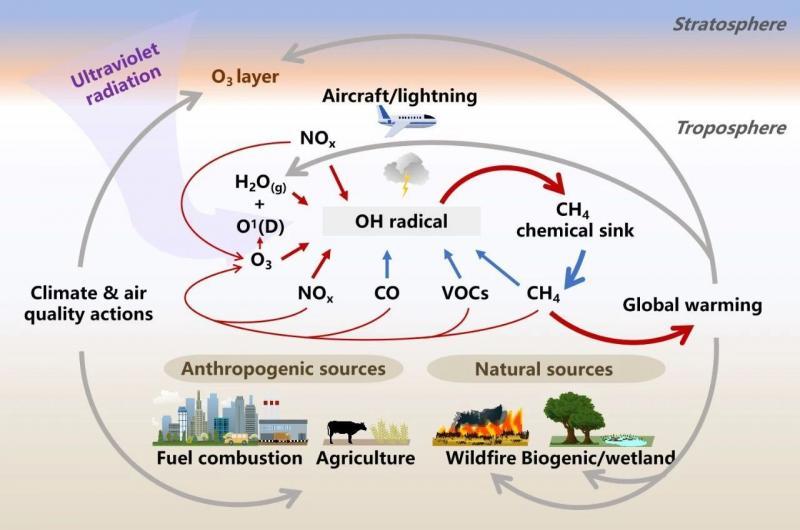
Core Insights - The research led by Zheng Bo and an international team highlights the innovative connection between air pollution and methane loss, proposing a new perspective for climate and environmental policy [1][2]. Group 1: Research Findings - The study reveals that the generation and loss of hydroxyl radicals (OH), which act as methane "cleansers," are influenced by reactive gases in the atmosphere, primarily sourced from air pollutants linked to human activities [2][3]. - Certain air pollutants can accelerate methane loss, indicating that efforts to reduce specific pollutants without considering their impact on methane dynamics may inadvertently lead to increased atmospheric methane concentrations [2][3]. Group 2: Implications for Policy - The findings suggest that policymakers should adopt a synergistic approach to air quality and climate policies, ensuring that efforts to reduce pollution do not compromise methane loss [2][3]. - The research emphasizes the need for interdisciplinary collaboration among experts to address the interconnectedness of air pollution and climate change, akin to a comprehensive medical diagnosis [3].
针对哈佛大学签证政策又有变化!最近赴美留学还去得成吗?
Di Yi Cai Jing· 2025-06-08 03:25
Group 1 - The U.S. Department of State has instructed consulates worldwide to resume processing student and exchange visitor visas for international students planning to attend Harvard University, reversing a previous directive issued on June 5 [1][3] - A federal judge in Massachusetts issued a temporary restraining order on June 5, requiring the restoration of entry rights for international students at Harvard University until a hearing on June 16 [3] - Reports indicate that international students, including those in MBA and doctoral programs, have successfully obtained visas to study in the U.S. following the lifting of the ban [3][4] Group 2 - A student pursuing a joint EMBA program expressed concerns about visa processing but reported a smooth interview experience, receiving an F1 visa valid for five years [4] - The J1 visa, which is designated for students and visiting scholars, has also been successfully obtained by international scholars, indicating a positive trend in academic exchanges [3]