微短剧

Search documents
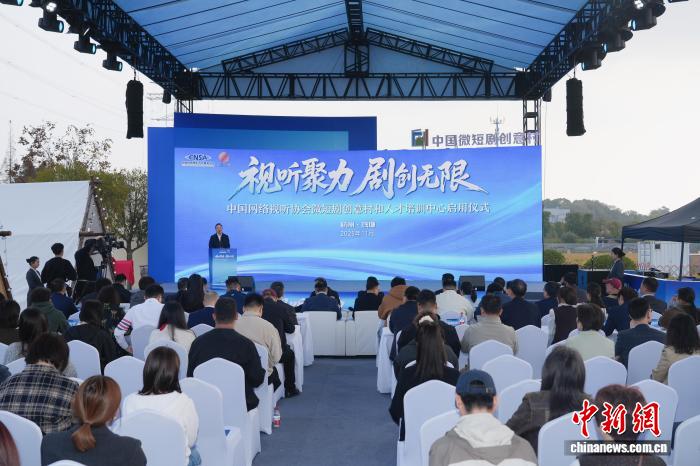
中国网络视听协会微短剧创意村在杭州钱塘启用
Zhong Guo Xin Wen Wang· 2025-11-10 23:29
Core Insights - The establishment of the Micro-Short Drama Creative Village and Talent Training Center in Hangzhou marks a significant step in building a comprehensive support system for the micro-short drama industry, addressing industry pain points and driving industrial upgrades [2][5] Industry Overview - Micro-short dramas are a typical representation of new popular art under internet conditions, playing a crucial role in enriching cultural life, driving new consumption in audiovisual culture, and empowering various industries [2] - The market size of micro-short dramas in China is projected to exceed 50.5 billion yuan in 2024, surpassing box office revenues from films, thus becoming a significant growth point for online audiovisual income and aiding cultural exports [2] Creative Village Features - The Creative Village consists of 20 buildings designed to gather high-quality industry resources, establish a platform for industry-academia-research collaboration, and cultivate a professional talent pool, aiming to create a demonstration hub for innovative development in the micro-short drama industry [2][5] - The village will focus on enhancing content quality, promoting standardized development, and innovating market expansion, injecting new momentum into the high-quality development of the cultural industry in Qiantang [2][6] Regional Development - Qiantang District is positioned as a core area for the development of the micro-short drama industry in Hangzhou, benefiting from spatial advantages, policy incentives, and a dense talent base from 14 universities and research institutions [5] - Six out of the top ten micro-short drama companies in China have established operations in Qiantang, with local core companies projected to see a 129% year-on-year revenue growth in 2024 and a sustained high growth rate of 45% in the first nine months of 2025 [5][6] Future Directions - The Creative Village's launch signifies a new phase for Qiantang's micro-short drama industry, emphasizing creativity, talent-driven initiatives, and ecological collaboration, with plans to encourage the creation of high-quality works and promote cultural products globally [6]

微短剧产业“领跑者” 杭州临平做对了什么?
Zhong Guo Xin Wen Wang· 2025-11-10 12:20
Core Insights - The article highlights the rapid development of the micro-short drama industry in Linping District, Hangzhou, which has become a leading area in Zhejiang's micro-short drama sector, attracting over 200 upstream and downstream enterprises and serving more than 700 production teams [1][2]. Group 1: Industry Growth and Strategy - Linping has set ambitious goals, including becoming the "most understanding local government for micro-short dramas" in 2023 and aiming for the title of "National Micro-Short Drama City" in the following years [1]. - The user base for micro-short dramas in China is projected to reach 626 million by June 2025, accounting for 55.8% of internet users, indicating a significant market opportunity [1]. Group 2: Brand Development and Ecosystem - The Linping Micro-Short Drama Conference has been established as a core platform for industry exchange, attracting major online platforms and leading enterprises to discuss key topics such as "quality creation" and "business models" [2]. - Linping's strategy includes attracting high-quality enterprises across the entire value chain from content creation to distribution, leveraging local leading companies to create a cluster advantage [2]. Group 3: Infrastructure and Support - Linping has developed the "Lin Ying Factory," a comprehensive industrial complex that includes the largest professional variety studio in Zhejiang and over 40 dedicated shooting scenes, providing one-stop services for production teams [4]. - A 100 million yuan "Da Mei Lin Zhuo" industrial fund has been established to support the audiovisual industry, along with policies to provide lifecycle support for enterprises [4]. Group 4: Professional Services and Talent Development - The establishment of various centers for film and television collaboration, content review, and artistic guidance has enhanced the professional service system, supporting over 200 talent training sessions annually [5]. - Initiatives such as training camps for young screenwriters and workshops for content creation have been implemented to nurture new talent in the industry [5]. Group 5: Cultural Export and Global Reach - Linping aims to expand the reach of Chinese traditional culture through micro-short dramas, with successful projects like "Diary of Miss Zhao" gaining international recognition [7]. - The launch of the overseas short drama platform FlickReels by Long Eagle Technology has quickly gained popularity in multiple countries, indicating a successful strategy for cultural export [7]. Group 6: Industry Challenges and Future Plans - Linping plans to address industry challenges such as copyright infringement by establishing a national micro-short drama copyright protection and trading center [8]. - The third Hangzhou Micro-Short Drama Conference is set to take place from November 10 to 11, 2023, where various industry plans and honors will be announced [8].

微短剧产业进阶
Xin Hua Wang· 2025-11-10 02:55
Core Insights - The micro-short drama market is projected to exceed 50 billion yuan in 2024, with significant growth expected this year compared to last year [1][2]. Group 1: Industry Transformation - The industry is shifting from a "traffic-oriented" model to a "value-oriented" approach, emphasizing quality over quantity [3]. - The past year has seen a significant "quality reshuffle," with platforms raising content review standards, pushing creators to focus on script logic and character development [4][5]. - The production costs for high-quality micro-short dramas have increased dramatically, from approximately 50,000 yuan in 2022 to 1.5 million yuan for a premium short drama [4]. Group 2: Cross-Industry Integration - The "micro-short drama+" model is creating multiplier effects across various industries, integrating content with brand marketing and tourism [8][10]. - Successful case studies include collaborations with brands like Dicos and Pizza Hut, which have effectively merged product promotion with storytelling [8]. - The industry is also exploring "long-short linkage," where long dramas and micro-short dramas co-create content to extend IP lifecycles and maximize user value [8][10]. Group 3: Technological Empowerment - AI is becoming a crucial tool for enhancing quality and efficiency in micro-short drama production, with estimates suggesting a 50% increase in planning efficiency and a 30% reduction in production costs [11]. - The application of AI in content creation and user engagement is rapidly expanding, with significant growth in the market for AI-generated content [11]. Group 4: Cultural Resonance - The market is evolving from "emotional consumption" to "emotional resonance," focusing on deeper connections with audiences [12][13]. - Works that depict nuanced emotional experiences are gaining popularity, reflecting a shift in user demand towards more meaningful content [12]. - The industry is increasingly producing content that embodies social concerns and cultural heritage, appealing to younger audiences [12]. Group 5: Global Expansion - The micro-short drama industry is entering a "global localization" phase, with companies establishing local teams overseas and expanding distribution channels [14]. - The volume of overseas productions and adaptations has surged, with significant numbers of both local and translated dramas being released globally [14]. - Micro-short dramas are becoming an effective cultural vehicle for reaching international markets, leveraging their engaging and easily digestible format [14].
业界共探微短剧精品化路径 爆火之后,何以破局立新
Ren Min Ri Bao Hai Wai Ban· 2025-11-10 02:20
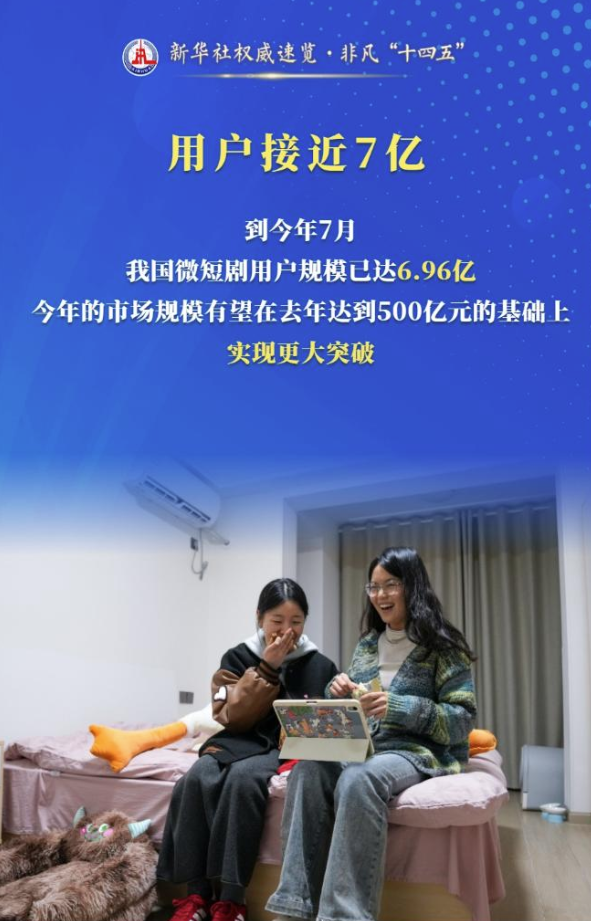
Core Insights - The micro-short drama industry in China is experiencing explosive growth, with the market expected to exceed 500 billion yuan in 2024, surpassing the national film box office for the first time [1] - Despite the rapid expansion, issues such as homogenization, low-quality content, and a tendency towards superficiality remain prevalent in the industry [2][3] - The industry is shifting towards higher quality storytelling and emotional depth, moving from mere entertainment to meaningful content that resonates with audiences [4][5] Market Growth - The micro-short drama market is projected to reach nearly 1 trillion yuan this year, indicating a significant increase in consumer interest and engagement [1] - Successful works like "Home and Away" and "In the Peach Blossom Blooming Place" have gained substantial viewership, with some achieving over billions of views internationally [1] Industry Challenges - The phenomenon of content homogenization is evident, with many dramas following similar storylines and character archetypes, leading to audience fatigue [2] - The industry has been criticized for prioritizing commercial efficiency over originality, resulting in a cycle of replicating successful formats [2] Content Quality Improvement - Platforms are enhancing their content review standards to encourage creators to focus on narrative depth and character development, moving away from simplistic and sensationalist approaches [3] - Audience expectations are evolving, with viewers seeking deeper emotional and philosophical engagement from micro-short dramas [3][4] Technological Integration - AIGC (Artificial Intelligence Generated Content) is transforming the production and creative processes within the micro-short drama sector, allowing for more innovative storytelling and efficient production methods [5][6] - Companies are leveraging AIGC to streamline scriptwriting and production, enabling creators to focus on creativity rather than repetitive tasks [5][6] Industry Initiatives - Various industry initiatives and plans have been launched to promote the development of micro-short dramas, including recommendations for legal education content and projects highlighting traditional Chinese culture [6] - The industry is also making strides in self-regulation, with multiple organizations signing a tax compliance initiative to promote ethical practices [6]
微短剧榜单里有文旅强省的脉动
He Nan Ri Bao· 2025-11-09 23:17
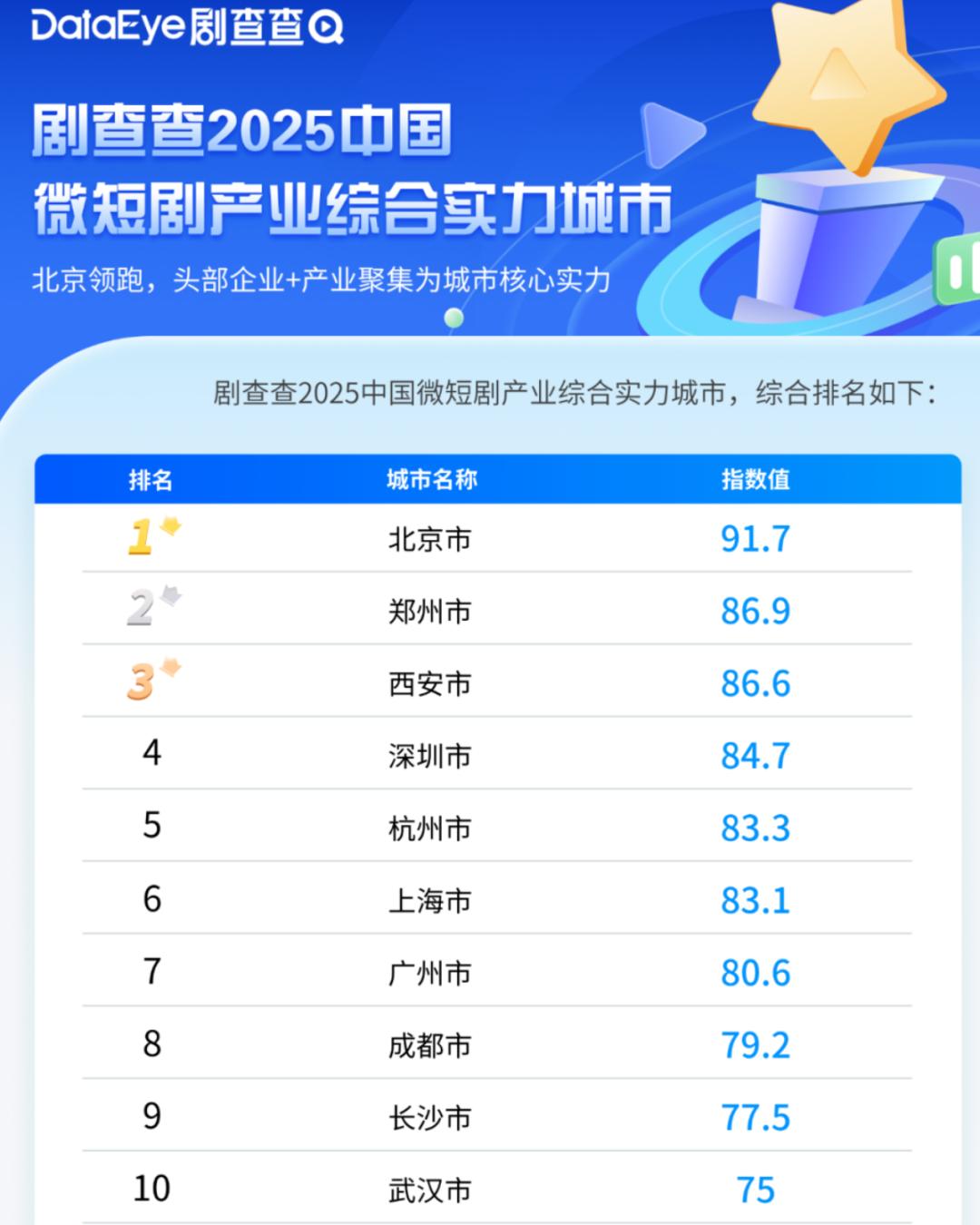
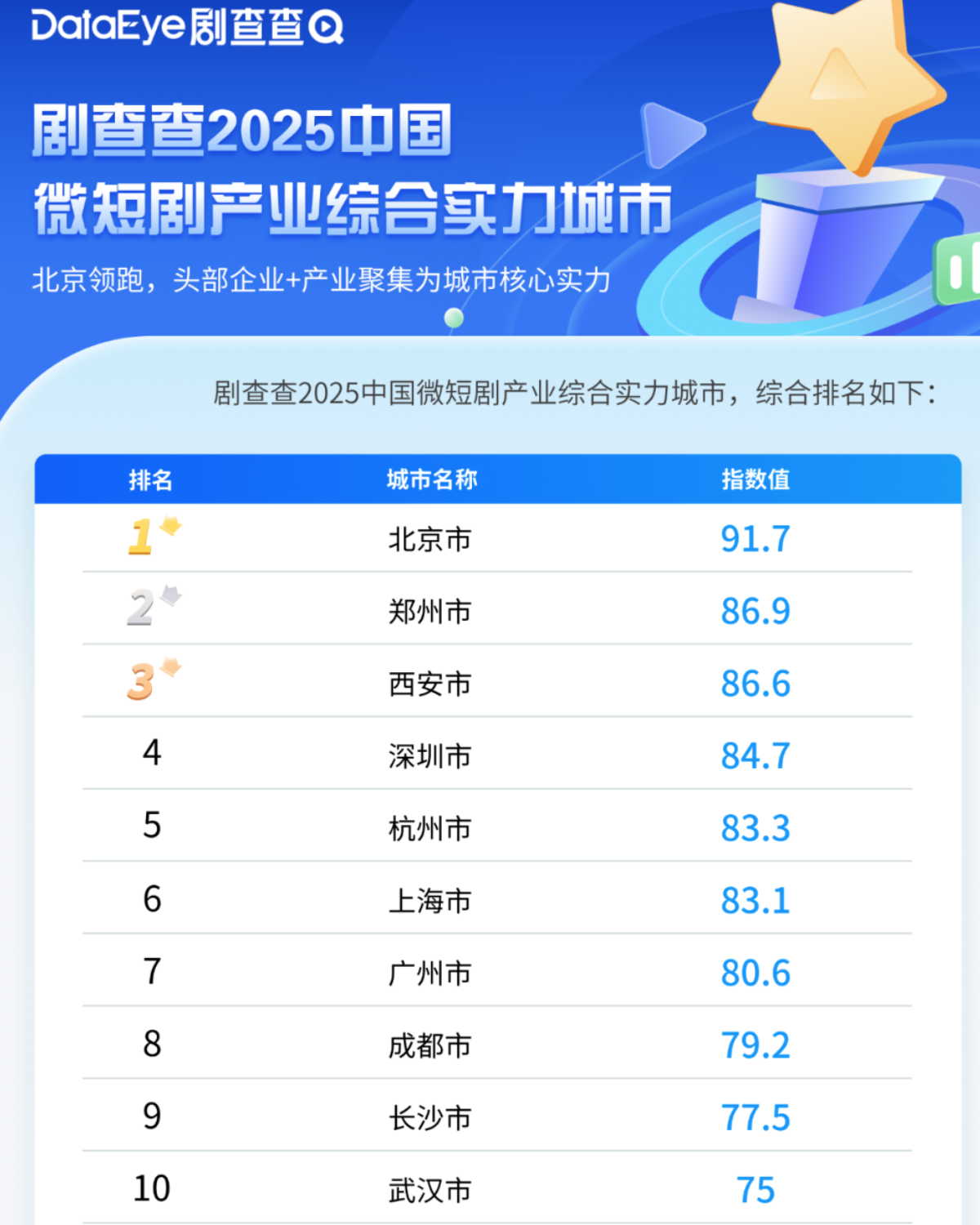
Core Insights - Zhengzhou is emerging as a leader in the micro-short drama industry, supported by favorable policies and a strong cultural and industrial foundation [1][2][3] Group 1: Industry Performance - Zhengzhou ranks first in micro-short drama dissemination strength and second in overall industry strength according to the DataEye report [1] - In 2024, Zhengzhou is expected to release 3,194 micro-short dramas, with 203 making it to the national popularity list, generating a market size of 2.3 billion yuan [3] - The city has seen a 30% increase in tourist numbers due to popular micro-short dramas like "Encounter with Shaolin Kung Fu" [3] Group 2: Cultural and Economic Integration - Zhengzhou's rich cultural heritage and modern urban development create a unique environment for film and television production [2] - The local government has implemented policies to support the high-quality development of the micro-short drama industry, aiming to create jobs and promote cultural tourism integration [2][3] - The city is leveraging its historical sites and modern infrastructure to enhance its cultural tourism appeal, with over 820 production companies and more than 830,000 industry professionals [2] Group 3: Future Development Strategies - The government plans to enhance regional collaboration in cultural tourism, focusing on the ancient capitals of Zhengzhou, Kaifeng, and Luoyang [5] - Initiatives like the "Cultural + Industry + Technology" approach are being adopted to further develop the micro-short drama sector [1][4] - The integration of culture and tourism is seen as a pathway to elevate the cultural industry into a pillar of the economy, with ongoing actions to improve the business environment for cultural enterprises [6]
爆火之后,何以破局立新(深观察)
Ren Min Ri Bao Hai Wai Ban· 2025-11-09 22:56
《家里家外》海报。 《弄潮》海报。 虽已经是秋冬时节,日前在京举办的第二届中国广播电视精品创作大会微短剧论坛现场却"热浪袭人"。 当天的北京会议中心8号楼多功能厅不仅座无虚席,连两旁和后面的过道都站满了听众,这也成为微短 剧这个新兴行业爆发式增长的生动注脚。 来自论坛的数据显示,2024年中国微短剧市场规模突破500亿元,首次超越同年全国电影票房总量,今 年中国微短剧市场规模则有望达到近千亿元。市场的繁荣催生了《家里家外》《在桃花盛开的地方》 《狮城山海》等一系列叫好又叫座的作品,一些微短剧作品不仅在国内"出圈",更在海外市场大放异 彩,播放量超过数十亿,成为讲述中国故事的生动载体。 《盛夏芬德拉》海报。 不过,在高歌猛进的同时,微短剧行业存在的问题也不容忽视。"我们也要清醒地看到跟风、低俗、同 质化这些现象仍然客观存在,伪流量倾向还有市场",国家广播电视总局党组成员、副局长韩冬指 出,"必须加快推进微短剧从作品向精品跃升,从流量爆款向时代精品迈进,不断铸造高原,勇攀高 峰"。 同质化困局如何破解 常看微短剧的观众不难发现,同一个故事可能被不同的演员演绎过多个版本,甚至十几二十个版本也不 稀奇。当然,同质化还 ...

枫叶互动贾毅:微短剧行业将开创内容产业的新可能
Sou Hu Cai Jing· 2025-11-08 12:11
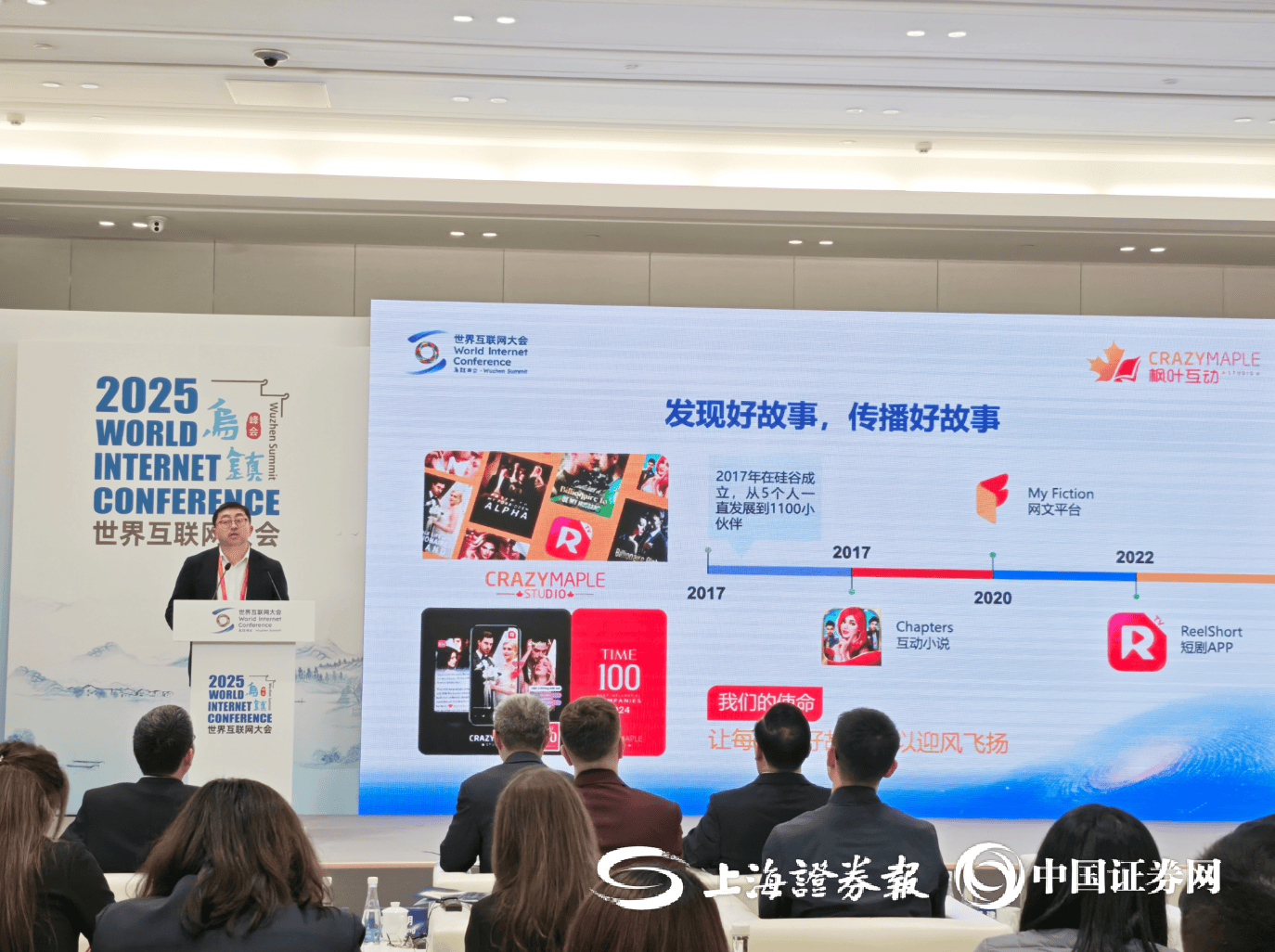
Core Insights - The streaming industry has entered the narrative 3.0 phase, characterized by the emergence of micro-short dramas, which redefine storytelling consumption methods [1][4] - The micro-short drama sector is rapidly growing, with significant potential for future development [1][4] Industry Overview - As of March this year, there are 237 micro-short drama applications in the overseas market, with rapid growth in user downloads and in-app purchase revenues [3] - The overseas micro-short drama platform Reelshort, launched by Fengye Interactive, has reached over 250 million global downloads and surpassed 100 million paid users [3] - In 2025, the platform is expected to add over 50 million new users, with monthly active users exceeding 70 million [3] Company Positioning - Fengye Interactive is a leader in the overseas micro-short drama field, with a fully integrated industrial delivery process covering content selection, production, and filming [3] - The company has established production bases in Los Angeles, the East Coast of the United States, and Latin America [3] Future Trends - The narrative 3.0 era, represented by platforms like Reelshort, utilizes data-driven creation and builds cross-channel matrices to enhance content richness and evolution speed [3] - A new evaluation system for micro-short drama content is needed, focusing on user acquisition, retention, and monetization to ensure high hit rates [4] - Vertical short dramas are reshaping storytelling modes, shifting towards emotion-driven narratives [4]
争夺“短剧之都”,又一个中部省会入局
Mei Ri Jing Ji Xin Wen· 2025-11-07 16:50
Core Insights - The forum held in Changsha focused on the integration of culture and technology, emphasizing the support for the micro-short drama industry through a set of measures aimed at high-quality development [1] Group 1: Industry Development - Changsha has introduced ten measures to support the micro-short drama industry, including funding for filming bases, quality creation, and technology empowerment [1] - The micro-short drama market in China is projected to exceed the total annual box office for films for the first time in 2024, with a market size expected to reach 63.43 billion yuan in 2025 and grow to 85.65 billion yuan by 2027, reflecting a compound annual growth rate of 19.2% [1] - The micro-short drama production in Hunan province was only 3% of the national total in 2024, indicating a lag in development compared to other regions [1] Group 2: Regional Competition - Changsha aims to establish itself as a significant player in the micro-short drama industry, with the recent opening of the Tongguan Shudian Short Drama Film City, which is expected to produce 500 to 800 micro-short dramas annually [2] - The success of Zhengzhou's "Shudian" model, which has rapidly gained traction due to cost advantages and cluster effects, serves as a benchmark for Changsha's development strategy [2] Group 3: Talent and Infrastructure - Changsha has seen a net inflow of 1 million people over the past decade, with 80% being young individuals, positioning it as one of the cities with the highest population growth in China [4] - The local entertainment industry is robust, supported by major platforms like Mango TV and the establishment of a national copyright research center, enhancing the region's capability in copyright protection for micro-short dramas [5]
80%成本砸向投流,微短剧为何难逃“烧钱”怪圈?
Xin Jing Bao· 2025-11-07 02:40
Core Insights - The micro-drama industry is experiencing a paradox where companies must invest in advertising (投流) despite the high costs, which can account for up to 80% of total expenses, leading to potential losses [2][4][10] - Recent developments indicate a shift towards free viewing models, allowing companies to reach more users without incurring high advertising costs [2][9] - The industry's reliance on advertising as a primary revenue source is being challenged by the emergence of free platforms and changing viewer preferences [8][12] Advertising Costs and Revenue Model - Advertising costs dominate the micro-drama industry's expense structure, with production costs typically comprising only 10% to 30% of total costs [4] - The micro-drama business model initially relied on a "free first few episodes + key plot points paid unlock" strategy, which has proven effective in generating significant revenue in a short time [4][10] - DataEye's report predicts that the advertising expenditure in the micro-drama sector will grow from 249 billion yuan in 2023 to 330 billion yuan in 2024, and further to 423 billion yuan by 2025 [5] Shift to Free Platforms - The introduction of free short drama apps by major platforms like Tencent and the shutdown of paid short drama programs by others like Kuaishou indicate a significant market shift [3][9] - The free model is seen as a way to attract users and generate revenue through advertising rather than direct payments from viewers [9][10] - The industry is moving towards a mixed monetization approach that combines in-app purchases and advertising [10][12] Industry Trends and Challenges - The micro-drama industry is characterized by a high degree of content homogeneity, with popular themes remaining largely unchanged, which poses challenges for differentiation and quality improvement [10][11] - The increasing competition and reliance on advertising have led to a "Matthew effect," where larger companies dominate the market, making it difficult for smaller players to survive [11][12] - Companies are exploring new business models, including brand collaborations and private traffic strategies, to reduce dependence on advertising [13][14] Future Directions - The industry is looking towards international markets as a potential growth area, with some companies beginning to adapt their content for audiences in Southeast Asia, the Middle East, and Europe [14] - The success of micro-dramas in international markets could provide new revenue streams and help mitigate the risks associated with the domestic advertising-heavy model [14]


争夺“短剧之都”,长沙入局
3 6 Ke· 2025-11-07 02:21
Group 1 - The forum held in Changsha focused on the integration of culture and technology, emphasizing the protection of copyrights and innovation in the micro-short drama industry [1] - The newly released measures aim to support the high-quality development of the micro-short drama industry in Changsha, including funding for projects in six key areas [1] - The micro-short drama market in China is projected to exceed 63.43 billion yuan in 2025, with a compound annual growth rate of 19.2% expected until 2027 [1] Group 2 - Changsha aims to establish itself as a major hub for micro-short drama production, with the recent opening of the Tongguan Shudian Short Drama Film City, which plans to produce 500 to 800 micro-short dramas annually [2] - The city is learning from the success of Zhengzhou, which has rapidly developed its short drama industry through cost advantages and cluster effects [2] Group 3 - Changsha has seen a significant population influx, particularly among young people, making it one of the cities with the highest net population inflow in China [4] - The local entertainment industry is robust, supported by major platforms like Mango TV and the establishment of a national copyright research center [4] - A copyright protection alliance for micro-short dramas has been formed to safeguard intellectual property rights in the industry [4] Group 4 - The rise of short dramas has led to a significant shift in the distribution of film and television resources across cities, with Changsha now entering the competitive landscape [5]