AI医疗

Search documents
青年创客共话创新创业 优质项目现场路演对接资本
Su Zhou Ri Bao· 2026-01-01 00:04
Core Insights - The "OPC Suzhou Night" New Year's Eve event featured an entrepreneurial exchange meeting and project roadshow aimed at fostering innovation and entrepreneurship [1] - The event included representatives from prestigious universities such as Stanford, University of Waterloo, and University of Edinburgh, who shared insights on technology transfer, business growth, and financing experiences [1] - A total of 36 high-quality projects from top universities were showcased during the roadshow, covering fields like intelligent robotics, embodied intelligence, AI applications, and AI healthcare [1][2] Summary by Sections Entrepreneurial Exchange Meeting - The meeting provided a platform for interaction between young students and experienced entrepreneurs, creating a vibrant atmosphere for discussion [1] - Participants were introduced to Suzhou's innovation and entrepreneurship environment, along with technology talent policies [1] - The event promoted the 2026 International Artificial Intelligence OPC Entrepreneurship Competition and offered comprehensive guidance from venture capital experts [1] Project Roadshow - The roadshow featured 36 projects from young talents, emphasizing their passion and commitment [1] - Experts from well-known investment institutions such as Suzhou Asset Management, Su Chuang Investment, and Dongwu Venture Capital provided professional feedback on the projects [1] - A dedicated "face-to-face" communication area was established, allowing over ten investment institutions to facilitate efficient connections between talent projects and capital [2]

AI医疗正迎来商业化拐点 机构高频调研股揭晓
Zheng Quan Shi Bao Wang· 2025-12-31 14:10
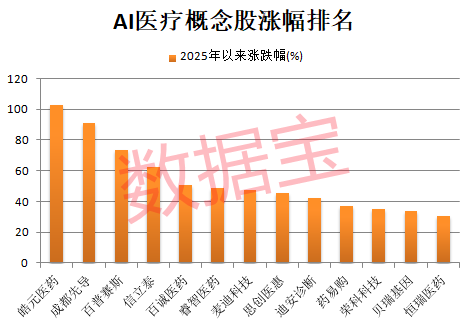
Group 1: AI Medical Industry Outlook - The AI medical industry is expected to maintain high prosperity due to continuous breakthroughs in AI technology and increasing healthcare demands [1] - The integration of AI in the medical field is becoming a core driver for industry development, with significant policy support from the government [5][4] - The global AI medical market is projected to grow at a compound annual growth rate (CAGR) of 43% from 2024 to 2032, potentially exceeding $491 billion [5] Group 2: Beijing's Support for AI in Healthcare - Beijing's health commission has introduced the "Action Plan" and "Several Measures" to support the development of AI in healthcare, focusing on core application scenarios and expanding application areas [3][4] - The "Action Plan" outlines 16 key tasks aimed at promoting collaboration between medical institutions and AI companies, with a goal to establish a robust AI industry support system by 2027 [3] Group 3: Market Performance of AI Medical Stocks - AI medical concept stocks have seen an average increase of 18.75% this year, with five stocks rising over 50% [6] - Haoyuan Pharmaceutical has the highest cumulative increase of 102.86% this year, reflecting strong market interest and institutional attention [8][6] - Yunnan Baiyao has been the most frequently researched stock, with 41 institutional surveys conducted this year, indicating significant investor interest [8]


顶级投资人段永平看好AI医疗 称AI已超三甲医院普通医生平均水平
Shang Hai Zheng Quan Bao· 2025-12-30 14:56
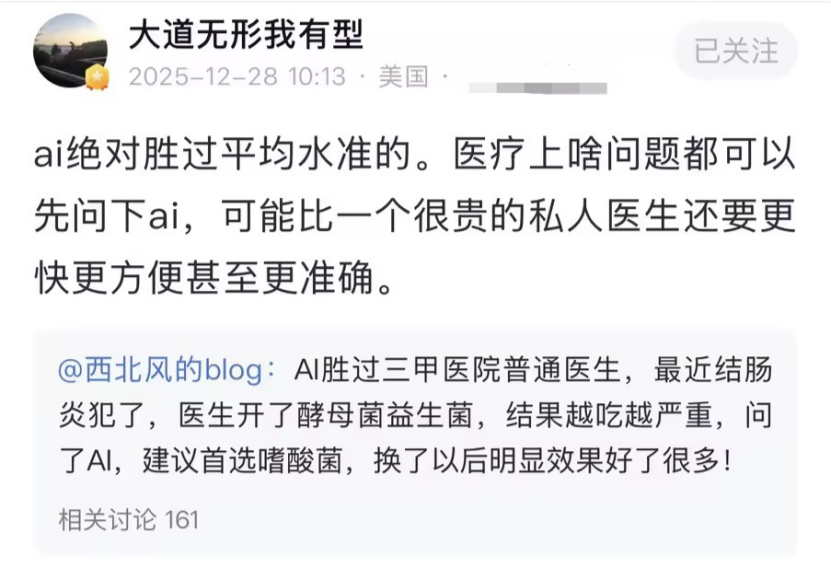
Group 1 - The discussion on "AI surpassing ordinary doctors in top-tier hospitals" has garnered significant attention in the investment community, with notable investor Duan Yongping commenting that AI is likely to be faster, more convenient, and even more accurate than expensive private doctors [1][3] - The AI healthcare sector is experiencing a surge in interest, particularly highlighted by the rapid popularity of consumer-level applications, such as Ant Group's AI health app "Antifufu," which has reached the top of the Apple App Store's free download chart and processes 5 million health inquiries daily [3][6] - The capital market's enthusiasm for the AI healthcare sector has been ignited, with the Wind AI healthcare theme index rising for several consecutive trading days following the product upgrade of "Antifufu," leading to active stock performance among related listed companies, including Meinian Health, Huaren Health, Weining Health, and Yuyue Medical [6] Group 2 - The aging population and increasing life expectancy are driving the demand for health-related AI applications, revealing a widespread market need for health solutions [6] - The current trajectory of AI healthcare is expanding from single products to a full diagnostic and treatment chain, with applications extending from core hospitals to grassroots healthcare and personalized health management [6] - The integration of "artificial intelligence + healthcare" is expected to deepen under supportive policies and the development of new productive forces, opening up broader opportunities for industry growth [6]
AI医疗崛起,投资机会显现
Sou Hu Cai Jing· 2025-12-27 12:54
Core Insights - Ant Group's AI health app, Antifufu, quickly rose to the top three in the Apple App Store, achieving over 15 million monthly active users, making it the largest health management AI app in China [1] - The app addresses two major pain points in internet healthcare: low-frequency medical consultations and uneven resource distribution, transforming infrequent medical inquiries into frequent health companionship, thus democratizing access to quality medical resources [1] - The popularity of Antifufu is not an isolated incident; it empowers the industry chain with three core investment dimensions: AI + home smart devices, AI + offline health check-ups, and AI + pharmaceutical retail and services [1] - This indicates that AI healthcare has transitioned from laboratory research to industrial application, and investors should focus on companies that can deeply integrate with AI and possess core advantages [1] - The success of Antifufu may mark the beginning of a transformation in AI healthcare [1] Investment Dimensions - The three core investment dimensions identified are: 1. AI + home smart devices 2. AI + offline health check-ups 3. AI + pharmaceutical retail and services [1] - Companies that align with these dimensions and have strong core advantages are expected to benefit from the growth of the AI healthcare sector [1][3] - The AI healthcare sector is moving from experimental phases to practical applications, indicating a significant investment opportunity in this core market [3]
ETF日报:今年四季度以来机器人板块持续调整,当前已具备一定性价比,关注机器人产业ETF
Xin Lang Cai Jing· 2025-12-25 13:53
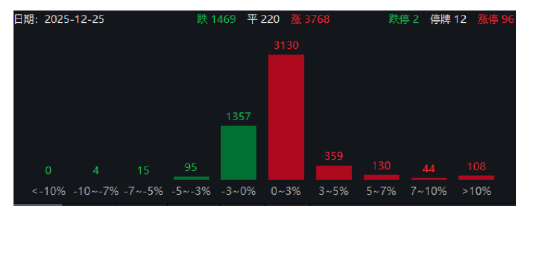
Market Overview - The market continues to rise, with the Shanghai Composite Index achieving a seven-day winning streak, closing up 0.47% at 3959.62 points. The Shenzhen Component Index rose 0.33%, and the ChiNext Index increased by 0.3%, while the STAR Market 50 Index fell by 0.23% [1][11] - A-shares saw a total trading volume of 1.94 trillion yuan, an increase from the previous day's 1.9 trillion yuan, with over 3700 stocks rising across the market [1][11] - Sectors such as aerospace, military, robotics, and insurance led the gains, while precious metals and non-ferrous metals experienced a pullback [1][11] Monetary Policy - The Central Bank's Monetary Policy Committee has decided to continue implementing a moderately loose monetary policy, enhancing counter-cyclical and cross-cycle adjustments to better utilize monetary policy tools for economic stability and reasonable price recovery [4][14] - The ongoing release of policy dividends is expected to further boost total economic demand, accelerating the transition of economic growth momentum and reinforcing the long-term positive logic of the capital market [4][14] - The CSI A500 Index, focusing on advanced manufacturing and information technology, is positioned to better capture opportunities in industrial structure upgrades compared to traditional broad-based indices [4][14] Robotics Sector - The robotics sector is experiencing a strong performance, driven by accelerated capital operations and positive market sentiment. A notable acquisition in Hong Kong aims to integrate precision manufacturing capabilities and supply chain resources [5][15] - The industry is at a critical juncture for large-scale production, with Tesla's Optimus robot achieving significant breakthroughs, supporting its 2026 production goals [5][15] - The total order volume for humanoid robots has exceeded 30,000 units this year, indicating a continuous growth trend towards commercialization [6][15] AI in Healthcare - AI in healthcare is gaining market attention, supported by policy initiatives and technological innovations. The National Health Commission and other ministries have outlined plans for AI applications in healthcare, aiming to establish clinical models and smart applications by 2027 [8][18] - The total procurement orders for medical IT projects, including pilot bases, have surpassed 1 billion yuan since December, indicating accelerated development in the AI healthcare sector [8][18] - Major internet companies are actively developing AI healthcare applications, with significant user engagement reported for various platforms [8][18] Pharmaceutical Industry - The pharmaceutical sector is a key area for AI applications, with potential for cost reduction and efficiency improvements in innovative drugs and high-end medical devices [9][19] - Domestic healthcare policies are supportive of innovative drug development, with promising prospects for the internationalization of innovative drugs and medical devices [9][19] - The industry is expected to see enhanced competitiveness and improved market conditions, making it an attractive area for investment [9][19]

蚂蚁集团推出AI健康应用阿福,消费电子ETF(561600)实现5连涨
Sou Hu Cai Jing· 2025-12-25 07:21
Group 1 - The core viewpoint of the news highlights the performance of the consumer electronics sector, with the CSI Consumer Electronics Theme Index rising by 0.23% and notable increases in individual stocks such as XW Communication (up 13.35%) and Changying Precision (up 8.52%) [1] - The consumer electronics ETF has achieved a five-day consecutive increase, with the latest price reported at 1.22 yuan [1] - Ant Group's AI healthcare application "AQ" has been rebranded to "Ant Afu," experiencing a surge in downloads, reaching the third position on the Apple app store, with over 15 million monthly active users [1] Group 2 - CITIC Securities expresses optimism regarding major internet companies leveraging AI capabilities and established ecosystems to capture market share in the AI healthcare sector, creating a comprehensive application that integrates medical consultation, health management, and medical consumption [1] - The policy environment continues to support the development of AI in healthcare, with increased funding driving demand in both B2B and B2C segments [1] - The CSI Consumer Electronics Theme Index includes 50 listed companies involved in component production and brand design, with the top ten weighted stocks accounting for 56.39% of the index [2]
长城基金龙宇飞:2026年AI医疗有望将迎来两大催化
Xin Lang Cai Jing· 2025-12-25 06:29
Core Viewpoint - The pharmaceutical industry is entering a critical period of innovation and technological integration, with investment logic being reshaped [1][4]. Group 1: Industry Trends - The core competitiveness standards in the pharmaceutical industry are evolving, shifting from commercialization capabilities over a decade ago, to product strength 5-10 years ago, and now requiring excellence in both R&D and commercialization [1][4]. - The global industry is entering a new wave of technological upgrades, where the ability to embrace new productivity tools and integrate them into business models and R&D will be key to future competition [1][4]. Group 2: Investment Outlook for 2026 - For 2026, the focus is on two main investment directions: innovative drugs and AI healthcare, which are expected to align with both industry trends and stock price trends [1][4]. Group 3: AI Healthcare Catalysts - AI healthcare is anticipated to experience two major catalysts in the coming year: 1. Policy support, with recent guidelines from the National Health Commission and other ministries aiming to establish specialized clinical models and intelligent applications by 2027, creating a two-year window for explosive growth in 2026 [5]. 2. Technological drivers, where foundational industries will benefit first, leading to a ripple effect across various sectors. The initial integration of AI in healthcare has been completed, and advancements in computational model capabilities are expected to drive significant growth in demand from both hospitals and patients [6].
蚂蚁阿福:完成品牌升级,AI医疗前景可期
Sou Hu Cai Jing· 2025-12-25 01:45
Core Insights - Ant Group's C-end AI medical application "AQ" has been rebranded as "Ant Afu," completing its brand strategy upgrade [1][2] - The Ant Afu app features three main highlights: structured multimodal precise consultation capabilities, long-term health data accumulation enhancing user stickiness, and promising commercialization prospects within the Alibaba ecosystem [1][2] - The company is optimistic about major internet firms leveraging AI product strength, mature ecosystems, and substantial funding to capture market share and cultivate user awareness of AI home medical services, aiming to create a national-level AI medical application [1][2] Market Potential - Leading pharmaceutical e-commerce platforms possess vast C-end customer bases and complete commercialization scenarios, likely to benefit first from these developments [1][2] - Policy initiatives are driving the development of the AI + healthcare industry, with incremental funding facilitating increased demand on the B/G end [1][2]
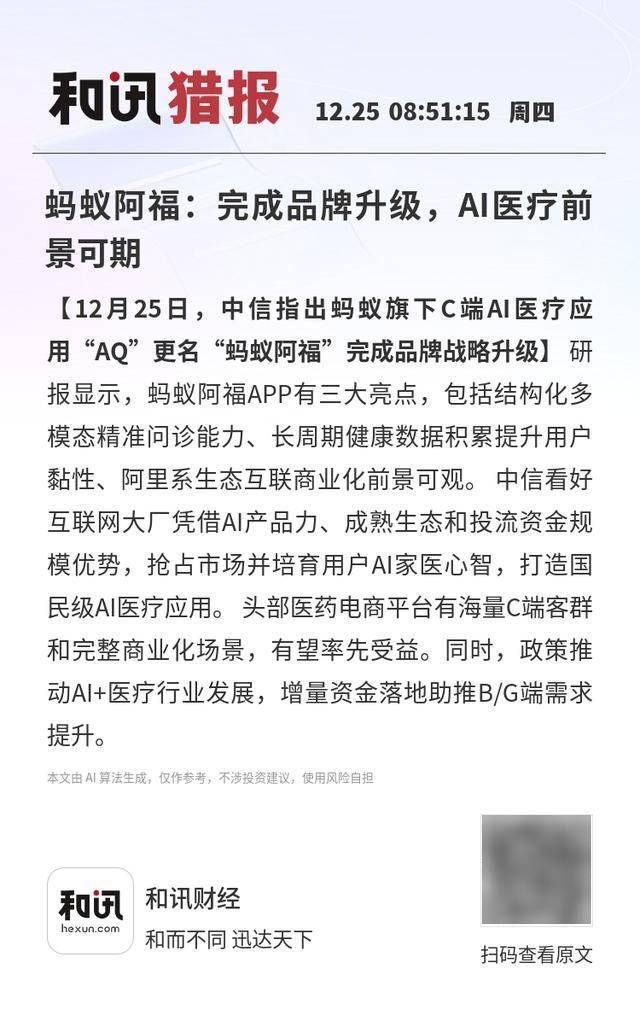
中信证券:大厂竞逐C端AI医疗Agent 医药电商有望率先受益
Zheng Quan Shi Bao Wang· 2025-12-25 00:44
人民财讯12月25日电,中信证券研报指出,蚂蚁旗下C端AI医疗应用"AQ"更名"蚂蚁阿福",完成品牌战 略升级。研报认为,蚂蚁阿福APP具备结构化多模态精准问诊能力,长周期健康数据积累提升用户黏 性,以及阿里系生态互联商业化前景可观三大亮点。看好互联网大厂凭借AI产品力、成熟生态以及投 流资金规模优势,率先抢占市场并完成用户AI家医心智培育,打造AI集医学问诊、健康管理、医疗消 费于一体的国民级AI医疗应用。头部医药电商平台手握海量C端客群,具备在线问诊、买药、预约挂 号、医疗服务的完整商业化场景,有望率先受益。与此同时,政策持续推动AI+医疗行业的发展,增量 资金落地助推B/G端需求同步提升。 ...

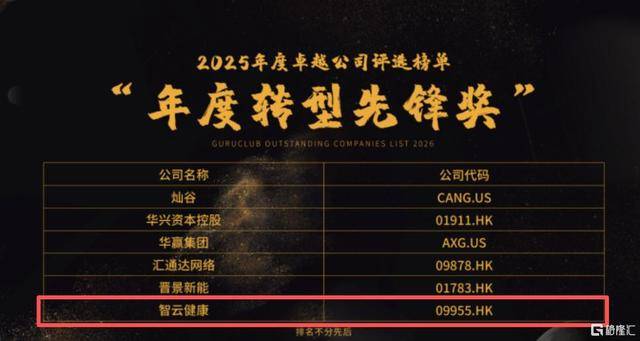
智云健康获年度转型先锋奖:AI驱动战略升级,P2M打开新空间
Sou Hu Cai Jing· 2025-12-24 06:48
Core Insights - The article highlights that Zhiyun Health (09955.HK) has been awarded the "Annual Transformation Pioneer Award" for its outstanding performance in strategic transformation, business restructuring, and sustainable growth in a dynamic market environment [1][2]. Group 1: Strategic Focus and Transformation - Zhiyun Health has shifted from a scale expansion model to a focus on "AI SaaS + P2M" as its core growth strategy, emphasizing high-quality and high-value growth [2]. - The company has strategically divested from non-core businesses, such as medical supplies and consumables, to concentrate resources on digital chronic disease management, thereby clarifying its strategic direction [3]. Group 2: Financial Performance and Validation - The mid-2025 financial report shows a 20.3% year-on-year growth in revenue after excluding the impact of divested businesses, indicating strong internal growth in core operations [4]. - The gross profit margin reached 37.1%, an increase of over 16 percentage points year-on-year, with adjusted gross margins at 49.9%, reflecting a successful shift from a scale-driven to a quality-driven business model [4]. Group 3: Cash Flow and Sustainability - For the first half of 2025, Zhiyun Health achieved a positive operating cash flow of 28.65 million, marking its first positive cash flow since going public, which validates its high-value strategic focus and demonstrates its self-sustaining capabilities [5][6]. Group 4: Dual-Engine Growth Model - The "AI SaaS + P2M" dual-engine model supports the company's transformation and long-term market outlook, with the SaaS system covering over 2,700 hospitals and nearly 270,000 pharmacies nationwide, establishing a robust digital service network [7]. - The P2M model, which links patient needs directly to the pharmaceutical industry, generated revenue of 260 million in the first half of 2025, a year-on-year increase of 142.1%, and has become a significant growth driver for the company [8]. Group 5: Technological Advancements - Zhiyun Health continues to deepen its core technology exploration, with self-developed models like "Zhiyun Medical Brain" and ClouD GPT enhancing operational efficiency and aiding in clinical diagnosis and research innovation [9]. Group 6: Future Outlook - The award signifies recognition of Zhiyun Health's past transformation and sets the stage for future endeavors, as the company aims to solidify its leading position in digital chronic disease management and leverage technology to reshape healthcare value [10].