Autos

Search documents
分享智界S7今年首次OTA升级的6个技术
Zhong Guo Jing Ji Wang· 2026-02-06 01:11
Core Insights - The article discusses the first OTA (Over-The-Air) upgrade of the Zhijie S7 in 2026, highlighting six key technological features introduced in this upgrade [1] Group 1: Technological Features - The upgrade includes a feature for in-car and external dialogue, enhancing communication capabilities [1] - A tire blowout intervention system is introduced, aimed at improving safety [1] - The suspension pre-adjustment feature is designed to optimize ride comfort and handling [1] - A pinch prevention function is included to enhance passenger safety [1] - The three-point turn capability is added for improved maneuverability in tight spaces [1] - Proximity parking assistance is introduced to facilitate easier parking [1]
X @Tesla Owners Silicon Valley
Tesla Owners Silicon Valley· 2026-02-06 00:56
LFGCraig Coker (@FromWhereICHG):The naysayers didn’t think I could make it to the top. The Cybertruck took the abuse like a champ, thanks to UP Beadlocks, UP Cybrshocks and Toyo R/T ProsShoutout to my partners for making this KOH trip possible@OptimaBatteries@ToyoTires@UnpluggedTesla@RakticalGear https://t.co/9sCJUKz1oH ...

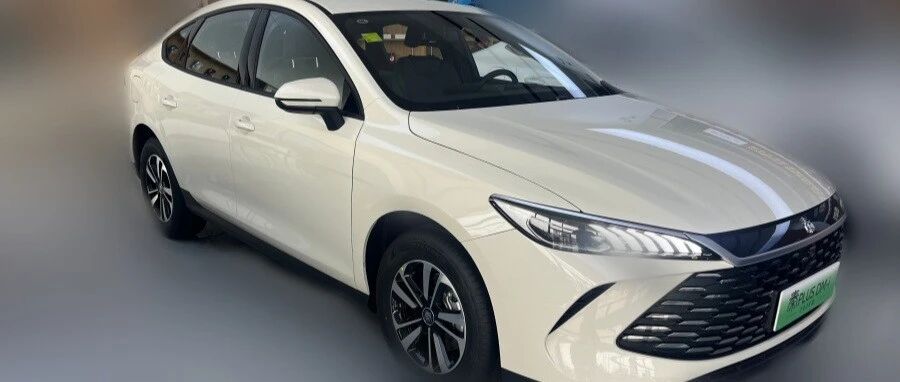
比亚迪“双秦”:话术新增国产竞品,KPI调低让销售过个好年
车fans· 2026-02-06 00:30
Core Viewpoint - The article discusses the launch and features of the new 2026 models of Qin PLUS DM-i and Qin L DM-i, highlighting their market positioning and competitive advantages. Group 1: Product Launch and Pricing - The new models Qin PLUS and Qin L were delivered five days before the launch, with specific configurations available in stock [2] - The price range for Qin PLUS is between 79,800 to 99,800 yuan, while Qin L ranges from 96,800 to 126,800 yuan [4] - Special promotional policies include a new spring purchase subsidy of 2,026 yuan for both models [27] Group 2: Competitive Analysis - The sales strategy emphasizes comparisons with traditional joint venture vehicles and specific domestic competitors, indicating a shift in focus to include domestic hybrid models [9] - The competitive advantages of the new models include the standard high-speed driving assistance system and the longest pure electric range in their class [16][17] - Disadvantages noted include a perception of outdated design compared to competitors like Ocean Network [18] Group 3: Customer Engagement and Sales Strategy - Customer foot traffic has decreased significantly due to policy changes affecting subsidies and taxes, leading to a low number of inquiries about the new models [12][13] - The sales team has adjusted their targets to be more realistic in light of current market conditions, aiming to support their staff during challenging times [13] - A notable sales tactic includes offering a hybrid vehicle with a complimentary electric vehicle, showcasing the extended electric range of the new models [11] Group 4: Financial Support and Purchase Timing - Financial policies include a two-year interest-free loan option, with specific examples provided for the Qin PLUS model [25] - The current market conditions are seen as a favorable time for potential buyers to consider purchasing the new models [26]


Stock market today: Dow, S&P 500, Nasdaq rise after tech rout as Wall Street rethinks AI risks
Yahoo Finance· 2026-02-06 00:07
US stocks turned higher early Friday, pointing cautiously to a rebound from a week-long tech bruising as Wall Street reassessed worries about the impact of AI disruption and the risks of hefty Big Tech spending. The S&P 500 (^GSPC) rose 0.5%, while the Nasdaq Composite (^IXIC) added roughly 0.4%, retracing earlier premarket losses. The Dow Jones Industrial Average (^DJI) also switched course, moving up 0.8% on the heels of sharp closing losses across the board on Thursday. Wall Street is looking to end ...
Asia-Pacific markets set for another weak session as tech sell off deepens after Wall Street rout
CNBC· 2026-02-06 00:05
Market Overview - South Korea's Kospi index experienced a significant decline, plunging as much as 5% before closing down 3.20%, while the small-cap Kosdaq fell by 3.17% [1] - The market is heavily influenced by the chip and automotive industries, which have seen sharp fluctuations due to negative sentiment surrounding tech stocks [2] Company Performance - Major companies such as Samsung Electronics and SK Hynix saw their stock prices drop by 3.08% and 3.56% respectively [1] - Hyundai Motor's shares decreased by 5.42%, and Hanwha Aerospace, a defense heavyweight, fell by 5.87% [1] - LG Energy Solution also faced a decline, losing 3.67% [1] Regional Market Trends - Japan's Nikkei 225 index fell by 0.57%, marking a third consecutive day of losses, while the broader Topix index was marginally lower [2] - Japanese pharmaceutical companies, including Sumitomo Pharma and Takeda Pharmaceutical, experienced stock declines of over 5% and 1.75% respectively, following U.S. President Donald Trump's announcement of discounted prescription medicines [3] - Hong Kong's Hang Seng Index opened down about 2%, and mainland China's CSI 300 saw a marginal decline [3] - Australia's S&P/ASX 200 index also showed weakness, falling by 1.84% [3] Commodity Market - Spot silver prices continued to decline, dropping by 1.63% after a significant crash of about 13% on Thursday [3]

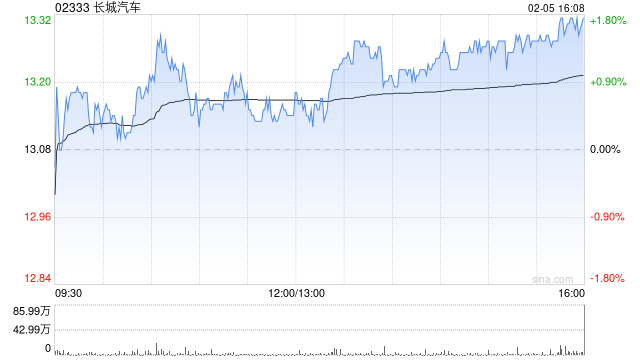
长城汽车获贝莱德增持180.8万股 每股作价约13.5港元
Xin Lang Cai Jing· 2026-02-05 23:40
香港联交所最新资料显示,1月29日,贝莱德增持长城汽车(02333)180.8万股,每股作价13.498港元, 总金额约为2440.44万港元。增持后最新持股数目约为1.86亿股,最新持股比例为8.04%。 香港联交所最新资料显示,1月29日,贝莱德增持长城汽车(02333)180.8万股,每股作价13.498港元, 总金额约为2440.44万港元。增持后最新持股数目约为1.86亿股,最新持股比例为8.04%。 热点栏目 自选股 数据中心 行情中心 资金流向 模拟交易 客户端 热点栏目 自选股 数据中心 行情中心 资金流向 模拟交易 客户端 责任编辑:卢昱君 责任编辑:卢昱君 ...

《中国互联网络发展状况统计报告》发布:AI赋能养老、跨境支付互联,释放消费潜力
Xin Lang Cai Jing· 2026-02-05 23:38
Core Insights - The report indicates that by the end of 2025, the number of internet users in China is expected to reach 1.125 billion, with the internet penetration rate exceeding 80% [1] - Artificial intelligence is being widely applied in sectors such as elderly care and healthcare, with smart robots and equipment providing comprehensive services for the elderly [1] - The commercial year for high-level autonomous driving has begun, with the first batch of L3 conditional autonomous driving vehicles being piloted in Beijing and Chongqing [1] - Breakthroughs in cross-border payment connectivity have made it more convenient for foreign individuals to consume in China, enhancing the attractiveness of inbound tourism [1] Group 1 - The expected internet user base in China will reach 1.125 billion by the end of 2025, with an internet penetration rate surpassing 80% [1] - The application of artificial intelligence in elderly care and healthcare is expanding, with smart robots providing all-around services [1] - The pilot testing of L3 conditional autonomous driving vehicles is taking place in major cities, marking a significant step in the commercialization of advanced driving technology [1] Group 2 - Cross-border payment systems have achieved significant advancements, facilitating easier consumption for foreign visitors in China [1] - The convenience of payment systems is expected to unlock the potential for inbound consumption, further boosting the attractiveness of China's inbound tourism [1]
X @Tesla Owners Silicon Valley
Tesla Owners Silicon Valley· 2026-02-05 23:20
🚨 BREAKING: Tesla just filed fresh USPTO trademarks for the next-gen Roadster — including a sleek new stylized wordmark AND what appears to be the updated production silhouette. After years of waiting, the long-teased hypercar unveil is finally closing in fast. 🔥0-60 under 1 second? 620+ mile range? SpaceX package thrusters? The wait might actually be almost over. ...
2亿用户,撑不起Uber的自动驾驶梦
汽车商业评论· 2026-02-05 23:06
Core Viewpoint - Uber's recent financial report highlights significant growth in user engagement and bookings, but concerns over profitability and market competition have led to a decline in stock price despite positive operational metrics [6][12][13]. Financial Performance - In Q4 2025, Uber reported a 22% increase in ride-hailing trips to 3.8 billion, with total bookings also rising 22% to $54.1 billion, and revenue growing 20% to $14 billion [6]. - Monthly active users reached a record 202 million, an 18% increase year-over-year, doubling from 100 million in 2019 [7][8]. - Operating profit for Q4 2025 was $1.77 billion, a 130% increase, but fell short of analyst expectations of $1.85 billion by $80 million [18]. Growth Drivers - The growth in bookings was attributed to new products and services, including the Uber One subscription service and expanded offerings in holiday travel and airport transportation [17]. - The food delivery segment also performed well, capturing market share from competitors by introducing more non-food merchants and increasing discounts [17]. Profitability Concerns - Despite revenue growth, Uber's profitability remains a concern, with significant losses from investments in companies like Lucid and Grab leading to a $1.6 billion write-down [19]. - The company anticipates a higher effective tax rate of 22%-25% in 2026, which could further pressure profit margins [22]. Autonomous Driving Strategy - Uber views autonomous driving as a key future growth area, investing heavily and forming partnerships with various technology firms [25][26]. - The company plans to deploy 25,000 autonomous vehicles on its platform and expand services to 15 global markets by the end of 2026 [28][30]. - Uber argues that its existing user base and operational experience will allow it to achieve better utilization and economic benefits from autonomous vehicles compared to independent operators [31]. Market Competition - The autonomous vehicle market is competitive, with companies like Waymo and Tesla advancing their own technologies, which poses a threat to Uber's strategy [42][44]. - Regulatory challenges in major cities may delay the rollout of autonomous services, impacting Uber's ability to capitalize on high-margin markets [46]. Investor Sentiment - Investor confidence is wavering, as the potential impact of autonomous vehicles on Uber's core business remains uncertain, leading to stock price volatility [47].

出口突破832万辆,究竟是谁在狂买中国车?
商业洞察· 2026-02-05 23:05
Core Viewpoint - In 2025, China's automobile exports reached 8.324 million units, a year-on-year increase of 29.9%, with export value at $142.46 billion, up 21.4%, indicating a significant global presence of Chinese automobiles [2][3]. Group 1: Who is Selling - The leading exporters are the "Big Three": Chery, SAIC, and BYD, with Chery exporting over 1.34 million units, SAIC's MG brand selling 1.07 million units, and BYD surpassing 1 million units for the first time [3]. - The second tier includes Great Wall, Changan, and Geely, with Great Wall establishing factories in Russia and Thailand, and Changan making strides in Mexico and Chile [6]. - The third tier consists of new energy vehicle manufacturers and commercial vehicle producers, with NIO and Xpeng targeting high-end markets in Germany and Norway, while Yutong and BYD dominate the global electric bus market [6]. Group 2: Market Trends - Chinese automakers are diversifying their export strategies, avoiding political entanglements with the West by establishing local production in countries like Mexico and Hungary [6]. - The exported vehicles are often tailored to local markets rather than being the most expensive models from China, with plug-in hybrid vehicles making up 13% of total exports, indicating a shift towards practical solutions [6][7]. - The popularity of plug-in hybrids is attributed to the lack of fast-charging infrastructure in 90% of countries, making them a suitable transitional technology [7]. Group 3: Export Destinations - The export market is diversified, with Asia, Europe, and Latin America as the main regions, and Mexico, Russia, and the UAE being the top three destinations for Chinese vehicle exports [7]. - The U.S. tariffs on Chinese electric vehicles have led companies to establish production in Mexico to circumvent these barriers, allowing vehicles to be exported to the U.S. duty-free [8]. - In Russia, the exit of Western automakers due to the Ukraine conflict has created a market gap that Chinese companies are rapidly filling, capturing over 51% of the new car market share [8]. Group 4: Defining Future Standards - The narrative around automotive standards is shifting from traditional German and Japanese benchmarks to a new "Chinese standard," focusing on innovative solutions to global challenges [9].