
农产品加工

Search documents
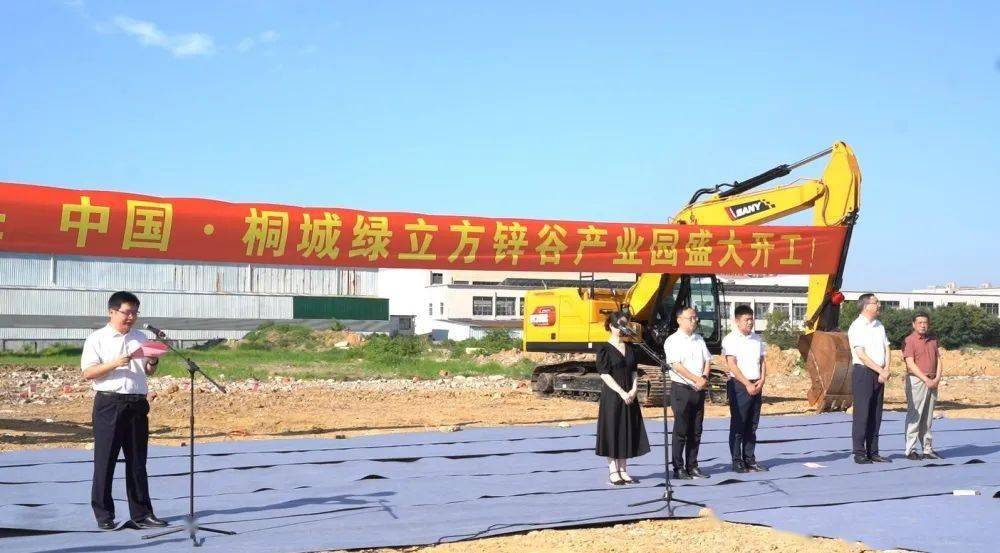
总投资达30亿元!中国·桐城绿立方锌谷产业园项目开工
Sou Hu Cai Jing· 2025-08-24 09:50
Core Viewpoint - The China Tongcheng Green Cube Zinc Valley Industrial Park project is positioned as a key driver for high-quality agricultural development and regional economic growth in Tongcheng, with a total investment of 3 billion yuan [2][3]. Group 1: Project Overview - The project was officially launched on August 20, with significant attendance from local government officials [2][3]. - The total investment for the project is 3 billion yuan, aimed at creating a modern industrial park that integrates various functions [2][3]. Group 2: Economic Impact - The industrial park will include a digital factory for zinc-rich agricultural products, a cultural heritage craft tourism base, a production and research center, and an e-commerce base [2][3]. - The project is expected to play a crucial role in upgrading specialty industries, expanding industrial chains, and increasing income for local communities [2][3]. Group 3: Government Support - The local government emphasizes a service-oriented approach, committing to provide high efficiency and optimal support throughout the project's lifecycle [2][3].

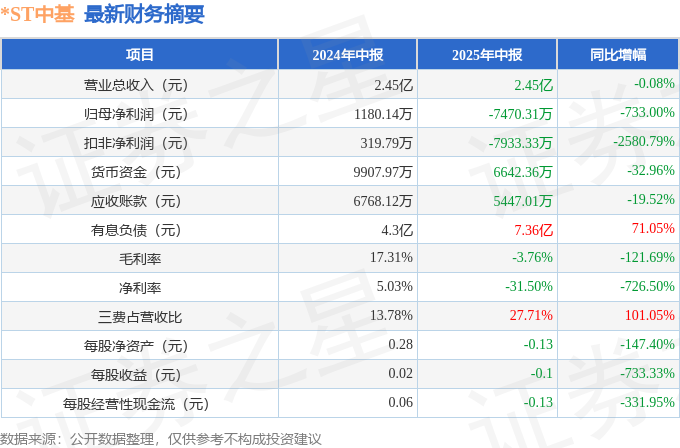
*ST中基2025年中报简析:净利润同比下降733%,三费占比上升明显
Zheng Quan Zhi Xing· 2025-08-23 22:58
管理费用变动幅度为141.96%,原因:本期公司减产后部分工厂停工停产将未开工工厂损失计入当期费 用。 财务费用变动幅度为77.72%,原因:本期存量及新增借款增加,导致利息支出同比增加。 据证券之星公开数据整理,近期*ST中基(000972)发布2025年中报。截至本报告期末,公司营业总收 入2.45亿元,同比下降0.08%,归母净利润-7470.31万元,同比下降733.0%。按单季度数据看,第二季度 营业总收入1.66亿元,同比上升32.07%,第二季度归母净利润-6744.74万元,同比下降1259.14%。本报 告期*ST中基三费占比上升明显,财务费用、销售费用和管理费用总和占总营收同比增幅达101.05%。 本次财报公布的各项数据指标表现不尽如人意。其中,毛利率-3.76%,同比减121.69%,净利 率-31.5%,同比减726.5%,销售费用、管理费用、财务费用总计6786.05万元,三费占营收比27.71%, 同比增101.05%,每股净资产-0.13元,同比减147.4%,每股经营性现金流-0.13元,同比减331.95%,每 股收益-0.1元,同比减733.33% | 项目 | 2024 ...

上合组织天津峰会|谋共同发展 赢繁荣未来——上海合作组织推动区域可持续发展走深走实
Xin Hua She· 2025-08-23 12:23
Core Viewpoint - The Shanghai Cooperation Organization (SCO) is actively promoting regional sustainable development through enhanced cooperation in various sectors, including connectivity, agriculture, industry, green industries, and digital economy, especially in the context of geopolitical conflicts and trade barriers [1][2]. Group 1: Connectivity Enhancement - The SCO serves as a significant platform for the Belt and Road Initiative, facilitating infrastructure cooperation and trade facilitation among member states [2]. - In the first seven months of 2025, China's total import and export volume with SCO member countries via land transport reached 677.4 billion yuan, an increase of 7.4%, while air transport reached 251.01 billion yuan, with a growth of 44.6% [2]. Group 2: Economic Transformation and Upgrading - The SCO provides a platform for sharing experiences in agricultural technology and industrial collaboration, enhancing the sustainability and autonomy of member countries' economic development [3]. - Uzbekistan has adopted Chinese drip irrigation technology, significantly improving cotton yield and water resource management [3]. - The establishment of the China-Belarus "Great Stone" Industrial Park has attracted over 150 enterprises from 15 countries, fostering industrial clusters in various sectors [3][4]. Group 3: New Cooperation Opportunities - The SCO countries are diversifying cooperation in green technology and digital infrastructure, which supports sustainable development [6]. - The 100 MW photovoltaic power station in Kazakhstan exemplifies successful green energy collaboration, aiding the region's transition to a low-carbon economy [6]. - The establishment of the "Silk Road E-commerce" comprehensive service base aims to enhance cross-border e-commerce and logistics [6]. Group 4: Digital Economy and Technological Innovation - The development of 5G networks in Kyrgyzstan has increased internet penetration from 43% to over 70%, showcasing the impact of digital infrastructure [6]. - The digital healthcare platform in Tajikistan provides remote medical consultations, benefiting remote populations [6]. - The SCO's focus on digital cooperation and multilateral coordination is expected to enhance member states' autonomous development capabilities [7].
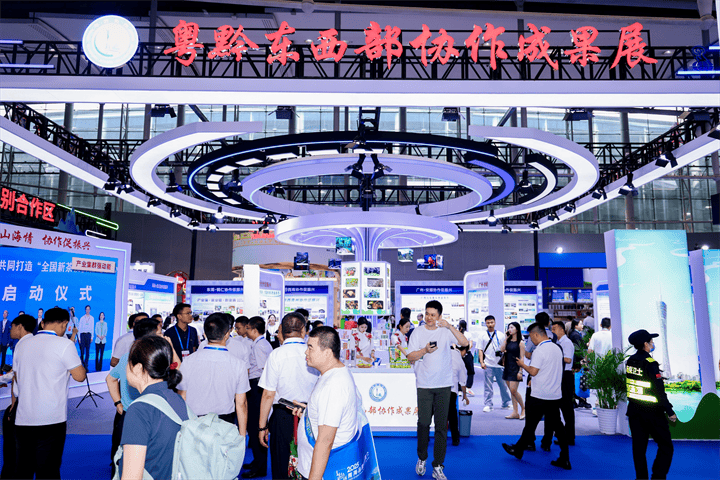
贵州8市(州)携千余款“深山好物”亮相广博会|粤黔协作开辟消费帮扶新赛道
Sou Hu Cai Jing· 2025-08-23 08:30
Core Insights - The 33rd Guangzhou Expo and the 2025 Guangzhou Consumer Assistance Exhibition have commenced, showcasing over a thousand unique products from eight cities in Guizhou, including tea, local delicacies, and specialty items [1][3] Group 1: Event Overview - The exhibition adopts innovative sales strategies such as live streaming, on-site promotions, and scenario-based sales to connect Guizhou's products directly with consumers in the Guangdong-Hong Kong-Macao Greater Bay Area [3][4] - The design of the Guizhou pavilion incorporates iconic landmarks from both regions, symbolizing the deep connection between them [6][11] Group 2: Product Highlights - Popular products include "Xiaomanyao" mineral water, "Qianyougu" prickly pear juice, and various new tea drinks, with significant sales achieved through live streaming, including 500 cups sold in half a day [8][12] - The "Cool Three Treasures" gift box from Liupanshui, containing kiwi, prickly pear juice, and tea, has seen a 20% increase in sales due to packaging adjustments for family consumption [12][19] Group 3: Consumer Engagement - The event features immersive experiences, allowing consumers to taste and learn about Guizhou's unique flavors and culture, enhancing product appeal [9][11] - Various promotional activities, such as photo-sharing incentives and discounts on local products, aim to attract visitors to Guizhou's tourism and agricultural offerings [16][17] Group 4: Business Impact - The expo serves as a significant platform for buyers, with notable agreements reached, including a 100 million yuan contract for local products [19] - The collaboration between Guizhou and the Greater Bay Area is expected to continue evolving, focusing on sustainable and precise assistance models to promote Guizhou's products and attract investment [19]
农产品操作类热点问答
蓝色柳林财税室· 2025-08-23 06:30
Core Viewpoint - The article provides detailed instructions on how to handle agricultural product tax deduction certificates in the digital tax account, emphasizing the different procedures based on the type of certificate and the necessity for pre-processing in certain cases [1][2][3]. Group 1: Tax Deduction Procedures - Different agricultural product deduction certificates require varying operations in the digital tax account, with some needing pre-processing and others not [1]. - Agricultural product sales invoices and customs payment receipts issued through the electronic tax bureau do not require pre-processing and can be directly selected for deduction [1]. - Special cases, such as tax authority-issued agricultural product invoices, require additional data entry before they can be selected for deduction [1]. Group 2: Special Cases and Pre-processing - For agricultural product VAT invoices issued by tax control systems, pre-processing is required in the "Pending Agricultural Product Invoices" module before they can be selected for deduction [2]. - Invoices from small-scale taxpayers with a simplified tax method at a 3% rate also require pre-processing, with the system indicating applicable situations for 9% deduction [2]. Group 3: VAT Declaration Process - After completing the deduction selection, taxpayers must confirm the statistics in the digital tax account before proceeding with the VAT declaration [3]. - The relevant amounts must be filled in the specified sections of the VAT and additional tax declaration form, which will automatically pull in the corresponding data [3]. Group 4: Invoice Issues and Corrections - If a taxpayer cannot find their agricultural product sales invoice in the deduction selection module, they should verify if it has the "agricultural product sales" specific business label [4]. - If the label is missing, the taxpayer must reissue the invoice through the electronic tax bureau [4][5]. Group 5: Cancellation and Adjustments - Taxpayers can revoke the status of invoices marked as "selected (deducted)" if they have not yet submitted the VAT declaration [6]. Group 6: Additional Deductions for Deep Processing - Only enterprises classified as agricultural product deep processing can utilize the additional deduction module, which allows for a 1% extra deduction during actual production [7]. - Specific steps must be followed to select invoices for additional deductions, including logging into the electronic tax bureau and confirming the deduction amounts [7]. Group 7: Customs Payment Receipts - Customs payment receipts with dual headings or those with disputes require manual entry or bulk import of information before they can be selected for deduction [8][9]. - The system will automatically initiate a verification process after saving the customs payment receipt information [9]. Group 8: Reporting Deductions - Specific sections of the VAT declaration form must be filled out based on the type of invoice and the applicable deduction rates [10]. - The form includes various categories for reporting deductions from different types of agricultural product invoices and customs payment receipts [10][11].

华英农业:河南证监局对公司实施责令改正措施并对有关责任人出具警示函
Zhong Zheng Wang· 2025-08-22 13:28
Core Viewpoint - Huaying Agriculture has received an administrative regulatory decision from the Henan Securities Regulatory Bureau due to violations related to asset transfer and failure to disclose important information [1] Group 1: Violations Identified - The company failed to timely review and disclose an asset transfer agreement signed on January 15, 2020, which was only reviewed and disclosed on April 15, 2022, violating multiple provisions of the Information Disclosure Management Measures [2] - The company did not follow the necessary review procedures and disclosure requirements when it waived the right of first refusal for a minority shareholder's equity transfer in March 2023, also violating the Information Disclosure Management Measures [2] Group 2: Regulatory Actions - The Henan Securities Regulatory Bureau has mandated corrective measures for the company and issued warning letters to responsible individuals, which will be recorded in the securities and futures market integrity archives [3]

走进内蒙古原产地现场选品,北京消费帮扶再创新
Xin Jing Bao· 2025-08-22 13:06
Core Insights - The "Taste Inner Mongolia" event aims to enhance the supply chain of high-quality agricultural products from Inner Mongolia to Beijing, facilitating direct procurement and establishing trust between producers and buyers [1][2][5] - The event showcased over 200 specialty agricultural products, resulting in 10 companies signing procurement agreements on-site [1][2] Group 1: Event Overview - The event was held from August 20 to 21, 2025, in Inner Mongolia's Xingan League, involving over 30 major supermarkets, e-commerce platforms, and food enterprises from Beijing [1] - The initiative is part of the 2025 Beijing consumption assistance series, focusing on direct engagement with agricultural producers [2] Group 2: Agricultural Products and Processing - The Beijing procurement team examined key agricultural sectors, including rice, beef, lamb, sweet corn, and specialty pickles, emphasizing the "Farm Fresh" brand [2] - The Xin Xuan fresh corn processing center can process 12,000 tons of sweet corn annually, benefiting over 2,000 local farmers with an average income increase of over 5,000 yuan [2] - The black garlic series from the purple garlic processing park has seen a value increase of over five times, becoming popular in high-end Beijing restaurants [2] Group 3: Collaboration and Economic Impact - Since the start of the Beijing-Inner Mongolia collaboration, over 150 billion yuan has been invested in various projects, with more than 3,200 industrial projects implemented [3][4] - The establishment of 12 Inner Mongolia consumption assistance pavilions in Beijing has facilitated a 23% year-on-year increase in sales of Inner Mongolia agricultural products, reaching 6.8 billion yuan in 2024 [4] - The collaboration has improved the commercialization rate of local agricultural products from 60% to 85%, benefiting 120,000 farmers [4][5] Group 4: Market Dynamics and Consumer Benefits - The event highlights the dual benefits of consumer assistance, allowing Beijing residents to access high-quality food at lower prices while providing stable income for Inner Mongolian farmers through order agriculture [5] - Approximately 30% of beef and 40% of grains in the Beijing market are sourced from Inner Mongolia, indicating a strong market presence [5]
黔北风物再入湾 珠遵协作帮扶聚力兴农
Nan Fang Nong Cun Bao· 2025-08-22 11:34
黔北风物再入湾 珠遵协作帮扶聚 力兴农_南方+_ 南方plus 8月22日,第33 届广州博览会在 广州开幕。同 期,由广东省粤 黔协作工作队遵 义工作组、珠海 市农业农村局、 遵义市农业农村 局和遵义市商务 局共同主办,珠 海农控集团承办 的珠遵协作帮扶 促消费专项活动 在中国进出口商 品交易会展馆成 功举办。 本次活动得到了 珠海市商务局、 珠海市国资委、 珠海市总工会、 遵义市文化旅游 局及广东省粤黔 协作工作队遵义 工作组各县 (市)小组等单 位的大力支持, 通过政府搭台、 企业唱戏的模 式,为遵义优质 农特产品开拓粤 港澳大湾区市场 注入新动能。 和市民驻足。 今年4月29日至5 月1日,"黔货出 山·八仙过 海"2025年粤黔 协作帮扶促消费 珠遵展销活动在 广州成功举办, 活动共组织两地 28家企业参加, 通过线上线下联 动,实现销售额 山海携手,黔货 入湾势头劲 活动现场,珠遵 携手在广州消费 帮扶展览会内打 造了约220平方 米的"珠海·遵义 农特产品展销 馆",集中展示 遵义8个对口帮 扶县(市)及珠 遵消费协作企业 联盟的粮油、果 蔬、饮料、茶 叶、酱香白酒等 名优农特产品, 吸引众多采 ...

鸡蛋、玉米淀粉、生猪期权上市一周年,产业有序参与
Sou Hu Cai Jing· 2025-08-22 11:22
Group 1 - The launch of egg, corn starch, and live pig options on the Dalian Commodity Exchange has been stable, with orderly industry participation and steady functionality over the past year [1] - As of August 22, 2025, the average daily trading volume, trading value, and open interest for egg options were 46,000 contracts, 13.21 million yuan, and 79,000 contracts respectively [1] - For corn starch options, the average daily trading volume, trading value, and open interest were 15,000 contracts, 3.474 million yuan, and 44,000 contracts respectively [1] - Live pig options had an average daily trading volume of 8,000 contracts, trading value of 16.019 million yuan, and open interest of 29,000 contracts [1] Group 2 - Sichuan Green Science Poultry Co., Ltd. has utilized options to lock in profits and reduce costs amid market volatility, successfully generating fixed income by selling at-the-money or slightly out-of-the-money call options [2] - The company also purchases out-of-the-money call options to hedge against extreme market conditions, demonstrating effective risk management strategies [2] Group 3 - Zhu Cheng Xingmao Corn Development Co., Ltd. has adopted various hedging strategies using corn starch options to lower costs and maintain operational efficiency in a challenging market environment [3] - The company employs strategies such as selling call options to reduce inventory costs and selling put options to hedge against unexecuted locked-price orders [3] Group 4 - Sichuan Dekang Agricultural and Animal Husbandry Food Group has integrated live pig options as a supplementary tool for futures hedging, focusing on locking in breeding profits and enhancing hedging returns [4] - In April, the company sold a call option with a strike price of 15,000 yuan per ton, receiving a premium of 300 yuan per ton, which helped offset losses from falling spot prices [4] Group 5 - The Dalian Commodity Exchange aims to optimize option contract rules and enhance industry participation through training and promotional activities, supporting stable and healthy market development [4]
红枣市场周报:持仓量下滑,红枣调整运行-20250822
Rui Da Qi Huo· 2025-08-22 10:00
Report Summary 1. Report Industry Investment Rating No investment rating is provided in the report. 2. Core Viewpoints - This week, the price of the main contract of Zhengzhou jujube futures declined, with a weekly drop of 2.69%. The market recognizes the expected reduction in the output of new - season Xinjiang grey jujubes, but there are differences in output estimates. After the market digests the bullish factors of the expected output reduction, short - term funds flow out, the trading volume of the main contract decreases, and the driving force for the market is insufficient. However, supported by the expected reduction in new - season output, it is expected to show a high - level volatile trend. The future focus will be on the actual output and the opening purchase price. It is recommended to wait and see for now [8][11]. 3. Summary by Directory 3.1 Week - to - Week Summary - **Market Review**: The price of the main contract of Zhengzhou jujube futures declined this week, with a weekly drop of 2.69% [8][11]. - **Market Outlook**: As of the 34th week, the physical inventory of jujubes in 36 sample points was 9,519 tons, a decrease of 167 tons from last week, a week - on - week decrease of 1.72%, and a year - on - year increase of 79.20%. The output of jujubes in 2024 increased year - on - year, resulting in higher old - crop inventory than the same period last year. It is expected that the market will show a high - level volatile trend, and the support level of the jujube 2601 contract is around 11,000 yuan/ton. It is recommended to wait and see [8]. - **Future Trading Alerts**: Pay attention to weather impacts and the consumer side [8]. 3.2 Futures and Spot Market - **Futures Price**: The price of the main contract of Zhengzhou jujube futures declined this week, with a weekly drop of 2.69% [8][11]. - **Futures Positions**: As of this week, the net position of the top 20 in jujube futures was - 12,617 lots [13]. - **Futures Warehouse Receipts**: As of this week, the number of Zhengzhou jujube warehouse receipts was 9,891 [16]. - **Futures Spread**: As of this week, the spread between the Zhengzhou Commodity Exchange jujube futures 2605 contract and the 2601 contract was 190 yuan/ton [20]. - **Basis**: As of this week, the basis between the spot price of Hebei grey jujubes and the main contract of jujube futures was - 805 yuan/ton [23]. - **New - Season Purchase Price**: As of August 22, 2025, the purchase price of general - grade jujubes in Aksu was 4.8 yuan/kg, in Alar was 5.2 yuan/kg, and in Kashgar was 6 yuan/kg [26]. - **First - Grade Spot Price**: As of August 22, 2025, the wholesale price of first - grade grey jujubes in Cangzhou, Hebei was 4.80 yuan/jin, and in Henan was 4.75 yuan/jin [29]. - **Special - Grade Spot Price**: As of August 22, 2025, the wholesale price of special - grade grey jujubes in Cangzhou, Hebei was 10.43 yuan/kg, and in Henan was 10.5 yuan/kg [33]. 3.3 Industry Chain - **Supply Side - Inventory**: As of this week, the physical inventory of jujubes in 36 sample points was 9,519 tons, a decrease of 167 tons from last week, a week - on - week decrease of 1.72%, and a year - on - year increase of 79.20% [38]. - **Supply Side - Output**: The crop is growing well, and it is expected that the jujube output in the 2024/25 season will recover [43]. - **Demand Side - Exports**: In July 2025, China's jujube export volume was 1,784,164 kg, the export value was 30,320,227 yuan, the export average price was 16,994.08 yuan/ton. The export volume increased by 1.08% month - on - month and decreased by 24.95% year - on - year. From January to July, the cumulative export volume was 18,899,838 kg, with a cumulative year - on - year increase of 14.05% [45]. - **Demand Side - BOCE Trading**: This week, the ordering volume of BOCE Xinjiang Jujube Hao brand was not traded [49]. 3.4 Options Market and Futures - Stock Correlation - **Options Market**: The report mentions the implied volatility of at - the - money jujube options this week but does not provide specific data [51]. - **Stock Market - Haoxiangni**: The report shows the price - to - earnings ratio chart of Haoxiangni but does not provide specific analysis [53].
