Apparel

Search documents
李宁(02331.HK):短期仍有压力 2H25保持投入姿态
Ge Long Hui· 2025-07-16 03:24
Company Overview - In Q2 2025, the retail revenue of the Li Ning brand (excluding Li Ning YOUNG) grew at a low single-digit percentage year-on-year, with a net increase of 11 retail points during the quarter [1] - The wholesale channel continued to outperform direct sales, with healthy inventory levels despite pressure on discounts due to market fluctuations [1] - The retail revenue from offline direct sales declined at a mid-single-digit percentage year-on-year, with a net decrease of 13 retail points, while the offline wholesale channel saw low single-digit growth and a net opening of 24 retail points [1] Product Performance - In terms of product categories, the running category saw high single-digit year-on-year growth, although the growth rate slowed compared to Q1 2025, which benefited from sponsorship of events like the Beijing Marathon [1] - The fitness category continued to perform well with high single-digit year-on-year growth, while the sports lifestyle category stabilized with flat year-on-year performance [1] - The basketball category experienced a decline in line with industry trends, while emerging categories such as outdoor and badminton maintained healthy growth [1] Discount and Inventory Management - Discounts in both online and offline channels deepened year-on-year at a low single-digit percentage, but the company maintained a healthy inventory level, with a channel inventory-to-sales ratio of approximately 4x as of the end of June [1] Future Outlook - Since July, retail has continued to fluctuate, with pressure on offline revenue and discounts for the Li Ning brand [2] - In the second half of the year, the company plans to increase marketing and product investment around the theme of "Olympics and Technology," including activities related to Olympic sponsorship and new product launches in various categories [2] - The management maintains guidance for 2025 revenue to be flat year-on-year and a high single-digit net profit margin [2] Earnings Forecast and Valuation - The company maintains its EPS forecasts for 2025 and 2026 at 0.92 and 1.07 HKD respectively, with the current stock price corresponding to 16x and 14x the 2025 and 2026 P/E ratios [2] - The target price remains at 20.82 HKD, implying a 30% upside potential compared to the current stock price, corresponding to 21x and 18x the 2025 and 2026 P/E ratios [2]

李宁(02331.HK)25Q2流水点评:折扣加深 库存改善 预计下半年增加费用投放
Ge Long Hui· 2025-07-16 03:24
Group 1 - The core viewpoint of the article indicates that Li Ning's overall retail revenue for Q2 2025 showed low single-digit growth year-on-year, with offline and e-commerce channels experiencing low single-digit decline and mid-single-digit growth respectively [1] - As of the end of Q2 2025, Li Ning's main brand store count reached 6,099, with a net increase of 11 stores compared to the previous quarter, but a net decrease of 18 stores compared to the end of the previous year [2] - The company signed NBA player Yang Hansheng, which is expected to boost basketball category sales, as basketball sales declined by 20% year-on-year in Q2 2025 [2] Group 2 - Li Ning plans to increase marketing and R&D investments related to the Olympics and technology in the second half of 2025 and into 2026, following its partnership with the Chinese Olympic Committee [3] - The company deepened discounts in Q2 2025 to drive sales, and inventory levels improved with a sales-to-inventory ratio of around 4 months [3] - Profit forecasts for 2025-2027 have been adjusted downwards, with net profits revised to 2.31 billion, 2.60 billion, and 2.93 billion respectively, while maintaining a "buy" rating based on long-term brand development potential [3]
太平鸟: 关于“太平转债”可选择回售的提示性公告
Zheng Quan Zhi Xing· 2025-07-15 08:13
Group 1 - The company has announced a buyback option for its convertible bonds, "Tai Ping Convertible Bonds," allowing holders to sell back their bonds at a price of 100.00 RMB per bond, including accrued interest [1][2][3] - The buyback period is set from July 15, 2025, to July 21, 2025, with funds to be disbursed on July 24, 2025 [1][5] - Holders of "Tai Ping Convertible Bonds" can choose to sell back part or all of their unconverted bonds, and this buyback is not mandatory [1][5] Group 2 - The buyback price is determined to be 100.00 RMB per bond, with the current interest rate for the fifth year set at 1.80%, resulting in no accrued interest at the time of the buyback [3][5] - The buyback option is triggered if there are significant changes in the implementation of the fundraising projects compared to the commitments made in the bond issuance prospectus [2][3] - During the buyback period, "Tai Ping Convertible Bonds" will continue to trade but will not be convertible into shares [5][6]

Levi Strauss: DTC Strategy Is Working Very Well
Seeking Alpha· 2025-07-15 03:43
Group 1 - The analyst previously held a buy rating for Levi Strauss & Co. (NYSE: LEVI) due to the company's effective scaling through its direct-to-consumer (DTC) channel, which is expected to drive earnings growth and margin expansion [1] - The investment approach emphasizes understanding the core economics of a business, including competitive moat, unit economics, reinvestment opportunities, and management quality, which are crucial for long-term free cash flow generation and shareholder value creation [1] - The focus is on sectors with strong secular tailwinds, indicating a preference for industries that are expected to grow over time [1] Group 2 - The analyst is a self-educated investor with 10 years of experience, currently managing personal funds sourced from friends and family [1] - The motivation for writing on Seeking Alpha is to share investment insights and receive feedback from fellow investors, aiming to help readers focus on factors that drive long-term equity value [1] - The analysis is intended to be both analytical and accessible, providing value to readers seeking high-quality, long-term investment opportunities [1]


白牌才是县城的“救世主”
创业邦· 2025-07-14 03:37
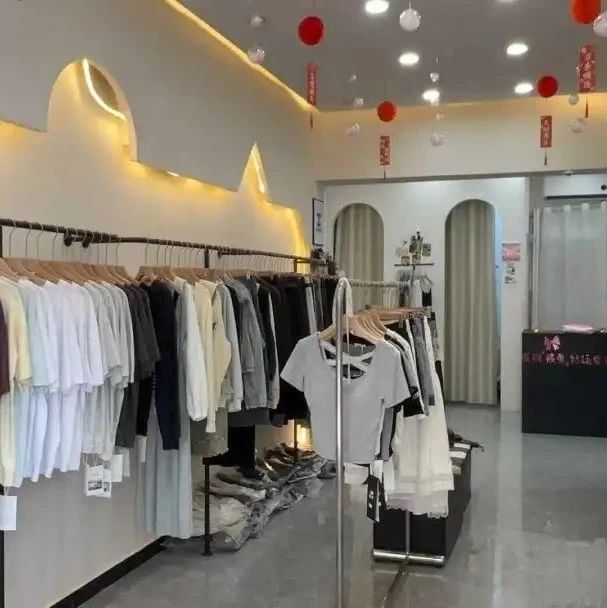
Core Viewpoint - The article emphasizes the dominance of "white label" products in county-level markets, highlighting their affordability, practicality, and local acceptance, which contrasts with the challenges faced by established brands in penetrating these markets [6][7][20]. Summary by Sections White Label Products in County Markets - White label products are favored in county markets due to their low prices and high cost-performance ratio, filling gaps left by established brands [6][7][29]. - Consumers in these areas often prioritize practicality over brand recognition, leading to a strong preference for local white label goods [20][21]. Case Studies of Local Merchants - Local merchants like Chen Jie and Xiao Xia prefer selling white label products due to higher profit margins compared to branded items, which often yield limited profits [9][11][15]. - Chen Jie reports that selling a case of local white label drinks can yield profits equivalent to selling multiple cases of branded drinks [11][36]. Challenges for Established Brands - Established brands struggle to penetrate county markets due to low brand recognition and high operational costs, leading to a reliance on local white label products [18][19][28]. - The article notes that many county consumers are not brand-conscious and focus on the value and quality of products instead [20][21]. Future of White Label Products - The rise of white label products has prompted traditional brands to reconsider their strategies for entering county markets, with some launching lower-priced product lines [31][32]. - Despite their current success, white label products face challenges such as quality inconsistency and competition from both established brands and e-commerce platforms [33][36]. Economic Impact - White label products are becoming a crucial economic support in county areas, catering to the needs of low-income consumers and driving local economies [27][29]. - The article suggests that the future of white label products will depend on their ability to improve quality and build consumer trust while navigating the competitive landscape [36].
I'm Upgrading Lululemon Stock to a Buy
The Motley Fool· 2025-07-13 08:54
Core Viewpoint - Lululemon's valuation has decreased sufficiently to counterbalance the macroeconomic and geopolitical challenges it is currently facing [1] Summary by Relevant Categories - **Valuation Impact** - The decline in Lululemon's valuation is significant enough to mitigate the effects of external economic and political pressures [1]


3 Growth Stocks Down 52% to 82% to Buy Right Now
The Motley Fool· 2025-07-12 12:00
Group 1: Lululemon Athletica - Lululemon is experiencing a significant decline in stock price, down 54% from a high of $516 to $235, despite a 19% annualized revenue growth over the last decade [5][6] - The stock is currently trading at 16 times forward earnings estimates, indicating a potential undervaluation given the brand's future growth prospects [6][9] - Lululemon's trailing-12-month revenue stands at $10.8 billion, which is considerably lower than competitors Nike and Adidas, who collectively generate $72 billion in annual sales [6][7] - The company has shown resilience with a 7% year-over-year revenue increase in the most recent quarter, contrasting with declines at Nike [7] - Increased search interest for Lululemon on Google suggests that the market may be underestimating its long-term growth potential, particularly in international markets [8] Group 2: Deckers Outdoor - Deckers Outdoor, known for brands like Hoka and Ugg, has seen its stock drop 52% from its peak earlier this year, attributed to slowing growth and market uncertainties [10][11] - The company anticipates a $150 million increase in costs due to tariffs, impacting its projected revenue of around $5 billion [12] - Despite short-term challenges, Deckers expects 9% revenue growth in the first quarter and double-digit growth for Hoka throughout the year [13] - The stock is currently trading at a price-to-earnings ratio of 16, suggesting it may be oversold and could rebound if growth resumes [14] Group 3: Roku - Roku has faced challenges post-pandemic, leading to slowing growth and losses, but maintains a dominant position in ad-supported streaming [15] - In the first quarter of 2025, Roku reported a 16% year-over-year revenue increase, primarily driven by its advertising segment, which constitutes 86% of total revenue [16] - The company has enhanced user engagement through its Roku channel, which became the second-most watched channel in the U.S., with an 84% increase in viewing hours year-over-year [17] - A partnership with Amazon aims to expand advertising reach, leveraging AI for targeted exposure, while Roku's stock is currently 82% off its all-time highs but has risen 40% over the past year [19]



X @Bloomberg
Bloomberg· 2025-07-11 08:01
Manufacturing & Trade - More than half of Nike's shoes are manufactured in Vietnam [1] - Vietnam has become a key manufacturing hub for thousands of American companies [1] - Vietnam is now a focus of the US trade war [1]

Why Vietnam Had to Make a Trade Deal With Trump
Bloomberg Originals· 2025-07-11 08:00
Trade Relations & Economic Impact - Vietnam's economy is heavily reliant on exports, representing approximately 90% of its GDP [4][8] - The US is Vietnam's largest export market, leading to a significant trade surplus and making it a target for potential tariffs [1] - Potential tariffs from the US, such as a proposed 46% tariff, could profoundly impact Vietnam's economy and manufacturing sector [2][10] - Vietnam experienced substantial foreign investment, exceeding $600 billion since 1988, contributing to export growth [7] Geopolitical Strategy & Manufacturing - Vietnam has become a major player in the global supply chain, manufacturing goods for various American companies and global brands [3][4] - The "China Plus One" strategy led companies to relocate some production to Vietnam to avoid tariffs on Chinese goods, benefiting Vietnam during US-China trade tensions [8][9] - Vietnam employs a "bamboo diplomacy" strategy to navigate complex relationships between the US and China, balancing economic and geopolitical considerations [15][16] - Vietnam's government is proactively engaging with the US to mitigate trade imbalances, including purchasing US products [12] Historical Context & Economic Development - Post-war Vietnam was one of the world's poorest countries, but economic reforms and policies to attract foreign investment have driven significant growth [5][6] - Vietnam's strategy of offering tax incentives, infrastructure development, and an open attitude to global manufacturers has been successful in attracting foreign investment [6]
Jeans brand Levi's is up 8% on strong earnings — despite a profit hit from tariffs
Business Insider· 2025-07-11 06:06
Core Insights - Levi Strauss reported a 6% increase in net revenues for the latest quarter, totaling $1.4 billion, with Europe showing a particularly strong performance at a 14% increase in net sales compared to the previous year [2][3] - The company is navigating the impact of tariffs, estimating a profit hit of $25 to $30 million for the remainder of the year due to these tariffs [3] - CEO Michelle Gass highlighted that 60% of the company's business is international, with minimal exposure to China, which positions the company competitively in relation to tariffs [4][3] Financial Performance - The company achieved net revenues of $1.4 billion, reflecting a 6% year-over-year increase [2] - European sales were a bright spot, increasing by 14% compared to the previous year [2] Strategic Initiatives - Levi's sold its Dockers brand and launched the third phase of its collaboration with Beyoncé, while also expanding its tops and outerwear lines [3] - The company has manufacturers in 28 countries, with 20 supplying products to the U.S., allowing for flexibility in response to tariff changes [8] Pricing Strategy - The company believes it has pricing power due to the health of the brand, indicating that any pricing changes will be carefully considered and executed [9]