
服装

Search documents
波司登任命前Dior男装设计师Kim Jones为新线创意总监
Cai Jing Wang· 2025-10-20 13:58
Core Insights - Bosideng appointed renowned British designer Kim Jones as the creative director for the newly established AREAL high-end urban line [1] - Kim Jones previously served as the artistic director for men's wear at Dior and has a history with Louis Vuitton [1] Company Developments - The launch of the AREAL high-end urban line marks a strategic move for Bosideng to enhance its brand positioning in the luxury market [1] - The appointment of Kim Jones is expected to bring significant design expertise and elevate the brand's appeal [1]


波司登任命Kim Jones为高级都市线AREAL创意总监
Cai Jing Wang· 2025-10-20 13:58
Core Insights - Bosideng appointed Kim Jones as the new creative director for the newly established high-end urban line AREAL, simultaneously launching the AREAL series [1] Company Developments - Kim Jones has previously served as the artistic director for Dior men's wear and Louis Vuitton men's wear, indicating a strong background in high fashion [1]
报喜鸟上半年业绩双降:户外板块难救场,主品牌拖后腿
凤凰网财经· 2025-10-20 13:51
Core Viewpoint - The overall consumption environment in China is under pressure, leading to a mixed performance in the brand matrix of Baoxiniang, with significant revenue declines in its main brands [3][5]. Group 1: Financial Performance - Baoxiniang's main brand revenue decreased by 9.6% year-on-year to 7 billion yuan, while the core brand Baoniao saw a more substantial decline of over 20%, contributing to an overall revenue drop of 3.58% to 2.39 billion yuan [3][6]. - The company's net profit attributable to shareholders fell sharply by 42.66% to 197 million yuan, which was below market expectations [3][5]. - In the first half of the year, Baoxiniang's revenue continued to decline, with a 3.47% drop in Q2, resulting in a total revenue of 1.087 billion yuan [5][6]. Group 2: Brand Performance and Strategy - The main brand Baoxiniang is facing challenges due to a shift in consumer preferences towards more casual and fashionable attire, impacting its traditional business suit positioning [6][7]. - The company has initiated a brand rejuvenation strategy since 2020, introducing new product lines like light formal wear and sports suits, but the effectiveness of this strategy remains to be seen [7][8]. - Baoniao, another core brand, experienced a revenue decline of 22.53% to 393 million yuan, attributed to increased competition in the professional clothing market [7][8]. Group 3: Outdoor Segment Growth - Despite the overall revenue decline, the outdoor segment, particularly the brand Le Fei Ye, saw a revenue increase of 20.48% to 183 million yuan, indicating a high growth potential in the outdoor apparel market [4][8]. - Baoxiniang has expanded its outdoor portfolio by acquiring the intellectual property rights of the international outdoor brand Woolrich, aiming to fill gaps in the high-end outdoor segment [8][9]. - However, the company faces rising competition in the outdoor sector, with both domestic and international brands intensifying their market presence [9][10].


波司登聘请LV及Dior男装前设计师,推出 AREAL 高级都市线
Xin Lang Cai Jing· 2025-10-20 13:02
Core Viewpoint - Bosideng has appointed renowned British designer Kim Jones as the creative director of its newly established AREAL high-end urban line, marking a significant step in the company's strategy to elevate its brand image and product offerings [1][3]. Group 1: Appointment of Kim Jones - Kim Jones, previously the artistic director for men's wear at Dior and Louis Vuitton, has been appointed by Bosideng to lead the AREAL line [1][3]. - Jones is recognized for his successful collaborations, including a notable partnership with Supreme that generated direct profits of €3.64 billion for LVMH [3]. Group 2: Bosideng's Brand Strategy - Bosideng has shifted its focus towards high-end positioning since 2018, which includes upgrading product positioning, technological innovation, and internationalization [4]. - The company plans to elevate its main product price range to between 1,500 to 2,500 yuan by 2025, with its high-end series "Dengfeng" being the first domestic down jacket brand to exceed the 10,000 yuan price point [4]. Group 3: Financial Performance - Bosideng reported a revenue of 25.902 billion yuan for the fiscal year ending March 31, 2025, reflecting a year-on-year growth of 11.58% [5]. - The net profit attributable to shareholders increased by 14.31% to 3.514 billion yuan during the same period [5].
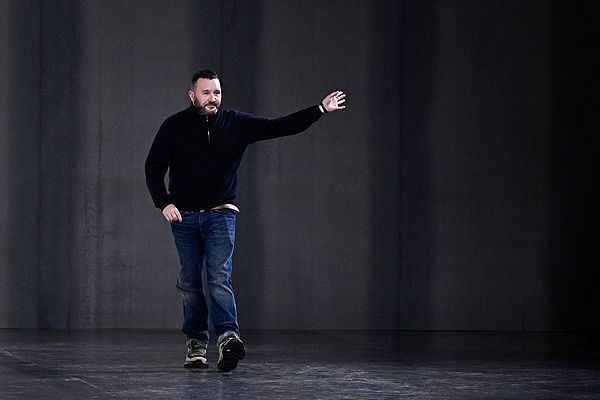
Dior前设计师Kim Jones加盟波司登任创意总监
Mei Ri Jing Ji Xin Wen· 2025-10-20 12:29
Group 1 - The core point of the article is the appointment of renowned British designer Kim Jones as the creative director of the newly established AREAL high-end urban line at Bosideng, following his departure from Dior earlier this year [1] - Kim Jones previously held the position of artistic director for men's wear at Dior and has also served as the artistic director for men's wear at Louis Vuitton [1]
LV及Dior男装前设计师入职波司登
Xin Lang Cai Jing· 2025-10-20 12:09
10月20日,波司登任命著名英国设计师 Kim Jones 为新创设的 AREAL 高级都市线创意总监,并推出 AREAL 高级都市线。Kim Jones 曾担任 LVMH集团旗下的法国奢侈品牌 Dior(迪奥)的男装艺术总 监,今年1月离职。此前,他还曾担任路易威登男装艺术总监。 ...
2000亿红海里跑出个黑金新贵
Hua Er Jie Jian Wen· 2025-10-20 10:13
Core Insights - The article discusses the rise of Guvet, a Chinese brand that integrates traditional "Yunjin" craftsmanship into high-end down jackets, challenging established international brands like Moncler and Canada Goose [2][3] - Guvet's founder, Wu Kunming, emphasizes a shift in the Chinese consumer market towards valuing quality and cultural identity over mere brand prestige, marking a significant transformation in consumer behavior [6][12] Company Overview - Guvet launched its "Black Gold Shell Yunjin" down jacket series on October 15, aiming to redefine high-end fashion in a market valued at nearly 200 billion [2] - The brand's strategy involves focusing on high-quality goose down products, moving away from lower-quality duck down, which has allowed it to target the mid-to-high-end market [4][8] Market Dynamics - The Chinese down jacket market has seen a compound annual growth rate of approximately 13% from 2020 to 2024, with the market size expected to exceed 200 billion by 2024 [5] - The competitive landscape has shifted, with domestic brands like Guvet beginning to capture market share traditionally held by foreign luxury brands [6][19] Consumer Behavior - The new generation of consumers, particularly those born between 1985 and 1995, prioritize product quality and personal satisfaction over brand recognition, leading to a decline in "symbolic consumption" [12][14] - This demographic shift has resulted in a demand for products that offer genuine value and emotional connection, rather than just brand prestige [15][18] Brand Strategy - Guvet's approach focuses on high-quality materials and craftsmanship, with a commitment to using top-tier goose down sourced from extreme cold regions, enhancing product performance and consumer trust [11][19] - The brand has established a clear identity by eliminating non-goose down products, allowing it to build a strong association with high-quality down jackets in consumers' minds [9][10] Cultural Integration - Guvet aims to blend traditional Chinese culture with modern design, exemplified by its collaboration with artisans to create culturally significant products, thereby enhancing its brand narrative [16][21] - The brand's strategy includes a commitment to cultural heritage, as seen in its initiatives to support traditional craftsmanship through dedicated funds [18][23] Global Expansion - Guvet is positioning itself as a global high-end brand, focusing on localizing its products for different markets, which includes adapting designs to meet the preferences of international consumers [20][22] - The brand's long-term vision is to redefine what constitutes a high-end Chinese brand on the global stage, emphasizing cultural value and innovation [21][24]

ST尔雅录得8天7板
Zheng Quan Shi Bao Wang· 2025-10-20 02:33
Core Viewpoint - ST Meiya has experienced significant stock price increases, achieving a cumulative rise of 41.78% over the past eight trading days, with seven of those days resulting in price limits being hit [1] Trading Performance - The stock recorded a trading volume of 426,700 shares and a transaction amount of 3.9384 million yuan on the latest trading day, with a turnover rate of 0.12% [1] - The total market capitalization of ST Meiya reached 3.323 billion yuan [1] Stock Movement Data - The stock's daily performance over the past few trading days is as follows: - October 17, 2025: +5.02% with a turnover rate of 3.76% and net inflow of 15.489 million yuan [1] - October 16, 2025: +0.60% with a turnover rate of 6.35% and net inflow of 5.7753 million yuan [1] - October 15, 2025: +5.05% with a turnover rate of 0.15% and net inflow of 906,900 yuan [1] - October 14, 2025: +5.04% with a turnover rate of 0.60% and net inflow of 753,900 yuan [1] - October 13, 2025: +5.01% with a turnover rate of 1.55% and net inflow of 4.8022 million yuan [1] - October 10, 2025: +4.97% with a turnover rate of 1.04% and net inflow of 2.5549 million yuan [1] - October 9, 2025: +5.07% with a turnover rate of 1.46% and net outflow of 884,100 yuan [1] - September 30, 2025: +0.46% with a turnover rate of 0.71% and net outflow of 1.3193 million yuan [1] - September 29, 2025: +0.31% with a turnover rate of 0.96% and net outflow of 1.9902 million yuan [1] - September 26, 2025: -3.87% with a turnover rate of 1.23% and net inflow of 1.7086 million yuan [1] Company Background - Hubei Meiya Co., Ltd. was established on December 31, 1993, with a registered capital of 36 million yuan [1]

解码全球流行新风向!2025苏州湾时尚趋势发布会举行
Yang Zi Wan Bao Wang· 2025-10-20 01:28
10月19日晚,苏州湾文化中心阅湖台广场流光溢彩,2025苏州湾时尚趋势发布会在此盛大举行。本次活动以"苏州湾,与世界共时尚"为主题,汇聚上久楷 宋锦、特步、丁非高定等领军品牌与顶级设计力量,通过四场主题大秀与全民互动体验,具象化"色彩、面料、纹样、功能"等时尚符号,不仅彰显了中国 时尚产业的专业高度与权威影响力,更构建起连接全球潮流与本土文化的桥梁。 发布会现场,四场主题大秀相继亮相,各自呈现了独特的时尚理念与设计哲学。丁非高定以《虹》为主题,每一处细节都彰显"设计为核"的高定精神。开 场以水墨意境的"白蓝渐变"呼应江南水乡底蕴;中段"紫绿交织"展现自然灵性;后段"银红碰撞"以未来主义金属光泽与生命原力红收尾,形成"地方美学 —世界共鸣"的色彩哲学。"在丁非的时尚宇宙中,'非遗'并非尘封的遗产,而是一枚蕴藏着古老生命力的'茧'。"丁非高级定制合伙人宁婉彤表示,当古老 的技艺在当代的湖面上激起涟漪,它所泛起的虹彩,足以惊艳世界。 横扇毛衫是吴江太湖新城的本地特色产业,本次发布会,横扇毛衫与两次荣获中国时装设计最高"金顶奖"的设计师刘勇强强联手,以"云絮织章"为主题, 全方位诠释针织纱线的"时尚"魅力。整组设计 ...

消费市场运行总体平稳
Sou Hu Cai Jing· 2025-10-20 01:16
Group 1 - The consumer price index (CPI) increased by 0.1% month-on-month in September, while year-on-year it decreased by 0.3%, with the core CPI (excluding food and energy) rising by 1.0%, marking the fifth consecutive month of growth [1][2] - Food prices rose by 0.7% month-on-month, contributing approximately 0.13 percentage points to the CPI increase, while clothing prices increased by 0.8% due to seasonal changes [1] - The producer price index (PPI) remained flat month-on-month and decreased by 2.3% year-on-year, with the decline narrowing by 0.6 percentage points compared to the previous month [2][3] Group 2 - The year-on-year decline in CPI of 0.3% was primarily influenced by a negative carryover effect of approximately 0.8 percentage points, while new price changes contributed about 0.5 percentage points [2] - The PPI's month-on-month stability is attributed to improved supply-demand dynamics in certain industries, with coal processing prices rising by 3.8% and coal mining prices increasing by 2.5% [2][3] - The narrowing year-on-year decline in PPI is a result of ongoing macroeconomic policy effects, with some industries experiencing positive price changes due to market competition and structural upgrades [3]