Semiconductors

Search documents
Should You Forget Micron Technology and Buy This Artificial Intelligence (AI) Stock Instead?
The Motley Fool· 2026-02-14 12:15
Core Viewpoint - Micron Technology has experienced significant stock growth, but Sandisk is outperforming it in the memory market, making it a potentially better investment choice for AI applications [1][5][14]. Company Performance - Micron Technology's stock has surged by 222% over the last six months, driven by a supply-constrained memory market and increasing demand for compute and storage chips [1][2]. - Sandisk's stock has skyrocketed by 1,220% in the same period, significantly outpacing Micron's gains due to larger earnings increases [5][10]. - In the first quarter of fiscal 2026, Micron reported a 167% year-over-year increase in non-GAAP earnings, while Sandisk's adjusted earnings rose by 404% in the fiscal second quarter [7][10]. Market Dynamics - The memory shortage is expected to persist until at least 2028, benefiting both companies, but Sandisk's focus on non-volatile flash storage positions it for faster growth compared to Micron's DRAM-centric model [2][10]. - NAND flash storage prices are increasing at a much faster rate than DRAM prices, with estimates suggesting a 50% to 55% rise in DRAM prices this quarter, while SSD prices are expected to rise significantly more [10][11]. Valuation Comparison - Despite similar sales and earnings multiples, Sandisk's superior growth trajectory makes it a more attractive investment option compared to Micron [12][14]. - The current market capitalization for Micron is $463 billion, while Sandisk's market cap stands at $92 billion, indicating a substantial difference in company size and market positioning [6][9].



Micron Technology Says AI Memory Demand Still Outstrips Supply Through 2026, HBM4 Shipping Early
Yahoo Finance· 2026-02-14 12:09
Core Insights - Micron Technology is experiencing significantly higher demand than supply across memory markets, particularly in DRAM, with tight industry conditions expected to persist beyond 2026 [6][5][1] Supply and Demand - Micron's inventories are lean, especially in DRAM, and supply is not meeting demand by a substantial margin, with key customers only able to meet 50% to two-thirds of their demand [1] - Demand is expected to proliferate beyond data centers to smartphones, PCs, and autonomy-related activities over time [2] - Server demand trends are improving, with expectations shifting from single-digit growth to mid-teens growth due to AI workloads affecting traditional server demand [3] Capacity Expansion - Micron is working to expand capacity through node transitions and greenfield investments, with a focus on multi-year supply agreements for longer-term visibility [5][6] - Supply additions, particularly for greenfield capacity, take time, and node transitions are less efficient than before, limiting incremental supply generation [7] - Micron is ramping its 1-gamma DRAM node, expected to provide supply into calendar 2026, and has plans for new capacity in Idaho and Singapore [10] High-Bandwidth Memory (HBM) - Micron is in high-volume production of HBM4, with customer shipments commencing and expectations for ramping shipment volumes in calendar Q1 [11] - The company has sold out its calendar year 2026 HBM supply, with HBM4 yields on track and delivering over 11 Gbps speeds [12] - Increasing silicon intensity of HBM is tightening supply, with a trade ratio historically around 3-to-1 for HBM3, which increases with newer HBM generations [8] Financial Outlook - Micron has guided to a 68% gross margin, with an improved financial outlook driven by pricing and strong cost performance from the 1-gamma ramp [14][15] - The company expects margins to expand from the fiscal second quarter into the third quarter, with premium technology and portfolio providing flexibility for higher-value optimization [15] NAND Market Position - Micron holds a preeminent position in NAND, focusing on the data center SSD market and has gained share, discussing achieving over a billion-dollar run rate in NAND [17] - Tighter NAND market conditions are emerging as storage becomes more integral to AI system architecture, prompting Micron to add greenfield NAND capacity in Singapore [18] Strategic Investments - Micron is committed to disciplined investments, reassessing market conditions and competitive capacity additions while expanding supply and securing longer-term agreements with customers [20]
Will the Stock Market Crash in Year 2 of Donald Trump's Second Term? Several Historically Correlated Events Offer a Clear Answer.
Yahoo Finance· 2026-02-14 11:56
Core Viewpoint - The article discusses the potential for a stock market correction during the second year of Donald Trump's presidency, supported by historical data and correlations, particularly focusing on the Shiller P/E Ratio and midterm election impacts. Group 1: Shiller P/E Ratio Insights - The Shiller P/E Ratio, or CAPE Ratio, has averaged 17.34 over the last 155 years but was at 40.35 as of February 11, indicating the second-highest stock market valuation in history, only behind the dot-com era [1][2] - Historical data suggests that Shiller P/E Ratios above 30 typically signal trouble for stocks, with previous instances leading to declines of 20% or more in major indices [7] Group 2: Market Performance Under Trump - Since Trump's second term began on January 20, 2025, major indices have seen significant gains: Dow up 15%, S&P 500 up 16%, and Nasdaq up 18% as of February 11 [5] - During Trump's first term, the Dow, S&P 500, and Nasdaq gained 57%, 70%, and 142% respectively, showcasing a strong market performance [6] Group 3: Historical Correlations and Market Corrections - Historically, midterm election years have led to larger stock market corrections, with an average peak-to-trough downturn of 17.5% for the S&P 500 since 1950 [13] - The S&P 500 fell nearly 20% during the midterm elections of Trump's first term, indicating a pattern that could repeat [13] Group 4: Technology and Market Bubbles - The article highlights that every major technological innovation over the past three decades has experienced a bubble-bursting event, suggesting that current investments in AI may face similar risks [8][10] - While companies are heavily investing in AI infrastructure, there are concerns about the optimization of these technologies to enhance corporate profitability [10] Group 5: Long-term Market Outlook - Despite short-term corrections, historical data shows that bear markets are typically short-lived, averaging 286 calendar days, while bull markets last significantly longer, averaging 1,011 calendar days [21] - The article emphasizes the importance of a long-term perspective for investors, as corrections and crashes tend to be temporary [18][21]
Global Security and Tech Spending Surge: Rubio Reassures Europe as Amazon Commits $200B to AI
Stock Market News· 2026-02-14 11:08
Key TakeawaysAmazon (AMZN) CEO Andy Jassy has committed to a record $200 billion capital expenditure plan for 2026, primarily to scale AWS and AI infrastructure.The U.S. and Taiwan have finalized a landmark $250 billion trade agreement that caps tariffs at 15% in exchange for massive domestic semiconductor investments by TSMC (TSM).U.S. Secretary of State Marco Rubio reaffirmed the Transatlantic Alliance at the Munich Security Conference, signaling a shift toward "revitalizing" rather than abandoning Europe ...



Microchip Technology Sees Demand Strengthen as Channel Normalizes, Shifts Focus to Debt Paydown
Yahoo Finance· 2026-02-14 11:03
Core Viewpoint - Microchip Technology is experiencing a normalization in demand and distribution channels, with a focus on debt reduction following a recent downturn, while maintaining a positive outlook for the upcoming quarters [3][5][17]. Demand and Market Conditions - The company reported that bookings activity strengthened in the December quarter, with a book-to-bill ratio "substantially above 1" [2][5]. - Microchip's March-quarter revenue outlook is projected to grow by 6.2%, which is better than the typical seasonal growth of 2% to 3% [5]. - Despite signs of strengthening demand, visibility into true end demand remains limited due to a diverse customer base of approximately 10,000 [1][5]. Financial Performance and Capital Allocation - Microchip completed a $1.5 billion mandatory convertible offering, reducing net debt/EBITDA from 4.69x to 4.18x, with a long-term target of around 1.5x [4][17]. - The company aims to maintain a gross margin of 61% for the March quarter, with a long-term target of 65% [4][10]. - Internal underutilization is identified as a headwind to gross margins, quantified at approximately $50 million to $51 million [4][8]. Supply Chain and Inventory Management - Microchip currently holds about 200 days of inventory and does not face issues with wafers produced in its internal fabs, maintaining short lead times [6]. - The distribution channel has largely normalized, with a significant narrowing of the sell-through versus sell-in gap to about $12 million for the quarter [3]. Product Segments and Innovations - The data center segment has increased its share of Microchip's revenue portfolio, representing roughly 19% of the prior fiscal year's revenue [11]. - The company is focusing on enhancing its data center products with features like security enhancements and Post-Quantum Cryptography [12]. - In automotive, Microchip is expanding its presence beyond microcontrollers into areas such as in-vehicle networking and automotive connectivity solutions [13][14]. Market Dynamics and Competitive Landscape - The Chinese market remains volatile, but many customers are willing to purchase U.S. semiconductor products if pricing and features align [15][16]. - Microchip is facing stronger competitive pressure at the low end of the market, particularly in microcontrollers and some analog products [15].

Nvidia CEO Huang won't attend India AI summit next week, company saus
Reuters· 2026-02-14 11:01
Core Viewpoint - Nvidia CEO Jensen Huang will not attend the India AI Impact Summit due to unforeseen circumstances, which is notable as he was expected to be a key speaker at the event [1]. Company Summary - Jensen Huang's absence from the summit is significant as he was anticipated to attract considerable attention, highlighting Nvidia's role in the AI sector [1]. - The summit is set to be inaugurated by Prime Minister Narendra Modi, indicating the importance of AI in India's technological landscape [1]. Industry Summary - The India AI Impact Summit is expected to gather global technology industry and political leaders, underscoring the growing interest and investment in AI technologies [1].


2026年度投资策略——莫愁千里路,自有到来风
Sou Hu Cai Jing· 2026-02-14 10:55
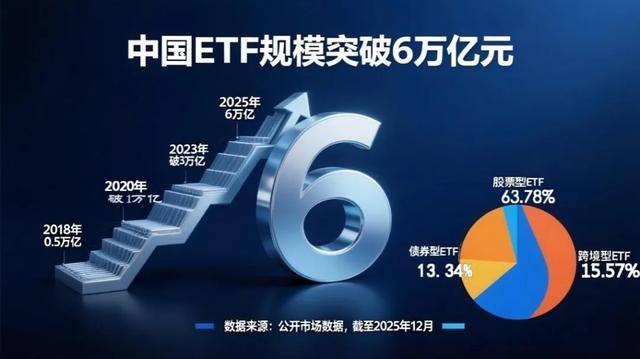
Group 1: 2025 Capital Market Review - The A-share market experienced a significant bull market in 2025, with the Shanghai Composite Index rising over 18% and surpassing the 4000-point mark, achieving multiple historical records [2] - The total trading volume of A-shares exceeded 400 trillion yuan for the first time, and the total market capitalization reached 100 trillion yuan, with margin trading balances returning to over 2 trillion yuan after ten years [2] - The total scale of ETFs in China reached 6.02 trillion yuan by the end of 2025, marking a growth of over 60% from the beginning of the year [2] Group 2: Fund Flows and Dividends - In 2025, there was a notable shift in deposits, with a slight increase of 0.62 trillion yuan in household deposits, while non-bank deposits surged by 4.11 trillion yuan, indicating a significant flow of funds from banks to the stock market [3] - The total cash dividends from A-share companies reached a record high of 2.64 trillion yuan, with 3,766 companies implementing cash dividends [3] - Over 1,300 companies announced stock repurchase plans, with a total repurchase amount exceeding 150 billion yuan [3] Group 3: Policy and Market Dynamics - In May 2025, the central bank and financial regulators introduced a series of policies to support the capital market, including interest rate cuts and measures to enhance market confidence [5] - The introduction of new listing standards for the Sci-Tech Innovation Board aimed to support companies in emerging sectors such as artificial intelligence and commercial aerospace [5] - The central government emphasized the importance of a stable capital market in its economic work meetings, indicating a commitment to enhancing the role of the capital market in economic growth [6][9] Group 4: 2026 Economic Outlook - The central economic work meeting outlined a focus on stabilizing growth and enhancing quality in 2026, with an emphasis on domestic demand and innovation-driven development [6] - A more proactive fiscal policy is expected in 2026, with plans for significant investments in consumer goods and equipment upgrades [7] - The monetary policy is anticipated to remain moderately accommodative, with expectations of 1-2 interest rate cuts throughout the year [7] Group 5: Investment Strategies for 2026 - The A-share market is expected to benefit from policy support, with a slow bull market likely to continue, emphasizing the importance of direction over index levels [18] - Three main investment themes for 2026 include the technology revolution, "anti-involution" strategies to reduce excessive competition, and safe-haven investments in the financial sector [19] - The focus on emerging industries such as AI, new energy, and advanced manufacturing is expected to create substantial investment opportunities [19]
字节跳动,多款云端芯片已量产部署
财联社· 2026-02-14 10:46
Core Viewpoint - ByteDance's chip research and development team is set to begin large-scale recruitment, focusing on custom hardware design and optimization for its business needs [1] Group 1: Recruitment and Team Focus - The chip R&D team at ByteDance is currently centered on the chip design phase, aiming to develop multiple complex chips using advanced semiconductor processes for cloud scenarios [1] - The team has successfully completed multiple initial tape-outs and several early projects have entered mass production, covering various mainstream advanced process nodes [1] Group 2: Performance and Cost Efficiency - The development of these chips is intended to enhance performance and reduce computing costs, indicating a strategic move towards improving operational efficiency [1] - The overall pace of research and implementation is reported to be steadily advancing, reflecting a commitment to innovation in hardware solutions [1]

GPU四小龙,春节不打盹儿 | 海斌访谈
第一财经网· 2026-02-14 10:16
Core Viewpoint - Companies that do not take action in the AI wave, particularly in the release of large models and domestic chip enterprises, may fall behind in the industry Group 1: Domestic GPU and Model Development - Domestic GPUs are increasingly well-matched with domestic models, with a surge in large model releases around the Spring Festival [2] - ByteDance launched the video generation model Seedance 2.0, while Zhizhu and MiniMax released their respective models GLM-5 and MiniMax-M2.5 [5][6] - Domestic GPU companies are on standby during the Spring Festival to quickly adapt to new models, indicating the fast-paced nature of AI technology [2][4] Group 2: Model Adaptation and Performance - Companies like Moer Thread and Nuxi have successfully adapted new models to their GPUs, with Moer Thread's MTTS5000 and Nuxi's Xiyun C series being highlighted [4] - Adapting models to run efficiently on GPUs can significantly improve performance, with general GPU architectures allowing for quicker adjustments compared to specialized architectures like NPU [4] - The adaptation process is crucial for ensuring that large models perform optimally on domestic chips, which is essential for competitive positioning [4] Group 3: Market Dynamics and Future Expectations - The release of DeepSeek's models has raised expectations for domestic AI capabilities, with significant improvements noted in the past year [9][10] - Domestic chip companies are increasingly collaborating with large model enterprises, establishing a routine for Day 0 adaptations [14] - The anticipated release of new models from DeepSeek could further stimulate deployment efforts among state-owned enterprises, expanding market opportunities for domestic GPU companies [14] Group 4: Competitive Landscape and Technological Advancements - Domestic GPU companies are beginning to compete with international firms like NVIDIA, particularly in inference tasks where performance requirements are less stringent [11] - The rapid iteration of domestic chips is driven by the growing demand for AI computing power, with companies like Moer Thread and Nuxi accelerating their product development cycles [15][16] - The industry is optimistic about overcoming existing technological gaps, with a belief that domestic firms will eventually achieve parity with international competitors [16]

The 5 Best Artificial Intelligence (AI) Stocks to Buy for February
The Motley Fool· 2026-02-14 10:00
Core Insights - A recent sell-off in the market has created unique buying opportunities, particularly in the artificial intelligence (AI) sector, which remains a focal point for investors [1] - The demand for AI technology continues to drive significant investment opportunities, especially in companies that provide essential hardware and cloud services [1] Group 1: AI Hardware Providers - Nvidia and Broadcom are major beneficiaries of AI spending, as they produce computing equipment crucial for AI data centers, leading to strong growth prospects [4][7] - Nvidia's GPUs are the industry standard for AI computing, and the company maintains a competitive edge with its technology stack [6] - Broadcom collaborates with AI hyperscalers to design custom AI chips, enhancing its position in the market [6][7] Group 2: Semiconductor Manufacturing - Taiwan Semiconductor (TSMC) plays a vital role in the AI ecosystem by fabricating logic chips for Nvidia and Broadcom, as well as other tech companies [8] - TSMC's advancements in 2-nanometer chip technology promise reduced power consumption, which is beneficial as AI data centers expand [10] Group 3: Cloud Computing Providers - Alphabet and Microsoft, despite recent stock sell-offs, are key players in the cloud computing industry, investing heavily to expand their AI capabilities [11] - Both companies are experiencing significant revenue growth in their cloud services, with Microsoft Azure revenue increasing by 39% and Google Cloud by 48% in their latest quarters [14] - The ongoing demand for cloud computing services supports the rationale for AI capital investment spending [12][14]