
Robotics

Search documents
21世纪科技年会“智见未来”:锚定AI新航向 锻造出海新引擎
2 1 Shi Ji Jing Ji Bao Dao· 2025-12-08 08:26
21世纪经济报道记者 彭新 广州报道 2025年,生成式人工智能(AIGC)席卷各行各业,大模型即将迎来AI规模化落地的质变时刻。同时, 在"具身智能"步入爆发元年、自动驾驶重构城市交通网络、商业航天织就太空新基建等变革浪潮的推动 下,科技创新的主战场已从单点技术突破转向系统级能力的较量。如何在AI时代捏准时代脉搏,抢占 价值制高点,是关乎未来的重要命题。 12月5日,由南方财经全媒体集团指导,21世纪经济报道和渣打银行联合主办,由广东省机器人协会支 持的"粤港澳大湾区新经济发展论坛暨21世纪科技年会" 在广州南方财经大厦举行。 作为"南方财经论坛2025年会"的重要专题会议之一,本届科技年会以"创新无界 智见未来"为主题,聚 焦行业热点,汇聚来自产业、科研、投资与政策领域的顶尖力量,试图穿透喧嚣技术叙事,锚定AI时 代真正可行的产业路径。 在开幕环节,南方财经全媒体集团党委副书记、副总经理杨云飞发表致辞,他表示,新技术革命以人工 智能为核心引擎,中国经济处于"创新质变"的前夜。前沿技术在逼近各自领域的临界点,更在"交叉、 交融、交响",共同推动人类社会的产业变革出现重大范式转移,面对这种根本性的结构变化," ...
中金:首予极智嘉-W“跑赢行业”评级 目标价32.8港元
Zhi Tong Cai Jing· 2025-12-08 06:51
Group 1 - The core viewpoint of the report is that the company, Geek+, is positioned as a leader in the AI-driven warehouse automation market, with a stable business model and significant growth potential due to AI integration [1][2] - The company is expected to achieve EPS of 0.06 and 0.17 yuan in 2025 and 2026 respectively, with a target price of 32.8 HKD, indicating a potential upside of 32% [1] - The report highlights that the global AMR (Autonomous Mobile Robot) solutions market is projected to exceed 100 billion yuan by 2029, with Chinese companies having a distinct advantage [2] Group 2 - Geek+ was established in 2015 and has become a global leader in AMR solutions, with over 70% of its revenue coming from overseas markets [3] - The company is expected to achieve a positive EBITDA of 0.12 million yuan in the first half of 2025, marking a significant financial turning point [3] - Geek+ has developed three proprietary technology platforms for AI integration in warehouse path planning, supply chain optimization, and digital twin applications, creating a strong data barrier for AI transformation [4] Group 3 - The company has accumulated a long-term client base of 770 end customers, providing a wealth of operational and historical order data [4] - Geek+ is focusing resources on embodied intelligence and has launched a general-purpose robotic arm and an embodied intelligence base called Geek+ Brain [4] - Potential catalysts for the company's growth include turning profitable, joining the Hang Seng Composite Index, and being included in the Hong Kong Stock Connect [4]
中金:首予极智嘉-W(02590)“跑赢行业”评级 目标价32.8港元
智通财经网· 2025-12-08 06:41
Core Viewpoint - The report from CICC indicates that Geek+ (02590) is positioned as a leader in the AI-driven smart warehousing sector, with a stable business model and significant growth potential driven by AI integration [1][2]. Group 1: Financial Projections - CICC forecasts Geek+'s EPS to be 0.06 and 0.17 yuan for 2025 and 2026, respectively [1]. - The company is assigned a target price of 32.8 HKD for 2026, reflecting a 32% upside based on a 10x P/S valuation [1]. Group 2: Market Position and Trends - The global market for AMR (Autonomous Mobile Robot) solutions in warehousing is expected to exceed 100 billion yuan by 2029, with significant advantages for Chinese companies [2]. - Geek+ is recognized as the global leader in AMR solutions, with over 70% of its revenue coming from international markets [3]. Group 3: Technological and Operational Strengths - The company utilizes three proprietary technology platforms for self-developed hardware and software, facilitating AI integration in warehouse path planning, supply chain optimization, and digital twin applications [4]. - Geek+ has established a strong data barrier for AI transformation by accumulating operational data from 770 end customers over the years [4]. Group 4: Potential Catalysts - Key catalysts for the company include achieving profitability, inclusion in the Hang Seng Composite Index, and participation in the Hong Kong Stock Connect program [4].
自变量机器人参与成立RoboChallenge组委会 开源协作开启标准化新阶段
Sou Hu Cai Jing· 2025-12-08 06:40
Core Insights - The article highlights the rapid growth and innovative approach of a Shenzhen-based startup, Zivariable Robotics, which has successfully raised over 2 billion yuan in funding within two years, positioning itself as a significant player in the embodied intelligence sector [1][11]. Company Overview - Zivariable Robotics was founded in December 2023 and has quickly gained attention for its advanced robotic capabilities, exemplified by a robot named "Xiaoliang" that can prepare drinks efficiently [1]. - The company has received substantial backing from major players like Alibaba and Meituan, which has contributed to its impressive funding achievements [1][11]. Leadership and Vision - The founder and CEO, Wang Qian, is a Tsinghua University graduate with a strong background in neural networks and robotics, aiming to make general-purpose robots an integral part of everyday life [3][4]. - Wang's vision includes leveraging China's advantages in hardware manufacturing and data collection to drive innovation in robotics [4][6]. Technological Approach - Zivariable Robotics adopts a unique "end-to-end model" approach, which integrates perception, planning, and control into a single framework, contrasting with traditional modular designs [7][8]. - The company's technology has demonstrated significant capabilities, including a high success rate in complex tasks and the ability to adapt to new scenarios without retraining [9][10]. Data Strategy - The company emphasizes the importance of high-quality real-world data for training its models, rejecting reliance on simulation data for complex physical interactions [10]. - A multi-channel data collection system has been established to ensure robust data quality, supporting the development of its models [10]. Funding and Market Position - Zivariable Robotics has completed eight funding rounds, raising over 2 billion yuan, with notable investments from Alibaba Cloud and Meituan, indicating strong market confidence [11]. - The company is strategically positioned to capitalize on the growing household robotics market, which is projected to be significant due to the high demand for automation in domestic tasks [12]. Future Plans - The company plans to initially target B2B markets before expanding into the consumer market, with expectations of launching early products within 3-4 years [12]. - Wang predicts that the price range for consumer robots will be around 100,000 yuan, with ongoing efforts to reduce costs through supply chain optimization [12]. Challenges and Ecosystem Development - Despite its progress, Zivariable Robotics acknowledges the challenges in the robotics industry, particularly in developing the "brain" of robots rather than just focusing on hardware [13]. - The company is actively working on building an ecosystem for embodied intelligence, including the release of an open-source foundational model to foster innovation [13].


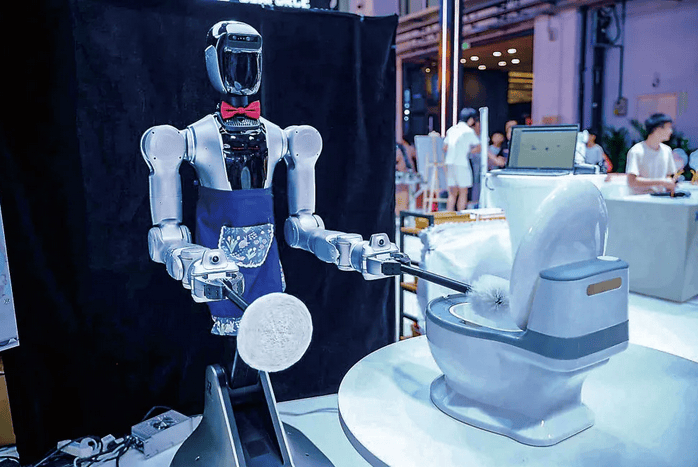
辰奕智能:暂无人形机器人相关业务
Mei Ri Jing Ji Xin Wen· 2025-12-08 06:22
Group 1 - The company does not currently have any humanoid robot-related business [2] - The company is focused on building a leading intelligent and automated production base in the industry [2] - The company has established an "Automation Products Department" to research and manufacture industrial automation robot systems and automated production lines [2]
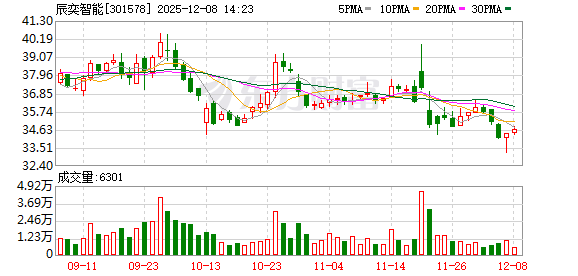
鹿明机器人完成Pre-A1和Pre-A2轮融资
Xin Lang Cai Jing· 2025-12-08 03:59
12月8日,鹿明机器人宣布完成Pre-A1和Pre-A2两轮融资,金额数亿元。其中,Pre-A1轮由鼎晖投资领 投,南京创投、金景资本、金固股份跟投,Pre-A2轮由申能诚毅投资。本轮融资将用于公司在具身智能 数据和硬件领域的持续投入。 ...
中国为何会扩大全球制造业出口的领先优势-Asia Economics-Why China will widen its lead in global manufacturing exports
2025-12-08 02:30
Summary of Key Points from the Conference Call Industry Overview - **Industry**: Global Manufacturing - **Company**: Morgan Stanley Asia Limited Core Insights and Arguments 1. **China's Dominance in Global Manufacturing**: China accounts for 15% of global exports and 28% of global manufacturing GDP, maintaining a trade surplus with 177 out of 225 economies [2][111] 2. **Projected Export Market Share**: China's global export market share is projected to increase to 16.5% by 2030, up from 15% currently, driven by its strengths in advanced manufacturing and emerging sectors like EVs, batteries, and robotics [1][4][92] 3. **Export Growth in Key Segments**: From 2019 to 2024, China's export growth outpaced global growth in 11 out of the 15 fastest-growing export segments, capturing 19% of the incremental export market revenue in these categories [2][23] 4. **Geopolitical Concerns and Diversification Efforts**: Trade partners are concerned about China's dominance, leading to efforts to diversify supply chains away from China, particularly by the US and EU [3][4] 5. **China's Strategic Industrial Policies**: China's industrial policy is characterized by robust execution, financial backing, and regulatory support, enabling rapid scaling of new industries [9][10] 6. **Talent Pool and Education**: The number of university graduates in China has increased by 42% from 2019 to 2024, with a significant share in STEM fields, enhancing the country's manufacturing capabilities [10][18] 7. **Automotive Sector Evolution**: China has transformed from a net importer of auto parts to the world's largest exporter of autos, with a trade surplus in this sector growing from US$40 billion in 2017 to US$116 billion in 2025 [56] 8. **Innovation in EVs**: Chinese companies are leading in EV production and battery manufacturing, with over 50% of global EVs sold being from China [56][57] 9. **Impact of Global Industrial Policies**: A resurgence in global industrial policies has been noted, with 75% of major economies implementing trade and industry-oriented interventions [58][59] Additional Important Insights 1. **China's Export Market Share Dynamics**: While China's share in US imports has decreased, its global export market share (excluding the US) has risen from 13.2% in 2017 to 17% currently [75][111] 2. **Challenges and Risks**: Risks include persistent deflationary pressures due to overcapacity and the effectiveness of protectionist measures that may hinder China's ability to maintain its market share [106][110] 3. **Regional Implications**: Countries like Japan and Korea face increased competitive pressure, while Vietnam, Malaysia, and India may benefit from supply chain diversification but remain dependent on China for critical inputs [96][98][99] This summary encapsulates the key points discussed in the conference call regarding China's position in global manufacturing and the implications for the industry and other economies.
实体 AI- 摩根士丹利机器人年鉴-Physical AI-The Morgan Stanley Robot Almanac
摩根· 2025-12-08 02:30
Investment Rating - The report indicates a bullish outlook on the robotics industry, projecting significant growth in revenues and unit sales through 2050, with a total of $25 trillion in combined robot revenues anticipated by that year [2][38]. Core Insights - The Morgan Stanley Robot Almanac serves as a comprehensive guide to the physical AI sector, detailing the expected adoption of robotics and its impact on the global economy, potentially multiplying the $115 trillion global GDP over time [2][11]. - The report introduces the Global Robot Model (GROM), which forecasts the total addressable market (TAM) for robotics, including unit sales and revenue across various form factors such as autonomous vehicles, industrial robots, and drones [11][37]. - The report emphasizes the importance of AI-enabled robotics in driving the 3rd Industrial Revolution, with projections of 1.4 billion annual robot unit sales by 2050 [35][38]. Summary by Sections Overview of Robotics - The report outlines the dynamic nature of physical AI and its integration into various sectors, highlighting the potential for transformative impacts across industries [2][4]. Market Projections - By 2050, the report estimates that there will be 6.5 billion robots in operation globally, with significant contributions from home robotics, industrial robots, and autonomous vehicles [12][39]. - Revenue estimates indicate a steady increase, with projections of $91 billion in 2024 growing to $25 trillion by 2050, reflecting the expanding market for robotics [41][42]. Robotics Adoption and Demand - The GROM model provides detailed projections for robotics demand across key components, including cameras, lidar, and semiconductors, essential for the development of various robotic applications [11][37]. - The report categorizes robotics into several verticals, including autonomous cars, drones, humanoids, and industrial robots, each with distinct growth trajectories and market dynamics [7][13]. Regional Insights - The report highlights regional differences in robotics adoption, with the USA, China, and the Rest-of-World showing varying growth patterns and market sizes [42][43]. - Specific revenue and unit sales forecasts are provided for each region, indicating a robust growth outlook particularly in China and the USA [42][43].
特斯拉-超越车轮:勾勒特斯拉的实体 AI 之路-Tesla Inc-Beyond the Wheel – Mapping Tesla’s Journey into Physical AI
2025-12-08 02:30
Tesla Inc. Research Call Summary Company Overview - **Company**: Tesla Inc (TSLA.O) - **Industry**: Autos & Shared Mobility - **Market Cap**: $1,604,330 million - **Current Stock Price**: $455.00 (as of December 5, 2025) - **Price Target**: Increased from $410.00 to $425.00, implying a 6% downside from current levels [4][10] Key Points Rating and Valuation - **Rating Change**: Coverage assumed at Equal-weight from Overweight [4][10] - **Valuation Framework**: A full refresh of the Sum-of-the-Parts (SOTP) valuation framework was conducted, leading to a $15/share upside to the prior price target [10] - **Humanoid Business Value**: Updated model includes $60/share of value for Tesla's Humanoid business (Optimus) [10][12] Market Position and Outlook - **Market Leadership**: Tesla is recognized as a global leader in electric vehicles, renewable energy, and AI, justifying a premium valuation [4][10] - **Choppy Trading Environment**: Anticipated volatility in TSLA shares over the next 12 months due to downside risks to estimates and priced-in non-auto catalysts [4][10] Financial Projections - **Earnings Per Share (EPS)**: Projected EPS for fiscal years ending December 2024, 2025, 2026, and 2027 are $2.41, $1.66, $1.98, and $2.69 respectively [8] - **Auto Volume Forecast**: MSe auto volume forecast is 13% below consensus for 2026, reflecting a more cautious EV industry outlook [10] Business Segments Autos - **Valuation**: Auto business valued at $55/share, based on long-term DCF with 13% annual unit growth through 2040 [34] - **Market Share**: Expected to maintain 9-11% of the global EV market by 2040 [34] Energy - **Valuation**: Energy business valued at $40/share, with storage deployments expected to compound at an 18% growth rate through 2040 [55] - **Market Position**: Tesla is a leading provider of Energy Storage Systems (ESS), with gross margins improving from 7% in 2022 to 31% in 2025 [50] Robotaxi (Tesla Mobility) - **Market Penetration**: By 2030, Tesla's fleet is expected to capture 20% of the US autonomous vehicle market with 30,000 vehicles [61] - **Valuation**: Tesla Mobility valued at $125/share, with a projected fleet scaling from 1,000 units in 2026 to 5 million by 2040 [66] Humanoids - **Market Potential**: The global humanoid market could reach $7.5 trillion annually by 2050, with Tesla expected to capture significant market share [71][77] - **Valuation**: Humanoids valued at $60/share, reflecting Tesla's leadership in AI and manufacturing [78] Risks and Challenges - **Competition**: Increased competition and margin pressure across all business lines could impact Tesla's market share and profitability [11] - **Regulatory Hurdles**: Challenges in scaling autonomous vehicles in adverse weather conditions and regulatory environments [60] Conclusion - Tesla remains a strong player in the EV and renewable energy markets, with significant growth potential in humanoids and robotaxi services. However, the company faces challenges from competition and market volatility, necessitating a cautious investment approach at this time [4][10][11]

机器人年鉴第 1 卷:AI 走向实体;机器人的寒武纪大爆发-The Robot Almanac-Vol. 1 AI Gets Physical; Cambrian Explosion of Bots
2025-12-08 02:30
Summary of The Robot Almanac: AI Gets Physical; Cambrian Explosion of Bots Industry Overview - The report focuses on the robotics and physical AI industry, projecting significant growth in the market for robotic hardware sales, with a total addressable market (TAM) expected to reach **$25 trillion by 2050**, up from **$9 trillion in 2040**, **$500 billion in 2030**, and approximately **$100 billion in 2025** [22][110]. Key Insights - **Component Suppliers' Opportunities**: The report highlights a potential major tailwind for suppliers of components such as motors, bearings, rare earths, cameras, sensors, AI compute, and batteries, indicating a growing demand in the robotics sector [23][118]. - **China's Dominance**: China is identified as having a commanding lead in robotics and physical AI, with the country prioritizing these technologies to compete with the US and Western rivals. The report notes that this lead is widening, driven by key bottlenecks such as rare earths, manufacturing capacity, and data availability for training models [24]. - **Drones and Low-Altitude Robots**: Drones and low-altitude robots are highlighted as the most relevant near-term applications due to their relative ease of navigation in three-dimensional space and the urgency for government prioritization following lessons learned from the Ukraine War [24]. - **Major Tech Companies' Involvement**: The report discusses how major tech companies are increasingly investing in physical AI to justify their valuations and disrupt legacy industries, indicating a resurgence of interest in hardware [24]. Market Projections - The report projects **1.4 billion robot unit sales by 2050**, with estimates of **90 million robots by 2030** and **600 million by 2040** [106][209]. - The expected revenue from global robot sales is projected to be **$25 trillion by 2050**, with hardware sales only, excluding software and services [109][110]. Challenges and Hurdles - The report identifies several key hurdles to adoption, including: - Availability of training data for models - Regulation and safety standards - Social acceptance - Supply chain constraints, particularly regarding rare earths and batteries - Energy and compute availability - Workforce and education challenges [118]. Venture Funding Trends - The report notes that venture funding for robotics and drones is on track to exceed **$30 billion in 2025**, which includes both hardware and software/AI across all robot form factors [137]. - Additionally, it anticipates over **$260 billion in 2025 VC funding for all AI-related companies**, indicating a robust investment landscape [144]. Conclusion - The report emphasizes that the robotics and physical AI industry is poised for a significant transformation, driven by technological advancements and increasing investments. The projected growth in market size and unit sales reflects a burgeoning sector that is likely to impact various industries, from manufacturing to consumer applications [22][109][137].