
基层治理

Search documents
枣庄|枣庄构建基层治理全生命周期闭环新格局
Da Zhong Ri Bao· 2025-12-05 01:17
Core Viewpoint - The article discusses the innovative grassroots governance model in Zaozhuang, which focuses on a closed-loop system for addressing public demands and enhancing community services, transforming governance from reactive to proactive [2][4][5]. Group 1: Grassroots Governance Model - Zaozhuang is implementing a closed-loop governance model that includes discovering public demands, addressing issues before they are raised, and improving public service effectiveness [2][4]. - The "Zaozhi Hui" platform has been instrumental in collecting public suggestions, leading to the rapid resolution of issues such as the installation of smart charging stations for electric vehicles [3][6]. Group 2: Community Engagement and Proactive Measures - Community workers in Zaozhuang are actively engaging with residents to identify and address potential safety hazards, exemplified by a community worker who alerted residents about a dangerous structure [4]. - The city has deployed 4,288 community workers across 2,013 urban grids to ensure timely identification and resolution of community issues [4]. Group 3: Efficient Response Mechanisms - The "Zaozhi Hui" platform integrates multiple channels for public requests, ensuring a streamlined response process with strict timelines for addressing various types of inquiries [5][6]. - Since the platform's launch, it has handled over 5,000 requests daily, achieving a 99.9% timely response rate and a 93% first-time resolution rate [6]. Group 4: Continuous Monitoring and Improvement - Zaozhuang emphasizes the importance of ongoing supervision to ensure effective public service delivery, with regular assessments and feedback mechanisms in place [7]. - The city has established a monthly progress mechanism to track and improve service delivery across six key areas, ensuring that public feedback is incorporated into governance practices [7].
四中全会精神在基层丨专属网格里的“针”功夫
He Nan Ri Bao· 2025-11-14 23:32
Group 1 - The article highlights the importance of precise governance in urban management, particularly in commercial areas like Kaifeng's Gulou Night Market and Zhengzhou's Wanbang Market [1][2] - Kaifeng's Gulou District has implemented a detailed service model with dedicated grid workers who address various merchant needs, ensuring safety and order in the bustling market environment [1] - Zhengzhou's Wanbang International Agricultural Logistics City, as a major agricultural hub, has adopted a unified management approach to enhance operational efficiency and address governance challenges [2] Group 2 - The establishment of dedicated grids in Zhengzhou's Wanbang Market has improved service delivery, allowing merchants to easily report issues via a QR code system [2] - The integration of a service platform, "Wanshi Wuyou - Code on Hand," facilitates various administrative tasks for merchants, streamlining processes such as property repairs and utility payments [2] - The article emphasizes the broader initiative in Henan Province to enhance grassroots governance through the establishment of 29,000 dedicated grids, which aim to address diverse community needs effectively [2]
张家港引入基层治理“合伙人”
Xin Hua Ri Bao· 2025-10-09 03:20
Group 1 - The article highlights the innovative community governance practices in Zhangjiagang, focusing on youth engagement and resource sharing through the establishment of shared workspaces and project incubation [1][2] - The "Haitang Red·Happiness Community" initiative has led to the establishment of party organizations in all neighborhoods, resulting in over 5,000 community service projects and the creation of more than 5,800 happiness scenes [2] - Zhangjiagang has implemented a "Good Governance Pioneer Partner" mechanism to recruit capable individuals from the community, enhancing grassroots governance and addressing local challenges [2][4] Group 2 - The Yue Sheng community has adopted a "zero rent" model to recruit "space partners," allowing for service exchange and reducing financial dependency on government funding [3] - The city has organized various initiatives to address common community needs, including emergency services and health-related projects, with a focus on improving elderly care services [3][4] - Zhangjiagang has successfully recruited over 870 community leaders and established 2,788 interest-based communities, promoting collaborative governance and cultural activities [4] Group 3 - The city has launched the "Neighboring Plan" to enhance cooperation with adjacent regions, focusing on environmental improvement and talent development through cross-border collaboration [4][5] - Zhangjiagang aims to deepen its area-based party building efforts, creating a structured organizational framework to facilitate inter-city cooperation and resource sharing [4][5]
聚焦“两高四着力”·一“县”观察丨源汇区 小网格织就民生幸福网
He Nan Ri Bao· 2025-10-06 23:20
Core Viewpoint - The article highlights the innovative governance model implemented in the Yuanhui District of Luohe City, which focuses on community engagement and efficient problem-solving through a grid management system and digital platforms [1][2][3] Group 1: Governance Model - Yuanhui District has established a flat grid governance system that emphasizes "horizontal to the edge, vertical to the bottom" to enhance community services [1] - The district employs a service model termed "one leader + multiple specialists + N part-time roles," integrating over 3,000 community workers and local volunteers into the grid management [2] - The district has set up 535 residential grids and 234 specialized grids in key areas to facilitate better community engagement and problem resolution [1][2] Group 2: Problem Resolution Mechanism - A three-tiered problem resolution mechanism has been implemented, allowing simple issues to be handled on-site, while complex issues are escalated to street-level coordination or the 12345 government service hotline for resolution [2] - The district has successfully resolved over 12,000 grassroots issues through a closed-loop mechanism that integrates problem reporting, processing, supervision, and feedback [2] Group 3: Digital Empowerment - The district has merged various public service hotlines into a single smart city operation center, enhancing data management and operational efficiency [3] - A total of 9,800 public service requests have been processed this year with a 100% on-time completion rate and over 97% satisfaction among residents [3] - The district aims to further develop its governance model by focusing on socialization, rule of law, intelligence, and professionalism in grassroots governance [3]
鄂尔多斯:推行“暖城善治” 升级乡村治理新体系
Zhong Guo Jin Rong Xin Xi Wang· 2025-09-18 08:18
Group 1 - The core viewpoint emphasizes the integration of party leadership with grassroots governance, enhancing the effectiveness of community services and governance systems in Ordos City [1][2] - Ordos City is implementing a governance model that combines organization, law, and morality, aiming to improve the quality of rural governance and community services [1][2] - The establishment of a multi-party collaborative governance mechanism is highlighted, focusing on efficient management and service delivery in residential areas [3] Group 2 - The "Three-Point Absorption Method" is being innovatively applied in Uxin Banner to resolve conflicts locally, contributing to its recognition as a "National Petition Demonstration County" in 2022 [4] - The "135+ Let One Step" work concept in Huanghaizi Village is enhancing the standardization of conflict resolution, leading to positive outcomes in community governance [4] - The "Four Rights, Four Systems, Three Safeguards" mechanism in Yijinhuoluo Banner is transforming decision-making processes from "acting on behalf of the people" to "inviting the people to participate" [4]


南阳:“一支队伍”下沉基层
Hang Zhou Ri Bao· 2025-08-29 02:59
Core Viewpoint - The implementation of the "Nanyang Street Grid Governance Empowerment Action Implementation Plan (Trial)" has led to a more efficient and unified governance structure in Nanyang Street, enhancing resource sharing and collaborative management between street and village levels [1][2]. Group 1: Governance Structure - The new governance model breaks down barriers between various auxiliary forces such as urban management and comprehensive management, allowing for unified scheduling and responsibility assignment in key areas [1]. - Nanyang has been divided into four major areas: Hengpeng, Nanyang, Zheshan, and Huizhan, with team leaders responsible for attendance, management, and supervision within their regions [1]. Group 2: Operational Efficiency - The team has resolved 23 public complaints, addressed 15 issues, assisted in over 30 community service matters, signed more than 100 outdoor advertising responsibility agreements, and conducted over 280 construction inspections [2]. - The governance model emphasizes daily training and weekly reviews to continuously improve work efficiency and responsiveness to community needs [1][2]. Group 3: Community Engagement - The dual-channel communication between street departments, down-sinking personnel, and local villages has clarified responsibilities and enhanced collaboration, leading to quicker responses to community issues [1]. - The governance approach has resulted in tangible benefits for residents, deepening the connection between governance actions and community voices [2].
“富民强村”开路 “精建细管”赋能 丹阳界牌奏响“振兴曲”
Zhen Jiang Ri Bao· 2025-08-25 23:34
Group 1 - The core viewpoint emphasizes the transformation of agricultural and rural work in Danyang's Jiepai Town, focusing on enhancing the quality of life and economic prosperity for farmers through strategic initiatives [1] Group 2 - The "Wealthy Villages" strategy aims to increase farmers' income by shifting from government-led initiatives to market-driven participation, ensuring food security and quality control in agricultural production [2][3] - The town has implemented rigorous monitoring of 22 aquaculture farms and achieved a 100% compliance rate in agricultural product quality testing [2] - The construction of the first industrial concentration area is expected to generate an additional tax revenue of 7 million yuan per year and increase collective village income by 3 million yuan annually [3] Group 3 - The "Quality Town" strategy focuses on improving rural infrastructure, including road upgrades and sewage system enhancements, with a total investment of over 838,000 yuan for various projects [4] - Collaboration with Suzhou University aims to develop outdoor advertising management strategies, enhancing the town's aesthetic and functional appeal [4] Group 4 - The "Talent Empowerment" strategy is designed to enhance local governance by preparing for community leadership transitions and building a reserve of community leaders [5] - The town is implementing a three-year action plan for grassroots governance, focusing on various aspects such as safety production and conflict resolution, with 36 specific tasks outlined [5] - The optimization of the "Jiepai Governance 2.0" app and the establishment of a drone surveillance system aim to improve the efficiency of local governance and enhance community safety [5]
句容市探索基层治理“最多跑一地”创新工作
Xin Hua Ri Bao· 2025-08-25 23:09
Core Insights - The article highlights the innovative measures taken by Jurong City to enhance grassroots governance through the "one-stop" service model, which significantly reduces the need for residents and officials to travel for administrative tasks [1][3] Group 1: Governance Innovations - Jurong City has implemented a "data running" approach to replace manual processes, allowing for more efficient handling of public requests and reducing the burden on grassroots officials [1][3] - The integration of various data systems enables online data flow, reducing repetitive reporting by approximately 70% [3] Group 2: Efficiency Improvements - The Jurong City Comprehensive Governance Center has processed over 30,000 events this year, achieving a 100% resolution rate and reducing processing time from 72 hours to 6 hours [3] - The case of an elderly veteran illustrates the effectiveness of the new system, where his retirement documentation issue was resolved on the same day through coordinated efforts among departments [2] Group 3: Expansion and Impact - Jurong City serves as a pilot for broader implementation across Jiangsu Province, with all eight county-level governance centers operational by July, integrating over 17 departments [4][5] - The county and town centers have collectively resolved over 39,000 disputes with a success rate of 99.64%, demonstrating the effectiveness of the new governance model [5]
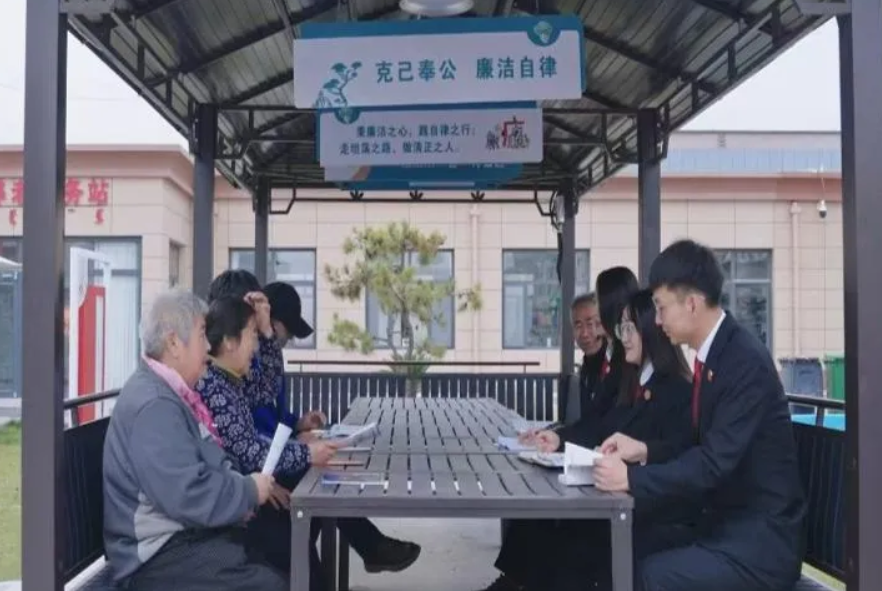
乔司五星村廉情驿站畅通基层治理“最后一公里”
Hang Zhou Ri Bao· 2025-07-17 03:12
Core Points - The "Happiness Home" service complex has become a popular platform for residents to voice their concerns, with a total of 35 issues collected and a 100% resolution rate since its launch in January [1] - The station employs both offline and online channels for feedback, including a "Red and Yellow Card" mechanism to address noise complaints from rental properties [1] - The station conducts weekly sessions to gather public opinions and strengthen communication with the street's disciplinary committee for effective issue resolution [1] Future Plans - The "Happiness Home" service complex plans to enhance its functionality by integrating with the local WeChat public account, allowing real-time tracking of issue resolution and transparency in the process [2] - The upgrade will include a live tracking feature for residents to monitor the progress of their complaints and rate the handling of issues [2]
甘肃宕昌:“干部大讲堂”铸魂增智转作风,赋能发展新征程
Zhong Guo Fa Zhan Wang· 2025-06-12 09:06
Core Viewpoint - The "Cadre Lecture Hall" initiative in Gansu's Dangchang County is significantly enhancing the capabilities and work ethic of local officials, driving high-quality development through knowledge sharing and practical engagement [1][2][3]. Group 1: Cadre Training and Development - The "Cadre Lecture Hall" combines education with practical work, focusing on implementing the spirit of the Central Eight Regulations and transforming learning outcomes into actionable efforts [2][3]. - Over 120 grassroots visits and discussions have identified over 1,000 issues, establishing a closed-loop mechanism for problem-solving that has shown initial success [3][11]. - The initiative has led to the organization of over 230 sessions, with more than 9,000 participants, contributing to the development of a high-quality cadre team [13]. Group 2: Community Engagement and Service - Cadres are encouraged to move beyond their offices to actively engage with the community, shifting from a passive to an active service model to address urgent public needs [2][3]. - The implementation of the "1234" work method has facilitated the collection and resolution of 3,575 public requests, achieving a completion rate of over 95% [12]. Group 3: Economic Development and Industry - Dangchang County is promoting diverse industries, including agriculture and tourism, to enhance local economic growth and community welfare [4][8]. - The county has invested 1.81 billion yuan in standardizing and improving 184 rural hospitality businesses, significantly boosting tourism revenue [8]. - The establishment of the "Dangchang Medicinal Herb Cloud Platform" has reduced transaction costs for farmers by over 12 million yuan, supporting the stability of the local medicinal herb industry [7]. Group 4: Infrastructure and Environmental Improvement - Significant investments have been made in rural infrastructure, including the construction of over 43,800 sanitary toilets and 220 kilometers of rural roads, improving living conditions [13]. - The county has implemented comprehensive environmental sanitation measures, enhancing the overall rural landscape and promoting better living habits among residents [13].