无线通信

Search documents
Comcast(CMCSA) - 2025 Q4 - Earnings Call Transcript
2026-01-29 14:30
Financial Data and Key Metrics Changes - Total company revenue grew 1% in Q4 2025, driven by strength across six growth businesses, which collectively represent 60% of revenue and grew at a mid-single-digit rate [18] - Adjusted EBITDA declined 10% in the quarter, and adjusted earnings per share declined 12% [19] - Free cash flow for the quarter was $4.4 billion, including a cash tax benefit of about $2 billion related to an internal corporate reorganization [19][30] - For the full year, free cash flow reached $19.2 billion, the highest year on record [30] Business Line Data and Key Metrics Changes - Connectivity and platforms saw a 4.5% decline in EBITDA, with broadband ARPU growing 1.1% [21][23] - Wireless revenue grew 18% in Q4, with 364,000 new wireless lines added, bringing total lines to over 9 million and residential broadband penetration above 15% [23][24] - Theme parks revenue increased 22% and EBITDA grew 24%, with EBITDA crossing the billion-dollar level for the first time [26] - Peacock revenue grew over 20% to a record $1.6 billion, supported by strong distribution revenue growth of over 30% [28] Market Data and Key Metrics Changes - The competitive environment for broadband remains intense, with increased competition from fiber and fixed wireless [19][55] - Wireless competition intensified towards the end of Q4, but Comcast achieved its best year ever in 2025 for wireless net additions [40][55] - The company is focused on transitioning to simplified market-based pricing plans, which is expected to stabilize the customer base and create durable pricing [20][21] Company Strategy and Development Direction - The company is at an inflection point, focusing on six growth drivers and making decisive management and operational changes [3][4] - The strategy includes simplifying broadband offerings, modernizing wireless partnerships, and enhancing customer experience through better service and pricing transparency [6][9][34] - The company aims to deepen convergence through wireless and leverage network leadership across residential and business services [12][17] Management's Comments on Operating Environment and Future Outlook - Management expressed confidence in the company's positioning despite intense competition, emphasizing the importance of execution and customer experience [3][34] - The focus for 2026 includes building on changes made in 2025, with significant investments in broadband and expectations for improved EBITDA in the second half of the year [12][59] - Management highlighted the importance of the upcoming major live events in 2026, including the Super Bowl and the Winter Olympics, as opportunities for growth [14][15] Other Important Information - The company completed the spin-off of Versant Media, allowing NBCUniversal to concentrate on profitability in its media business [12][30] - Total capital spending in 2025 declined 5% to $14.4 billion, with expectations for similar spending in 2026 [30][32] - The company returned nearly $12 billion to shareholders in 2025, including $7 billion in share repurchases [32][33] Q&A Session Questions and Answers Question: Update on broadband and wireless opportunities - Management highlighted improvements in voluntary churn and strong adoption of the five-year price guarantee, indicating positive early results from the new go-to-market strategy [39] Question: Thoughts on Peacock and potential partnerships - Management expressed confidence in Peacock's integrated media business and the strength of its content, emphasizing ongoing efforts to drive profitability [43][44] Question: Competitive environment in high-speed data - Management acknowledged increased competition from fiber and fixed wireless but remains focused on executing their strategy to maintain market position [55]

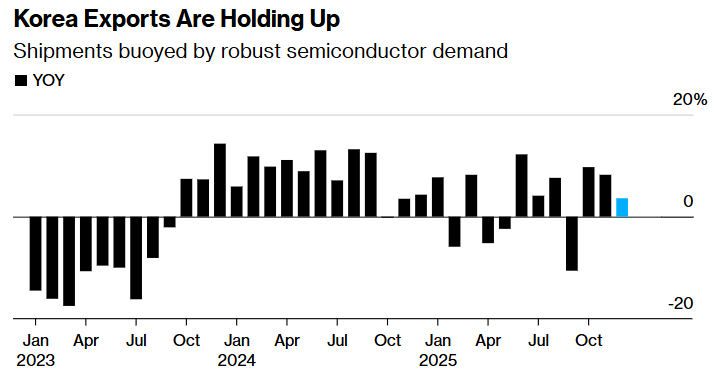
“金丝雀”报喜!韩国1月出口初步增长14.9%,芯片出口激增70%
Hua Er Jie Jian Wen· 2026-01-21 10:31
Core Insights - South Korea's exports saw a significant increase of 14.9% year-on-year in the first 20 days of January, primarily driven by a surge in semiconductor demand due to the global AI boom [1][2] - Semiconductor exports skyrocketed by 70.2%, continuing the growth trend fueled by strong investments in AI and data centers, which helped offset declines in traditional sectors like automotive and shipbuilding [1][2] - Despite structural pressures from U.S. tariffs and a slowdown in global demand, the robust performance of high-tech exports has narrowed the trade deficit to $626 million [1] Semiconductor Sector - The semiconductor sector remains the core engine of South Korea's export growth, with a notable 70.2% increase in chip exports in January, driven by AI-related demand [2] - South Korea's position in the global semiconductor supply chain is further emphasized, with projected exports reaching a record $709.4 billion in 2025, a 3.8% year-on-year increase, and a 22% rise in semiconductor shipments [2] - The U.S. has imposed a 25% import tariff on certain semiconductors and related equipment, which could impact South Korean manufacturers if they do not increase production in the U.S. [2] Regional Export Performance - Exports to China increased by 30.2%, and exports to the U.S. rose by 19.3%, indicating stable demand in major markets [3] - However, exports to the EU and Japan fell by approximately 15% and 13%, respectively, highlighting structural market disparities amid global economic and policy differences [3] Automotive Sector Challenges - The automotive sector faced significant challenges, with exports declining nearly 11% due to U.S. tariff policies and a slowdown in global demand [4] - Shipbuilding exports also dropped by 18%, reflecting the headwinds faced by traditional manufacturing industries [4] - Despite a trade agreement that set a 15% cap on import tariffs, the current rates remain higher than previous free trade arrangements, continuing to pressure the automotive sector [4] Currency Effects - The weakening of the Korean won has provided crucial support for exports, with the currency depreciating over 8% against the dollar since June [6] - While currency depreciation enhances the price competitiveness of export products, it also raises import costs, contributing to inflationary pressures [6] - The Bank of Korea has maintained the benchmark interest rate at 2.5% for the fifth consecutive time, indicating a neutral policy stance amid mixed economic outlooks [6]
韩国1月出口强势开局!半导体需求强劲抵消汽车关税冲击
智通财经网· 2026-01-21 02:09
Core Insights - South Korea's exports accelerated in the first 20 days of January, primarily driven by strong semiconductor demand, while automotive exports weakened due to increased tariffs in the U.S. [1] - The export growth rate reached 14.9% year-on-year, surpassing the revised 13.3% growth for the entire month of December [1] - Semiconductor exports surged by 70.2%, supported by global AI and data center investment trends, while automotive exports fell nearly 11% [1] Export Performance - The total export value for the first 20 days of January was 14.9% higher year-on-year, with imports increasing by 4.2%, resulting in a trade deficit of $626 million [1] - Wireless communication devices and petrochemical products also saw significant export growth, increasing by 48% and 18% respectively [1] - The decline in automotive exports reflects a slowdown in global demand and the impact of U.S. tariffs, with shipbuilding exports also down by 18% [1] Economic Context - The strong export growth is seen as a key driver for South Korea's economy in 2023, with semiconductor demand expected to offset declines in other sectors [1] - The recent trade agreement with the U.S. set a tariff cap of 15% on imported goods, including automobiles, which has raised concerns about long-term export challenges for the economy [2] - The depreciation of the Korean won against the U.S. dollar has improved price competitiveness for exports but has also increased inflationary pressures [2] Monetary Policy - The Bank of Korea maintained the benchmark interest rate at 2.5% for the fifth consecutive meeting, signaling a neutral stance amid mixed economic growth risks [2] - Core inflation and overall inflation have exceeded the central bank's target of 2%, raising concerns about rising import costs due to a weak won [2] Trade Partner Dynamics - Exports to China and the U.S. grew by 30.2% and 19.3% respectively, while exports to the EU and Japan declined by approximately 15% and 13% [2]
博实结:无线通信模组使用的芯片等原材料大部分已实现了国产化替代
Zheng Quan Ri Bao Wang· 2026-01-16 15:12
Group 1 - The core viewpoint of the article is that the company has largely achieved domestic substitution for the chips and raw materials used in its wireless communication modules [1] - The company will continue to monitor the development of the "AI edge" industry and will develop corresponding products based on customer demand [1]
硕贝德1月9日获融资买入4.66亿元,融资余额10.15亿元
Xin Lang Cai Jing· 2026-01-12 01:35
Group 1 - The core viewpoint of the news is that ShuoBeide's stock performance and financial metrics indicate a significant increase in revenue and net profit, alongside high levels of financing and margin trading activity [1][2]. Group 2 - On January 9, ShuoBeide's stock price fell by 0.57%, with a trading volume of 3.653 billion yuan. The financing buy amount was 466 million yuan, while the financing repayment was 519 million yuan, resulting in a net financing outflow of 53.27 million yuan [1]. - As of January 9, the total balance of margin trading for ShuoBeide was 1.016 billion yuan, with the financing balance accounting for 7.00% of the circulating market value, indicating a high level compared to the past year [1]. - In terms of short selling, on January 9, ShuoBeide had a short selling repayment of 300 shares and a short selling amount of 1,000 shares, with a total selling amount of 31,500 yuan. The remaining short selling volume was 26,300 shares, with a short selling balance of 829,000 yuan, also at a high level compared to the past year [1]. Group 3 - As of September 30, ShuoBeide had 88,000 shareholders, an increase of 49.30% from the previous period, while the average circulating shares per person decreased by 33.14% to 5,005 shares [2]. - For the period from January to September 2025, ShuoBeide achieved an operating income of 1.99 billion yuan, representing a year-on-year growth of 50.25%. The net profit attributable to the parent company was 50.71 million yuan, showing a remarkable year-on-year increase of 1,290.66% [2]. - Since its A-share listing, ShuoBeide has distributed a total of 116 million yuan in dividends, with no dividends distributed in the last three years [2]. - As of September 30, 2025, Hong Kong Central Clearing Limited was the third-largest circulating shareholder of ShuoBeide, holding 3.0145 million shares, a decrease of 8.4168 million shares from the previous period [2].

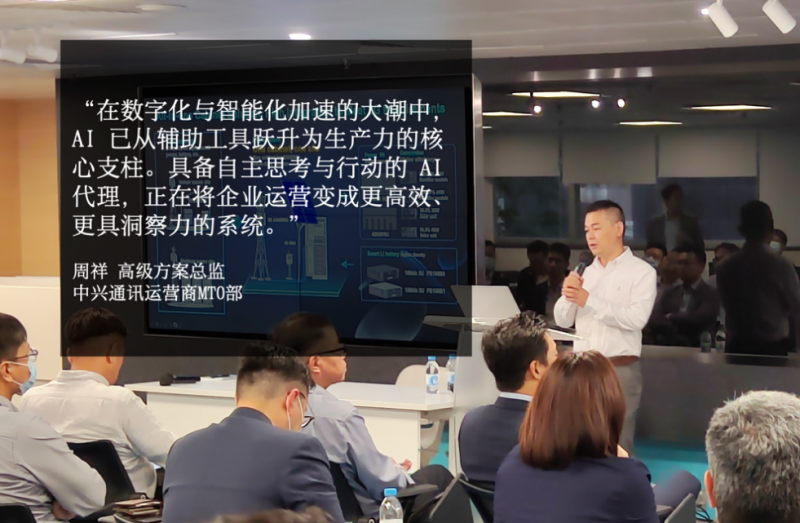
电信评论领袖峰会,倡导开放协作的创新方式
Jiang Nan Shi Bao· 2026-01-04 03:49
周祥从事通信行业的产品研发和项目管理,超过20年经验。在无线通信行业积累深厚的经验,近年在5G Advanced和6G领域取得进展。特别是在6G动态场景覆盖方面,小区切换频繁、覆盖不均匀及信道快速变化等挑 战,周祥提出了特色的去蜂窝网络通过分布式节点协作实现连续覆盖,探索可移动天线通过小尺度位移主动改变 信道环境,解决上述问题的底层技术。 电信评论领袖峰会是全球规模最大的C级高管行业盛会之一,汇聚了来自世界各地的ICT行业领袖和政府官员。本 届峰会以"超越移动性的技术智能"为全新主题,重点关注行业的主要发展趋势,包括5G、云计算、数据中心、网 络安全、数字化等等。(作者:吴宇凡) 随着低空经济的重要性提升,无人机(UAV)在物流、安防、应急救援等领域的应用迅速增长。6G通感一体化 (ISAC)将通信与雷达感知融合,成为低空核心需求的支撑性技术。周祥提出若干物理层关键技术构想,包括自 适应波束成形、智能反射面(IRS)、AI赋能机制、组网协同架构及干扰控制策略,强调能效优化与协同调度将 成为未来研究重点。 2025年12月31日,全球领先的综合信息和通信技术解决方案提供商中兴通讯参加了第19届电信评论领导人峰会 ...

韩国2025年出口同比增3.8%刷新纪录
Xin Lang Cai Jing· 2026-01-01 10:33
Core Insights - South Korea's total exports reached a record high of $709.7 billion in 2024, marking a year-on-year increase of 3.8% [1] Export Performance - Semiconductor exports surged by 22.2% year-on-year, totaling $173.4 billion, setting a new historical peak for the second consecutive year [1] - Automotive exports increased by 1.7%, reaching $72 billion, also achieving a record high [1] - Biopharmaceutical exports rose by 7.9% to $16.3 billion, maintaining growth for two consecutive years [1] - Other sectors such as shipbuilding, computers, wireless communication devices, agricultural products, cosmetics, and electrical equipment also experienced growth [1] Decline in Specific Sectors - Exports of petroleum products decreased by 9.6% to $45.5 billion [1] - Petrochemical product exports fell by 11.4% to $42.5 billion [1] - Steel exports dropped by 9% to $30.3 billion [1]
告别连接“将就”时代:星闪如何成为 AIoT 的“神经中枢”与万物互联的“硬总线”
Xin Lang Cai Jing· 2025-12-31 02:58
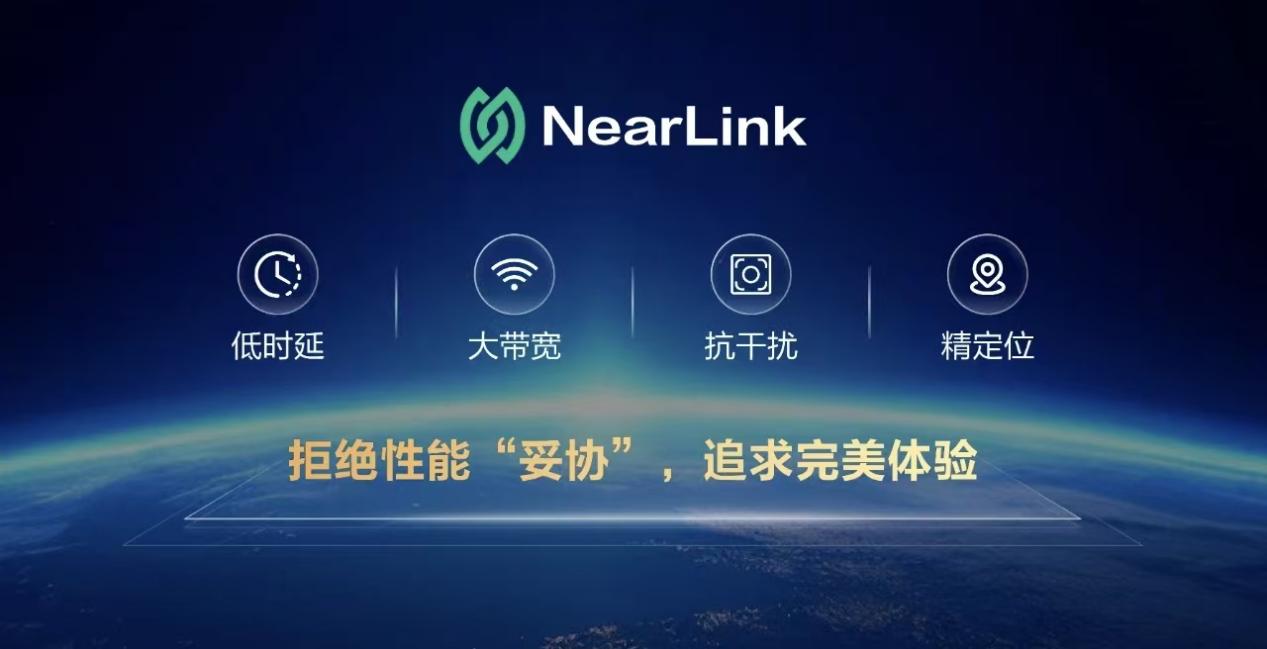
Core Insights - The year 2025 is marked as a watershed moment for the global wireless communication industry, with the launch of the Chinese-origin NearLink technology, which signifies a critical leap in industrial development [1][57]. Industry Overview - NearLink technology has transitioned from steady growth to explosive scale by 2025, with over 100 million terminal products expected to be equipped with this technology, indicating a shift from concept validation to large-scale commercialization [3][59]. - The International NearLink Alliance has grown to over 1,200 members, covering the entire industry chain from chip design to terminal applications, establishing a collaborative ecosystem [5][61]. Technological Advancements - NearLink technology integrates the advantages of traditional wireless technologies like Bluetooth and Wi-Fi, achieving six key capabilities: low latency, high bandwidth, strong anti-interference, precise positioning, integrated sensing, and high concurrency [10][66]. - The introduction of Polar codes enhances anti-interference capabilities by 7dB, significantly improving signal reception sensitivity and capacity [12][68]. - NearLink expands physical layer bandwidth to 4MHz and achieves a transmission rate of 12Mbps, which is six times faster than traditional Bluetooth [13][69]. Application Scenarios - In consumer electronics, NearLink is revolutionizing user experiences with high-speed interactions and lossless audio transmission, with over 50 products already utilizing this technology [19][75]. - In smart home applications, NearLink enables devices to transition from passive control to proactive sensing, enhancing user interaction and energy efficiency [36][92]. - In the automotive sector, NearLink is becoming a standard for digital car keys, improving accuracy and security in vehicle access [42][100]. Ecosystem Development - The strategic partnership between NearLink and the open-source HarmonyOS is fostering a synergistic ecosystem, enhancing device interconnectivity and user experience [47][103]. - The combined efforts of over 1,200 industry partners are driving the rapid adoption of NearLink technology, aiming to create a foundation for a trillion-dollar market in the AIoT era [5][61]. Future Outlook - NearLink aims to establish a robust ecosystem that supports 1 billion to 10 billion connections, marking a significant shift in the wireless communication landscape [54][110]. - The technology's evolution reflects China's transition from a follower to a leader in short-range wireless communication, paving the way for a new era of interconnected devices [55][111].
180 Wealth Advisors LLC Sells 2,679 Shares of T-Mobile US, Inc. $TMUS
Defense World· 2025-12-28 08:06
Core Insights - T-Mobile US, Inc. has seen varied institutional investment activity, with some hedge funds increasing their stakes while others have reduced theirs [2][3] Institutional Holdings - 180 Wealth Advisors LLC reduced its holdings in T-Mobile US by 27.1%, owning 7,223 shares worth $1,729,000 after selling 2,679 shares [2] - Castle Rock Wealth Management LLC increased its stake by 17.3%, now owning 5,731 shares valued at $1,321,000 after acquiring 846 additional shares [3] - Ellsworth Advisors LLC raised its stake by 2.7%, owning 25,550 shares valued at $5,791,000 after buying 670 shares [3] - Nvwm LLC increased its stake by 3.8%, now owning 2,652 shares valued at $635,000 after purchasing 98 shares [3] - Trust Co. of Toledo NA OH boosted its stake by 20.2%, owning 1,931 shares worth $462,000 after buying 324 shares [3] - Regent Peak Wealth Advisors LLC established a new position valued at $303,000 [3] - Institutional investors collectively own 42.49% of T-Mobile US stock [3] Stock Performance - T-Mobile US shares opened at $201.00, with a market cap of $224.82 billion, a PE ratio of 19.33, and a beta of 0.44 [4] - The company has a debt-to-equity ratio of 1.37, a current ratio of 0.89, and a quick ratio of 0.80 [4] - The stock's 50-day simple moving average is $207.97, and the 200-day simple moving average is $227.58 [4] - T-Mobile US has a 1-year low of $194.01 and a 1-year high of $276.49 [4] Financial Performance - T-Mobile US reported earnings of $2.41 per share for the quarter, exceeding the consensus estimate of $2.40 by $0.01 [5] - The company achieved revenue of $21.96 billion, surpassing analyst estimates of $21.61 billion, and reflecting an 8.9% increase compared to the same quarter last year [5] - The return on equity was 19.76%, and the net margin was 13.83% [5] - Analysts predict T-Mobile US will post earnings of $10.37 per share for the current year [5] Dividend Information - T-Mobile US announced a quarterly dividend of $1.02 per share, to be paid on March 12, with an annualized dividend of $4.08 and a yield of 2.0% [6] - The current payout ratio is 39.23% [6] Analyst Ratings - JPMorgan Chase & Co. reiterated a "buy" rating for T-Mobile US [7] - Oppenheimer downgraded the stock from "outperform" to "market perform" [7] - Benchmark raised the target price from $275.00 to $295.00, maintaining a "buy" rating [7] - KeyCorp upgraded the stock from "underweight" to "sector weight" [7] - Raymond James upgraded the stock to a "hold" rating [7] - The consensus rating is "Moderate Buy" with an average target price of $260.17 [7] Insider Transactions - CEO Srini Gopalan purchased 9,800 shares at an average price of $201.82, increasing his position by 12.18% [9] - Director Letitia A. Long sold 1,457 shares at an average price of $210.32, decreasing her ownership by 21.13% [9] - Over the last ninety days, insiders sold 915,016 shares worth $208,006,290, with insiders currently owning 0.37% of the stock [9]


韩国经济凸显“芯片依赖症”:12月前20天出口增长放缓,半导体需求飙升掩盖经济结构性疲软
Zhi Tong Cai Jing· 2025-12-22 03:45
Group 1: Semiconductor Industry Performance - South Korea's semiconductor exports increased by nearly 42%, driven by demand from artificial intelligence and data centers, helping to offset declines in other sectors [1] - The overall export value for the first 20 days of December grew by 3.6% year-on-year, with a previous month's growth rate of 8.2% [1] - Wireless communication equipment shipments also saw a growth of nearly 18% [1] Group 2: Economic Outlook and Monetary Policy - Excluding the semiconductor sector, economic data remains weak, highlighting the strong performance of the semiconductor industry [3] - The Bank of Korea maintained the benchmark interest rate at 2.5% and raised the 2026 economic growth forecast to 1.8%, primarily due to growth in the chip and information technology sectors [3] - Barclays Bank forecasts a 2.1% growth in South Korean exports next year, but only 1.1% when excluding semiconductor-related exports, imports, and investments [3] Group 3: Trade Agreements and Currency Impact - A significant tariff agreement was reached between Seoul and Washington, setting the maximum tariff on South Korean goods at 15%, effective from November 1 [4] - The Korean won has depreciated over 8% against the US dollar since the second half of 2025, raising concerns about inflation [4] - Both the core consumer price index and overall consumer price index in South Korea have exceeded the Bank of Korea's target of 2% [4]