无线耳机

Search documents
绿联科技(301606)深度研究:主业四重驱动,NAS供需奔赴
东方财富· 2026-03-31 10:50
Investment Rating - The report assigns an "Add" rating for the company, marking its first coverage [2][9]. Core Insights - The company, UGREEN Technology, is positioned as a strong player in the global consumer electronics market, leveraging its core business in electronic accessories and expanding into the NAS (Network Attached Storage) market, which is expected to drive significant growth [20][21]. - The report highlights UGREEN's four growth drivers: market segments, regional expansion, diversified channels, and brand competition, which collectively enhance its competitive edge [6][42]. - The NAS market is projected to grow significantly, with a forecasted CAGR of 9.5% over the next decade, and UGREEN is expected to capture a substantial market share due to its competitive pricing and effective marketing strategies [8][9]. Summary by Sections 1. Company Overview - UGREEN Technology, founded in 2012, has established itself as a representative brand in the global consumer electronics sector, focusing on providing comprehensive digital solutions across various product categories [21][24]. - The company has a stable management team with extensive industry experience, which has contributed to its strategic decision-making and operational efficiency [28]. 2. Business Segments - UGREEN's revenue is diversified across several categories: charging (37%), transmission (26.7%), audio-video (16.3%), storage (10.7%), and mobile peripherals (7.9%) [44]. - The storage segment, particularly NAS, has shown remarkable growth, with a year-on-year increase of 125.13% in the first half of 2025, indicating its potential as a key growth driver [34][39]. 3. Market Dynamics - The global consumer electronics market is characterized by a shift towards smaller, high-growth segments, where UGREEN is strategically positioned to capitalize on emerging trends [46]. - The NAS market is expected to reach a size of $8 billion by 2025, with UGREEN aiming to capture a significant share through its competitive product offerings and marketing efforts [8][9]. 4. Financial Projections - Revenue forecasts for UGREEN are optimistic, with expected revenues of 87.40 billion, 115.46 billion, and 148.70 billion yuan for the years 2025, 2026, and 2027, respectively [9][10]. - The projected net profits for the same years are 6.71 billion, 9.14 billion, and 12.11 billion yuan, reflecting a strong growth trajectory [9][10].
绿联科技(301606):深度研究:主业四重驱动,NAS供需奔赴
East Money Securities· 2026-03-31 06:45
Investment Rating - The report assigns a rating of "Buy" for the company, marking its first coverage [2]. Core Insights - The company, UGREEN Technology, is positioned as a strong player in the global consumer electronics market, leveraging its core business in electronic accessories and expanding into the NAS (Network Attached Storage) market, which is expected to drive significant growth [20][21]. - The report highlights the company's robust growth trajectory, with projected revenues of 8.74 billion, 11.55 billion, and 14.87 billion yuan for the years 2025, 2026, and 2027 respectively, alongside net profits of 671 million, 914 million, and 1.21 billion yuan for the same years [9][10]. Summary by Sections 1. Company Overview - UGREEN Technology, founded in 2012, has established itself as a representative brand in the global consumer electronics market, focusing on charging, transmission, audio-video, storage, and mobile peripheral products [21]. - The company has successfully expanded its market presence across China, the US, Europe, and Japan, integrating online and offline channels for comprehensive development [21]. 2. Core Business Growth - The company's main business segments include charging (37%), transmission (26.7%), audio-video (16.3%), storage (10.7%), and mobile peripherals (7.9%) [44]. - The storage segment has shown remarkable growth, with a year-on-year increase of 125.13% in the first half of 2025, becoming a key growth driver [34][39]. 3. Market Expansion and Competitive Positioning - UGREEN is actively expanding its international presence, with overseas revenue growth significantly outpacing domestic growth, achieving 46.5% and 51.4% growth in 2024 and the first half of 2025 respectively [35]. - The company is positioned to capture a substantial share of the NAS market, which is projected to reach $8 billion by 2025, with a CAGR of 9.5% over the next decade [8]. 4. Financial Projections - The report forecasts the company's revenue and net profit growth, with EPS expected to rise from 1.62 yuan in 2025 to 2.92 yuan in 2027, reflecting a strong financial outlook [9][10]. - The company's P/E ratio is projected to decrease from 42.35 in 2025 to 23.46 in 2027, indicating improving valuation metrics as growth continues [9].
绿联科技20260324
2026-03-26 13:20
Summary of Ugreen Technology Conference Call Company Overview - **Company**: Ugreen Technology - **Industry**: Consumer Electronics, specifically in charging, audio-video, connectivity, and storage products Key Financial Projections - **Revenue Forecast**: Expected revenues for 2025, 2026, and 2027 are 8.7 billion, 11.6 billion, and 14.8 billion RMB, representing year-on-year growth of 41%, 34%, and 27% respectively [2][4] - **Net Profit Forecast**: Projected net profits for the same years are 695 million, 982 million, and 1.32 billion RMB, with growth rates of 50%, 41%, and 34% respectively [2][4] - **Historical Performance**: Over the past five years, the company has achieved a revenue compound annual growth rate (CAGR) of 25% and a profit CAGR of 15% [5] Business Segmentation and Market Position - **Core Product Categories**: Major revenue sources include charging products, connectivity products, and audio-video products, with storage products expected to increase significantly in revenue contribution [6] - **Market Share**: Ugreen ranks first in the industry by shipment volume with 150 million units and second by retail revenue with 7 billion RMB, holding a 1.5% market share [8][9] - **NAS Market Position**: In the consumer NAS market, Ugreen holds a 21% shipment market share and a 17.5% retail market share, indicating a strong competitive position [9] Growth Drivers - **NAS Business Growth**: The NAS segment is expected to see significant growth, with revenues projected to reach 970 million RMB in 2025 and a growth rate of 70% in 2026 [2][9] - **Channel Optimization**: The company has optimized its sales channels, with nearly 60% of revenue coming from overseas markets and a stable offline channel contribution of over 20% [2][6] Profitability and Cost Structure - **Gross Margin**: The overall gross margin is maintained at around 40%, with expectations for improvement as the high-margin NAS business grows [7] - **Net Margin**: Currently at approximately 8%, the net margin is expected to improve as the business structure optimizes [7] - **Cost Management**: R&D expenses are projected to increase slightly, while sales expenses are rising due to marketing for new products [7] Industry Dynamics - **Market Growth**: The consumer electronics market is expected to maintain double-digit growth, with specific segments like charging and storage projected to grow at 14% and nearly 30% CAGR respectively over the next five years [8] - **Supply Chain Improvements**: Recent regulatory changes in the cross-border e-commerce sector are expected to benefit leading companies like Ugreen by consolidating market share among top players [10] Competitive Advantages - **Ecosystem and Innovation**: Ugreen's competitive edge lies in its diverse product matrix, strong brand partnerships, and continuous R&D investment, particularly in AI-integrated NAS products [11][12] - **Supply Chain Management**: The company effectively manages its supply chain with a combination of in-house production and outsourcing, ensuring competitive pricing [12] Valuation and Investment Rating - **Target Price**: Based on projected growth and industry comparisons, the target price is set at 87.69 RMB, with a buy rating assigned for initial coverage [2][12]
瀛通通讯股价下跌2.08%至19.80元,主力资金连续三日净流出
Jing Ji Guan Cha Wang· 2026-02-28 01:30
Group 1 - The stock price of Yingtong Communications fell by 2.08% to 19.80 yuan, with a trading volume of 96.36 million yuan and a turnover rate of 3.24%, resulting in a total market capitalization of 3.688 billion yuan [1] - The main funds experienced a net outflow of 4.73 million yuan on the same day, marking a continuous net outflow trend for three days, with a cumulative net outflow of 24.43 million yuan over the past five days, indicating short-term pressure on capital [1] - The stock price is approaching a resistance level of 20.12 yuan, with an average cost of shares at 19.68 yuan; a breakthrough of the resistance level could initiate an upward trend, but caution is advised regarding potential pullback risks [1] Group 2 - On February 26, 2026, Yingtong Communications announced that its wholly-owned subsidiary obtained a patent for "a positioning welding device for ultra-fine coaxial wire," which will enhance the company's intellectual property protection system and improve long-term core competitiveness, although it will not have a significant short-term impact on production and operations [2] - The company continues to focus on emerging sectors such as wireless headphones and AI hardware, supported by a previously announced capacity expansion project for wireless headphones in October 2025, which will provide support for future growth [2]
瑞士英国等地游客的华强北数码之旅:科技感十足,称颠覆想象
Nan Fang Du Shi Bao· 2026-01-28 06:16
Core Insights - The article highlights the growing popularity of Guangdong's electronic market, particularly Huaqiangbei, as a shopping destination for international tourists, showcasing its unique offerings and vibrant market atmosphere [1][2][3] Group 1: International Appeal - Tourists from various countries, including the UK and Switzerland, are drawn to Huaqiangbei for its extensive range of electronic products and competitive prices, often influenced by recommendations from social media influencers [2][3] - The market is recognized as the "World's biggest electronic market," attracting tech enthusiasts and entrepreneurs seeking innovative products and business opportunities [5][6] Group 2: Shopping Experience - The shopping experience in Huaqiangbei is characterized by a wide selection of products, allowing customers to negotiate prices and enjoy a dynamic retail environment, which is less common in Western markets [3][4] - The convenience of transportation and electronic payment methods in Guangdong enhances the overall shopping experience for foreign visitors, making it efficient and user-friendly [5][6] Group 3: Product Innovation - The article notes a shift in consumer interest towards smart and innovative products, with buyers increasingly inquiring about features like smart control capabilities [7] - Interactive and experiential shopping spaces have been developed, allowing customers to engage with products in a hands-on manner, transforming the traditional shopping model [9][10]


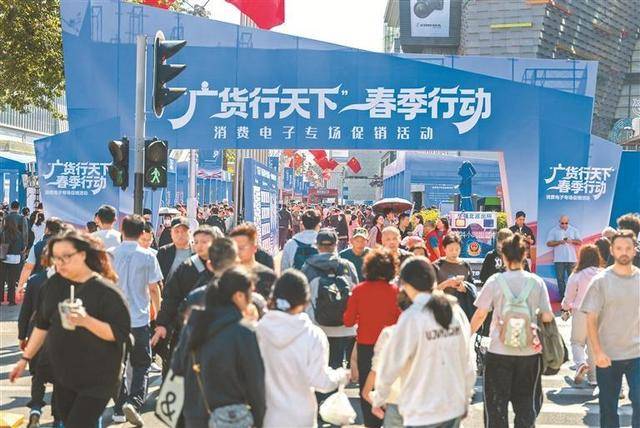
【深圳特区报】“广货”消费电子专场燃动华强北
Sou Hu Cai Jing· 2026-01-26 10:18
Core Insights - The "Guangdong Goods Go Global" spring action consumer electronics promotion event successfully took place in Shenzhen, attracting over 150,000 visitors and generating sales exceeding 2.5 million yuan in just four hours [3][4]. Group 1: Event Overview - The event showcased over 400 types of consumer electronics, including smart wearables and AI glasses, from 50 participating companies [5]. - Major platforms such as Alibaba, Douyin, Kuaishou, and Tencent provided promotional support, leading to a significant increase in online sales and viewership during live broadcasts [7]. Group 2: Sales Performance - The total viewership for live broadcasts exceeded 250,000, with sales from these sessions surpassing 2 million yuan, reflecting a more than 60% increase in average sales and viewership compared to regular days [7]. - Specific companies reported remarkable growth, with Ying Shi Innovation's live broadcast viewership increasing by 500%, and Shenzhen Mata Chuangxiang Technology's online sales rising by 300% [7]. Group 3: International Participation - The event attracted over 800 foreign buyers from regions including Europe, the Middle East, and others, indicating strong international interest in Guangdong's electronic products [8]. Group 4: Community Engagement - The event included promotional activities in three local communities, showcasing over 20 new products and highlighting the evolution of Guangdong's electronic industry from OEM to independent innovation [9]. - An international volunteer team provided multilingual translation and procurement guidance for foreign buyers, enhancing the overall experience [9].
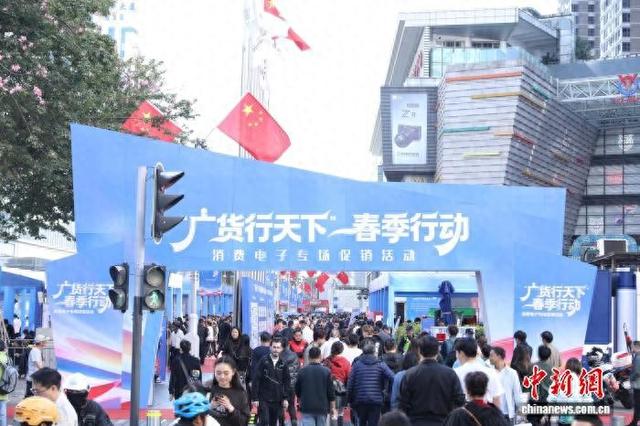
“广货行天下”春季行动消费电子专场促销活动走进深圳
Xin Lang Cai Jing· 2026-01-25 13:04
Core Viewpoint - The "Guangdong Goods Going Global" spring promotional event aims to enhance the brand image of Guangdong's consumer electronics and promote sales both domestically and internationally, leveraging the province's technological innovation and industrial strengths [1][3]. Group 1: Event Overview - The promotional event is organized by the Guangdong Provincial Department of Industry and Information Technology and the Shenzhen Municipal Government, focusing on consumer electronics [1]. - This event is the third phase of the "Guangdong Goods Going Global" spring campaign, following previous promotions for home appliances and mobile phones, and it is the first outdoor event designed to attract large crowds [3][5]. Group 2: Product and Participation - The event features 50 exhibition booths showcasing over 400 consumer electronic products, including smart wristbands, smartwatches, wireless earphones, and AI glasses, from 50 participating companies [5]. - Major platforms like Douyin and Alibaba have announced special promotional plans and supporting measures during the event [5]. Group 3: Discounts and Sales - Participating companies are offering multiple discounts, with some smart terminal products available at up to 50% off, maximizing benefits for consumers [8]. - The event attracted foreign buyers from regions such as the Middle East, Southeast Asia, and Europe, leading to record sales for several companies [8]. Group 4: Future Activities and Exhibitions - Following the promotional event, a series of activities such as "Entering the Citizen Center" and "Consumer Electronics New Year Festival" will continue, creating a sustained consumer engagement effect [8]. - The event also includes an exhibition showcasing the history and achievements of innovation in the Huachangbei area, highlighting the evolution of Guangdong's electronics industry from OEM to independent innovation [8].
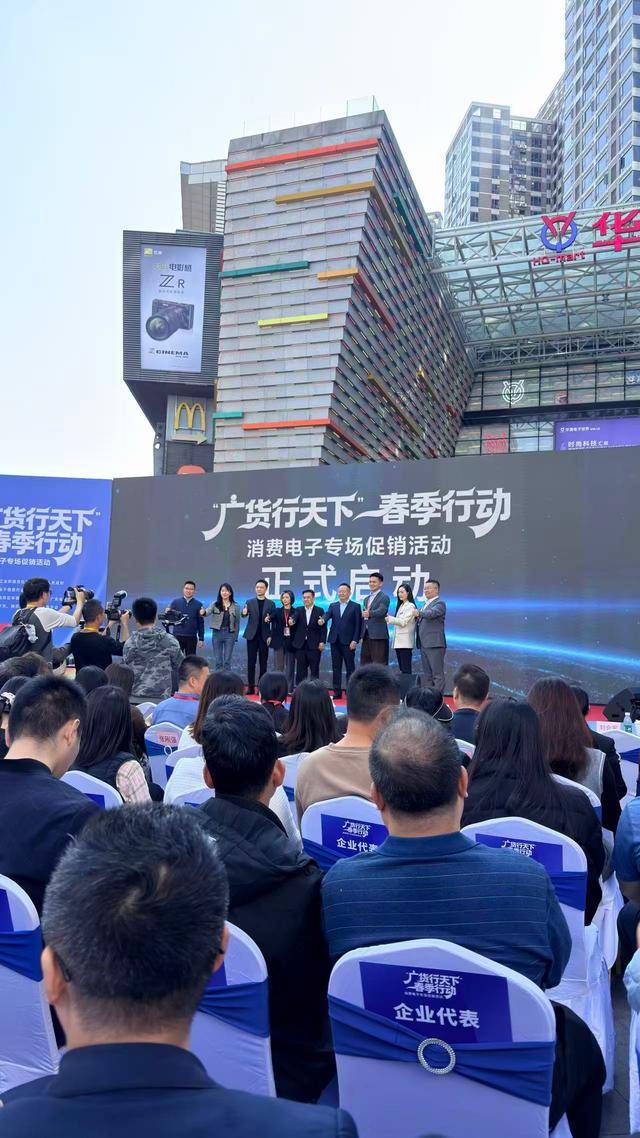
广东“电子年货”来了!400余种消费电子优品集中亮相华强北,数万游客汇聚
Sou Hu Cai Jing· 2026-01-25 12:54
Group 1 - The "Guanghuo Xing Tianxia" Spring Action Consumer Electronics Promotion event was successfully held in Shenzhen, aiming to enhance the brand image of Guangdong products and promote their sales both domestically and internationally [1][7] - The event featured 50 exhibitors showcasing over 400 types of consumer electronics, including smart wearables and AI glasses, with significant discounts offered to consumers [4][7] - The promotion is part of a broader strategy to leverage Guangdong's industrial advantages and meet consumer demand for traditional New Year goods, with plans for ongoing activities to maintain consumer engagement [1][4] Group 2 - This event marked the third stop of the "Guanghuo Xing Tianxia" Spring Action, attended by over 250 representatives from government, media, and industry, with consumer foot traffic reaching tens of thousands [7] - The event included a historical exhibition showcasing the evolution of Guangdong's electronics industry from OEM to innovation leader, highlighting achievements in chip development and AI interaction [4][7] - The promotion utilized outdoor settings and strategic timing to maximize attendance and engagement, aligning with online streaming trends [4]
猜想谁是26年"易中天"系列——华勤技术
Ge Long Hui· 2026-01-25 08:50
Core Viewpoint - In 2025, AI computing power is expected to drive core assets in the market, with optical modules leading the high-demand sector due to a combination of industrial necessity, explosive performance, and solid barriers, indicating a growth potential that resonates with industry trends and corporate competitiveness [1] Group 1: Company Performance - In the first three quarters of 2025, the company reported a revenue growth of 69.6% year-on-year, with net profit attributable to shareholders increasing by 51.2% [1] - The company has achieved over 100 billion in annual revenue, positioning itself as a platform enterprise with a comprehensive AI layout across multiple business sectors [1] - The high-performance computing segment accounted for 60.3% of revenue in the first half of 2025, benefiting from the demand for AI PCs and servers [5] Group 2: Business Structure - The business structure includes high-performance computing (60.3% of revenue), smart terminals (31.9%), and emerging businesses like automotive electronics and AIoT (5.1%), which create new growth curves [5] - The smart terminal segment is the fastest-growing, with a revenue of 450 billion in the first three quarters, reflecting an 84.4% year-on-year increase [7] - The automotive electronics segment achieved over 1 billion in revenue for the first time in 2025, with significant breakthroughs in smart cockpit and intelligent driving domains [8] Group 3: Competitive Advantages - The company has established a competitive moat through technology, customer relationships, production capacity, and capital, enabling it to navigate industry cycles effectively [9] - The company has a unique vertical integration model with a self-sufficiency rate of approximately 45% in structural components, leading to shorter R&D cycles compared to the industry average [10] - R&D investment exceeded 4 billion in the first three quarters of 2025, with a workforce of 17,000 and over 12,000 patents covering key areas like AI algorithms and automotive-grade technology [11] Group 4: Market Position and Future Outlook - The company serves a matrix of global top brands, including eight of the top ten smartphone brands and four of the top five PC brands, with a diversified customer base reducing reliance on major clients [12] - The dual-circulation network of domestic and overseas production bases supports high-end product mass production, with a projected 30% increase in overall capacity by 2026 [12] - The company is planning an IPO in Hong Kong in 2025, which is expected to optimize shareholder structure and broaden financing channels [12][13]


跨境电商短视频:客易云助力品牌“破圈”全球市场
Sou Hu Cai Jing· 2026-01-22 05:13
Core Insights - Short videos have become a core tool for brands to reach global consumers in the increasingly competitive cross-border e-commerce landscape, with Kexiyun leveraging a "technology + creativity" dual-driven solution to redefine content marketing logic [1] Group 1: Precision Targeting - Traditional cross-border e-commerce short videos often fall into the trap of "content homogenization," but Kexiyun uses AI algorithms to analyze cultural preferences, consumption habits, and trends in target markets to create differentiated content strategies [3] - For example, a domestic beauty brand targeting the Southeast Asian market received a series of "daily commuting makeup" tutorial videos, which focused on the product's "lightweight" and "8-hour wear" features, resulting in over 20 million views on TikTok and significant sales growth in the region [3] Group 2: Creative Content - Kexiyun understands that the essence of short videos is emotional resonance, as demonstrated in a promotional video for a wireless earphone brand that showcased a "urban night runner" theme, highlighting the product's noise-cancellation feature through a narrative approach [3] - This "scene-based storytelling" allowed users to intuitively perceive the product's value, leading to a notable increase in sales within three days of the video's release, with frequent comments asking "Where can I buy it?" [3] Group 3: Data-Driven Decisions - Kexiyun's AI data analysis platform tracks key metrics such as completion rates, click-through rates, and conversion rates in real-time, generating visual reports for informed decision-making [4] - For instance, a home brand promoting a smart desk lamp initially focused on "eye protection," but data revealed user interest in "multi-scene usage," prompting a strategy shift to showcase various scenarios, which improved average conversion rates and turned the lamp into a cross-border bestseller [4]