
海关监管

Search documents
2025年海南空港口岸进出境人员264.4万人次
Sou Hu Cai Jing· 2026-01-13 15:50
Core Insights - In 2025, Haikou Customs reported a total of 2.644 million inbound and outbound passengers at Hainan's airport ports, marking a year-on-year increase of 27.2% [1] - The number of inbound and outbound flights reached 17,907, reflecting a year-on-year growth of 17.4% [1] Group 1: Airline Operations - Hainan's airport ports operated a total of 92 international and regional passenger routes in 2025, with 37 new routes added [3] - Notable new routes include the first "seventh freedom" route from Sanya to Prague, two "fifth freedom" passenger routes, and four international routes that opened domestic segments for international flights [3] - The route network now covers key regions including Northeast Asia, Southeast Asia, Europe, and Oceania, enhancing Hainan's connectivity as a free trade port [3] Group 2: Customs and Regulatory Enhancements - Haikou Customs has implemented a "one-time inspection" customs clearance model to improve the travel experience for outbound tourists [3] - The customs authority has tailored its strategies to the characteristics of the new routes, providing one-on-one guidance to airlines and upgrading the airport's international transfer facilities [3] - The use of technology, such as "pre-flight inspections" and "intelligent image analysis," has been leveraged to enhance customs supervision and create a seamless travel experience for passengers [3][4] Group 3: Future Developments - Haikou Customs plans to continue advancing the construction of a smart customs system to provide a more convenient customs environment and efficient regulatory services [4]

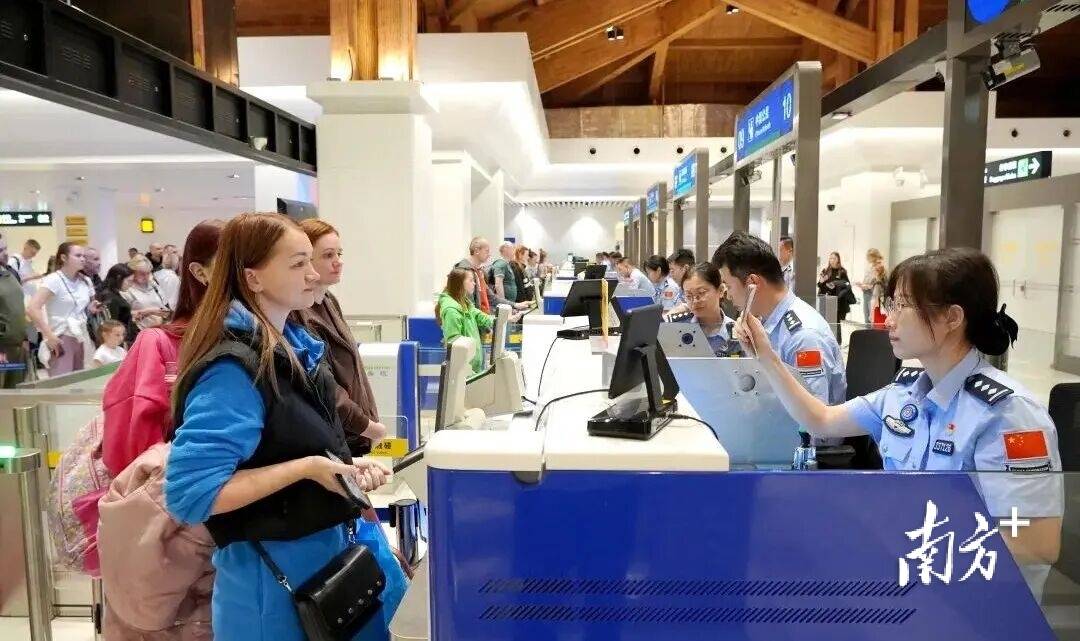
海南空港口岸2025年进出境人员264.4万人次,同比增长27.2%
Sou Hu Cai Jing· 2026-01-12 07:32
Core Insights - In 2025, Haikou Customs reported a total of 2.644 million inbound and outbound passengers at Hainan's airport ports, representing a year-on-year increase of 27.2% [1] - The number of inbound and outbound flights reached 17,907, marking a 17.4% increase compared to the previous year [1] - Hainan's airport ports operated a total of 92 international and regional passenger routes, with 37 new routes added, including the first-ever seventh freedom route from Sanya to Prague [1] Summary by Categories Passenger Traffic - Haikou Customs monitored 2.644 million passengers, a 27.2% increase year-on-year [1] Flight Operations - The total number of flights was 17,907, reflecting a 17.4% growth [1] - The airport network now covers key regions including Northeast Asia, Southeast Asia, Europe, and Oceania [1] Route Development - A total of 92 international and regional passenger routes are now operational, with 37 new routes introduced [1] - New routes include two fifth freedom passenger routes and four international routes that offer domestic segments [1] Customs and Regulatory Enhancements - Haikou Customs implemented targeted measures to support the opening of new routes, including one-on-one guidance for airlines [1] - Upgrades to the airport's international transfer hall and the implementation of a "single inspection" outbound customs clearance model were introduced [1] - The use of technology such as "pre-flight inspections" and "intelligent image review" enhances customs supervision and aims to provide a seamless travel experience for passengers [1] Future Plans - Haikou Customs will continue to advance smart customs initiatives to create a more convenient customs environment and efficient regulatory services for the development of Hainan's aviation hub [1]
辽宁魅力吸引全球目光
Liao Ning Ri Bao· 2026-01-10 00:48
面对日益增长的客流和高企的航班上座率,沈阳海关主动优化服务,联合机场、安检等部门建立信 息共享机制,创新推出"一国一案""一机一策"等多元化通关举措。现场组建的青年突击队和小语种服务 队随时为旅客提供引导,清晰的多语种提示牌和广播消除了语言障碍。"我们在出境现场增开专用通 道,减少旅客等待时间,还设置了中、英、韩、俄4种语言的提示设备。"沈阳桃仙机场海关旅检一科科 长王盼介绍。 1月7日深夜,沈阳桃仙国际机场灯火通明,国际到达行李转盘前,肤色各异的旅客推着行李箱有序 前行。"借着免签政策,我终于来到中国了!"刚下飞机的俄罗斯旅客伊万兴奋地说,"通关时有俄文指 引,还有会俄语的工作人员帮忙,非常暖心!" 随着我国免签"朋友圈"不断扩大、过境免签时长延长,沈阳和大连两座城市正吸引越来越多海外游 客前来"打卡"。据沈阳海关统计,2025年沈阳空港口岸进出境航班达7505架次、旅客117万人次,同比 分别增长4.6%和17.9%。其中,对俄免签政策实施以来,经沈阳空港口岸出入境的俄罗斯旅客数量较之 前增长10.95%。持续攀升的数字,不仅是口岸客流活跃的见证,更是沈阳国际枢纽能级跃升的生动注 脚。 据大连海关统计,2 ...
南非税务署在贸易便利化与海关执法之间寻求平衡
Shang Wu Bu Wang Zhan· 2025-12-31 14:21
Core Insights - South Africa's Minister of Finance, Godongwana, emphasized the dual objectives of the South African Revenue Service (SARS) in customs regulation: facilitating trade while preventing low-value declarations and counterfeit goods from entering the market [1] Group 1: Customs Operations and Revenue - SARS is equipped with an average of 240 inspectors, completing over 281,000 inspections with a success rate of 46% [1] - These enforcement actions generated revenue of 1.28 billion Rand, with 10,140 seizures valued at 6.3 billion Rand, and inspection-related revenue increased by 61.8% year-on-year [1] Group 2: Risk Management and Auditing - The customs declaration system utilizes WCO data models for verification and applies risk rules for screening, with high-risk declarations undergoing comprehensive document reviews and potential inspections [2] - A specialized audit team established in 2019 has recovered 59 million Rand in enforcement revenue and completed 75 audit cases, generating an additional 3.5 billion Rand, achieving a success rate of 69% [2] - SARS has developed a mature risk assessment system that includes electronic risk screening of all declarations and real-time port risk profiling using multi-source data [2]
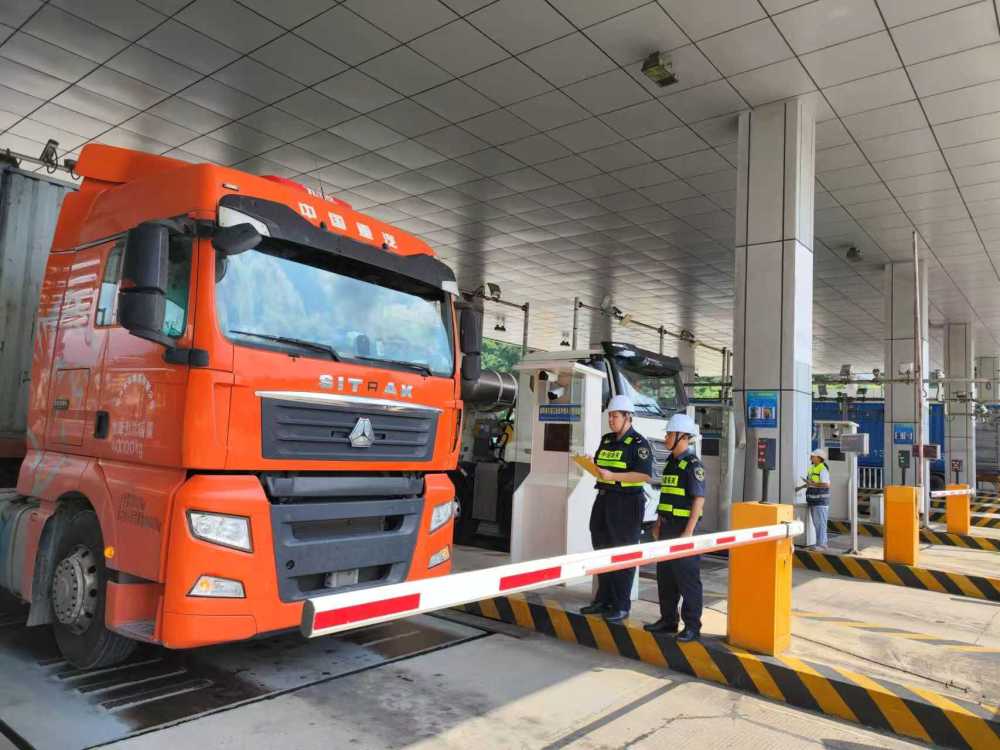
广西友谊关口岸海关监管进出境车辆突破百万辆
Xin Hua She· 2025-12-19 03:45
Core Insights - The Friendship Pass customs has achieved a significant milestone by monitoring its one millionth inbound and outbound vehicle in 2023, marking the first time this threshold has been crossed in a single year [1] - The total value of goods monitored by the Friendship Pass customs reached 545.17 billion yuan in the first eleven months of the year, reflecting a year-on-year increase of 28.6% [1] Group 1 - The Friendship Pass customs is a crucial hub for the Western Land-Sea New Corridor and serves as one of the most convenient land routes to ASEAN countries [1] - The customs has enhanced its inspection capacity by increasing the number of inspection spots from 28 to 76, thereby improving clearance efficiency [2] - Daily vehicle monitoring has exceeded 2,700, representing a growth of over 60% compared to the early stages of the 14th Five-Year Plan [1][2] Group 2 - The customs has implemented various technological advancements, including a smart logistics control platform and intelligent inspection systems, which have reduced cargo waiting times for inspections by 20% [2] - The Friendship Pass customs plays a vital role in the importation of fruits from ASEAN countries, ensuring the safety and freshness of imported products through strict quarantine measures [2] - The customs has adopted facilitation measures such as "two-step declaration" and "advance release" to further reduce waiting times for imported fruits by 20% [2]
今年前11月经满洲里口岸进出境中欧班列4377列
Zhong Guo Jing Ji Wang· 2025-12-17 06:41
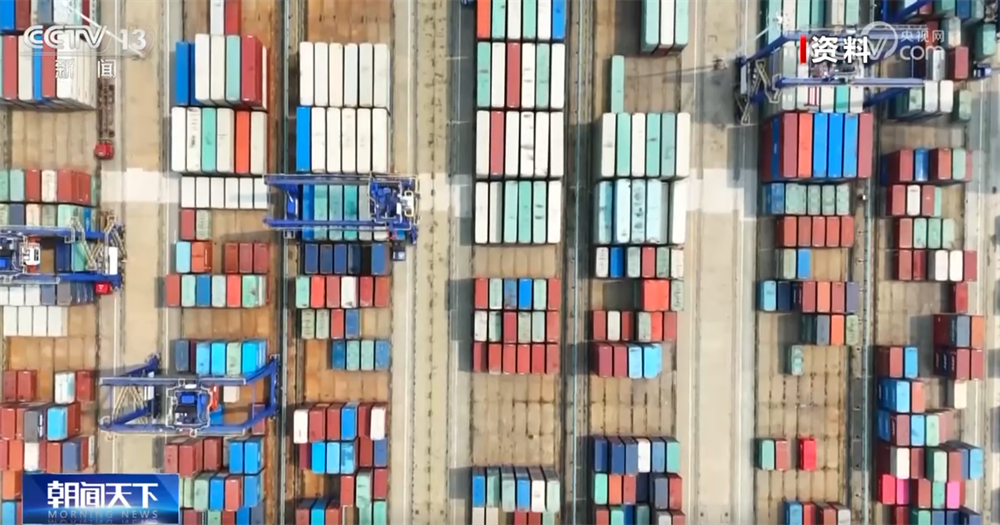
Core Viewpoint - The efficient operation of the China-Europe Railway Express at the Manzhouli Railway Port is a vital support for extending international logistics channels and reflects high-level openness and quality cooperation in building the "Belt and Road" initiative [1][2]. Group 1: Operational Statistics - From January to November this year, the Manzhouli Customs supervised 4,377 China-Europe Railway Express trains, carrying 457,000 TEUs, representing year-on-year increases of 8.4% and 6.2% respectively [1]. - Among these, 2,705 return trains carried 191,000 TEUs, with the number of return trains ranking first in the country for 11 consecutive months [1]. Group 2: Customs Support Measures - Manzhouli Customs has implemented measures to enhance the efficiency of the China-Europe Railway Express, including regular reviews of suggestions from freight agents and import-export companies, and providing one-on-one guidance for compliant declarations [2]. - In the first 11 months of this year, the customs helped companies reduce return freight costs by 15.33 million yuan and exempted tax payments of 1.8745 million yuan [2]. - A dedicated customs window for the China-Europe Railway Express has been established to prioritize the review and release of train manifest data, and the overall operation time of the trains has been shortened by 1 to 2 days [2]. Group 3: Future Developments - Manzhouli Customs plans to continue deepening smart supervision reforms and explore more facilitation measures to optimize the business environment at the port [3]. - The customs aims to inject strength into the international logistics channel by ensuring the smooth passage of the "Steel Silk Road" [3].
“一线放得开、二线管得住” 海南自贸港封关运作准备工作已全面就绪
Yang Shi Wang· 2025-12-16 02:07
Group 1 - Hainan Free Trade Port is set to commence operations in less than two days, with all eight open ports and ten "second-line ports" prepared for closure [1] - Customs has established a smart regulatory platform and risk warning model for precise management of goods passing through "second-line ports" [1] - Over 90,000 foreign trade enterprises in Hainan will be managed based on credit ratings, with lower inspection frequencies for high-certification and "white list" enterprises [1] Group 2 - The new Haikou Port has completed pressure testing, with approximately 80% of outbound goods expected to pass through this port after closure [2] - A total of 29 pressure tests have been conducted to ensure the stability of equipment, data transmission, and inter-departmental coordination [4] - A three-level monitoring command center will be established at Haikou New Port to enhance risk management capabilities [6] Group 3 - Yangpu Port is the largest maritime open port in Hainan, with 35 international shipping routes, and is prepared for the "first-line open" policy [6] - Container throughput at Yangpu Port is projected to increase from 2 million TEUs last year to 3.5 million TEUs this year, with a growth rate of 53.5% from January to November [8] - The Yangpu bonded port area has implemented a management system of "first-line open, second-line controlled," with an average annual growth rate of 97.4% in import and export value during the 14th Five-Year Plan period [8]
海南全岛封关进入冲刺期
21世纪经济报道· 2025-12-09 06:46
Core Viewpoint - The article discusses the upcoming full island closure operation of Hainan Free Trade Port, emphasizing the implementation of a customs supervision system characterized by "one line open, two lines controlled, and free movement within the island" as a significant step towards expanding openness and facilitating trade [1][2]. Group 1: Customs Supervision and Policy Implementation - The customs supervision system will differentiate between regulated and non-regulated goods at the two-line ports, allowing most goods to exit through non-regulated channels while only specific categories like zero-tariff and value-added processing goods will go through regulated channels [2][3]. - A series of customs regulatory measures have been developed to support the high-level opening policies, with the necessary preparations for the closure operation being nearly complete [5][6]. - The customs regulatory framework will extend from the first line to the second line, requiring faster customs clearance and more complex regulatory management [5][12]. Group 2: Infrastructure and Technological Enhancements - Key projects such as the Hainan International Travel Health Center have been completed, and ten "two-line ports" have passed national inspections, ensuring readiness for the closure operation [5][8]. - The customs smart supervision platform has been launched, integrating with existing systems to facilitate a streamlined process of "one declaration, one inspection, one release" for goods [5][18]. - A centralized inspection site at Haikou New Port and South Port has been established to optimize traffic organization and improve passage efficiency, designed to handle 1.72 million vehicle trips and 44 million tons of goods annually [8][10]. Group 3: Credit Management and Risk Control - A credit classification management system has been implemented for over 80,000 foreign trade entities in Hainan, allowing AEO enterprises to benefit from reduced inspection rates and fewer audits [6][13]. - The customs authority has adopted a "smart + credit" approach to enhance trade facilitation, utilizing big data pools and risk assessment models to expedite the clearance of low-risk goods [12][18]. - The customs will implement a "pre-declaration + smart diversion + no-sense inspection" model to streamline the customs process, allowing low-risk goods to pass through quickly while high-risk items undergo more thorough checks [12][18]. Group 4: Final Preparations and Testing - Various departments are conducting comprehensive testing and drills to ensure smooth operations ahead of the full closure, focusing on optimizing processes and identifying potential issues [9][10]. - The customs has engaged local enterprises in pressure testing to enhance operational efficiency and ensure readiness for the closure [13][19]. - The article highlights the urgency and responsibility felt by customs officials to establish a first-class customs supervision system that aligns with the Hainan Free Trade Port's objectives [13][14].
天津机场海关打造进境快件通关“快车道”
Sou Hu Cai Jing· 2025-12-04 10:41
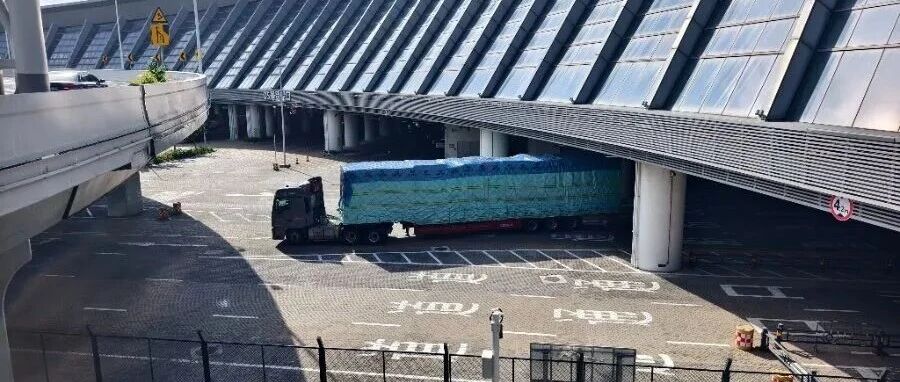
Core Insights - The globalization of online shopping has led to a significant increase in cross-border e-commerce, with approximately 3.2 million packages passing through Tianjin Airport Customs annually since the start of the 14th Five-Year Plan, enhancing the quality of life for consumers [1] Group 1: Customs and Logistics Innovations - Tianjin Binhai Airport Customs has implemented a "smart customs" initiative to improve the efficiency of package clearance, focusing on the integration of customs supervision processes with logistics [2] - A new rapid clearance model has been developed, which includes "pre-auxiliary declaration + electronic tax collection," enhancing the accuracy and efficiency of enterprise declarations [2] - The "one-stop direct access" logistics management model has been established, allowing air cargo to bypass secondary regulatory storage, significantly speeding up clearance times and reducing logistics costs [2] Group 2: Real-time Monitoring and Communication - The introduction of a "package visualization monitoring platform" allows customs officials to track real-time package status and optimize inspection routes based on risk assessments [3] - A new SMS notification system has been implemented to inform recipients when their packages are released, with over 4.76 million notifications sent this year [3] Group 3: Advanced Inspection Techniques - A new intelligent inspection model has been created, combining smart imaging and manual review to enhance both clearance efficiency and regulatory effectiveness [5] - The use of CT machines and intelligent imaging has improved the detection of high-risk packages, leading to successful interceptions of prohibited items such as drugs and controlled weapons [5]
建强通道,陕西开拓与中亚合作新天地
Shan Xi Ri Bao· 2025-11-23 22:55
Core Insights - In the first ten months of this year, Shaanxi's trade with Central Asia reached 9.44 billion yuan, marking a year-on-year increase of 29.7% [1] - The establishment of logistics hubs and air routes has significantly enhanced trade efficiency and connectivity between Shaanxi and Central Asia [2][5] Trade Performance - Shaanxi's imports and exports to Kazakhstan amounted to 5.32 billion yuan, a year-on-year increase of 130%, accounting for half of Shaanxi's total trade with Central Asia [2] - Major export products from Shaanxi to Central Asia include automobiles, textiles, and agricultural products, with exports valued at 2.12 billion yuan, 390 million yuan, and 290 million yuan respectively [10] Logistics and Infrastructure Development - The logistics hub at the Kazakhstan Xi'an Port has handled over 150,000 tons of goods since its operation began in 2024, marking a historic upgrade in logistics cooperation between China and Kazakhstan [2] - The opening of the T5 terminal at Xi'an Xianyang International Airport has increased annual flight capacity to 600,000 takeoffs and landings, enhancing the airport's ability to support growing air traffic to Central Asia [6] Digital and Regulatory Innovations - The implementation of a comprehensive digital service platform by Xi'an Customs has improved customs efficiency, reducing overall clearance time by 2 to 3 days [3][4] - Innovative regulatory models have been introduced for the export of specific products, such as wooden doors, allowing for real-time monitoring and expedited clearance processes [7][8] Agricultural Cooperation - Shaanxi has provided advanced apple planting technology to Tajikistan, facilitating the export of 16,000 apple seedlings to support the establishment of a friendship orchard [9] - The successful cultivation of apple seedlings demonstrates the practical cooperation between China and Tajikistan in agriculture [9]