电商快递

Search documents
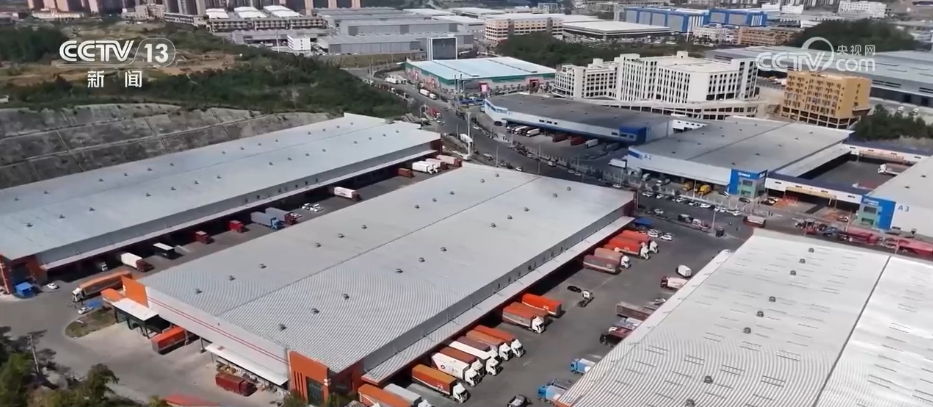
7月份全国物流需求保持扩张 电商快递业务活跃度持续升高
Yang Shi Wang· 2025-08-05 03:18
Core Viewpoint - The logistics industry in China showed continued expansion in July, despite adverse weather conditions, with a logistics prosperity index of 50.5%, indicating a slight slowdown in growth [3][9]. Logistics Industry Performance - The logistics prosperity index for July was 50.5%, down 0.3 percentage points from the previous month, but still within the expansion range [3]. - E-commerce and express delivery sectors remained robust, with a business volume index of 69.3%, indicating high activity levels [5]. - The air transport sector saw a business volume index of 52.8%, up 0.8 percentage points from June, while road and rail transport also experienced slight recoveries [5]. Regional Analysis - The central and western regions of China had business volume indices above the national average, with notable growth in e-commerce and air logistics [8]. - New order indices for logistics in July were 52.5%, reflecting a slight increase, with eastern and western regions continuing to show expansion [11]. Market Demand and Pricing - The logistics new order index increased, indicating a recovery in market demand, while service prices showed a slight upward trend [9][13]. - The logistics service price index rose slightly, and the main business profit index for logistics companies increased by 0.1 percentage points [13]. Investment Trends - Fixed asset investment in the logistics sector has been on the rise, with the investment completion index at 54.9%, indicating ongoing infrastructure development [15]. - The business activity expectation index for July was 55.6%, suggesting strong market confidence, particularly in air transport and express delivery sectors [15]. International Air Cargo Development - In July, 20 new international air cargo routes were opened, enhancing China's air cargo network, with a total of 137 new routes established this year [16].

中国是一个显而易见被低估了的服务消费大国!|东哥笔记
Sou Hu Cai Jing· 2025-07-29 13:05
Core Insights - The article argues that China is significantly undervalued as a service consumption powerhouse, with a notable disparity in service pricing compared to the United States [2][13] Group 1: Consumption Comparison - In the first half of 2025, the retail sales of consumer goods in the U.S. reached $420.15 billion, while China's was $341.68 billion, making China's figure 81.32% of the U.S. total [3] - The U.S. service consumption total is projected to reach $13.6 trillion in 2024, accounting for 69% of total consumption and 67% of GDP [4] - China's service consumption total is only $2.15 trillion, representing 46% of total consumption and 39%-40% of GDP, indicating a significant gap in service consumption scale [4] Group 2: Sector-Specific Analysis - The healthcare sector shows the most pronounced difference, with U.S. per capita healthcare spending at $9,900 compared to China's $350, a 28-fold difference despite similar life expectancy [4][6] - Price comparisons for medical services reveal that U.S. costs are substantially higher, with CT scans costing $5,000 in the U.S. versus $120-$120 in China, a difference of 90-233 times [5] - In the e-commerce sector, China's express delivery service prices are only one-seventh of those in the U.S., with 2024 express delivery volume in China reaching 175.08 billion packages, a 21.5% increase [7] Group 3: Dining and Hospitality - In the food delivery sector, China's average order frequency is double that of the U.S., with a per capita annual order volume of 20.7 compared to 12 in the U.S. [8] - The hotel industry in China has expanded significantly, with 348,717 hotels and a total of 21.5 million rooms, compared to approximately 85,000 hotels and 4.43 million rooms in the U.S. [11][12] - Average daily rates (ADR) for hotels in China are approximately $40, while in the U.S. they are around $165, indicating a substantial price difference [12] Group 4: Overall Consumption Trends - The article concludes that the perception of Chinese consumers as not enjoying services is misleading; rather, the low pricing of services in China contributes to the underestimation of its service consumption potential [13]

华泰证券今日早参-20250708
HTSC· 2025-07-08 01:43
Key Insights - The report highlights a recovery in the real estate market, with new home sales showing slight improvement while the second-hand home market remains subdued. Price stabilization is anticipated, with land premium rates at low levels [2][4] - The fixed income market is expected to remain strong, particularly in credit bonds, with a focus on medium to high-grade industrial bonds and city investment bonds for investment opportunities [3][5] - The international fertilizer prices have risen significantly, driven by increased global planting areas and limited new production capacity, benefiting domestic leading companies in the fertilizer sector [4] - The transportation sector is experiencing a mixed performance, with passenger transport profitability improving due to strong travel demand, while freight transport shows divergence in profitability across different segments [5][6] - The automotive industry is entering a phase of consolidation, with a focus on key players in the humanoid robot market, as technological advancements continue to drive market confidence [6][7] - The communication sector is projected to see a 7% year-on-year increase in net profit for the second quarter, with strong performance expected from telecom operators and the optical communication segment [8] Fixed Income - The credit bond market is expected to continue its upward trend, with a focus on long-term investments and opportunities in high-quality city investment bonds [3] - Investors are advised to consider extending duration in their portfolios and to look for wave opportunities in the credit market [3] Fertilizer Industry - International fertilizer prices have increased by 42% for urea, 24% for diammonium phosphate, and 23% for potash since the beginning of the year, while domestic prices show a mixed trend [4] - The report recommends companies like Hualu Hengsheng and Xingfa Group as beneficiaries of the improving fertilizer demand and profitability [4] Transportation Sector - The second quarter is expected to show improved profitability in passenger transport, particularly in aviation and railways, driven by strong travel demand [5] - Freight transport profitability is mixed, with some segments experiencing growth while others face challenges due to competition and demand fluctuations [5] Automotive Industry - The humanoid robot market is shifting towards a more competitive landscape, with a focus on companies that have strong supply chain orders and innovative technology [6] - The report suggests that the market will increasingly favor companies with significant advancements in technology and production capabilities [6] Communication Sector - The communication sector is expected to see a 7% increase in net profit, with strong growth in the optical communication and IDC segments [8] - The report highlights the potential for continued expansion in the communication industry, driven by domestic and international demand [8]


广发证券 新消费主义研究
2025-03-18 14:57
Summary of Key Points from Conference Call Industry Overview - The conference call primarily discusses the **apparel and home textile industry** in China, with a focus on retail performance and emerging trends in consumer behavior [2][4][6]. Core Insights and Arguments - **Retail Performance**: In January-February 2025, retail sales of clothing, shoes, and textiles from key enterprises increased by **3.3% year-on-year**, showing improvement compared to declines of **4.5%** in November 2024 and **0.3%** in December 2024. This indicates a recovery in the apparel and home textile consumption [2][3]. - **Online vs. Offline Sales**: Offline retail is outperforming online sales, suggesting a shift in consumer preference towards physical shopping experiences [2]. - **Children's Apparel Market**: The introduction of child-rearing subsidies in Hohhot is expected to positively impact the children's clothing market, with approximately **33 provinces and cities** implementing similar policies. In 2021, clothing and footwear accounted for **26%** of the maternal and infant consumption market, indicating significant growth potential in children's apparel [6]. - **Discount Retail Sector**: The discount retail sector is thriving, with strategic partnerships, such as that between **Hailan Home** and **JD.com**, expected to drive growth. The government’s consumer stimulus policies are also beneficial for the apparel and home goods sectors [7][9]. - **Investment Recommendations**: Companies like **Semir Apparel**, which leads in the children's clothing market, are recommended due to their strong brand positioning and expansion strategies. Other notable companies include **Anta Sports**, **Li Ning**, and **361 Degrees**, which have significant children's apparel lines [8]. Emerging Trends - **Demand for UHMWPE**: The demand for **Ultra-High-Molecular-Weight Polyethylene (UHMWPE)** is projected to grow at approximately **20% annually**, with applications expanding across various sectors. Companies involved in UHMWPE production, such as **Nanshan Zhishang** and **Henghui Security**, are recommended for investment [4][5]. - **Consumer Behavior**: There is a notable trend towards value-for-money products, with consumers increasingly seeking high-quality items at lower prices, particularly in the apparel sector [9]. - **Social Consumption Trends**: The total retail sales of consumer goods in January-February 2025 grew by about **4% year-on-year**, indicating a stabilization in consumer spending [2][10]. Additional Important Insights - **Market Dynamics**: The apparel and home textile industry is expected to see a gradual acceleration in performance due to low base effects from previous years, despite potential fluctuations in end-demand [4]. - **Investment Strategy**: The focus should be on companies that can adapt to changing consumer preferences, particularly those that emphasize quality and affordability. The potential for growth in the children's apparel segment is significant, driven by demographic policies and changing consumer habits [6][8]. - **Discount Retail Viability**: The discount retail model is positioned to thrive in economic downturns, as consumers become more price-sensitive. This sector is expected to benefit from existing inventory pressures among apparel brands [9]. This summary encapsulates the key points discussed in the conference call, highlighting the current state and future outlook of the apparel and home textile industry in China.