
考古研究

Search documents
沉睡2200年的“地下粮仓”重见天日
Qi Lu Wan Bao· 2025-12-13 10:19
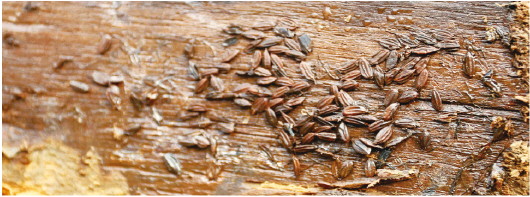
Core Insights - The discovery of well-preserved rice remains in a 2200-year-old tomb in Hubei's Yunmeng Zhengjiahu site represents the earliest and largest instance of grain burial in China, providing insights into ancient agricultural practices and beliefs [2][3] Archaeological Findings - Nearly 100,000 grains of rice from the Warring States period were uncovered, indicating a long-standing tradition of rice cultivation in the Jianghan Plain, dating back to the late Warring States period [3] - The tomb contained not only rice but also remains of various plants such as chestnuts, melons, and jujubes, reflecting the dietary preferences and biodiversity of the region during that era [3] Preservation Techniques - The rice grains were preserved in a waterlogged environment, which acted as a natural preservative, preventing oxidation and damage [5] - Scientific analysis, including carbon isotope studies, is being conducted to trace the irrigation sources and evolutionary paths of the rice varieties found [5] Cultural Significance - The intentional processing of some rice grains before burial suggests a symbolic role in ancient rituals, possibly representing a connection between the living and the afterlife [5] - The findings contribute to understanding the agricultural history and cultural practices of the Warring States period, highlighting the importance of grains in funerary customs [2][5] Broader Implications - The discovery of ancient seeds, like those from Yunmeng, emphasizes the resilience of life and the potential for ancient genetic traits to inform modern agricultural practices [6][8] - The preservation of ancient seeds serves as a vital resource for studying the origins of agriculture and the exchange of civilizations, underscoring the need for biodiversity conservation in agriculture [9]

“陶瓷是我们了解历史的载体”(赓续历史文脉)
Ren Min Ri Bao· 2025-12-01 22:11
Core Insights - The article highlights the significant contributions of Jiang Jianxin to the study and preservation of Jingdezhen's imperial kiln history and Chinese ceramic culture over the past 40 years [2][3][4]. Group 1: Historical Significance - Jingdezhen's imperial kiln, established in 1369, is noted as one of the longest-running and largest official kilns in China, producing over 90% of the ceramics currently housed in the Forbidden City [4]. - The discovery of numerous ceramic fragments during urban construction in 1979 led to extensive archaeological efforts, revealing that many of these fragments were from imperial kiln products that were destroyed to maintain quality control [3][4]. Group 2: Research and Restoration Efforts - Jiang Jianxin's team successfully reconstructed six Ming Dynasty duck-shaped incense burners from over 60 selected fragments, showcasing the importance of ceramics as historical artifacts [6]. - The collaboration between the Jingdezhen Imperial Kiln Museum and the Palace Museum resulted in the restoration of these artifacts, emphasizing the integration of archaeological findings with historical literature [6][7]. Group 3: Cultural Exchange and Education - Jiang Jianxin organized numerous exhibitions, including a comparative exhibition of Ming Dynasty imperial ceramics at the Palace Museum, which attracted scholars and collectors, enhancing the understanding of ceramic culture [7][8]. - The article discusses the importance of nurturing young scholars in ceramic archaeology, with Jiang Jianxin mentoring students who are now leading research efforts and developing cultural products based on historical artifacts [9][10]. Group 4: Global Influence of Chinese Ceramics - The article notes that Chinese ceramics were not only significant in ancient trade but also served as cultural carriers, influencing pottery production in places like Delft, Netherlands [8]. - Jiang Jianxin's work includes writing a book on the global impact of Chinese export ceramics, highlighting their role in cultural and economic exchanges [10].
【榆林】发现史前至商代石城遗址573座
Shan Xi Ri Bao· 2025-11-13 00:01
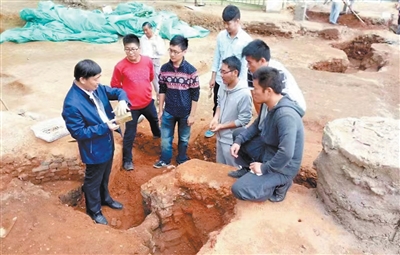
Core Insights - The archaeological investigation in Yulin City has uncovered 573 prehistoric to Shang Dynasty stone city sites, providing new information on the origins, development, and evolution of prehistoric city sites in northern China [1][2] Group 1: Archaeological Findings - The 573 sites are distributed across various districts: 30 in Yuyang District, 64 in Jia County, 89 in Shenmu City, 41 in Fugu County, 39 in Mizhi County, 63 in Hengshan District, 78 in Suide County, 73 in Qingjian County, 69 in Zizhou County, 26 in Wubao County, and 1 in Jingbian County [1] - Yulin City is identified as the core area for the distribution of prehistoric stone cities among the four provinces (Shaanxi, Shanxi, Inner Mongolia, and Hebei), with the largest and highest specification stone cities located here [1] Group 2: Cultural and Historical Context - The stone city settlements in Yulin date from the late Yangshao period to the end of the Shang Dynasty, approximately from 2800 BC to 1000 BC, lasting around 1800 years [1] - The layout of the stone city settlements includes various types such as single city circles, "parallel" multiple city circles, "serial" multiple city circles, and "nested" multiple city circles, indicating a progression from small to large settlement sizes and from simple to complex spatial layouts [2] - The emergence of these stone cities is believed to be influenced by cultural interactions from the Yan-Liao region, marking a significant cultural shift and the establishment of a new cultural center in the Loess Plateau during the late Yangshao to Longshan periods [2] Group 3: Future Implications - The findings from this investigation will provide crucial information for the application of the Shimao site for World Heritage status and the protection and utilization of prehistoric stone cities [3]
内蒙古红山文化研究联盟成立
Nei Meng Gu Ri Bao· 2025-11-12 01:24
Core Viewpoint - The Inner Mongolia Hongshan Culture Research Alliance has been established to promote collaborative research and preservation of the Hongshan culture, which is crucial for understanding the formation of China's diverse civilization [1] Group 1: Alliance Objectives - The alliance aims to create an open, collaborative, and efficient platform for research and preservation [1] - Four core missions have been outlined: coordinating protection efforts, deepening joint research, promoting living heritage, and facilitating mutual exchange [1] Group 2: Expert Insights - The Director of the Inner Mongolia Cultural Relics Bureau emphasized the importance of protecting and systematically researching the Hongshan culture to address key academic issues related to its social civilization process [1] - There is a call for enhanced cross-regional collaboration to consolidate resources for the Hongshan culture's application for UNESCO World Heritage status and to articulate its value [1] Group 3: Impact on Cultural Identity - The establishment of the alliance is seen as a means to achieve "co-construction, communication, and sharing" among research forces within the region, supporting deeper and broader development of Hongshan culture studies [1] - This initiative is expected to contribute significantly to the continuity of Chinese cultural heritage, strengthen cultural confidence, and reinforce the sense of community among the Chinese nation [1]
秦始皇祖母陵墓出土的长臂猿为灭绝新物种
Yang Shi Xin Wen· 2025-11-08 03:49
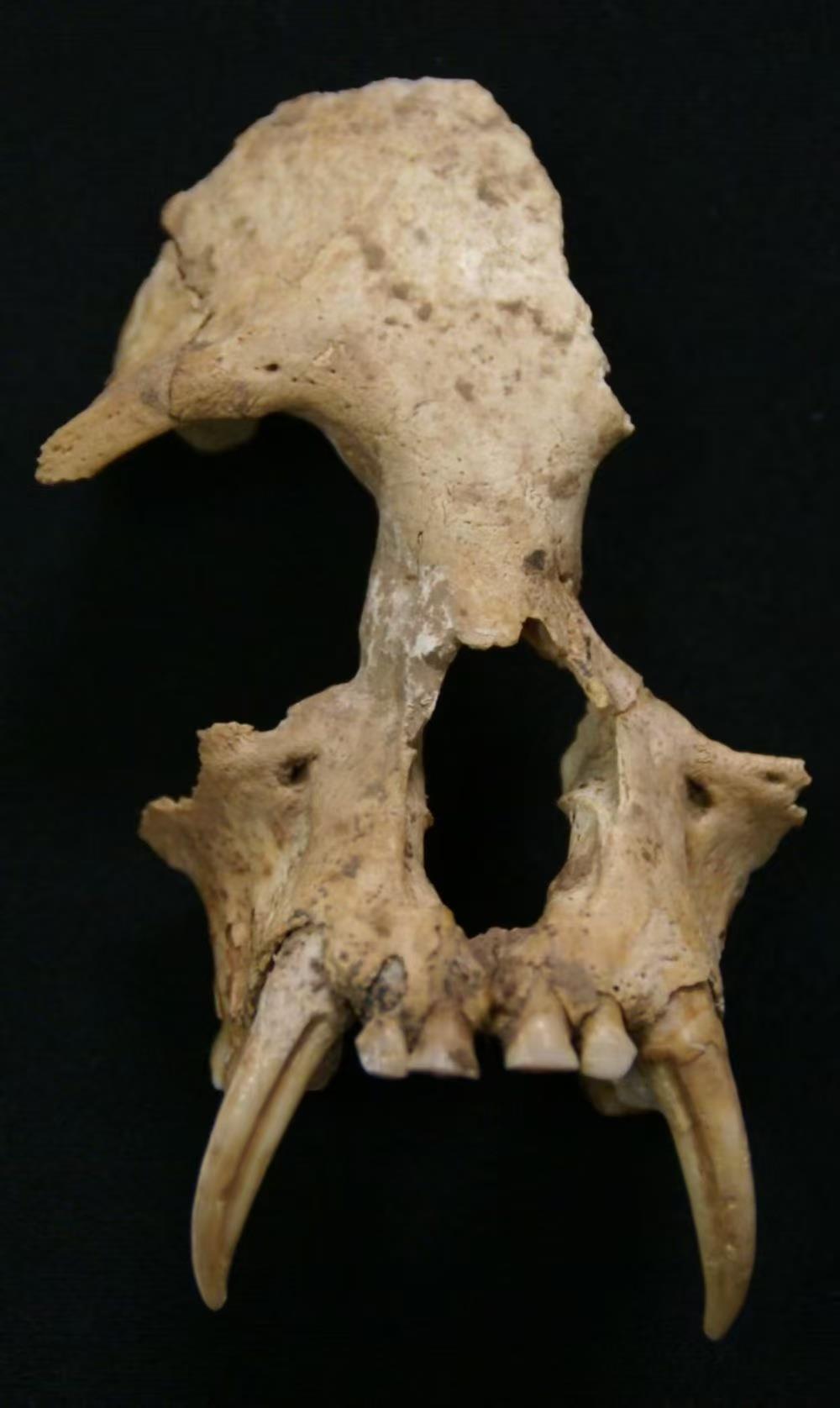
Core Insights - An international team led by Chinese scientists has discovered a new species of gibbon, named "Imperial Gentleman Gibbon," through ancient DNA sequencing technology, published in the journal Cell [1][5]. Group 1: Discovery and Research Findings - The Imperial Gentleman Gibbon was found in the burial site of Empress Xia, the grandmother of Qin Shi Huang, during excavations in 2004, where gibbon remains were uncovered in a burial pit [1][6]. - Initial morphological studies in 2018 suggested it was a new genus and species, but further DNA analysis in 2025 confirmed it as a new species within the Hoolock genus, closely related to the Hainan gibbon [5][8]. - The burial site also contained remains of other animals such as leopard cats, lynxes, Asian black bears, and red-crowned cranes, along with bronze chains and feeding tools, indicating a diverse collection of animals [6][8]. Group 2: Cultural and Historical Context - The findings suggest that Empress Xia had a fondness for rare animals, which were likely kept in royal gardens and buried with her, reflecting ancient beliefs about life and death [8]. - The research also reinforced the classification of the "Tianxing Gibbon" as an independent species and identified the gene "SHH" that regulates the length of gibbons' arms [8].
山东打造文化“两创”新标杆,推动文明交流互鉴——儒风传千载,海岱弦歌新
Da Zhong Ri Bao· 2025-09-27 01:33
Core Insights - The 11th Nishan World Civilization Forum was held in July, showcasing a platform for experts and scholars from over 70 countries to exchange ideas [1] - The 2025 China International Confucius Culture Festival, themed "Great Confucius, Harmony and Coexistence," aims to promote cultural heritage and tell China's story to the world [1] Group 1: Cultural Initiatives - Shandong province is deeply engaged in promoting traditional Chinese culture, integrating cultural tourism, and enhancing public cultural services [1][2] - The establishment of a digital resource platform for ancient texts in Shandong allows for easy access and full-text search capabilities, enhancing research opportunities [2] - Shandong has led significant national projects related to ancient texts, showcasing its rich cultural heritage and commitment to preserving traditional literature [2] Group 2: Educational and Research Development - The collaboration between Confucius and Mencius research institutes and 16 renowned universities has resulted in the enrollment of 2,553 graduate students [3] - The establishment of various overseas research centers and the implementation of programs like the "Nishan Scholar" initiative highlight Shandong's commitment to global dialogue on Confucianism [3] Group 3: Community Engagement and Social Governance - Local initiatives, such as community volunteer programs for the elderly, reflect Shandong's efforts to promote traditional virtues and social harmony [4][5] - The "Lake-based Propaganda" initiative in Weishan County exemplifies innovative community engagement strategies that integrate cultural education into local governance [5] Group 4: Cultural Exchange and Tourism - Shandong is leveraging its rich cultural resources to enhance tourism, with initiatives like the "Hello Jining" campaign promoting cultural exchanges and attracting international visitors [7][8] - The province's cultural achievements are not only revitalizing historical artifacts but also creating new products and services that support the local economy [7][8] Group 5: International Collaboration - The Nishan World Civilization Forum serves as a platform for international dialogue, showcasing Chinese culture and enhancing its global influence [8] - Shandong's initiatives to invite international scholars and promote cultural exchanges aim to strengthen mutual understanding and appreciation of diverse civilizations [8]
江苏无锡发现长江下游史前古城 距今6000年
Yang Shi Xin Wen· 2025-09-26 21:30
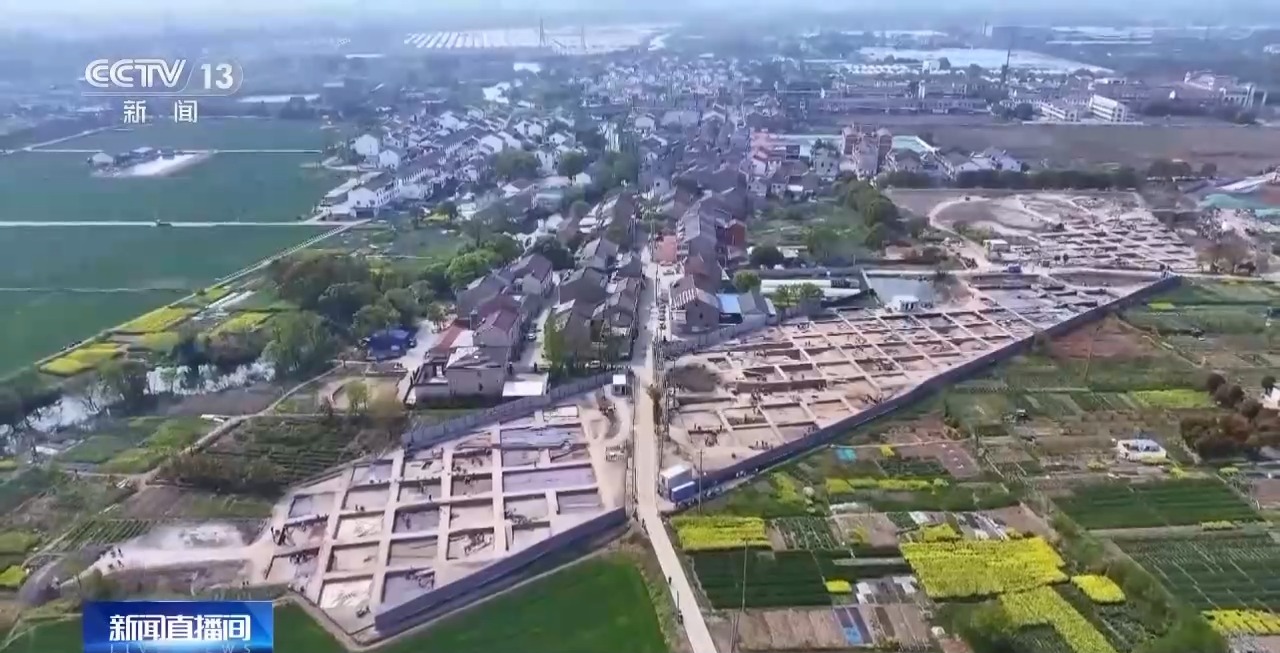
Core Insights - The discovery of an ancient city site from the Majiabang culture, dating back 6000 years, at the Wuxi Doushan site is significant as it represents the earliest known prehistoric city in the lower Yangtze River region [1][4] Archaeological Findings - The Doushan site covers an area of approximately 250,000 square meters and includes remnants from both the Majiabang and Songze cultures, indicating a large and culturally rich prehistoric settlement [1] - Excavation efforts have revealed a total of 194 tombs, 13 house sites, and 12 areas of red burnt earth, along with nearly 1800 artifacts including pottery, jade, and bronze items [6] - The excavation area has reached approximately 16,000 square meters, with findings such as deep ditches and walls suggesting careful planning and design of the Majiabang period city [3][4] Future Plans - The archaeological team plans to develop a medium- to long-term strategy for ongoing investigation and excavation at the Doushan site, aiming to systematically uncover its significance and value [6]
模式创新、国际合作 成都考古“十四五”期间实现多领域突破
Zhong Guo Xin Wen Wang· 2025-09-24 02:22
Core Viewpoint - Chengdu's archaeological efforts during the 14th Five-Year Plan period have been integrated into the city's reform strategy, achieving significant results in various areas such as legal framework, academic research, cultural heritage protection, talent development, and utilization of archaeological resources [1][2]. Legal and Regulatory Framework - Chengdu has improved its legal framework for cultural heritage protection, revising the "Chengdu Cultural Relics Protection Management Regulations" in 2020 and issuing the "Chengdu Major Site Protection Regulations" in 2022, establishing a "prior archaeology, then transfer" system [1]. - In 2024, Chengdu introduced a mechanism for reporting disciplinary violations in cultural heritage protection, enhancing accountability among local governments [1]. Archaeological Practices and Innovations - Chengdu pioneered the "Chengdu Model" for pre-archaeological land transfer, mandating archaeological surveys before construction projects, which has effectively protected underground relics while promoting urban development [1][2]. - Over the past five years, nearly 7,000 archaeological investigations have been conducted, covering over 300,000 acres, leading to significant discoveries and facilitating the commencement of over 200 major projects [2]. Policy Innovations - Chengdu implemented the first "volume ratio" reward policy for archaeological sites, allowing preserved cultural heritage sites to be excluded from construction density calculations, thus reconciling the conflict between heritage protection and urban development [2]. - This policy has been recognized by the Ministry of Natural Resources and the National Cultural Heritage Administration as an important innovation to be promoted nationwide [2]. Research and Collaboration - The Chengdu Archaeological Research Institute has undertaken 27 key research projects funded by national and provincial programs, receiving recognition as a key research base for the protection of wooden lacquer artifacts [3]. - The institute collaborates with domestic and international universities, including Harvard University and Ehime University, on various archaeological research projects [3]. Infrastructure and Public Engagement - Chengdu has established the Chengdu Archaeological Center, equipped with advanced technologies for archaeological excavation, and built a 4,500 square meter archaeological specimen storage facility [3]. - The city has actively promoted the construction of national archaeological parks, with several sites receiving public acclaim, and has conducted over 300 educational outreach activities serving more than 26,000 people [3].
北疆文化研究·第二届裕民文化学术研讨会举行
Nei Meng Gu Ri Bao· 2025-08-27 01:44
Core Insights - The second Yumin Cultural Academic Seminar was held in Huade County, Ulanqab City, focusing on the theme of "Research on the Origins and Innovative Transformation of Yumin Culture" [1] - The seminar aimed to deeply explore the connotations of Yumin culture and seek innovative development paths in the new era [1] Group 1: Seminar Details - The seminar featured 16 experts and scholars, including prominent figures from various institutions, who delivered keynote speeches and engaged in thematic discussions [1] - Topics covered included the origins and exchange studies of Yumin culture, interdisciplinary research, innovative transformation and application, as well as protection, inheritance, and tourism development of Yumin culture [1] Group 2: Archaeological Findings - In 2010, the Yumin site was discovered and excavated in Huade County, showcasing advanced housing construction techniques and a transition from the Paleolithic to Neolithic cultural characteristics [2] - Over 60 Yumin cultural relic sites have been identified in Huade County, with similar cultural remains found in surrounding areas, leading to the establishment of a new archaeological culture named Yumin culture [2] - This culture dates back to approximately 8400 years ago, filling a gap in the early Neolithic archaeological culture in the northern grasslands of China [2]
科技为钥,解密文明瑰宝(编辑手记)
Ren Min Ri Bao· 2025-08-13 22:10
Core Insights - The article highlights the significant advancements in underwater archaeology in China, showcasing the integration of technology in exploring and retrieving historical artifacts from the deep sea [1] - It emphasizes the challenges faced in underwater archaeology, such as complex environments and the preservation of artifacts, which necessitate higher technological standards [1] Summary by Sections Development of Underwater Archaeology - Underwater archaeology in China began in 1987 and has evolved from non-existence to a robust field capable of exploring depths of up to 1,500 meters [1] - The development of marine detection technology and interdisciplinary archaeological capabilities has provided a solid foundation for underwater explorations [1] Technological Innovations - The use of innovative salvage techniques allows for millimeter-level precision in retrieving artifacts, exemplified by the recovery of the ancient Southern Song Dynasty ship "Nanhai No. 1" [1] - Molecular-level biological research techniques have been employed to verify the age of artifacts, such as rice husks found in retrieved porcelain bottles [1] - The deployment of manned submersibles and other advanced technologies facilitates systematic scientific exploration of ancient shipwreck sites [1] Future Prospects - There remain numerous valuable historical relics waiting to be uncovered, indicating ongoing opportunities for archaeological research [1] - The article expresses hope for further technological innovations to enhance the understanding of China's rich and profound civilization [1]