航空航天器制造

Search documents
中国2025年6月经济数据图景:上半年经济稳步增长
Hua Tai Qi Huo· 2025-07-16 05:22
Report Industry Investment Rating No relevant information provided. Core Views - The economy grew steadily in the first half of the year, with GDP up 5.3% year-on-year, showing a mild recovery. The service industry was the core of economic growth, and industrial production continued to rise in June. However, there were risks such as potential pork overcapacity and PPI deflation spreading to the consumer side [4]. - Domestic demand showed resilience, but external uncertainties increased. The economy maintained high growth in the first half, with new productive forces accelerating industrial upgrading. However, trade protectionism and geopolitical risks posed challenges [6]. Summary by Directory Growth: Steady Growth - The GDP in the first half of the year increased by 5.3% year-on-year, with the service industry contributing significantly. In June, industrial production continued to grow, and high-tech and equipment manufacturing industries maintained relatively fast growth [4][11]. Inflation: PPI Under Pressure - In June 2025, PPI decreased by 3.6% year-on-year and 0.4% month-on-month. The decline was mainly due to factors like loose energy and raw material supply, pressure on export - dependent industries, and international input adjustments. Some high - tech and consumer - related sectors showed positive changes [21][22]. Investment: Marginal Slowdown - From January to June 2025, national fixed - asset investment increased by 2.8% year-on-year, with a slowdown in growth. Manufacturing investment was the main driver, and high - tech fields performed well. However, private investment overall declined, excluding real estate [58]. Production: Widening Differentiation - In the first half of 2025, the added value of large - scale industries increased by 6.4% year-on-year. There was significant industry differentiation, with high - tech sectors like the automotive and computer equipment manufacturing leading in capacity utilization, while upstream raw material industries were weak [64]. Consumption: Policy Effectiveness - In June 2025, the consumer market continued to recover, with the total retail sales of consumer goods up 4.8% year-on-year. The "trade - in" policy was effective, and online sales and service consumption showed strong growth [73]. Real Estate: Investment Under Pressure - In the first half of 2025, the real estate market was at the bottoming stage. Real estate development investment decreased by 11.2% year-on-year, and the sales side showed regional differentiation. Policy support was in place, but the market still faced challenges such as investment pressure and regional disparities [81]. Appendix: National Bureau of Statistics Announcement - The national economy showed a stable and positive trend in the first half of the year. GDP grew by 5.3% year-on-year, with stable growth in production and demand, stable employment, increased resident income, and the growth of new driving forces [103].
6月CPI转降为升,后续价格或出现修复性反弹
Hua Xia Shi Bao· 2025-07-10 13:22
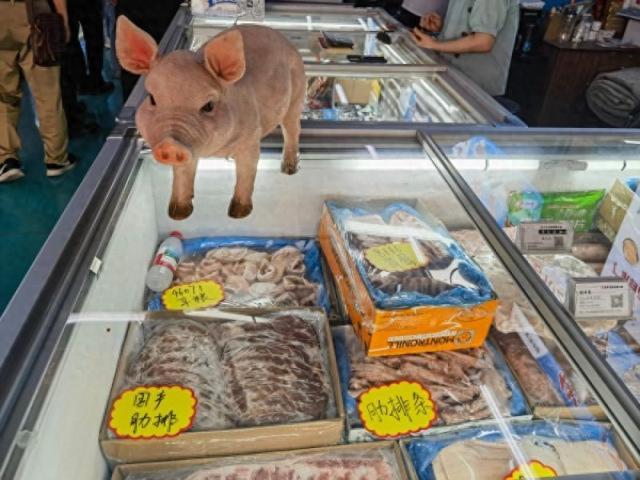
Group 1 - The Consumer Price Index (CPI) increased by 0.1% year-on-year in June, marking the first rise after four consecutive months of decline [2][3] - The Producer Price Index (PPI) decreased by 3.6% year-on-year, indicating ongoing pressure on industrial prices, particularly in coal, electricity, and black metal smelting sectors [2][5] - The marginal improvement in CPI is attributed to the recovery in industrial consumer goods prices, which saw a reduction in the year-on-year decline from 1.0% to 0.5% [3][4] Group 2 - Food prices experienced a year-on-year decline of 0.3%, with beef prices rising by 2.7% after 28 months of continuous decline, while pork prices fell by 8.5% [3][4] - Energy prices showed a slight recovery, with gasoline prices increasing by 0.4% month-on-month, contributing to a 0.1% rise in overall energy prices [4] - The core CPI rose by 0.7% year-on-year, the highest increase in nearly 14 months, indicating a stable rise in service prices [4][5] Group 3 - Industrial prices remain under significant pressure, with coal mining and washing prices dropping by 5.5% and 3.4% respectively, primarily due to ample supply and reduced thermal power demand [5][6] - Export-oriented industries, such as computer communication equipment and textiles, are facing price declines, reflecting weak external demand and trade barriers [5][6] - Some high-tech sectors, including wearable smart devices and aerospace manufacturing, are showing positive price growth, indicating resilience in new momentum industries [6]