
计算机通信设备制造

Search documents
证券交易印花税增长1.1倍!前两个月财政运行平稳开局
证券时报· 2026-03-19 11:34
Core Viewpoint - The fiscal revenue and expenditure data for January and February 2026 indicate a stable start to the fiscal year, with slight growth in revenue and accelerated expenditure [2][9]. Revenue Summary - In the first two months of 2026, the national general public budget revenue reached 4.42 trillion yuan, a year-on-year increase of 0.7% [1]. - Tax revenue increased by 0.1%, while non-tax revenue grew by 3.4% [3]. - The domestic value-added tax rose by 4.7%, while domestic consumption tax, corporate income tax, and individual income tax saw declines of 6.2%, 3.9%, and 6.9% respectively [3]. - The growth in value-added tax is attributed to the growth in industrial services and a narrowing decline in industrial producer prices [6]. - The increase in import value-added tax and consumption tax was 12.9%, and the export value-added tax and consumption tax increased by 9.7% [6]. - Securities transaction stamp duty revenue reached 49.9 billion yuan, reflecting a year-on-year increase of 110%, indicating active trading in the stock market [6]. Expenditure Summary - National general public budget expenditure increased by 3.6% in the first two months of 2026 [9]. - Key expenditure areas such as social security and employment, health care, housing security, and urban-rural community spending saw year-on-year increases of 8.6%, 17.3%, 9%, 7.7%, and 5.4% respectively [10]. - The proportion of spending on medical, education, social security and employment, and housing security has been increasing in the general public budget [10]. - Government bond issuance has accelerated, with a year-on-year increase of 12.2% for national bonds and 8.5% for local government bonds [10].


向新、向绿、向智能——电力数据折射深圳经济高质量发展新动向
Xin Hua She· 2026-02-01 16:44
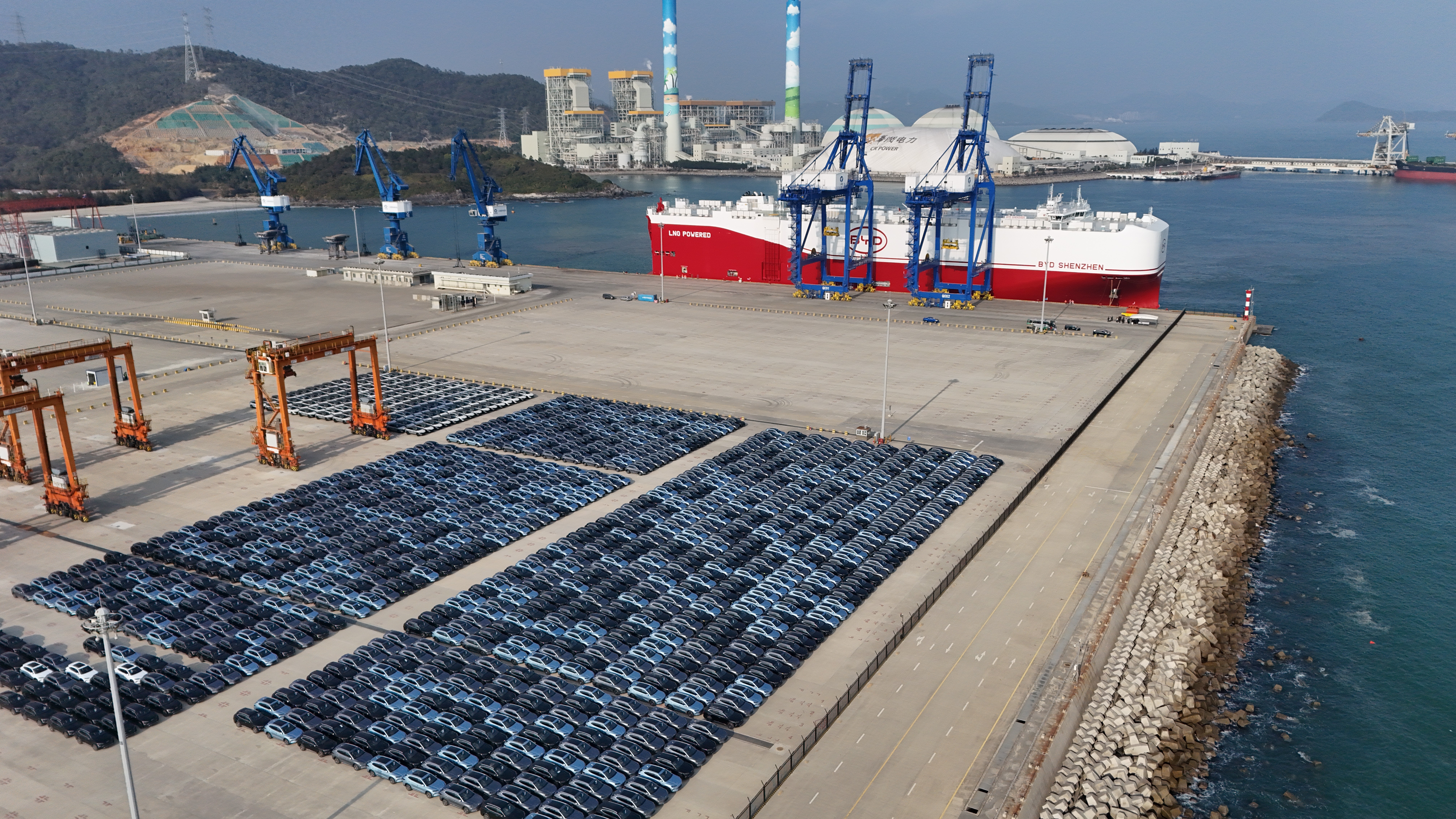
Group 1 - The core viewpoint of the article highlights Shenzhen's significant transformation towards high-quality development, focusing on new, green, and intelligent initiatives, as evidenced by various electricity consumption statistics and the growth of the automotive industry [1][5][6] - In 2025, Shenzhen's automotive manufacturing electricity consumption increased by 23.98%, while traditional high-energy-consuming manufacturing saw a decline of 3.56%. BYD's sales of new energy vehicles reached 4.602 million units, a growth of 7.73%, with pure electric vehicle sales increasing by 27.86% to 2.2567 million units [1][5] - The overall electricity consumption in Shenzhen reached 127.215 billion kilowatt-hours in 2025, marking a growth of 4.71%, with the secondary industry growing by 2.28% and the tertiary industry by 7.24% [5][6] Group 2 - The "20+8" industrial cluster strategy in Shenzhen is flourishing, with electricity consumption in the pharmaceutical manufacturing, computer communication equipment manufacturing, and instrumentation manufacturing sectors growing by 6.57%, 8.87%, and 9.20%, respectively [6] - The construction of over 1,000 supercharging stations has led to a 16.22% increase in electricity consumption for charging stations, reaching 6.942 billion kilowatt-hours, which accounts for nearly 15% of the tertiary industry's electricity consumption [12] - In 2025, the information transmission, software, and IT service sectors saw a 27.07% increase in electricity consumption, with data center electricity consumption reaching 3.454 billion kilowatt-hours, a growth of 14.92% [12][15]

透过发票数据看经济亮点:“硬核”科技实力支撑发展底气
Yang Shi Wang· 2026-02-01 04:34
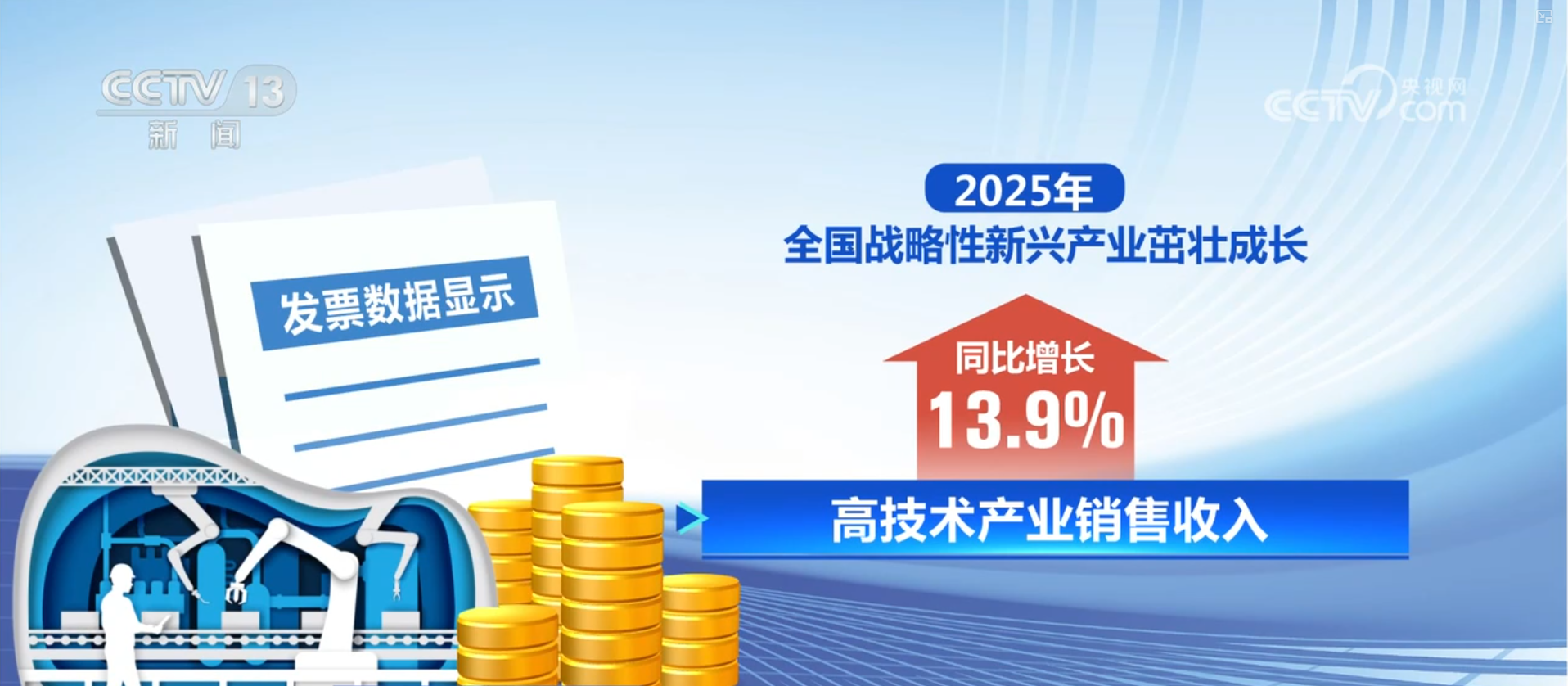
Group 1 - The core viewpoint indicates that by 2025, China's integration of technological innovation and industrial innovation will accelerate, leading to a steady increase in sales revenue from high-tech industries [2] - In 2025, the sales revenue of strategic emerging industries in China is expected to grow by 13.9% year-on-year, with high-tech manufacturing and high-tech services increasing by 10.1% and 16.6% respectively [3] - The optical electronics technology R&D company in Wuhan is experiencing significant growth, with overseas revenue increasing by nearly 200% due to the demand for new generation optical modules used in data transmission for computing centers [6] Group 2 - By 2025, the scale of Hubei's optical electronics information industry is projected to exceed 1 trillion yuan, with over 17,000 enterprises, including two billion-yuan companies and 11 hundred-million-yuan companies [8] - The sales revenue of key high-tech sectors such as lithium-ion battery manufacturing, integrated circuit manufacturing, and biopharmaceutical manufacturing is expected to grow by 25.1%, 19.2%, and 7.7% respectively [10] - The sales revenue of the intelligent equipment manufacturing industry is projected to increase by 28.1% in 2025, with significant growth in smart consumer devices and robotics [14] Group 3 - The number of national high-tech enterprises in Chengdu is expected to grow by 141.3% to 14,700, with high-tech industry revenue exceeding 1.5 trillion yuan [16] - The sales revenue of industrial robot manufacturing in Chengdu is projected to grow by 7.88% year-on-year, supported by tax reductions and incentives that enhance R&D investment confidence [16] - The advanced manufacturing sector, particularly in computer communication equipment and instrumentation manufacturing, is also expected to see revenue growth of 11.5% and 10.3% respectively [18]
2025年财政收支账单出炉,释放哪些信号?
Sou Hu Cai Jing· 2026-01-31 11:45
Group 1 - The core viewpoint of the article highlights the government's initiatives to stimulate consumption in 2026 through various fiscal measures, including a prize invoice program targeting daily consumption scenarios [2][4][5] - In 2025, personal income tax revenue reached 16,187 billion yuan, marking an 11.5% increase, significantly outpacing economic growth, attributed to base effect and increased capital income from a vibrant stock market [2] - The implementation of the "Golden Tax Phase IV" system has enhanced tax collection efficiency through big data, leading to increased tax revenues from platform enterprises [2] Group 2 - Other major tax revenues in 2025 included corporate income tax at 41,304 billion yuan (1% growth), domestic value-added tax at 68,947 billion yuan (3.4% growth), and domestic consumption tax at 16,857 billion yuan (2% growth) [3] - The national budget for state-owned capital operations in 2025 was 8,547 billion yuan, reflecting a 25.8% year-on-year increase, with central government income rising by 73.3% [3] - Local general public budget revenue for 2025 was 122.1 trillion yuan, a 2.4% increase, with 27 out of 31 regions reporting revenue growth compared to 2024 [4]

28.74万亿元支出保障有力 去年近九成地区财政收入实现增长
Sou Hu Cai Jing· 2026-01-30 22:24
Group 1 - In 2025, the national general public budget revenue reached 21.6 trillion yuan, a year-on-year decrease of 1.7%, while expenditure was 28.74 trillion yuan, an increase of 1% [1] - The overall fiscal revenue in China remained stable, with tax revenue steadily rebounding and key areas of expenditure being well-supported [1][2] - Tax revenue grew by 0.8% in 2025, reflecting a steady upward trend in the economy, while non-tax revenue fell by 11.3% due to a high base from 2024 [1][2] Group 2 - Major tax categories such as value-added tax, consumption tax, corporate income tax, and individual income tax grew by 3.4%, 2%, 1%, and 11.5% respectively, accounting for about 81% of total tax revenue [2] - The growth in consumption tax was primarily driven by increases in cigarette and refined oil taxes, while corporate income tax growth was supported by the manufacturing sector [2] - The securities transaction stamp duty reached 203.5 billion yuan, a significant increase of 57.8%, indicating a strong correlation with market activity [2][3] Group 3 - National general public budget expenditure increased by 1%, with social security and employment, technology, education, and health spending rising by 6.7%, 4.8%, 3.2%, and 5.7% respectively, together accounting for about 42% of total expenditure [3] - Fiscal funds showed a clear trend of investing in human capital, with over 30 million infants receiving childcare subsidies [3] - In 2025, the total expenditure on special bonds and other financial instruments reached 6.19 trillion yuan, an increase of 1.69 trillion yuan or 37.6%, enhancing economic development momentum [3][4]
去年证券交易印花税 收入增长57.8%
Zhong Guo Zheng Quan Bao· 2026-01-30 21:12
Group 1 - In 2025, total fiscal revenue is projected to be stable, with a notable increase in securities transaction stamp duty revenue, which is expected to reach 203.5 billion yuan, a growth of 57.8% [1] - The general public budget revenue for 2025 is estimated at 21.6 trillion yuan, reflecting a decrease of 1.7% compared to 2024, while tax revenue is expected to grow by 0.8%, indicating a steady recovery in the economy [1] - Key industries such as equipment manufacturing and modern services are showing strong tax revenue performance, with significant growth in sectors like computer and communication equipment manufacturing (13.5%), electrical machinery (8%), scientific research and technical services (14.3%), and cultural and sports entertainment (7.5%) [1] Group 2 - The total general public budget expenditure for 2025 is projected at 28.74 trillion yuan, an increase of 1% from 2024, with social security and employment expenditures rising by 6.7% and education expenditures by 3.2% [2] - Government fund budget revenue is expected to be 5.77 trillion yuan, a decrease of 7% from 2024, while government fund budget expenditure is projected to be 11.29 trillion yuan, an increase of 11.3%, driven by accelerated use of bond funds [2] - The total expenditure from special bonds and other financial instruments is expected to reach 61.9 billion yuan, an increase of 37.6% from 2024, aimed at enhancing economic development momentum [2] Group 3 - The "zero tariff" policy in Hainan Free Trade Port has significantly boosted imports, with the value of imported goods under this policy reaching 857 million yuan, a year-on-year increase of 243% [3] - The number of new foreign-funded enterprises in Hainan has increased by 23.56%, indicating a growing interest in investment in the region [3] - Duty-free sales in Hainan reached 6.28 billion yuan, with shopping participation increasing significantly, reflecting a 35.9% growth in sales and a 21% increase in the number of shoppers [3]
去年证券交易印花税收入增长57.8%
Zhong Guo Zheng Quan Bao· 2026-01-30 21:01
Group 1 - In 2025, total fiscal revenue is projected to be stable, with a notable increase in securities transaction stamp duty revenue, which is expected to reach 203.5 billion yuan, a growth of 57.8% [1] - The general public budget revenue for 2025 is estimated at 21.6 trillion yuan, a decrease of 1.7% compared to 2024, with tax revenue showing a modest growth of 0.8% [1] - Key industries such as equipment manufacturing and modern services are expected to perform well in terms of tax revenue, with specific sectors like computer communication equipment manufacturing seeing a 13.5% increase [1] Group 2 - Total general public budget expenditure for 2025 is projected at 28.74 trillion yuan, reflecting a growth of 1% from 2024, with significant increases in social security and employment spending by 6.7% [2] - Government fund budget revenue is expected to decline by 7% to 5.77 trillion yuan, while expenditure is set to rise by 11.3% to 11.29 trillion yuan, driven by accelerated use of bond funds [2] - The total expenditure from various bond funds in 2025 is projected to be 61.9 billion yuan, an increase of 37.6% from 2024, aimed at enhancing economic development momentum [2] Group 3 - The "zero tariff" policy in Hainan Free Trade Port has significantly boosted imports, with the value of imported goods under this policy reaching 857 million yuan, a year-on-year increase of 243% [3] - The number of new foreign-funded enterprises in Hainan has increased by 23.56%, indicating a growing interest in investment in the region [3] - Duty-free sales in Hainan reached 6.28 billion yuan, with shopping participation increasing significantly, reflecting a 35.9% growth in sales [3]
“十四五”期间新能源车制造同比增长14.3%
Xin Lang Cai Jing· 2026-01-29 09:25
Group 1 - The core viewpoint of the article highlights the significant growth in various sectors of China's economy during the "14th Five-Year Plan" period, indicating a shift towards high-quality development and innovation [1][2] Group 2 - The sales revenue of the equipment manufacturing industry has an average annual growth rate of 9.1%, with a projected 7.4% year-on-year growth in 2025, accounting for 47.7% of the manufacturing sector, an increase of 4.7 percentage points from 2021 [1] - High-tech industries show an average annual sales revenue growth of 13.9%, with a projected 13.9% year-on-year growth in 2025, and high-tech manufacturing and services expected to grow by 10.1% and 16.6% respectively [1] - The digital economy's core industries have an average annual sales revenue growth of 10.5%, with a projected 9.4% year-on-year growth in 2025, and enterprise procurement of digital technologies growing by 11.2% [2] - The new energy vehicle industry maintains a leading advantage with an average annual sales revenue growth of 49.5%, and a projected 14.3% year-on-year growth in 2025 [2] - The sales revenue from clean energy generation, including wind, solar, and nuclear, has an average annual growth of 13.9%, with a projected 17.3% year-on-year growth in 2025, making up 38.5% of total electricity production revenue, an increase of 6.9 percentage points from 2021 [2] - Inter-provincial trade sales as a percentage of total sales increased from 38.6% in 2021 to 41% in 2025, with 57.6% of tax-related business entities involved in cross-province sales by 2025 [2]
税收数据显示: “十四五”期间新能源车制造销售收入年均增长49.5%
Sou Hu Cai Jing· 2026-01-28 08:21
Core Viewpoint - During the "14th Five-Year Plan" period, China's high-quality development is making solid progress, with significant achievements expected by 2025, particularly in high-end manufacturing, innovative industries, digital economy integration, green transformation, and the acceleration of a unified market [1][2][3]. High-End Manufacturing - The sales revenue of the equipment manufacturing industry has an average annual growth rate of 9.1%, consistently outpacing the average growth of the manufacturing sector. By 2025, sales revenue is expected to grow by 7.4% year-on-year, accounting for 47.7% of the manufacturing sector, an increase of 4.7 percentage points from 2021 [1]. - Advanced manufacturing sectors, such as computer communication equipment and instrument manufacturing, are showing positive growth, with year-on-year increases of 11.5% and 10.3%, respectively. The sales revenue of "big country heavy equipment" like shipbuilding and industrial mother machines has also seen year-on-year growth of 10.6% and 10.5% [1]. Innovative Industries - The sales revenue of high-tech industries has an average annual growth rate of 13.9%, indicating a rapid pace of development. By 2025, high-tech industries are projected to grow by 13.9% year-on-year, with high-tech manufacturing and services increasing by 10.1% and 16.6%, respectively [2]. - The "Artificial Intelligence +" initiative is accelerating, with significant year-on-year growth in smart consumer device manufacturing (32.4%), integrated circuit manufacturing (19.2%), and robotics manufacturing (24%) [2]. Digital Economy Integration - The core industries of the digital economy have an average annual sales revenue growth of 10.5%, with enterprise procurement of digital technologies growing by 11.2%. By 2025, the sales revenue of digital economy core industries is expected to increase by 9.4%, and enterprise procurement of digital technologies is projected to grow by 9.6%, with manufacturing sector procurement increasing by 10.4% [2]. Green Transformation - The new energy vehicle industry continues to strengthen its leading advantage, with an average annual growth rate of 49.5% in manufacturing sales revenue. By 2025, new energy vehicle manufacturing is expected to grow by 14.3% year-on-year, while the clean energy power generation sector is projected to grow by 17.3%, accounting for 38.5% of total electricity production sales revenue, an increase of 6.9 percentage points from 2021 [3]. Unified Market Acceleration - The proportion of inter-provincial trade sales to total sales has increased from 38.6% in 2021 to 41% in 2025. By 2025, the number of tax-related entities involved in cross-province sales is expected to account for 57.6% of total sales entities [3].
前11个月证券交易印花税同比增长70.7%
Xin Lang Cai Jing· 2025-12-17 22:47
Group 1: Fiscal Revenue - From January to November, the national general public budget revenue reached 20.05 trillion yuan, a year-on-year increase of 0.8% [1][3] - Tax revenue continued to grow, with total tax revenue at 16.48 trillion yuan, up 1.8% year-on-year, an increase of 0.1 percentage points compared to January to October [1][3] - Major tax categories showed stable growth: domestic value-added tax and domestic consumption tax increased by 3.9% and 2.5% respectively; corporate income tax rose by 1.7%; personal income tax grew by 11.5%, consistent with the previous period [1][3] Group 2: Sector Performance - The equipment manufacturing and modern service industries showed strong tax performance, with tax revenue from computer and communication equipment manufacturing up 14.1%, electrical machinery and equipment manufacturing up 7.9%, scientific research and technical services up 14.6%, and cultural, sports, and entertainment sectors up 6.3% [1][4] Group 3: Fiscal Expenditure - From January to November, the national general public budget expenditure was 24.85 trillion yuan, a year-on-year increase of 1.4% [2][4] - Key areas of expenditure included social security and employment (up 8.1%), education (up 4.4%), health (up 4.7%), science and technology (up 7.9%), energy conservation and environmental protection (up 6.6%), and culture, tourism, sports, and media (up 1.3%) [2][4] Group 4: Government Fund Budget - Government fund budget revenue was 4.03 trillion yuan, a year-on-year decrease of 4.9% [2][4] - Government fund budget expenditure reached 9.21 trillion yuan, a year-on-year increase of 13.7%, primarily due to accelerated use of bond funds, with 5.15 trillion yuan spent from various bond sources [2][4]