航运等

Search documents
港股红利低波ETF(159569)涨1.50%,成交额4106.38万元
Xin Lang Cai Jing· 2025-09-19 07:13
Core Viewpoint - The Invesco Great Wall National Index Hong Kong Stock Connect Dividend Low Volatility ETF (159569) has shown significant growth in both share volume and fund size since its inception, indicating strong investor interest and market performance [1][2]. Fund Performance - As of September 19, 2024, the ETF closed with a gain of 1.50% and a trading volume of 41.06 million yuan [1]. - The fund was established on August 14, 2024, with a management fee of 0.50% and a custody fee of 0.08% [1]. - The latest share count is 240 million, with a total fund size of 322 million yuan, reflecting a 112.24% increase in shares and a 149.02% increase in size since December 31, 2024 [1]. Liquidity - Over the past 20 trading days, the ETF has accumulated a trading volume of 639 million yuan, averaging 31.97 million yuan per day [1]. - Year-to-date, the ETF has seen a total trading volume of 6.922 billion yuan, with an average daily trading volume of 39.33 million yuan over 176 trading days [1]. Fund Management - The current fund managers are Gong Lili and Wang Yang, with Gong Lili managing since August 29, 2024, achieving a return of 39.00%, while Wang Yang has managed since August 13, 2025, with a return of -1.05% [2]. Top Holdings - The ETF's top holdings include: - Orient Overseas International: 9.65% [3] - China COSCO Shipping: 7.14% [3] - Yancoal Australia: 5.43% [3] - Yanzhou Coal Mining: 4.73% [3] - Seaspan Corporation: 4.36% [3] - China Hongqiao Group: 3.10% [3] - Sinopec: 3.08% [3] - CNOOC: 3.03% [3] - Minsheng Bank: 3.01% [3] - China Everbright Bank: 3.01% [3]
万家国企动力混合A:2025年上半年利润1094.68万元 净值增长率12.09%
Sou Hu Cai Jing· 2025-09-03 15:16
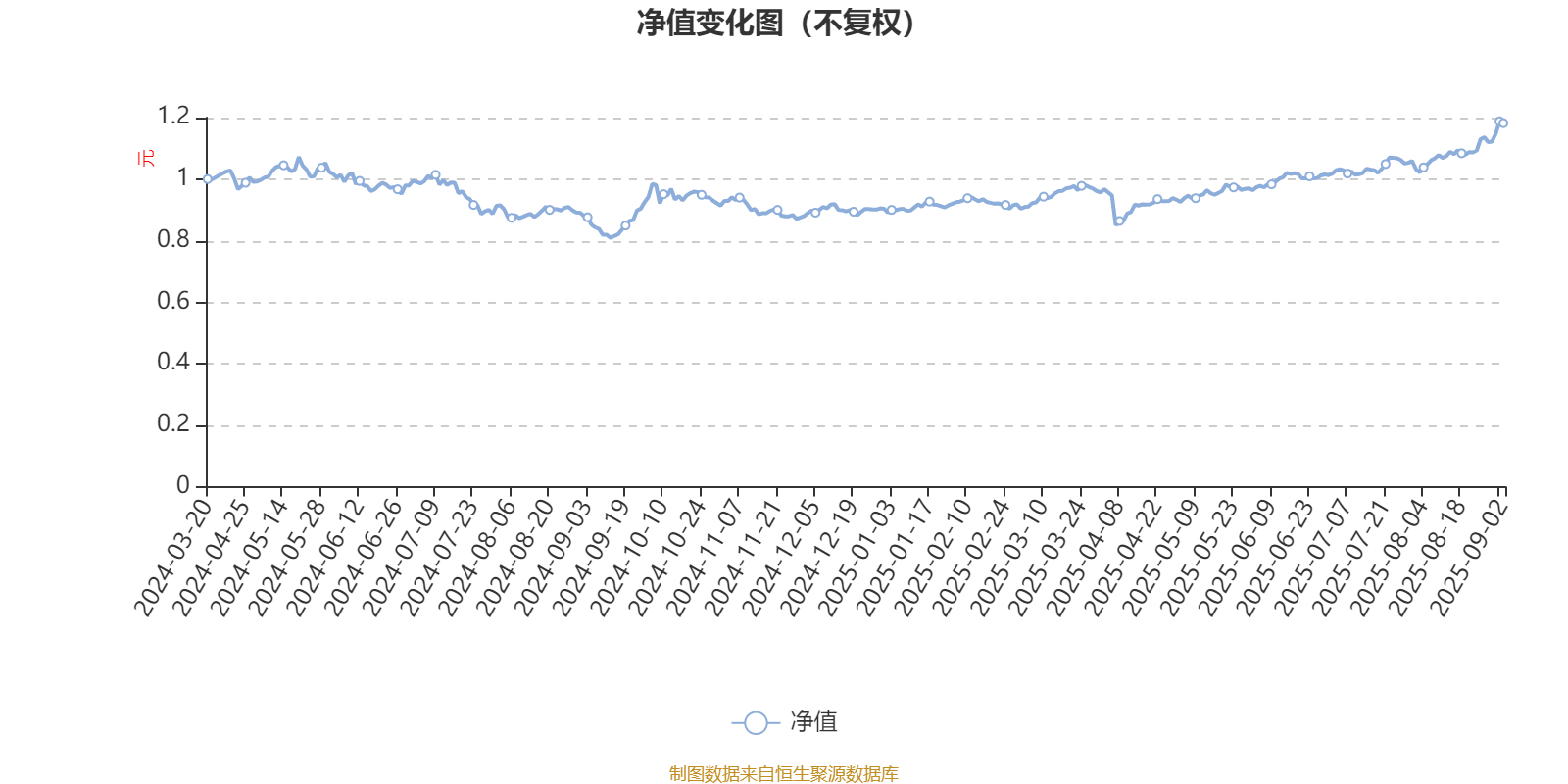
Core Insights - The AI Fund Wanjiaguoqi Power Mixed A (019336) reported a profit of 10.9468 million yuan for the first half of 2025, with a weighted average profit per fund share of 0.1083 yuan. The fund's net value growth rate was 12.09%, and the fund size reached 90.0894 million yuan by the end of the reporting period [3] - The fund is classified as a mixed equity fund, focusing on cyclical stocks, and as of September 2, the unit net value was 1.182 yuan. The fund manager, Ye Yong, oversees six funds, all of which have shown positive returns over the past year [3] - The fund's investment strategy emphasizes sectors with strong demand-side logic, particularly those that are expected to rebound after several years of decline, such as traditional manufacturing leaders [3] Performance Metrics - As of September 2, the fund's one-year cumulative net value growth rate was 34.16%, ranking 32 out of 80 comparable funds. The six-month growth rate was 30.79%, ranking 22 out of 82, and the three-month growth rate was 22.68%, ranking 37 out of 82 [6] - The fund's stock assets have a weighted average price-to-earnings (P/E) ratio of approximately 3.5 times, significantly lower than the comparable average of -1056.23 times. The weighted average price-to-book (P/B) ratio is about 0.41 times, compared to the average of 1.55 times [11] - The fund's weighted average revenue growth rate for the first half of 2025 was 0%, with a weighted average net profit growth rate of 0.13% [17] Investment Strategy - The fund manager plans to focus on sectors such as industrial non-ferrous metals, crude oil, dividends, gold, oil transportation, and certain cyclical leaders to achieve aggressive returns in the second half of the year [3] - The fund has maintained a high stock position, with an average stock position of 92.55% since inception, peaking at 93.19% at the end of the first half of 2025 [32] - The top ten holdings of the fund include companies like Luoyang Molybdenum, Bank of Communications, and China National Offshore Oil Corporation, indicating a concentrated investment strategy [41]

腾讯控股,开启新一轮回购!
证券时报· 2025-08-19 11:38
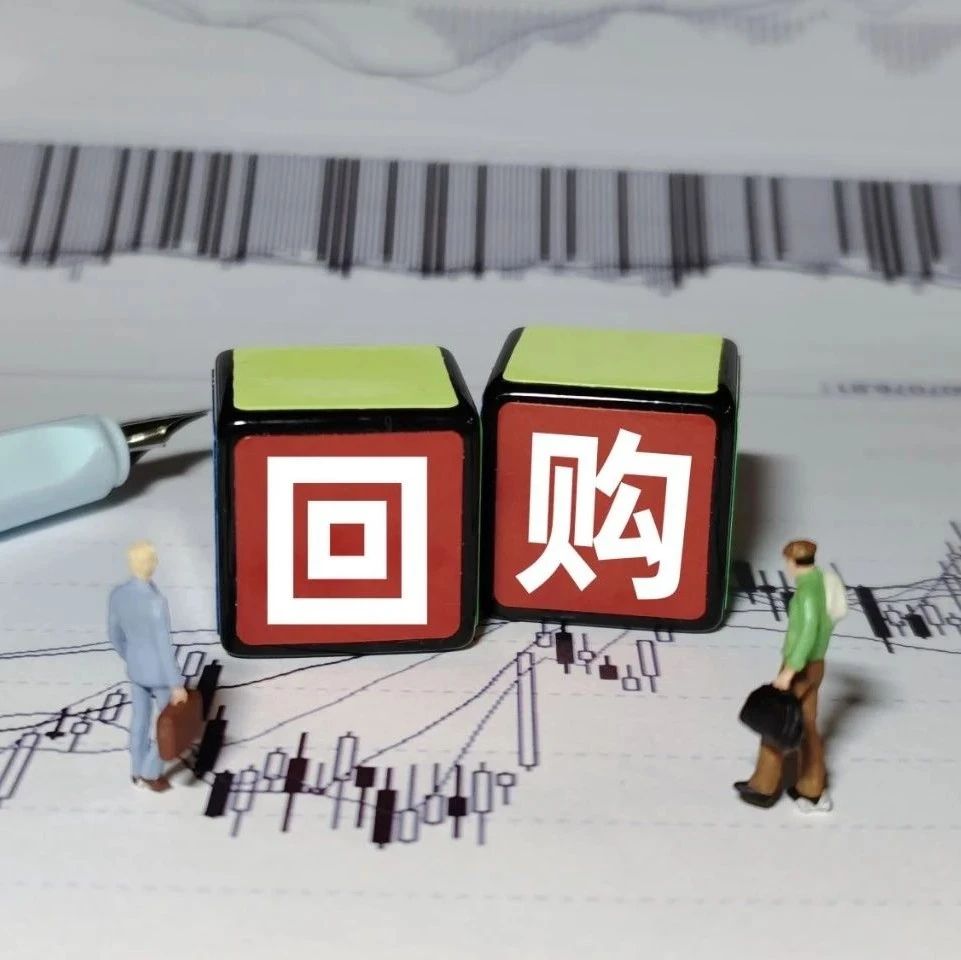
Core Viewpoint - Tencent Holdings has resumed its stock buyback program after the earnings "quiet period," signaling strong confidence in the company's long-term value [1][6]. Buyback Details - On August 18, Tencent Holdings repurchased approximately 931,000 shares at a cost of about 550 million HKD, marking the start of a new buyback round after pausing on July 11 [2][6]. - The total buyback amount for the year has exceeded 40 billion HKD, demonstrating management's commitment to the company's long-term value [4][6]. Market Context - The buyback trend among Hong Kong-listed companies has seen a decrease compared to the same period in 2024, with Tencent's buyback amount significantly lower than last year's [3][9]. - As of August 18, 216 Hong Kong-listed companies have repurchased shares totaling 1,074.81 billion HKD, with Tencent leading at 405.93 billion HKD [9]. Impact of Buybacks - Buybacks are often seen as a signal that companies believe their stock is undervalued, which can help stabilize investor confidence and stock prices [5][10]. - Tencent has reduced its total share capital from approximately 9.629 billion shares in July 2022 to 9.225 billion shares by the end of 2024, which directly boosts earnings per share (EPS) [7]. Market Trends - The reduction in buyback activity is viewed as a rational market response to the recovery of the Hong Kong stock market, where the Hang Seng Index has risen over 25% this year [10]. - As market valuations improve, companies may opt to reduce buybacks to allocate capital more efficiently for other business developments or investment projects [10].
A股重大违法退市案例激增
Jing Ji Guan Cha Bao· 2025-08-12 13:58
Core Viewpoint - The implementation of the new delisting regulations has led to an increase in the number of companies delisted from the A-share market, with a focus on eliminating companies involved in major violations and financial fraud [2][4][8]. Delisting Statistics - As of August 11, 2025, 23 A-share listed companies have been delisted, primarily due to financial issues, trading violations, major illegal activities, and voluntary delisting [2][8]. - In 2025, seven companies, including *ST Gaohong, are suspected of major violations leading to potential delisting, with three already completed [3][4]. Major Violations and Regulatory Actions - *ST Gaohong has been identified for serious financial fraud, with the China Securities Regulatory Commission (CSRC) issuing a notice indicating potential major illegal delisting [5][6]. - The fraudulent activities of *ST Gaohong spanned from 2015 to 2023, with inflated revenues totaling 198.76 billion yuan and profits of 76.23 million yuan [6]. Trends in Delisting - The number of companies delisted for fraud in 2025 has already surpassed the total for 2024, indicating a stricter regulatory environment aimed at cleaning up the market [4][6]. - The new delisting regulations, effective from January 2025, have clarified the signals for various types of delisting, including trading and financial delisting [8]. Active Delisting Cases - Companies like China Heavy Industries and *ST Tianmao are pursuing voluntary delisting, with mechanisms in place to protect minority shareholders through cash options [10][11]. - The proactive delisting of *ST Tianmao includes a buyback offer at a premium price, providing a clear exit strategy for investors [10]. Market Implications - The new delisting regulations are expected to shift the market focus from expansion to quality, allowing more resources for high-quality companies [11].

中字头股票午后拉升,中铁装配涨超10%
news flash· 2025-07-22 05:14
Group 1 - The core viewpoint is that stocks related to state-owned enterprises are experiencing significant gains in the afternoon trading session, indicating a positive market sentiment towards these companies [1] - China Railway Construction (中铁装配, 300374) saw an increase of over 10%, highlighting strong investor interest [1] - Other companies such as China Shipbuilding Emergency (中船应急, 300527), China Xidian (中国西电, 601179), China Coal Energy (中煤能源, 601898), COSCO Shipping Holdings (中远海控, 601919), and China Railway (中国中铁, 601390) also experienced notable price increases [1] Group 2 - There is a notable influx of dark pool funds into these stocks, suggesting increased institutional interest and potential for further price movements [2]

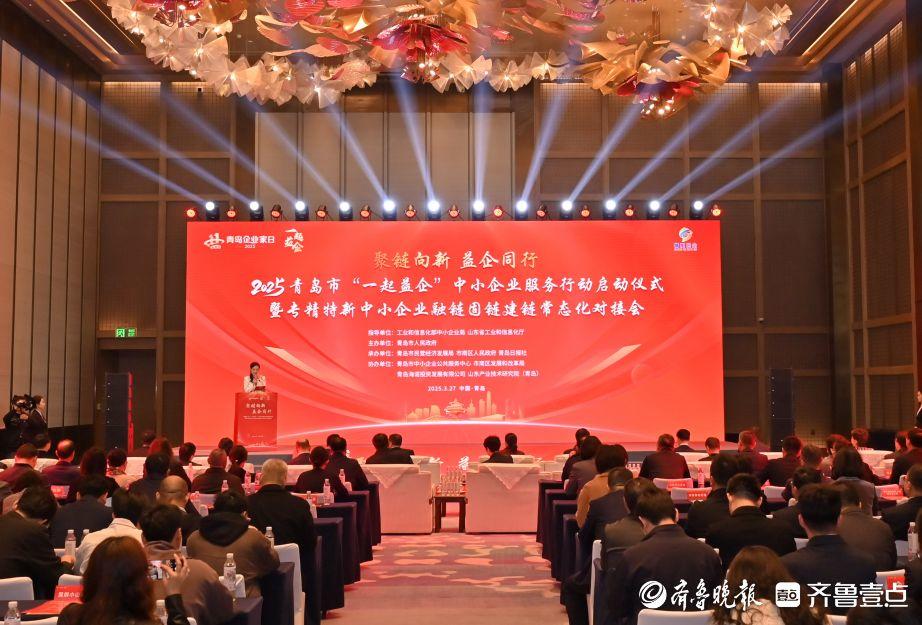
亮成绩!青岛市发布民营和中小企业高质量发展“半年报”
Qi Lu Wan Bao Wang· 2025-06-28 02:51
Core Viewpoint - The city of Qingdao is focusing on enhancing the development of small and medium-sized enterprises (SMEs) and the private economy, aiming to create a supportive business environment and boost confidence among enterprises [1][5]. Group 1: Economic Contributions - In the first five months, the private economy contributed over 60% of the city's investment (62.2%) and tax revenue (60.0%), over 70% of imports and exports (70.8%), over 80% of urban new employment (89.0%), and over 90% of the number of operating entities (98.4%) and enterprises (96.0%) [3]. Group 2: Industry Development - Qingdao has established 3 new provincial-level characteristic industrial clusters, totaling 6 national-level characteristic industrial clusters, ranking first in the province and tied for first among national plan-separated cities [3]. - The city ranks 8th among sub-provincial cities in the 2024 national SME development environment assessment, with the market environment index ranking 3rd nationally, an improvement of 2 positions from the previous year [3]. Group 3: Initiatives and Actions - A special working group for the development of the private economy (SMEs) has been established [7]. - Various events and initiatives have been launched, including media exchange meetings, training for foreign trade enterprises, and campaigns to promote the Private Economy Promotion Law [8][9][10]. - The city is implementing a "service-oriented law enforcement" model to ensure fair and civilized law enforcement while supporting enterprise development [10].
37家港股公司回购 斥资1.79亿港元
Zheng Quan Shi Bao Wang· 2025-05-06 01:49
Summary of Key Points Core Viewpoint - On May 2, 37 Hong Kong-listed companies conducted share buybacks, totaling 23.26 million shares and an aggregate amount of HKD 179 million [1]. Group 1: Buyback Details - The company with the highest buyback amount on May 2 was Green Bamboo Bio-B, which repurchased 1.76 million shares for HKD 39.71 million, with a maximum price of HKD 23.00 and a minimum price of HKD 21.95 [1][2]. - China Hongqiao repurchased 2.79 million shares for HKD 39.39 million, with a maximum price of HKD 14.20 and a minimum price of HKD 14.02, bringing its total buyback amount for the year to HKD 20.74 billion [1][2]. - Swire Pacific A repurchased 0.33 million shares for HKD 22.59 million, with a maximum price of HKD 68.95 and a minimum price of HKD 66.95, totaling HKD 15.26 billion for the year [1][2]. Group 2: Notable Buybacks - AIA Group conducted multiple buybacks throughout the year, with a total buyback amount of HKD 7.69 billion, including a buyback of HKD 16.07 million on May 2 [2]. - The company with the highest number of shares repurchased on May 2 was Ying Group, which bought back 7 million shares [1][2]. - Other notable companies in terms of buyback volume included China Hongqiao and Four Seasons Pharmaceutical, with repurchases of 2.79 million shares and 2.68 million shares, respectively [1][2].