预测市场

Search documents
《福布斯》:30岁以下白手起家亿万富翁数量创新高,原因有三
Sou Hu Cai Jing· 2025-12-25 11:02
Group 1 - The number of self-made billionaires under 30 has reached a historical peak of 13, driven by advancements in artificial intelligence, prediction markets, and online gambling [1][4] - In April, only two entrepreneurs under 30 were listed as billionaires, with Alexandr Wang selling 49% of his AI startup Scale AI for approximately $14 billion [1][3] - Shayne Coplan, founder of the prediction market platform Polymarket, received a $2 billion investment, raising the company's valuation to $9 billion and making him one of the youngest self-made billionaires [3][4] Group 2 - In November and December, seven more entrepreneurs under 30 became billionaires, including Luana Lopes Lara, the youngest self-made female billionaire [3][4] - Despite the rise of young billionaires, they remain an anomaly in the billionaire class, with an average age of 67 among over 3,100 billionaires globally [5]


律师:解读预测市场 Polymarket 推广中的法律风险
Sou Hu Cai Jing· 2025-11-09 10:23
Core Viewpoint - The article provides an in-depth analysis of Polymarket, a prediction market platform, highlighting its differences from traditional casinos and the legal risks associated with promoting it in China [1][2][3]. Group 1: Differences Between Polymarket and Traditional Casinos - Polymarket operates on a decentralized blockchain network (Polygon), unlike traditional casinos that rely on centralized servers and house control [2]. - The mechanism of Polymarket is based on real-world event outcomes executed by smart contracts, whereas traditional casinos manipulate games through human-operated tools, maintaining a centralized management model [2]. - Polymarket serves a social function by aggregating market expectations and reflecting public predictive information, which can aid academic and media research, while traditional casinos primarily focus on entertainment without positive societal contributions [2]. Group 2: Legal Risks of Promoting Polymarket - Promoting Polymarket carries significant legal risks, as it may be classified as gambling under Chinese law, which could lead to severe legal consequences for promoters [3][8]. - The 2010 guidelines from Chinese authorities indicate that acting as an agent for gambling websites and organizing gambling activities online could constitute the crime of operating a casino [8].

当「首席交易员」已不够了 特朗普要亲自「开场子」了?
Hua Er Jie Jian Wen· 2025-10-30 14:19
Core Insights - Trump Media Technology Group is entering the prediction market business through a partnership with Crypto.com, launching the Truth Predict service on its social platform Truth Social, allowing users to bet on various event outcomes [1][2] - The timing of this move is notable, as Trump's trading activities have faced scrutiny due to suspicious stock price movements and insider trading allegations involving him and his family [1][4] - The prediction market is gaining traction on Wall Street, with a record trading volume exceeding $2.3 billion recently, attracting investments from major financial institutions [1][8] Company Developments - Truth Predict will be tested on Truth Social before a full rollout in the U.S. and eventually globally, as the company aims to deepen its ties with the cryptocurrency industry [2][3] - The collaboration with Crypto.com is not the first; earlier this year, they formed a joint venture to accumulate the native token CRO, further solidifying their connection to the crypto sector [3] Industry Trends - The prediction market is evolving from a niche concept to a mainstream financial avenue, with platforms like Polymarket and Kalshi leading the charge, attracting significant venture capital interest [8][9] - Major financial players, including the Chicago Mercantile Exchange, are planning to introduce financial contracts linked to sports events and economic indicators, indicating a shift towards broader acceptance of prediction markets [8][9] - The recent surge in trading volume and valuation of platforms like Polymarket, which received a $2 billion investment from the parent company of the New York Stock Exchange, highlights the growing legitimacy of prediction markets [8][9]


当“首席交易员”已不够了,特朗普要亲自“开场子”了?
Hua Er Jie Jian Wen· 2025-10-30 09:15
Core Insights - Trump is expanding his influence in financial markets by launching a prediction market service called Truth Predict through his media company, in partnership with Crypto.com [1][2] - The timing of this move is notable, given ongoing scrutiny regarding potential insider trading and stock price manipulation involving Trump and his family [1][4] - Prediction markets are gaining traction on Wall Street, with significant investments from traditional financial giants, indicating a shift from a niche concept to mainstream acceptance [9][10] Group 1: Company Developments - Trump Media Technology Group is launching Truth Predict on its social platform Truth Social, allowing users to bet on outcomes in sports, entertainment, politics, and economics [1][2] - The service will undergo beta testing before a full rollout in the U.S. and plans for global expansion once regulatory requirements are met [2] - The partnership with Crypto.com is part of a broader strategy to deepen ties with the cryptocurrency industry, following previous collaborations [2] Group 2: Market Trends - The prediction market sector has seen a surge in trading volume, with over $2.3 billion traded last week, marking a historical high [1][9] - Major players like Polymarket and Kalshi are leading this trend, with Polymarket's valuation nearing $15 billion after receiving a $2 billion investment from the parent company of the New York Stock Exchange [10] - Traditional financial institutions, including the Chicago Mercantile Exchange, are entering the prediction market space, further legitimizing this emerging financial avenue [10] Group 3: Controversies and Scrutiny - Trump's entry into the prediction market comes amid ongoing allegations of insider trading linked to his family and associates, raising concerns about market manipulation [4][8] - Notable incidents include significant stock price movements preceding major announcements, suggesting potential misuse of information [4][5] - The scrutiny extends to other political figures associated with Trump, highlighting a broader concern regarding the integrity of trading practices within this circle [8]

“预测市场龙头”Polymarket即将11月底重返美国,主打体育博彩业务
Sou Hu Cai Jing· 2025-10-28 23:21
Core Viewpoint - Polymarket is preparing to re-enter the U.S. market focusing on sports betting after being expelled for illegal trading, with plans to launch by the end of November [1][4]. Company Summary - Polymarket was expelled from the U.S. market nearly three years ago due to illegal trading and paid a $1.4 million fine to settle with the Commodity Futures Trading Commission (CFTC) [1]. - The company has acquired QCX, which holds a CFTC license for derivatives trading and clearing, as a strategic move to ensure compliance for its return [2]. - The U.S. version of Polymarket's website has set up a waiting list for users to register for updates on the platform's launch [4]. Industry Summary - The return of Polymarket coincides with explosive growth in the prediction market industry, with platforms like Polymarket and Kalshi allowing users to bet on various events [6]. - Kalshi recently won a lawsuit against U.S. regulators, allowing it to trade on "event contracts," significantly advancing the industry [6]. - The industry is attracting attention from major institutions, with the CME Group considering launching its own sports betting contracts after partnering with FanDuel [6]. - Despite positive industry prospects, prediction market companies face a complex regulatory environment and ongoing legal challenges, with some state regulators explicitly prohibiting operations [6][7]. - Kalshi has filed a lawsuit against the New York State Gaming Commission, highlighting the tension between federal jurisdiction and state regulatory power in the sports betting sector [7].
“市场预测龙头”Polymarket即将11月底重返美国,主打体育博彩业务
Hua Er Jie Jian Wen· 2025-10-28 21:01
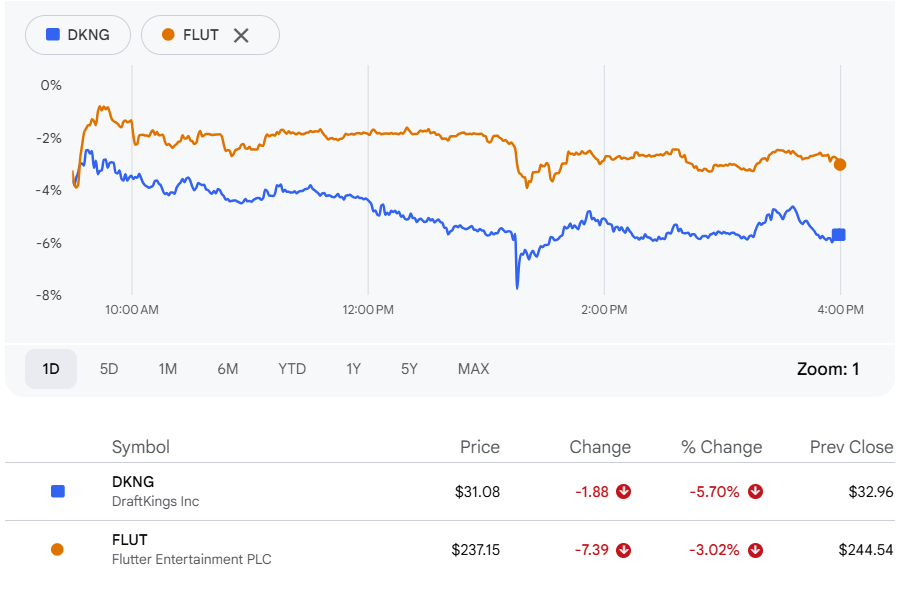
Core Insights - Polymarket is preparing to return to the U.S. market focusing on sports betting after being expelled for illegal trading nearly three years ago [1] - The company plans to launch by the end of November, targeting peak trading volumes during the American football and basketball seasons [1] - Following the news, shares of U.S. gambling companies, including DraftKings and Flutter Entertainment, experienced declines [1][3] Company Strategy - To ensure compliance for its return, Polymarket acquired QCX, a licensed derivatives exchange and clearinghouse, after investigations by the DOJ and CFTC were dropped earlier this year [4] - The U.S. version of Polymarket's website has set up a waiting list for users to register for updates, indicating preparations for the platform's launch [4] Industry Trends - The return of Polymarket coincides with explosive growth in the prediction market industry, with platforms allowing users to bet on various events [6] - Competitor Kalshi recently won a lawsuit allowing it to trade on "event contracts," significantly advancing the industry [6] - Business volumes have surged to record levels as exchanges leverage federal financial licenses to operate in states where sports betting was previously prohibited [7] Regulatory Environment - Despite positive industry prospects, prediction market companies face a complex regulatory landscape and ongoing legal challenges in the U.S. [8] - Some state regulators have explicitly stated that prediction markets cannot operate within their jurisdictions, creating uncertainty for industry expansion [8] - Kalshi has filed a lawsuit against the New York State Gaming Commission, highlighting tensions between federal jurisdiction and state regulatory powers [8]
身价翻倍!美国预测市场明星Kalshi获风投追捧 估值超百亿美元
Zhi Tong Cai Jing· 2025-10-23 03:20
Group 1 - Kalshi is receiving investment offers from venture capital firms, with its valuation expected to exceed $10 billion, up from $5 billion after a recent $300 million funding round [1] - The company has seen significant growth in trading volume following a legal victory that allowed it to launch contracts related to presidential elections [1][5] - Kalshi's annualized trading volume has reached $50 billion recently, indicating strong market activity [5] Group 2 - The platform has opened sports betting across the U.S., which has increased its trading volume and positively impacted competitors like Polymarket [2] - Major sports leagues, including the NHL, are forming partnerships with prediction market platforms, marking a shift in traditional sports betting dynamics [4] - The investment landscape for prediction markets is competitive, with venture capitalists increasingly making bold investment proposals before formal funding processes begin [4]
4个月翻了10倍!“市场预测龙头”Polymarket寻求以150亿美元估值进行融资
Hua Er Jie Jian Wen· 2025-10-23 02:39
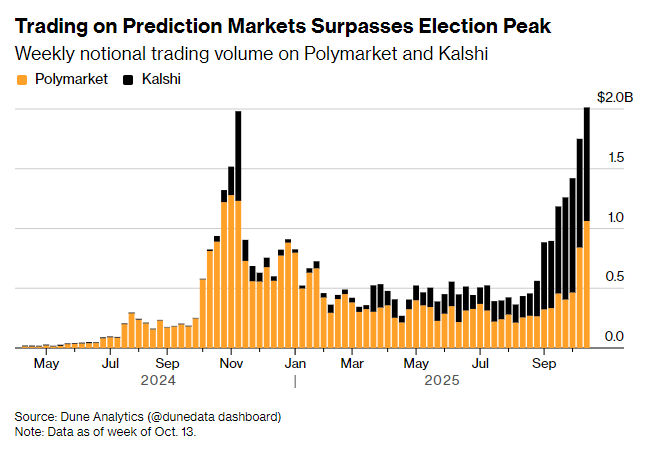
Core Insights - The blockchain prediction market is experiencing explosive valuation growth, with Polymarket seeking to raise funds at a valuation of $12 billion to $15 billion, a more than tenfold increase from four months ago [1][2] - The Intercontinental Exchange (ICE) announced an investment of up to $2 billion in Polymarket at an approximate valuation of $8 billion, excluding new funds [2] - Kalshi, a major competitor, is also seeing a surge in valuation, exceeding $10 billion, reflecting strong investor confidence in the prediction market sector [2][4] Valuation Surge - Polymarket's valuation trajectory is remarkable, rising from $1 billion in June after a funding round led by Founders Fund to a target of $12 billion to $15 billion within four months [2] - The recent ICE deal is a key milestone in this valuation leap, providing both funding and traditional financial market endorsement [2] - Kalshi's valuation has also skyrocketed, doubling to over $10 billion shortly after raising $185 million at a $2 billion valuation in June [2] Trading Volume Increase - Both Polymarket and Kalshi have seen a significant increase in trading volume, surpassing $2 billion in the week ending October 19, marking a new high [3] Wall Street and Sports Betting Involvement - The soaring valuations highlight strong market interest in this rapidly growing sector, particularly as gambling and financial markets converge [4] - Wall Street firms and sports betting giants are forming partnerships with leading prediction market companies, anticipating potential industry disruptions [4] - Polymarket is set to act as a clearinghouse for DraftKings as it enters the prediction market space [4] Sports Industry Engagement - The NHL has announced a multi-year partnership with Kalshi and Polymarket, becoming the first major U.S. sports league to collaborate with these platforms [5] - The sports sector is emerging as a significant growth driver for prediction markets, with Kalshi previously partnering with Robinhood to offer prediction contracts for NFL and college football events [5] - Kalshi's trading volume reached $875 million in August, while Polymarket's monthly trading volume hit $1 billion [5] Regulatory Uncertainty - Despite soaring valuations, the prediction market faces significant regulatory uncertainties [6] - The CFTC has allowed Kalshi to open new markets, but state gambling regulators have raised objections in court [6] - Polymarket's regulatory path has been complex, having previously settled with the CFTC over operating an unregistered derivatives exchange, but has since made strides to re-enter the U.S. market [6]
硅谷这个新风口,顶级VC追着投!
Zheng Quan Shi Bao Wang· 2025-10-20 12:04
Core Insights - Prediction markets are gaining significant attention from Silicon Valley investment firms, with major funding rounds and the involvement of established exchanges indicating a move towards mainstream acceptance [1][6]. Funding and Valuation - Kalshi, a prediction market platform, raised over $300 million in its Series D funding round on October 10, achieving a valuation of $5 billion, up from $2 billion just four months prior [2][3]. - The funding round was led by prominent firms such as Sequoia Capital and a16z, with participation from other notable investors [2]. Company Background and Development - Kalshi was founded in 2018 by Tarek Mansour and Luana Lopes Lara, both of whom have backgrounds in major financial institutions [3][4]. - The platform aims to simplify trading on event outcomes, addressing a gap in the market where investors lacked direct methods to trade on specific events [4]. Regulatory Milestones - Kalshi became the first fully regulated platform in the U.S. to offer legal election trading, overcoming initial regulatory hurdles with the Commodity Futures Trading Commission (CFTC) [4][5]. Market Potential and Growth - Kalshi has seen a 200-fold increase in trading volume over the past year, reaching $50 billion, and has captured over 60% of global prediction market activity [6][7]. - The prediction market is viewed as a potential major asset class, with the ability to directly trade based on real-world events [6][8]. Competitive Landscape - Kalshi's main competitor, Polymarket, recently raised $2 billion, achieving a post-money valuation of $9 billion, and has gained traction during the 2024 U.S. presidential election [6][7]. - The Chicago Mercantile Exchange (CME) is also entering the prediction market space, planning to launch financial contracts linked to sports events and economic indicators [7][8]. Industry Trends and Future Outlook - The simplicity and intuitiveness of prediction markets are seen as key factors for their potential widespread adoption, contrasting with the complexity of traditional financial products [8]. - The growth potential of prediction markets is viewed as limitless, with the possibility of them becoming as large as the biggest financial markets [8].
预测市场网站Kalshi获超3亿美元融资:估值50亿美元
Sou Hu Cai Jing· 2025-10-12 11:16
Core Insights - Kalshi has raised over $300 million in funding, achieving a valuation of $5 billion, with participation from existing investor Sequoia Capital and new investor Andreessen Horowitz [2] - The company's valuation has increased 2.5 times from $2 billion in the last funding round three months ago [2] - Kalshi's annual trading volume is projected to reach $50 billion, significantly higher than the estimated $300 million trading volume for 2024 [2] - Competitor Polymarket has also announced funding, securing up to $2 billion from the Intercontinental Exchange (ICE), with a pre-funding valuation of $8 billion, up from $1 billion two months prior [2]