
食品制造

Search documents
老街新岁人潮涌 海口百年骑楼南洋风催热“年经济”
Zhong Guo Xin Wen Wang· 2026-02-05 00:31
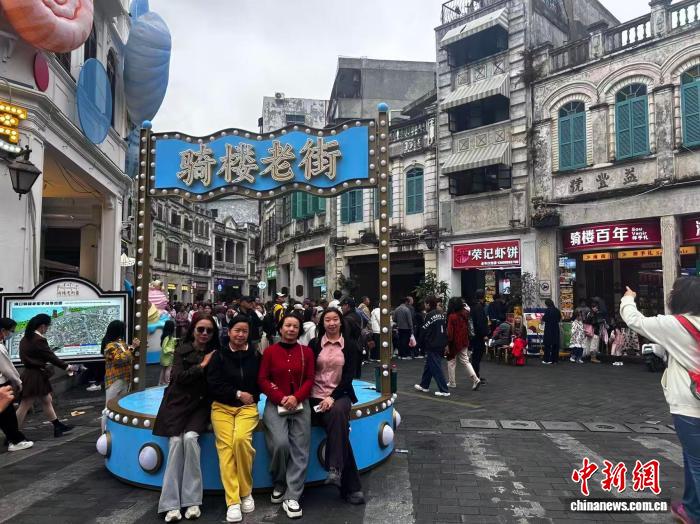
中新网海口2月4日电 题:老街新岁人潮涌 海口百年骑楼南洋风催热"年经济" 中新网记者 符宇群 马年春节临近,年味渐浓,拥有百余年历史、兼具南洋风情的海口骑楼老街迎来旅游热潮。 作为首批"中国历史文化名街",海口骑楼老街的历史可追溯至南宋。近代随着海上贸易与航运的发展, 闯南洋的海南人荣归故里,在德胜沙路、中山路等街区,建起融合中西与南洋风格的骑楼建筑群,成为 侨乡历史与南洋文化交融的鲜活见证。 春节临近,骑楼老街早已被新春喜庆氛围包裹。红灯笼、彩灯点缀廊檐街巷,各式"马元素"摆件错落有 致,特色的骑楼建筑与新春景致交相辉映,人声鼎沸、暖意融融。 2月1日,海口骑楼老街前来参观游览的市民游客络绎不绝。记者 符宇群 摄 穿行其间,热闹集市与时尚新潮感扑面而来,老街上创意美食、原创手作、网红茶饮、潮流文创一应俱 全,海南黄花梨、沉香、黎锦等特色工艺品,与鸡屎藤、清补凉、辣汤饭等本土美食相映成趣,南洋风 情与本土烟火气在此交融。 南洋美食成为老街吸引游客的一大亮点。在榴莲摊铺前,金黄饱满的猫山王、果肉莹白的竹脚、果香醇 厚的苏丹王等多款马来西亚榴莲一字排开,香气扑鼻。摊铺负责人、马来西亚侨胞文邦娇介绍,这些榴 莲均 ...

(新春走基层)老街新岁人潮涌 海口百年骑楼南洋风催热“年经济”
Zhong Guo Xin Wen Wang· 2026-02-04 08:47
(新春走基层)老街新岁人潮涌 海口百年骑楼南洋风催热"年经济" 中新网海口2月4日电 题:老街新岁人潮涌 海口百年骑楼南洋风催热"年经济" "这两天日均客流量能达到三四千人,场地一直很火爆。"食集负责人刘坤表示,骑楼老街既有深厚的历 史文化底蕴,又有老海口的生活气息,逛骑楼、赏建筑、吃小吃的一站式体验,让这里成为海口新春打 卡必选地。 2月1日,游客在海口骑楼老街品味不同品种的马来西亚榴莲。记者 符宇群 摄 中新网记者 符宇群 马年春节临近,年味渐浓,拥有百余年历史、兼具南洋风情的海口骑楼老街迎来旅游热潮。 作为首批"中国历史文化名街",海口骑楼老街的历史可追溯至南宋。近代随着海上贸易与航运的发展, 闯南洋的海南人荣归故里,在德胜沙路、中山路等街区,建起融合中西与南洋风格的骑楼建筑群,成为 侨乡历史与南洋文化交融的鲜活见证。 春节临近,骑楼老街早已被新春喜庆氛围包裹。红灯笼、彩灯点缀廊檐街巷,各式"马元素"摆件错落有 致,特色的骑楼建筑与新春景致交相辉映,人声鼎沸、暖意融融。 穿行其间,热闹集市与时尚新潮感扑面而来,老街上创意美食、原创手作、网红茶饮、潮流文创一应俱 全,海南黄花梨、沉香、黎锦等特色工艺品,与 ...
2025年我国规上轻工业增加值同比增长5.3%
Xin Hua Wang· 2026-02-03 12:35
Core Insights - The light industry in China is expected to maintain a stable economic operation in 2025, with a year-on-year growth of 5.3% in added value for large-scale light industry [1] - The light industry accounts for 13% of national industrial assets, contributing to 16.5% of national industrial revenue and 18.8% of profits [1] Group 1: Economic Performance - In 2025, the added value growth rates for certain sectors are projected to exceed 20%, including electric vehicles, batteries, and plastic furniture manufacturing [1] - The agricultural and food processing industries are expected to see added value growth of 5.6% and 5.3% respectively [1] - Among 90 major light industrial products, 35 are expected to see production increases, with electric bicycle production growing by 21.6% and solar cell production by 7.6% [1] Group 2: Domestic Consumption - Retail sales of 11 categories of light industrial goods are projected to reach 86,719 billion yuan, reflecting a year-on-year growth of 7.8% [1] - Specific categories such as home appliances and audio-visual equipment are expected to see retail sales growth of 11%, while furniture sales are projected to grow by 14.6% and cultural office supplies by 17.3% [1] Group 3: Export Performance - Among 22 major export categories in the light industry, 11 are expected to see year-on-year growth in export value [1] - Exports of batteries and battery parts are projected to reach 84.73 billion USD, with a growth of 22.3%, while daily chemical products and light machinery are expected to grow by 10.9% and 11.6% respectively [1] Group 4: Future Outlook - The President of the China Light Industry Federation, Zhang Chonghe, indicates that in 2026, the light industry will continue to show resilience and stable development due to ongoing economic stabilization and consumption promotion policies [2] - The light industry is expected to exhibit overall stability and differentiated growth characteristics, maintaining a medium-speed growth trend [2]
Supplier-retailer talks in France stall as pricing tensions rise
Yahoo Finance· 2026-01-27 09:35
Core Insights - Annual supplier-retailer negotiations in France are facing significant challenges, with pricing disputes dominating discussions in the grocery and food retail sector [1][2] - Despite a joint charter signed in late 2025 aimed at improving negotiation processes, progress has been minimal, and many suppliers are still encountering requests for price reductions [3][4] Group 1: Negotiation Dynamics - The negotiations are crucial for determining purchasing prices and trading terms for the upcoming year, yet many suppliers report a substantial gap between retailer demands and their cost realities [2] - Pact'Alim's findings indicate that most member companies have seen little progress since negotiations began in December, with only a minority of small and medium-sized suppliers securing signed agreements [4] Group 2: Pricing Pressures - The current deadlock reflects ongoing tensions, as retailers aim to limit shelf-price increases while suppliers seek modest price rises to counteract cost inflation [5] - This imbalance is creating uncertainty within the retail supply chain, complicating production planning and cash flow management for suppliers, while retailers struggle with reduced visibility on future pricing [6] Group 3: Regulatory Concerns - The stalled negotiations raise concerns regarding compliance with France's Egalim laws, which are intended to protect agricultural raw material prices and ensure fair value distribution across the food chain [7]
解码山东5.5%GDP增速的底层逻辑
经济观察报· 2026-01-23 14:59
Core Viewpoint - Shandong's GDP growth rate of 5.5% in 2025 reflects substantial economic quality, with significant contributions from the tertiary sector and industrial growth [2][3]. Economic Growth and Structure - In 2025, Shandong's GDP reached 10.3197 trillion yuan, marking it as the third province in China to surpass 10 trillion yuan [2]. - The tertiary sector's contribution to economic growth increased by 0.8 percentage points, accounting for 59.1% of the growth [2]. - The added value of the equipment manufacturing industry grew by 11.4%, with a 1.4 percentage point increase in growth rate compared to the previous year [2][6]. - Consumption growth in Shandong exceeded the national average by 1.4 percentage points [2]. Industrial Development - Shandong is recognized as a key industrial province, with a comprehensive industrial structure and significant contributions to national GDP [3][4]. - The province's industrial economy is projected to grow with a focus on traditional industry optimization, new industry cultivation, and future industry layout [6]. - In 2025, the added value of Shandong's industrial economy is expected to grow by 7.6%, with 36 out of 41 industrial categories showing positive growth [6]. Consumption Dynamics - In 2025, Shandong's total retail sales of consumer goods surpassed 4.2 trillion yuan, ranking third nationally with a growth rate of 5.1% [9]. - Online retail sales in Shandong reached 241.76 billion yuan, growing by 17.4%, significantly higher than the overall retail growth [9]. - The province implemented a consumption boost plan, allocating 50 million yuan to support local governments in issuing consumption vouchers [10]. Future Outlook - Shandong's per capita disposable income is projected to reach 44,180 yuan, with a nominal growth of 5.0% [10]. - The province aims to maintain rapid consumption growth by enhancing income levels and improving living standards [10].

企业获得感是最好的代言
Hai Nan Ri Bao· 2026-01-23 01:58
Core Insights - The Hainan Free Trade Port has successfully implemented core policies such as "zero tariffs" and "low tax rates," which have significantly benefited enterprises, enhancing their confidence and stabilizing expectations for investment in Hainan [1][2] Group 1: Business Environment and Growth - Entrepreneurs shared their experiences at a recent conference, highlighting how policies like "zero tariffs" have reduced costs and attracted talent, leading to innovation and growth [1] - For instance, Oscar Grain and Oil achieved a remarkable increase in output value from 1.08 billion to 6.83 billion within four years, demonstrating the effectiveness of the Free Trade Port policies [1] Group 2: Government Support and Policy Implementation - Government departments are actively optimizing services to address the growth challenges faced by enterprises, which has been positively acknowledged by business representatives [2] - The establishment of a one-stop policy query platform and various initiatives to promote policy implementation have been introduced to enhance the understanding and application of Free Trade Port policies [3] Group 3: Investment Trends and Market Dynamics - Hainan has entered a new phase of reform and opening up, with a significant increase in new business entities, indicating a robust market demand and diverse business landscape [4] - The proportion of new enterprises has risen from 42% before the closure to nearly 80%, reflecting heightened investment enthusiasm and the effectiveness of the Free Trade Port policies [4]
Canada’s front-of-package labelling deadline reaches enforcement stage
Yahoo Finance· 2026-01-22 08:55
Core Points - Canada has introduced a front-of-package nutrition symbol requirement for prepackaged foods high in saturated fat, sugars, or sodium, effective from January 1, 2026, marking a significant regulatory change in food packaging standards [1][3] - The new regulation aims to enhance consumer awareness by making key nutritional information immediately visible through a standardized "high in" symbol on food packaging [1][4] Group 1: Regulatory Impact - The change affects both domestic and imported products sold in Canada, imposing new compliance obligations on food manufacturers, retailers, and packaging suppliers [2] - Under the amendments to Canada's Food and Drug Regulations, most prepackaged foods that meet or exceed specified thresholds for saturated fat, sugars, or sodium must display the front-of-package nutrition symbol [3] Group 2: Symbol Design and Compliance - The front-of-package nutrition symbol will be a black-and-white design featuring a magnifying glass and text indicating the nutrient of concern, facilitating quick identification of high-nutrient foods [4] - The regulations specify strict presentation requirements for the symbol to ensure visibility and clarity across various packaging formats, including bilingual presentation in English and French [6][7] - Compliance teams in packaging and regulatory sectors must integrate these design requirements into their label production workflows to maintain consistency across products [7] Group 3: Exemptions and Enforcement - Certain categories, such as specific raw single-ingredient foods, small packages, and some dairy and produce items, are exempt from the symbol requirement to avoid misleading consumers [5] - Products that do not display the required symbol and meet the nutrient criteria may face regulatory action under inspection frameworks starting January 1, 2026 [5]
五家企业分享“获得感”:“海南自贸港为我们提供了广阔舞台”
Zhong Guo Xin Wen Wang· 2026-01-22 03:56
Core Viewpoint - The Hainan Free Trade Port has significantly enhanced the operational capabilities and market reach of various companies, leading to substantial growth and development opportunities in the region [1]. Group 1: Policy Benefits and Market Expansion - Under the tariff exemption policy for value-added processing, Oscar Grain and Oil has saved approximately 300 million yuan in tariff costs, alongside a reduction in overall operational costs due to a 15% corporate and personal income tax rate [2]. - Oscar Grain and Oil has adopted a "two ends outside" strategy, successfully entering over ten international markets, with an annual foreign trade import and export volume reaching 825 million USD [2]. - The Hainan Free Trade Port has provided a broad platform for companies, with Oscar Grain and Oil's output value expected to increase from 10 billion yuan to between 20 billion and 25 billion yuan during the 14th Five-Year Plan period [2]. Group 2: Industry Development and Innovation - The one-stop aircraft maintenance industrial base in Haikou has completed over 2,400 aircraft maintenance tasks and over 300 complete aircraft paint jobs, serving more than 20 foreign airlines [2]. - The base aims to develop an aircraft dismantling industry chain and expand high-value-added maintenance services, enhancing cooperation with Southeast Asia and Oceania [2]. - The establishment of a healthy chocolate brand by Qiaozhi Enterprise has been facilitated by easier raw material imports and reduced costs, leading to a strong market response with orders exceeding 30 million yuan [3]. Group 3: Transformation and Growth - The energy sector, represented by Datang Hainan Energy Development, has expanded from a single power generation focus to a comprehensive energy service model, with installed capacity growing from zero to over 3 million kilowatts [4]. - The company has integrated advanced technologies such as AI monitoring and drone inspections, transforming its power plants into intelligent entities [4]. - Hainan Flyer Technology has evolved from a three-person team to a technology enterprise with over 80 patents, benefiting from zero-tariff policies that lower R&D equipment import costs [6].
享自贸港政策红利 促企业创新发展
Hai Nan Ri Bao· 2026-01-22 01:56
Group 1 - The core viewpoint of the article highlights that the policy dividends from the Hainan Free Trade Port are rapidly transforming into tangible benefits for enterprises [1] - A case-sharing conference was held in Haikou, showcasing representatives from various sectors such as energy, grain and oil, technology, and food manufacturing, who shared their experiences regarding the benefits of "zero tariffs" and "low tax rates" [1] - The sharing of experiences by enterprises serves as a testament to the effectiveness of the Free Trade Port policies and indicates the steady progress of Hainan's Free Trade Port construction and the continuous optimization of the business environment [1] Group 2 - The Haikou Jiangdong New District's integrated smart energy demonstration project has successfully commenced production, indicating advancements in energy sector initiatives [3] - The Yangpu International Container Terminal is experiencing busy transportation activities, reflecting the growing logistics and trade activities in the region [5] - Workers are actively engaged in the production processes at various manufacturing facilities, such as the green food manufacturing company and the one-stop aircraft maintenance industry base, showcasing the operational capabilities within the Free Trade Port [6][7]
新官上任第一把火! 阿贝尔为巴菲特时代的失败投资止血 欲清仓卡夫亨氏(KHC.US)
Zhi Tong Cai Jing· 2026-01-21 13:29
Core Viewpoint - Berkshire Hathaway, led by Warren Buffett, may soon sell most or all of its stake in Kraft Heinz, following the company's announcement of a split into two entities, amid significant investment losses totaling approximately $8.4 billion [1][2]. Group 1: Berkshire Hathaway's Investment in Kraft Heinz - Berkshire Hathaway holds about 28% of Kraft Heinz's shares, which amounts to over 325 million common shares [2]. - The company has recorded a total investment loss of approximately $8.4 billion in Kraft Heinz, including a $3.8 billion impairment charge last year [2][3]. - Buffett expressed disappointment regarding Kraft Heinz's split, indicating that the merger in 2015 did not progress as planned [2]. Group 2: Kraft Heinz's Corporate Restructuring - Kraft Heinz is undergoing significant reforms, announcing a split into two companies after a $46 billion merger nearly a decade ago [2][3]. - The split is expected to be completed in the second half of this year, with one company focusing on Heinz ketchup and other packaged foods generating $15.4 billion in annual sales, while the other will handle Oscar Mayer hot dogs and Lunchables, with revenues around $10.4 billion [3]. Group 3: Leadership Changes and Future Outlook - Steve Cahillane has been appointed as the new CEO of Kraft Heinz, having previously led a major split at Kellogg [3]. - Berkshire Hathaway's new CEO, Greg Abel, is expected to evaluate the company's subsidiaries and may consider divesting underperforming assets, marking a potential shift in strategy from Buffett's acquisition-focused approach [4]. - Abel faces pressure from shareholders regarding the effective use of Berkshire's $382 billion cash reserve, with discussions around potential dividend payments or stock buybacks if no productive investments are identified [5]. Group 4: Berkshire Hathaway's Financial Performance - Berkshire Hathaway's third-quarter performance exceeded expectations, benefiting from improved insurance underwriting and solid contributions from its aerospace parts manufacturer, Precision Castparts [6]. - Analysts believe that Abel's leadership, combined with Berkshire's record cash reserves nearing $400 billion, will help rebuild investor confidence [6].
