
New Energy Vehicles

Search documents
实施消费名品培育计划,让更多“海南造”畅销全球
Xin Lang Cai Jing· 2026-01-28 16:48
Core Viewpoint - The article outlines a strategic plan for the development of a modern industrial system in Hainan by 2026, focusing on four key areas: strengthening advantageous industries, breaking through characteristic industries, expanding the digital economy, and nurturing future industries. Group 1: Strengthening Advantageous Industries - Focus on developing new materials in the petrochemical sector by enhancing existing products like olefins and acrylonitrile, and expanding into high-end chemical materials [1] - Promote the deep processing of strategic mineral resources, particularly in lithium carbonate projects to release production capacity [1] - Accelerate the development of consumer goods industries, including gold refining and jewelry processing, and elevate local products to global markets through a brand cultivation plan [1] Group 2: Breaking Through Characteristic Industries - Develop the biopharmaceutical sector by localizing the production of international innovative drugs and medical devices through a "research and application + Hainan production" model [2] - Strengthen the equipment manufacturing industry by establishing an international repair and remanufacturing center, focusing on aircraft, engineering machinery, and medical equipment [2] - Target the new energy vehicle sector with a focus on international markets, particularly in hot regions, and enhance the manufacturing of specialized vehicles [2] Group 3: Expanding the Digital Economy - Emphasize the growth of the electronic information manufacturing industry, particularly in semiconductor packaging and high-performance servers [2] - Foster international data industries through digital content export, cross-border live streaming, and other initiatives [2] - Enhance key infrastructure for international communication and promote the development of a "dual-gigabit" network [2] Group 4: Nurturing Future Industries - Implement a three-year action plan for biomanufacturing and explore intelligent applications in deep-sea exploration and tourism [3] - Support innovations in brain-computer interface technology and hydrogen energy applications to drive industry growth [3]
Jiuzi Holdings to Receive $90 Million Investment from Morgan International Finance at $3 Per Share to Boost Blockchain and Web3 Initiatives
Prnewswire· 2026-01-27 12:18
Core Viewpoint - Jiuzi Holdings, Inc. has entered into a strategic Memorandum of Understanding with Morgan International Finance Ltd, which involves a potential investment of up to US$90 million at a price of US$3.00 per share, aimed at enhancing the company's capital strength and supporting its initiatives in blockchain infrastructure and digital assets [1][2][3]. Group 1: Investment Details - Morgan intends to invest in the company's shares through a structured arrangement at a price of US$3.00 per share, with specifics regarding the investment structure, source of shares, and timelines to be finalized upon further negotiations [2]. - The proposed investment is expected to optimize the company's capital structure and diversify funding sources, providing financial backing for digital asset strategies and Web3 infrastructure development [3]. Group 2: Strategic Collaboration - The collaboration with Morgan is anticipated to introduce an internationally oriented capital partner, leveraging Morgan's experience in cross-border capital operations to accelerate the implementation of strategies in blockchain and digital assets [4]. - Both parties plan to explore opportunities for technology synergy, resource sharing, and international market development within the framework of definitive transaction documents [4]. Group 3: Company Overview - Jiuzi Holdings, Inc. focuses on new energy vehicle sales, financial services, and technology enablement, committed to providing intelligent and eco-friendly mobility solutions [7]. - The company continues to explore strategic opportunities in emerging technology fields such as blockchain and digital assets, aiming to create sustainable long-term value for shareholders and partners [7].



山东2026年力争机器人和智能装备产业规模破2000亿元
Zhong Guo Xin Wen Wang· 2026-01-27 10:50
Group 1 - The core objective is for Shandong Province to strive for a scale of over 200 billion yuan in the robotics and intelligent equipment industry by 2026 [1] - The provincial government plans to strengthen four major robotics industry bases: Jinan, Qingdao, Zibo, and Jining [1] - Shandong will support major platforms like the Laoshan Laboratory to implement significant foundational research projects in "artificial intelligence + scientific research" [1] Group 2 - The province aims to enhance the quality and quantity of the new energy vehicle industry, targeting an output of over 1.2 million vehicles by 2026 [1] - Shandong will integrate the Yantai Dongfang Aerospace Port into the national commercial aerospace layout and support major projects in rocket and satellite manufacturing [1] - The province plans to focus on key areas such as deep-sea aerospace, biomanufacturing, brain-computer interfaces, and quantum technology [1] Group 3 - Shandong will establish a multi-faceted investment growth mechanism for future industries, concentrating resources on high-end equipment, information technology services, new energy, and new materials [2] - By 2025, the core revenue of the artificial intelligence industry in Shandong is expected to exceed 120 billion yuan, with over 95% of industrial enterprises undergoing digital transformation [2] - The province aims to reach 18,000 high-tech enterprises by 2026 [2]

广西:2025年家用电器和音像器材类零售额同比增17.6%
Zhong Guo Xin Wen Wang· 2026-01-27 05:57
Group 1 - The core viewpoint of the article highlights that Guangxi's GDP is projected to reach 29,727.45 billion RMB in 2025, reflecting a year-on-year growth of 5.1% at constant prices [1] - In 2025, the consumer market in Guangxi is expected to maintain a recovery momentum, with total retail sales of consumer goods increasing by 3.0% compared to the previous year [1] - The sales of household appliances and audio-visual equipment, as well as new energy vehicles, are expected to see significant growth, with retail sales increasing by 17.6% and 9.0% respectively [1] - Online retail sales in Guangxi are projected to grow by 19.0% [1]
Jingsourcing Report: China’s Record $6.3 Trillion Trade Value Reflects Supply Chain Resilience and Structural Upgrades
Globenewswire· 2026-01-27 03:02
Yiwu, China, Jan. 26, 2026 (GLOBE NEWSWIRE) -- Yiwu, China, January 22, 2026 – Jingsourcing, one of the China's leading sourcing and supply chain solutions providers, today released its annual strategic industry outlook. Under the leadership of CEO Zhu Jing, the report provides a comprehensive analysis of China's trade performance in 2025 and its implications for global e-commerce and retail brands.The data clearly indicates a structural shift: China’s total goods trade reached a historic $6.3 trillion in 2 ...
8省率先公开2025年经济数据:浙江第1,河南第3,上海远超北京!
Sou Hu Cai Jing· 2026-01-24 11:40
Core Insights - Gansu Province leads with a remarkable GDP growth rate of 5.2%, surpassing traditionally strong economies like Shanghai and Zhejiang, challenging the notion of "coastal prosperity and inland stagnation" [1][10] - Each province showcases unique strengths and strategies for economic development, emphasizing differentiated competition rather than simple GDP rankings [11] Group 1: Zhejiang Province - Zhejiang's GDP approaches 10 trillion, with an increase of over 450 billion, driven largely by its robust private sector, which contributes more than two-thirds of the province's GDP [1][11] - The Ningbo-Zhoushan Port has maintained its position as the world's busiest port for 15 consecutive years, supporting a high foreign trade dependency of over 60% [1] - The Hangzhou Future Technology City hosts over 2,000 high-tech enterprises, with AI patents accounting for 12% of the national total, indicating a strong focus on technological innovation [1] Group 2: Sichuan Province - Sichuan's GDP exceeds 6.7 trillion, with an increase of over 300 billion, benefiting from the Chengdu-Chongqing economic circle policy [2][11] - The Chengdu Plain Economic Zone contributes 80% of the province's GDP, with Chengdu acting as a leading force for regional development [2] - The Baihetan Hydropower Station's commissioning has raised the clean energy installed capacity to over 80%, attracting companies like CATL to establish production bases in the region [2] Group 3: Henan Province - Henan maintains a strong position in central China, with a GDP of over 66.6 trillion and an increase of over 300 billion [2][11] - Zhengzhou's cross-border e-commerce business has ranked first in the nation for eight consecutive years, showcasing the province's manufacturing and logistics strengths [2] - Foxconn's Zhengzhou base produces over 120 million iPhones annually, significantly boosting Henan's import and export totals [2] Group 4: Shanghai - Shanghai achieves a GDP growth rate of 5.16%, with a total GDP exceeding 5.6 trillion, despite a general economic slowdown [3][11] - The Tesla factory in the Lingang New Area has a production capacity exceeding 750,000 vehicles, contributing to the city's industrial output [3] - Yangshan Port's automated terminal has surpassed a throughput of 20 million TEUs, maintaining Shanghai's status as the world's busiest port for 13 years [3] Group 5: Beijing - Beijing's GDP exceeds 5.2 trillion, driven by the tech sector in Zhongguancun, which houses over 600 specialized "little giant" enterprises [5][11] - The digital economy accounts for over 40% of Beijing's GDP, highlighting the city's focus on innovation and technology [5] Group 6: Yunnan Province - Yunnan's GDP surpasses 3.2 trillion, with the China-Laos Railway achieving a freight volume exceeding 10 million tons [7][11] - The province's green aluminum-silicon production capacity accounts for 15% of the national total, indicating a focus on sustainable industries [7] Group 7: Guizhou Province - Guizhou's GDP exceeds 2.3 trillion, with the digital economy comprising over 36% of its total [8][11] - The Guiyang Big Data Exchange has an annual transaction volume exceeding 5 billion, showcasing the province's emphasis on data-driven industries [8] - Moutai's revenue reaches 150 billion, indicating the strength of the liquor industry as a key economic driver [8] Group 8: Gansu Province - Gansu's GDP growth rate of 5.2% positions it as a surprising leader among the eight provinces, with a total GDP of approximately 1.37 trillion [10][11] - The "East Data West Calculation" initiative has driven the revenue of the computing power industry to exceed 20 billion [10] - The Jinchuan Group's nickel-cobalt new materials hold a 15% share of the global market, and the province ranks first in potato exports [10]
甲醇技术路线重构商用车绿色发展版图,加速进入主流市场
Xin Hua Cai Jing· 2026-01-22 01:45
Core Viewpoint - The methanol-based alcohol-hydrogen electric technology is accelerating its entry into the mainstream commercial vehicle market, providing a competitive alternative to pure electric and hydrogen fuel cell technologies, and is expected to create a new trillion-level renewable energy sector [1][4]. Group 1: Market Overview - China is the largest commercial vehicle market globally, with rapid development expected in electric, hydrogen fuel cell, and methanol technologies, driven by supportive policies and both domestic and export demand [2]. - By 2025, domestic sales of commercial vehicles are projected to reach 3.237 million units, with 871,000 units being new energy commercial vehicles, resulting in a penetration rate of 26.9% [2]. - The current penetration rate of new energy in commercial vehicles is low compared to passenger vehicles, which have surpassed 50% [2]. Group 2: Challenges and Opportunities - The slow development of new energy in commercial vehicles is attributed to the limitations of existing technologies, which do not meet the specific needs of commercial vehicle usage [3]. - The commercial vehicle sector is a significant energy consumer, accounting for over half of vehicle fuel consumption and 56% of CO2 emissions from all vehicles [2]. Group 3: Technological Advantages - The alcohol-hydrogen electric vehicle technology, which utilizes methanol as a liquid hydrogen substitute, has shown practical and economic advantages, making it suitable for various operational conditions [4][5]. - Compared to pure electric vehicles, alcohol-hydrogen electric vehicles offer stronger endurance, less impact from weather conditions, and lower infrastructure costs [5]. - The latest generation of methanol-powered systems has achieved a thermal efficiency of 50.3%, with comprehensive energy costs reduced by 32%-52% compared to diesel vehicles [5]. Group 4: Infrastructure and Policy Support - The existing oil and gas pipeline network can be utilized for low-cost transportation of liquid methanol, and converting existing gas stations to methanol refueling stations is significantly cheaper than building new hydrogen stations [6]. - The Chinese government has introduced over 70 policy documents to support the promotion of methanol vehicles, indicating strong institutional backing for the industry [8][9]. Group 5: Global Trends and Future Outlook - European car manufacturers are increasingly developing methanol as a vehicle fuel, with models expected to enter the market post-2035 [7]. - The global methanol industry is expanding, with 414 ships confirmed to adopt methanol fuel by the end of 2025, indicating a growing acceptance of methanol in various transportation sectors [7]. - The integration of green hydrogen, ammonia, and methanol is becoming a key pathway for clean energy consumption and industrial innovation [10].

China Prunes Export Incentives, As BYD Takes Global NEV Crown - BYD (OTC:BYDDF), BYD (OTC:BYDDY)
Benzinga· 2026-01-21 18:48
Policy Changes - Beijing has scrapped export tax rebates for solar energy products and reduced the rate for EV batteries from 9% to 6%, aiming to restore rational pricing and reduce trade frictions [3][4] - The Chinese government seeks to boost tax revenues by eliminating unnecessary incentives, as domestic manufacturers produce approximately 80% of the world's solar panels [4] - The move is intended to end irrational price competition in the sector, potentially stabilizing employment and tax revenue, although it may not fully satisfy Western governments due to remaining local subsidies [5] Company Performance - BYD has surpassed Tesla in NEV sales, achieving 2.26 million units sold compared to Tesla's 1.6 million, driven by a 145% increase in overseas sales while Tesla experienced an 8.6% decline [6] - BYD's strategy focuses on lower-priced vehicles, such as those priced around $8,000, which contrasts with Tesla's mid- to upper-end market focus [7] - Concerns arise regarding BYD's financial practices, including reliance on an internal "IOU system" that delays payments to suppliers, inflating its debt ratio to nearly 100% when accounting for these practices [8] Financial Transparency - The Chinese government has mandated BYD to dismantle its IOU system within two years, indicating concerns about the potential risks of sudden corrections in financial practices [9] - Historical precedents of financial opacity, such as Enron and Evergrande, highlight the risks associated with a lack of transparency in financial health, raising alarms for investors regarding BYD's practices [10]

财政部答21:科技创新类贷款给予贴息,结构性减税降费重点支持
2 1 Shi Ji Jing Ji Bao Dao· 2026-01-20 09:45
Core Viewpoint - The Chinese government is implementing a series of fiscal policies to support technological innovation and high-quality economic development, with a focus on achieving technological self-reliance and fostering new growth drivers by 2025 [1][2]. Group 1: Fiscal Policy Measures - The central government's technology expenditure increased by 10%, significantly higher than the general public budget expenditure growth, with a focus on basic research and national strategic technology tasks [1]. - In 2024, total R&D investment is projected to reach 3.63 trillion yuan, maintaining China's position as the second-largest R&D investor globally [1]. Group 2: Innovation Cost Reduction - The government is implementing tax incentives across multiple innovation stages to reduce the tax burden on enterprises, supporting 34,400 companies in obtaining over 140 billion yuan in bank loans, with comprehensive financing costs dropping below 5% [2][3]. Group 3: Innovation Results Transformation - The government is promoting a collaborative innovation model in procurement, enabling more innovative results to transition from laboratories to production lines, leading to a multiplier effect in value creation [2]. - China is recognized as one of the fastest-growing economies in terms of innovation, with a goal to enter the top 10 in the global innovation index by 2025 [2]. Group 4: Future Focus Areas - The government will leverage investment funds to support early-stage, small, long-term investments in hard technology, focusing on original and disruptive technological breakthroughs [3]. - There will be enhanced financial support for key industries, including interest subsidies for loans related to technological innovation, and continued promotion of digital transformation in manufacturing [3]. - Policies will be implemented to strengthen the role of enterprises in technological innovation, including structural tax reductions and support for specialized small and medium-sized enterprises [3]. - The government aims to accelerate the efficient transformation and application of major technological achievements, continuing to support the iteration and promotion of qualifying innovative products [3]. Group 5: Loan Subsidy Policy - A joint announcement from five government departments outlines a loan interest subsidy policy for small and micro enterprises, targeting 14 key industries, with a subsidy rate of 1.5% on total loan amounts for a maximum period of two years [4][5].
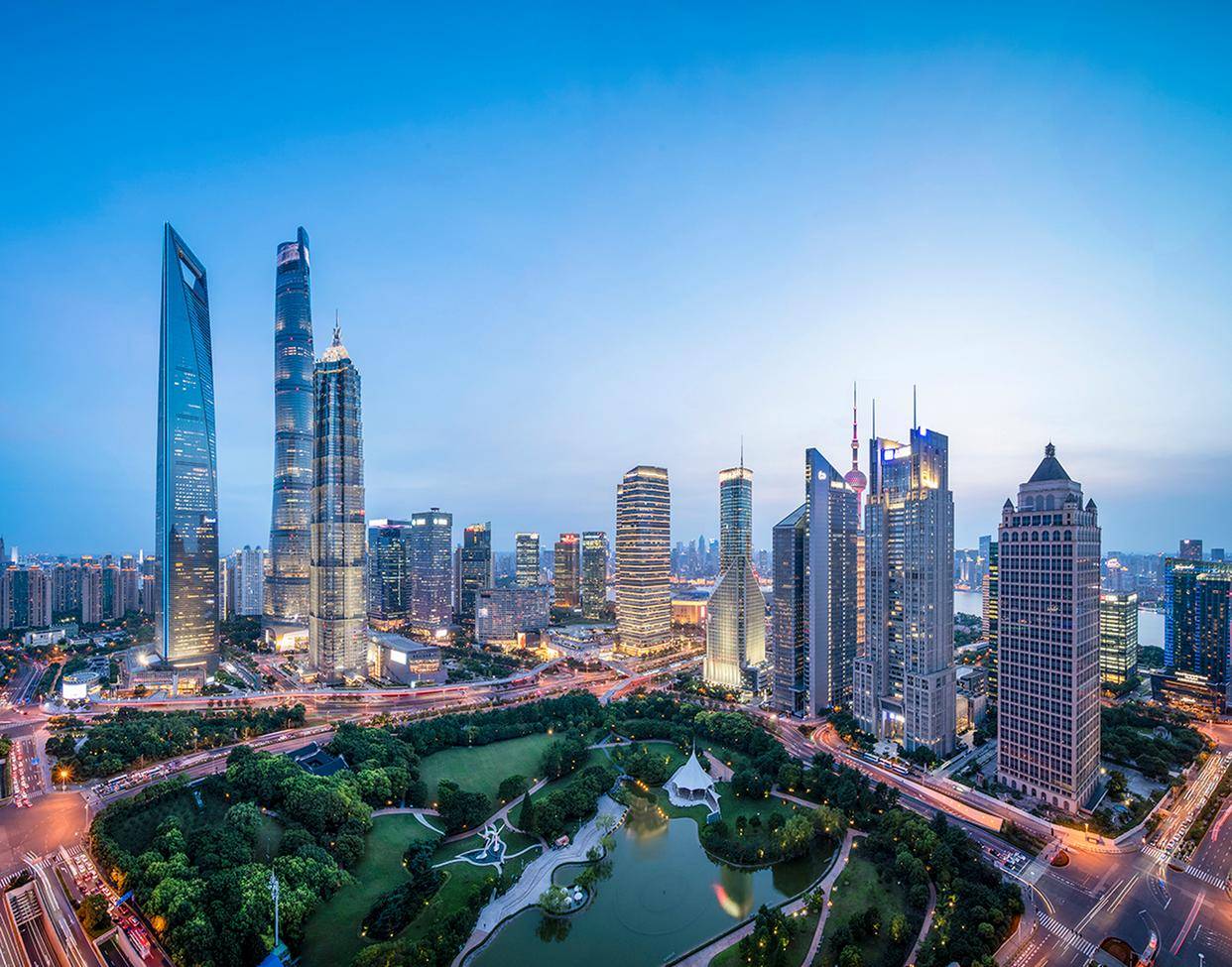
上海“十五五”锚定世界级高端产业集群 加快建设“五个中心”
Xin Lang Cai Jing· 2026-01-19 23:21
Core Viewpoint - Shanghai is set to become the first city in China with a GDP exceeding 5 trillion yuan, aiming to establish a world-class high-end industrial cluster over the next five years, with a goal to double its per capita GDP by 2035 compared to 2020 levels [1][2]. Group 1: Development Strategy - The "15th Five-Year Plan" outlines a clear path for high-quality development, emphasizing significant achievements in economic growth, productivity, and maintaining a reasonable manufacturing sector proportion [1][2]. - Shanghai's development will focus on high-end, leading industries, with a commitment to enhancing its international economic center status and building a modern industrial system [4][5]. Group 2: Key Industries - Shanghai will accelerate the development of three leading industries: integrated circuits, biomedicine, and artificial intelligence, aiming for breakthroughs across the entire industrial chain [6][7]. - The integrated circuit industry in Shanghai has established a comprehensive ecosystem, housing over 1,200 companies and accounting for approximately 40% of national talent and nearly 50% of innovation resources in the sector [6]. Group 3: Future Industries - The city plans to focus on six emerging pillar industries, including advanced materials, new energy, and smart connected vehicles, to drive innovation and development [8][9]. - Shanghai aims to position itself in cutting-edge fields such as quantum technology, brain-machine interfaces, and controlled nuclear fusion, with a strategy of agile layout to foster growth in these sectors [9][10]. Group 4: Financial Support - To support the high-end industrial cluster, Shanghai will enhance its international financial center capabilities, developing a financial support system that aligns with its industrial goals [10]. - The city will promote the establishment of an international financial asset trading platform and explore new financial instruments to support technological innovation and investment [10].