
石油贸易

Search documents
十余家中国实体被纳入名单!欧盟制裁风暴再升级
Sou Hu Cai Jing· 2025-09-28 10:04
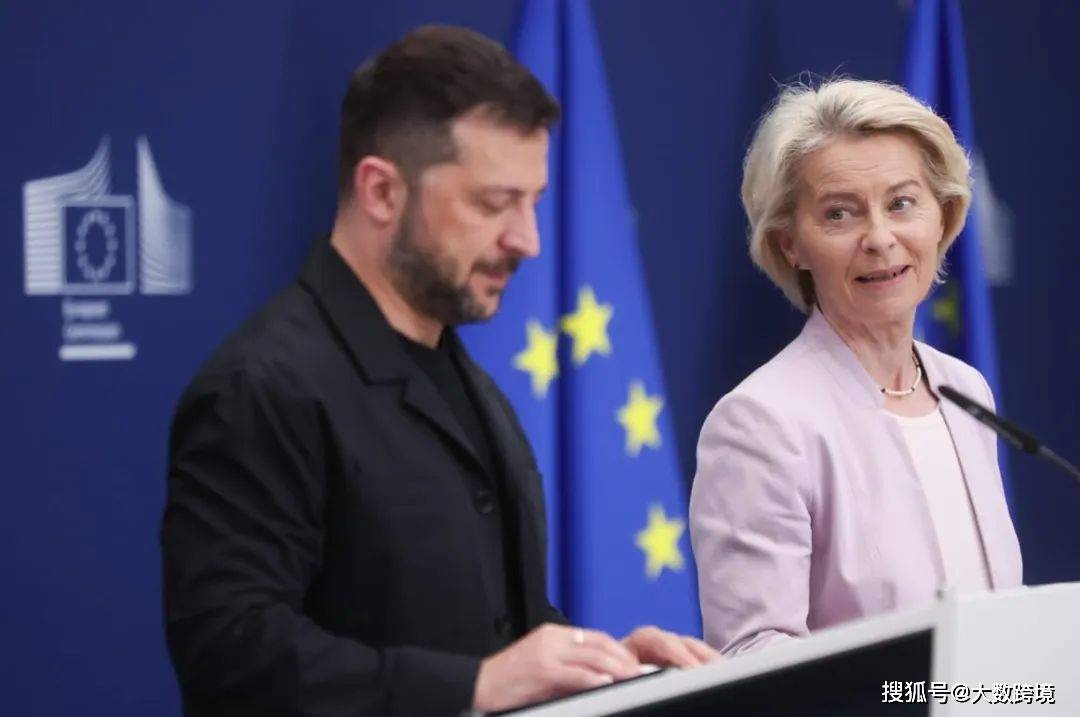
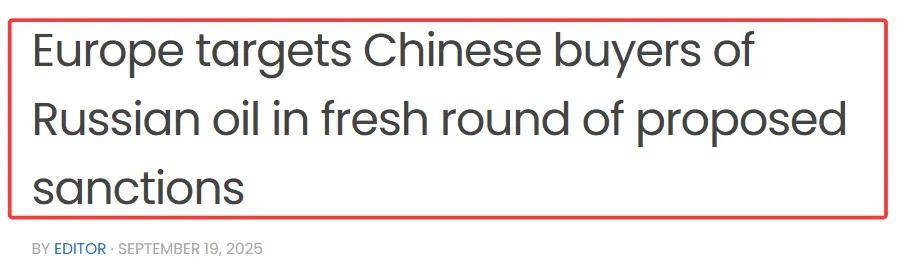
Core Points - The European Union (EU) is moving towards a more aggressive stance against Russia, aiming to ban imports of liquefied natural gas (LNG) from Russia by 2027 under pressure from the United States [1] - The EU Commission has proposed a new round of sanctions that includes unprecedented measures targeting various sectors, including energy, finance, and technology, with a focus on energy [1][2] - The sanctions will also affect Chinese entities, with around 12 Chinese firms potentially facing restrictions on trade with EU companies [5] Energy Sector - The proposed sanctions include a complete ban on importing Russian LNG and a reduction of the price cap on Russian crude oil to $47.6 per barrel [1] - The EU plans to impose sanctions on 118 vessels of Russia's "shadow fleet," increasing the total number of sanctioned Russian ships to over 560 [2] Financial and Technological Measures - The sanctions will expand the trading ban on Russian banks within Russia and third countries, and for the first time, will include restrictions on cryptocurrency platforms to prevent sanction evasion [2] - New direct export restrictions on military goods and technology are also proposed, with 45 Russian and third-country companies set to be added to the sanctions list [2] Impact on Chinese Entities - The EU has prepared a sanctions list that includes approximately 12 Chinese entities, which would prohibit EU companies from engaging in any business with them [5] - Two Chinese petrochemical companies are also facing a complete trading ban with EU companies regarding oil and gas [5] Internal EU Disagreements - There are significant divisions within the EU regarding the sanctions, particularly from Hungary, which opposes the early cessation of Russian fossil fuel imports due to concerns over national energy security [6] - The approval of the sanctions requires unanimous consent from all 27 EU member states, and Hungary's energy security concerns may pose a significant obstacle [6]

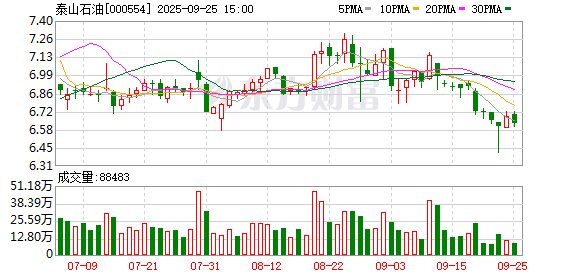
泰山石油:公司近年来净利润的显著增长主要得益于成品油采销差高于同期
Zheng Quan Ri Bao· 2025-09-25 14:08
Core Viewpoint - The significant growth in net profit for Taishan Petroleum in recent years is attributed to higher sales margins on refined oil, improved market share, optimized customer management, cost control, and risk management [2] Group 1: Financial Performance - The company has experienced notable net profit growth due to favorable sales margins on refined oil compared to the same period last year [2] - The company expresses confidence in future performance growth and plans to continue optimizing sales structure and expanding market share [2] Group 2: Market Strategy - Taishan Petroleum aims to stabilize its market share while exploring new markets and customer segments [2] - The company acknowledges that stock price movements are influenced by macroeconomic factors, industry fluctuations, and market sentiment [2]

泰山石油:截至2025年8月31日公司尚未实施本次股份回购
Zheng Quan Ri Bao Zhi Sheng· 2025-09-25 10:08
Group 1 - The company, Taishan Petroleum, announced on September 25 that it has not yet implemented its share repurchase plan as of August 31, 2025 [1] - The share repurchase period is set to last no more than 12 months from the date the plan is approved at the 2024 annual shareholders' meeting [1] - Investors are advised to monitor the company's designated information disclosure media for further updates on the share repurchase progress [1]
泰山石油:净利润增长因采销差提升及成本控制
Sou Hu Cai Jing· 2025-09-25 08:52
Core Viewpoint - The significant increase in net profit for Taishan Petroleum is attributed to higher sales margins on refined oil, improved market share, optimized customer management, and effective cost control measures. However, the stock price remains low due to various external factors affecting market sentiment and economic conditions [1]. Group 1: Financial Performance - The net profit of Taishan Petroleum has doubled in recent years, showing remarkable growth compared to previous years [1]. - The increase in net profit is primarily due to higher sales margins on refined oil, enhanced market share, and optimized customer management [1]. Group 2: Stock Price Concerns - The stock price of Taishan Petroleum has been hovering at low levels, reaching new lows despite the company's strong financial performance [1]. - The company acknowledges that stock price movements are influenced by macroeconomic factors, industry fluctuations, and market sentiment [1]. Group 3: Future Outlook - Taishan Petroleum expresses confidence in maintaining future performance growth by continuing to optimize sales structure, stabilize market share, and expand into new markets and customer segments [1].
西方加强对俄能源制裁,俄罗斯不怒反笑,影子油轮舰队持续壮大
Sou Hu Cai Jing· 2025-09-24 11:07
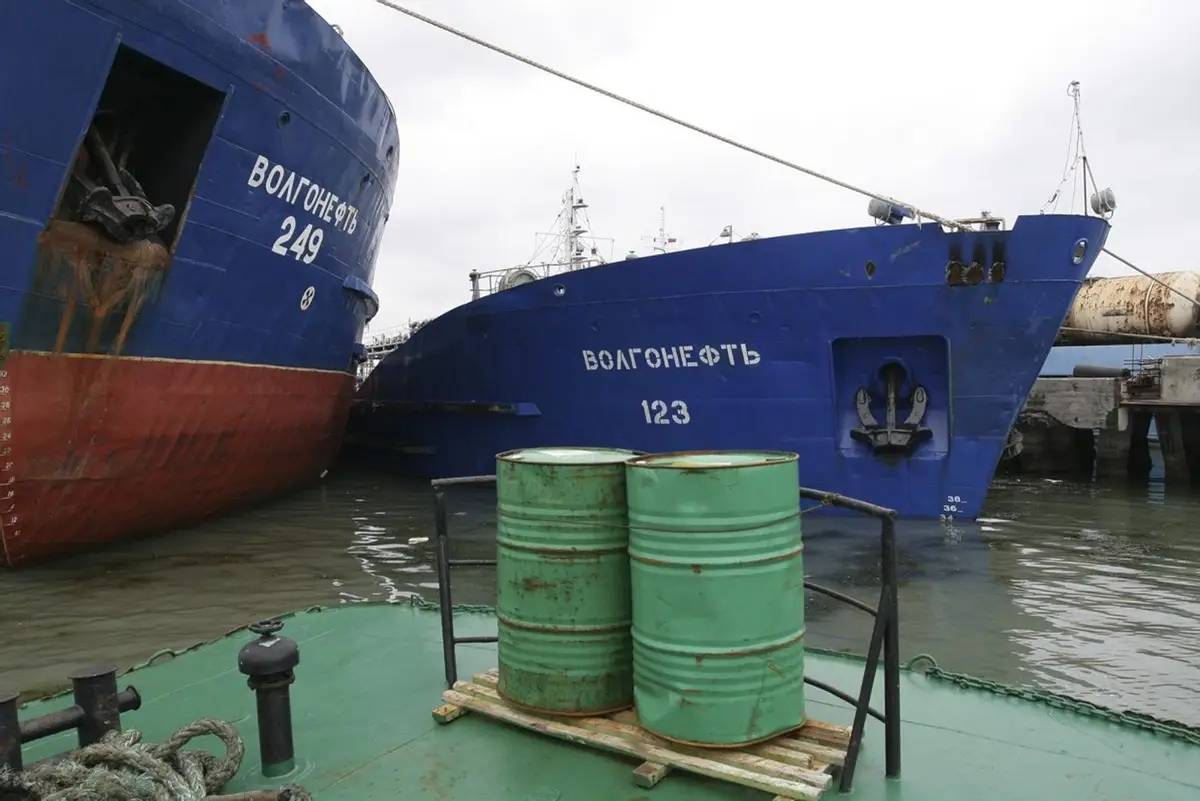
Core Insights - The UK is secretly developing a plan to target Russia's ghost fleet of oil tankers, escalating the ongoing energy conflict between the West and Russia [1] Group 1: Ghost Fleet Operations - A fleet of over 70 aging oil tankers, averaging over 15 years old, is successfully evading Western sanctions by frequently changing names and flags, allowing Russia to maintain oil exports of approximately 2 million barrels per day, with 60% reaching Asian ports [5][9] - The UK Foreign Office's sanctions have made these vessels a primary target, as they are seen as critical to Russia's oil revenue [7] Group 2: Economic Impact and Revenue - Russia's oil revenue for the first half of 2024 exceeded $235 billion, which is 1.8 times its annual military budget, indicating a robust economic position despite sanctions [11] - The energy landscape is shifting, with China becoming the largest buyer of Russian oil, while U.S. shale oil producers are reducing operations, with active drilling platforms dropping to 520, the lowest since January 2022 [9] Group 3: Sanctions and Regulatory Developments - The EU is considering secondary sanctions that could freeze assets and restrict market access for third-party companies involved in Russian oil trade, highlighting the complexities of international energy politics [13] - The U.S. LNG exports to Europe have surged by 110% year-on-year, indicating a shift in energy supply dynamics amid the sanctions [13] Group 4: Historical Context and Future Outlook - The ongoing maritime strategies resemble historical energy blockades, with daily global oil demand at 102 million barrels, suggesting that attempts to completely cut off Russian energy exports may be challenging [14] - The situation reflects a broader energy battle that is still in its early stages, with significant implications for global energy markets [14]
石油与化工指数多数下跌(9月15日至19日)
Zhong Guo Hua Gong Bao· 2025-09-23 02:38
Group 1: Chemical Sector Performance - The chemical raw materials index decreased by 1.21%, while the chemical machinery index increased by 2.90% [1] - The pharmaceutical index fell by 1.36%, and the pesticide and fertilizer index dropped by 2.50% [1] - The oil processing index declined by 2.22%, the oil extraction index decreased by 3.17%, and the oil trading index fell by 1.46% [1] Group 2: Oil Prices - As of September 19, the WTI crude oil futures settled at $62.68 per barrel, down 0.02% from September 12 [1] - The Brent crude oil futures settled at $66.68 per barrel, down 0.46% from the previous Friday [1] Group 3: Petrochemical Product Price Changes - The top five petrochemical products with price increases were liquid chlorine (up 22.93%), isooctyl acrylate (up 7.47%), acrylic acid (up 5.04%), calcium carbide (up 4.94%), and MMA (up 4.51%) [1] - The top five petrochemical products with price decreases were vitamin E (down 10.00%), epichlorohydrin (down 6.44%), sulfuric acid (down 4.94%), p-nitrochlorobenzene (down 4.62%), and dichloromethane (down 3.64%) [1] Group 4: Capital Market Performance of Chemical Companies - The top five performing listed chemical companies were Kaimete Gas (up 28.62%), Hongda Explosive (up 22.93%), Sanwei Co. (up 22.53%), Zhongshi Technology (up 21.57%), and Jinghua New Materials (up 18.94%) [2] - The bottom five performing listed chemical companies were Runyang Technology (down 11.48%), Lafang Cosmetics (down 10.43%), Wankai New Materials (down 10.42%), Jiaao Environmental Protection (down 10.25%), and Shilong Industrial (down 9.41%) [2]




突发!拟制裁大量中企!
Sou Hu Cai Jing· 2025-09-22 03:02
Group 1 - The European Commission President Ursula von der Leyen stated that Russia's oil revenue in Europe has decreased by 90% over the past three years, and the EU is now pursuing those who violate sanctions by purchasing oil that fuels the Russia-Ukraine war [1] - The EU has approved its 19th round of sanctions since the outbreak of the Russia-Ukraine conflict in February 2022, targeting oil refineries, traders, and petrochemical companies in third countries including China, Brazil, and India [1][3] - The new sanctions are expected to restrict Russia's access to technologies such as artificial intelligence and geospatial data, as well as critical resources needed for weapons production, which may include resources sourced from foreign suppliers like China and India [3] Group 2 - Former President Trump indicated readiness to impose significant sanctions on Russia if all NATO members take similar actions and stop purchasing oil from Russia [1] - Trump previously called for a 50% to 100% tariff on Chinese and Indian companies purchasing Russian oil, highlighting the geopolitical implications of energy trade [1] - The EU plans to impose transaction bans on more Russian banks and third-country banks as part of the new sanctions [3]
股市必读:和顺石油(603353)9月19日主力资金净流出177.57万元,占总成交额2.32%
Sou Hu Cai Jing· 2025-09-21 20:26
Trading Information Summary - On September 19, 2025, Heshun Petroleum (603353) closed at 16.7 yuan, up 1.27%, with a turnover rate of 2.71% and a trading volume of 46,100 shares, amounting to a transaction value of 76.54 million yuan [1] - On the same day, the net outflow of main funds was 1.7757 million yuan, accounting for 2.32% of the total transaction value; the net outflow of speculative funds was 2.0426 million yuan, accounting for 2.67% of the total transaction value; while retail investors had a net inflow of 3.8183 million yuan, accounting for 4.99% of the total transaction value [1][3] Company Announcement Summary - Heshun Petroleum announced that non-independent director Liu Jing submitted her resignation on September 18, 2025, due to internal work adjustments, but she will continue to serve as the manager of the administrative department [1] - On the same day, the company held a staff representative meeting to elect Liu Jing as the staff representative director of the fourth board of directors, with a term until the current board's term ends [1] - The resignation will not lead to a decrease in the number of board members below the legal requirement and will not affect the normal operation of the company [1] - Additionally, the company has revised its articles of association to eliminate the supervisory board and supervisors; Chen Zhiling was relieved of her duties as a staff representative supervisor but will continue in other roles within the company [1]

TBKS HLDGS(01960)附属拟1146.24万令吉出售马来西亚柔佛州一物业
智通财经网· 2025-09-18 10:44
Group 1 - TBKS HLDGS has agreed to sell a property for a total consideration of 11.4624 million Malaysian Ringgit, with the transaction completed on August 25, 2025 [1] - The property consists of four parcels of vacant land designated for light industrial use, covering a total area of approximately 12,101 square meters located in Johor, Malaysia [1] - The property was previously mortgaged to a Malaysian bank, which has released the mortgage as a condition for the sale, with 1 million Ringgit set aside from the proceeds as collateral for the seller's bank financing [1] Group 2 - The company is an investment holding firm with subsidiaries primarily engaged in civil and structural engineering in Malaysia and China, as well as trading of oil and related products in China [2] - The board believes that the sale represents a good opportunity to realize the value of the vacant property at a reasonable price, enhancing the company's financial position and liquidity [2] - The terms and conditions of the sale are considered fair and reasonable, aligning with the overall interests of the company and its shareholders [2]
泰山石油:拟签署加油站租赁经营合同
Ge Long Hui· 2025-09-16 11:20
Core Viewpoint - The company plans to sign a lease agreement with Shandong Expressway Service Area Development Group Co., Ltd. for gas station assets located at Qilan Expressway Taishan and Taixin Expressway Xinwen service areas, aimed at enhancing its operational capabilities in fuel sales and gas station management [1] Group 1 - The lease period will commence from the effective date of the contract until June 30, 2028 [1] - The leasing is intended to meet the company's daily operational and developmental needs [1] - It is expected that this lease will not have a negative impact on the company's operating results for the current year [1]