计算机硬件

Search documents
华硕今年强劲成长 明年更好 预告 AI PC 换机潮将至
Jing Ji Ri Bao· 2025-11-11 23:39
Core Viewpoint - ASUS expects strong growth in 2023 despite entering a traditional off-season, with three main operational pillars: consumer, gaming, and enterprise markets, particularly driven by AI servers and commercial PCs [1][2] Group 1: Financial Performance and Projections - ASUS anticipates a 10% to 15% quarter-over-quarter decline in PC business revenue this season, which is roughly in line with the same period last year [1] - Server and component business is expected to see a 5% to 10% decline quarter-over-quarter but will grow by 40% to 50% year-over-year [1] - For 2026, ASUS predicts a flat or slight growth of 2% to 3% in the global PC industry, with an anticipated AI PC replacement wave starting in the first half of next year [1] Group 2: Market Segmentation and Growth Drivers - By Q3 2023, consumer products accounted for 29% of ASUS's total revenue, gaming products 41%, and enterprise market share increased to 30% due to significant growth in AI servers and commercial PCs [1] - ASUS's commercial PC shipments increased by over 50% year-over-year in Q3 2023, indicating strong performance in this segment [1] Group 3: Server Business Insights - The server business is projected to account for 10% to 15% of total revenue, with Q3 2023 server revenue growing over 100% year-over-year, now representing about 20% of total revenue [2] - The growth in the server business is primarily driven by AI server products, with successful penetration into the North American and European markets [2] - ASUS is among the first companies to ship NVIDIA's B300 and GB300 AI servers, with smooth delivery schedules [2]
多元算力加速超智融合新进程
Zhong Guo Jing Ji Wang· 2025-11-11 15:16
Core Insights - Lenovo has once again secured the top position in the 2025 China High-Performance Computing (HPC) TOP100 list with 43 systems, marking its 11th consecutive year as the leader in quantity share [1] - The company has been recognized as a "Leading Enterprise in Computing Power" in China, with its "Lenovo Wanquan Large Model Training and Inference Integrated Solution" being selected as a classic case in the 2025 China Computing Power Applications [1] - The China Supercomputing Conference introduced the concept of "Computing Power Economy," focusing on the direction and pathways for the new computing power industry in the era of computing power economy [1] Market Trends - The demand for computing power is shifting from training to inference and post-training stages, with a predicted global spending on generative AI reaching $644 billion by 2025, a 76.4% increase from 2024, with approximately 80% allocated for AI hardware [2] - The "Super Intelligence Fusion" technology is becoming a mainstream trend to address the challenges posed by AI large models, enabling high-end intelligent computing centers to meet diverse computing power needs across various industries [2] Company Performance - Lenovo ranks among the top three in the Chinese AI server market based on sales revenue in the first half of 2025, attributed to its continuous innovation in server hardware and AI computing power optimization [3] - The company has launched three families of servers: data processing computing servers, AI training computing servers, and inference application computing servers, enhancing its AI infrastructure layout [3] Case Studies and Achievements - Lenovo's "Wanquan Large Model Training and Inference Integrated Solution" has achieved significant results in various sectors, including a 30% to 60% improvement in MFU in national-level high-quality AI cluster scenarios [4] - The company has established benchmark cases across multiple industries, including education, manufacturing, and finance, showcasing its successful implementation of AI solutions [4]

HPC TOP100 十一连冠 联想全面升级基础设施筑牢算力底座
Zheng Quan Shi Bao Wang· 2025-11-10 10:19
Core Insights - Lenovo has once again secured the top position in the HPC TOP100 list with 43 systems, marking its 11th consecutive year as the leader in annual quantity share [1] - The demand for computing power is shifting from training to inference and post-training phases, with a predicted global spending on generative AI reaching $644 billion by 2025, a 76.4% increase from 2024, with approximately 80% allocated for AI hardware [1] - The emergence of "super-intelligent integration" technology is becoming a mainstream trend to address the challenges posed by AI large models, combining HPC with intelligent computing capabilities to meet diverse computing needs across industries [1] Industry Challenges - The underlying computing infrastructure faces new challenges related to transmission, computation, storage, and scheduling, necessitating a critical evolution in computing facilities [2] - Lenovo aims to drive AI implementation through comprehensive computing layouts and technological innovations, ranking among the top three in China's AI server market sales in the first half of 2025 [2] Technological Innovations - Lenovo has introduced three families of servers: data processing computing servers, AI training computing servers, and inference application computing servers, to support the evolution of computing architecture [2] - The latest version of Lenovo's heterogeneous intelligent computing platform 3.0 includes breakthroughs such as AI inference acceleration algorithm sets, AI compilation optimizers, and self-healing systems for fault prediction [2] Successful Implementations - Lenovo's integrated training and inference solution has achieved significant results, such as improving MFU from 30% to 60% in national-level AI cluster scenarios [3] - In the education sector, Lenovo collaborated with Peking University to build a high-performance computing platform, drastically reducing the time for MRI results from 15 minutes to approximately 20 seconds [3] - The new generation liquid-cooled high-performance computing platform "Blue Whale No. 1" for Nanjing University's high-performance computing center was completed and operational in September [3]
(第八届进博会)戴尔科技集团全球资深副总裁:进博会成为企业链接全球资源重要纽带
Zhong Guo Xin Wen Wang· 2025-11-09 05:07
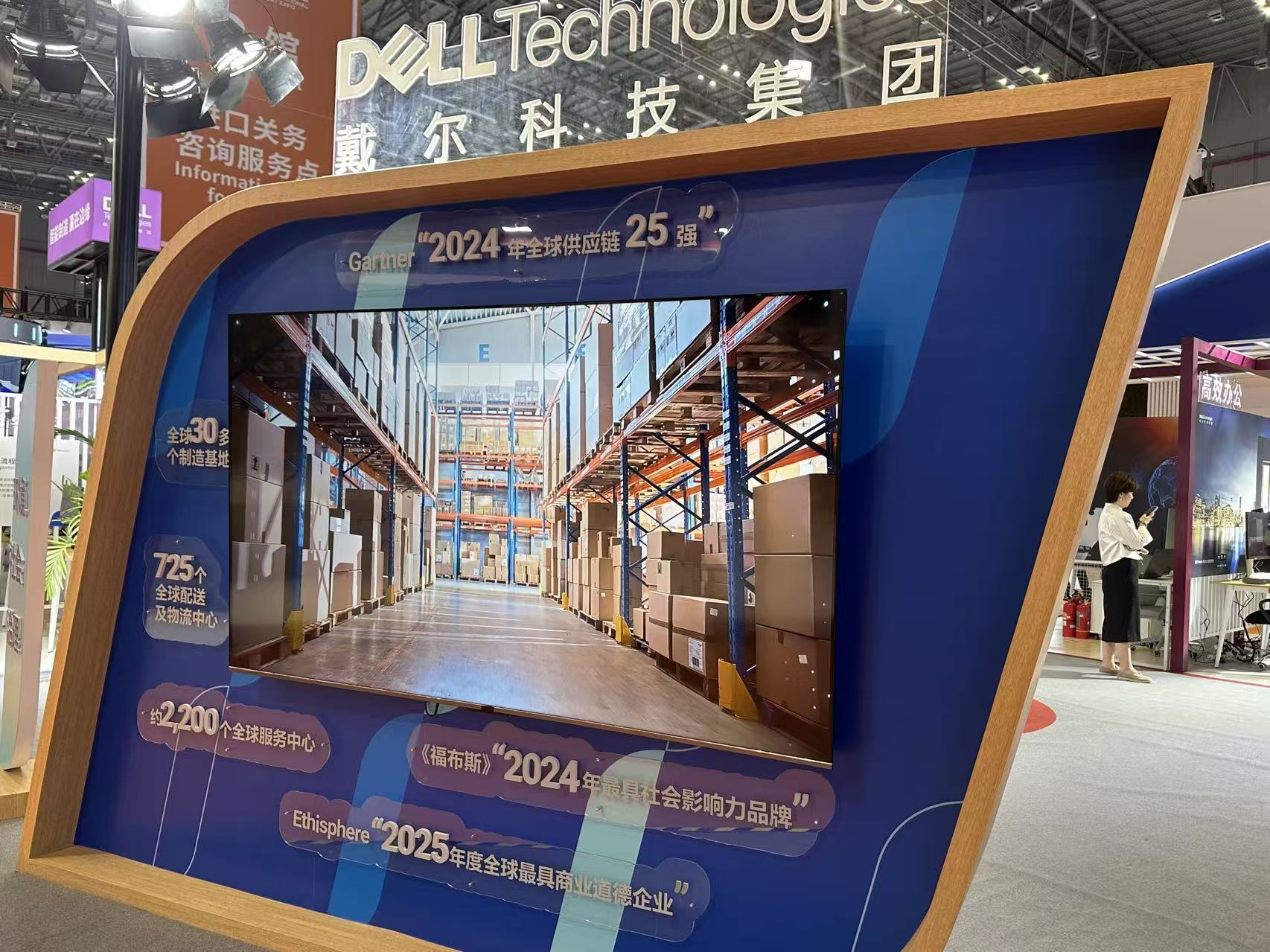
Core Viewpoint - Dell Technologies views the China International Import Expo (CIIE) as a vital link for connecting global resources and promoting digital transformation, marking its eighth consecutive year of participation [1][2] Group 1: Dell's Participation in CIIE - Dell has expanded collaboration with customers and partners through CIIE, exploring new cooperation models and promoting the application of technology and services [1] - The company emphasizes the importance of the expo in driving innovation and digital transformation in the Chinese market [1] Group 2: Market Insights - China, accounting for approximately 17% of the global economy, contributes about 30% to global growth, creating vast development opportunities for enterprise innovation and digital transformation [1] - The emergence of new consumption models in China provides a conducive environment for companies to innovate [1] Group 3: AI PC Product Line - Dell showcased its upgraded AI PC product lineup at the expo, highlighting the application of intelligent technology in office experiences, content creation, and enterprise data management [1] - The transition from traditional PCs to AI PCs integrates powerful local computing and intelligent processing capabilities, catering to the needs of creators, engineers, and developers [2] - This evolution transforms PCs from mere tools into intelligent assistants, significantly enhancing user creativity, decision-making support, and work efficiency [2]

戴尔科技八刷进博,以全栈式IT解决方案为数字经济注入新动能
Guo Ji Jin Rong Bao· 2025-11-08 06:15
Core Insights - The eighth China International Import Expo was held in Shanghai from November 5 to November 10, showcasing Dell's continuous commitment to innovation and technology in the IT sector [1] - Dell's participation serves as a platform for understanding market trends and customer needs in the context of digital transformation [1] Group 1: Digital Transformation and IT Infrastructure - The digital economy in China is accelerating, leading to increased investments in modernization, with a focus on high-performance, energy-efficient, and resilient IT infrastructure [4] - Dell showcased innovations in server, storage, and network resilience, including the new Dell PowerEdge servers and Dell PowerStore storage solutions [4][10] - The company aims to help clients build future-ready intelligent computing centers through advanced products and smarter management capabilities [4] Group 2: AI PC Development - Dell is advancing the intelligent upgrade of PC products, creating a comprehensive AI PC matrix for various user needs, from everyday office tasks to professional creative work [6] - The AI PC market is projected to see significant growth, with Gartner predicting shipments to reach 143 million units by 2026, accounting for 55% of the total PC market [6] - Dell is enhancing user experience by integrating computing power into desktop terminals and real-world applications, facilitating seamless development and deployment from local to cloud environments [6][8] Group 3: Energy Efficiency and Sustainability - Balancing energy efficiency with system performance is crucial in IT infrastructure design, as companies face pressures for performance and cost control [9] - Dell is implementing innovative cooling solutions in data centers to improve overall energy efficiency, such as smart airflow configurations in Dell PowerEdge servers [10] - The company emphasizes a circular design approach in its products, using recycled materials and reducing reliance on rare minerals, while also offering asset recovery services for responsible equipment updates [10]

被产业链“寄予厚望”,AIPC现在如何了?
Jing Ji Guan Cha Wang· 2025-11-08 05:26
Core Insights - The article discusses the rise of AIPC (Artificial Intelligence Personal Computer) as a new category in the tech industry, highlighting Lenovo's launch of the "Lenovo Savior AI Edition" laptops equipped with AI capabilities through the integration of NPU (Neural Processing Unit) alongside traditional CPU and GPU [2][3] - The demand for AIPC has surged since the introduction of ChatGPT, prompting major tech companies to accelerate their AIPC strategies and product offerings [3][4] - Despite the growing market interest, challenges remain regarding the software ecosystem and practical applications of AIPC, with many users reporting underwhelming AI experiences [5][6] Industry Trends - AIPC sales have been increasing, with Lenovo's AIPC series seeing a production priority shift due to rising demand [3] - Intel reported a revenue increase of 2.8% in Q3 2025, attributed to AIPC, and anticipates supplying processors for over 100 million AIPC units by the end of 2025 [3][8] - Other companies, such as iFlytek, are also entering the AIPC market, aiming to create a comprehensive ecosystem with domestic CPUs and operating systems [4][10] Market Dynamics - The AIPC market is characterized by a fragmented software ecosystem and insufficient practical applications, leading to consumer dissatisfaction despite hardware advancements [5][6] - The hardware foundation of AIPC relies on a heterogeneous computing architecture (CPU+GPU+NPU), with various chip manufacturers, including Intel, AMD, and Qualcomm, competing in this space [6][8] - The operating system landscape is dominated by Microsoft, which has set standards for AIPC, while domestic players like iFlytek are adapting their systems to local needs [9][10] Supply Chain and Manufacturing - ODM manufacturers like Huaqin Technology are experiencing significant growth in AIPC-related revenues, with expectations of over 30% revenue growth in 2025 [11] - The demand for AIPC is driving up the prices of components, such as heat dissipation structures, which are expected to increase by around 30% due to higher cooling requirements [12] - The transition to AIPC is creating a complete supply chain that includes high-value products and improved profit margins for manufacturers [14] Consumer Experience and Challenges - Despite the hardware advancements, many consumers report that the AI functionalities of AIPC are not meeting expectations, often describing them as inadequate or frustrating [16][18] - The current AIPC offerings are seen as traditional computers with AI features rather than fully realized AI systems, indicating a gap between consumer expectations and actual performance [18][19] - Industry experts suggest that the true potential of AIPC will not be realized until the software ecosystem matures and AI applications become more robust and user-friendly [19]



宏碁第三季营收环比增长10.3% 泛美营运总部启动双总经理新制
Ju Chao Zi Xun· 2025-11-07 14:55
Group 1 - Acer reported Q3 2025 revenue of NT$73.4 billion, a 10.3% increase quarter-over-quarter and a 1.0% increase year-over-year; net profit after tax was NT$1.11 billion, up 2.3% from the previous quarter [1] - The gross margin for Q3 was 11.2%, an increase of 1.1 percentage points from the previous quarter and 0.6 percentage points year-over-year; operating profit reached NT$1.51 billion, a significant increase of 105.1% quarter-over-quarter [1] - Non-PC and display business revenue accounted for 33.6% of total revenue in Q3, with a cumulative share of 31.8% for the first three quarters, indicating a continued optimization of the company's business structure [1] Group 2 - Acer announced a significant personnel change, with Greg Prendergast retiring at the end of 2025; starting January 1, 2026, the Americas region will be jointly managed by Jiang Xuan and Germano Cui, reporting directly to Chairman and CEO Jason Chen [2] - Jason Chen highlighted Prendergast's substantial contributions to Acer, particularly in expanding sales and brand presence in the Americas, and noted his role in establishing Acer as a leading Chromebook brand globally [2] - The new executives, Jiang Xuan and Germano Cui, bring extensive international market experience, with Jiang having been with Acer since 2007 and Cui having 30 years of experience in the Latin American tech industry [2]
让中国消费成为全球增长的稳定器和加速器,全球政商学界发出大力提振消费“虹桥声音”
第一财经· 2025-11-07 10:15
Group 1 - The core theme of the forum is to boost consumption in China and transform its vast market potential into global economic growth opportunities [1][16][18] - The "14th Five-Year Plan" emphasizes the importance of increasing the consumption rate and enhancing domestic demand as a key driver for economic growth [3][16] - The forum highlights the need for a combination of short-term and medium-term policies to address low consumption rates and restore consumer confidence [5][6] Group 2 - Liu Yuanchun suggests that the government should shift from an investment-driven model to a service-oriented approach, focusing on social security and affordable housing to increase consumer spending [5][6] - Michael Spence predicts that by 2028, China's economy will achieve higher income levels and a more balanced demand structure, with a focus on transitioning from investment-driven growth to consumer-led growth [8] - Lu Ming emphasizes the need for structural adjustments in the economy, particularly in enhancing service consumption and optimizing urban spaces to support consumer spending [9] Group 3 - Ye Guofu discusses the rise of interest-based consumption and the globalization of Chinese IP, indicating a significant shift in consumer trends [11] - Sara Camp from Intel highlights that AI PCs will create a new wave of consumer demand, with the global AI PC market expected to grow from $610 billion in 2025 to $9,920 billion by 2035, reflecting a compound annual growth rate of 32.16% [14] - The overall contribution of consumption to economic growth in China is projected to remain around 60% during the "14th Five-Year Plan" period, with retail sales expected to exceed 50 trillion yuan by 2025 [16]

国家级基金加码超聚变
Shang Hai Zheng Quan Bao· 2025-11-05 16:08
Core Insights - Chaojuvian Digital Technology Co., Ltd. has received strategic investment from the National Adjustment Fund managed by China Chengtong Holdings Group, indicating strong capital support following signals of an IPO [1][4] - The company, established in September 2021 after Huawei spun off its X86 server business, has rapidly grown, achieving sales revenue of over 10 billion yuan in 2022 and projected revenues of over 28 billion yuan in 2023 and 40 billion yuan in 2024 [4] - Chaojuvian is preparing for its IPO, with recruitment efforts underway for financial experts, indicating a focus on strengthening its financial team ahead of the public offering [4][6] Company Overview - Chaojuvian aims to be a global leader in computing infrastructure and services, with a vision to build an intelligent era [6] - The company operates 11 research centers and 7 regional offices globally, serving over 10,000 clients across more than 100 countries [6] - It has maintained the largest market share in China's standard liquid cooling server market for two consecutive years [4] Financial Performance - The registered capital of Chaojuvian is 800 million yuan, and it has shown significant revenue growth, with a target to reach 40 billion yuan in sales by 2024 [4] - The company is actively hiring for various financial positions, with salary ranges between 300,000 to 800,000 yuan, reflecting its growth and expansion plans [4][5]
特朗普,突发!黄金直线爆发!美股突变
Sou Hu Cai Jing· 2025-11-05 15:34
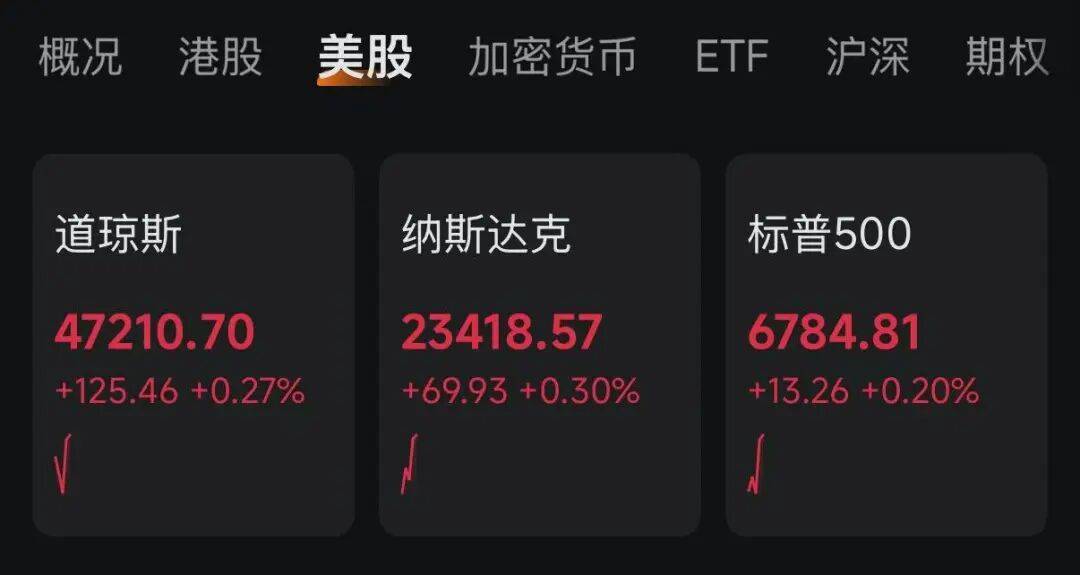
Group 1 - US stock market experienced a decline followed by a sharp recovery, with all indices turning positive by the time of reporting [1] - Individual stocks showed mixed performance, with Supermicro down over 5%, while storage stocks like Seagate and SanDisk saw gains of nearly 7% and over 6% respectively [3] - The Nasdaq Golden Dragon China Index also rebounded, with notable increases in Chinese stocks such as Canadian Solar up over 13% and So-Young up over 7% [3] Group 2 - Gold prices surged, with spot gold increasing by over 1.1% at the time of reporting [5] - President Trump emphasized the need to reopen the government quickly, stating that the economy is in a historically strong period and that the government shutdown has impacted the stock market [7] - The US federal government shutdown reached a record length of 36 days as of November 5 [7] Group 3 - Recent ADP data indicated a rebound in the US job market, with October employment numbers increasing by 42,000, the largest gain since July 2025, surpassing expectations [7] - The ADP report suggests that while there is a rebound in employment, the overall hiring numbers remain modest compared to earlier in the year [7] - This ADP data may influence the Federal Reserve's decision on potential interest rate cuts, with Chairman Powell indicating strong divisions within the committee regarding a December rate cut [8]