算力经济

Search documents
活动报名|龙虾openclaw热潮下如何构建系统安全架构
机器人圈· 2026-03-14 08:09
Core Viewpoint - The article discusses the rapid rise of OpenClaw, an open-source AI intelligent agent software, and the associated "养龙虾" (raising lobsters) phenomenon in the tech community, highlighting both the excitement and the underlying safety concerns related to its widespread adoption [4][8][18]. Group 1: Phenomenon of "Raising Lobsters" - The "养虾" trend has gained traction, with local governments and companies in Shenzhen encouraging employees to adopt OpenClaw, leading to a surge in its usage [4][8]. - OpenClaw has achieved over 250,000 stars on GitHub within three weeks, surpassing the growth rate of Linux over 30 years [8]. - Major companies like Tencent are actively facilitating the installation of OpenClaw, indicating a strong push towards AI integration in workplaces [8]. Group 2: Opportunities from Intelligent Agents - The article identifies three transformative changes brought about by intelligent agents like OpenClaw: 1. Activation of computing economy: Heavy users of OpenClaw consume between 30 million to 100 million tokens daily, potentially creating a $360 billion market for Agentic AI computing power if 1 million instances operate in China [12]. 2. Value release of task trajectory data: User interactions with AI generate valuable training data that reflects real-world operations and causal reasoning, essential for reinforcement learning [12]. 3. Reconstruction of user entry points: Companies integrating AI deeply into their systems are redefining how user intentions are distributed, moving away from traditional app models [12]. Group 3: Security Concerns - The article raises significant security concerns regarding OpenClaw, including high-risk vulnerabilities that could allow remote takeovers and unauthorized access to user data [13][15]. - A specific vulnerability, "ClawJacked" (CVE-2026-25253), has been identified, with over 270,000 instances exposed globally, including approximately 90,000 in China [15]. - The risks associated with OpenClaw include potential data breaches, operational errors, and malicious plugins that could compromise sensitive information in critical industries [15][16]. Group 4: Conclusion and Future Outlook - The article emphasizes the need for a robust security framework to ensure that OpenClaw can be a productive tool rather than a source of risk, highlighting the importance of establishing a secure foundation for AI deployment [17][18]. - The upcoming conference on March 19, featuring expert insights, aims to address these critical issues and explore how to harness the potential of AI safely [18][22].


改革攻坚突破 协同高效推进 在全省融入服务全国统一大市场建设中担重任走在前
Zheng Zhou Ri Bao· 2026-02-27 00:50
Core Viewpoint - The meeting emphasizes the importance of integrating into the national unified market and advancing comprehensive reforms in factor market allocation to enhance the business environment and support high-quality development in the city [2][3]. Group 1: Meeting Objectives and Context - The meeting aims to implement the spirit of the 20th Central Committee and the important speeches by General Secretary Xi Jinping, focusing on the construction of a national unified market and optimizing the business environment [1]. - The city is committed to deepening the "three standards" activities and accelerating the establishment of a dual circulation hub and strategic support point [1]. Group 2: Key Strategies and Initiatives - The city will leverage data, technology, talent, capital, and land to advance comprehensive reforms in factor market allocation, enhancing its role in the provincial construction of the "four hubs" and "three support points" [3]. - There is a focus on developing a strong digital economy, platform economy, and headquarters economy, aiming to establish a regional financial center and improve the efficiency of the Zhengzhou metropolitan area [3]. Group 3: Leadership and Responsibility - City leaders are urged to enhance their responsibilities and collaborate effectively to achieve practical results in promoting modernization in the central plains [3]. - The meeting also included the appointment of representatives for the third session of the city's business environment "invited supervisors" [4].
盛合晶微科创板首发过会 坤元资产FOF生态圈迎“马年开门红”
Cai Fu Zai Xian· 2026-02-26 07:28
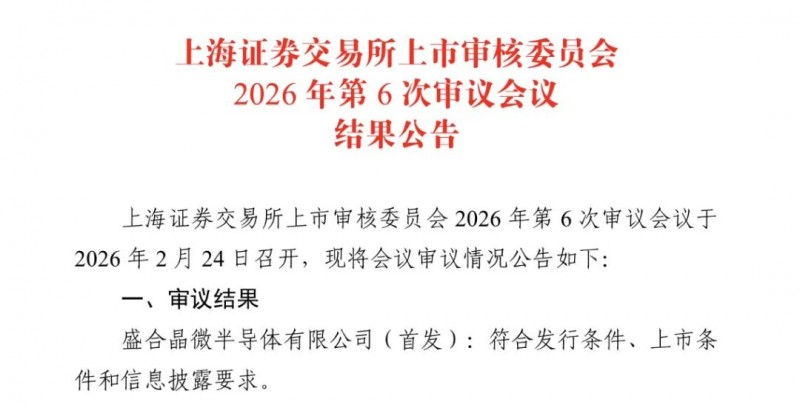
Core Insights - Shenghe Jingwei Semiconductor Co., Ltd. has successfully passed the IPO approval for the Sci-Tech Innovation Board, marking it as the first company to achieve this in the Year of the Horse [1][2] - The company is the first and only enterprise in mainland China to achieve large-scale production of 2.5D silicon-based chip packaging technology, showcasing its strategic rise supported by Kunyuan Asset's FOF ecosystem [1] Industry Trends - The AI boom is reshaping the global technology landscape, with computing power becoming a focal point in the semiconductor industry, as evidenced by IDC's prediction that China's computing power will reach 1,460.3 EFLOPS by 2026, doubling from 2024 [3] - The demand for high-performance chip manufacturing is surging, with industry experts noting that computing power demand is doubling every 3 to 4 months, necessitating new evolution paths in the semiconductor sector [4] Company Performance - Shenghe Jingwei is recognized as one of the largest and fastest-growing advanced packaging enterprises globally, ranking as the 10th largest and 4th largest in mainland China according to Gartner [6] - The company has the largest 12-inch bumping capacity in mainland China and is the first to provide 14nm advanced process bumping services, filling a critical gap in the high-end integrated circuit manufacturing chain [6] - In the 2.5D packaging market, Shenghe Jingwei holds an impressive 85% market share in mainland China, demonstrating its leading position in this technology [7] Financial Aspects - Shenghe Jingwei plans to raise 4.8 billion yuan through its IPO to invest in three-dimensional multi-chip integration packaging projects and enhance its manufacturing capacity for advanced packaging technologies [7] - The company’s revenue growth rate from 2022 to 2024 is the highest among the top ten global enterprises in the advanced packaging sector [6] Strategic Vision - Kunyuan Asset emphasizes the importance of "patient capital" in supporting hard technology breakthroughs, fostering a collaborative investment ecosystem that nurtures leading tech companies [8] - The successful IPO of Shenghe Jingwei is seen as a testament to the deep trust and mutual achievement between capital and technology, highlighting the potential for significant industrial advancement driven by the synergy of computing power, core algorithms, and intelligent terminals [9]
今年上海GDP增长5%左右,新支撑结构正形成
Di Yi Cai Jing Zi Xun· 2026-02-04 03:49
Group 1 - Shanghai's GDP is projected to reach 5.67 trillion yuan by 2025, with a growth rate of 5.4%, which is better than expected [1] - The new driving forces of Shanghai's economy include integrated circuits, biomedicine, and artificial intelligence, which have historically surpassed 2 trillion yuan in scale [1][2] - The information service industry has seen a significant increase, with a value-added growth of 15.3%, driven by the demand for artificial intelligence and computing power [1] Group 2 - The government report emphasizes the importance of nurturing new momentum and stabilizing market expectations rather than relying on short-term stimulus [2] - The rapid growth of computing power demand is reshaping the energy and infrastructure landscape, with AI applications leading to increased electricity consumption [3][5] - The electricity system is transitioning from a supportive role to a critical infrastructure role, directly impacting the feasibility of AI and digital industries [3] Group 3 - The 5% GDP growth target for 2026 is supported by traditional investments and consumption, but the structure of support is changing, with AI-driven computing demand becoming a significant growth variable [5] - There is a need for Shanghai to enhance its external trade resilience and support enterprises in international expansion while encouraging green transformation [7][8] - Recommendations include improving the industrial ecosystem for intelligent robotics and enhancing the talent pool for technology application and results transformation [8]
上海发布智算产业高质量发展倡议
Guo Ji Jin Rong Bao· 2026-01-28 00:07
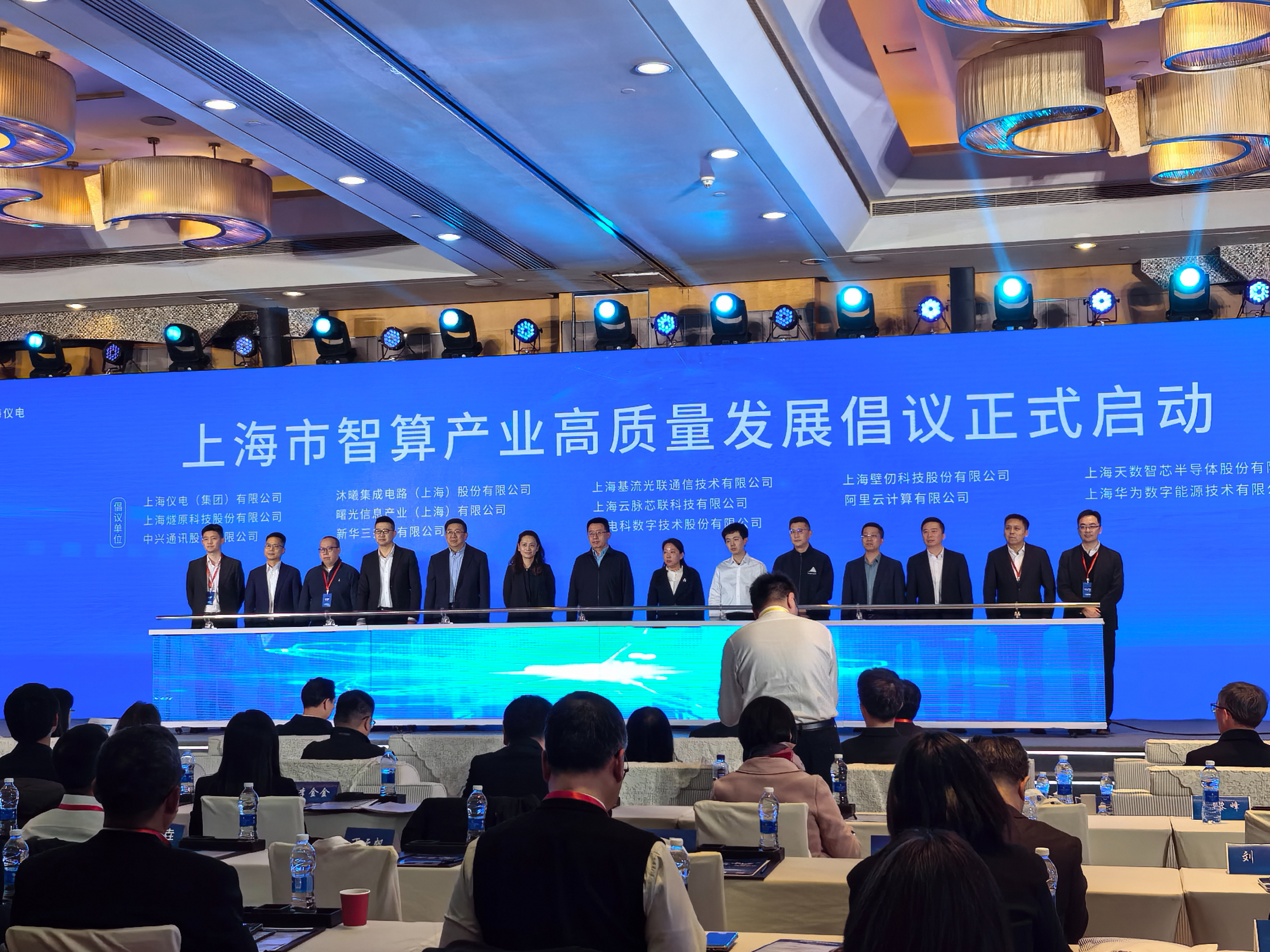
Core Insights - The "Shanghai Intelligent Computing Industry High-Quality Development Initiative" was officially launched to promote the construction of next-generation intelligent computing centers and establish a high-level intelligent cloud service system [1] - Shanghai's intelligent computing resources have surpassed 120,000 PetaFLOPS, with nearly 20,000 PetaFLOPS managed by the municipal scheduling platform [5] - The initiative aims to transform the intelligent computing industry into a new engine for Shanghai's high-quality economic development [1][5] Industry Developments - The Shanghai Economic and Information Commission is implementing the "Artificial Intelligence +" action to lead the digital transformation of the manufacturing sector [5] - The city plans to build a series of intelligent computing infrastructures and accelerate the large-scale deployment of domestically produced chips [5] - The initiative emphasizes the creation of a self-controllable intelligent computing industry ecosystem, promoting the "National Chip, National Model, National Cloud" system [5] Collaborative Efforts - A "Computing Economy Empowerment Co-Creation System" was launched to address the challenge of converting computing resources into economic value [7] - The "Scientific Intelligent Open Community Computing Support Plan" was signed to provide a one-stop research tool and model services for scientists [7] - Major telecommunications companies and service providers in Shanghai are collaborating to build a city-wide intelligent computing ecosystem [7] Technological Innovations - Domestic chip companies showcased their latest products in GPU, large-scale cluster construction, and industry empowerment [9] - The forum highlighted the development of a "Dynamic Industry Map" to present the industry chain's landscape and trends [10] - Innovations in green and low-carbon development of computing infrastructure were discussed, showcasing the achievements of the "14th Five-Year Plan" [10] Future Directions - The initiative aims to enhance the efficiency and collaboration of the intelligent computing industry, focusing on hardware, intelligent cloud, models, and applications [6] - The industry is expected to evolve from "facility scale" to "comprehensive efficiency," creating a four-level interactive architecture [6] - The forum emphasized the importance of a supportive ecosystem involving technology, talent, and standards to drive high-quality development in intelligent computing [10]
国产大模型拉动IDC需求-龙头公司近况更新
2026-01-13 01:10
Summary of Conference Call Notes Industry Overview - The conference call discusses the **AIDC (Artificial Intelligence Data Center)** industry, highlighting significant growth and changes in demand for domestic computing power cards and large models in China [1][3][4]. Key Points and Arguments 1. **Growth in Domestic Card Shipments**: - Domestic card shipments are expected to grow rapidly in 2026, with an increase in overall deployment rates. The sector is currently at a low valuation but shows signs of fundamental improvement supported by various event-driven plans [1][4]. 2. **Market Performance**: - Companies like Century Interconnect and WanGuo Data in the US, along with domestic firms like Runze, have seen stock price increases, partly due to the US lifting restrictions on the H200 card. However, the primary demand is shifting towards domestic large models and cards [1][4]. 3. **Government Support**: - Government policies are crucial for the development of domestic computing power. Beijing and Shanghai are set to launch large-scale subsidies for projects exceeding 100 million yuan, with a 20% funding rate for projects that meet specific criteria [5][1]. 4. **Market Dynamics**: - The AIDC industry is experiencing a significant growth phase, with increased bidding activity expected by the end of 2025. The market is likely to evolve towards large-scale park development to meet customer expansion and stable delivery needs [3][6]. 5. **Competitive Landscape**: - Major players like ByteDance, Alibaba, Baidu, Huawei, and Tencent continue to dominate the market. ByteDance plans to deliver approximately 300-400 MW of computing power in 2026 [4][20]. 6. **Cost and Pricing Trends**: - The price per kilowatt is currently stable at around 280 yuan, with significant regional variations. Short-term market competition is intense, and no significant price turning point is expected in the next one to two years [7][9]. 7. **Liquid Cooling Technology**: - Demand for liquid cooling technology is increasing, with design capacities reaching 170 kW per cabinet. However, profit margins remain limited despite slight cost increases [10][12]. 8. **Profitability Challenges**: - Despite increased bidding volumes, the market remains focused on volume rather than profitability. Head companies are concentrating resources, which limits expansion and keeps costs high [16][19]. 9. **Regional Insights**: - Areas like Shaoguan and regions with lower electricity prices (e.g., Inner Mongolia and Xinjiang) have potential advantages, but overall project numbers are limited [17][19]. 10. **Future Demand Trends**: - There is a noticeable increase in demand for edge computing nodes and urban-level inference computing nodes, with high-cost performance solutions becoming mainstream [6][18]. Other Important Insights - **Storage Costs**: Rapid increases in storage costs (over 40%) are affecting project budgets, particularly for small and medium enterprises that need to focus on cost control [2][5]. - **Market Supply and Demand Mismatch**: There is a national oversupply issue, with scattered projects lacking a cluster effect. However, the market will still be dominated by large clusters from leading companies [19][24]. - **Energy Approval Processes**: Energy approval processes remain slow in major cities, impacting new project developments [22][23]. This summary encapsulates the key insights and trends discussed in the conference call, providing a comprehensive overview of the current state and future outlook of the AIDC industry.
让算力成为贵州核心竞争力
Xin Lang Cai Jing· 2025-12-28 22:35
Core Insights - Guizhou is transforming into a "digital highland" by leveraging its leading computing power, which is becoming a key indicator of economic and social development in the digital economy era [1][2] - The province has achieved a fundamental leap in its digital economy during the 14th Five-Year Plan period, with an annual growth rate of 16.2% in the intelligent industry, reflecting strategic optimization of computing power structure [2] - The collaboration between Guizhou and Shenzhen exemplifies a successful model of resource synergy, enhancing the efficiency of computing power utilization and supporting technological innovation in the Greater Bay Area [3][4] Industry Development - Guizhou's computing power capacity is projected to reach 150 EFLOPS, with over 97% of its computing power now being intelligent computing, positioning it as one of the strongest regions in the country for intelligent computing capabilities [2] - The province is actively promoting the integration of computing power into the real economy, leading to rapid growth in the digital industry and significant revenue increases in software and information technology services [2] - Guizhou is not only focusing on resource output but is also advancing the market-oriented allocation of data elements, creating a new ecosystem for data value extraction and enhancing the scale of the computing power market [4] Strategic Initiatives - The "East Data West Computing" initiative is being implemented to facilitate regional coordination and development in the digital age, showcasing a new logic for regional collaboration [1][2] - Guizhou has introduced policies such as the "computing power voucher" to lower the barriers for enterprises, enabling efficient cross-province resource matching and fostering a collaborative path of "Eastern demand + Western supply" [3][4] - The province's efforts in data collaboration and application innovation are expected to provide solid support for optimizing and reorganizing industrial and innovation chains across a broader scope [4]
未来智造局 | 国产AI芯片加速追赶 为算力经济注入“中国芯”
Xin Hua Cai Jing· 2025-12-26 15:38
Core Insights - The domestic GPU industry is poised for historic development opportunities by 2025, driven by technological breakthroughs and a growing ecosystem, reflecting strong market recognition of domestic "hard technology" [1][2] - The rapid development of domestic GPUs not only supports cutting-edge industries like artificial intelligence but also enhances supply chain security, contributing to high-quality economic development [1] Industry Development - The demand for computing power has surged due to the global rise of AI models, with China accelerating the construction of robust computing infrastructure [2] - By 2025, major tech companies in China, including Alibaba, Tencent, and ByteDance, are expected to invest approximately 450 billion yuan in AI computing power, with 30% allocated for domestic chip validation and adaptation [2] - The domestic GPU industry is transitioning from technological exploration to commercialization and scaling, with leading companies innovating architectures and integrating ecosystems to catch up with international giants [2][3] Technological Innovations - Domestic GPU manufacturers are striving to capture market share through technological innovation and differentiation strategies, with some companies achieving significant breakthroughs [3] - The introduction of supernodes as core computing units in intelligent computing centers is a key focus, with Huawei showcasing its Ascend 384 supernode, achieving a total computing power of 300 PFLOPS, surpassing international competitors [3] Market Dynamics - The emergence of open-source domestic models like DeepSeek is driving explosive growth in AI applications, with future demand for inference computing power expected to be significantly higher than training power [4] - The domestic GPU sector faces challenges in general computing and high-performance scenarios due to technological gaps and ecological barriers, particularly in comparison to NVIDIA's established CUDA ecosystem [5] Ecosystem Development - To address ecological shortcomings, domestic companies are exploring paths such as chiplet technology, collaboration with model manufacturers, and enhancing software ecosystems [5][6] - Strategic collaborations among companies like Wallen Technology, Jiyue Star, and Shanghai Yidian Smart Computing aim to create a comprehensive ecosystem for domestic chips, models, and computing power [6] Capital Market Trends - The domestic GPU industry is experiencing a notable IPO boom, with significant fundraising activities, including the record-setting IPO of Moore Threads on the STAR Market [7][8] - The market's enthusiasm for domestic AI chip companies is fueled by high valuations of international competitors like NVIDIA and AMD, alongside the successful turnaround of companies like Cambricon [8] - Analysts highlight that the accelerated IPO processes reflect strong market recognition of the domestic GPU sector, with funds raised primarily aimed at R&D and ecosystem development [8]


AI应用下一个突破口在哪
Bei Jing Shang Bao· 2025-12-10 15:44
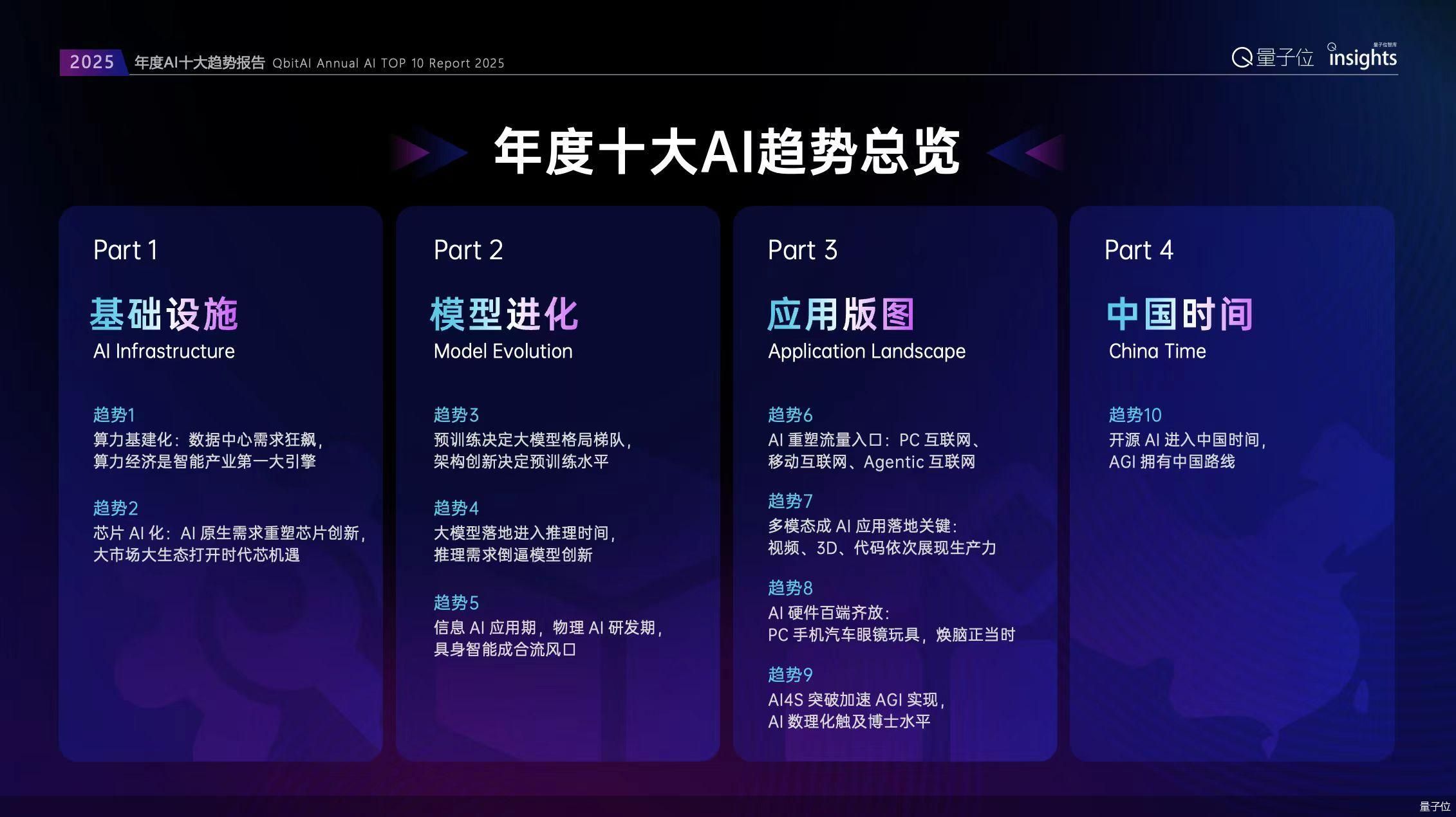
Core Insights - The report indicates that AI is transitioning from the "tool era" to the "partner era" by 2025, with a clearer development trend for 2026 [1] Infrastructure - The report emphasizes the importance of computing power and chips, identifying the computing economy as the primary engine of the intelligent industry, with unprecedented global demand for AI computing power driving the construction of large-scale data centers [3] - These data centers are evolving from traditional server hosting to AI company-led powerhouses integrating massive computing, storage, and network resources [3] - Cloud computing vendors are shifting investments from general computing resources to dedicated computing infrastructure that meets AI demands, leading to strategic partnerships with AI companies [3] - The rise of AI-native demands is reshaping chip innovation, with GPU dominance being challenged by NPU and growth in ASIC/FPGA technologies [3] - China is accelerating the construction of a self-controlled computing ecosystem, with domestic "chip + SDK + framework" solutions validated in trillion-level model training [3] Model Innovation - Pre-training determines the hierarchy of large models, while architectural innovation influences pre-training levels, with hybrid expert models becoming mainstream under computational constraints [4] - In 2025, large models will enter the "inference time," with breakthroughs in multi-modal deep inference and adaptive reasoning [4] - The report highlights a surge in research and development in physical AI and embodied intelligence, with world models and VLA frameworks becoming focal points [4] - A new order collaboration was announced by UBTECH, involving humanoid robot sales exceeding 50 million yuan, showcasing integration with AI large models [4] Application Landscape - AI is reshaping traffic entry points, transitioning from "people finding services" to "services finding people," marking a new interaction paradigm [7] - AI agents are developing closed-loop capabilities in perception, planning, decision-making, and execution, gradually replacing traditional apps [7] - The new generation of AI systems can process and understand multiple information types simultaneously, enhancing performance in complex scenarios and opening new possibilities for creative content generation and intelligent interaction [7] - The report predicts that as technology matures in the next 2-3 years, AI will become a standard tool across various industries, transitioning from a competitive advantage to a necessity [7] - The AI hardware sector is also gaining attention, with lightweight models and edge computing technologies driving AI capabilities to mobile devices, cars, and IoT devices [7] - More smart devices are gaining local AI processing capabilities, addressing data privacy, network latency, and cost efficiency issues [7]
AI的下一个突破口在哪
Bei Jing Shang Bao· 2025-12-10 13:12
Core Insights - The report indicates that AI is transitioning from the "tool era" to the "partner era" by 2025, with clearer development trends emerging for 2026 [1] Group 1: Infrastructure and Computing Power - The report emphasizes that computing power is the primary engine of the intelligent industry, with unprecedented global demand for AI computing power driving the construction of large-scale data centers [5] - Cloud computing vendors are shifting investments from traditional general computing resources to dedicated computing infrastructure that meets AI demands, evolving their partnerships with AI companies into deep strategic collaborations [5] - The demand for AI is reshaping chip innovation, with a significant market opening up for new opportunities in chip technology, challenging the dominance of GPUs and promoting the adoption of NPUs and custom chips [6] Group 2: Model Innovation - Pre-training determines the hierarchy of large models, while architectural innovation influences pre-training levels, with hybrid expert models becoming mainstream due to their cost-effective design [7] - By 2025, large models will enter a "reasoning time," with continuous breakthroughs in multi-modal deep reasoning and adaptive reasoning frameworks [7] Group 3: Embodied Intelligence and Applications - There is a growing trend in the research and development of physical AI and embodied intelligence, with significant orders being placed for humanoid robots, indicating a shift towards broader application exploration [8] - The report highlights that AI is reshaping traffic entry points, transitioning from "people finding services" to "services finding people," which is becoming the next generation of interaction paradigms [10] - The emergence of lightweight models and edge computing technologies is facilitating the proliferation of AI capabilities in devices such as smartphones, cars, and IoT devices, addressing key issues of data privacy and cost efficiency [10]