财富管理

Search documents
钱没少,家办先垮了:八个最常见的“隐形陷阱”
3 6 Ke· 2025-11-10 11:27
Core Insights - Family offices (FOs) are private wealth management institutions responsible for overseeing and coordinating family financial, administrative, and related affairs. Effective governance mechanisms are crucial for their core operations [1] - Good governance helps families achieve wealth transfer across generations, maintain harmony among family members, and drive long-term strategic goals. Conversely, weak governance can lead to inefficiencies, internal conflicts, and missed opportunities [1] Governance Importance - Governance in the context of family offices refers to a system of rules, structures, and processes that dictate decision-making, risk management, and alignment of family members' actions with long-term goals. This includes ownership structure, succession planning, reporting mechanisms, and accountability systems [2] - Good governance brings clarity and order, reduces conflicts, and ensures the continuity of family wealth and values across generations. Weak governance often results in disputes, management errors, and reputational or financial risks [3] Common Governance Traps - Common governance traps include unclear roles and responsibilities, weak succession planning, insufficient communication, and inadequate oversight of advisors or external partners [4] Strategies to Avoid Governance Failures - Family offices can avoid governance failures by establishing clear decision-making frameworks, formalizing succession plans, creating unified reporting and accountability standards, and regularly assessing and optimizing governance systems. Many family offices also engage independent advisors or non-family board members to ensure balance and objectivity [6] Role of Technology - Technology can enhance information transparency, decision quality, and reporting efficiency. However, without a proper governance framework, technology alone cannot resolve issues related to coordination or accountability [7] Governance Structure Review - Best practices suggest that governance frameworks should be systematically reviewed every few years. Significant changes, such as the addition of new family members, major asset acquisitions, or shifts in family strategy or priorities, should trigger earlier reviews [8] Eight Major Governance Traps - To thrive, family offices must avoid structural and behavioral pitfalls that can silently undermine long-term success. The eight major governance traps include: 1. Ignoring foundational planning 2. Unclear roles and responsibilities 3. Lack of a formal decision-making framework 4. Poor communication and inconsistent goals 5. Inefficient project execution and coordination 6. Rigid governance and excessive centralization 7. Talent management challenges 8. Weak security and risk management [9] Strategic Responses to Governance Traps - For each identified trap, strategic responses include: - Establishing a clear mission and purpose before forming a family office [10][12] - Creating governance charters, detailed job descriptions, and RACI matrices to clarify roles [14] - Developing a written decision-making framework and maintaining a decision register [23] - Implementing structured meeting mechanisms and transparent reporting systems to improve communication [18] - Utilizing project management frameworks to enhance project execution [21] - Regularly reviewing governance structures and involving next-generation members in decision-making [31] - Building a comprehensive talent strategy to attract and retain skilled professionals [27] - Establishing a formal risk classification system and enhancing cybersecurity measures [28] Future Outlook - In the next decade, family offices will evolve beyond asset managers to become data managers, venture partners, and value guardians. As digitalization and AI advance, governance must keep pace with technological changes. Strong ESG governance frameworks will be essential for family offices to remain relevant in a changing landscape [33]


息差收窄如何破局,中小银行如何突围,买方投顾如何升级这场金融年会给出答案
Mei Ri Jing Ji Xin Wen· 2025-11-09 08:00
Core Insights - The annual conference focused on how the Chinese financial industry can reshape its development logic in a low-interest-rate environment, emphasizing the need for transformation and innovation [1][2][3] Group 1: Key Themes from the Conference - The theme of the conference was "Resilience and Breakthrough: A New Chapter in Intelligence," highlighting the challenges and opportunities in the current financial landscape [1] - Keynote speakers discussed the importance of risk management and the shift towards high-risk asset allocation due to narrowing interest margins [2][3] - The conference featured a roundtable discussion on the transformation of small and medium-sized financial institutions, emphasizing the need for precise strategies and customer-centric services [8][9] Group 2: Insights on Wealth Management - The "2025 Wealth Management Market Report" was released, indicating a recovery in market confidence and risk appetite, leading to increased demand for diversified and professional asset allocation [5][6] - The report highlighted a shift from limited product offerings to comprehensive, customized solutions, and from single-channel approaches to ecosystem-based service models [6][7] - AI technology is expected to play a crucial role in upgrading advisory services, enhancing personalization and service quality [7] Group 3: Challenges and Strategies for Financial Institutions - The narrowing interest margin has reduced the funding cost gap between small and medium banks and larger banks, providing more competitive pricing opportunities [3] - Institutions are focusing on digital transformation and innovative service models to adapt to the low-interest-rate environment and increasing competition [9][11] - Emphasis on leveraging AI and data intelligence to improve customer acquisition and operational efficiency, moving away from traditional mass marketing strategies [11]
PWMA报告:客户对香港作为首选财富管理中心信心升至三年新高
智通财经网· 2025-11-06 03:14
Core Insights - The Private Wealth Management Association (PWMA) and KPMG China released the tenth annual report on Hong Kong's private wealth management, indicating a three-year high in client confidence towards Hong Kong as a preferred wealth management center [1] - 100% of member firms express optimism about the future development of Hong Kong's private wealth management industry over the next five years, a significant increase from 76% in 2024 [1] - Despite geopolitical instability and macroeconomic uncertainties, the industry maintains a positive outlook on overall prospects [1] Client Confidence - In 2025, 44% of private wealth management firms report that clients are increasingly inclined to choose Hong Kong as their preferred wealth management center [1] - The demand for opening new accounts and asset allocation in Hong Kong has nearly doubled, with 59% of firms indicating an increase in demand, significantly higher than 34% last year [1] Industry Resilience - The report highlights Hong Kong's resilience in the face of global economic headwinds and its ability to adapt to changing client needs as key factors driving the increase in client confidence [1] - The chairman of the PWMA, Lu Choi-yun, noted that Hong Kong is clearly on a growth trajectory, with collaborative efforts from both private and public sectors yielding results [1] - The assets under management (AUM) in the private wealth management sector grew by 15% year-on-year to HKD 10.404 trillion, with net inflows increasing by 13% over the year [1]
余伟文:香港独特地位获全球投资者信任 多元化配置下优势明显
Zhi Tong Cai Jing· 2025-11-06 03:13
Core Insights - The Hong Kong Monetary Authority (HKMA) reported a 13% growth in Hong Kong's asset management scale to approximately $4.5 trillion, with private wealth management growing by 15%, indicating a sustained growth trend due to increasing wealth in Asia and a fragmented geopolitical landscape seeking diversified asset allocation [1][1][1] Group 1 - Hong Kong's unique position as part of China and the global financial system enhances its ability to gain trust from global investors, including those from the mainland [1][1] - The HKMA has been proactive in areas such as central bank digital currencies, tokenization, and artificial intelligence applications, which are beneficial for the development of wealth management in Hong Kong [1][1][1] Group 2 - The HKMA launched a generative AI sandbox last year, emphasizing the importance of accuracy, consistency, and interpretability in AI technology usage within the industry [1][1] - Collaboration with organizations like the BIS Innovation Hub and the UK's Financial Conduct Authority (FCA) on the Noor project aims to develop explainable AI tools for banks, with a prototype expected to be released next year [1][1] - The HKMA plans to further collaborate with Cyberport next year to establish AI infrastructure, providing computing power, data ecosystems, and data analysis tools to benefit smaller institutions across various industries [1][1][1]
得益于市场波动和并购活动激增 华尔街奖金有望再创辉煌
Ge Long Hui A P P· 2025-11-05 12:15
Core Insights - Wall Street bonuses are expected to see significant growth for the second consecutive year, driven by market volatility and a resurgence in M&A activity [1] - The report from Johnson Associates Inc indicates that year-end incentive compensation for investment bankers, traders, and wealth management professionals is projected to increase [1] - Stock traders, particularly those assisting investors with stock positions, are anticipated to experience the largest bonus increase, potentially reaching 25% due to market fluctuations [1] - Alan Johnson, Managing Director of Johnson Associates, noted that all sectors are exhibiting unusually positive trends, benefiting from the overall good performance of the economy and financial markets [1] Industry Summary - The investment banking sector is poised to benefit from increased trading demand and a recovery in M&A activities [1] - The financial market's performance is contributing positively to the compensation landscape for financial professionals [1] - Market volatility is a key driver for the anticipated growth in bonuses, particularly for stock traders [1]
香港证监会黄天祐:多元化投资重要性凸显 宜采取跨地区、跨资产策略分散风险
智通财经网· 2025-11-05 07:25
Core Viewpoint - The Hong Kong Securities and Futures Commission (SFC) emphasizes the importance of effective regulation and market development to maintain and enhance Hong Kong's status as an international financial center, while acknowledging various risks impacting market resilience [1] Group 1: Market Conditions and Risks - Geopolitical tensions, rising debt, technological changes, and high concentration risks are putting pressure on market resilience, necessitating a cautious approach [1] - The SFC highlights the need for diversification through cross-regional and cross-asset investment strategies to mitigate risks [1] Group 2: Market Growth and Opportunities - The Hong Kong market and wealth management sector have shown strong growth, with new stock fundraising returning to the top position globally, attracting large sovereign funds and institutional investors [1] - The Assets Under Management (AUM) in Hong Kong has doubled over the past decade, indicating robust confidence in Hong Kong's financial and regulatory systems from international markets [1] Group 3: Future Outlook - The International Monetary Fund (IMF) estimates that Asia will be the largest driver of global economic growth in the next two years, and Hong Kong is positioning itself to capitalize on this trend [1] - The SFC plans to enhance market performance and wealth creation capabilities, collaborating with regulatory bodies like the Hong Kong Monetary Authority to protect investors and build international confidence [1] - There will be a focus on providing a wider range of product offerings, strengthening market connections, and promoting the development of tokenization and virtual asset markets [1] - Progress in the asset management sector is strong, with continued efforts to provide new opportunities for global investors [1]
美国私人财富管理协会|中国财富传承的深层逻辑与现实出路
Sou Hu Cai Jing· 2025-11-05 02:45
Core Insights - Wealth inheritance in China faces significant challenges, often resulting in the phenomenon of "wealth not lasting beyond three generations" [1][4][26] Historical Context - The cyclical nature of family wealth decline is illustrated through the story of the Jia family in "Dream of the Red Chamber," reflecting a broader historical trend in Chinese families [3][4] - Since the Song and Ming dynasties, many prominent families have failed to sustain wealth across generations due to inherent flaws in family systems, wealth concepts, and social structures [4][6] Cultural and Institutional Challenges - The agrarian economy's focus on fixed assets like land and property limits wealth mobility and is vulnerable to external shocks, hindering long-term wealth transmission [6] - Traditional Chinese culture emphasizes family and state unity, where family authority often overshadows individual property rights, leading to a lack of systematic wealth management [9][10] - The equal distribution of inheritance leads to wealth dilution across generations, contrasting with Western practices that favor primogeniture for capital concentration [10] Modern Structural Challenges - Despite rapid wealth accumulation post-reform, issues of wealth inheritance remain acute, with modern wealth being more complex and requiring specialized planning [12][13] - Many private enterprises lack governance structures, leading to conflicts in management and ownership during transitions, with over 60% of firms unprepared for succession [14] - Generational value differences create conflicts in wealth management, with younger generations often favoring consumption over prudent financial stewardship [15] Comparative Analysis - Western wealth inheritance mechanisms are grounded in legal frameworks that protect individual property rights, contrasting with China's reliance on familial and moral constraints [17][18] Pathways to Solutions - Establishing modern family governance structures is essential for effective wealth transmission, including family charters and professional family offices [21][22] - Strengthening legal frameworks and inheritance planning tools can provide necessary protections and flexibility for wealth distribution [23] - Promoting wealth education and shared family values across generations is crucial for ensuring that wealth is not only preserved but also aligned with family missions [24]

Morgan Stanley CEO on Business Strategy in Asia
Youtube· 2025-11-04 05:49
Group 1 - The normalization of US-China tensions is positively impacting capital markets in Hong Kong, making them more receptive to new products [1][2] - China's recovery from COVID-19 has been significant across various industries, with Hong Kong emerging as a key hub for capital raising [2][8] - Hong Kong is currently the most active IPO market globally, with a diverse range of sectors attracting investment [8][12] Group 2 - The competitive landscape for equity capital markets (ECM) has evolved, with Chinese banks increasingly participating in smaller deals, indicating a shift in market dynamics [10][12] - The dual listing of companies allows for greater capital raising opportunities and access to a broader investor base, enhancing the competitive environment [11][12] - Investors are seeking specific allocations in sectors like robotics and biotech, highlighting the importance of company-specific insights from investment banks [13][18] Group 3 - Morgan Stanley's wealth management strategy in Asia focuses on connecting clients with global perspectives while catering to high net worth individuals [19][21] - Hong Kong remains a critical financial center for capital flows, serving as a gateway for foreign banks to access the Chinese market [23][32] - The partnership with local firms is essential for providing transparency and local advice, which is crucial for successful capital raising [11][33] Group 4 - Japan's economic landscape is changing, with increased shareholder activism and a focus on governance, making it an attractive market for investment banking and wealth management [27][28] - The demographic challenges in India and China present opportunities for both markets to learn from each other, particularly in developing global competitors [35][36]

全球财富将迎来传承浪潮,家族艺术收藏如何转型?
第一财经· 2025-11-03 08:53
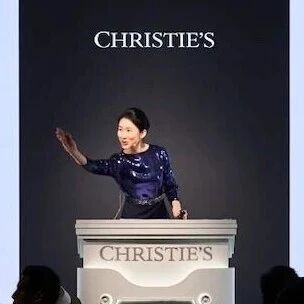
Core Viewpoint - The article discusses the unprecedented wealth transfer expected to occur globally over the next 20 to 25 years, amounting to $83 trillion, and its implications for the art market and collections [3][4]. Group 1: Wealth Transfer and Art Market Impact - The UBS Global Wealth Report predicts that approximately $9 trillion will be transferred between spouses, while $74 trillion will be passed down to the next generation [3]. - The art collection is a significant component of wealth for high-net-worth individuals, and the upcoming wealth transfer will influence art and collections [4]. Group 2: Female Wealth and Art Collection Trends - The UBS Art Market Report reveals a significant increase in female wealth, driven by rising incomes and improved opportunities in work and education [7]. - Female collectors are increasingly focusing on works by female artists, including both contemporary pieces and historically overlooked artists [8]. - Women collectors tend to be more sensitive to themes such as "motherhood" and are interested in the social value of collections, often integrating philanthropy into their collecting practices [8]. Group 3: Inheritance and Art Collection - In China, 97% of billionaires are self-made, and 47% of high-net-worth collectors have never inherited art, indicating a forthcoming large-scale transfer of wealth and art collections [9]. - The ideal scenario for art collection inheritance involves the next generation being involved from a young age, understanding the significance of collecting, and gradually taking over decision-making [9]. Group 4: Strategies for Collection Continuation - Some collectors may choose not to continue their collections, opting to sell them, a trend expected to increase as the art market matures in Asia [10]. - Charitable donations of important collections to public or private institutions are also common, often in a mixed approach where some pieces are retained for family legacy while others are sold or donated [10]. - A case study illustrates how a family found common ground between generations, leading to a decision on which artworks to keep and which to sell, emphasizing the narrative behind their collection [11].

全球财富将迎来传承浪潮,家族艺术收藏如何转型?
Di Yi Cai Jing· 2025-11-03 04:08
Core Insights - The global art market is experiencing a significant shift due to the impending wealth transfer, estimated at $83 trillion over the next 20 to 25 years, which will impact art and collectibles [3][4] - The increase in female wealth and influence in the art market is notable, with women collectors showing a preference for works by female artists and a focus on social value in their collections [4][5] - The inheritance of art collections is becoming more common in China, with 47% of high-net-worth collectors having never inherited art, indicating a future shift in ownership and collection dynamics [6][7] Group 1: Wealth Transfer and Art Market - UBS's report predicts a historic wealth transfer of $83 trillion, with $9 trillion moving between spouses and $74 trillion across generations [3] - The art collection is a significant part of high-net-worth individuals' wealth, and the upcoming transfer will influence the art market [3][4] Group 2: Female Influence in Art Collecting - The UBS report highlights a major change in wealth structure, with an increase in female wealth due to income growth and inheritance [4] - Female collectors are increasingly focusing on works by women artists and are sensitive to themes like motherhood, often integrating social causes into their collections [5] Group 3: Inheritance and Collection Dynamics - In China, 97% of billionaires are self-made, and many high-net-worth collectors have not inherited art, suggesting a future of significant art inheritance [6] - The ideal scenario for art collection inheritance involves gradual decision-making power transfer to the next generation, fostering a deeper understanding of the collection's significance [6][7] - Some collectors may choose to sell their collections instead of passing them down, reflecting a growing trend in the mature art market [7][8]