智能网联新能源汽车

Search documents
上半年京津冀GDP同比增长5.4%
Bei Jing Qing Nian Bao· 2025-08-28 01:46
Economic Performance - The GDP of the Beijing-Tianjin-Hebei region reached 5.7 trillion yuan in the first half of the year, with a year-on-year growth of 5.4% at constant prices [2] - The industrial added value for large-scale industries in the three regions grew by 7.0%, 5.1%, and 7.4% respectively, with high-tech manufacturing accounting for 32.9% and 16.4% of the industrial added value in Beijing and Tianjin [2] - The service sector's added value was 4.1 trillion yuan, showing a year-on-year increase of 5.5% [2] - The total retail sales of consumer goods in the region reached 1.60978 trillion yuan, growing by 0.7% year-on-year [2] - Fixed asset investment (excluding rural households) increased by 14.1%, 5.5%, and 6.5% in the three regions respectively [2] Collaborative Development - The region is accelerating collaborative innovation and industrial cooperation, with significant projects like the completion of the Zhangjiakou computing power center and the establishment of the Beijing-Tianjin-Hebei National Technology Innovation Center for smart connected vehicles [3] - In the first half of the year, Tianjin received 99.04 billion yuan in industrial project investments from Beijing and Hebei, accounting for nearly 50% of all industrial project investments [3] - The Beijing sub-center in Tongzhou district saw a GDP growth of 12.5% and fixed asset investment growth of 18.7%, both exceeding the city average [3] Public Services Integration - The transportation network has improved, with the first intercity bus line to Beijing now operational and seamless connections between Hebei and Beijing's transit systems [4] - Medical resources are being shared, with 8.398 million visits for direct settlement of medical expenses in Beijing by insured individuals from Tianjin and Hebei [4] - Educational collaboration has been established, with over 300 schools in Hebei cooperating with Beijing-Tianjin institutions, and 13,000 students enrolled in joint programs [4] Income Growth - The per capita disposable income in the three regions increased by 4.8%, 4.7%, and 5.3% respectively in the first half of the year [5]
天津西青:向“新”而行 传统产业数字化转型跑出“加速度”
Zhong Guo Xin Wen Wang· 2025-08-22 05:04
Group 1: Digital Transformation in Traditional Industries - Tianjin Xiqing District is accelerating the digital transformation of traditional industries, exemplified by the production of the 1 millionth physical zone control unit (ZCU) by Jingwei Hengrun, which holds an 18.07% market share in China's passenger car ZCU market [1][2] - The region is fostering high-quality industrial development through policy support, technological empowerment, and ecosystem construction [1][4] Group 2: Automotive Industry Advancements - Tianjin Xiqing has become a key area for the new energy vehicle industry in the Beijing-Tianjin-Hebei region, with companies like Jingwei Hengrun and others forming a complete industrial chain in power batteries and intelligent driving systems [2] - Jingwei Hengrun has partnered with L4 autonomous driving company Baixinniu to promote the large-scale deployment of unmanned logistics vehicles and is accelerating the certification of domestic silicon carbide modules in collaboration with Changfei Advanced Semiconductor [2] Group 3: Innovations in Traditional Medicine and Equipment Manufacturing - Tianjin Hongrentang Pharmaceutical is investing in a digital intelligent extraction manufacturing project to enhance the efficacy and quality control of traditional Chinese medicine, featuring a smart manufacturing production line designed by academic experts [3] - Tianjin First Machine Tool Co., a traditional enterprise, is undergoing a digital and intelligent upgrade, achieving breakthroughs in high-precision vertical grinding machines and micro-level processing technology [3] Group 4: Policy Support and Financial Assistance - In the first half of the year, Tianjin Xiqing District recommended 24 projects for special national bonds, with 14 projects receiving 137 million yuan in support [4] - The district is helping enterprises reduce financing costs, with six projects receiving special loans from the Ministry of Industry and Information Technology, totaling a loan demand of 100 million yuan [4]
市场监管总局、工信部再出击 新能源车未经备案OTA不得升级
Xi Niu Cai Jing· 2025-08-18 09:44
Core Viewpoint - The draft notification from the State Administration for Market Regulation and the Ministry of Industry and Information Technology imposes stricter requirements on companies regarding the recall and supervision of intelligent connected new energy vehicles [2] Group 1: Defect Investigation and Recall Management - Companies are required to enhance consumer awareness by clearly stating safety tips and usage instructions for combined driving assistance systems in vehicle apps, onboard information systems, and user manuals to avoid confusion between assistance and autonomous driving functions [4] - Companies must develop driver monitoring, warning, and intervention features to address situations where the driver is disengaged, such as being distracted or asleep, to reduce safety risks [4] - The draft emphasizes the need for companies to strengthen defect information monitoring, with the regulatory authority conducting investigations into companies with safety issues and urging recalls when necessary [4] Group 2: OTA Upgrade Regulations - Companies are prohibited from conducting OTA (Over-The-Air) upgrades without prior filing and must not push untested software versions or conceal defects through OTA methods, ensuring product consistency and safety accountability [4] - Companies frequently engaging in OTA upgrades will be subject to focused inspections and special checks by the regulatory authority [4] Group 3: Advertising and Commercial Promotion Supervision - The draft specifies that companies must provide truthful and comprehensive information about intelligent connected new energy vehicles, prohibiting false or exaggerated claims and preventing misleading implications about non-existent features [4] - Companies are also restricted from overstating vehicle performance to avoid misleading consumers regarding high-speed driving [4] Group 4: Incident Reporting and Investigation - Companies are required to report safety incidents and collisions involving combined driving assistance systems promptly, with the regulatory authority collaborating with other departments to conduct in-depth investigations and analyses of accidents [5] - Failure to report incidents as required will lead to public disclosure and corrective actions, while companies concealing significant facts will face special investigations [5] - The draft aims to enforce stricter requirements on companies, which is essential for the development of electrification, driving technological upgrades, and accelerating industry standard formation [5]


2025全国生态日京津冀活动暨第三届京津冀绿色发展大会在河北保定开幕
Zhong Guo Jing Ji Wang· 2025-08-17 06:03
Group 1 - The 2025 National Ecological Day event and the Third Beijing-Tianjin-Hebei Green Development Conference opened in Baoding, Hebei, focusing on the theme "Collaborative 'Green' Movement for 'New' Energy Release" [1] - Experts shared development achievements and strategic plans on key topics such as carbon emission dual control systems, new power system construction, and zero-carbon park development [1] - The conference showcased ten typical cases of green development in the Beijing-Tianjin-Hebei region, highlighting significant achievements in economic development and ecological protection since the implementation of the major national strategy [1] Group 2 - Baoding has been cultivating a systematic green low-carbon industrial system featuring intelligent connected new energy vehicles, high-end electric and new energy equipment, green health buildings, and hydrogen energy [2] - The city is deepening cooperation in green technology research and development, promoting the transformation of traditional manufacturing towards high-end, intelligent, and green practices [2] - Baoding is enhancing collaboration in green talent cultivation, building a talent exchange platform, and optimizing talent resource allocation [2]
站产城互融
Jing Ji Ri Bao· 2025-08-16 21:50
Group 1 - The core viewpoint emphasizes the role of Wuqing District as a key player in promoting the integration of Beijing-Tianjin-Hebei, focusing on deep integration of industry and urban development [1] - Wuqing District has established a comprehensive management system for seven industrial functional zones, including Wuqing Development Zone and Jingqing Automotive Industry Park, to facilitate the integration of construction, production, investment, and services [1] - In the first half of the year, Wuqing District achieved a GDP of 49.261 billion yuan, representing a year-on-year growth of 5.8%, with 390 projects landing and an expected investment of 11.8 billion yuan [1] Group 2 - Wuqing District is developing a new commercial area themed around high-end fashion consumption and automotive culture, enhancing its attractiveness to visitors [2] - The district has launched the "Wuqing New Ten Scenery" and ten high-quality tourism routes, improving its tourism offerings [2] - In 2023, Wuqing District hosted the "Meet the Canal" cultural creative market and other events, attracting 5.814 million visitors, a year-on-year increase of 3.4% [2]
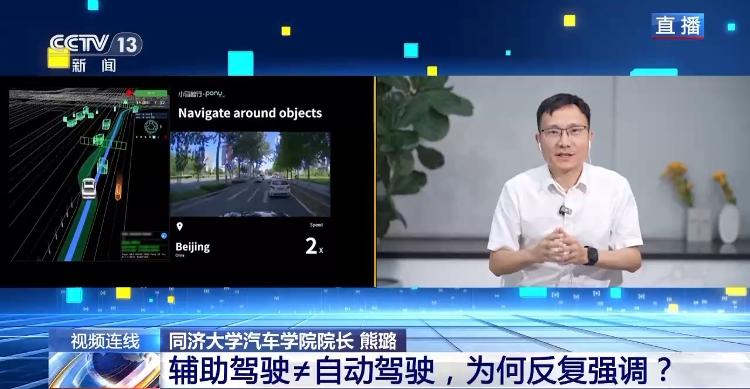
辅助驾驶≠自动驾驶,为何反复强调?
Qi Lu Wan Bao· 2025-08-15 00:49
Group 1 - The core viewpoint of the news is the release of a draft notification by the State Administration for Market Regulation and the Ministry of Industry and Information Technology aimed at strengthening the recall and supervision of intelligent connected new energy vehicles, particularly focusing on the promotion and use of Level 2 (L2) driver assistance systems [1] - The draft includes requirements for software upgrades to address current issues and aims to prevent safety hazards associated with over-the-air (OTA) updates, which may conceal defects rather than resolve them [1] - The new regulations are intended to standardize OTA practices among companies, reducing chaotic competition and ensuring that software upgrades are adequately verified before implementation [1] Group 2 - Strengthening driver training is deemed necessary as traditional driving schools focus on conventional driving skills, while future systems require drivers to develop a safety awareness regarding the use of driver assistance and automated systems [2] - The interaction between drivers and Level 3 (L3) conditional automated driving systems necessitates specific skills that drivers must learn, as these systems may prompt drivers to take control of the vehicle [4] - China possesses significant advantages in advancing towards higher levels of automation (L3, L4, L5), including a comprehensive supply chain for intelligent connected new energy vehicles and a rich talent pool of engineers in the field [5][6] Group 3 - The competitive nature of the Chinese automotive market fosters rapid technological iteration, positioning the country to potentially lead in future technological developments [6] - The stability of policies regarding new energy and intelligent connected vehicles in China contrasts with other countries, allowing for sustained progress in the automotive industry [6]
新闻1+1丨辅助驾驶≠自动驾驶,为何反复强调?
Yang Shi Wang· 2025-08-14 22:24
Group 1 - The core viewpoint of the news is the release of a draft notification by the State Administration for Market Regulation and the Ministry of Industry and Information Technology aimed at strengthening the recall, production consistency supervision, and standardized promotion of intelligent connected new energy vehicles [1] - The draft notification specifically addresses the need to regulate the promotion and use of Level 2 (L2) driver assistance systems by car manufacturers, which is expected to play a significant role in ensuring safety [1] - The document includes requirements for software upgrades, targeting current issues related to the potential concealment of defects through Over-The-Air (OTA) updates by companies [1][3] Group 2 - There is a necessity to enhance driver training, as traditional driving schools focus on conventional driving skills, while future systems require drivers to develop a safety awareness regarding the use of driver assistance and autonomous driving systems [4] - The interaction between the driver and the system in Level 3 (L3) conditional autonomous driving systems will require drivers to master new skills, such as responding to takeover prompts during assisted driving [6] - China possesses significant advantages in the development of L3, L4, and L5 autonomous driving technologies, including a complete industrial chain for intelligent connected new energy vehicles and a rich talent pool of engineers [7][9]
两部门征求意见:辅助驾驶不能当自动驾驶 未经备案OTA不得升级
中汽协会数据· 2025-08-14 07:53
Core Viewpoint - The article discusses the draft notice from the State Administration for Market Regulation and the Ministry of Industry and Information Technology regarding the strengthening of recall management, production consistency supervision, and standardized publicity for intelligent connected new energy vehicles. Group 1: Safety and Monitoring Requirements - Companies are required to display safety prompts and usage instructions for combined driving assistance systems prominently in vehicle apps and user manuals to prevent drivers from misinterpreting these features as autonomous driving capabilities [2] - Companies must develop and implement driver monitoring, warning, and intervention functions that prioritize safety, ensuring timely alerts and control measures when drivers disengage from dynamic driving tasks [2][4] Group 2: Defect Monitoring and Reporting - Companies should enhance defect information monitoring for intelligent connected new energy vehicles to mitigate risks from cyberattacks and vulnerabilities, with the market regulator conducting investigations into safety incidents [4] - Companies are prohibited from disabling driver monitoring and warning functions through user actions or system logic, with special investigations into deficiencies in these areas [4] Group 3: Compliance and Information Disclosure - Companies must accurately report key information regarding combined driving assistance systems and energy storage devices in the vehicle qualification certificate system, and must not conduct OTA upgrades without proper filing [5] - Companies are required to provide truthful and comprehensive information about the automation levels, system capabilities, and boundaries of intelligent connected new energy vehicles to ensure consumers have a correct understanding [5] Group 4: Marketing and Advertising Regulations - Companies must not imply that combined driving assistance systems can be viewed as autonomous driving systems or exaggerate their capabilities, preventing driver misuse [7] - The market regulator will intensify supervision of advertising and promotional activities that mislead consumers regarding the capabilities of combined driving assistance systems, and will conduct joint investigations with the Ministry of Industry and Information Technology [7] Group 5: Incident Reporting and Accountability - Companies must promptly report safety incidents and collisions involving combined driving assistance systems, with the market regulator and relevant departments conducting thorough investigations into these reports [7]

市场监管总局征求意见:对频繁开展OTA升级活动的企业 将进行重点抽查和专项核查
Cai Jing Wang· 2025-08-14 07:21
Core Viewpoint - The regulatory authorities are seeking to enhance the supervision and management of intelligent connected new energy vehicles (NEVs) regarding product recalls and production consistency, emphasizing the importance of accurate reporting and compliance with software upgrade protocols [1] Group 1: Regulatory Requirements - Companies must accurately report key information such as the combination of driving assistance systems and energy storage devices in the vehicle qualification certificate system [1] - Strict management of Over-The-Air (OTA) software upgrades is mandated, requiring prior approval for any upgrades and prohibiting the release of untested software versions to users [1] - Companies are held responsible for ensuring that the intelligent connected NEVs produced are consistent with the approved products and must bear product safety responsibilities [1] Group 2: Enforcement and Compliance - The Ministry of Industry and Information Technology and the State Administration for Market Regulation will enhance coordination in managing compliance [1] - Companies failing to report technical parameters or discrepancies between vehicle performance and reported parameters will face regulatory actions [1] - Frequent OTA upgrade activities by companies will be subject to special inspections and checks by the regulatory authorities [1]
两部门征求意见:辅助驾驶不能当自动驾驶
中国基金报· 2025-08-14 01:35
Core Viewpoint - The article discusses the draft notification from the State Administration for Market Regulation and the Ministry of Industry and Information Technology regarding the management and supervision of intelligent connected new energy vehicles, emphasizing safety measures and consumer protection [2]. Group 1: Safety Measures and Consumer Protection - Companies must display safety prompts and usage instructions for combined driving assistance systems prominently in vehicle apps and user manuals to prevent drivers from misinterpreting these features as autonomous driving capabilities [3]. - Companies are required to develop and implement driver monitoring, warning, and intervention functions to ensure driver engagement, including measures like voice alerts and steering wheel vibrations when the driver is distracted or unresponsive [3]. - Companies must enhance defect information monitoring for intelligent connected new energy vehicles to mitigate risks from cyberattacks and vulnerabilities, with the market regulator conducting defect investigations as necessary [3][4]. Group 2: Compliance and Reporting Requirements - Companies must accurately report key information regarding combined driving assistance systems and energy storage devices in the vehicle qualification certificate system and adhere to classified management requirements for over-the-air (OTA) software upgrades [4]. - Companies are prohibited from misleading consumers about the capabilities of their driving assistance systems and must provide truthful and comprehensive information regarding automation levels and system boundaries [5]. - Companies are required to report safety incidents and collisions involving combined driving assistance systems promptly, with regulatory bodies conducting thorough investigations and audits of incident reporting [6].