核聚变能源

Search documents
全球核聚变竞赛,欧美急什么
Hu Xiu· 2025-10-16 00:11
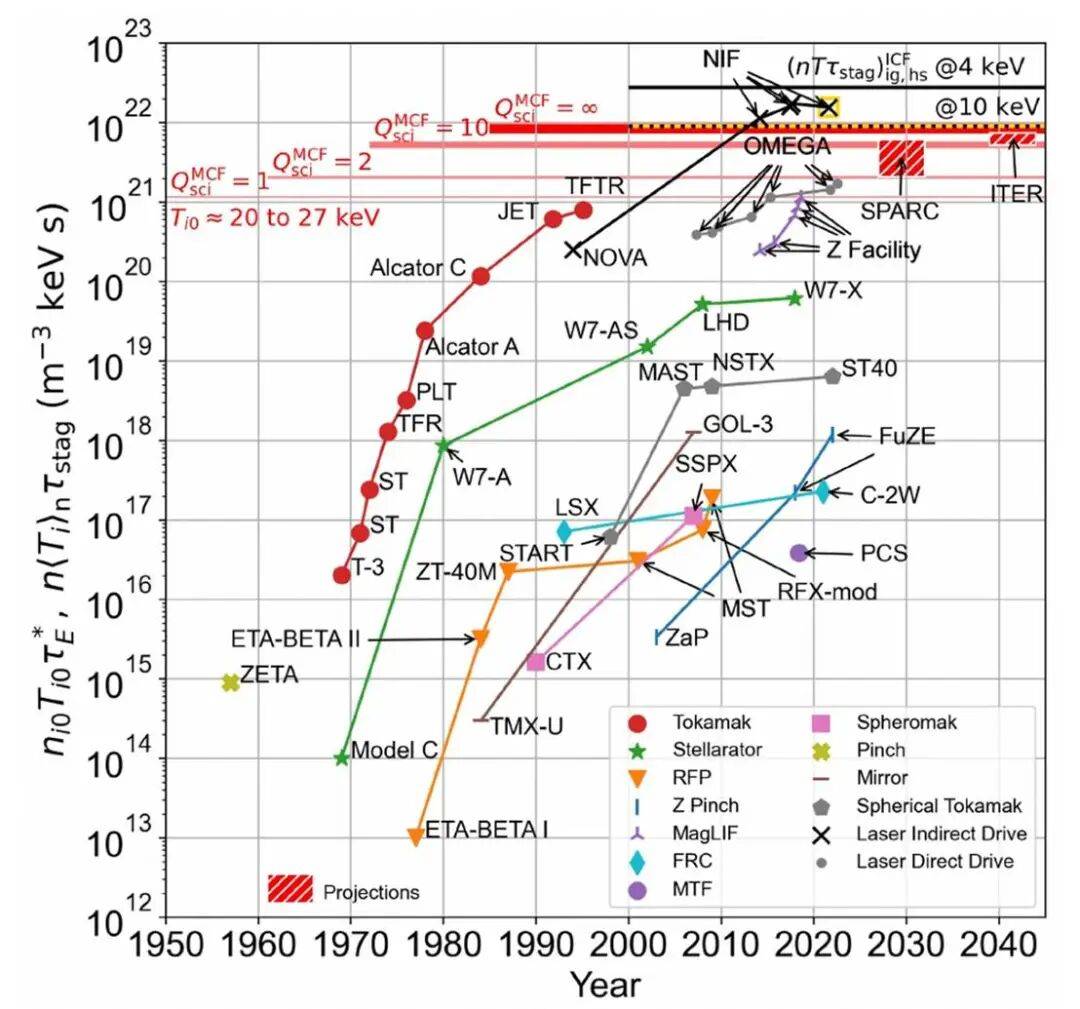
Core Insights - The International Atomic Energy Agency (IAEA) has released the "Fusion Energy Outlook 2025," indicating that global fusion energy exploration has entered a decisive new phase in 2023 [1] - Significant milestones have been achieved in fusion energy, particularly by the United States and China, with the U.S. National Ignition Facility (NIF) claiming a Q value greater than 4 and China's BEST project entering the assembly phase [1][2] - The report highlights a growing competition between the U.S. and China in the fusion energy sector, with increasing investments and advancements in technology [12][21] Investment and Funding - Global funding for fusion enterprises has surpassed the total amount raised in the previous year, reaching a historical high by September 2023 [13] - China's cumulative funding in fusion energy, approximately $5 billion, is still less than the U.S.'s $7.5 billion, but since 2023, China's annual funding has exceeded that of the U.S. [14] - The U.S. report indicates that China has mobilized up to $13 billion for fusion infrastructure since 2023, significantly outpacing U.S. investments [17] Technological Advancements - Fusion performance has improved tenfold over the past decade, with projections indicating that the 2030s will be a critical decade for fusion power generation [3][6] - The Lawson criteria, which determines the energy gain of fusion systems, shows that the three-product (temperature, fuel density, and confinement time) is improving at a rate of one order of magnitude every ten years [4][5] Global Competition - The U.S. and China are positioned as the primary competitors in the commercial fusion energy race, with both countries' projects nearing operational status [12][21] - The report notes that 27% of the papers submitted to the IAEA Fusion Energy Conference in 2025 are from China, surpassing the combined contributions from the U.S. and Japan [21] Supply Chain Concerns - The U.S. faces significant challenges regarding supply chain security in the fusion sector, particularly in critical minerals and components where China holds a dominant position [23][26] - Key materials such as tungsten and lithium-6 are primarily produced by China and Russia, raising concerns for U.S. energy independence [26][27] Strategic Recommendations - The U.S. report emphasizes the urgency for increased government funding and subsidies to maintain competitiveness in the fusion energy sector [28]

行业洞察 | 可控核聚变技术喜迎突破 耐心资本布局“终极能源”
Xin Hua Cai Jing· 2025-10-15 02:21
Core Insights - Recent advancements in controllable nuclear fusion technology indicate a shift from laboratory breakthroughs to engineering applications, providing clear value anchors for the capital market [1][2][11] Group 1: Technological Developments - The first domestic compact fusion energy experimental device (BEST) has successfully installed its core component, and the key systems of the fusion reactor main facility "Kua Fu" have passed acceptance tests [1][2] - China aims to build and operate its first commercial fusion power plant in Shanghai by 2045, with significant milestones expected by 2027 and 2030 for fusion energy demonstration and power generation, respectively [2][10] - High-temperature superconducting technology is becoming a crucial driver for compact and economical fusion reactors, significantly reducing construction costs and time [6][7] Group 2: Policy and Investment Landscape - The introduction of the "Atomic Energy Law" in September 2023 marks a significant policy shift, with the establishment of a 20 billion yuan fusion industry fund and local subsidies up to 50 million yuan [3][10] - The nuclear fusion industry has attracted over $7.1 billion in global investments, with 45 companies involved in fusion-related activities [5][10] - The capital expenditure for fusion technology development is expected to exceed 10 billion yuan annually, with total existing facility investments around 136.2 billion yuan [3][10] Group 3: Market Dynamics and Future Outlook - The nuclear fusion index has seen a year-to-date increase of 63.79%, reflecting strong market interest and institutional investment inflows [11][12] - Major Chinese companies, such as China Nuclear Power and China Nuclear Engineering, are deeply involved in key fusion projects, indicating a robust domestic industry capable of supporting global fusion initiatives [12][13] - The global fusion device market is projected to reach 2.26 trillion yuan by 2030-2035, with China expected to play a leading role in constructing 12 commercial reactors [10][12]


中国核聚变装置BEST项目建设取得关键突破,多家A股公司披露布局情况
Di Yi Cai Jing· 2025-10-14 14:04
Core Viewpoint - The article highlights significant advancements in China's self-developed nuclear fusion device (BEST), particularly the successful installation of the first key component, the dewar base, and the involvement of several listed companies in the project [1]. Group 1: Company Involvement - GuoDa Special Materials supplies materials for superconducting coil armor for nuclear fusion and has achieved mass production; the company has also won the bid for the machining project of the BEST coil box, which is currently in progress [1]. - Parker New Materials is a member of the fusion industry alliance and has conducted material research and product provision for key components of the BEST project, including vacuum chambers, shielding layers, filters, and the first wall [1]. - Far East Holdings' subsidiary, Anlan, has won the bid for the compact fusion energy experimental device (BEST) project; the company's products have been applied in the controllable nuclear fusion test project (EAST) and are collaborating with leading research institutions and universities on superconducting strip and controllable nuclear fusion cable technology [1].
中国核聚变装置BEST项目建设取得关键突破 多家A股公司披露布局情况
Di Yi Cai Jing· 2025-10-14 14:01
Group 1 - The domestic nuclear fusion device (BEST) has achieved a key breakthrough with the successful installation of its first critical component, the dewar base [1] - Several listed companies have responded regarding their involvement in the BEST project on interactive platforms [1] Group 2 - Guangda Special Materials supplies materials for superconducting coil armor for nuclear fusion and has achieved mass production; the company has also won the bid for the machining project of the BEST coil box, which is currently in progress [3] - Parker New Materials is a member of the fusion industry alliance and has conducted material research and product provision for key components such as vacuum chambers, shielding layers, filters, and first walls for the BEST project [4] - Far East Holdings' subsidiary, Anlan, has won the bid for the compact fusion energy experimental device (BEST) project; the company’s products have been applied in controllable nuclear fusion test projects (EAST) and are actively collaborating with leading research institutions and universities on superconducting strip and controllable nuclear fusion cable technology [5]
广大特材:中标BEST线圈盒机加工项目 正在实施中
Mei Ri Jing Ji Xin Wen· 2025-10-14 08:36
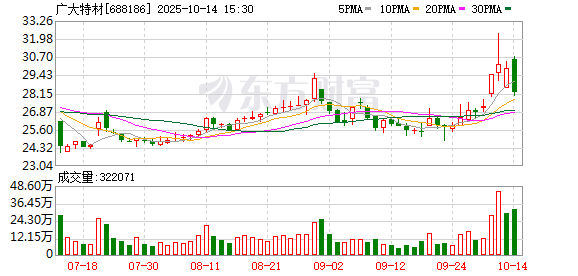
每经AI快讯,10月14日,有投资者问广大特材,公司有供货聚变新能(安徽)可控核聚变BEST线圈盒机 加工项目?广大特材在互动平台表示,公司主要供应核聚变超导线圈铠甲用材料并已实现批量化供应; 同时公司中标BEST线圈盒机加工项目,目前正在实施过程中。 ...

岩山科技:岩超聚能完成数亿元天使轮融资 AI加速仿星器聚变能源与超导应用开发
Zheng Quan Shi Bao Wang· 2025-10-14 06:35
Core Viewpoint - Yan Mountain Technology (002195) announced that its subsidiary Yan Chao Fusion has completed a multi-hundred million RMB angel round financing, aimed at advancing the research and development of fusion devices and superconducting technology applications [1] Financing and Investment - The financing round was co-led by Yan Mountain Technology and Yan Mountain Investment, with the funds designated for the development of advanced superconducting fusion devices [1] Technological Development - Yan Chao Fusion is focusing on an advanced superconducting fusion route, emphasizing its unique steady-state operation advantages and future grid compatibility [1] - The company is advancing the research of an advanced superconducting fusion system using internationally leading quasi-equilibrium magnetic configurations and leveraging AI and 3D printing to accelerate device development [1] Collaborative Efforts - The company is establishing a "Fusion and New Energy Joint Laboratory" in collaboration with Peking University in Shenzhen, focusing on the physics and engineering of fusion devices, AI for science, superconducting materials, and energy applications [1] - Yan Chao Fusion is actively expanding international research cooperation channels and plans to recruit globally recognized fusion experts to form a top-tier academic advisory committee [1]

可控核聚变概念活跃,安泰科技斩获4连板,西部超导等大涨
Zheng Quan Shi Bao Wang· 2025-10-14 03:26
Core Insights - The controlled nuclear fusion sector is experiencing significant activity, with several companies like Antai Technology and Hezhu Intelligent hitting trading limits, indicating strong market interest [1] - Major advancements have been reported in China's fusion projects, particularly with the successful testing of the CRAFT facility's key components and the progress of the BEST project [1] - The global focus on controlled nuclear fusion as a key energy strategy is leading to accelerated policy support and investment opportunities in related materials and components [1] Group 1 - The CRAFT facility's prototype component has achieved a steady-state thermal load capacity of 20 megawatts per square meter, marking a significant milestone in China's fusion technology development [1] - The BEST project has successfully completed the development and installation of its key component, the Dewar base, indicating progress in the main engineering phase [1] - Institutions are noting that controlled nuclear fusion is becoming a priority in energy strategies globally, with China implementing policies to enhance industry development [1] Group 2 - The fusion industry is seeing increased activity compared to July and August, with expectations of major announcements at the International Atomic Energy Fusion Energy Conference [2] - The BEST project is anticipated to initiate a second round of intensive bidding in the fourth quarter, covering high-value products such as the first wall and power supply [2] - The entry of major players and significant progress in overseas fusion projects are expected to trigger a second market rally for fusion technologies this year [2]

皖能电力:间接持有聚变新能股权;盐湖股份:第三季度净利同比预增 | 新能源早参
Mei Ri Jing Ji Xin Wen· 2025-10-13 23:19
Group 1 - WanNeng Power indirectly holds approximately 3.5% of Fusion New Energy (Anhui) Co., Ltd., indicating a strategic move towards nuclear fusion as a future energy source [1] - The investment reflects WanNeng Power's commitment to transitioning into strategic emerging industries, positioning itself for potential future gains in the energy revolution [1] Group 2 - Cangge Mining's subsidiary, Geermu Cangge Lithium Industry Co., Ltd., has officially resumed production after receiving approval to restart lithium resource development, ending an 87-day temporary shutdown [2] - The company anticipates minimal impact on its 2025 annual performance from the shutdown, demonstrating strong operational resilience and reducing market uncertainty [2] Group 3 - Salt Lake Co. expects a net profit of 4.3 billion to 4.7 billion yuan for the first three quarters of 2025, representing a year-on-year increase of 36.89% to 49.62% [3] - The company projects a third-quarter net profit of 1.8 billion to 2.2 billion yuan, nearly doubling from the previous year, driven by rising potassium chloride prices despite a decline in lithium carbonate prices [3] - Salt Lake Co.'s dual business strategy in potassium and lithium showcases its strong risk resilience and profitability, reinforcing its position as an industry leader [3]


中国科学力量再迎突破,未来能源或迎曙光
Sou Hu Cai Jing· 2025-10-13 16:20
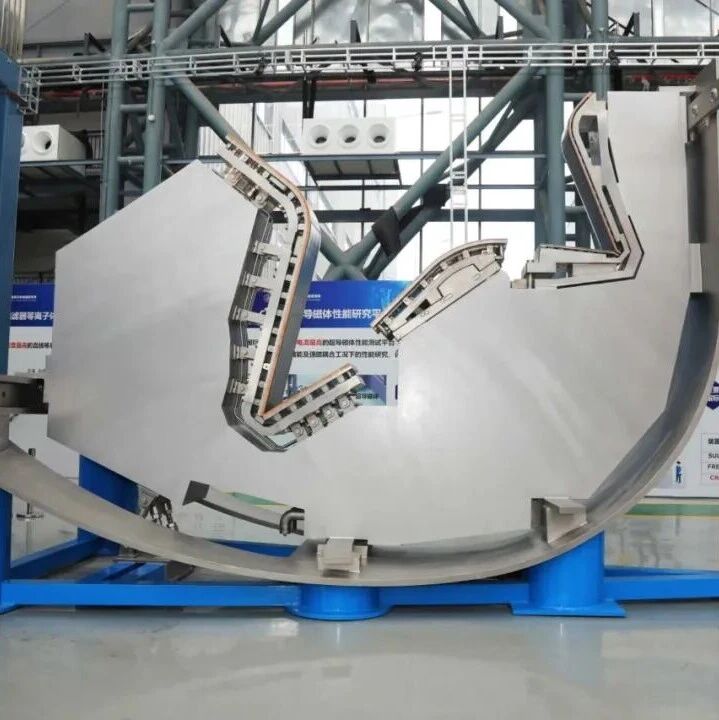
Core Viewpoint - The successful development and delivery of the toroidal field magnet coil box marks a significant milestone in China's nuclear fusion research, indicating a potential pathway towards the commercialization of fusion energy [1][3]. Group 1: Technological Advancements - The toroidal field magnet coil box, weighing 400 tons and measuring 21m x 12m, is the largest of its kind globally, surpassing similar components in the ITER project by 1.2 times in size and double in weight [3]. - The development process took over five years, overcoming numerous technical challenges, showcasing China's growing technological innovation and research capabilities in this field [3][5]. - This breakthrough signifies a shift from China being a technology follower to a technology leader in nuclear fusion, reflecting the dedication of countless researchers and experts [3][5]. Group 2: Global Energy Landscape - China's advancements in nuclear fusion technology may reshape the global energy landscape, potentially altering the dynamics of energy competition worldwide [5]. - The success in fusion energy research is seen as a pivotal moment that could lead to a fundamental change in global energy structures over the coming decades [6][8]. - The emergence of China in this domain suggests a reconfiguration of global scientific power, moving away from the traditional dominance of Western nations [5][6]. Group 3: Future Implications - While the delivery of the toroidal field magnet coil box is a significant step, achieving self-sustaining energy output and practical applications still faces numerous technical challenges [5]. - The ongoing pursuit of fusion energy is viewed as a revolutionary solution to global warming and a means to reduce dependence on fossil fuels [6][8]. - The integration of fusion energy into educational curricula may become commonplace, reflecting its potential as a key energy source for future generations [8].
自主设计!“夸父”关键部件成功研制
中国能源报· 2025-10-13 12:33
Core Insights - The CRAFT (Comprehensive Research Facility for Fusion Reactor Key Systems) has made significant progress with the successful testing and acceptance of the prototype component for the divertor, which is crucial for fusion reactor operations [1][3] Group 1: Technical Achievements - The divertor prototype component achieved a steady-state thermal load capacity of 20 megawatts per square meter, with a target plate alignment error of less than 1 millimeter, marking the successful development of the largest and highest thermal load divertor prototype designed independently in China [1][3] - The innovative design of the divertor features a hybrid divertor blanket integration scheme, theoretically increasing the tritium breeding ratio by over 3%, providing an effective auxiliary pathway for achieving tritium self-sufficiency [3] Group 2: Project Significance - The divertor prototype is one of the 19 key systems within the CRAFT project, and its successful development signifies that China's divertor research capabilities have reached a level of independent control, laying a solid technical foundation for future engineering applications of fusion reactor divertors in China [3]