核聚变电力

Search documents
观察 | 融资数亿!红杉高瓴抢投的核聚变,藏着你未来10年的财富密码
未可知人工智能研究院· 2026-01-08 10:03
Core Viewpoint - The article discusses the increasing investment in nuclear fusion technology, highlighting its potential as a solution to the energy demands of the AI era and the significant financial backing from top venture capital firms and government initiatives [2][8][20]. Group 1: Investment Trends - Dongsheng Fusion, a newly established nuclear fusion company, secured several hundred million yuan in its angel round funding [2]. - Major investors include Sequoia, IDG, Hillhouse, and Dinghui, indicating a strong interest from top-tier venture capital firms [3]. - The trend of investing large sums in early-stage, high-risk projects like nuclear fusion is unusual, as traditionally, venture capitalists avoid significant investments at the angel stage due to high risks [9][10]. Group 2: Energy Demand and AI - The demand for AI computing power is driving a shift in focus from acquiring more chips to securing sufficient electricity, as the operational costs of AI data centers are heavily influenced by electricity expenses [17][19]. - The capital expenditures of major tech companies like Microsoft, Google, and Amazon are projected to approach $400 billion, with a significant portion allocated to addressing energy shortages [19]. Group 3: Nuclear Fusion as a Solution - Nuclear fusion is being viewed as a "ultimate energy" solution due to the limitations of traditional energy sources and the safety concerns associated with nuclear fission [21][22]. - Notable investments in nuclear fusion include a $375 million investment by OpenAI's CEO in Helion and a power purchase agreement between Google and Commonwealth Fusion [24][25]. Group 4: Domestic Developments - In China, the establishment of the China Fusion Energy Company and significant funding rounds for various fusion startups indicate a strong governmental push towards fusion energy, with plans to invest over 300 billion yuan by 2030 [28][31]. - The timeline for fusion energy development includes milestones such as starting combustion experiments in 2027 and completing engineering experimental reactors by 2035 [35]. Group 5: Technological Advances - The article outlines three main approaches to nuclear fusion: Tokamak, FRC, and inertial confinement, each with its own advantages and challenges [41]. - Recent breakthroughs in high-temperature superconductors and AI technology are accelerating the development of nuclear fusion by making it more feasible and cost-effective [46][48]. Group 6: Opportunities for Individuals - The transition from laboratory to engineering in nuclear fusion presents numerous job and entrepreneurial opportunities across various fields, including engineering, materials science, and project management [57]. - Investment opportunities exist in the supply chain related to nuclear fusion, such as superconducting materials and precision manufacturing [58]. - Understanding the implications of nuclear fusion and energy transformation can provide individuals with a competitive edge in future investment opportunities [58]. Group 7: Dongsheng Fusion's Significance - Dongsheng Fusion is pursuing a unique "deuterium-helium-3" fusion route, which is considered safer and cleaner than traditional methods [61]. - The company is backed by a team from Fudan University and supported by significant funding from local government initiatives [62]. - The interest from top-tier VCs in Dongsheng Fusion is attributed to its differentiated technology, strong academic foundation, and robust policy support [63].

从特朗普跨界到中国超导突破,全球核聚变商业化竞赛全面升温
Hua Er Jie Jian Wen· 2025-12-23 12:32
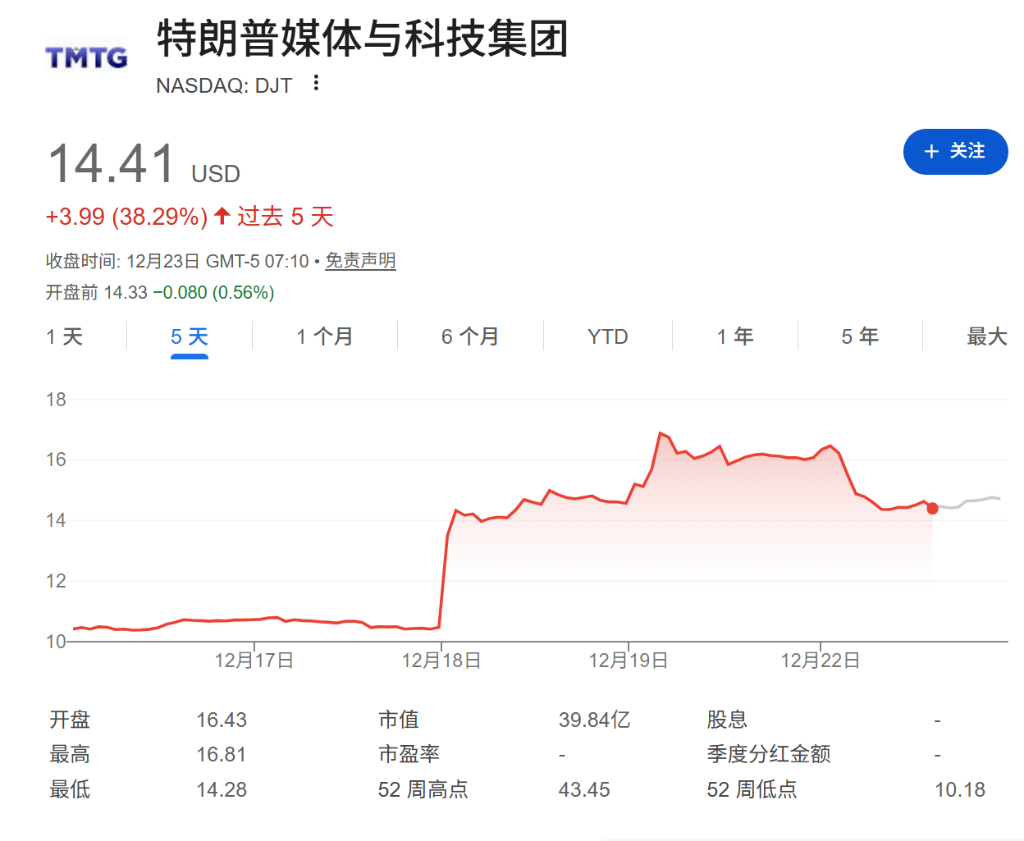
Core Insights - The commercialization of controlled nuclear fusion technology is accelerating due to surging energy demand and advancements in artificial intelligence computing power [1][3] - A significant merger involving Trump Media & Technology Group and TAE Technologies, valued at $6 billion, highlights the increasing investment interest in the nuclear fusion sector [1][3] - TAE Technologies, backed by major investors like Google and Goldman Sachs, plans to build its first commercial-scale fusion power plant by 2026 [3][4] Investment Landscape - The nuclear fusion investment landscape is heating up, with major players like Helion Energy and Commonwealth Fusion Systems (CFS) making strides in the U.S. [4][6] - Helion Energy has begun construction on its first commercial fusion power plant and has secured a power purchase agreement with Microsoft for electricity starting in 2028 [4][6] - CFS has raised approximately $3 billion and is collaborating with MIT to develop high-temperature superconducting magnets for its SPARC device [4][6] Technological Advancements - Chinese companies are rapidly advancing in nuclear fusion technology, holding the most patents globally and achieving significant milestones [6][7] - The Energy Singularity team in Shanghai has set a new record with a magnet strength of 21.7T, surpassing previous records held by MIT and CFS [6][7] - Other Chinese startups, like Hanhai Fusion and Xinghuan Fusion, are also making progress in fusion technology, with some exploring commercial applications in related fields [6][7] Challenges and Market Dynamics - Despite technological breakthroughs, nuclear fusion still faces challenges in achieving grid-level commercial application, with current operational times limited to seconds [7] - The funding landscape shows a stark contrast, with the U.S. investing approximately $5 billion in the last five years compared to China's $500 million, highlighting the scale of investment in the sector [7] - The long-term nature of nuclear fusion investments requires patience from investors, with timelines potentially extending 8 to 10 years [7]
全球核聚变竞赛,欧美急什么
Hu Xiu· 2025-10-16 00:11
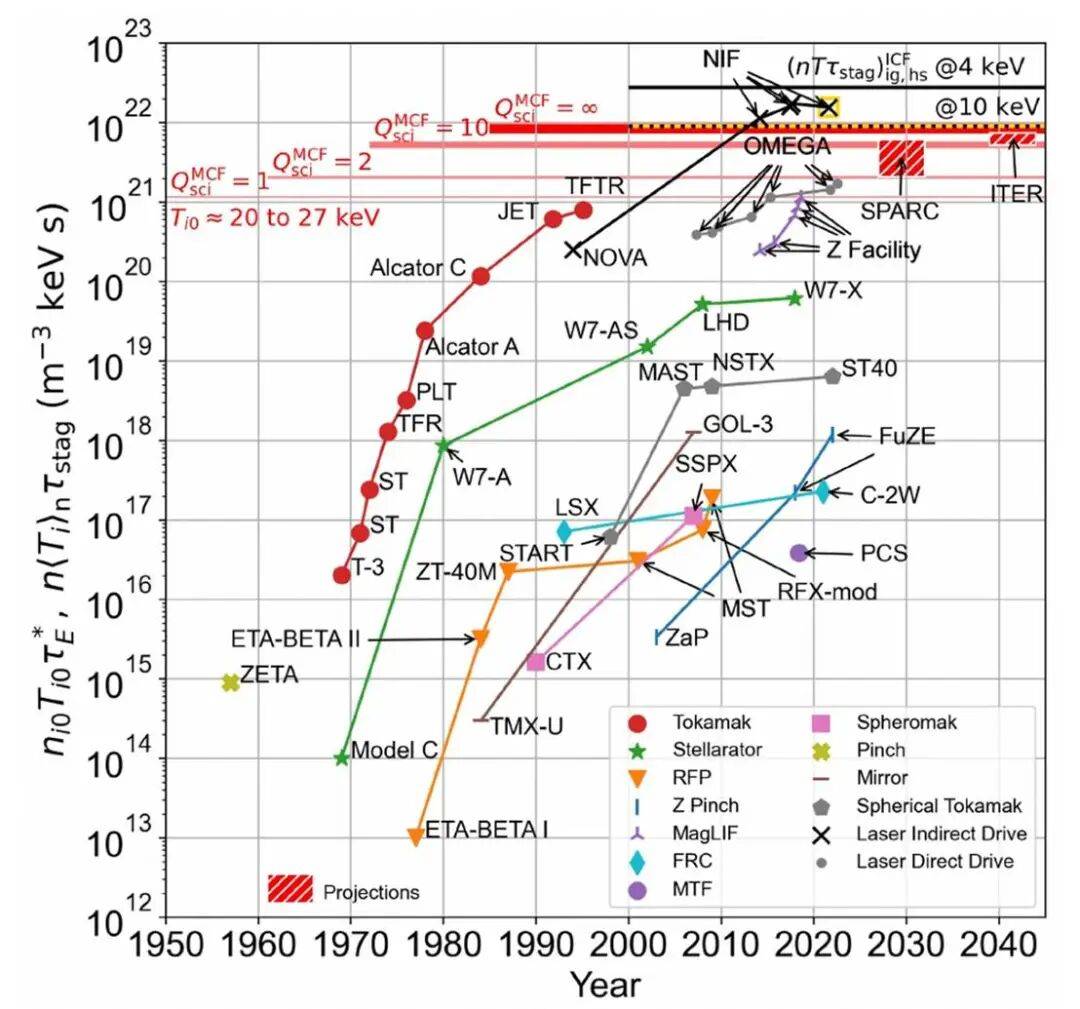
Core Insights - The International Atomic Energy Agency (IAEA) has released the "Fusion Energy Outlook 2025," indicating that global fusion energy exploration has entered a decisive new phase in 2023 [1] - Significant milestones have been achieved in fusion energy, particularly by the United States and China, with the U.S. National Ignition Facility (NIF) claiming a Q value greater than 4 and China's BEST project entering the assembly phase [1][2] - The report highlights a growing competition between the U.S. and China in the fusion energy sector, with increasing investments and advancements in technology [12][21] Investment and Funding - Global funding for fusion enterprises has surpassed the total amount raised in the previous year, reaching a historical high by September 2023 [13] - China's cumulative funding in fusion energy, approximately $5 billion, is still less than the U.S.'s $7.5 billion, but since 2023, China's annual funding has exceeded that of the U.S. [14] - The U.S. report indicates that China has mobilized up to $13 billion for fusion infrastructure since 2023, significantly outpacing U.S. investments [17] Technological Advancements - Fusion performance has improved tenfold over the past decade, with projections indicating that the 2030s will be a critical decade for fusion power generation [3][6] - The Lawson criteria, which determines the energy gain of fusion systems, shows that the three-product (temperature, fuel density, and confinement time) is improving at a rate of one order of magnitude every ten years [4][5] Global Competition - The U.S. and China are positioned as the primary competitors in the commercial fusion energy race, with both countries' projects nearing operational status [12][21] - The report notes that 27% of the papers submitted to the IAEA Fusion Energy Conference in 2025 are from China, surpassing the combined contributions from the U.S. and Japan [21] Supply Chain Concerns - The U.S. faces significant challenges regarding supply chain security in the fusion sector, particularly in critical minerals and components where China holds a dominant position [23][26] - Key materials such as tungsten and lithium-6 are primarily produced by China and Russia, raising concerns for U.S. energy independence [26][27] Strategic Recommendations - The U.S. report emphasizes the urgency for increased government funding and subsidies to maintain competitiveness in the fusion energy sector [28]
东大要刺刀见红了!短短20天,中美相继押上国运对拼
Xin Lang Cai Jing· 2025-07-30 14:25
Core Viewpoint - The establishment of China Fusion Energy Company in Shanghai marks a significant step towards the commercialization of nuclear fusion technology in China, which is expected to have profound implications for future energy needs and human civilization [1][2]. Group 1: Company Establishment and Implications - China Fusion Energy Company has officially been established, indicating that China's nuclear fusion project has reached a commercial phase [1]. - The formation of this company suggests that the Chinese government has conducted thorough strategic assessments and believes the technology is ready for market implementation [2]. - The establishment of this company is seen as a platform for commercial operations in the nuclear fusion sector, which is expected to drive significant advancements in energy production [2]. Group 2: Energy Landscape and Challenges - Current energy sources, including fossil fuels and nuclear fission, are limited and pose environmental challenges, with fossil fuels expected to last only about 200 years at current consumption rates [4]. - Nuclear fission relies on uranium, which is scarce in China, leading to a heavy dependence on imports for 80% of its uranium needs [4]. - The limitations of existing energy sources hinder technological advancements and space exploration due to low energy density and high costs associated with traditional fuels [5]. Group 3: Advantages of Nuclear Fusion - Nuclear fusion primarily uses deuterium, which is abundant in seawater, making it a virtually limitless energy source [6]. - The energy output from nuclear fusion is significantly higher than that of nuclear fission, with one gram of nuclear fuel releasing up to 90 million kilowatt-hours of energy, compared to 2 million kilowatt-hours from fission [6]. - Fusion does not produce greenhouse gases or long-lived radioactive waste, making it a cleaner and safer energy option [6]. Group 4: Strategic Competition - The establishment of China Fusion Energy Company comes amid intense competition with the United States, which is also making strides in nuclear fusion technology [8][14]. - Recent agreements, such as the one between Commonwealth Fusion Systems and Google for a significant power supply from a commercial fusion plant, highlight the urgency and stakes involved in this technological race [8][14]. - Both China and the U.S. are racing against time to achieve commercial fusion energy by 2030, which could redefine energy production and human civilization [14].

核聚变系列(02):瀚海聚能点亮仪式开启,FRC路线持续推进
Minsheng Securities· 2025-07-20 08:46
Investment Rating - The report maintains a "Recommended" rating for the nuclear fusion industry, indicating a potential stock price increase of over 15% relative to the benchmark index within the next 12 months [4]. Core Insights - The successful plasma ignition of the HHMAX-901 device by Hanhai Fusion marks a significant breakthrough in China's commercial exploration of controlled nuclear fusion, particularly in the field-reversed configuration (FRC) technology [1][2]. - FRC technology is gaining attention due to its simpler system structure and lower costs, positioning it as a frontrunner for commercialization in the nuclear fusion sector [1]. - The report suggests that the commercialization of the nuclear fusion industry is accelerating, urging continued attention to the sector's catalysts [3]. Summary by Sections Event Highlights - On July 18, Hanhai Fusion successfully conducted the plasma ignition ceremony for its HHMAX-901 device, representing a major milestone in the commercial application of nuclear fusion technology in China [1]. - The FRC technology, which Hanhai Fusion focuses on, is characterized by its ability to create a closed magnetic field through reverse current, forming a self-organizing magnetic structure [1]. Company Developments - Hanhai Fusion's HHMAX-901 project began in June 2024, with significant progress made in physical design and engineering, culminating in the successful ignition of plasma [2]. - The company plans to leverage the HHMAX-901 as a platform to advance research in controllable nuclear fusion technology and accelerate breakthroughs in core components [2]. Investment Recommendations - The report recommends focusing on companies involved in vacuum chambers, high-power electronic tubes, superconductors, and capacitors, including Guoguang Electric, Xuguang Electronics, and Yongding Co., among others [3].
公用事业事件点评:谷歌与CFS签订200MW核聚变供电协议,产业长期发展趋势已立
Guohai Securities· 2025-07-05 12:47
Investment Rating - The industry investment rating is "Recommended" (maintained) [1] Core Viewpoints - The signing of a 200MW power supply agreement between Google and Commonwealth Fusion Systems (CFS) is a strong validation of the commercial viability of nuclear fusion technology [5][6] - The increase in nuclear fusion project tenders since 2025 indicates a growing interest and investment in this sector, with various domestic projects accelerating [6] - The report emphasizes that nuclear fusion is a crucial solution to humanity's energy challenges, and the competition in this field is intensifying globally [6] Summary by Sections Recent Performance - The utility sector has shown a performance of 1.7% over the last month, 2.7% over the last three months, and a decline of 2.1% over the past year, compared to the CSI 300 index which has increased by 2.9%, 3.1%, and 15.6% respectively [4] Key Investment Points - CFS's tokamak technology has completed feasibility verification, with assembly starting in March 2025 and expectations to achieve Q>1 by 2027 [6] - The report suggests focusing on companies with significant project positioning advantages, including Guoguang Electric, Hezhong Intelligent, and others in various segments such as power systems and materials [6][8] Focused Companies and Earnings Forecast - The report lists several companies with their respective stock prices and earnings per share (EPS) forecasts for 2024A, 2025E, and 2026E, indicating their potential growth and investment ratings [8]
谷歌采购核聚变电力推动概念股大涨,融发核电百万手封板涨停
Jin Rong Jie· 2025-07-02 04:59
Group 1 - The core viewpoint of the articles highlights the strong performance of controlled nuclear fusion concept stocks, driven by a significant partnership between Alphabet and a fusion energy company, marking a historic breakthrough in commercial power procurement for nuclear fusion energy [1][2] - The stock of Rongfa Nuclear Power surged to its daily limit, becoming the leading stock in the sector, with other companies like Haheng Huaton and Tianli also seeing gains of over 5% [1] - The market's optimism regarding the commercialization prospects of nuclear fusion technology has increased, leading to heightened activity in related concept stocks [1][2] Group 2 - Rongfa Nuclear Power is recognized as a key supplier of nuclear power equipment in China and has participated in the manufacturing of components for international fusion reactor projects [1] - The company has established a presence in fourth-generation nuclear technology and provides forgings for the Huaneng Shidaowan High-Temperature Gas-Cooled Reactor Power Station [1] - The strategic value of nuclear fusion technology is becoming more prominent due to the growing global demand for clean energy and the surge in electricity needs from emerging industries like artificial intelligence [1]

国泰海通 · 晨报0702|核电、基础化工
国泰海通证券研究· 2025-07-01 10:40
Group 1: Nuclear Fusion Industry - Google has signed a historic power purchase agreement with Commonwealth Fusion Systems (CFS) to buy 200MW of electricity from its fusion power project in Virginia, marking a significant milestone in the commercialization of nuclear fusion energy [3][5] - The ARC project, located in Chesterfield County, Virginia, aims to be the world's first commercial fusion power plant, expected to generate 400MW of fusion power by the early 2030s, sufficient to power 150,000 homes or large industrial sites [3][4] - CFS, established in 2018, has raised over $2 billion and is one of North America's largest nuclear fusion commercialization companies, with ongoing projects including SPARC, which aims to achieve net energy gain by 2027 [4][5] Group 2: Market Recognition and Trends - The nuclear fusion sector is gaining recognition, with major tech companies like Google and Microsoft entering into power purchase agreements, indicating a growing acceptance and maturity of the nuclear fusion supply chain [5] - Microsoft's previous agreement with Helion Energy to provide at least 50MW of fusion power by 2029 further illustrates the accelerating commercialization of nuclear fusion technology [5]

国泰海通|电新:谷歌签订核聚变供电协议,核聚变行业发展再迎里程碑
国泰海通证券研究· 2025-07-01 10:40
Core Viewpoint - Google's signing of the largest fusion power purchase agreement with Commonwealth Fusion Systems (CFS) marks a significant step towards the commercialization of nuclear fusion, indicating growing market recognition of the fusion industry [1][3]. Group 1: Agreement Details - On June 30, 2023, CFS announced that Alphabet, Google's parent company, will purchase 200MW of power from its fusion project in Chesterfield County, Virginia [1]. - The ARC project aims to build the world's first commercial fusion power plant, expected to be operational in the early 2030s, with a lifespan of 20 years or more, generating 400MW of fusion power sufficient to supply 150,000 households [1]. Group 2: CFS's Development Plans - CFS, established in 2018, has raised over $2 billion and is one of North America's largest nuclear fusion commercialization companies [2]. - In addition to the ARC project, CFS is developing the SPARC project, which aims to achieve net energy gain (Q>1) and provide critical knowledge for the ARC project [2]. - SPARC is designed with a plasma major radius of 1.85m, a minor radius of 0.57m, a plasma current of 8.7MA, and a maximum auxiliary heating power of 25MW, with a magnetic field strength of 12.2T [2]. Group 3: Market Recognition - Prior to Google's agreement, Microsoft had already committed to purchasing fusion power, with Helion Energy promising to deliver at least 50MW by 2029 [3]. - The increasing maturity of upstream equipment in the fusion industry and the acceleration of commercialization are evident, as major tech companies like Google and Microsoft sign power purchase agreements, indicating widespread market acceptance of fusion energy [3].


4年3次加码核聚变,硅谷巨头们疯狂抢电ing
量子位· 2025-07-01 07:29
Core Viewpoint - The current trend in technology is AI, with the next focus shifting towards nuclear power, specifically nuclear fusion, as a solution to the increasing energy demands driven by AI advancements [1]. Investment Trends in Nuclear Fusion - Major tech companies are investing heavily in nuclear fusion to meet the exponential growth in computational power requirements. Google has made significant investments in Commonwealth Fusion Systems (CFS), including a recent agreement to purchase electricity from CFS's first power plant, Arc, which is expected to be operational by 2030 [2][5][12]. - Google has invested in CFS multiple times, including participation in a $1.8 billion B-round financing in 2021 and leading a $150 million E-round financing for TAE Technologies in 2023 [4][13]. CFS Developments - CFS, which has raised over $2 billion and is one of the largest nuclear fusion companies globally, is developing the Sparc demonstration reactor, which aims to produce more energy than it consumes. The reactor is currently 60% complete and is expected to be finished by 2026 [8][10]. - The Arc power plant will be located near Richmond, Virginia, and is set to supply 200 megawatts of power to Google [5][12]. Broader Industry Movements - Other tech giants are also entering the nuclear power sector. Microsoft has signed a power purchase agreement with Helion for a fusion power plant expected to be operational by 2028, marking the first such agreement globally [17]. - Microsoft is also investing $16 billion to restart the Three Mile Island nuclear plant, which is expected to provide power for 20 years [23]. - Amazon is supporting the construction of new small modular reactors (SMRs) in the Pacific Northwest and has led a $50 million financing round for X-energy [23]. - Meta has signed a 20-year nuclear power purchase agreement with Constellation Energy [24]. Chinese Nuclear Power Initiatives - Chinese companies are also increasing their investments in nuclear fusion, with announcements of significant capital injections into domestic fusion energy firms [30]. - Notably, the company Energy Singularity, backed by MiHoYo, has completed a B-round financing and is advancing its high-temperature superconducting tokamak technology [30]. Conclusion - The nuclear fusion sector is gaining momentum as a critical area of investment among tech companies, driven by the need for sustainable energy solutions to support the growing demands of AI technologies [31].