
蔬菜种植

Search documents
“高冷”经济看发展|鲜行千里!高原冷凉蔬菜端上粤港澳餐桌
Xin Hua Wang· 2025-12-05 05:47
Core Viewpoint - Qinghai province is leveraging its unique climatic advantages to produce over 700,000 tons of high-quality cool-season vegetables in 2024, aiming to supply the Guangdong-Hong Kong-Macao Greater Bay Area [1] Group 1: Industry Development - The cool-season vegetable sector in Huangzhong District is becoming a new growth point for the agricultural economy and a key to rural revitalization, positioning Qinghai as a national demonstration area for the integrated development of the cool-season vegetable industry [1] - Technological advancements are enhancing the quality and competitiveness of Qinghai's high-altitude vegetables, ensuring they maintain their unique flavor while capturing high-end market segments [1] Group 2: Economic Impact - The development of cool-season vegetables involves diverse participants, including cooperatives and agricultural enterprises, creating a collaborative industry structure that supports employment and income growth [1] - Strict quality control measures are implemented from harvesting to post-harvest processing, including sorting, cleaning, and packaging, ensuring consumer trust through traceability and standardization across the supply chain [1]


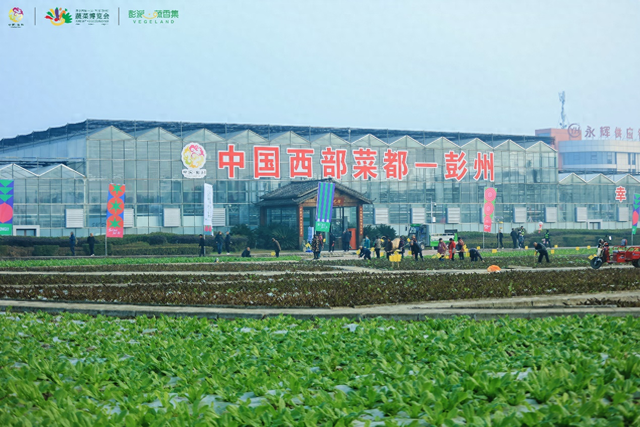
四川小城的逆袭!在蔬菜地里,种下“理想生活”
Guan Cha Zhe Wang· 2025-12-04 09:47
Core Insights - The article highlights the innovative approaches taken by Pengzhou, Sichuan, to connect agricultural production with consumer markets, enhancing visibility and recognition of the industry while avoiding the "industry without a scene" dilemma [1] Group 1: Agricultural Development - Pengzhou is recognized as a representative region for "regional vegetables" in China, with a vegetable planting area of 820,000 acres and an annual output of approximately 2.35 million tons [3] - The annual China-Sichuan (Pengzhou) Vegetable Expo serves as a significant platform for showcasing the achievements of Sichuan's vegetable industry and facilitating external cooperation [3] Group 2: Event Transformation - The Vegetable Expo is transitioning from an industry-focused exhibition to a regional festival that integrates industry value, citizen participation, and cultural experiences [3][4] - The event features various activities such as vegetable-themed weddings, workshops, and music festivals, creating a vibrant atmosphere that engages the community [1][4] Group 3: Cross-Industry Collaboration - The integration of "vegetable+" collaborations with brands like NIO and local agricultural trading centers aims to expand the fashionable boundaries of "vegetable lifestyle" [4] - The local government, industry associations, and leading enterprises collaborate to provide professional resources and execute the event, enhancing the overall experience for participants [3][4] Group 4: Long-term Vision - The "Vegetable Aroma Super Ideal Village" project aims to deeply integrate the vegetable industry with cultural tourism, creating tangible experiences over a ten-year phased operation [5] - Future developments will include interactive experiences such as vegetable garden adoption and educational programs for children, promoting a sustainable "vegetable lifestyle" [5]
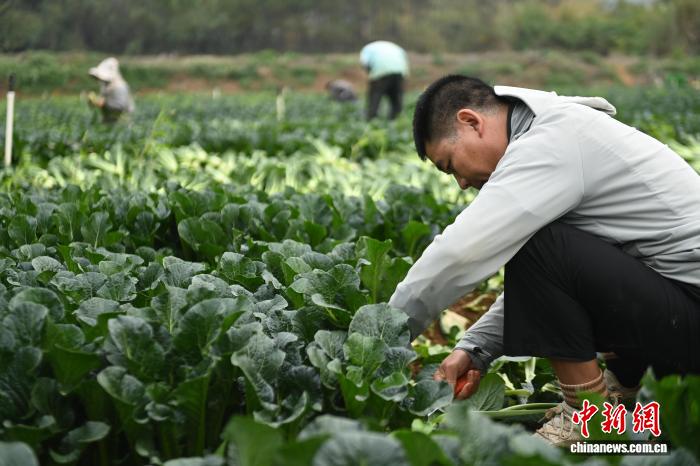
广西贺州供粤港澳大湾区蔬菜采摘忙
Zhong Guo Xin Wen Wang· 2025-12-04 02:24
图为工人在采摘蔬菜。 中新网记者 蒋雪林 摄 图为工人在采摘蔬菜。(无人机照片) 中新网记者 蒋雪林 摄 12月3日,航拍广西贺州农投供港蔬菜基地。(无人机照片) 中新网记者 蒋雪林 摄 广西贺州供粤港澳大湾区蔬菜采摘忙 图为工人在采摘蔬菜。 中新网记者 蒋雪林 摄 图为工人在采摘蔬菜。 中新网记者 蒋雪林 摄 12月3日,航拍广西贺州农投供港蔬菜基地。(无人机照片) 中新网记者 蒋雪林 摄 来源:中国新闻网 编辑:郭晋嘉 广告等商务合作,请点击这里 本文为转载内容,授权事宜请联系原著作权人 中新经纬版权所有,未经书面授权,任何单位及个人不得转载、摘编或以其它方式使用。 关注中新经纬微信公众号(微信搜索"中新经纬"或"jwview"),看更多精彩财经资讯。 12月3日,航拍广西贺州农投供港蔬菜基地。(无人机照片) 中新网记者 蒋雪林 摄 ...
从“冬闲”变“冬忙” 反季节种植让村民“富起来”乡村振兴“火起来”
Yang Shi Wang· 2025-12-03 07:39
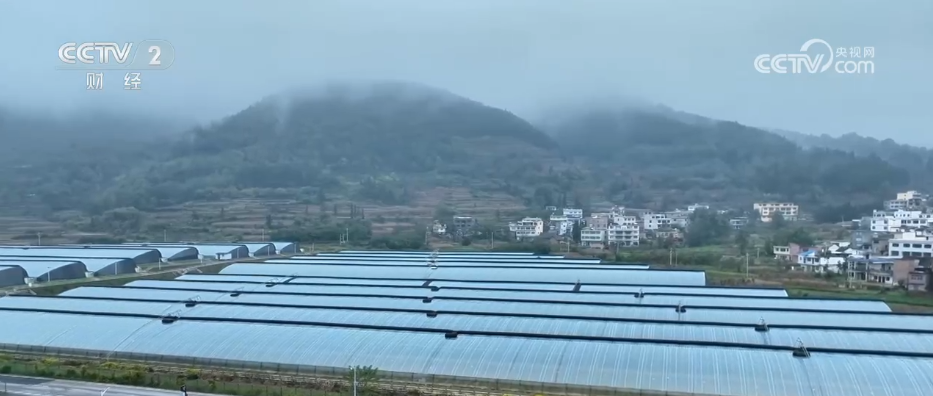
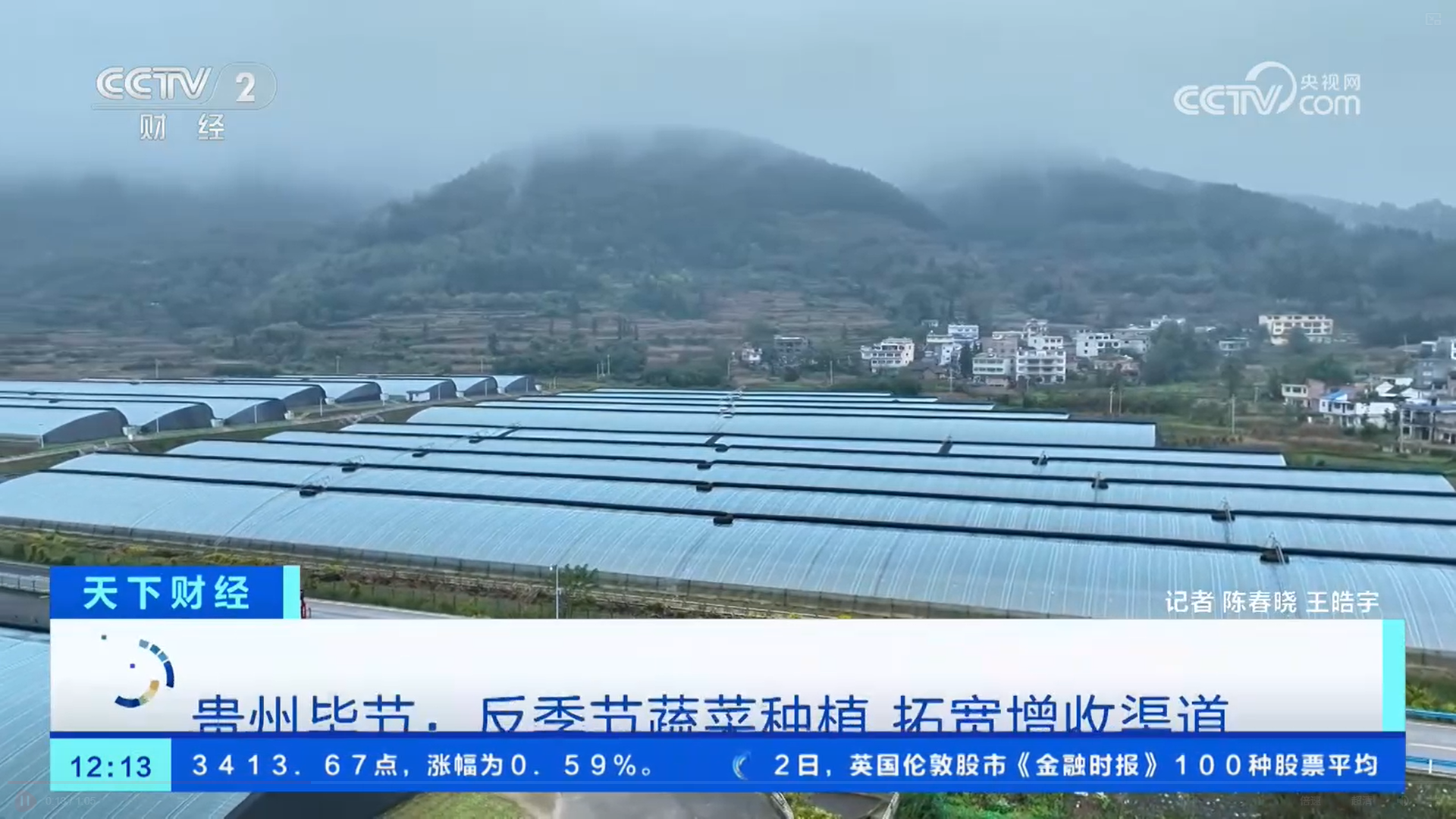
Group 1: Agricultural Development in Bijie City - Bijie City's Qixingguan District is actively transforming the winter season from "idle" to "busy," effectively increasing farmers' income [2] - The agricultural technology park in Qixingguan District utilizes modern agricultural techniques such as greenhouse cultivation and integrated water and fertilizer systems to achieve off-season vegetable planting, providing new income channels for local villagers [3] - The agricultural park has developed 57 greenhouses, allowing for two planting seasons of cucumbers and tomatoes each year, followed by celery and green vegetables [5] Group 2: Vegetable Base Innovations - A vegetable base in Lin Kou Town has adopted a leasing model for vegetable cultivation, enabling continuous land use during winter and creating over 30 vegetable bases exceeding 50 acres across 11 townships, effectively boosting local employment [7] Group 3: Oyster Harvesting in Lianyungang - In Lianyungang, Jiangsu Province, the oyster harvesting season has begun, with oysters being sold nationwide [9][10] - The oyster farming area in Ganyu District features fishermen harvesting oysters from cultivation nets, with the current catch being particularly plump due to lower sea temperatures [12] - The winter oyster harvest in Lianyungang can continue until just before the Spring Festival, with fresh oysters supplied locally and to cities like Shanghai and Chongqing through cold chain logistics; the local oyster farming area spans approximately 110,000 acres, yielding about 160,000 tons annually [14]
盘活冬季资源 变 “冬闲”为“冬忙” 带动农民增收
Yang Shi Wang· 2025-12-03 07:07
Group 1: Agricultural Development in Qixingguan District - The Qixingguan District in Bijie City, Guizhou, is actively utilizing winter resources to transform the "winter idle" period into a "winter busy" season, effectively increasing farmers' income [1] - The agricultural technology park in Qixingguan is employing modern agricultural techniques such as greenhouse cultivation and integrated water and fertilizer management to achieve off-season vegetable planting, providing new income channels for local villagers [1] - A new leasing model for vegetable cultivation has been introduced in Lin Kou Town, allowing continuous land use during winter, with over 30 vegetable bases developed across 11 townships, significantly boosting local employment [3] Group 2: Oyster Harvesting in Lianyungang - In Lianyungang, Jiangsu, the oyster harvesting season has begun, with fresh oysters being sold nationwide [4] - The oyster farming area in the Ganyu District is currently active, with fishermen harvesting oysters from cultivation nets, which are particularly plump due to the drop in seawater temperature [4] - The winter oyster harvest in Lianyungang is expected to continue until just before the Spring Festival, with fresh oysters not only supplied locally but also distributed to cities like Shanghai and Chongqing through cold chain logistics; the local oyster farming area covers approximately 110,000 acres, yielding an annual production of about 160,000 tons [6]
11月份“菜篮子”产品价格呈现季节性上涨 多因素推高生产成本
Yang Shi Wang· 2025-12-03 06:31
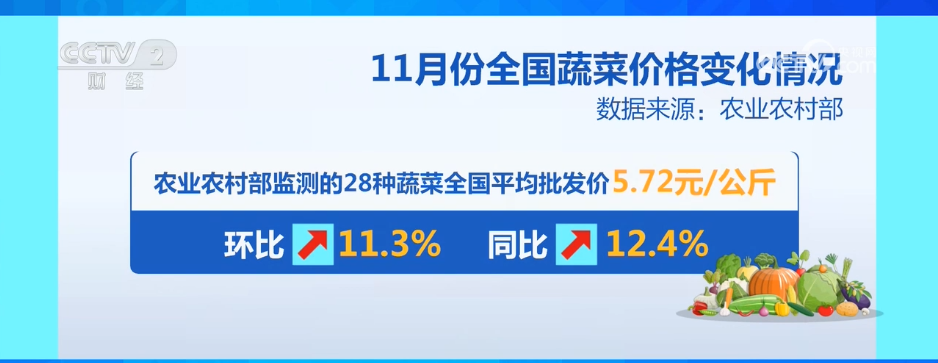
央视网消息:农业农村部最新数据显示,11月份全国菜篮子指数为127.65,环比上涨6.17个点,同比上涨3.55个点。其中,蔬菜价格呈现 季节性上涨。 11月份,农业农村部监测的28种蔬菜全国平均批发价为每公斤5.72元,环比上涨11.3%,同比上涨12.4%。分品种看,25种蔬菜价格环比上 涨,其中韭菜、茄子、生菜、西红柿价格涨幅较大。 中国农业科学院农业信息研究所副研究员 张晶:11月份,全国蔬菜价格呈现"高位震荡、先降后升"走势。一是北方产区连续遭遇3次寒潮 天气,加速了露地蔬菜退市进程,同时大棚蔬菜生长速度放缓,部分地区出现冻害;二是湖北、云南等南方主要产区在秋季遭遇连续降雨,造 成多种蔬菜出现供应链衔接不畅。 专家介绍,随着北方蔬菜全面进入冬季生产模式,设施蔬菜生产成本将刚性上涨。此外,随着"南菜北运"规模增大,运输及保鲜费用增 加;同时,北方耐储蔬菜转入库存模式,存储费用也将推高成本。 中国农业科学院农业信息研究所副研究员 张晶:预计后期蔬菜价格保持高位震荡走势。12月份上中旬,设施蔬菜产量恢复和南方产区蔬 菜批量上市尚需时日,价格预计保持相对高位。12月下旬至明年1月,随着冬季蔬菜主产区逐步形成 ...
穿越风雨 又见彩虹——老工业基地咸阳迎来产业新生
Zhong Guo Jin Rong Xin Xi Wang· 2025-12-02 03:08
Core Insights - The city of Xianyang has transformed from a historical industrial hub to a diversified economy, achieving significant economic growth and becoming the third city in Shaanxi province to surpass a GDP of 300 billion yuan [1] Group 1: Economic Transformation - Xianyang's economy has shifted from a single-industry focus to a multi-faceted approach, emphasizing innovation and resource optimization [1] - The city has seen a resurgence in economic growth, becoming the fastest-growing city in Shaanxi province last year [1] Group 2: E-commerce Development - Wugong County has developed a robust e-commerce sector, with the company Xiyu Meinan generating nearly 1 billion yuan in annual revenue, evolving from a small online store to a comprehensive e-commerce leader [2][3] - The e-commerce industry in Wugong has grown significantly, with over 420 e-commerce companies and more than 500 local brands established [3] Group 3: Industrial Clusters - Xianyang has formed several industrial clusters, including clean energy, equipment manufacturing, and e-commerce logistics, with multiple clusters exceeding 10 billion yuan in output [4] - The county's leading industries contributed to a total output value of 579 billion yuan by the third quarter of 2025, accounting for 70.6% of the city's GDP [4] Group 4: Traditional Industry Upgrades - Traditional industries in Xianyang, such as energy and chemicals, are undergoing significant upgrades, with a projected output value of 1,582 billion yuan in 2024, representing 67% of the city's industrial output [9] - The high-end energy and chemical park in Binzhou is attracting numerous high-tech projects, with an expected investment of over 17 billion yuan by 2025 [7] Group 5: High-tech Industry Growth - Xianyang is revitalizing its electronics sector, with the Rainbow Group successfully transitioning to high-generation LCD glass production, breaking foreign monopolies [10][11] - The city aims to establish a modern industrial system with a focus on electronic displays, biomedicine, and new materials, targeting a scale of 27.44 billion yuan for key industries by 2024 [11] Group 6: Innovation and Collaboration - Xianyang High-tech Zone is fostering innovation through financial support and collaboration with local universities, enhancing the region's technological capabilities [12] - The establishment of a 30-square-kilometer innovation corridor aims to integrate various sectors, promoting deep collaboration among innovation, industry, and talent [12]

河南省方城县:设施农业“棚”勃发展 奏响乡村振兴“致富曲”
Zhong Guo Jing Ji Wang· 2025-12-01 12:32
Core Insights - The article highlights the successful development of facility agriculture in Shangzhuang Village, Henan Province, particularly focusing on the cultivation of tomatoes and cucumbers in greenhouses, which has significantly improved local residents' incomes [1][2] - The establishment of a "ground transaction market" has facilitated the sales of vegetables, allowing local farmers to efficiently connect with buyers and ensuring that produce is sold without excess inventory [1] Group 1: Agricultural Development - Shangzhuang Village has expanded its greenhouse vegetable planting industry, with 310 greenhouses covering 1,100 acres and involving over 200 farming households [1] - The village has seen a steady increase in the quality and profitability of greenhouse vegetables due to improved structure, new varieties, and optimized cultivation techniques [1] Group 2: Economic Impact - The facility agriculture in Bohuang Town has created over 1,600 greenhouses covering more than 7,000 acres, benefiting over 1,000 households and providing employment for more than 4,000 villagers [2] - The local economy has been positively impacted, with farmers reporting annual incomes of 20,000 to 30,000 yuan from vegetable cultivation [1]
(乡村行·看振兴)江西玉山“小辣椒”点燃乡村振兴“红火”图景
Zhong Guo Xin Wen Wang· 2025-12-01 11:35
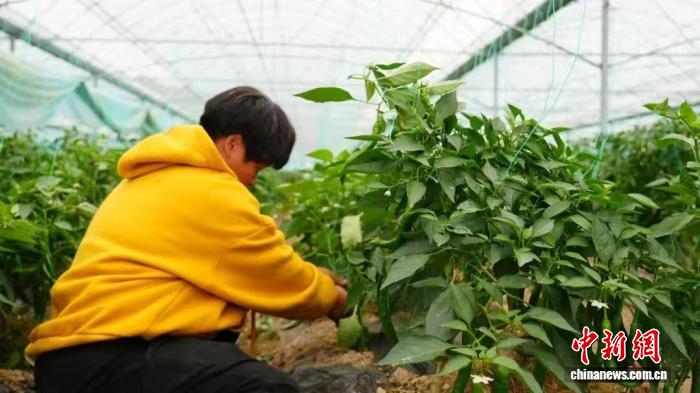
(乡村行·看振兴)江西玉山"小辣椒"点燃乡村振兴"红火"图景 中新网上饶12月1日电 (熊锦阳)近日,走进江西省上饶市玉山县必姆镇上田村的美民农业蔬菜种植基 地,只见饱满的辣椒挂满枝头,村民们穿梭其间,熟练地采摘、打包、搬运,一派繁忙的丰收景象。 辣椒种植具有投入少、周期短、市场稳等特点。从种植、管护到采摘,每个环节都需要大量劳动力,是 带动群众就业增收的重要载体。近年来,玉山县充分发挥统一战线联系广泛、资源密集的独特优势,积 极引导民营经济人士、新的社会阶层人士等统战力量投身乡村振兴事业,通过"党建引领+统战赋能"双 轮驱动,推动特色农业产业化、规模化发展。 正在采摘辣椒的村民。 玉山县委统战部供图 "现在是辣椒采摘的高峰期,每天产量能有3吨左右,盛产时可达5吨至10吨。"据蔬菜种植基地负责人姜 为民介绍,基地用工优先选择本地村民,目前已带动约120名群众实现家门口稳定就业。该基地种植的 辣椒具有品相佳、口感好等特点,因此深受市场和消费者青睐,目前已进入上饶、衢州、南昌、杭州等 周边城市的大型商超与批发市场。 "在玉山县委统战部的牵线搭桥下,基地发展迅速,不仅对接上了农业科技专家,提高了辣椒的品质, 还得到 ...
北京市推进基地直供模式稳菜价 年供蔬菜14.1万吨
Bei Jing Shang Bao· 2025-12-01 09:02
Group 1 - The core idea of the news is that Beijing is promoting a direct supply model for vegetable bases, enhancing the connection between agricultural markets and production areas, benefiting both farmers and consumers [1] - Beijing has established direct supply cooperation agreements with 28 vegetable bases across 6 provinces, covering 12 vegetable varieties with a total planting area of 36,000 acres, supplying 141,000 tons of vegetables annually to the city [1] - The direct supply model has eliminated multiple intermediaries, improving the freshness and reducing the prices of vegetables, as they can reach the markets within 2 hours after harvest [1] Group 2 - The Beijing market regulatory bureau has moved inspection points to the production fields, collaborating with agricultural departments in regions like Tangshan and Baodi to strengthen supervision during the planting period [2] - A higher standard system is being established to guide vegetable bases in standardized planting, ensuring the quality of vegetables by controlling pesticide and fertilizer use from the source [2] - The regulatory bureau aims to create a "Beijing quality" local standard system, expanding direct supply bases and introducing more diverse products to ensure food safety and market recognition [2]