科技行业

Search documents
光力科技:2025年11月10日公司股东人数约为2.6万户
Zheng Quan Ri Bao Wang· 2025-11-12 11:08
Core Viewpoint - Guangli Technology (300480) reported that as of November 10, 2025, the number of shareholders is approximately 26,000 [1] Summary by Category - **Company Information** - Guangli Technology has approximately 26,000 shareholders as of November 10, 2025 [1]

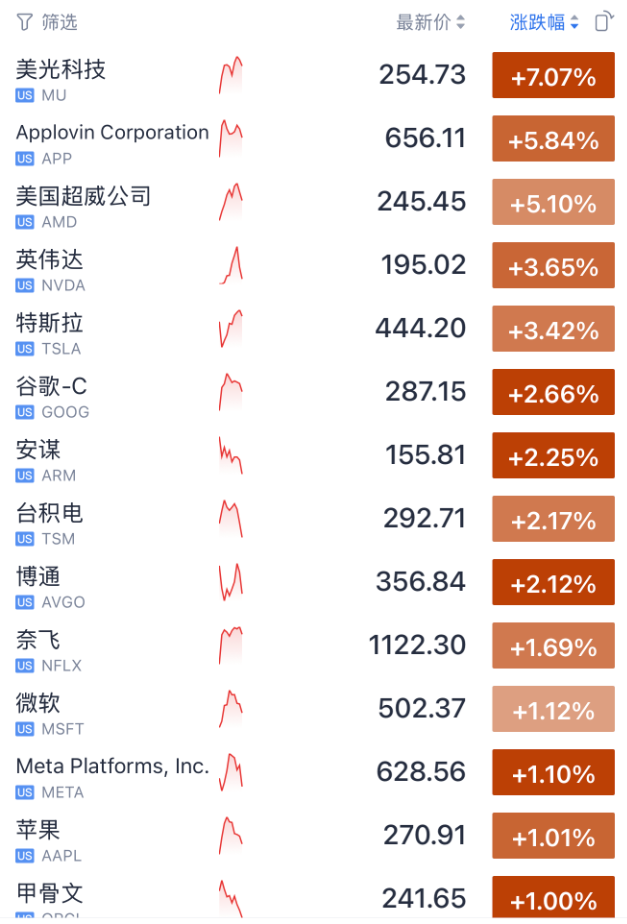
美股大型科技股盘前普涨
第一财经· 2025-11-12 09:31
Group 1 - Major US tech stocks showed a pre-market rally on November 12, with AMD rising nearly 6%, Nvidia up 1%, Google A increasing by 0.8%, Amazon and Apple both up 0.4%, Meta rising 0.3%, Microsoft increasing by 0.2%, and Tesla up 0.1% [1] - Chinese concept stocks exhibited mixed performance in pre-market trading, with Tencent Music rising by 6%, Pony.ai up 1%, Alibaba increasing by 0.4%, and Pinduoduo up 0.3%. However, NIO fell by 0.7%, Baidu dropped by 1%, and Xpeng Motors decreased by 3% [1]



“小非农”再度预警!10月ADP私营部门就业人数减少4.5万,创两年半来最大降幅
Hua Er Jie Jian Wen· 2025-11-12 01:33
Group 1 - The core point of the articles indicates a significant decline in employment within the U.S. private sector, with an average weekly reduction of 11,250 jobs over the four weeks ending October 25, leading to a total loss of 45,000 jobs for the month, marking the largest monthly decline since March 2023 [1][5] - Multiple companies have announced layoffs, with Challenger, Gray & Christmas Inc. reporting the highest number of layoffs for this time of year in over two decades, raising concerns about the health of the labor market [3][5] - Goldman Sachs has developed a new tool to monitor discussions about layoffs in earnings calls, revealing an increase in such discussions, particularly in the context of artificial intelligence, although evidence linking AI directly to layoffs remains inconclusive [4][8] Group 2 - The ADP has started releasing more frequent labor market data, which shows a concerning trend of increasing layoffs amid low hiring rates and high difficulty for unemployed individuals to find jobs [4] - A composite layoff tracking indicator created by Goldman Sachs, which includes various metrics such as WARN notices and initial unemployment claims, has risen in October and is currently above pre-pandemic levels, indicating an increased risk of labor market deterioration [8] - The small business confidence index in the U.S. has dropped to a six-month low in October, reflecting a decline in optimism due to worsening profit conditions and declining economic sentiment [8][10]

磁谷科技龙虎榜:营业部净卖出1101.71万元
Zheng Quan Shi Bao Wang· 2025-11-11 11:52
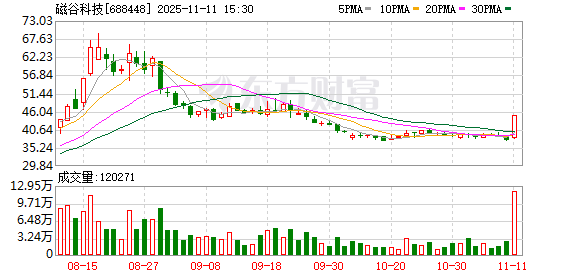
Group 1 - The closing price of Magu Technology (688448) on November 11 was 44.88 yuan, reaching the daily limit with a trading volume of 5.05 billion yuan and a turnover rate of 25.07% [2] - The stock was listed on the trading board due to a price increase of 15% at the close [2] - The top five trading departments accounted for a total transaction amount of 203 million yuan, with a net sell of 11.01 million yuan [2] Group 2 - The main capital inflow for the stock was 43.69 million yuan throughout the day [3] - The largest buying department was UBS Securities with a purchase amount of 25.19 million yuan, followed by Goldman Sachs with 22.01 million yuan [3] - The largest selling department was an institutional proprietary seat, selling 49.96 million yuan [3]

AI狂潮“虹吸”全球资本,AI已让美元“见底”?
Hua Er Jie Jian Wen· 2025-11-11 07:13
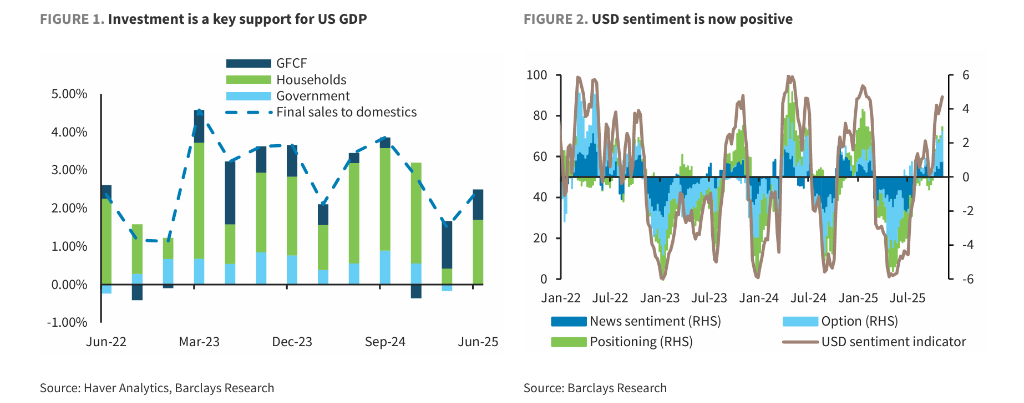
Group 1 - The core viewpoint of the articles is that the significant investment in AI infrastructure by American tech companies is reshaping global capital flows and providing silent support for the US dollar [1][2][5] - AI-related capital expenditure expectations have been significantly raised, with projections for 2025 increasing from several hundred billion to approximately 500 billion, and total investment over the next five years expected to exceed 3 trillion, which is over 10% of US GDP [1][2][5] - The investment trend is beginning to show macroeconomic impacts, contributing an annualized 1 percentage point to US GDP in the first two quarters of 2025, marking the highest level since 2023 [2][5] Group 2 - The AI investment boom is creating a capital absorption effect, with the US attracting resources and capital globally through large-scale corporate bond issuance [5][6] - Barclays emphasizes that while the forex market narrative focuses on data gaps and government shutdown risks, the substantial AI investments by tech companies and the resulting global capital flows are the "elephant in the room" [5][6] - The expectation that the dollar may have bottomed out is reinforced by the resilience in economic output driven by AI investments, the re-evaluation of interest rate expectations, and global capital inflows [6]
炬华科技成交额创2023年2月17日以来新高
Zheng Quan Shi Bao Wang· 2025-11-11 02:52
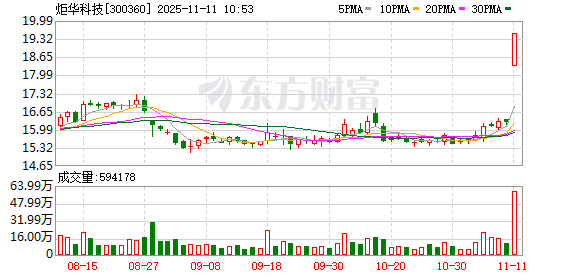
Core Insights - The trading volume of Juhua Technology reached 1.058 billion RMB, marking the highest level since February 17, 2023 [2] - The latest stock price increased by 19.99%, with a turnover rate of 10.95% [2] - The previous trading day's total transaction volume for the stock was 191 million RMB [2] Company Overview - Juhua Technology Co., Ltd. was established on April 6, 2006, with a registered capital of 514.187126 million RMB [2]

分析了1.8亿个岗位后,我发现应届生们好像被AI堵在了门外。
数字生命卡兹克· 2025-11-11 01:21
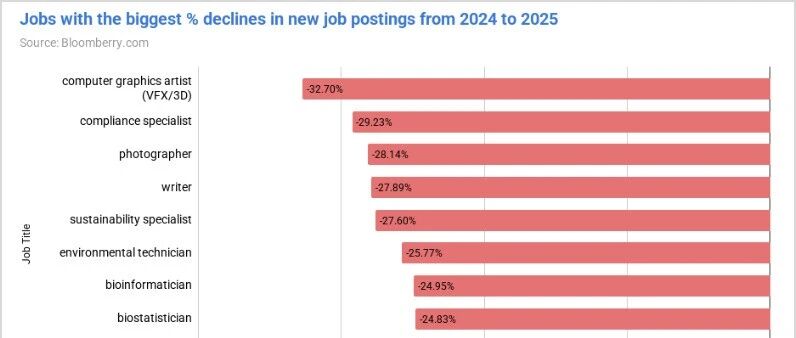
Core Insights - The article analyzes the impact of artificial intelligence (AI) on job markets by examining 180 million job postings from 2023 to 2025, revealing significant trends in job displacement and creation [1][3]. Group 1: Job Market Trends - The overall job postings are projected to decrease by 8% in 2025 compared to 2024, indicating a contraction in the employment market [3]. - Specific job roles have seen declines exceeding this average, suggesting deeper issues potentially linked to AI [4]. Group 2: Job Displacement - The top ten job roles with the largest declines include CG artists, compliance officers, photographers, writers, and sustainability experts, with creative roles particularly affected [5][7]. - Creative management positions, such as creative directors and managers, have shown resilience and even growth, contrasting with execution-level roles [8][12]. Group 3: Job Creation - The ten job roles with the highest growth include software engineering directors, legal directors, real estate directors, and data engineering directors, with machine learning engineers seeing a notable increase of 39.62% [11]. - Senior leadership roles have experienced minimal decline, only dropping by 1.7%, while management roles decreased by 5.7%, indicating a preference for experienced professionals over entry-level positions [14]. Group 4: Impact on New Graduates - New graduates, particularly in entry-level positions, are facing significant challenges, with many roles disappearing from the market [20][22]. - The article highlights a sentiment among young job seekers that the job market has become increasingly difficult, with many feeling disillusioned despite low overall unemployment rates [24][26]. Group 5: The Future of Work - The article discusses the potential loss of apprenticeship models due to AI's efficiency, which may eliminate the need for training and mentorship of new employees [30][32]. - The narrative emphasizes a shift where experienced professionals may prefer to utilize AI for tasks, leading to a lack of opportunities for newcomers to gain essential skills [54][63].
美股大涨!美联储,释放降息大消息
Zhong Guo Ji Jin Bao· 2025-11-10 22:49
Market Performance - US stock markets experienced significant gains, with the Dow Jones Industrial Average rising by 381.53 points (0.81%) to close at 47,368.63, the Nasdaq Composite increasing by 522.64 points (2.27%) to 23,527.17, and the S&P 500 up by 103.63 points (1.54%) to 6,832.43 [1] Senate Developments - The Senate made progress towards ending the longest government shutdown in history, which positively impacted stock and Bitcoin prices while causing a decline in bond prices [1][2] - The market viewed this development as a breakthrough, providing investors with clearer economic data and insights into Federal Reserve policy [3] Analyst Insights - Analysts indicated that the recent progress is beneficial for both the US and global markets, emphasizing the need for certainty regarding economic conditions and investments [4] - Despite the anticipated reopening of the government, analysts noted that it may take weeks to receive all delayed data, raising concerns about the quality of government data until 2026 [4] Federal Reserve Outlook - St. Louis Fed President Alberto Musalem expressed expectations of a strong economic rebound in early next year, attributing this to the end of the government shutdown, fiscal support, previous rate cuts, and regulatory easing [6] - Musalem cautioned against further rate cuts, suggesting that monetary policy is nearing a level that no longer exerts downward pressure on inflation [6][7] - He highlighted the increasing pressure on low- and middle-income families due to rising costs, indicating that inflation is eroding consumer purchasing power [7]
今夜,大涨!美联储,降息大消息!
Zhong Guo Ji Jin Bao· 2025-11-10 16:17
Group 1 - The U.S. stock market experienced a significant rise, with technology stocks leading the gains, as the Nasdaq index surged by 2% and the S&P 500 index increased by nearly 1% [1][3] - The Senate's progress towards ending the longest government shutdown in history has positively impacted both stocks and Bitcoin, while bonds have declined [2][3] - Analysts view the Senate's movement towards reopening the government as a breakthrough, which is expected to provide investors with clearer economic data and insights into Federal Reserve policy [4][5] Group 2 - The absence of official data has led decision-makers to adopt a more cautious stance regarding interest rate cuts, with the delayed September employment report expected to be released shortly after the government reopens [5] - The Chinese assets also saw a significant increase, with the Chinese concept stock index rising nearly 2% [6] - St. Louis Fed President Alberto Musalem anticipates a strong rebound in the U.S. economy in early next year, attributing this to the end of the government shutdown, fiscal support, previous rate cuts, and regulatory easing [8]

异动盘点1110 | 航空股早盘走高,泡泡玛特涨超6%;稀土概念股普涨,简伯特大涨逾15.89%
贝塔投资智库· 2025-11-10 04:03
Group 1: Airline Sector - Major domestic airlines in China, including China Eastern Airlines, Air China, and China Southern Airlines, reported revenue growth and profitability for the third quarter of 2025, supported by summer travel and foreign exchange gains [1] - China Eastern Airlines (00670) rose by 4.65%, Air China (00753) increased by 6.31%, and China Southern Airlines (01055) gained 4.85% in early trading [1] Group 2: Infrastructure and Construction - China Liansu (02128) saw a rise of over 5.5% following the announcement of plans to construct and renovate over 700,000 kilometers of underground pipelines, with an investment demand exceeding 5 trillion yuan during the 14th Five-Year Plan [1] Group 3: Consumer Goods and Retail - Pop Mart (09992) surged over 6.64% as a report indicated a 245-250% increase in overall revenue for the third quarter of 2025, with domestic revenue growing by 185-190% and overseas revenue by 365-370% [1] - Wei Long (09985) increased by over 6.8% due to a Goldman Sachs report highlighting a favorable risk-reward profile after a 30% price correction since April [4] Group 4: Renewable Energy and Technology - Aidi New Energy (02623) rose by over 13.67% after announcing a change in control, with PIH becoming the new controlling shareholder [2] - Global energy storage battery shipments reached 428 GWh in the first nine months of 2025, marking a significant year-on-year increase of 90.7%, benefiting companies like Ruipu Lanjun (00666), which saw a nearly 8% rise [2] Group 5: Pharmaceuticals - Gilead Sciences-B (01672) increased by over 6.98% after being included in the MSCI Global Small Cap Index, effective November 24 [2] - Zhaoke Ophthalmology-B (06622) rose over 10.3% following a distribution agreement with a leading Indonesian pharmaceutical company for its innovative eye treatment [3] Group 6: Metals and Mining - Century Aluminum (CENX.US) reported a revenue of $632.2 million for Q3 2025, a 17.3% year-on-year increase, primarily driven by price increases in the Midwest [5] - Rare earth stocks saw significant gains, with MP Materials rising over 12.8% [5] Group 7: Technology and E-commerce - Airbnb (ABNB.US) reported Q3 2025 revenue of approximately $4.1 billion, a 10% year-on-year increase, with net profit around $1.4 billion [7] - Akamai (AKAM.US) saw a 14.71% increase after reporting a non-GAAP EPS of $1.86, exceeding market expectations [7]