
量子计算

Search documents
异动盘点1118 | 黄金股延续跌势,金科服务复牌后涨超17%;锂矿股集体大涨,小鹏汽车跌超10%
贝塔投资智库· 2025-11-18 04:01
Group 1 - Ctrip Group-S (09961) reported a net operating revenue of 18.3 billion RMB (approximately 2.6 billion USD) for Q3 2025, a 16% increase year-on-year [1] - XPeng Motors-W (09868) experienced a decline of over 9% post-earnings, with Q3 revenue at 20.38 billion RMB, a 102% year-on-year growth, but slightly below market expectations of 20.45 billion RMB [1] - BeiGene (06160) saw a 2.32% increase following positive results from its Phase III HERIZON-GEA-01 study [1] - Kinko Service (09666) surged over 17% after resuming trading, with a revised offer price of 6.67 HKD per share contingent on shareholder approval for delisting [1] Group 2 - Gold stocks continued to decline, with Lingbao Gold (03330) down 6.91% and Tongguan Gold (00340) down 4.66%, as gold prices fell for the fourth consecutive day [2] - Joy City Property (00207) rose 1.67% after announcing plans to withdraw its listing status on November 27 [2] - Semiconductor stocks performed well, with Hua Hong Semiconductor (01347) up 4.45% and SMIC (00981) up 1.58%, indicating high demand with a 95.8% capacity utilization rate in Q3 [2] - Guangzheng Education (06068) fell nearly 10%, projecting a net profit of approximately 37.7 million RMB for the fiscal year ending August 31, 2025, down from 96.4 million RMB in the previous year [2] Group 3 - Coal stocks faced declines, with Yanzhou Coal Mining (01171) down 4.7% and China Shenhua Energy (01088) down 3.59%, despite a quarter-on-quarter recovery in coal prices [3] - Hong Kong Travel (00308) dropped over 17% following the announcement of a cash distribution plan related to its private company shares [4] Group 4 - Dell Technologies (DELL.US) fell 8.43% after Morgan Stanley downgraded its stock rating from "Overweight" to "Underweight," raising concerns about its earnings outlook [5] - XPeng Motors (XPEV.US) dropped 10.32% as its Q3 revenue fell short of market expectations [5] - Lithium stocks surged, with Sigma Lithium (SGML.US) up 32.34%, driven by strong demand rather than supply disruptions [5] - Sohu (SOHU.US) rose 7.26% with a Q3 revenue of 180 million USD, a 19% increase year-on-year [6] - Quantum Computing (QUBT.US) increased 8.49% after reporting better-than-expected earnings and outlining a roadmap for mass production [6] - Google (GOOGL.US) gained 3.11% following Berkshire Hathaway's new investment in Alphabet [6] - Alibaba (BABA.US) rose over 2.54% after announcing its entry into the AI to C market with the "Qianwen" project [6]


广州首个量子计算平台发布 首届量子计算+生物医药科技峰会举行
Ke Ji Ri Bao· 2025-11-18 03:24
Core Insights - The first Quantum Computing + Biomedicine Technology Summit was held in Guangzhou, marking a significant step in integrating quantum technology with the biomedicine sector [1] - The launch of the "Pude" dedicated quantum scientific computing platform aims to provide low-cost and efficient quantum computing services to enterprises and research institutions in Guangzhou [1] Group 1: Quantum Computing Developments - The "Pude" platform is designed to be a leading public service platform for quantum computing in China, facilitating the deep integration of quantum technology with the real economy [1] - The introduction of quantum Gibbs sampling mechanisms into classical deep generative models represents a breakthrough in quantum-classical collaborative computing architecture [2] - The self-developed coherent light quantum computer by Boson Quantum is specialized for solving the Ising model, featuring high parallel computing capabilities [3] Group 2: Collaborations and Applications - Boson Quantum collaborates with various institutions, including Sun Yat-sen University and Shanghai Jiao Tong University, to enhance quantum computing applications in biomedicine [3] - China Mobile is developing platforms that integrate quantum computing with classical computing to improve efficiency in drug simulation and biomolecular structure prediction [2] - Guangzhou's health commission is planning to implement 21 quantum medical application scenarios in collaboration with multiple organizations [1]
Quantum Computing Stock Soars After Top-Line Beat
Schaeffers Investment Research· 2025-11-17 15:42
Quantum Computing Inc (NASDAQ:QUBT) stock is 12.1% higher to trade at $11.88 today, after the company reported an adjusted third-quarter loss of five cents per share, slimmer than the six cents per share loss analysts projected. Better yet, revenue topped forecasts, and the tech firm provided a strategic roadmap toward scalable quantum and photonic manufacturing. The report has the quantum computing sector buzzing, with IonQ (IONQ) and Rigetti Computing (RGTI) 2.9% and 0.5% higher, respectively, this morni ...



Q3业绩超预期 Quantum Computing(QUBT.US)盘前涨近13%
Zhi Tong Cai Jing· 2025-11-17 14:58
周一,Quantum Computing(QUBT.US)股价盘前涨近13%,报12美元。此前公司披露好于预期的业绩, 并概述通往量产的战略路线图。在一份为期3年的路线图中,该公司表示将重点优化流程、扩大小批量 生产以及扩充团队和设施,为规模量产做准备。业绩方面,公司三季度实现营收38.4万美元,同比增长 280%;季度净利润为240万美元,归因于衍生负债按市值计价产生的920万美元收益及350万美元利息收 入。 ...
美股异动 | Q3业绩超预期 Quantum Computing(QUBT.US)盘前涨近13%
Xin Lang Cai Jing· 2025-11-17 14:40
周一,Quantum Computing(QUBT.US)股价盘前涨近13%,报12美元。此前公司披露好于预期的业绩, 并概述通往量产的战略路线图。在一份为期3年的路线图中,该公司表示将重点优化流程、扩大小批量 生产以及扩充团队和设施,为规模量产做准备。业绩方面,公司三季度实现营收38.4万美元,同比增长 280%;季度净利润为240万美元,归因于衍生负债按市值计价产生的920万美元收益及350万美元利息收 入。 来源:智通财经网 ...
中国台湾芯片设备,限制出口
半导体芯闻· 2025-11-17 10:17
Group 1 - Taiwan authorities announced a revision of the export control list for strategic high-tech goods, adding 18 new controlled items including advanced 3D printing equipment, semiconductor equipment, and quantum computers [2] - The revision requires Taiwanese manufacturers to apply for export permits for controlled items, with the Trade Bureau assessing the risk of military expansion before granting permission [2][3] - The Trade Bureau aims to align Taiwan's controlled goods list with international export control organizations, referencing agreements such as the Wassenaar Arrangement and the Nuclear Suppliers Group [3] Group 2 - The semiconductor industry is experiencing significant market fluctuations, with major chip companies facing declines in market value [4] - Huang Renxun described High Bandwidth Memory (HBM) as a technological marvel, indicating its importance in the semiconductor landscape [5] - Jim Keller expressed confidence in the RISC-V architecture, predicting its eventual success in the industry [5]

公司问答丨国盾量子:公司可提供除芯片外的量子计算机整机解决方案 主要技术路线聚焦在超导领域
Ge Long Hui A P P· 2025-11-17 08:51
Core Viewpoint - The company, GuoDun Quantum, is actively engaged in the development of quantum computing technology, focusing on superconducting technology and collaborating with research institutions to enhance its capabilities in this field [1] Group 1: Quantum Computing Development - The company has established horizontal collaborations with research institutions such as the University of Science and Technology of China to develop quantum computing chips [1] - GuoDun Quantum offers complete quantum computing solutions beyond just chips, including measurement and control systems, dilution refrigerators, and other core components [1] - The company is committed to core technology breakthroughs and product development through self-research and partnerships with leading research teams [1] Group 2: Market Positioning - The company has successfully delivered products to downstream research and industrial clients, indicating its active role in the market [1] - The focus on superconducting technology positions the company strategically within the quantum computing industry [1]

搭载“祖冲之三号”同款芯片超导量子计算机“天衍-287”建成
Ke Ji Ri Bao· 2025-11-17 08:49
Core Insights - China Telecom's Quantum Research Institute announced the completion of the "Tianyan-287" superconducting quantum computer, which features 105 data qubits and 182 coupling qubits, developed in collaboration with Keda Guo Shield Quantum Technology Co., Ltd [1] - The quantum computing system demonstrates "quantum computing superiority," processing specific problems 450 million times faster than the fastest supercomputer, marking a significant step in China's push for practical quantum computing [1] - The "Tianyan" quantum computing cloud platform will be launched globally, providing application services and enhancing China's competitiveness in the quantum computing sector [1] Group 1 - The construction of the quantum computer reflects breakthroughs in three areas: "fully domestic," "AI empowerment," and "super quantum integration" [2] - The hardware and components used in the construction were entirely domestically produced, establishing a fully domestic supply chain for superconducting quantum computing [2] - An AI-enabled automatic calibration system for superconducting chips was developed, achieving efficient and precise calibration and maintenance of the quantum computing system [2] Group 2 - The "Tianyan" quantum computing cloud platform integrates Tianyi Cloud supercomputing capabilities with 176 qubits of superconducting quantum computing, currently serving over 37 million users across more than 60 countries [2] - The number of experimental tasks on the "Tianyan" platform has exceeded 2.7 million, indicating strong user engagement and application potential [2] - The company aims to provide computational support to more industry users and research institutions, expanding the application boundaries of quantum computing [3]
中国台湾,限制先进半导体设备出口!
是说芯语· 2025-11-17 08:18
Core Viewpoint - Taiwan has announced modifications to its export control list for strategic high-tech goods, adding 18 new items, including advanced 3D printing equipment, advanced semiconductor equipment, and quantum computers [1]. Group 1: New Export Control Items - The new export control items include high-end 3D printing equipment, advanced semiconductor equipment such as Complementary Metal-Oxide-Semiconductor (CMOS) integrated circuits, low-temperature cooling systems, scanning electron microscopes (SEM), and low-temperature wafer testing equipment [1]. - The addition of quantum computers to the export control list is also significant, reflecting the growing importance of quantum technology in the high-tech sector [1]. Group 2: Export Licensing Process - Taiwanese manufacturers wishing to export controlled items must apply for a strategic high-tech goods export license from the Taiwan Trade Bureau [3]. - The Trade Bureau will review the export transaction for any potential military expansion risks and will grant the export license if deemed appropriate [3].
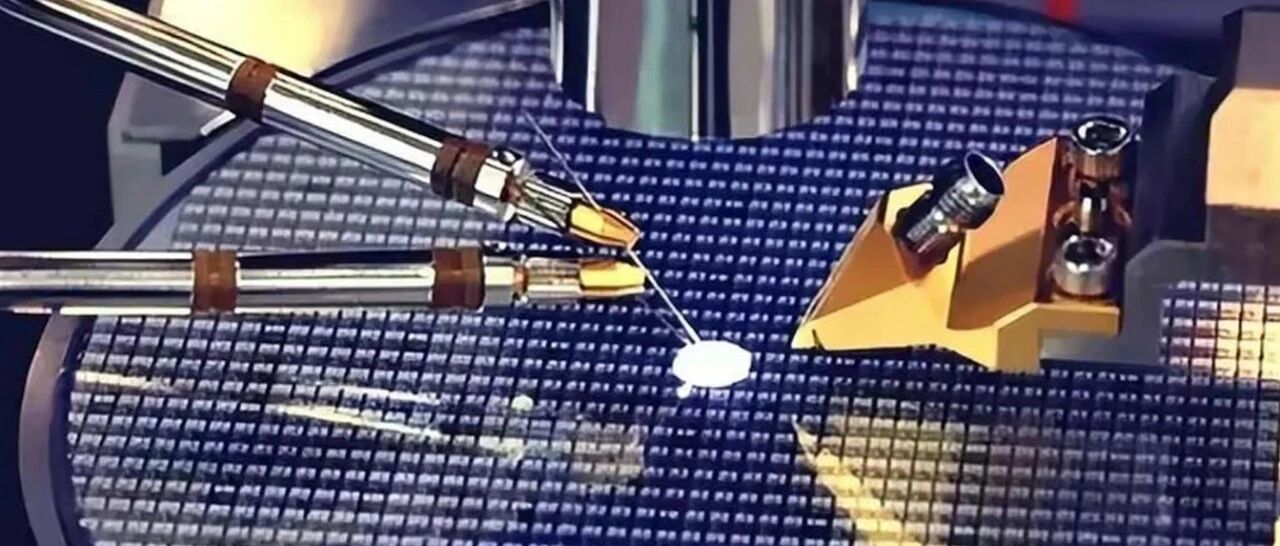
国盾量子(688027.SH):在量子计算领域,公司可提供除芯片外的量子计算机整机解决方案
Ge Long Hui· 2025-11-17 08:02
Core Viewpoint - GuoDun Quantum (688027.SH) emphasizes its collaboration with research institutions like the University of Science and Technology of China for the development of quantum computing chips and solutions [1] Company Overview - The company provides complete quantum computing solutions beyond just chips, focusing on superconducting technology [1] - It engages in both self-research and collaboration with leading research teams to tackle core technology challenges and product development [1] Product Offerings - GuoDun Quantum offers key components such as measurement and control systems, dilution refrigerators, and complete quantum computing systems [1] - The products have already been delivered to downstream research and industrial clients [1]