
可再生能源

Search documents
外媒在年终报道回顾这一年的潮起潮涌时——纷纷赞叹一个可信可爱可敬的中国
Xin Hua She· 2025-12-27 23:29
Group 1: Technological Innovation - International media highlighted China's technological innovation, with reports showcasing advancements such as autonomous delivery trucks and drones, creating a sense of "living in tomorrow" [2] - China's global innovation index ranking improved from 34th in 2012 to 10th in 2025, reflecting the country's rapid technological advancements [2] - China is recognized as a leading force in renewable energy technology and production, significantly impacting global energy transitions [2] Group 2: Economic Vitality - International institutions have raised their economic growth forecasts for China in 2025, with the World Bank, IMF, and ADB increasing their projections by 0.4, 0.2, and 0.1 percentage points respectively [4] - Reports emphasize China's robust production, trade, and investment growth, asserting that the country remains the world's most dynamic "factory" [4] - The narrative around China's economic resilience counters previous pessimistic views, highlighting its ongoing vitality and market potential [4] Group 3: International Cooperation - China's commitment to international cooperation is evident through initiatives like the Regional Comprehensive Economic Partnership and the Belt and Road Initiative, showcasing its proactive stance in global trade [5] - The country is seen as a vital player in maintaining global competitiveness for multinational corporations, attracting increased investment from European firms [5] Group 4: Modernization Practices - China is recognized as a leading example of ambitious modernization, with cities like Suzhou and Shenzhen integrating technology with urban planning [6] - The country's governance and development strategies are praised for their effectiveness, contributing to a growing sense of confidence among the populace [7] Group 5: Global Contributions - China is actively participating in global governance discussions, offering initiatives aimed at addressing international challenges such as poverty and conflict [9] - The country is viewed as a stabilizing force in a tumultuous world, promoting cooperation and dialogue to resolve differences [9]
含“绿”量提升,可再生能源装机占比超七成
Xin Lang Cai Jing· 2025-12-27 21:47
Core Insights - Hebei province is accelerating the construction of a new energy strong province, with renewable energy installed capacity reaching 14,236.7 MW by November 2025, accounting for 72.4% of the total power installed capacity [1] - The province's efforts contribute significantly to the national "dual carbon" goals, enhancing the green aspect of economic development [1] Renewable Energy Development - The province is focusing on large-scale wind and solar power projects, with a new management approach for wind and solar project approvals introduced in December [2] - By November 2025, the installed capacity of wind and solar energy in the Hebei North grid reached 7,764.81 MW, representing 70.66% of the total, leading the nation among provincial grids [1][2] Energy Storage and Stability - The Hebei Fengning Pumped Storage Power Station has a total installed capacity of 3.6 million kW, capable of absorbing 8.716 billion kWh of green electricity annually [3] - The province has a planned total capacity of 29.97 million kW for pumped storage, ranking first in the country [3] Green Computing and Data Centers - Zhangjiakou city is developing a green computing hub, leveraging local renewable energy resources, with green electricity consumption for computing reaching 4.412 billion kWh by November [4] Hydrogen Energy Initiatives - The construction of the largest green hydrogen pipeline project in terms of diameter, pressure, and distance has commenced, with Hebei being selected as one of the national hydrogen energy pilot regions [5] Electricity Transmission and Trading - Hebei's power grid investments have enhanced the coordination of energy sources, networks, loads, and storage, facilitating the reliable delivery of green electricity [6] - By December 11, 2025, the province's green electricity trading volume exceeded 43.465 billion kWh, a year-on-year increase of 54.83% [6][7] Green Electricity Trading System - The province is reforming its green electricity trading system to enhance flexibility and efficiency, with cumulative green electricity trading reaching 48.004 billion kWh from January to November, accounting for 27.7% of total trading volume [7]
喀麦隆两年内为绿色能源减税超过1600万美元
Shang Wu Bu Wang Zhan· 2025-12-26 17:12
Core Viewpoint - The Cameroonian government is actively supporting the development of renewable energy through tax exemptions and strategic decisions aimed at addressing energy and drinking water shortages [1] Group 1: Government Initiatives - Over the past two years, the government has implemented a series of strategic decisions to promote renewable energy, including tax exemptions for materials and equipment used in renewable energy production, totaling over 9 billion CFA francs (approximately 16 million USD) [1] - The tax exemptions are projected to reach 3.7 billion CFA francs in 2024 and 5.3 billion CFA francs in 2025 [1] Group 2: Financial Implications - The Minister of Finance, Motaze, stated that these tax expenditures represent "taxes not collected due to the exemptions granted by the government" [1] - The government aims to provide indirect support in the form of national subsidies to encourage the development of green energy [1] Group 3: Policy Details - Starting in 2024, the government will implement a tax exemption policy for imported equipment and materials used in drinking water production and renewable energy, as outlined in Article 5 of the 2024 Finance Law [1] - This policy will cover approximately 30 types of products related to drinking water production, solar energy, as well as medical, livestock, and fisheries sectors, and is expected to last for two years [1] - The Minister emphasized that a positive impact of these tax exemptions is the general decrease in prices of imported equipment and materials, as importers are required to sign an agreement to pass on the tax benefits to consumers [1]
(经济观察)中国零碳园区建设进入实质创建阶段
Xin Lang Cai Jing· 2025-12-26 11:52
园区能源消耗和碳排放相对集中,是实现碳达峰碳中和的重点和难点,也是推进绿色转型、探索低碳化 发展新路径的重要突破口。官方数据显示,中国现有国家级、省级园区超3000个,各类园区集聚了80% 以上的工业企业,消耗了全国约60%的能源,产生的直接碳排放占全国的30%以上。 建设零碳园区的技术条件也已具备。中国国家发改委宏观经济研究院能源研究所研究员田智宇指出,中 国节能降碳、可再生能源、储能等技术持续进步、产业不断壮大,为园区深度降碳创造了有利条件。 电力规划设计总院能源政策与市场研究院院长凡鹏飞表示,国家级零碳园区建设名单的公布为全国园区 的零碳化改造提供了清晰、统一的国家标准与实施蓝图,将引导产业进行系统性深度脱碳,打造面向未 来的低碳发展先行区,标志着零碳园区从概念倡导进入实质创建阶段。 长期来看,零碳园区建设将有助于解决当前日益凸显的新能源消纳难题。田智宇表示,建设零碳园区是 加快建设新型能源体系的重要试验场。零碳园区的能源供给必须主要由非化石能源满足,通过源网荷储 一体化、绿电直连等模式设计建设,将显著提升可再生能源就地消纳规模和比例,缓解电网消纳负担和 外送通道制约,有力促进各个地区以更大力度发展可再 ...
金风科技:截至2025年三季度末海外在手外部订单共计7161.72MW
Ge Long Hui A P P· 2025-12-26 10:28
Core Viewpoint - The company, Goldwind Technology (002202.SZ), has successfully expanded its overseas business across multiple continents, establishing a comprehensive capability to provide reliable renewable energy solutions globally [1] Group 1: International Business Expansion - The company has developed its overseas business in North America, Oceania, Europe, Asia, South America, and Africa [1] - As of the end of Q3 2025, the cumulative installed capacity of international business reached 11,214.62 MW [1] - Installed capacity in Asia (excluding China) has surpassed 3 GW, while South America and Oceania each exceeded 2 GW, and North America and Africa each surpassed 1 GW [1] Group 2: Order Backlog - The company currently has an external order backlog of 7,161.72 MW for its overseas operations [1]

通用电气取得用于转子叶片的钨基耐腐蚀前缘保护盖专利
Jin Rong Jie· 2025-12-26 07:53
Core Insights - General Electric Renewable Energy Spain, S.L. has obtained a patent for a "Tungsten-based Corrosion-resistant Leading Edge Protection Cover for Rotor Blades" with authorization announcement number CN115380159B, filed on February 2021 [1] Group 1 - The patent is focused on enhancing the durability and performance of rotor blades in renewable energy applications [1] - The innovation reflects the company's commitment to advancing technology in the renewable energy sector [1] - The patent acquisition may provide General Electric with a competitive edge in the market for wind energy solutions [1]

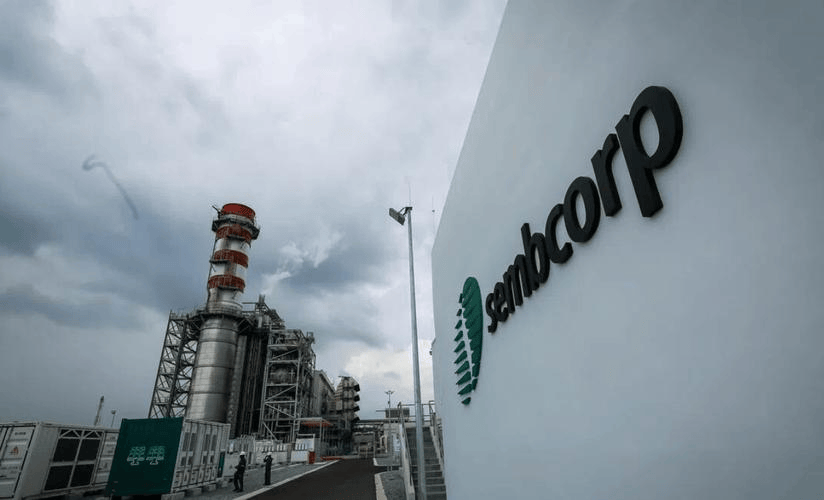
胜科工业印度再出手,拿下25年期购电协议光伏项目
Sou Hu Cai Jing· 2025-12-26 07:35
Group 1 - The core point of the article is that Sembcorp Industries has completed the acquisition of ReNew Sun Bright in India for approximately $246 million, enhancing its renewable energy portfolio [1][3] - The acquired company operates a 300 MW solar power plant in India, which has been operational since November 2021 and is connected to the national grid [1] - The project has a 25-year power purchase agreement with the Maharashtra State Electricity Distribution Company, providing Sembcorp with a stable long-term revenue source [3] Group 2 - Following the acquisition, Sembcorp's renewable energy capacity in India, including projects under construction, exceeds 7.6 GW, while its global capacity, including pending acquisitions, reaches 20.2 GW [3] - The announcement led to a slight fluctuation in Sembcorp's stock price [3]

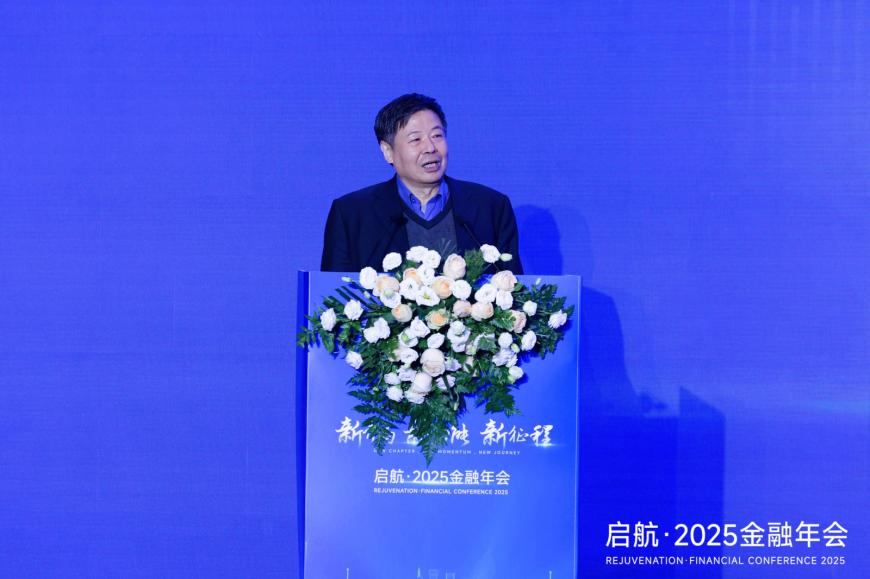
财政部原副部长朱光耀:我们要全面、客观地对国际贸易顺差进行分析,加强国际经济政策协调
Jin Rong Jie· 2025-12-26 06:57
Group 1 - The 2025 financial conference in Beijing gathered over 100 guests and 500 financial institutions and listed companies, focusing on the theme of "New Starting Point, New Momentum, New Journey" [1] - Zhu Guangyao highlighted that 2025 is a crucial year for China's "14th Five-Year Plan," with a projected GDP growth of around 5%, contributing significantly to global economic growth [3][4] - The global economic growth rate is forecasted at 3.2% for 2025, below the past decade's average of 3.7%, indicating a weak recovery in the global economy [3] Group 2 - China's international trade is expected to exceed $7.5 trillion in 2025, with a trade surplus of nearly $1 trillion, driven by strong manufacturing capabilities and a complete industrial supply chain [4] - The growth rates for China's goods and services trade in the first 11 months of the year were 3.6% and 7.6%, respectively, indicating robust trade performance [4] - In 2026, China will host the APEC leaders' informal meeting, focusing on global trade and international economic policy coordination [4][5] Group 3 - China's strong manufacturing base, electricity production capacity, and vast data resources are supporting the development of the artificial intelligence industry, positioning China at the forefront of the global industrial revolution [5] - The country is expected to contribute significantly to global productivity through advancements in artificial intelligence, while also addressing governance and ethical standards in the field [5]
中金资本合作设立中国可再生能源基础设施美元基金 助力苹果公司产业链碳中和目标
Zhong Guo Jing Ji Wang· 2025-12-26 06:37
Core Viewpoint - The establishment of the China Renewable Power Infrastructure LPF aims to support the development of a new energy system in China during the 14th Five-Year Plan period, focusing on attracting international and private capital [1] Group 1: Fund Details - The fund is launched by CICC Capital and Huaneng Investment, and it has completed its first closing in mid-2023 [1] - It is structured as a Hong Kong Limited Partnership Fund (HKLPF), with CICC as the general partner and manager, and Huaneng Investment as the investment advisor [1] - The fund's investors include several suppliers to Apple Inc. [1] Group 2: Investment Goals - The fund aims to achieve both financial returns and green equity, providing funding support for renewable energy projects in China, including those in early development stages [1] - It is projected that by 2030, the fund will contribute to an annual increase of 1 million megawatt-hours of clean electricity in the country through its investments [1] Group 3: Strategic Importance - CICC's mission reflects a commitment to support high-level opening-up and high-quality development strategies in China, facilitating the green investment of large multinational groups in the country [1] - The establishment of the fund underscores the mutual benefits of international capital and domestic economic growth [1]

中金资本合作设立中国可再生能源基础设施美元基金 助力苹果公司产业链碳中和目标
Zhong Guo Jing Ji Wang· 2025-12-26 06:36
Core Viewpoint - The establishment of the China Renewable Power Infrastructure LPF aims to support the development of a new energy system in China during the 14th Five-Year Plan period, focusing on attracting international and private capital [1] Group 1: Fund Details - The fund is initiated by CICC Capital and Huaneng Investment, and it has completed its first closing in mid-2023 [1] - It is structured as a Hong Kong Limited Partnership Fund (HKLPF), with CICC as the general partner and manager, and Huaneng Investment as the investment advisor [1] - The fund's investors include several suppliers to Apple Inc. [1] Group 2: Investment Goals - The fund aims to achieve both financial returns and green equity, providing funding support for renewable energy projects in China, including those in early development stages [1] - It is projected that by 2030, the fund will contribute to an annual increase of 1 million megawatt-hours of clean electricity in the country through its investments [1] Group 3: Strategic Importance - CICC's mission is rooted in connecting China with the world, actively serving Chinese enterprises in their global expansion and facilitating the introduction of international capital [1] - The establishment of this fund reflects CICC's long-term commitment to supporting China's high-level opening-up and high-quality development strategy, enhancing the green investment landscape for multinational corporations in China [1]